The Porsche 928 was unveiled at the 1977 Geneva Salon and voted European Car of the Year for 1978. It had a front-engine layout with a hatchback body style that featured lightweight aluminum doors, front wings, and bonnet. There were impact-resistant 'bumpers' made of color-matched plastic incorporated into the nose and tail. Power was from the company's first V8 powerplant with a 4.5-liter displacement and offering 234 bhp. It was backed by a five-speed transaxle gearbox or optional three-speed automatic. 
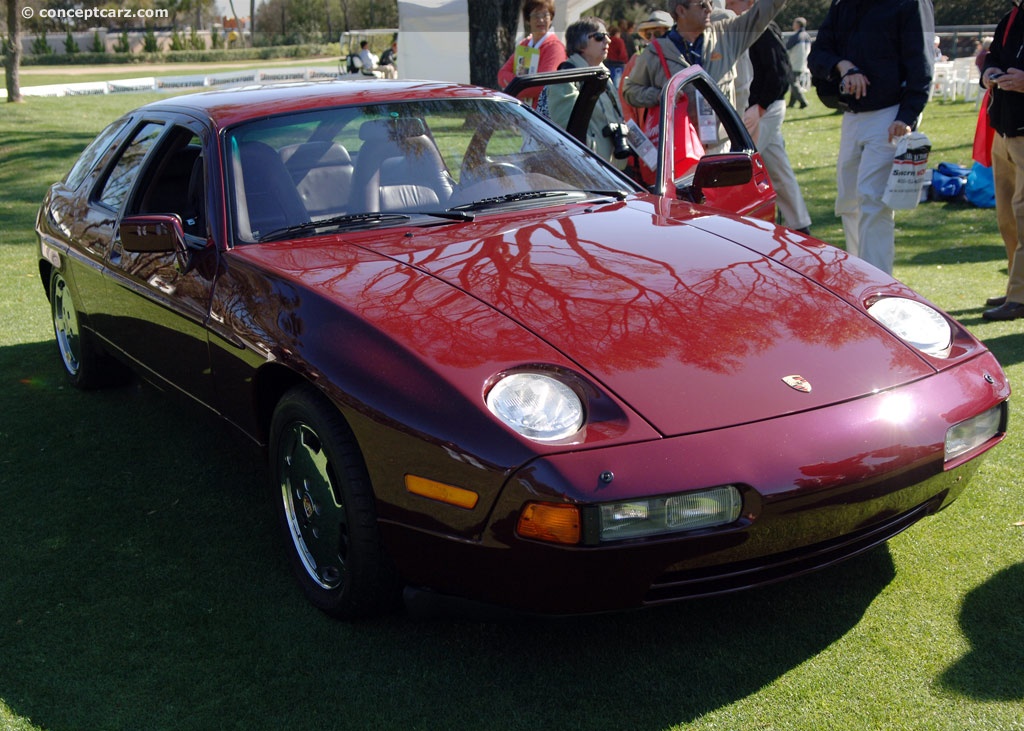
Factory Custom 4-Door Sedan
View info and historyA 4.6-liter engine arrived in 1979, spawning a new name (the 928S), and then in 1986 additional revisions and restyling occurred, resulting in the 928 S4. The twin-cam, 16-valve cylinder heads engine displaced 4,957cc and developed 320 bhp, giving the S4 a top speed of 160 mph. Porsche continued to refine and develop the 928, resulting in the 928 GT for 1989, which had a top speed of around 170 making it the Stuttgart firm's fastest production car at the time. The ultimate incarnation of the 928 was the 928 GTS, introduced in 1991 at the Frankfurt Motor Show. It came with a 5.4-liter engine offering 345 bhp. Production of the 928 GTS continued until the model's deletion in 1995. Porsche built a lightweight, low-production version of the 928 in 1988 and 1989 CS or Club Sport. The Club Sport came with twin and straight exhaust tailpipes, a wider track, and CS-type wheels. The bodywork was the same as the European S4 models, but without the mould line on the side. Buyers could select the no-cost option 'CS Club Sport' sticker on the front left wing. However, the Club Sport was not available with a sunroof, cruise control, or a rear screen wiper.
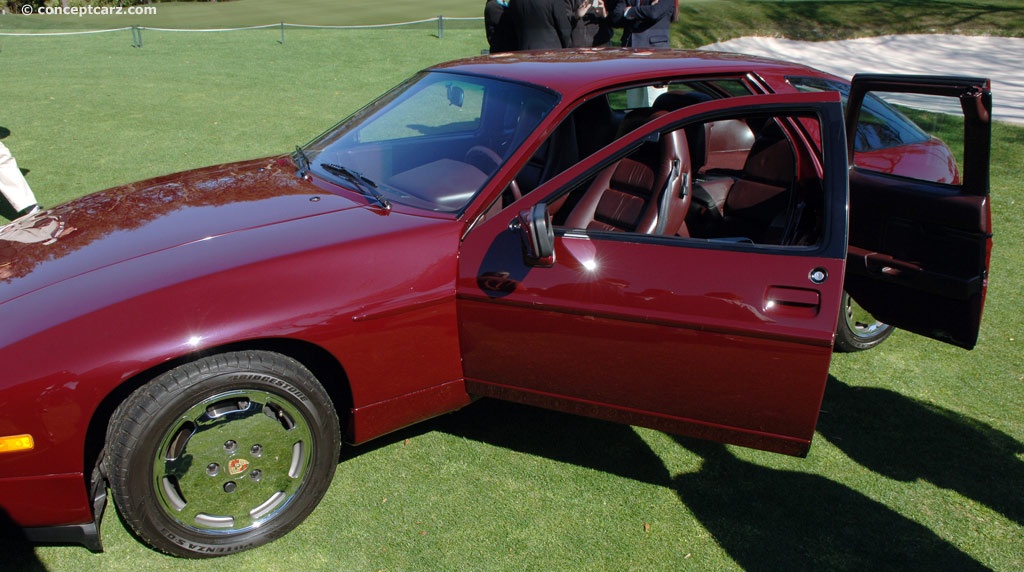
Factory Custom 4-Door Sedan
View info and historyThere were minor differences between the 1988 and 1989 CS models. The 1988 versions had a radio antenna integrated into the windscreen, while the 1989 models had it mounted toward the rear of the roof. All CS models had a left-hand drive configuration, a manual gearbox, no leather trim on the dashboard, a black leather interior, and only one rearview mirror. The seats were adjusted manually, there was no cassette box behind the window switches, no rear sun visors, and the door trim panels were sourced from the 928 S. Prior to the official launch of the 928 Club Sport model, Porsche built five prototypes for their factory drivers (Derek Bell, Jochen Mass, Hans Stuck, Bob Wollek, and Jacky Ickx). These were delivered to the drivers as their 'company car.' These five cars had a more powerful engine (of around 300 bhp), a more tuned suspension, a passenger-side mirror, and a full leather interior.
by Daniel Vaughan | May 2020
Factory Custom 4-Door Sedan
View info and history
Factory Custom 4-Door Sedan
View info and history
by Daniel Vaughan | May 2020
Related Reading : Porsche 928 History
Porsche introduced the 928 at the Geneva Auto Show in 1977 as a potential replacement for the 911. The design and development of the vehicle began in 1971. The 928 was designed as a luxurious car and a grand tourer, but with its excellent weight distribution and V8 engine, it was a performance machine. In 1978 it was awarded the prestigious European Car of the Year. Ernst Fuhrman, Porsches Managing....
Continue Reading >>
Continue Reading >>
Related Reading : Porsche 928 History
Landing on the scene in 1978, the Porsche 928 is a sport-GT car sold by Porsche AG of Germany. From the beginning, the 928 was meant to be the replacement of the legendary 911. At times the 911 had undergone some criticism so Porsche hoped to eliminate that with the brand new car that handled like a sports car but had the luxury features of a sedan. Porsche had produced only six front-engined models,....
Continue Reading >>
Continue Reading >>
Similar Automakers


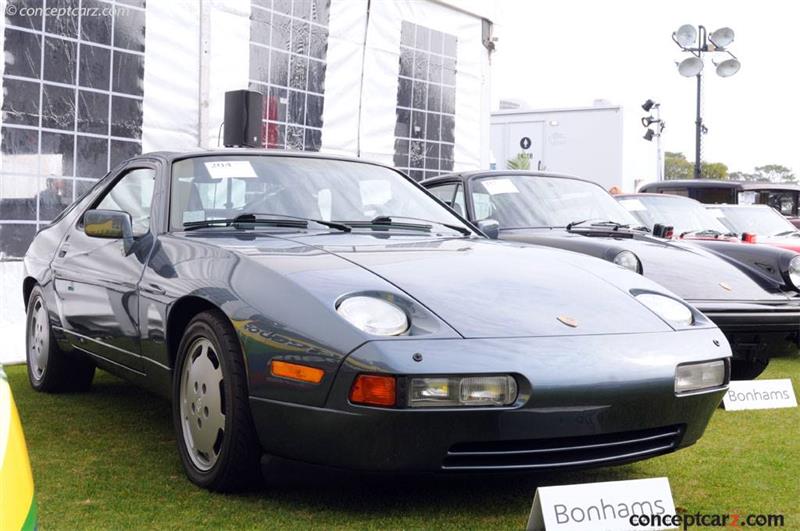
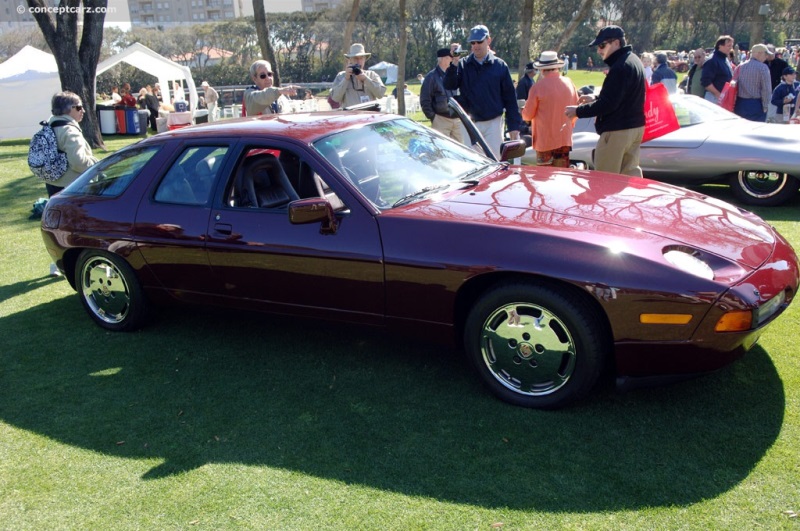
1987 Porsche 928 S4 Vehicle Profiles

Recent Vehicle Additions


Performance and Specification Comparison
Price Comparison
$19,905
$25,505 - $33,255
$38,505 - $76,505
$58,755 - $76,505
$223,000
$225,000
928 S4 Specification Comparison by Year
Year
Production
Wheelbase
Engine
Prices
Related Automotive News

VOLKSWAGEN ANNOUNCES PRICING OF 2015 GOLF MODELS, STARTING AT $17,995
The seventh-generation version of VWs worldwide best seller offers more space, less weight, and increased efficiency at an even better value
Pricing starts at %2417,995 for the two-door Golf Launch Edition model with manual transmission
New TDI® S m...

VOLKSWAGEN CELEBRATES 40 YEARS OF THE GOLF AT THE NEW YORK AUTO SHOW
The most successful European car of all time turns 40
More than 30 million Golf models have been sold worldwide
Car went on sale in Europe in May 1974, was sold in the U.S. from December that year as the Rabbit
Seventh-generation Golf GTI goes on...

FIAT 500 ABARTH AND ABARTH CABRIO OFFER AUTOMATIC TRANSMISSION OPTION FOR 2015
Six-speed automatic transmission available as an option to five-speed manual transmission on 2015 Fiat 500 Abarth and Abarth Cabrio
Specially tuned automatic transmission maintains high-performance legacy of Abarth models while delivering accessib...
THE NEW FIAT 500 1957 EDITION ARRIVING SOON IN FIAT STUDIOS
Order allocations open this week, with the 2014 Fiat 500 1957 Edition arriving in studios in late spring
New 2014 Fiat 500 1957 Edition offers vintage Italian styling starting at %2420,400 U.S. MSRP
Limited-production model builds on the Fiat 500s...

FIAT BRAND WINS 'BEST SMALL CONVERTIBLE' AT SAMA CONVERTIBLE AWARDS FOR THIRD CONSECUTIVE YEAR
June 7, 2013 , Auburn Hills, Mich. - The Fiat 500 Abarth Cabrio was recognized as the Best Small Convertible during the third annual Topless in Miami Convertible Awards on Thursday, June 6, by the Southern Automotive Media Association (SAMA)....