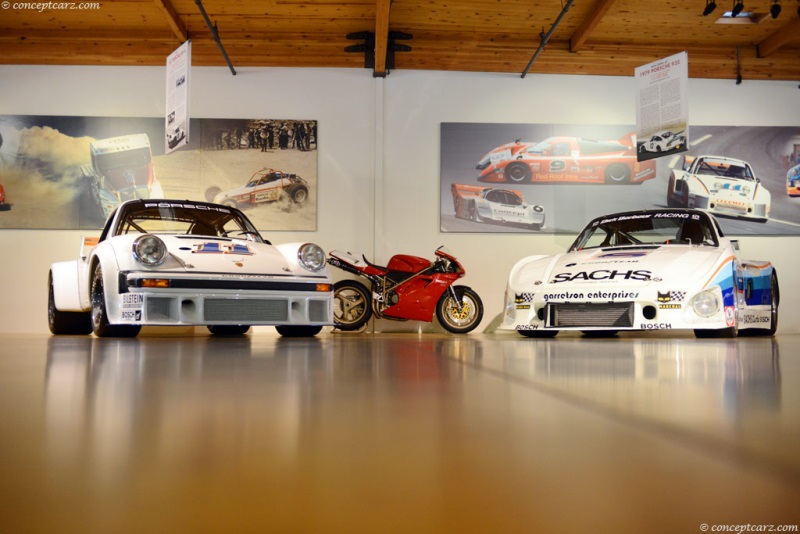
1976 934 |
1977 Porsche 934.5 news, pictures, and information | ||
| Tweet | ||
![]() | ![]() | ![]() | Coupe Chassis Num: 930 770 0952 |
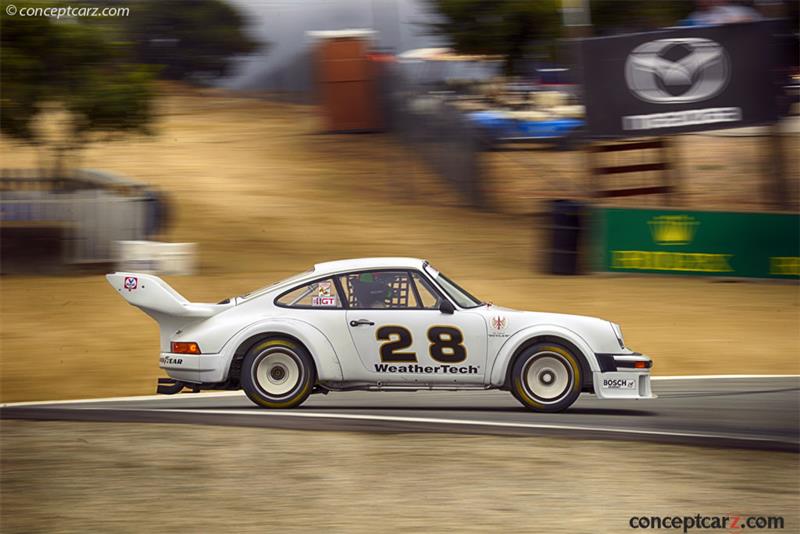
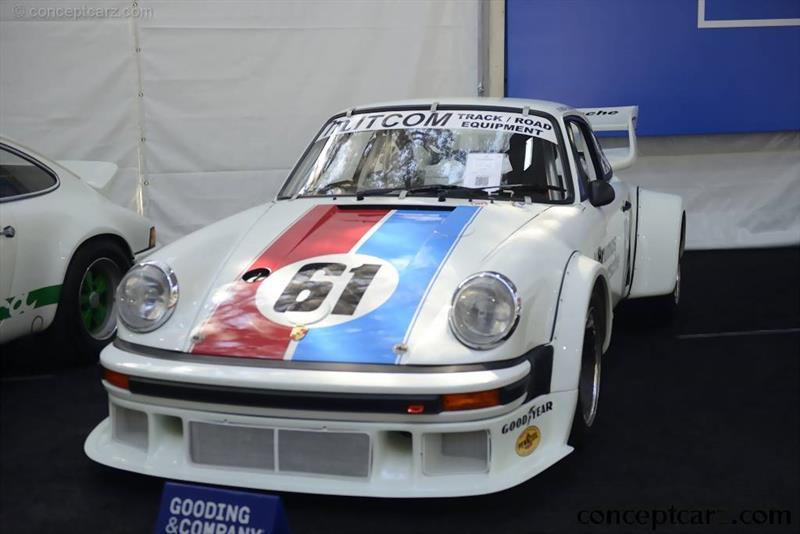
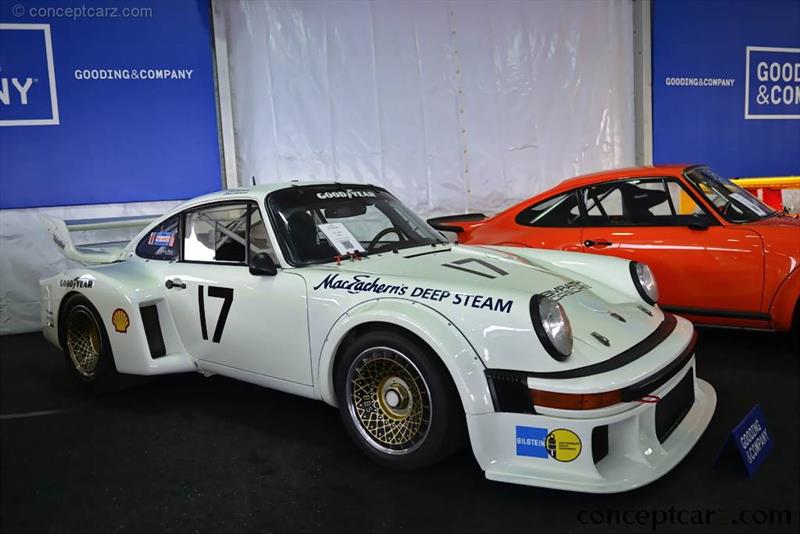
On 2/22/77, Peter Gregg and Jack Atkinson, Brumo's Crew Chief, flew to Zuffenhausen and purchased this 934.5 and a single turbo 935. The 934.5arrived in Jacksonville, Florida, in February or March of 1977. It required preparation by Brumos before debuting at the Road Atlanta IMSA race. It was disqualified by IMSA, so Peter Gregg decided to campaign the car in the Trans Am racing series. The 935 purchased was not raced in 1977; it did, however set an IMSA record at Daytona. During the 1977 SCCA Trans-Am season, the bodywork from the 935 would be used on the 934.5 in various configurations.
Peter Gregg, won the 1977 SCCA Trans-AM Championship with this car. However, Canadian Ludwig Heimrath protested the championship and eventually the FIA ruled in Heimrath's favor. Porsche, however, produced a poster commemorating Peter Gregg's championship.
![]() | ![]() | ![]() | Coupe Chassis Num: 930 770 0958 |
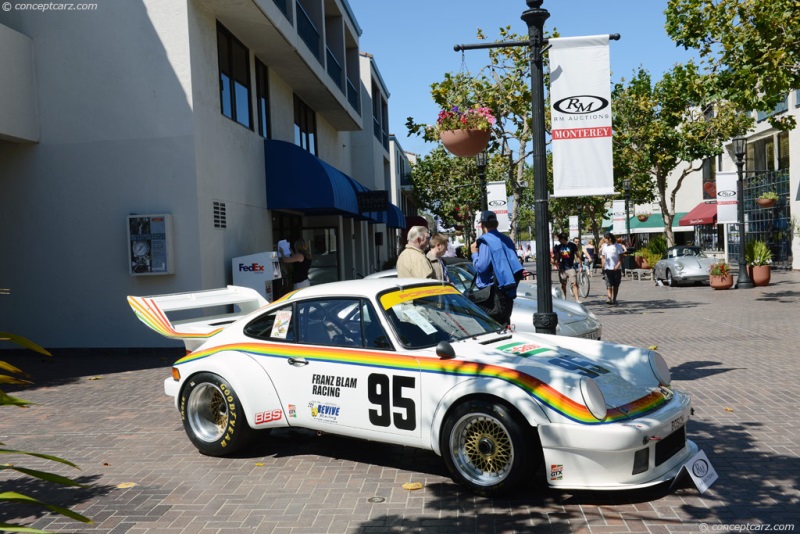
The car was subsequently converted into a 935 and raced by Heimrath from 1978 to 1980. It was retired at the end of the 1980 season and parked in a warehouse in Toronto, Canada.
Porschehaus acquired the bare chassis and a container of related bits and pieces in 1995. The car was rebuilt over a period of five years to the original factory specs as delivered to Heimrath. Sold to Jim and Lawrence in April of 1996.
The car was test driven for the first time at the 2004 Mont-Tremblant Legend event and the 2006 Wine Country Classic.
After the successes of the 934 in the SCCA's Trans-Am series in 1976, where the 934 had migrated after IMSA had effectively banned the car to curry favor wîth some of its major American sponsors and their teams, Porsche once again found itself at the center of sanctioning body politics. After a miserable season IMSA was back courting Porsche and the 934, hoping to have them and quality fields back for 1977.
After witnessing a special test session of a Brumos prepared and Peter Gregg driven 934, equipped wîth 935's wheel and tire package and rear wing configuration, John Bishop, the head of IMSA was convinced that the 934 would not dominate the series as other competitors had feared. Bishop approved the car to run 'as tested' for the 1977 season, and the SCCA quickly followed suit approving the 'up-rated' 934 for Trans-Am. The car would now be called the 934 1/2.
Peter Gregg, always lòòking for an edge over the competition, continued to try and further develop the 934 1/2 by integrating more and more parts from the 935. When IMSA felt this violated the agreement to run the 934s as tested for Bishop, they sent Gregg home from the April Road Atlanta race to re-fit his car to the agreed upon standard.
Gregg however, went straight to the SCCA which agreed to Gregg's modifications and more. Teams sensing an opportunity to 'develop' their own 934 1/2s and thus find their own advantages moved to the Trans-Am quickly.
The politics were not over with, however. When the Trans-Am visited Mosport in Canada the FIA had overriding jurisdiction as the event was a six-hour endurance race and was part of the World Championship of Makes. The race was won by Peter Gregg in his modified 934 1/2. Canadian Porsche dealer, Ludwig Heimrath seized the opportunity and protested Gregg's car. After several months, Gregg's win was nullified. Neither IMSA nor SCCA ever accepted the ruling and continued to accept the evolutionary nature of the rules.
The outcome was predictable. Porsche swept the top five places in the Trans-Am Championship point standings while over in IMSA Al Holbert won his second consecutive championship in his DeKon Chevrolet Monza.Source - Porsche
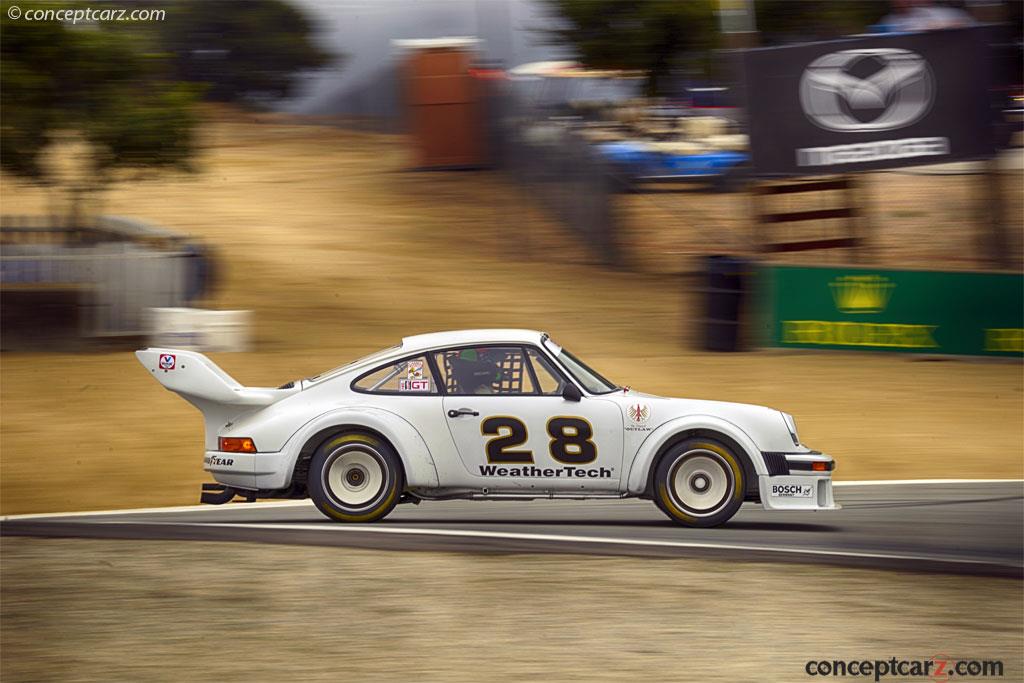
After witnessing a special test session of a Brumos prepared and Peter Gregg driven 934, equipped wîth 935's wheel and tire package and rear wing configuration, John Bishop, the head of IMSA was convinced that the 934 would not dominate the series as other competitors had feared. Bishop approved the car to run 'as tested' for the 1977 season, and the SCCA quickly followed suit approving the 'up-rated' 934 for Trans-Am. The car would now be called the 934 1/2.
Peter Gregg, always lòòking for an edge over the competition, continued to try and further develop the 934 1/2 by integrating more and more parts from the 935. When IMSA felt this violated the agreement to run the 934s as tested for Bishop, they sent Gregg home from the April Road Atlanta race to re-fit his car to the agreed upon standard.
Gregg however, went straight to the SCCA which agreed to Gregg's modifications and more. Teams sensing an opportunity to 'develop' their own 934 1/2s and thus find their own advantages moved to the Trans-Am quickly.The politics were not over with, however. When the Trans-Am visited Mosport in Canada the FIA had overriding jurisdiction as the event was a six-hour endurance race and was part of the World Championship of Makes. The race was won by Peter Gregg in his modified 934 1/2. Canadian Porsche dealer, Ludwig Heimrath seized the opportunity and protested Gregg's car. After several months, Gregg's win was nullified. Neither IMSA nor SCCA ever accepted the ruling and continued to accept the evolutionary nature of the rules.
The outcome was predictable. Porsche swept the top five places in the Trans-Am Championship point standings while over in IMSA Al Holbert won his second consecutive championship in his DeKon Chevrolet Monza.Source - Porsche
![]() | ![]() | ![]() | Coupe |
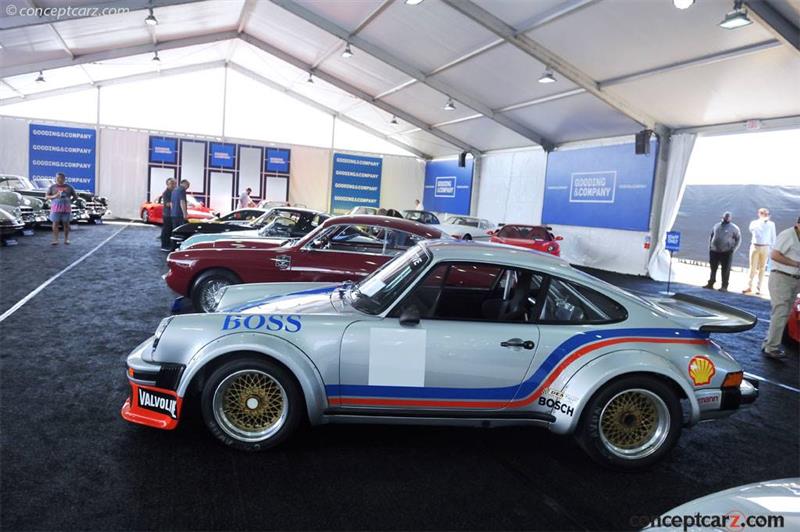
The Porsche 934 was a specially prepared racing version of the Porsche 911 Turbo built to satisfy the FIA Group 4 rules and to continue the marque's success in that class. Homologation requirements stated at least 400 road-going cars were to be built within a two year period. The dimensions of the road and race cars were to be equal and modifications throughout were to be limited, except for safety. A roll cage, fuel cell, and other common racing safety features were required. These restrictions made the class very competitive; the limitation of displacement and weight made competition even more fierce. The allowable limit of displacement size was directly tied to the vehicles overall weight. The more weight, the higher the displacement allowed; the lower the weight, the less displacement permitted.
Porsche introduced the new 930 model in 1975. This 911 Turbo Type 930 would serve as the basis for the new Group 4 racer, which would be dubbed the Type 934. During the development of the 930, the needs of the 934 were taken into consideration and planned appropriately. To satisfy the rules stating 'limited modifications', Porsche gave the 930 much strong and better components than needed, thus having it included on the 934. For example, components on the transmission were designed to handle the rigorous 485 horsepower from the Type 934 engine, making it under-utilized for the 290 horsepower Type 930.
The Type 934 was fitted with a turbocharger which helped the engine achieve over 480 horsepower. In 1977 the valves were enlarged and horsepower grew to over 550. To satisfy the 1120 kg rule, the interior was stripped many non-essential items. Major modifications were not allowed, which meant the electric windows remained in tact.
In both the European GT Championship and the TransAm Championship, the Porsche 934 was a dominant force. The highlights were from 1977 through 1979 when it captured three successive class victories at the legendary 24 Hours of LeMans.
By Daniel Vaughan | Feb 2008
Porsche introduced the new 930 model in 1975. This 911 Turbo Type 930 would serve as the basis for the new Group 4 racer, which would be dubbed the Type 934. During the development of the 930, the needs of the 934 were taken into consideration and planned appropriately. To satisfy the rules stating 'limited modifications', Porsche gave the 930 much strong and better components than needed, thus having it included on the 934. For example, components on the transmission were designed to handle the rigorous 485 horsepower from the Type 934 engine, making it under-utilized for the 290 horsepower Type 930.
The Type 934 was fitted with a turbocharger which helped the engine achieve over 480 horsepower. In 1977 the valves were enlarged and horsepower grew to over 550. To satisfy the 1120 kg rule, the interior was stripped many non-essential items. Major modifications were not allowed, which meant the electric windows remained in tact.
In both the European GT Championship and the TransAm Championship, the Porsche 934 was a dominant force. The highlights were from 1977 through 1979 when it captured three successive class victories at the legendary 24 Hours of LeMans.
By Daniel Vaughan | Feb 2008
One of the most successful shapes of all time, every young schoolboy can spot a Porsche 911 when one drives by. Porsche purists can wax poetic on the timeless lines of the series. And surely timeless is the right word. Introduced in 1964, even the very first 911 looks remarkably similar to today's iteration. The smooth, elegant contours, though, have occasionally taken on a distinctively sinister flair. Case in point, the 911-based Porsche 934.
Introduced as a hardcore racer's Porsche, only a small number of 934s were made for street use. Of the 31 true 934s built, most if not all were destined for a hard life of race use. The street cars were produced only to fulfill a requirement of the FIA's Group 4 regulations. The Porsche 934 was built to dominate on the tracks, not to be flaunted on the streets.
Successful in its Group 4 class, the 934 proved a proud successor to the impressive RSR. The brutish 934 was an awe-inspiring piece of machinery. Despite its menacing stance, though, the 934 was more civilized than one would expect. The reason was simple. The 930, a turbocharged variant of the 911 on which the 934 was based, weighed little more than the lowest allowable weight for its displacement level according to FIA regulations. Porsche, therefore, was only permitted to shave a mere 20kg off of the 930 when they transformed it into the fire-breathing 934. With barely any weight to lose, the 934 was able to retain many of the creature comforts of the luxurious 930.
Despite the minimal weight loss necessary, Porsche did some ingenious work when leaning out the 934. Sure, you could have your race-ready banshee with factory door panels and power windows. But Porsche managed to shave enough pounds off the rest of the car that the Stuttgart company was forced to add weight. While adding weight to a racecar sounds like an idea created simply to torture the vehicle's creators, the FIA regulations actually gave Porsche the ability to load the car with ballast used to improve the weight distribution.
Even with its optimally placed ballast and advanced aerodynamics, the 934 was a handful on the track. The inherent tail-happiness of the 911 design, the manic power levels, and the fairly high weight created a vehicle that could break loose easily. But with such a fierce face, the violence could almost be expected.
Porsche employed a huge air dam up front to provide ample air supply to the Behr water radiators, oil cooler, and front brakes. Many components of the 934's body were made of lightweight fiberglass, including the wide fender flares and legendary whale tail rear spoiler. These racy items weren't just for show: the 934 initially produced 485hp at 7000rpm, with 540hp available from subsequent versions produced in 1977.
Proving the great dynamics of a trademark Porsche design, the 934 was a formidable beast with wild wings that remained every ounce a 911. The car will always be remembered as one of the last spectacular Porsche racers to remain so true to that hallmark curvature. But power windows and resemblance to lesser models aside, the 934 was a devastating weapon in the hands of any driver brave and skilled enough to harness its awesome performance.
The site www.qv500.com supplied information for this story, and contains useful guides to many prominent supercars. By Evan Acuña
For more information and related vehicles, click hereIntroduced as a hardcore racer's Porsche, only a small number of 934s were made for street use. Of the 31 true 934s built, most if not all were destined for a hard life of race use. The street cars were produced only to fulfill a requirement of the FIA's Group 4 regulations. The Porsche 934 was built to dominate on the tracks, not to be flaunted on the streets.
Successful in its Group 4 class, the 934 proved a proud successor to the impressive RSR. The brutish 934 was an awe-inspiring piece of machinery. Despite its menacing stance, though, the 934 was more civilized than one would expect. The reason was simple. The 930, a turbocharged variant of the 911 on which the 934 was based, weighed little more than the lowest allowable weight for its displacement level according to FIA regulations. Porsche, therefore, was only permitted to shave a mere 20kg off of the 930 when they transformed it into the fire-breathing 934. With barely any weight to lose, the 934 was able to retain many of the creature comforts of the luxurious 930.
Despite the minimal weight loss necessary, Porsche did some ingenious work when leaning out the 934. Sure, you could have your race-ready banshee with factory door panels and power windows. But Porsche managed to shave enough pounds off the rest of the car that the Stuttgart company was forced to add weight. While adding weight to a racecar sounds like an idea created simply to torture the vehicle's creators, the FIA regulations actually gave Porsche the ability to load the car with ballast used to improve the weight distribution.
Even with its optimally placed ballast and advanced aerodynamics, the 934 was a handful on the track. The inherent tail-happiness of the 911 design, the manic power levels, and the fairly high weight created a vehicle that could break loose easily. But with such a fierce face, the violence could almost be expected.
Porsche employed a huge air dam up front to provide ample air supply to the Behr water radiators, oil cooler, and front brakes. Many components of the 934's body were made of lightweight fiberglass, including the wide fender flares and legendary whale tail rear spoiler. These racy items weren't just for show: the 934 initially produced 485hp at 7000rpm, with 540hp available from subsequent versions produced in 1977.
Proving the great dynamics of a trademark Porsche design, the 934 was a formidable beast with wild wings that remained every ounce a 911. The car will always be remembered as one of the last spectacular Porsche racers to remain so true to that hallmark curvature. But power windows and resemblance to lesser models aside, the 934 was a devastating weapon in the hands of any driver brave and skilled enough to harness its awesome performance.
The site www.qv500.com supplied information for this story, and contains useful guides to many prominent supercars. By Evan Acuña
| Firestone Returns As Presenting Sponsor of RRDC Evening With Brian Redman in Long Beach | |
![]() | The Firestone brand will return as presenting sponsor of the Road Racing Drivers Club's fifth annual West Coast banquet honoring auto racing's most influential leaders. This year, on Thursday, April 18, prior to the running of the Toyota Grand Prix of Long Beach, the 'RRDC Evening with Brian Redman presented by Firestone' will highlight the career of one of the sport's most popular, talented and successful race-car drivers. This is the Firestone brand's fourth straight year as a supporter of the...[Read more...] |
| Amelia Island Concours d'Elegance Honors The Genius Of Porsche's 911 at 50 | |
![]() | Porsche's 911 has defied common wisdom, outlived its competitors and, from roots in the early Sixties, leads Porsche Cars into a new century as the only car built today that carries its engine behind the rear axle. At 4:00 PM on Friday, March 8th, 2013 in the Ritz-Carlton, Amelia Island, the Amelia Island Concours d'Elegance presents 'THE PORSCHE 911 SEMINAR: PORSCHE'S FLAGSHIP at 50'. The Porsche 911 Seminar will be empaneled by a pride of Porsche 911 legends. Brumos Porsche's Hurl...[Read more...] |
| THE VIPER GTS-R IS BACK IN 2012 | |
![]() | •Two identical SRT Viper GTS-R race cars will compete in this weekend's American Le Mans Series event at the 2.54-mile Road Atlanta circuit. •The driver lineup for Petit Le Mans: Tommy Kendall and Marc Goossens will be joined by Jonathan Bomarito in the No. 93 Pennzoil Ultra Viper GTS-R. Dominik Farnbacher and Kuno Wittmer will share driving duties with Ryan Hunter-Reay in the No. 91 Hewlett Packard Viper GTS-R. •This is the first on-track, factory-based participation for the SRT Viper GTS-R...[Read more...] |
| Stars of American Racing Panel Discussion for upcoming Savannah Speed Classic | |
![]() | The Hilton Head Island Motoring Festival & Concours d'Elegance, one of the nation's signature automobile events, is proud to announce the addition of legendary racing stars, to the already packed Savannah Speed Classic agenda. The scenic river-view site of Hutchinson Island in Savannah will be alive with not only the roar of vintage race cars, off-road drives through the woods, Hot Lap rides at speed, but some of history's greatest automotive influences including Hurley Haywood, Brian Redman, To...[Read more...] |
| AMERICAN LE MANS SERIES ROAD RACE SHOWCASE RETURNS TO ROAD AMERICA AUGUST 16-18 | |
![]() | Road America has hosted The American Le Mans Series (ALMS) every year since 2002 and the fabled four-mile, 14-turn circuit - the longest on the series schedule - still provides close finishes with narrow margins of victory year after year. A popular late-summer tradition, this prestigious event will showcase more than 36 cars in several classes on Saturday August 18. Everything from prototypes to production-based sports cars from numerous manufacturers in several classes will battle for position...[Read more...] |
| View more Trans-Am Series vehicles |
1977
Porsche
models |
| Porsche 911 |
| Porsche 924 Martini Edition |
| Porsche 935 |
| Similar Automakers | |
| Aston Martin | Bentley |
| Bugatti | Devon |
| Ferrari | GTA |
| Koenigsegg | Lamborghini |
| Lotus | Maserati |
| Maybach | McLaren |
| Rolls-Royce | Spyker |
| Tesla | |
| Similarly Sized Vehicles from 1977 |
| Lamborghini Urraco |
| MG MGB |
| Porsche 911 |
| Porsche 935 |
| Porsche: 1971-1980 |
| Similar Automakers |
| Porsche History |
| Other models by Porsche |
| Manufacturer Website |
| ||||||||||||||||||||||||||||||||||||||||||||
| 356 550/718 Sports Racing Cars 597 904 | 906 907 908 911 | 912 914 917 924 | 928 934/935 944 956 and 962 | 968 Boxster Carrera GT Cayenne | Cayman GT3 Panamera Type 959 |
1976 934 |


1976 934


1977