1959 Bocar Stiletto
1959 Bocar Stiletto Navigation
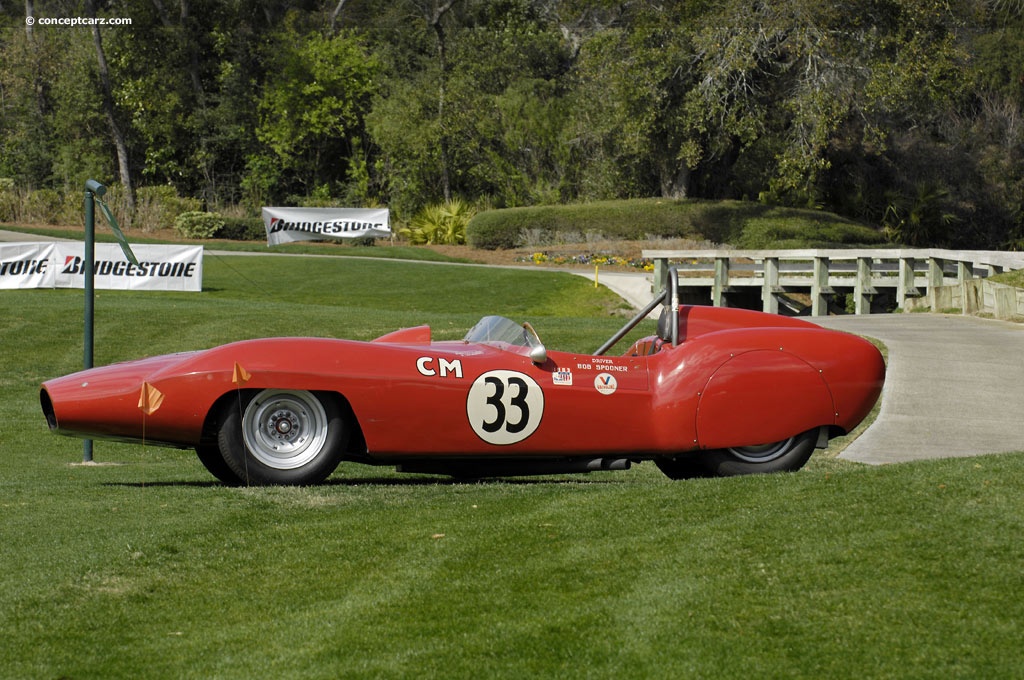
The Bocars were produced by Bob Carnes during the late 1950s and early 1960s in Colorado. The vehicles were available in both kit or assembled forms. The vehicles were intended for track use and competition but could also be driven on the road. 
Roadster
View info and historyCarnes entrance into the racing sport occurred in 1953 when he raced a Glockler Porsche Spyder in hillclimb competition and road races. The following year he piloted a Jaguar XK-120 to an impressive third-place finish at Pikes Beak. Within a few years, he was modifying automobiles to feed his need for speed. He transplanted a Cadillac engine into a Jaguar and dubbed it a 'Jagillac.' In his capable hands, he won the 1956 Buffalo Bill Hillclimb. In 1957, he began work on a car of his own design.His first creation was the Bocar X-1. It was comprised of a Jaguar suspension and brakes in the front and a Lincoln live axle in the rear. The powerplant was a 283 cubic-inch Chevy engine. The body was fiberglass which aided in lightweight characteristics while maintaining rigidity.
Roadster
View info and historyThe X-1 was entered in the 1958 Pikes Peak Hillclimb where it finished in fifth place in the sports car class. The car was promising but needed more refinement and power. After several iterations, the XP-4 was born. These were available near the close of 1958 and offered as a kit car or as a complete package. The fiberglass body sat atop of a 90-inch wheelbase. A Volkswagen or Porsche suspension could be found in the front and given extra modifications by Carnes. In the back was an Oldsmobile live axle with torsion bars. One vehicle was given Jaguar disc brakes, but most were outfitted with either Chevrolet or Buick drums. The engine were eight-cylinder units from either Pontiac or Chevrolet and matted to a Borg-Warner T-10 four-speed manual gearbox. Engines varied. A completely assembled example would set the buyer back about $6450. The Bocar XP-5 was very similar to the XP-4. Main changes were to the brakes which now incorporated Buick Alfin drums. Weight distribution was improved; the XP-5 had a 44% of its weight in the front and the remaining in the rear. This was achieved by moving the engine back into the frame and offset to the right. This improved weight distribution enhancing the vehicle's balance and giving it better traction.
Roadster
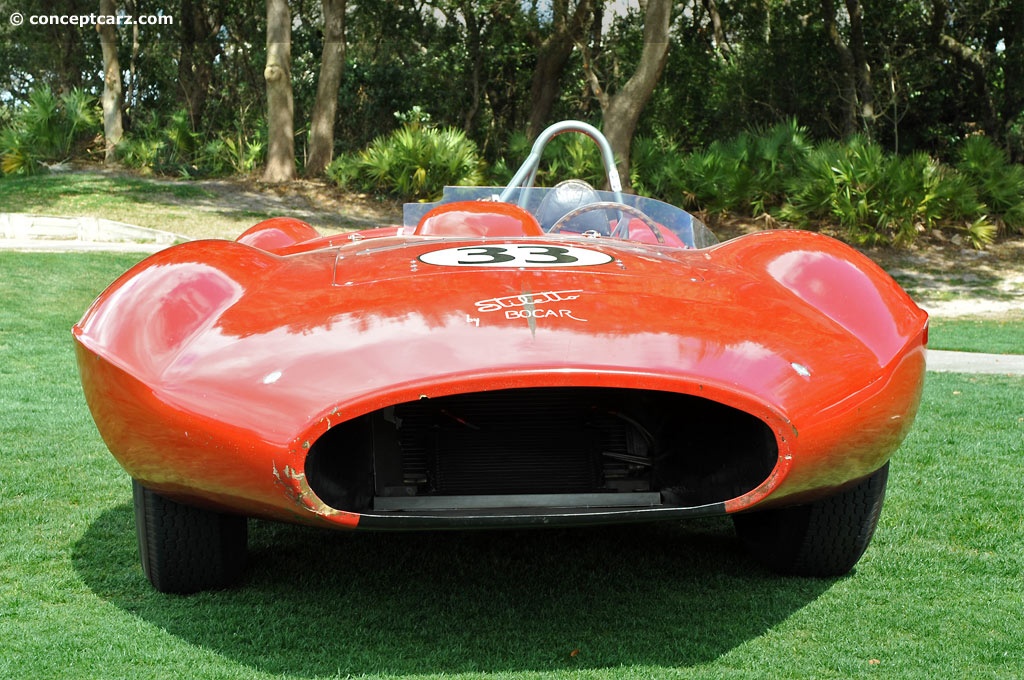
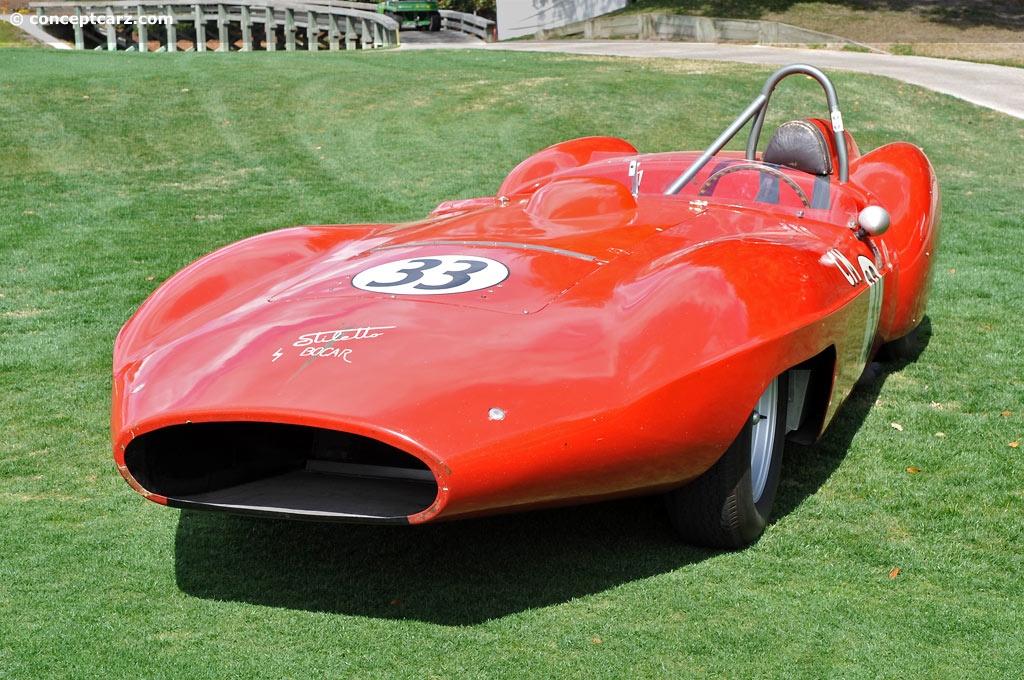
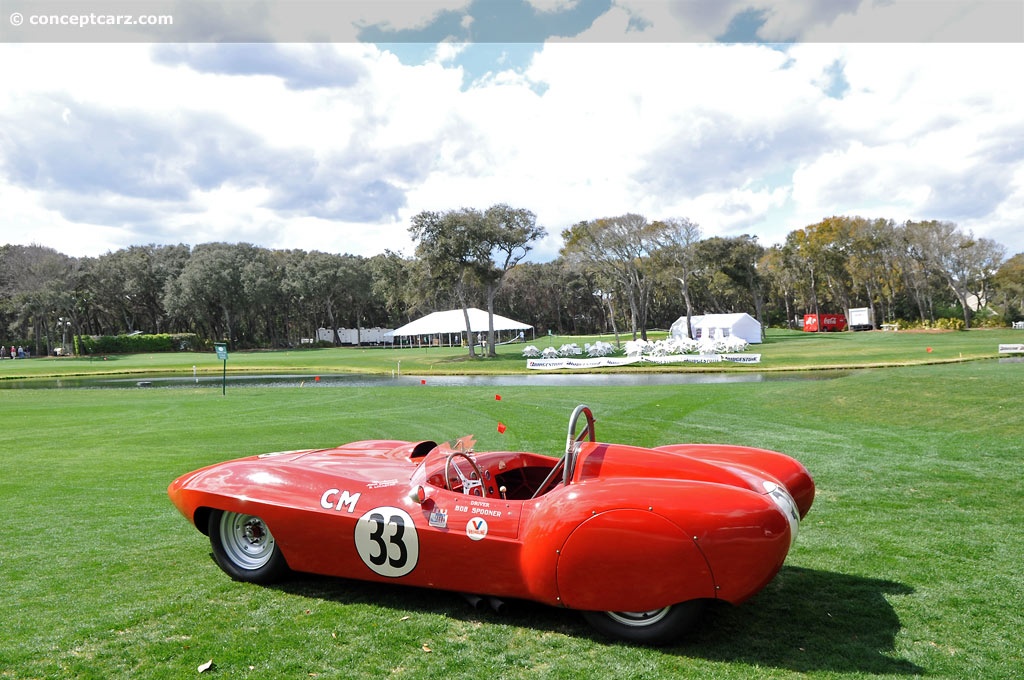
View info and historyThe Bocar XP-6 incorporated a supercharged version of a Chevrolet V8. The chassis was enlarged by 14 inches to accommodate the supercharger. Horsepower was around 400, which required changes to the suspension. The suspension was beefed up to include a solid axle with torsion bars in the front and a live axle with torsion bars in the rear. The car was quick, but never really gained much national attention. Only one example was ever created.The Bocar XP-7 was the next evolution of the Bocar racers. It was similar to the car it replaced and had a Volkswagen front end. At a price tag of nearly $9000, the cars were produced in very few numbers. Bocar's last racer built was for the 1960 season, the Stiletto. Less than three were created and carried a price tag of about $13,000. The car was intended to race during the 1960 season. Power was from a supercharged Chevrolet V8 engine mated to a four-speed Borg-Warner T-10 transmission. It had a space frame chassis and a fiberglass body.
Roadster
View info and historyThe early Stiletto was raced at Pikes Peak by Carnes but it encountered problems. A second example was built and sold to Tom Butz for driver Graham Shaw. This second car had a Hillborn-injected small-block engine. A third example is believed to have been built.
by Daniel Vaughan | Mar 2010
Roadster
View info and history
Roadster
View info and history
Roadster
View info and history
Roadster
View info and history
by Daniel Vaughan | Mar 2010
- 1959 Bocar Stiletto Menu
- Article
- Image gallery
- Specifications


1959 Bocar Stiletto Vehicle Profiles

Recent Vehicle Additions


Related Automotive News

From Lucybelle to DHL: Historic Porsche Competition Cars Race to Gooding & Company's Pebble Beach Auctions
The very best of Porsche excellence will come to Pebble Beach with a 1959 Porsche 718 RSK, a 1969 Porsche 90802, a 2007 Porsche RS Spyder Evo, and more.
Gooding %26 Company, the official auction house of the Pebble Beach Concours dElegance®,...

Blue-Chip Classics and Legendary 50s and 60s Sports Cars Added to Gooding & Company's Amelia Island Auction
Gooding %26 Company is revving up for its upcoming Amelia Island Auction with a stellar lineup of offerings. The auction house today announced yet another spectacular group of consignments, consisting of iconic sports and racing cars from the 1950s and...

London Concours 2020 To Celebrate 'Lost Marques'
The London Concours has announced the Lost Marques display – an homage to those marques we have loved and lost
Models from the likes of Facel Vega, Bizzarrini, Austin Healey, Alvis, Jensen and many more will grace the lawn as part of the display...

John Barnard's Finest: Some of the Greatest of Barnard's Design
The latter-part of Barnards Formula One career would be filled with disappointments and disputes. However, there was no disputing the genius of the man from London. In fact, a couple of innovations that are mainstays in Formula One design were first...

Carroll Shelby, Ford Family for More Than Half a Century
Carroll Shelby was a member of the Ford family for the better part of 60 years, producing stunning performance vehicles from concepts to production models.
He once said his energy and passion for performance products were always strongest when he was...