History
The 365 Series was introduced in the late 1960's and stayed in production until the early 1970's. The 365's were often powered by a Columbo SOHC 4390 cc V-12 engine with three Weber carburetors capable of producing around 300 horsepower. The front and rear suspension for most of the series was independent with double wishbones and coil springs. The 365 GT4 2+2 had an independent with transverse parallelograms and coil springs suspension. The 365 California had a live axle with coil springs rear suspension. The chassis was an oval tube ladder-type frame layout.
Disc brakes were standard on all the vehicles, as was the five-speed manual gearbox. Many of the series received standard options such as power steering and air conditioning, uncommon at the time. When most manufacturers such as Lamborghini and DeTomaso were creating vehicles with mid-engined design, Ferrari continued to use their tried-and-true front-engined, rear-wheel design.
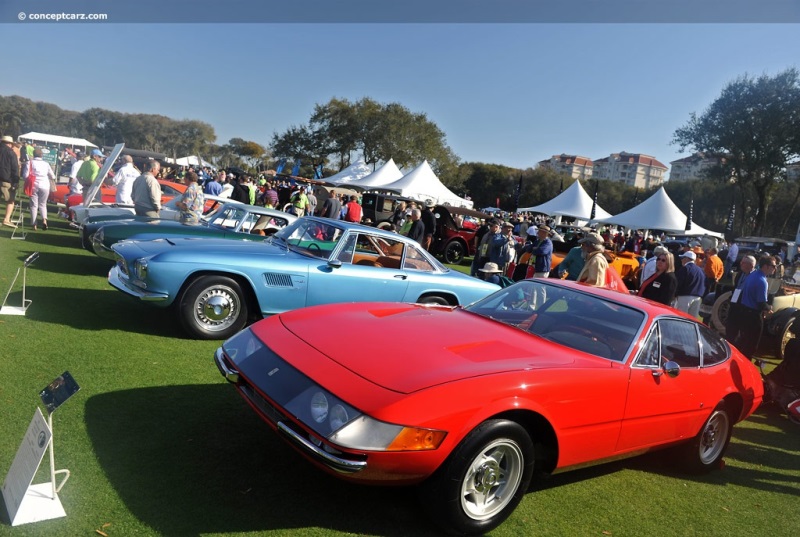
In 1967 Ferrari dominated the Daytona 24 Hours race with a first, second, and third-place finish. At the 1968 Paris Auto Show, the public and press were expecting Ferrari's new Berlinetta to be dubbed 'Daytona'. They were proven wrong when Ferrari dubbed the vehicle the 365 GTB/4, however, the name Daytona is a common reference to the vehicle even to this day. Ferrari had intended on using 'Daytona' but it was revealed prematurely so the traditional Ferrari naming sequence was used.
During its production lifespan lasting from 1968 through 1974, 1383 examples of the Pininfarina designed 365 GTB/4 Daytona vehicles were created.
The famous coachbuilder Pininfarina was tasked with creating many of the designs for the 365 Series. The designs were not new, rather they borrowed many of the styling cues of the prior 330 GTC and 275 GTS models. The headlights were courtesy of the 500 Superfast. The result was a visually stunning automobile with proven Ferrari mechanics and performance.
GT represented Gran Turismo. GTB represented Berlinetta or coupe. GTS stood for open models which were either a Targa roof or a full convertible. '4' represented four-cam engines. 'C' represented 'Competizione' or 'Corsa' meaning 'to race'.
365 California
In 1966 Ferrari introduced the 365 California at the Geneva Auto Show as a replacement for the Ferrari 500 Superfast. The famous coachbuilder, Pininfarina, had been tasked with creating the body for the vehicle. The result was a two-door, two-seat, convertible. The 365 borrowed many of the mechanics of its predecessor including the five-speed manual gearbox, chassis, and suspension. The front of the vehicle was similar in design to the 500 with the remaining portions all new. With a top speed of 240 km/h, it was the fastest convertible in the world at the time. Disc brakes provided excellent stopping power for the 1300 kg vehicle. Production continued for only a year with a total of fourteen examples being created.
365 GT2+2
In 1967 Ferrari introduced the 365 GT2+2, only its second production four-seater vehicle. The vehicle would stay in production until 1971 during which around 800 examples being created.
The rear passengers had limited headroom but there was sufficient legroom for most passengers. The purpose of the vehicle was to provided performance and comfort. As a result, the vehicle was outfitted with electric windows, leather interior, power-assisted brakes, full carpeting, and optional air conditioning.
365 GTC
Near the close of 1968, Ferrari introduced the 365 GTC which stayed in production until 1970. During the production lifespan, 168 examples were produced. The 365 GTC was basically a 330 GTC with a SOHC 4390 cc V-12 engine. Visually, the vehicle was very similar to its predecessor except for the air vents in the front wings had been removed. In their place were black vents placed in the back corners of the hood.
365 GTS
The 365 GTS was a replacement for the 330 GTS. It featured a 4390 cc SOHC engine and had its cooling vents removed in favor of vents in the hood. Only twenty examples were created.
365 GTC/4
In 1971 Ferrari introduced the 365 GTC/4 as a replacement for the 365 GT 2+2. It sat atop a Daytona chassis and given an independent suspension. The same Daytona ventilated disc brakes were used. The gearbox was mounted in the front and the engine was the 4390 cc V12 but with six side draught Weber carburetors and wet-sump lubrication resulting in 340 horsepower.
The design was once again handled by Pininfarina. The two-door, 2+2 coupe had pop-up headlights and five-spoke alloy wheels. During its production lifespan lasting until 1972, around 500 examples were produced. Strict American safety and emission regulations were partly responsible for the demise of the GTC/4.
365 GT4 2+2
The 365 GT4 2+2 was debuted to the public at the 1972 Paris Auto Show as a replacement for the 365 GT 2+2 and the 365 GTC/4. It sat atop an enlarged 365 GTC/4 chassis and given the same mechanics. The larger chassis meant more interior room for the passengers, especially the rear passengers, and their luggage. The styling was once again assigned to Pininfarina. The design was different from the prior 365 models.
During its production lifespan lasting until 1976, 524 examples were created.
365 GT4 BB
The 365 GT4 BB, meaning Berlinetta Boxer, was introduced to the public at the 1971 Turin Auto Show. Its styling was similar to the P6 show car built in 1968. The engine was a flat-12 cylinder power-plant mounted longitudinally. The gearbox was mounted under the engine. This was a great design but ultimately created an unbalanced weight distribution with most of the weight over the rear axle. The weight distribution problem and the fact that the engine was mounted high in the vehicle resulted in a car that had poor handling and never achieved successful racing status.
The 365 GT4 BB was replaced by the 512 BB in 1976. The 512 BB was similar in design but featured a five-liter engine.
By Daniel Vaughan | Dec 2006
Disc brakes were standard on all the vehicles, as was the five-speed manual gearbox. Many of the series received standard options such as power steering and air conditioning, uncommon at the time. When most manufacturers such as Lamborghini and DeTomaso were creating vehicles with mid-engined design, Ferrari continued to use their tried-and-true front-engined, rear-wheel design.
In 1967 Ferrari dominated the Daytona 24 Hours race with a first, second, and third-place finish. At the 1968 Paris Auto Show, the public and press were expecting Ferrari's new Berlinetta to be dubbed 'Daytona'. They were proven wrong when Ferrari dubbed the vehicle the 365 GTB/4, however, the name Daytona is a common reference to the vehicle even to this day. Ferrari had intended on using 'Daytona' but it was revealed prematurely so the traditional Ferrari naming sequence was used.
During its production lifespan lasting from 1968 through 1974, 1383 examples of the Pininfarina designed 365 GTB/4 Daytona vehicles were created.
The famous coachbuilder Pininfarina was tasked with creating many of the designs for the 365 Series. The designs were not new, rather they borrowed many of the styling cues of the prior 330 GTC and 275 GTS models. The headlights were courtesy of the 500 Superfast. The result was a visually stunning automobile with proven Ferrari mechanics and performance.
GT represented Gran Turismo. GTB represented Berlinetta or coupe. GTS stood for open models which were either a Targa roof or a full convertible. '4' represented four-cam engines. 'C' represented 'Competizione' or 'Corsa' meaning 'to race'.
365 California
In 1966 Ferrari introduced the 365 California at the Geneva Auto Show as a replacement for the Ferrari 500 Superfast. The famous coachbuilder, Pininfarina, had been tasked with creating the body for the vehicle. The result was a two-door, two-seat, convertible. The 365 borrowed many of the mechanics of its predecessor including the five-speed manual gearbox, chassis, and suspension. The front of the vehicle was similar in design to the 500 with the remaining portions all new. With a top speed of 240 km/h, it was the fastest convertible in the world at the time. Disc brakes provided excellent stopping power for the 1300 kg vehicle. Production continued for only a year with a total of fourteen examples being created.
365 GT2+2
In 1967 Ferrari introduced the 365 GT2+2, only its second production four-seater vehicle. The vehicle would stay in production until 1971 during which around 800 examples being created.
The rear passengers had limited headroom but there was sufficient legroom for most passengers. The purpose of the vehicle was to provided performance and comfort. As a result, the vehicle was outfitted with electric windows, leather interior, power-assisted brakes, full carpeting, and optional air conditioning.
365 GTC
Near the close of 1968, Ferrari introduced the 365 GTC which stayed in production until 1970. During the production lifespan, 168 examples were produced. The 365 GTC was basically a 330 GTC with a SOHC 4390 cc V-12 engine. Visually, the vehicle was very similar to its predecessor except for the air vents in the front wings had been removed. In their place were black vents placed in the back corners of the hood.
365 GTS
The 365 GTS was a replacement for the 330 GTS. It featured a 4390 cc SOHC engine and had its cooling vents removed in favor of vents in the hood. Only twenty examples were created.
365 GTC/4
In 1971 Ferrari introduced the 365 GTC/4 as a replacement for the 365 GT 2+2. It sat atop a Daytona chassis and given an independent suspension. The same Daytona ventilated disc brakes were used. The gearbox was mounted in the front and the engine was the 4390 cc V12 but with six side draught Weber carburetors and wet-sump lubrication resulting in 340 horsepower.
The design was once again handled by Pininfarina. The two-door, 2+2 coupe had pop-up headlights and five-spoke alloy wheels. During its production lifespan lasting until 1972, around 500 examples were produced. Strict American safety and emission regulations were partly responsible for the demise of the GTC/4.
365 GT4 2+2
The 365 GT4 2+2 was debuted to the public at the 1972 Paris Auto Show as a replacement for the 365 GT 2+2 and the 365 GTC/4. It sat atop an enlarged 365 GTC/4 chassis and given the same mechanics. The larger chassis meant more interior room for the passengers, especially the rear passengers, and their luggage. The styling was once again assigned to Pininfarina. The design was different from the prior 365 models.
During its production lifespan lasting until 1976, 524 examples were created.
365 GT4 BB
The 365 GT4 BB, meaning Berlinetta Boxer, was introduced to the public at the 1971 Turin Auto Show. Its styling was similar to the P6 show car built in 1968. The engine was a flat-12 cylinder power-plant mounted longitudinally. The gearbox was mounted under the engine. This was a great design but ultimately created an unbalanced weight distribution with most of the weight over the rear axle. The weight distribution problem and the fact that the engine was mounted high in the vehicle resulted in a car that had poor handling and never achieved successful racing status.
The 365 GT4 BB was replaced by the 512 BB in 1976. The 512 BB was similar in design but featured a five-liter engine.
By Daniel Vaughan | Dec 2006
Similar Automakers


1970 Ferrari 365 GTB/4 Vehicle Profiles


Recent Vehicle Additions


Performance and Specification Comparison
Price Comparison
$18,895
365 GTB/4 Daytona Specification Comparison by Year
Year
Production
Wheelbase
Engine
Prices
Related Automotive News

Platinum Award-Winning Ferrari 275 GTB and Aston Martin DB5 Convertible Lead Gooding & Company's Blue-Chip Icons for Upcoming Pebble Beach Auctions
The official auction house of the Pebble Beach Concours dElegance® will present a 1966 Ferrari 275 GTB, a 1965 Aston Martin DB5 Convertible, and a 1968 Lamborghini Miura P400 among other ultra-collectible 1960s sports cars.
Gooding...

A fabulous display of Ferraris joins Concours of Elegance
Some of the worlds finest Ferraris are coming to the Concours of Elegance from 3-5 September – cars on display range from 1950 to 1991
From a one-of-one RHD Ferrari 250 GT Europa to a Ferrari F40 first owned by Sir Stirling Moss
In total, nearly...

Four Pininfarina Masterpieces Offered at Gooding & Company's 2019 Pebble Beach Auctions
Highlights include the Italian Prince Ruspolis spectacular Ferrari 250 GT Series I Cabriolet, the one-of-a-kind Alfa Romeo 6C 3000 CM Superflow show car, a wonderfully original Ferrari 400 Superamerica Series I Coupe Aerodinamico, and an ultra-rare...

Blue-Chip Collector Cars Revealed for Gooding & Company's Scottsdale Auctions
The first Bugatti Type 55 Roadster ever built will be presented at Gooding %26 Companys marquee this January
SANTA MONICA, Calif. (December 8, 2017) – Gooding %26 Company, the auction house acclaimed for selling some of the worlds most significant...

REVERED FERRARI 250 LM LEADS SUPERLATIVE ROSTER OF ITALIAN SPORTS CARS AT RM'S FLAGSHIP MONTEREY SALE
· RM Auctions announces a legendary 1964 Ferrari 250 LM by Scaglietti as the latest multi-million-dollar highlight for its flagship Monterey sale, August 15–16 in California
· 250 LM leads a superb roster of no less than 26 Ferraris at...