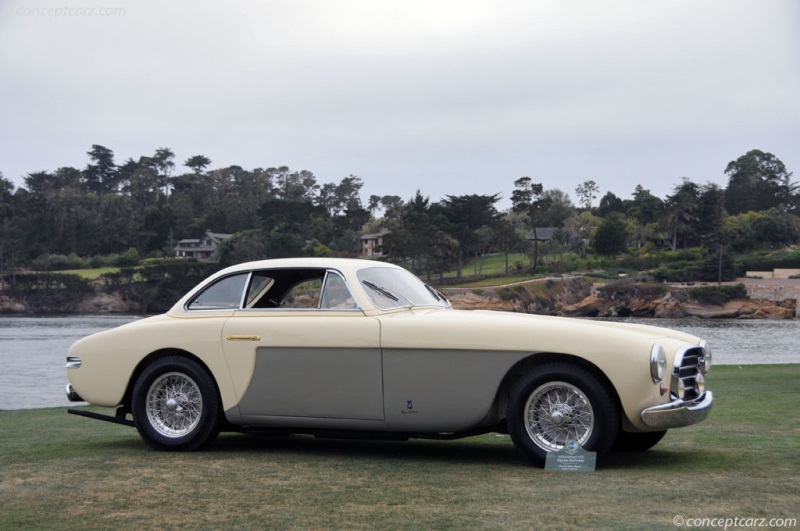
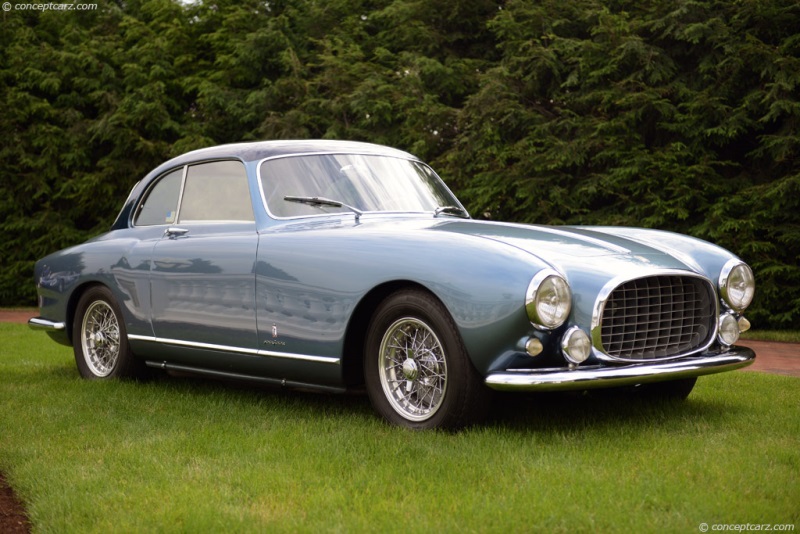
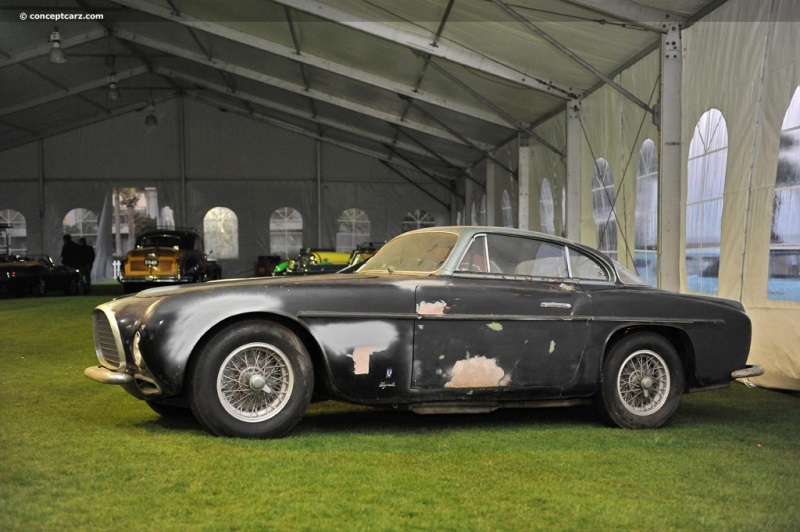
During the formative years of the marque, Enzo Ferrari reluctantly sold road-going vehicles to support his passion for racing. In November of 1948, at the Turin Show, Ferrari unveiled the 166MM and 166 Inter; a pair of racing and road variations, respectively. Production was low, with just 38 examples of the 38 Inter and approximately 46 of the 166MM, but they demonstrated the company's abilities to sell cars to clients, and compete at the highest levels of motorsport competition. The success of the sports racing cars gave Enzo Ferrari his reputation, while his road-going cars gave him the financial footing to continue his racing endeavors. 
Coupe
Chassis #: 0267 EU
View info and history
Auction entries : 1In single-carbureted form, the all-aluminum single overhead camshaft engine offered around 115 horsepower. With triple carburetors, output rose to around 140 bhp. During 1950, Ferrari enlarged the original Colombo V-12 engine twice; the bore increased from 60 to 65mm for a total capacity of 2,341cc and to 68mm for 2,562cc, while the stroke remained at 58.8mm. In Ferrari's nomenclature, these increases brought about the designations Tipo 195 and 212, respectively. (The names reflected the unitary displacement of the engine in 'cc.') The Ferrari 212 succeeded the 166 in late 1950 and was produced through 1953. The chassis was largely based on that of the earlier 166 MM, but reinforced to cope with the higher horsepower output of the modified Colombo V-12 engine. The frame was constructed from elliptical steel side-members, with added cross-members for strength and support. The front wheels were suspended by double wishbones, hydraulic shock absorbers and transverse leaf springs, while the rear used longitudinal semi-elliptic leaf springs for its live-axle. Hydraulic drum brakes provided the stopping power.
Coupe
Chassis #: 0267 EU
View info and history
Auction entries : 1The 212 Export rested on an 88.6-inch wheelbase - the same as the 195 S - while the 212 Inter (Europa) was 4 inches longer, at 102.4 inches.The 212 Inter used a single Weber 36DCF carburetor and its SOHC, 2-vlve per cylinder engine offered approximately 148 horsepower. The Export produced around 163 horsepower with the help from a trio of Weber carburetors. In 1952, following the addition of improved cylinder heads, output rose by approximately five horsepower. The 212 MM had tripe quad-barret Weber carburetors, and a few early examples used only a single carburetor. Engine lubrication was via a wet sump setup, and the ignition system was made of a single spark plug per cylinder served by two coils. Power was sent to the rear wheels via a five-speed, non-synchronized transmission. The competition-ready Ferrari 212 Export models had even-numbered chassis, while the road-going 212 Inter models had odd numbers. Coachwork was supplied by independent coachbuilders. Ferrari provided the chassis and drivetrain, and customers were able to select the body styles, fit, and finish. Several coachbuilders created bodies for the Ferrari 212, including Ghia, Pinin Farina, Touring, and Vignale. Chassis number 0177E was a 212 Inter Cabriolet that was the first Ferrari to receive coachwork by Pinin Farina. Production
Ferrari produced approximately 27 examples of the 212 Export between 1951 and 1952, and 82 of the 212 Europa (Inter). Competition
The Ferrari 212 was immediately successful in competition, winning both the Tour of Sicily and the Coppa Inter Europa. Gianni Marzotto won the Coppa Toscana, and Luigi Chinetti and Piero Taruffi won the 1951 Carrera Panamericana, followed by Alberto Ascari and Luigi Villoresi in second place. The 212 Export would earn numerous class and overall victories during the 1950s, even after the company had introduced more formidable weapons.
Coupe
Chassis #: 0285 EU
Engine #: 0285 EU
View info and history
Auction entries : 2Along with its racing accomplishments, the 212 helped establish Ferrari as a road car manufacturer. Its successor, the 250 Series, would continue to use a development of the Colombo 'short block' engine and chassis employed by early Ferrari models.
by Daniel Vaughan | Sep 2023

Coupe
Chassis #: 0267 EU
View info and history
Auction entries : 1
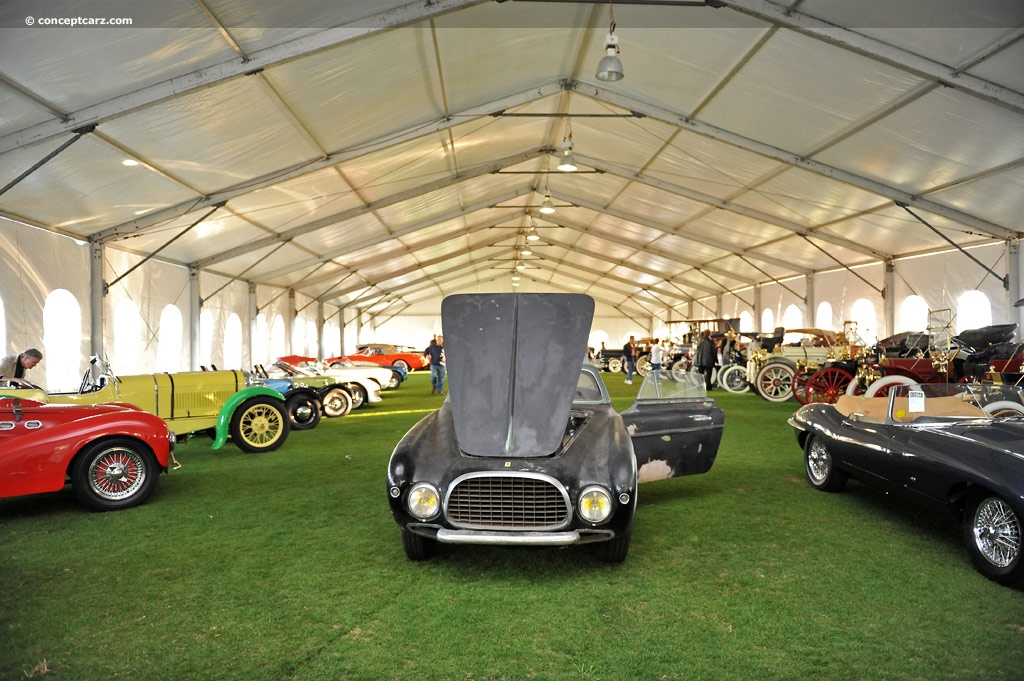
Coupe
Chassis #: 0267 EU
View info and history
Auction entries : 1
Ferrari produced approximately 27 examples of the 212 Export between 1951 and 1952, and 82 of the 212 Europa (Inter). Competition
The Ferrari 212 was immediately successful in competition, winning both the Tour of Sicily and the Coppa Inter Europa. Gianni Marzotto won the Coppa Toscana, and Luigi Chinetti and Piero Taruffi won the 1951 Carrera Panamericana, followed by Alberto Ascari and Luigi Villoresi in second place. The 212 Export would earn numerous class and overall victories during the 1950s, even after the company had introduced more formidable weapons.
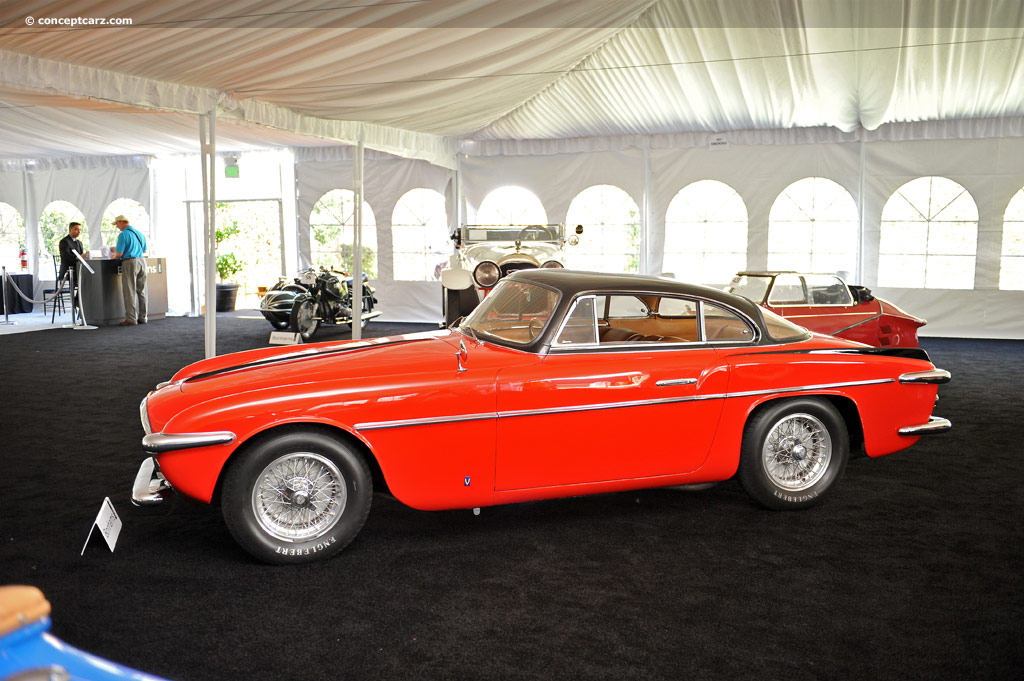
Coupe
Chassis #: 0285 EU
Engine #: 0285 EU
View info and history
Auction entries : 2
by Daniel Vaughan | Sep 2023
Related Reading : Ferrari 212 Inter History
The 212 Inter descended directly from the first Ferrari of just four years previous. Introduced in 1951, the 212 was the replacement for Ferraris very successful 166 and 195 Inter GT vehicles. This was the eventual evolution of the 166, a sports car that would win international races, as well as being a road-worthy warrior. Sharing a similar chassis to the 125, the 212 had double wishbones in front....
Continue Reading >>
Continue Reading >>
166, 195, and 212
The 166 Inter was powered by a 2-liter V12 engine and produced 115 horsepower. These were road cars and were given odd chassis numbers. The even chassis numbers were reserved for the vehicles that were intended for racing. The bodies of the Inter vehicles were mostly Berlinetta and Coupes. At first, Touring handled most of the road going body construction but it was not long before Vignale, Ghia,....
Continue Reading >>
Continue Reading >>
Similar Automakers
Similarly Sized Vehicles
from 1953


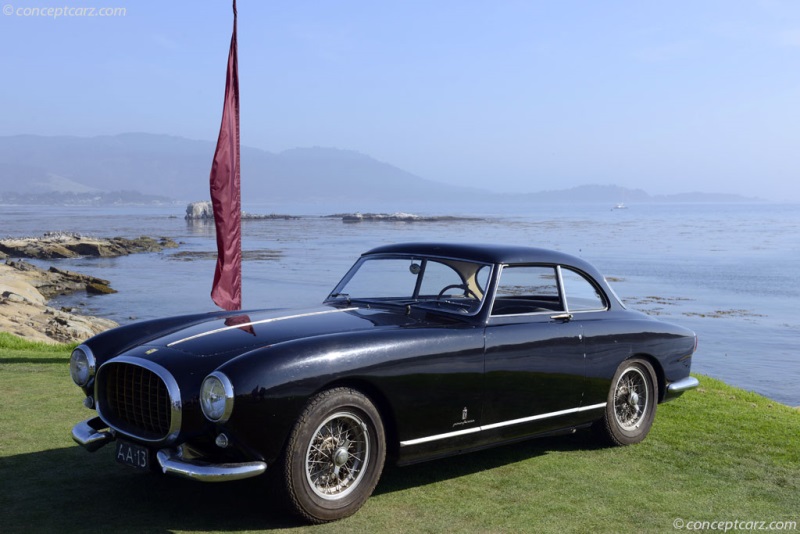
1953 Ferrari 212 Inter Vehicle Profiles
Recent Vehicle Additions


Performance and Specification Comparison
Price Comparison
212 Inter Specification Comparison by Year
Year
Production
Wheelbase
Engine
Prices
98.50 in., 102.36 in., 102.40 in.
12 cyl., 156.00 CID., 130.00hp
12 cyl., 156.00 CID., 150.00hp
12 cyl., 156.00 CID., 150.00hp
$11,000 - $11,000
102.40 in.
12 cyl., 156.00 CID., 130.00hp
12 cyl., 156.00 CID., 150.00hp
12 cyl., 156.00 CID., 150.00hp
$11,000 - $11,000
Related Automotive News
Pedigreed 500 Mondial Series I Spider, ex-Jo Siffert, Unrestored 275 GTB/4, and Dark Green 365 GTB/4 Daytona Spider Lead Ferrari Offerings at the Amelia Island Auction
Star Ferraris at Gooding %26 Companys Amelia Island Auctions include a 1954 Ferrari 500 Mondial Series I Spider, a garage-find 1967 Ferrari 275 GTB4, and a low-mileage 1972 Ferrari 365 GTB4 Daytona Spider
Gooding %26 Company has announced an...

1962 Ferrari 250 GT SWB California Spider to Lead Gooding & Company's Amelia Island Auctions Alongside Stable of the Finest Ferraris
The star car of the auctions will be a one-off 1962 Ferrari 250 GT SWB California Spider, joined by a 250 GT Tour de France Berlinetta, a 250 MM Vignale Spider, and other examples of Maranellos finest models.
Leading international auction...

Phenomenal Ferraris and Italian Thoroughbreds Offered at Gooding & Company's Pebble Beach Auctions
The auction house announced a stable of Italian star cars, including a 1950 Ferrari 166 MM Berlinetta Le Mans, a 1961 Ferrari 400 Superamerica Series I Coupe Aerodinamico, and a 1954 Ferrari 500 Mondial Series I Spider.
A stunning group of star...

Past Best of Show Winners at The Pebble Beach Concours d'Elegance
overview1
The 70th anniversary of the Pebble Beach Concours dElegance was celebrated with a spectacular display of previous Best of Show winners. Thirty-seven examples graced the showfield and many were still with the same owners who raised the trophy...

2015 Pebble Beach Concours d'Elegance Best of Show
PEBBLE BEACH, Calif. (August 17, 2015) -- An Italian Isotta Fraschini Tipo 8A Cabriolet that once turned heads and garnered top prizes in the classic era glided to victory at the 65th Pebble Beach Concours dElegance on Sunday.
The competition...