Concept Cars Home
Image Left 1924 H6B1926 H6B Image Right
 

1925 Hispano Suiza H6B news, pictures, and information

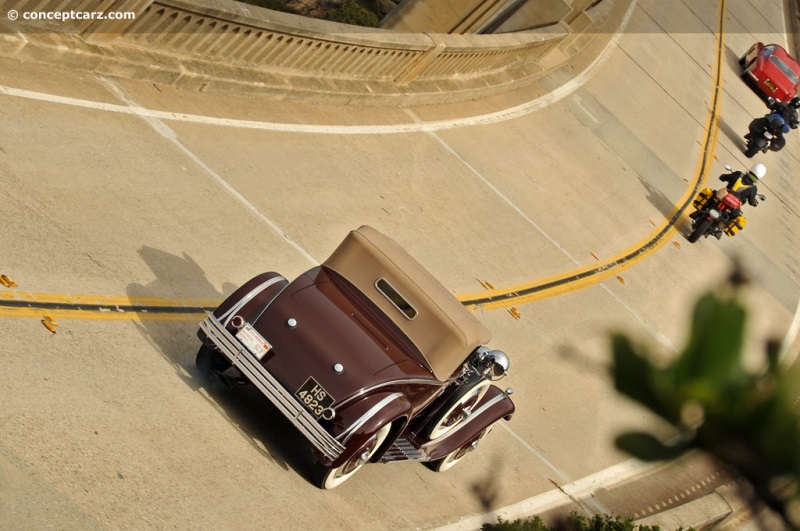
Landaulet
Coachwork: Kellner
 
The Spanish (and later French) Hispano-Suiza was produced from 1904-1938. The H6 series was introduced at the 1919 Paris Automobile Salon. The chassis was complemented by servo-assisted brakes, which Henry Royce found so admirable that he acquired a license for the system for Rolls-Royce in 1925. The year previous, legendary driver Woolf Barnato drove his Hispano-Suiza around the Brooklands circuit breaking eight international records while averaging 92 mph for 300 miles. In the early 1920s, it was rare for a car to reach 100 mph - the Hispano-Suiza did it easily, and with style. As one of the world's most expensive cars, the H6 clientele was decidedly limited. Its influence was much greater as GM's Harley Earl admitted to modeling the 1927 LaSalle after the Hispano-Suiza.

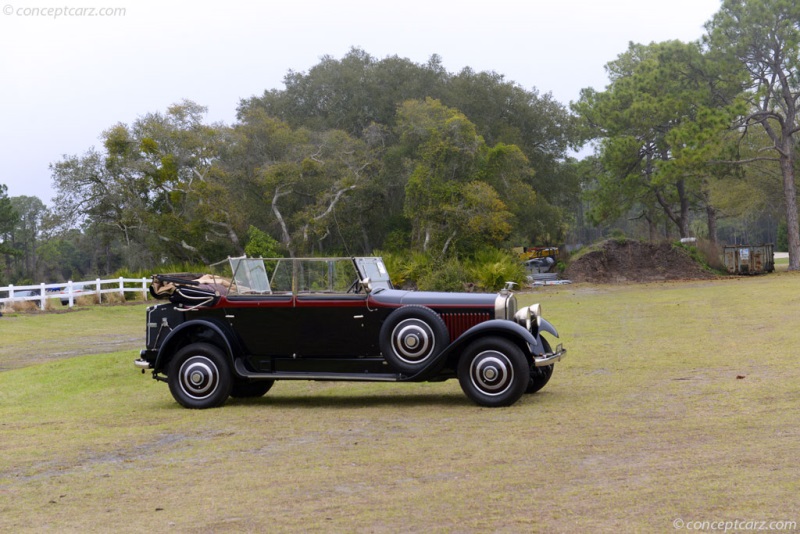
This H6B was built to order for American industrialist Andrew Mellon as a gift to his daughter Ailsa, who had written to him, saying she 'hated taxis.' The landaulet coachwork, built by Kellner to Mellon's requirements, harbors an inline 6-cylinder with overhead cam displacing of 6.6 liters. The block and head were cast in an aluminum unit with steel sleeves, the electrical system has dual ignition and dual batteries, and the brakes have servo assist.

Mellon was at that time, one of the wealthiest men in America. The car was used at the family estates in Pittsburgh, PA and Long Island, NY. Ailsa was Mr. Mellon's Social Secretary while he was Secretary of the U.S. Treasury.

The current owner has a photograph of the car while it was in use in Washington, DC.

The Mellon's gave the Hispano to the family chauffeur. Upon his retirement, the current owner purchased it in very derelict condition in 1970. An exhaustive restoration began in 2003 and was completed in 2010.
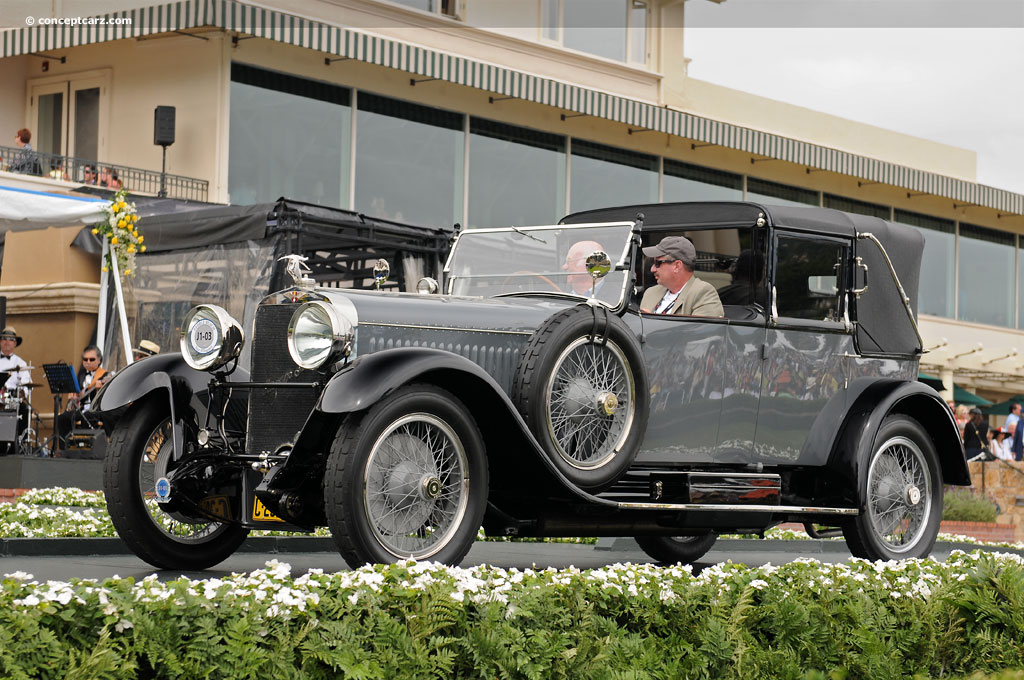
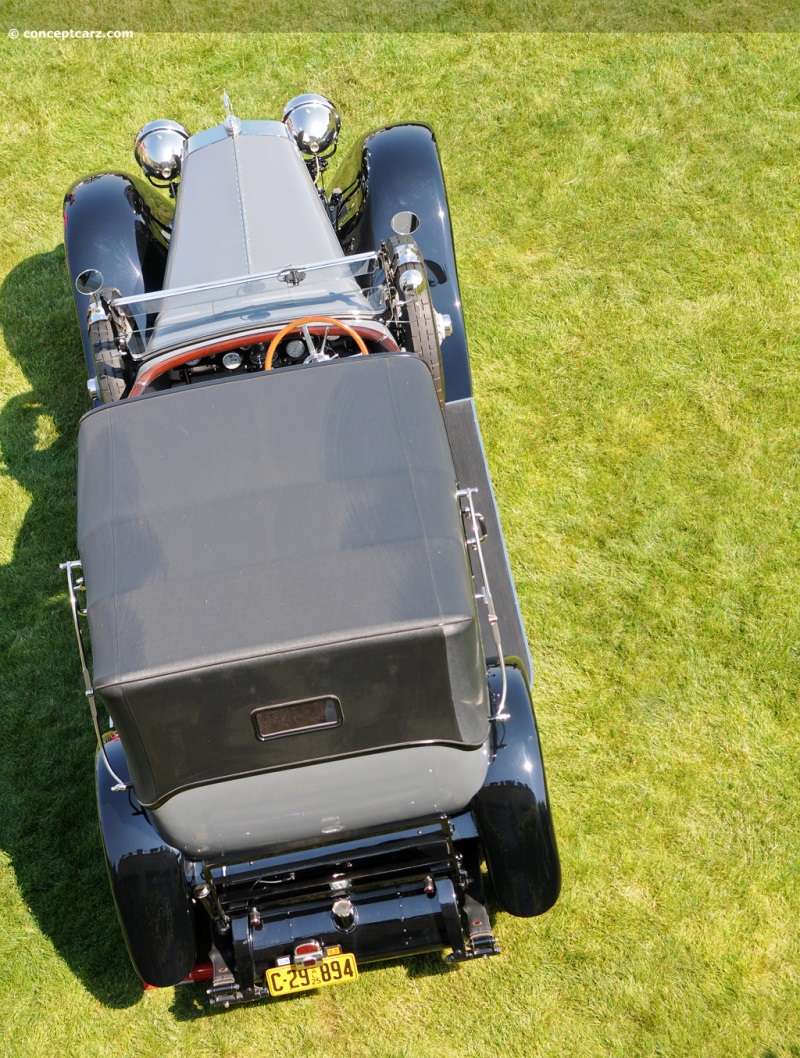
Cabriolet
Coachwork: Kellner
 
Hispano-Suiza delivered the H6B only as a rolling chassis. To match its remarkable engineering, only the finest coachbuilders were commissioned to design and fit the bodies.

This unusual cabriolet, built by Kellner in Paris, was ordered by the Maharaja of Alwar specifically for his tiger-hunting safaris. During the Great War, Hispano-Suiza had built nearly 50,000 V12 fighter plane engines, powering over half the aircraft, and Hispano owner Marc Birkigt first intended to use the V12 engine for his luxury automobiles. After some tests, though, he concluded that only one bank of the V12 would be sufficient to propel the new Hispano-Suiza car, so he built the H6B with a straight six-cylinder 6.5-liter single-overhead camshaft engine.
The Hispano-Suiza Company has created some of most elegant, respected, and exquisite automobiles of all time. The designs and custom-built bodies were owned by the most elite and exclusive clientele. Among their most memorable creations were the H6 Series and the J-12. Among their accomplishments was the production of aircraft engines. During the First World War they produced over 50,000 V-12 engines for aircraft. From 1919 through 1923 Hispano-Suiza produced an eight-cylinder aircraft engine.

The beginning of the company Fabrica La Hispano Suiza de Automovils began in 1904 but their existence and experience in the automotive community began six years prior. Emilio de la Cuadra created the La Cuadra Company in 1898 focusing on production of the electric automobile. Marc Birkigt, a French engineer, joined the Barcelona, Spain based company shortly after its inception. In the very early 1900's, the La Cuadra Company began production of a gasoline-powered engine that featured a shaft drive instead of a chain, a revolutionary design at the time. Their fortune shortly changed and the company was forced to close. The Fabrica La Hispano-Suiza de Automovils succeeded the Castro Company continuing production in Spain and employing the ingenious designer, Birkigt. The name was later changed to Fabrica La Hispano Suiza de Automovils. The very early engines were four-cylinders comprised of a 3.8 and a 7.4 liter capacity. Two six cylinder engines were introduced shortly after the fours.

In 1911 a factory in Paris was opened to satisfy the demands from their French clientele. A larger factory was built three years later in Bois-Colombes. The production of these facilities focused primarily on the H6B, a large, luxurious, and desirable automobile.

The H6 was revolutionary, offering speed, luxury, quality and an unequalled level of craftsmanship. Rolls Royce, Isotta, and Bentley did not offer all of these qualities in their automobiles until the 1920's. The H6 models were expensive, often the most expensive vehicle in all of Europe. The production of the H6 began at the close of the 1920's and were powered by a six-cylinder, 6.5 liter overhead-camshaft engine capable of producing 135 horsepower. The camshaft was shaft-driven and operated the valves, a configuration that was uncommon at the time. The engine was placed in the front and powered the rear wheels. Top speed was achieved at around 85 miles per hour. Even though a V-12 cylinder was available, Birkigt felt that a single bank of the 12-cylinder engine was appropriate to power their vehicles. The suspension was comprised of a semi-elliptic leaf springs and a live axle. Drum brakes with a power-assisted servo-brake system provided ample stopping power. The H6 Series were built in Paris and later in the Czech Republic.

As was customary at the time, Hispano Suiza delivered the rolling-chassis H6 to custom coach builder for assembly. This resulted in unique and custom bodies that complimented the power, ingenuity and performance of the components of the chassis. Only the finest coach builders were commissioned to build the bodies.

In 1932 production of the H6B ended and in 1933, the production of the H6C began. The H6C was powered by a 7983 cc engine, the result of modifying the cylinder size of the of the straight-six cylinder power-plant. The need to increase the horsepower of the cars were two-fold, the first being the need to stay competitive when compared with its competition, the second being the fact that the custom-built bodies had become heavier to keep pace with luxury. The need to offer an even larger engine became apparent. There was little room left in modification of the six-cylinder power-plant, so Birkigt decided that a V-12 would be more appropriate and allow the ability for future modifications. The result was the T68, also known as the J-12.

In 1924 Hispano-Suiza produced the Type 12Jb V-12 aircraft engine produced 400 horsepower. In 1926 the engine was enlarged, dubbed the 12Hb, and produced over 500 horsepower. In 1928 the 12Nb version was introduced, a result of enlarging the engine further, resulting in 720 horsepower.

Hispano took over Ballot in 1930, the producers of a 4580cc Junior six-cylinder engine. In 1934, the Junior was replaced with the K6 model.

The 1930's brought The Great Depression. The automobile manufacturers most affected were the luxury automobile makers. Their short-list of clientele became even shorter which meant competition was fierce and change was necessary. Many luxury manufacturers began producing small, less expensive automobiles that could continue to be sold and still generate income. Hispano Suiza, however, did not change and continued to produce their large, powerful, and luxurious automobiles. The Type 68 was introduced featuring a 9.5 liter V-12 engine. As the years progressed, so did the engine capacity which was further enlarged to 11.3 liters. The company had stayed in business for most of the Depression but was forced to close its doors in 1938.

The automobiles produced by Hispano Suiza were unmatched. No expenses were spared on their creation resulting in some of the greatest automobile creations of all time.

By Daniel Vaughan | Oct 2008
For more information and related vehicles, click here

Legendary Bentley Sets £4.5 Million Auction Record
•Tim Birkin's 4 ½ Litre Supercharged 'Blower' Bentley single seater sets new world best for a Bentley at Bonhams Goodwood auction •Beautiful Brooklands racing machine underlines enduring appeal of the 'Bentley Boy' racing spirit (Crewe and Goodwood, 29 June 2012) Just 35 miles away from the fabled Brooklands race circuit where it astonished thousands of spectators eight decades ago by sprinting its way into the record books, Sir Henry 'Tim' Birkin's dramatic 4 ½ Litre Supercharged...[Read more...]
Joe Bortz to Host Historic Dream Car Discussion Panel
Dream car collector and historian Joe Bortz has prepared a special treat for participants at the 40th Annual Pontiac-Oakland Club International Convention in St. Charles Illinois, this coming July 17-21. In addition to bringing his four historic Pontiac Dream Cars, he has also assembled a panel, conisisting of two noted designers, a retired engineer and two veteran authors to examine the topic of Pontiac's early concept vehicles. The panel discussion will be held on Friday, July 20th at 1...[Read more...]
GM Design: 85 Years of Making Art That Moves You
As GM Design celebrates its 85th birthday this month, the 1,900 men and women in GM's 10 global design centers are focused on the future, united in their vision to entice consumers to fall in love and see vehicles as they do: art that moves you. 'Our global team is united around its passion for designing vehicles that make an emotional connection with customers,' said Ed Welburn, GM vice president, Global Design. 'What was true 85 years ago is still true today: A designer's role is to create...[Read more...]
Automotive Hall of Fame Inductees Named
Awards to be Presented in Conjunction with the Concours d'Elegance of America The Automotive Hall of Fame will present its annual induction and awards ceremony on Thursday, July 26, 2012 as one of the week-long Concours d'Elegance of America events. It will be held at The Inn at St. John's in Plymouth, Michigan. Both the Concours d'Elegance of America and the Automotive Hall of Fame celebrate the heritage and history of Detroit. The show highlights the evolution of the automobile's...[Read more...]
Buyers in abundance for another strong sale at Brooklands
Amidst some speculative recent market results, the heat was on Historics, but with Brooklands bathed in sunshine, the classic and sports car auctioneer again delivered another strong sale. In total 60 of 103 vehicles were seen away for a sale ratio of 58% and a final sale figure of £1,159,070. As pre-sale publicity predicted, Bentley's blazed a trail, with the star of the show an R-Type Coupé by Abbott of Farnham, which sold for £100,000. A 1937 4¼ litre Sports Special sold for £47,500, wh...[Read more...]
H6
J12
K6

Image Left 1924 H6B1926 H6B Image Right
© 1998-2012. All rights reserved. The material may not be published, broadcast, rewritten, or redistributed.