1969 Mercury Cyclone
1969 Mercury Cyclone Navigation
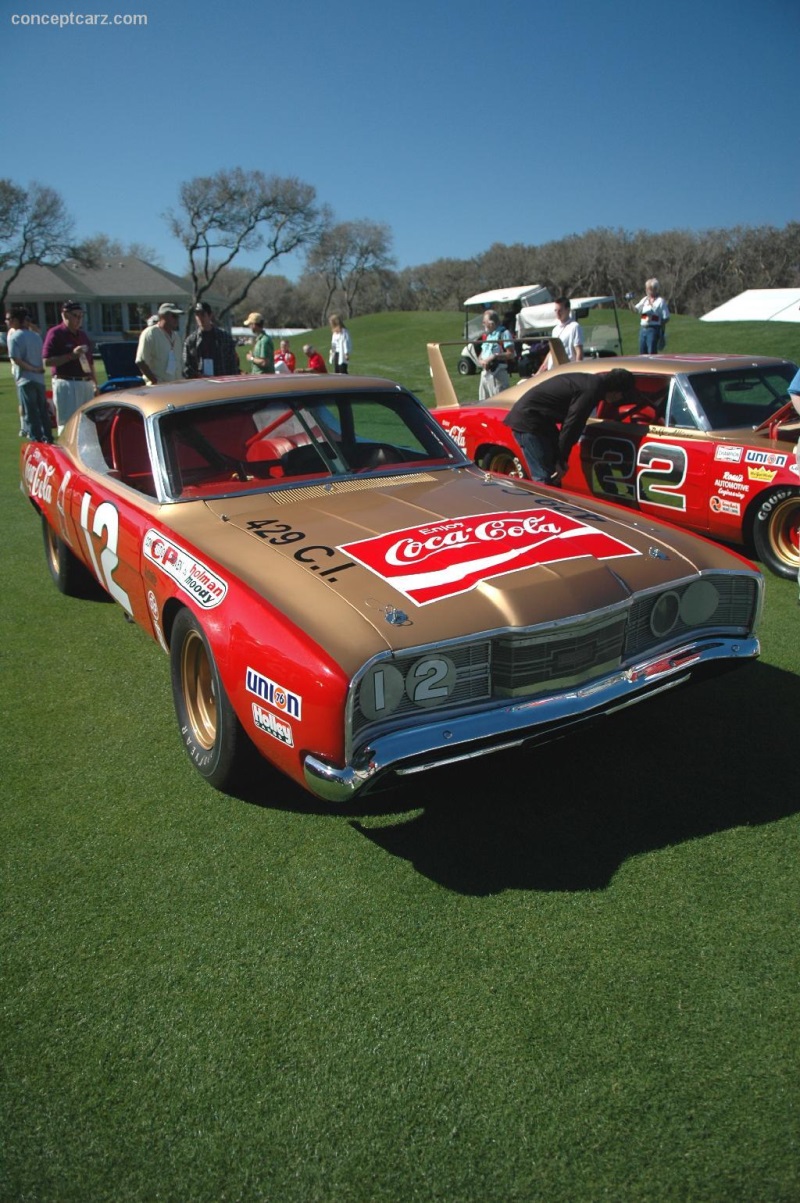
Although Mercury was considered more of a luxury brand than its Ford corporate cousin, it often catered to the high-performance market segment and participated in racing activities during the late 1960s. The Cyclone burst onto the scene in 1964 with advertisements that stated 'under the hood, a whiplash of surging power' and the 'masculine feel of black vinyl in the instrument panel.' Originally an option on the 1964 Mercury Comet, it came equipped with a 289 CID V8 rated at 210 horsepower. The following year it gained a four-barrel carbureted version of the 289 CID, although it was rated at 200 horsepower. Additional performance options were available including a handling package, and a 'power transfer' rear axle. 
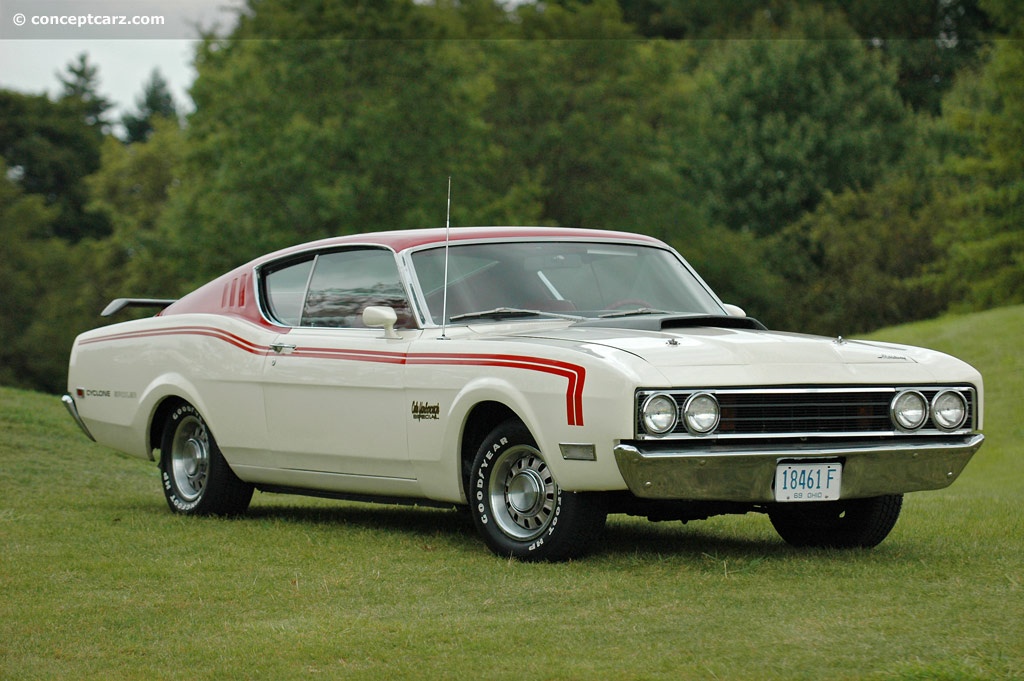
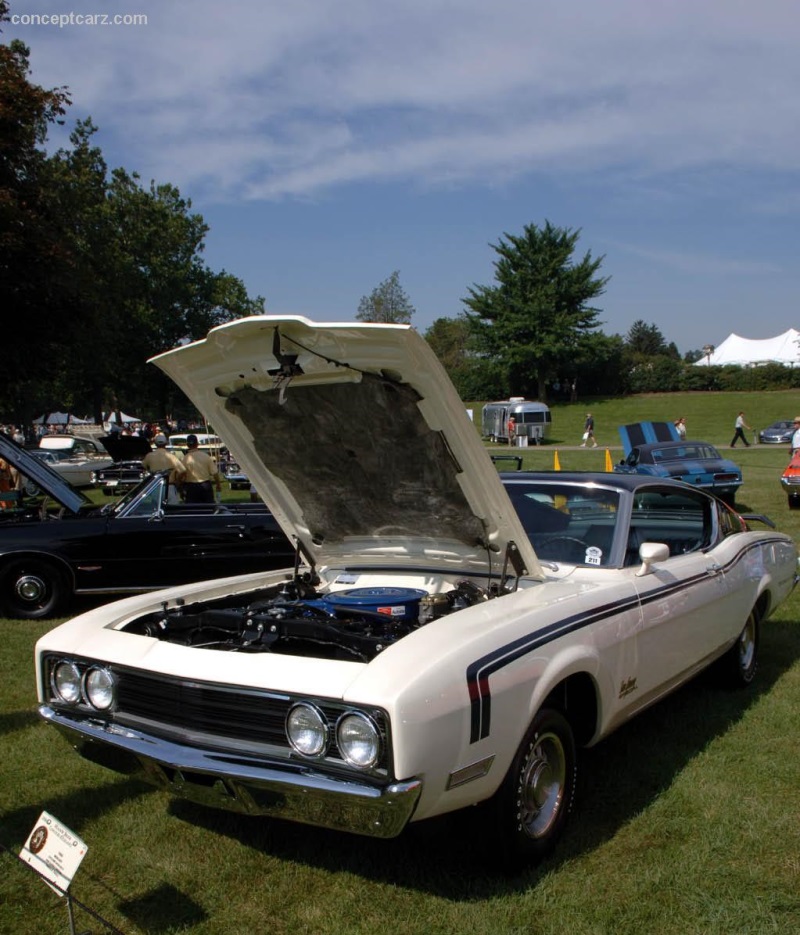
CJ Fastback Coupe
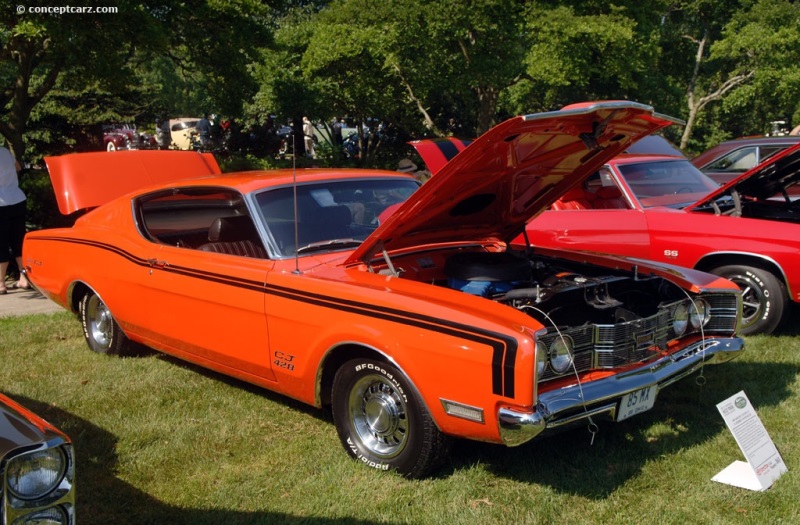
View info and historyA major styling change occurred in 1966 and its body was now based on the Ford Fairlane. New engines became available including the 390 Y code with two-barrel carburetion and 265 horsepower. The 390 H code had a four-barrel carburetor and 10 additional horsepower. When the GT option was selected, it added a 390 S code engine with 335 hp, stripes, a fiberglass hood with two air scoops, and other performance features designed to cope with the increase in power.The third generation of the Cyclone was built in 1968 and 1969, no longer having 'Comet' in its name. The 1968 Cyclone was available as a fastback Coupe or Hardtop Coupe, but for the following year, only the fastback body style remained. Priced at $2,750 a total of 5,882 examples were sold plus 3,261 of the Cyclone CJ.Powering the 1969 Cyclone was a 302 cubic-inch, overhead-valve V8 with 9.5:1 compression and 220 horsepower at 4,400 RPM. The Cyclone CJ came with a 428 CID V8 offering 335 horsepower. The Cyclone Spoiler had a 351 CID and 320 horsepower.
CJ Fastback Coupe
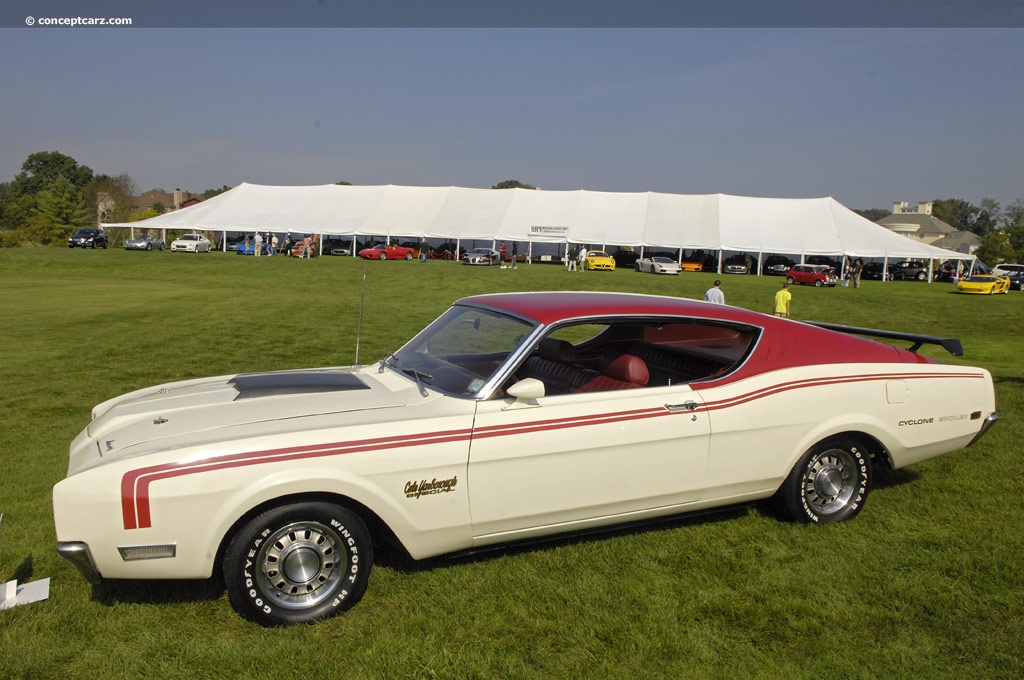
View info and historyStandard features in the Cyclone included ventless windows, tinted rear window, wood-tone appliques on the instrument cluster and lower dash, all-vinyl upholstery, and carpeting. The CJ Series added a blacked-out grille framed in chrome, dual exhaust, a 3.50:1 rear axle, hood tape stripe, and engine dress-up kit. They also were fitted with the competition handling package.To homologate cars for NASCAR, rules stated that 500 street versions were required to be built. The Mercury Cyclone and Ford Torino fastback bodies had proven very effective on shorter tracks, however, the large, squared-off frontal areas and recessed grille provided major drag that prevented them from reaching their full potential on longer speedways. To resolve this issue, the Torino Talladega and the Cyclone Spoiler were developed, with two Cyclone variants available: the Spoiler, with a standard nose, and the radical Spoiler II, with an elongated nose similar to that of the Talladega.Mercury brought racing and street performance together with the Cyclone Spoiler that was named for two of its NASCAR drivers, Cale Yarborough and Dan Gurney. A two-tone Spoiler package was added to the Cyclone and offered either as a Cale Yarborough Special in the Wood Brothers colors of white and red, or a Dan Gurney Special with Gurney's Presidential Blue on white. The base package included the 290 HP 351, FMX automatic transmission, a blacked-out grille, a two-tone roof and rear deck with matching hockey-stick side stripes, a hood scoop and lock pins, argent-styled steel wheels with F70x14 raised-white-letter Goodyear tires and a rear deck spoiler. Options for the spoiler model included everything available for the standard Cyclone, including bucket seats, air conditioning, and optional big-block engines.
Spoiler II Dan Gurney Special Coupe
View info and historyIt is estimated that 503 examples of the Spoiler were produced, with as many as 519. Of those, about 40 percent were the Dan Gurney-edition cars.
by Daniel Vaughan | Aug 2020
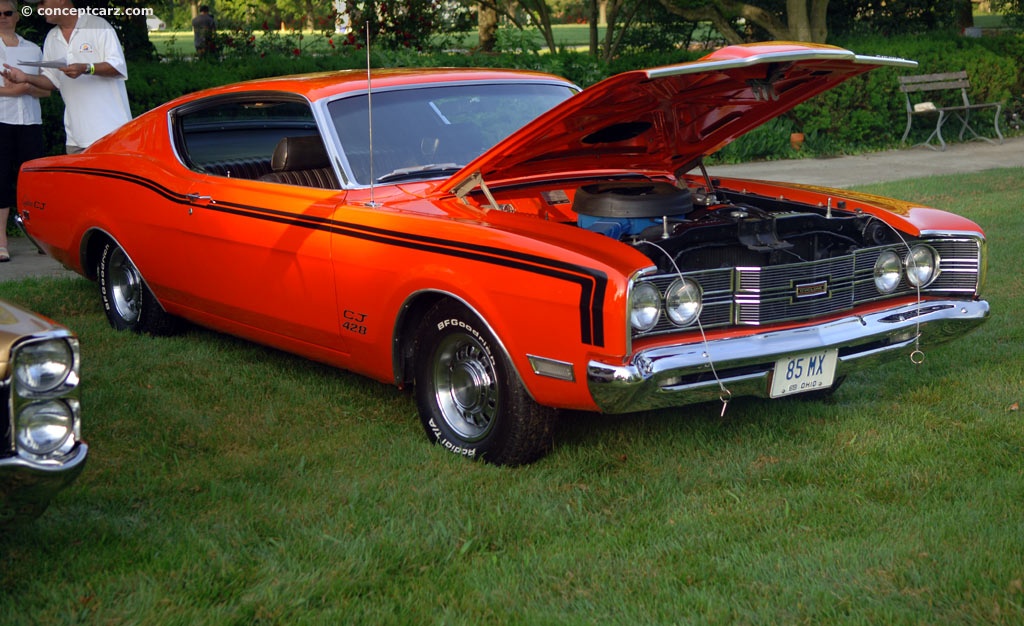
CJ Fastback Coupe
View info and history
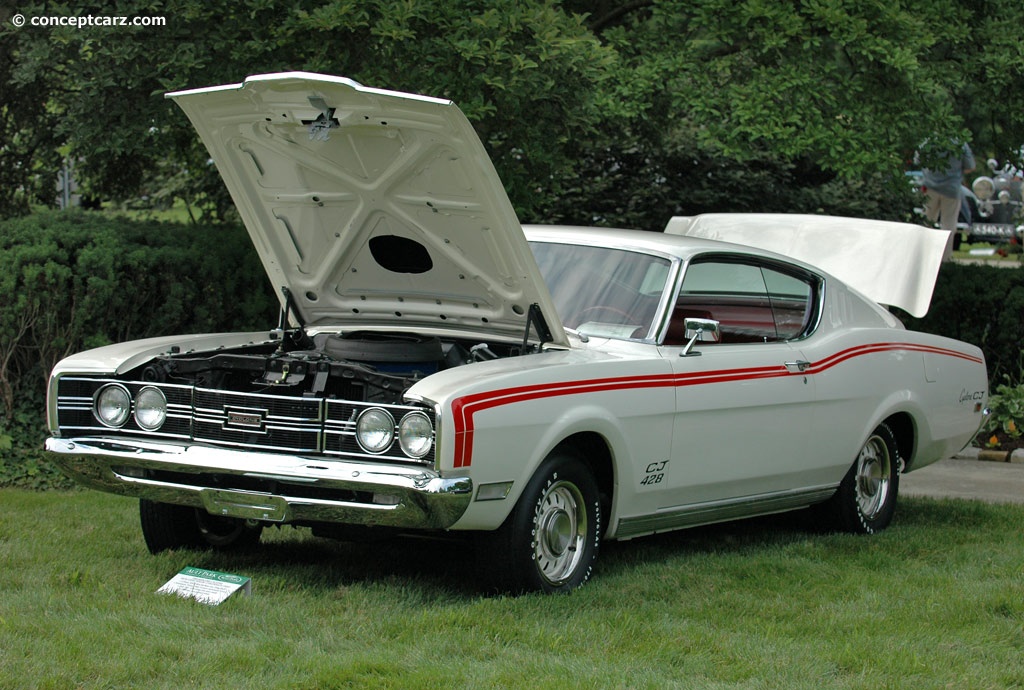
CJ Fastback Coupe
View info and history
Spoiler II Dan Gurney Special Coupe
View info and history
by Daniel Vaughan | Aug 2020
Related Reading : Mercury Cyclone History
Advertised as the vehicle that was Born for Action - Racy the 1965 Comet Cyclone hit the market with a bang. Help stamp out dull driving was the catchphrase used to promote this new model. Beginning as an option for the 64 Comet, the Mercury Cyclone was originally introduced to the automobile market in 1964. For the next three years, it continued as a Mercury Comet Cyclone. Remaining in production....
Continue Reading >>
Continue Reading >>
- 1969 Mercury Cyclone Menu
- Article
- Image gallery
- Valuation
- Specifications
- Profiles
- Production figures
- Accessories
Mercury
Similar Vehicles

Similar Automakers
Similarly Sized Vehicles
from 1969
- Ford Fairlane
Ford Fairlane Torino
Oldsmobile Cutlass
Plymouth Belvedere
Plymouth GTX
Plymouth Road Runner
Plymouth Satellite
Rolls-Royce Silver Shadow
Rolls-Royce Silver Shadow Estate Wagon
Similarly Priced Vehicles


1969 Mercury Cyclone Vehicle Profiles





Recent Vehicle Additions


Related Automotive News

Ray Evernham's Race Cars and More Head to Mecum's Indy Spring Classic
Estimated 3,000 Collector Vehicles Expected to Cross the Auction Block May 13-21
Following Mecum Auctions record-setting sales totaling nearly %24300 million from the companys first three auctions of 2022, the auction house is now prepping for...

Competition at the Amelia Island Concours
Competition has always been a part of the Amelia Island Concours dElegance. The core group of classes includes four Race Car groups (Prewar, 1946-57, 1958-66, 1967-83). Additionally, there are four classes reserved for Sports Cars. For those seeking...
RRDC VOTES IN 37 NEW MEMBERS FOR 2013
HILLIARD, Ohio (Nov. 7, 2013) - Thirty-seven race-car drivers and motorsports professionals have been voted into the Road Racing Drivers Club in 2013. The group includes 13 Regular Members from the open-wheel and sports-car racing ranks, 20 Associate...

Barrett-Jackson Flavors Its January Scottsdale Auction With NASCAR Treats
RACING HERITAGE, HIGH PERFORMANCE ARE RECIPES FOR CAR-COLLECTING FEAST
SPEED™ SET FOR 39 HOURS of LIVE COVERAGE STARTING JAN. 15
The great Henry Ford once said, Auto racing began five minutes after the second car was built.
...

TOPLINE COLLECTORS PLACE SPOTLIGHT on SPEED'S BARRETT-JACKSON BROADCAST FROM SCOTTSDALE
TOPLINE COLLECTORS PLACE SPOTLIGHT on SPEEDS BARRETT-JACKSON BROADCAST FROM SCOTTSDALE
LOST SHELBY DUAL PROTOTYPE, HAGERTY GIVEAWAY %26 SALON COLLECTION HIGHLIGHT 39 HOURS OF LIVE COVERAGE
The 42nd annual Barrett-Jackson Scottsdale (Ar...