1965 Plymouth Barracuda

1965 Plymouth Barracuda Navigation
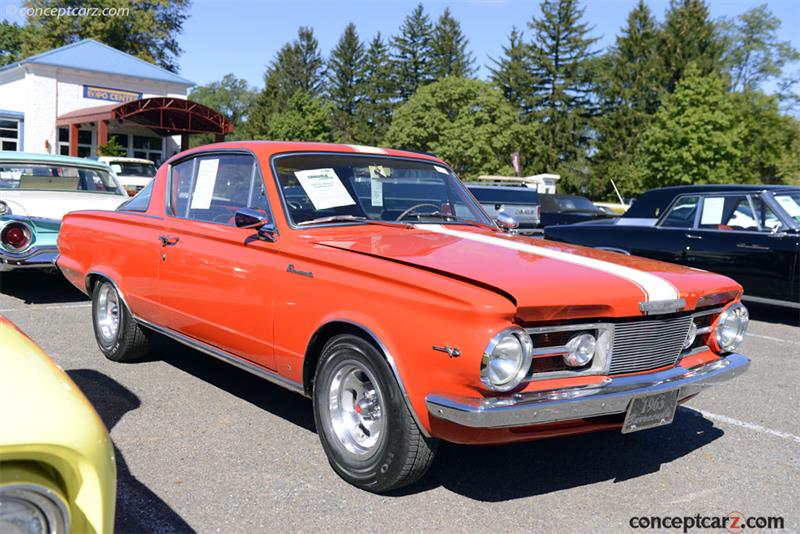
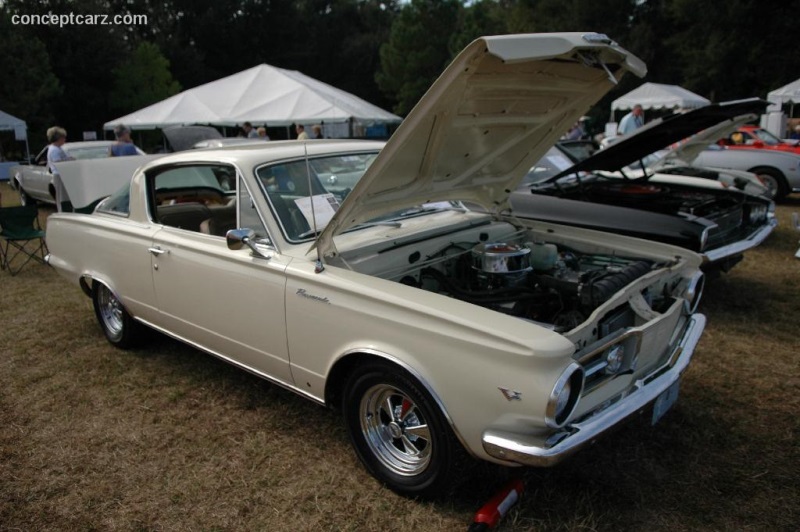
The 2-door Sport Hardtop Barracuda, which had been introduced in 1964, received only minor changes for 1965. The 'Valiant' nameplate was no longer found on the exterior of the vehicle and a 'Formula S' competition package became available. The Formula S came with a 273 cubic-inch four-barrel V8 engine offering 235 horsepower. Additionally, they had heavy-duty rear springs, a heavy-duty torsion bar setup in the front, sway bars, wide wheel rims, Goodyear Blue Streak wide oval tires, rally stripes, tachometer, and 'Formula S' medallions.
Funny Car
View info and historyThe base engine for the United States market was the 225 Slant-6 and the 170 CID version in Canada. The 273 CID V8 engine had solid valve lifters, overhead valves, five main bearings, a Carter two-barrel carburetor, and delivered 180 horsepower at 4,200 RPM. The Command 273 had a Carter four-barrel carburetor, 10.5:1 compression, and offered 235 horsepower. New options this year included a factory-installed air conditioning system and disc brakes.In total, 64,596 examples were built in 1965.
by Daniel Vaughan | Jul 2015
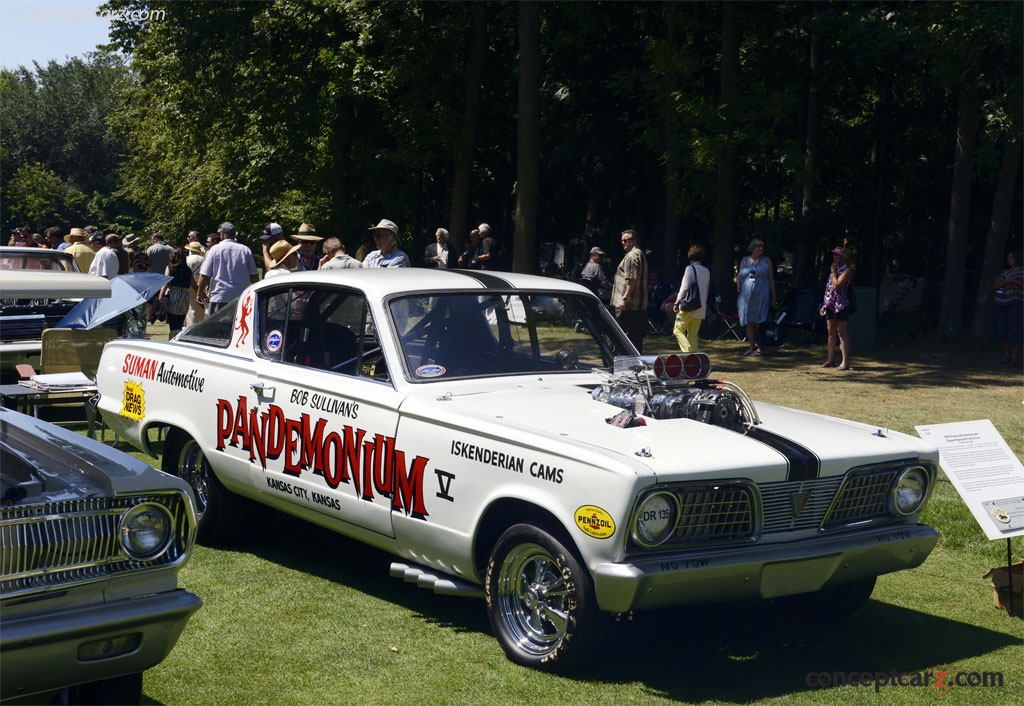
Funny Car
View info and history
by Daniel Vaughan | Jul 2015
Related Reading : Plymouth Barracuda History
The first series of the Barracuda was produced from 1964 through 1969, distinguished by its A-body construction. From 1970 through 1974 the second series was produced using an E-body construction. In 1964, Plymouth offered the Barracuda as an option of the Valiant model line, meaning it wore both the Valiant and Barracuda emblems. The base offering was a 225 cubic-inch six-cylinder engine that....
Continue Reading >>
Continue Reading >>
- 1965 Plymouth Barracuda Menu
- Article
- Image gallery
- Valuation
- Specifications
- Profiles
- Production figures
Drag Racer Vehicles
Similarly Sized Vehicles
Plymouth
Similarly Sized Vehicles
from 1965
Similarly Priced Vehicles
- Volkswagen Karmann-Ghia ($2,295-$2,450)
- Dodge Dart ($2,045-$2,590)
- Datsun 1500 SPL310 ($2,460-$2,460)
- Ford Falcon ($1,975-$2,660)
- Chevrolet Corvair Monza ($2,295-$2,440)
- Chevrolet Corvair Series ($2,025-$2,600)
- Chevrolet Chevy II Series ($2,000-$2,460)
- Chevrolet El Camino ($2,270-$2,460)
- Plymouth Valiant ($1,980-$2,530)
- Volkswagen Karmann-Ghia Type 1 Concept ($2,450-$2,450)
Average Auction Sale: $16,534


1965 Plymouth Barracuda Vehicle Profiles



Recent Vehicle Additions


Related Automotive News

Classic, Late-Model Ford Mustangs Will Stampede into Las Vegas for the 11th Annual Barrett-Jackson Auction
LAS VEGAS – September 18, 2018 – Classic, custom and late-model Ford Mustangs will rumble into the 11th Annual Barrett-Jackson Las Vegas Auction at the Mandalay Bay Resort and Casino, Sept. 27-29, 2018. This years auction docket will include...

MECUM KISSIMMEE 2017 AUCTION IS LOADED WITH SIGNIFICANT DRAG RACING HISTORY
Fezell and Runyon Collections Headline the Worlds Largest Collector-Car Auction
WALWORTH, Wis. – Dec. 13, 2016 – Drag racing enthusiasts have lots to look forward to at Mecum Auctions Kissimmee 2017 classic and collector-car auction...

15 Exciting Collector Automobiles to Watch During This January's Scottsdale, Arizona Car Week Auctions
Scottsdale, Arizona (January 13th, 2016) – Astute Collectors of the worlds most sought after and most valuable automobiles know that Scottsdale, Arizona in January is where the market values for collector cars are established each year. As such, they...

Steve McQueen Chevrolet Styleline Leads Exciting List of Celebrity Rides At Auctions America's Ford Lauderdale Sale
Auctions America kicks off its 2013 calendar, March 22 – 24, 2013 in Fort Lauderdale, Florida
Regarded as South Floridas premier collector car auction, multi-day sale expected to feature more than 550 quality collector cars
Star attraction 19...

Chevy Performance Rolls with Hot Rod Magazine Power Tour
Weeklong drive kicks off with unprecedented access to GMs Milford Proving Ground
Road trip! Its that time of year again for the annual automotive pilgrimage known as the Hot Rod Magazine Power Tour® and Chevrolet Performance helps get it started...