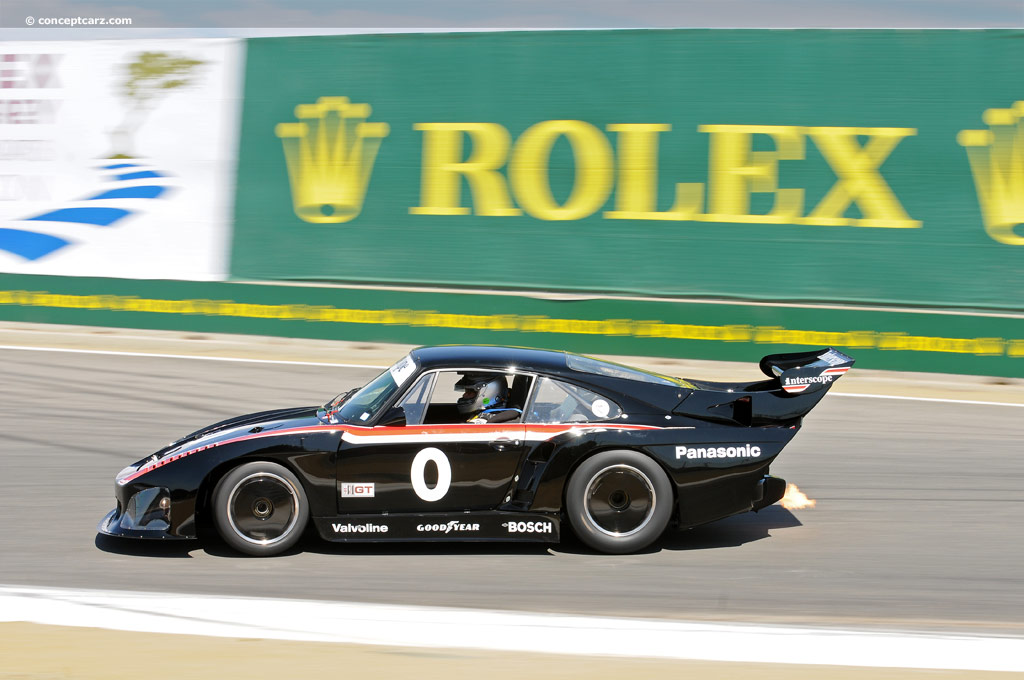
The Porsche 935 was the ultimate iteration of the racing 911 and a very important model for Stuttgart, with variants helping to bridge the gap between the 936 prototype and the 956, introduced in 1982. Raced through 1984, the 935 would capture over 150 victories worldwide, including over 20 class victories. Among its many accolades include an overall victory in the 1979 24 Hours of Le Mans, and it won the 24 Hours of Daytona and the 12 Hours of Sebring six times each. Between 1977 and 1979, it was undefeated in the German DRM, and between 1976 to 1979, it earned Porsche victory in the FIA World Championship for Makes. In 1982, Alan Jones drove a 935 to victory in the Australian GT Championship. After Group 5 competition was discontinued by FIA after 1982, the 935 moved to IMSA's GTP category.
Coupe
Chassis #: 000 00013
View info and historyPorsche's dominance in the prototype era began during the early 1970s, beginning with a works racing program based on the 911. The 911 Carrera RSR 2.8 won the Targa Florio outright in 1973, and the following year, an experimental RSR 2.1 Turbo entered by the Martini-sponsored works team placed 2nd Overall at the 24 Hours of Le Mans. This birthed new 911-based racing cars to contest the FIA World Sportscar Championship.Porsche's Group 4 variant of the all-new turbocharged 930 was introduced for the 1976 season. Dubbed the 934, it was a factory-built racing machine and a total of 31 examples would eventually be built. From 1976, new FIA regulations for the World Manufacturers Championship saw the introduction of Group 5 competition - the so-called Silhouette formula. This 'Special Production Car' category allowed extensive modification to production-based vehicles that were homologated in FIA Groups 1 through 4. Porsche's formidable contender was the slope-nosed, Type 935, an evolution of the RSR 2.1 Turbo. While the 934 was air-cooled, the Group 5 Type 935 was water-cooled and also based on the 930 Turbo. It was powered by a turbocharged twin-plug flat-six engine, endowed with a fully independent coil-spring suspension, and wore aerodynamic fiberglass bodywork. Per racing regulations, only the roof, doors, bonnet, and rail panel were left unmodified. Since there was no mention of headlight heights in the rule books, the 935s raced with the hallmark flat nose. The 935s initially wore the 911's fender-mounted headlights in two different configurations - a high-speed version with modified aerodynamics and a sprint version with a wider version of its wheel arches. Most of the time, the high-speed configuration was used. A loophole was found by Porsche engineers, namely Norbert Singer, which allowed modifications of the fenders which allowed the removal of the headlights to create more downforce and reduce drag. This 'flat nose (a.k.a. slant nose)' had the headlights installed in the front spoiler, and became one of the most distinguishable features of the 935.
Coupe
Chassis #: 00023
View info and historyDuring its debut season, the Martini-liveried works 935s captured the Group 5 championship. This was one of the two FIA World Championship for Makes in 1976, the other being the World Sportscar Championship season for Group 6 prototypes up to 3.0 L. For the latter, Porsche entered its 936 sports racing prototype.Porsche 935/76 Specification
The basic silhouette of the 935 remained similar when viewed from the front, the road-going model upon which it was based. Modifications were allowed to the bodywork, wider axles, larger wings, and several other significant modifications, including water cooling. Its engine was based on the 3.0-liter flat-six and depending on the configuration, produced approximately 560 horsepower at 7,900 RPM and 438 lb-ft of torque at 5,400 RPM. To satisfy the 'under the four-liter' regulation and '970 kg' (minimum weight) group - plus the turbocharging penalty factory of 1.4, its displacement measured 2,857cc using a slightly reduced bore size of 92 mm. The KKK Turbocharger was mated to an intercooler and gave boost between 1.35 and 1.55. It was mounted at the rear, which would later cause issues when the sport's governing body tried to fit an original 930 'whale tail' engine cover. With the large intercooler obstructing its closure, the 935 was not permitted to race until a solution was found. This occurred after the Porsche's second race. Working quickly, engineers installed the intercoolers of the 934, however, this compact air-to-water setup was not as successful as the original air-to-air intercooler.While the Carrera RSR prototype weighed under 800 kg, the 935 weighed approximately 900 kg (empty).The 1976 FIA World Championship for Makes for Group 5
Coupe
Chassis #: 00023
View info and historyThe 1976 FIA World Champions season was contested over seven races, with only Dijon having both on the same weekend. Two examples of Porsche's 1976 Group 5 contender, known as the 935/76, were ready in time for the first races of the season at Mugello and Vallelunga. The Porsche 935 won both of these races and appeared poised to sweep the series. The switch to the 934's intercooler gave BMW the edge it needed and they quickly gained ground in the points arena. During the first race at the six-hour Mugello, the Martini Racing sponsored factory entry of Jochen Mass and Jacky Ickx placed first, followed by a 935 K1 with a factory shell entered by Cologne-based Kremer Racing. The first seven places were captured by Porsche race cars, ahead of a BMW in eighth. This gave Porsche twenty points and BMW three. At the six-hour Vallelunga, a factory 935 captured the pole position the fastest lap, and the overall victory. A BMW was second, and a 934 finished fifth.At the six-hour Silverstone race, a modified Martini 935 won the pole position and fastest lap, but finished the race tenth overall due to a clutch problem at the start. A Kremer 935 placed second, earning valuable points for the Porsche team, and beaten by a BMW 3.5 CSL by only a second. BMW had also entered a 3.2 CSL driven by Ronnie Peterson and Gunnar Nillson. During qualifying, it had nearly beaten the factory 935, but during the race, it retired due to gearbox issues.The 1,000 km Nürburgring was actually a 1,073km race, as the usual 44 laps were run as 47 laps for 1976. Both Moss and Ickx were unable to compete due to Formula One obligations with the Monaco Grand Prix, 935 driving duties were assigned to Rolf Stommelen and Manfred Schurti. Stommelen qualified the 935 on the pole, while the BMW turbo did not take part. A naturally aspirated BMW CSL entered by Schnitzer Motorsport took the victory, and a 934 entered by Loos placed second. The engine and intercooler of the 935 were still being sorted out and suffered from vibrations which led to ignition failure. These issues would take several weeks of testing to resolve and half a million Deutsche marks.
Coupe
Chassis #: 00023
View info and historyIckx captured pole position at Zeltweg, but was forced to retire mid-race due to a broken throttle link. The fastest lap was set by Derek Bell in the Kremer 935, but it was a pair of BMW's to cross the line first. A Porsche 934 placed third, once again securing valuable points which helped Porsche retain a narrow lead in the points standing. BMW had won on three occasions and Porsche had won twice, since only the best five of the seven events would count, Porsche needed to win the next two races. The 935 of Stommelen and Schurti won at Watkins Glen, and the highest finishing BMW was in fourth. Porsche and BMW now had three wins, with Porsche having two seconds (for 90 points) and BMW one second and a fourth (for 85 points). Porsche was in the points lead going into the final race, but either team could secure the championship with a victory. For the final race of the season, the turbocharged BMW returned, now with the 3.5 L CSL. Pole position was set by the Peterson and Nillson in the BMW, edging out Ickx by half a second. During the race, the transmission of the BMW was unable to cope with the 750 horsepower and retired before the first of the six hours had passed. The naturally aspired BMW placed sixth behind three 935s and two Group 5 spec 934/5s. Both the 935 and 936 had secured their championship, plus Porsche had won at Le Mans. A Porsche 935 was driven by Stommelen and Schurti at Le Mans and qualified in the third position. Wearing Group 5 silhouette, the car finished fourth overall. The Porsche 936 claimed the overall victory.The 1977 Season
Coupe
Chassis #: 00023
View info and historyPorsche sold thirteen examples of the 935/77A to privateer teams for the 1977 World Championship for Makes Group 5 competition and the Deutsche Rennsport Meisterschaft (DRM) which introduced the Group 5 rules. The list of teams, based in the U.S., Germany, France, Italy, and Australia, included Kremer Racing and Georg Loos, among others. In DRM racing, the 935s had little competition until the arrival of turbocharged cars such as the Toyota Celica, the Zakspeed Ford Capri, and the BMW-powered Schnitzer. Porsche raced one or two new 935 models during the 1977 season, much to the dismay of 935/77A customer teams who were not happy about competing against a newer car. Known as the 935/77 'Works', they were given many changes to the aerodynamics, running gear, and suspension. While the Porsche 935/76 had used a single large Turbocharger, the 935/77 'Works' received two smaller KKK units which Porsche engineers hoped would reduce Turbo lag. Output was initially rated at around 630 bhp but by the close of the season, horsepower had risen to 680 bhp. Of the nine WCM events (which did not include Le Mans), the 935/77 won on four occasions. Its biggest competition was its reliability, which plagued it throughout the season.
Coupe
Chassis #: 000 00017
View info and historyThe first race of the season was the 24 Hour Daytona, won by an old RSR followed by a pair of customer 935s. At Le Mans, the works 935/77 qualified sixth, but engine troubles and head gasket failures forced early retirement. The race was ultimately won by a 936, and a customer 935 finished third overall. By the close of the season, after having solved many of its issues, the 935/77 'Works' was nearly unbeatable. 935/77 Baby
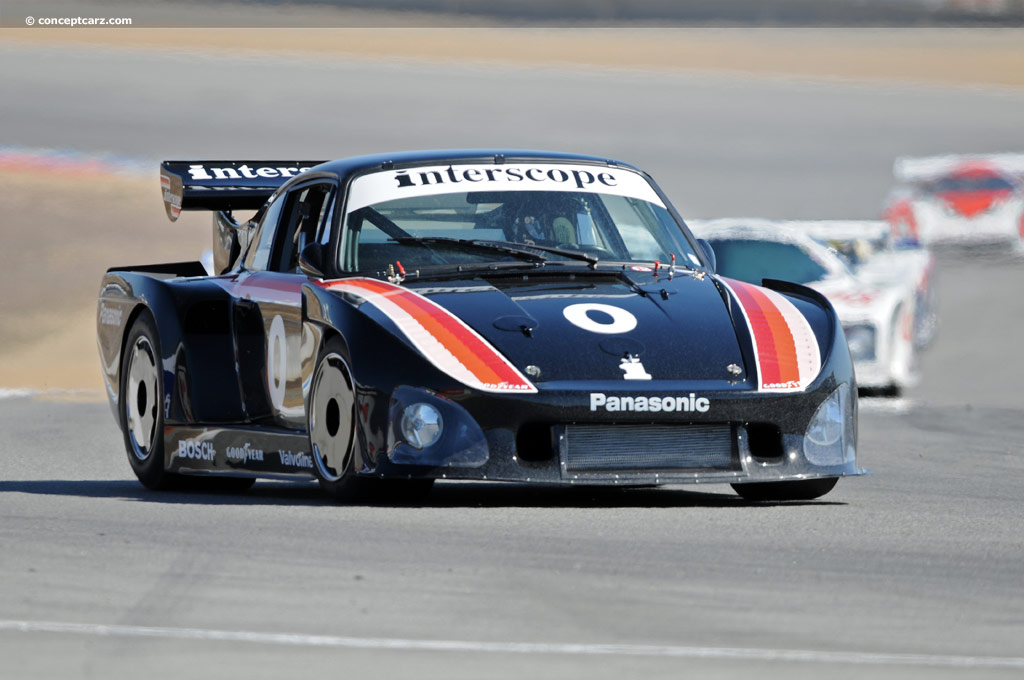
Using the body style of the 935/77, Porsche engineers reduced the capacity of the air-cooled flat-six to 1,425cc, allowing it to compete in the 2.0-liter Division II of the DRM. Customer 935s raced in Division I. Known as 'Baby' due to its 1.4-liter turbocharged engine, it produced 350 horsepower and weighed approximately 750 kg (1,650 lb). To achieve this low weight, engineers had replaced parts of the vehicle's chassis with a tubular aluminum space frame. Jacky Ickx drove the 935/77 Baby at Norisring in early July 1977 but was unable to finish due to overheating issues. Porsche decided to skip the next round at Diepholz airfield so they could sort the car out for the DRM support race of the 1977 German Grand Prix at Hockenheimring. Jacky Ickx set the pole position, the fastest lap, and won the race. After the race, Porsche retired 'Baby' and placed it in their Museum.
Coupe
Chassis #: 000 00017
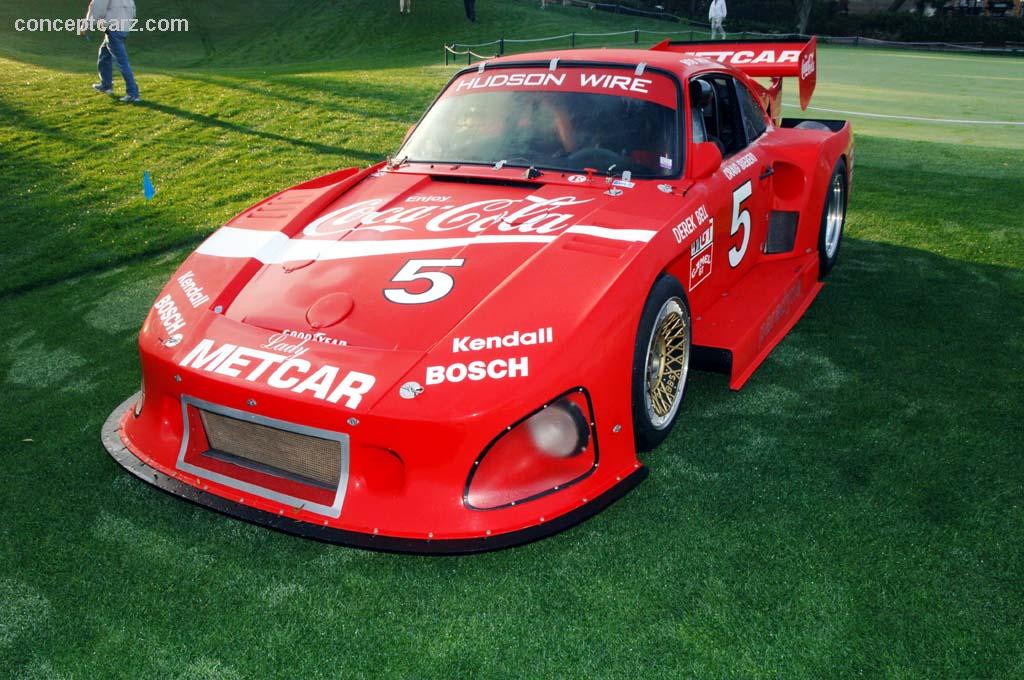
View info and history935/78 'Moby Dick'The Porsche 935/78, known as 'Moby Dick' due to its white color and long tail shape, was built to contest the 1978 Le Mans 24 Hours race. It was a purpose-built race car intended to take full advantage of the high-speed straights, and right-hand corners such as Dunlop, Tertre Rouge and Mulsanne. The driver seat was positioned to the right side for better right-hand cornering, the long tail reduced drag, its weight was now 1,030 kg (per regulations), and its engine was enlarged to 3.2-liters. The previous air-cooling configuration was replaced by water-cooled cylinder heads in hopes of elevation the head gasket failures that plagued the 1977 version. The Moby-Dick's inaugural outing was at the 6 hours of Silverstone Circuit with Mass/Ickx set pole position, the fastest lap, and crossed the finish line first. At Le Mans, the 935 qualified third behind a Renault Alpine and a 936. The slippery body configuration and the potent 3.2-liter engine made it the fastest on the straight, with a top speed of 228 mph.
Coupe
Chassis #: 000 00013
View info and historyPrior to the start of the Le Mans race, the engine had to be replaced, and problems during the early portion of the race meant the Moby Dick would finish the 24 Hours in 8th place behind three customer 935s. Renault won the race, followed by two of the three 936s, and another Alpine.The Moby Dick raced at Vallelunga and at the Norisring but failed to finish. It retired to the Porsche museum. 1979 and 1980 Season
The Porsche factory did not officially enter 935s during the 1979 or 1980 season, however, they did provide limited support to privateers with the 935, 936, and even the 908 and 917. Much of their support came in the form of spare parts, engines, and knowledge. Kremer Racing
Coupe
Chassis #: 00023
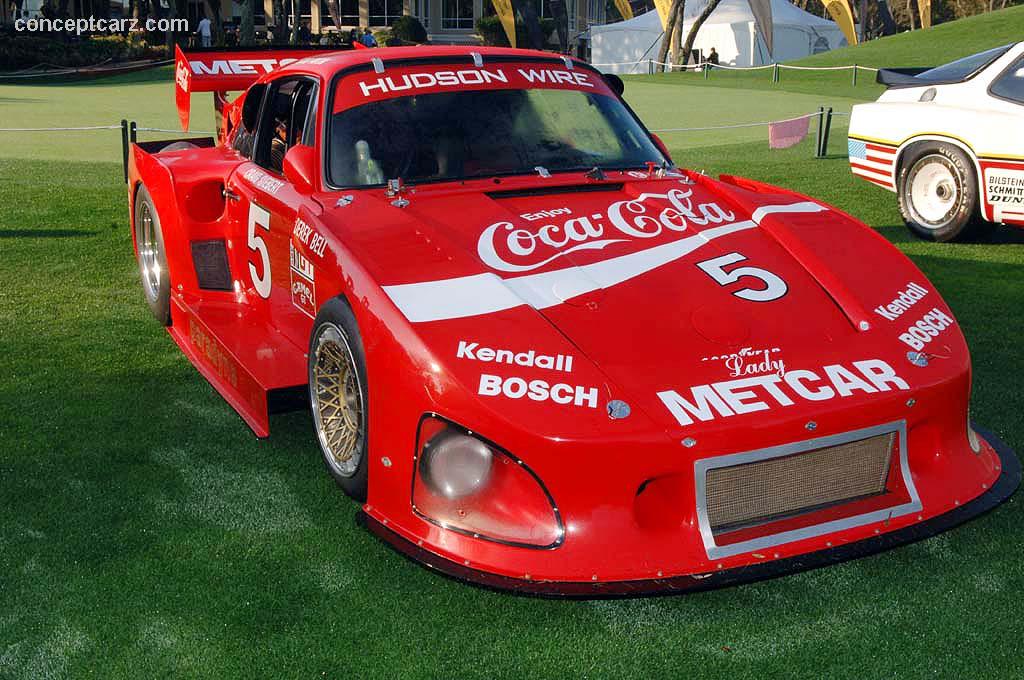
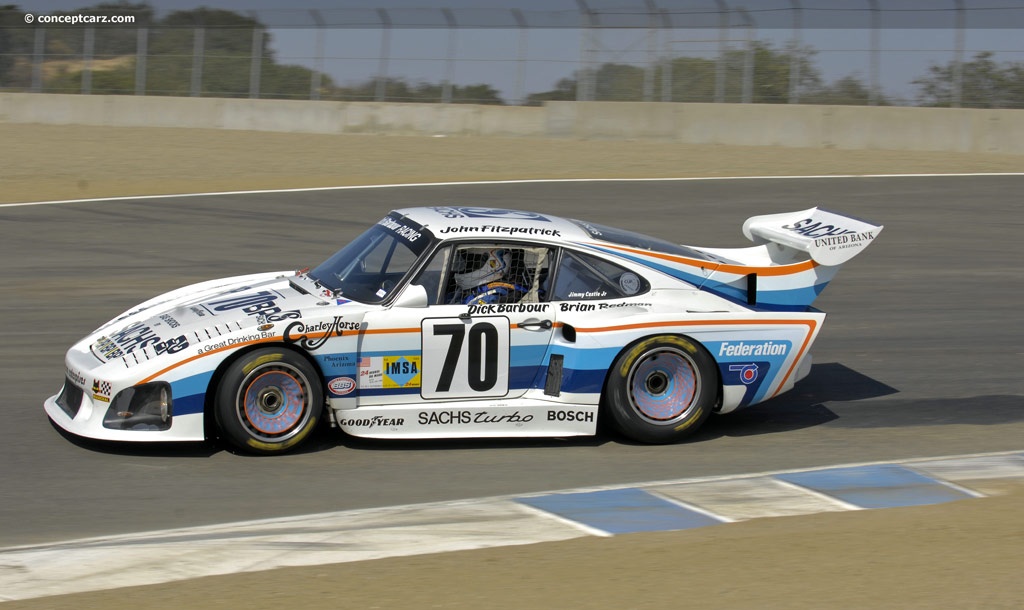
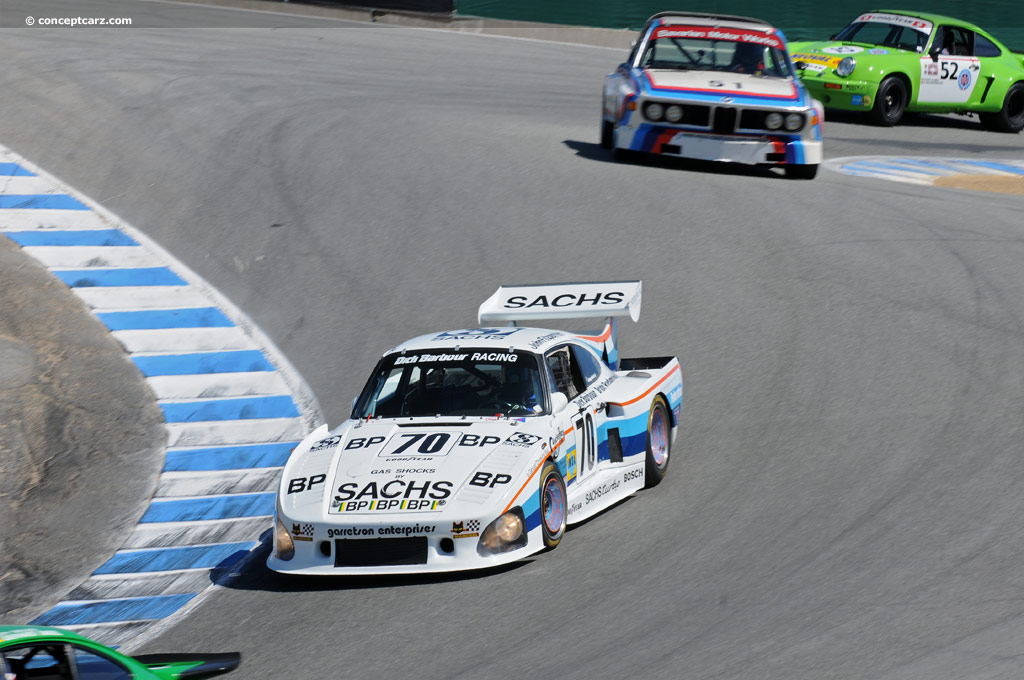
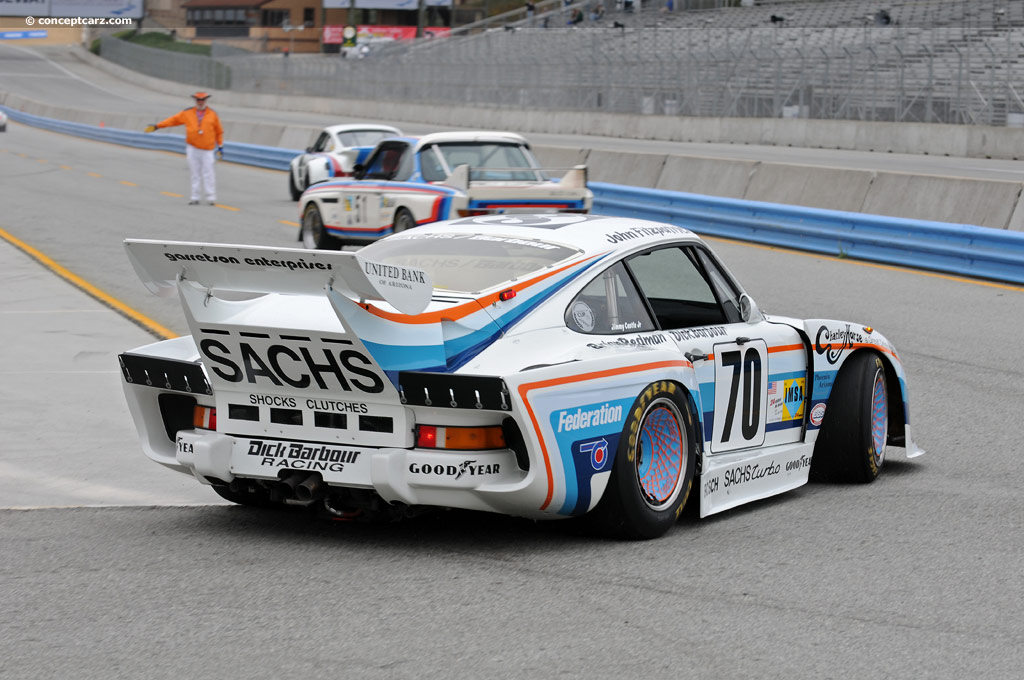
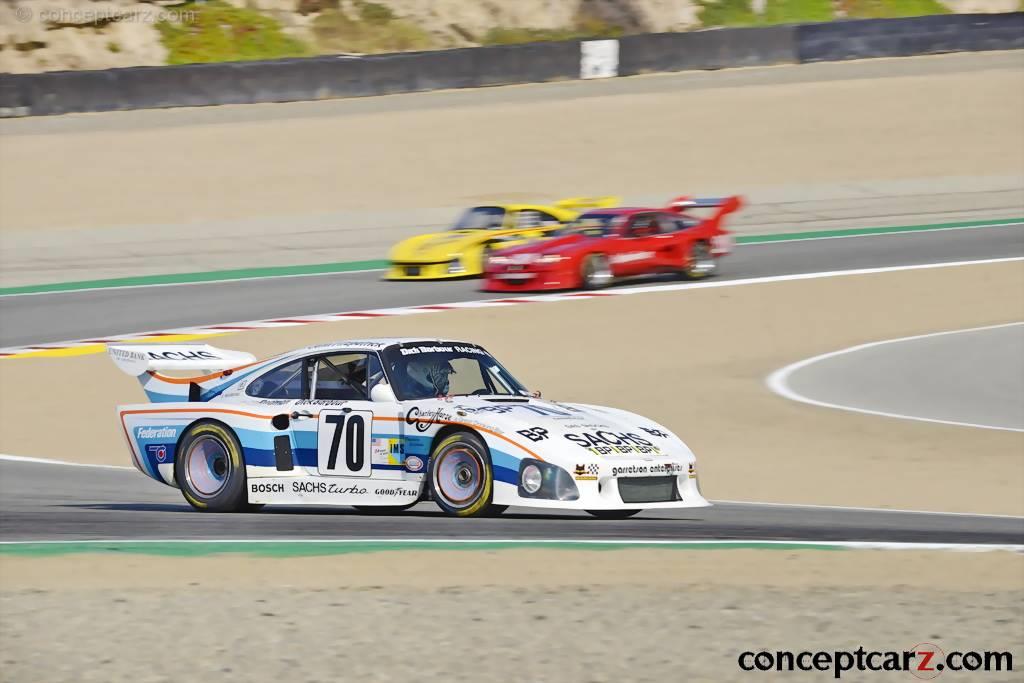
View info and historySeveral privateer teams developed their own version of the 935 including Kremer Racing from Cologne, Germany. Of all the independently constructed 935s, the most successful were the K3s built by the Kremer Racing Team.Erwin and Manfred Kremer developed, built, and campaigned Porsche racing cars over a period of nearly four decades. They won many of the top prizes in endurance racing, and by the mid-1970s, achieved considerable success at the 24 Hours of Le Mans and in the German National Championship. The Porsche 935 K1 was built for the 1976 season and introduced shortly after Porsche debuted the 935. The 935 K1 (for Kremer Type 1) was entered in the World Championship for Makes, followed by the 935 K2 for the 1977 season. The 935 K3 was introduced in 1979 and took its inspiration from the 935/77. It wore advanced Kevlar composite bodywork, designed in conjunction with Eckerhard Zimmerman's Design Plastics company. It had a raised rear rood, Kremer-developed wing for increased downforce, and running board rocker panels. Its bodywork was exotic and aerodynamic, its chassis was lightened, and large ventilated disc brakes provided the stopping power. The inverted gearbox lowered the car's center of gravity, made it easier to change ratios, and put less strain on CV joints. The air-to-air intercooler greatly improved power output and reliability. In K3 form, the engine developed approximately 800 horsepower at 1.7 bar of boost, with 740 hp available at a more reliable 1.4 bar.
Coupe
Chassis #: 000 0009
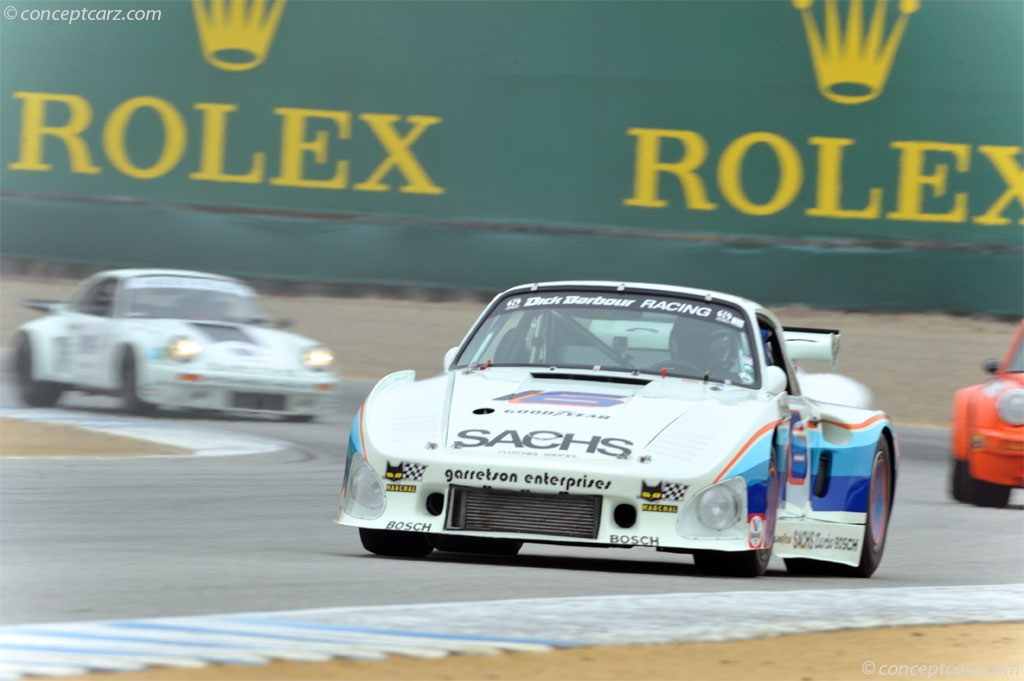
View info and historyn 1979, the Kremer Racing K3 won the 24 Hours of Le Mans outright. The following year, Dick Barbour Racing won the 12 Hours of Sebring with a K3. Also that year, K3s helped Klaus Ludwig capture the German National Championship and John Fitzpatrick win the IMSA GTX title.The Porsche 935 K4 was introduced in mid-1981 and was equipped with a 3.1 liter twin-turbocharged Flat six engine.
by Daniel Vaughan | Jun 2022
Coupe
Chassis #: 000 00013
View info and history
Coupe
Chassis #: 00023
View info and history
The basic silhouette of the 935 remained similar when viewed from the front, the road-going model upon which it was based. Modifications were allowed to the bodywork, wider axles, larger wings, and several other significant modifications, including water cooling. Its engine was based on the 3.0-liter flat-six and depending on the configuration, produced approximately 560 horsepower at 7,900 RPM and 438 lb-ft of torque at 5,400 RPM. To satisfy the 'under the four-liter' regulation and '970 kg' (minimum weight) group - plus the turbocharging penalty factory of 1.4, its displacement measured 2,857cc using a slightly reduced bore size of 92 mm. The KKK Turbocharger was mated to an intercooler and gave boost between 1.35 and 1.55. It was mounted at the rear, which would later cause issues when the sport's governing body tried to fit an original 930 'whale tail' engine cover. With the large intercooler obstructing its closure, the 935 was not permitted to race until a solution was found. This occurred after the Porsche's second race. Working quickly, engineers installed the intercoolers of the 934, however, this compact air-to-water setup was not as successful as the original air-to-air intercooler.While the Carrera RSR prototype weighed under 800 kg, the 935 weighed approximately 900 kg (empty).The 1976 FIA World Championship for Makes for Group 5

Coupe
Chassis #: 00023
View info and history
Coupe
Chassis #: 00023
View info and history
Coupe
Chassis #: 00023
View info and history
Coupe
Chassis #: 000 00017
View info and history
Using the body style of the 935/77, Porsche engineers reduced the capacity of the air-cooled flat-six to 1,425cc, allowing it to compete in the 2.0-liter Division II of the DRM. Customer 935s raced in Division I. Known as 'Baby' due to its 1.4-liter turbocharged engine, it produced 350 horsepower and weighed approximately 750 kg (1,650 lb). To achieve this low weight, engineers had replaced parts of the vehicle's chassis with a tubular aluminum space frame. Jacky Ickx drove the 935/77 Baby at Norisring in early July 1977 but was unable to finish due to overheating issues. Porsche decided to skip the next round at Diepholz airfield so they could sort the car out for the DRM support race of the 1977 German Grand Prix at Hockenheimring. Jacky Ickx set the pole position, the fastest lap, and won the race. After the race, Porsche retired 'Baby' and placed it in their Museum.
Coupe
Chassis #: 000 00017
View info and history
Coupe
Chassis #: 000 00013
View info and history
The Porsche factory did not officially enter 935s during the 1979 or 1980 season, however, they did provide limited support to privateers with the 935, 936, and even the 908 and 917. Much of their support came in the form of spare parts, engines, and knowledge. Kremer Racing
Coupe
Chassis #: 00023
View info and history
Coupe
Chassis #: 000 0009
View info and history
by Daniel Vaughan | Jun 2022
Related Reading : Porsche 935 K3 History
Like the Porsche 911s that competed in the Group 4 category, the Porsche 935s that contested the Group 5 category were delivered to private clients and had an extensive international racing career. Several companies and some individuals modified 935s, the most notable being Kremer. The Porsche 935 K3 (Kremer) was the third variation of the legendary 935. It was created by the Kremer brothers using....
Continue Reading >>
Continue Reading >>
Related Reading : Porsche 934/935 History
In 1976, Porsche introduced a racing version of the Porsche 930911 Turbo which they dubbed, the 935. It was designed for FIA-Group 5 competition and was constructed in a similar fashion to the Porsche 934, which was used in Group 4 competition. The works team, with sponsorship by Martini, entered the 935 in the FIA World Championship for Makes with team drivers, Jacky Ickx and Jochen Mass in....
Continue Reading >>
Continue Reading >>


1980 Porsche 935 K3 Vehicle Profiles


Recent Vehicle Additions


Related Automotive News
Porsche customers come to 'America's National Park of Speed'
WeatherTech SportsCar Championship, GTD Pro Round 8, GTD Round 10 Michelin Pilot Challenge, GS Round 8
Twin Porsche 911 GT3 R race cars on Road America entry list.
Pfaff Porsche rolls into Americas National Park of Speed full throttle.
Ten...

Porsche Rennsport Reunion VI : Highlights: of man and machines
Stuttgart. The Porsche Rennsport Reunion VI at Laguna Seca (USA) has more than 60,000 fans of the brand from Stuttgart spellbound. At the four-day event in California, avid motor racing enthusiasts in legendary vehicles and unforgotten works...

FORD CHIP GANASSI RACING CONTINUES GLOBAL PODIUM STREAK WITH THIRD-PLACE AT NORTHEAST GRAND PRIX AT LIME ROCK PARK
With p3 finish at Lime Rock, Ford Chip Ganassi Racing has finished on every IMSA and FIA World Endurance Championship race it has competed in since the IMSA WeatherTech Sports Car Championship race at Laguna Seca in May
Global podium streak extende...
IMSA ANNOUNCES 2014 TUDOR UNITED SPORTSCAR CHAMPIONSHIP SCHEDULE
12-Event Inaugural Season Will Showcase New Series At Premium Venues
Attractive Lineup Reflects Cooperative Spirit Of Rolex Series, ALMS Merger
Preseason Test Sessions Scheduled For November At Sebring And Daytona
DAYTONA BEACH, Fla. (Sept. 20...

Tradition: Future - 50 Years Of The Porsche 911 Celebrated At Goodwood
Seven generations of the 911 display the genetic code of the iconic sports coupe from 1963 to 2013
Fifty-year landmark celebrated with memorable Central Feature display at Goodwood Festival of Speed
Legendary racing cars meet famous drivers at t...