1948 Tucker 48 pictures and wallpaper 1948 Tucker 48 pictures and wallpaper 1948 Tucker 48 pictures and wallpaper 1948 Tucker 48 pictures and wallpaper 1948 Tucker 48 pictures and wallpaper
1948 Tucker 48 pictures and wallpaper 1948 Tucker 48 pictures and wallpaper


1948 Tucker 48 news, pictures, and information

View more photos
Sedan
Chassis Num: 70052026013
Engine Num: 1036
 
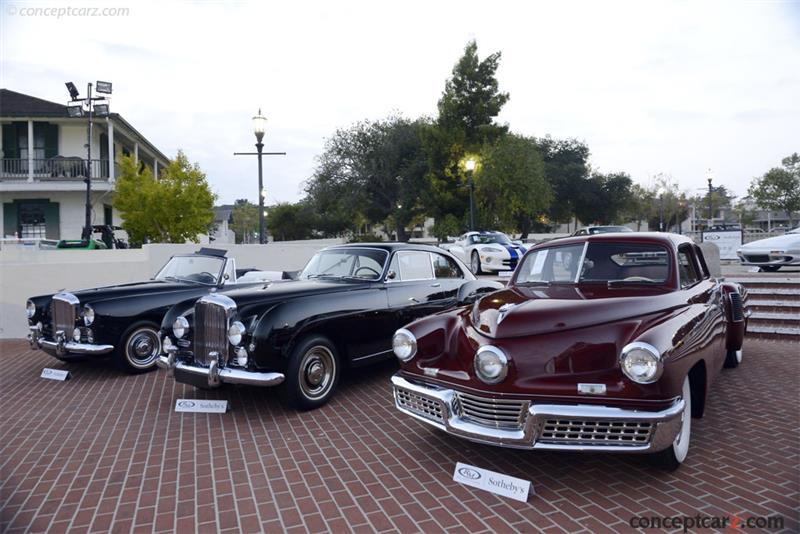
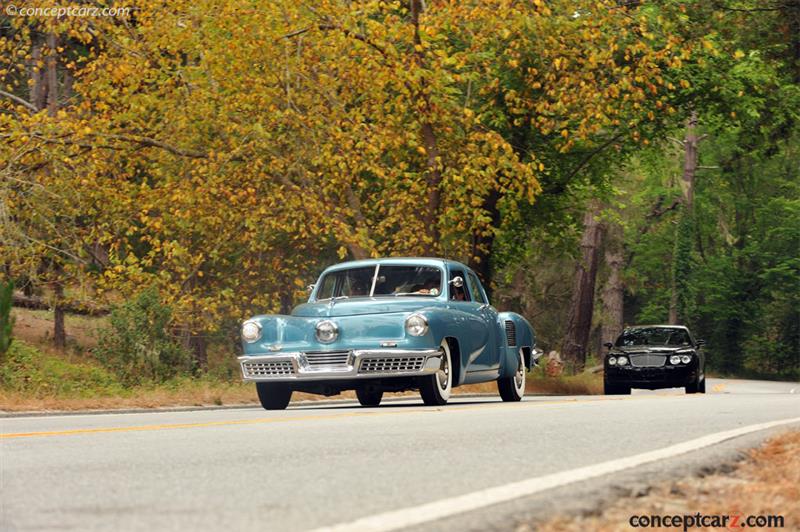
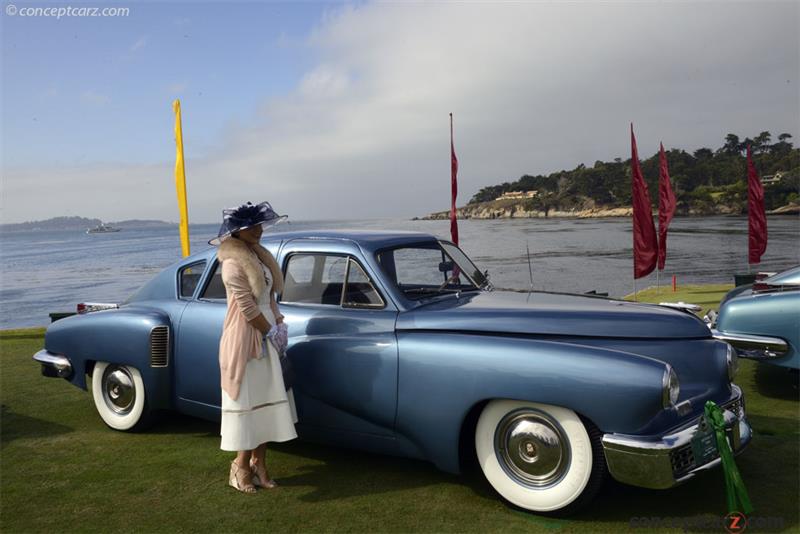
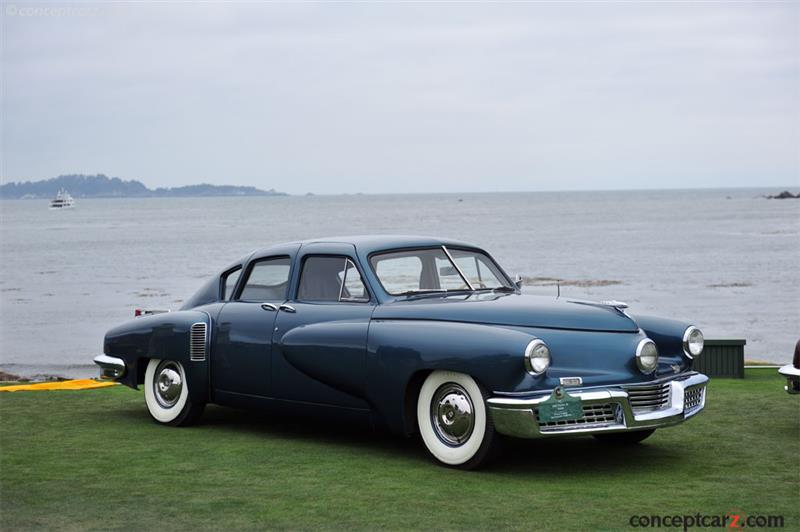
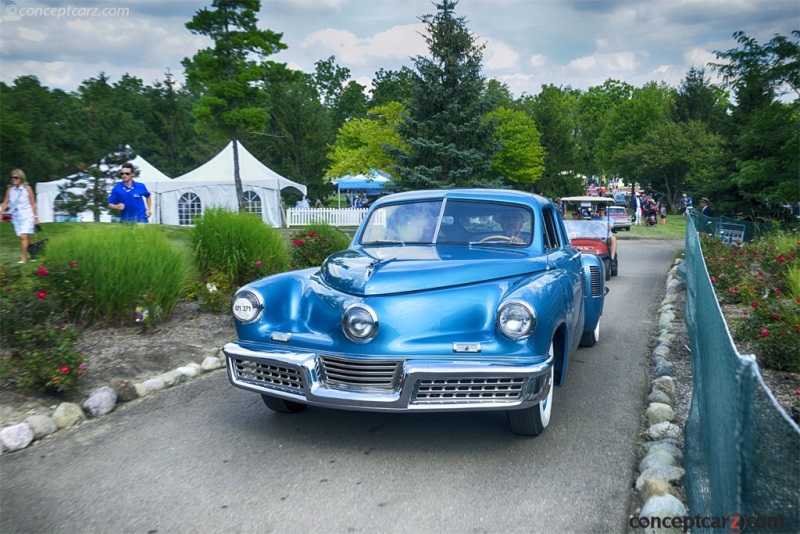
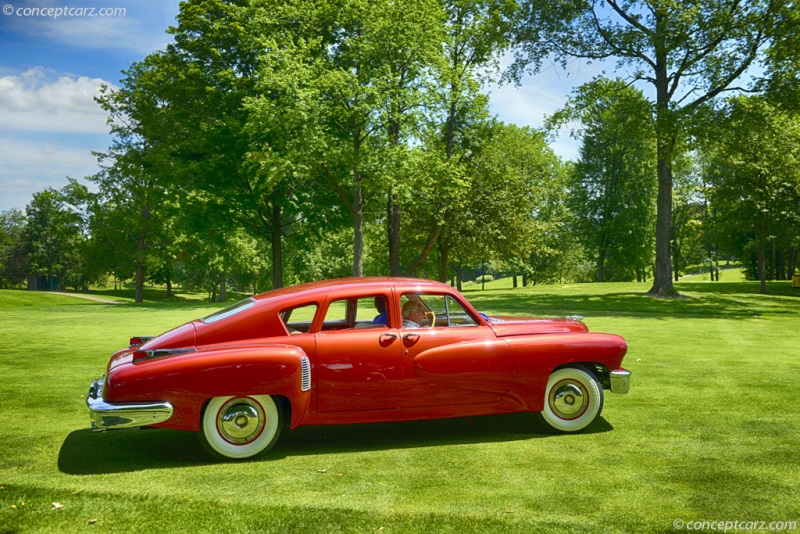
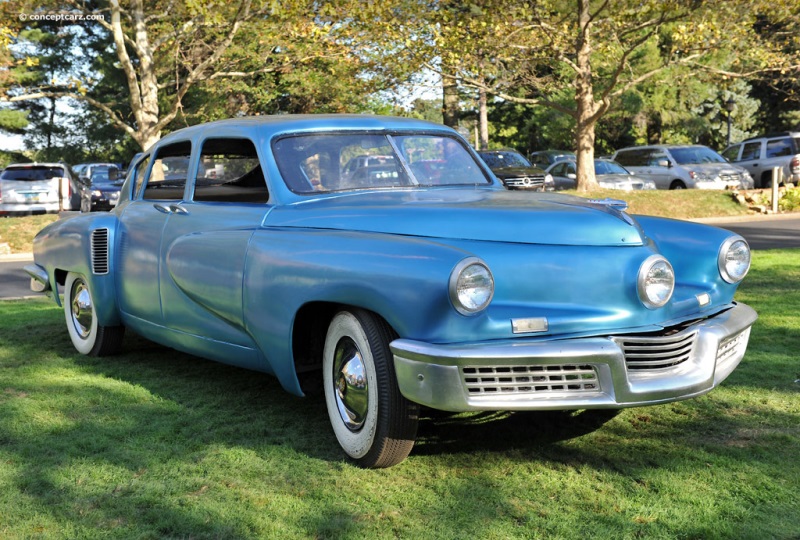
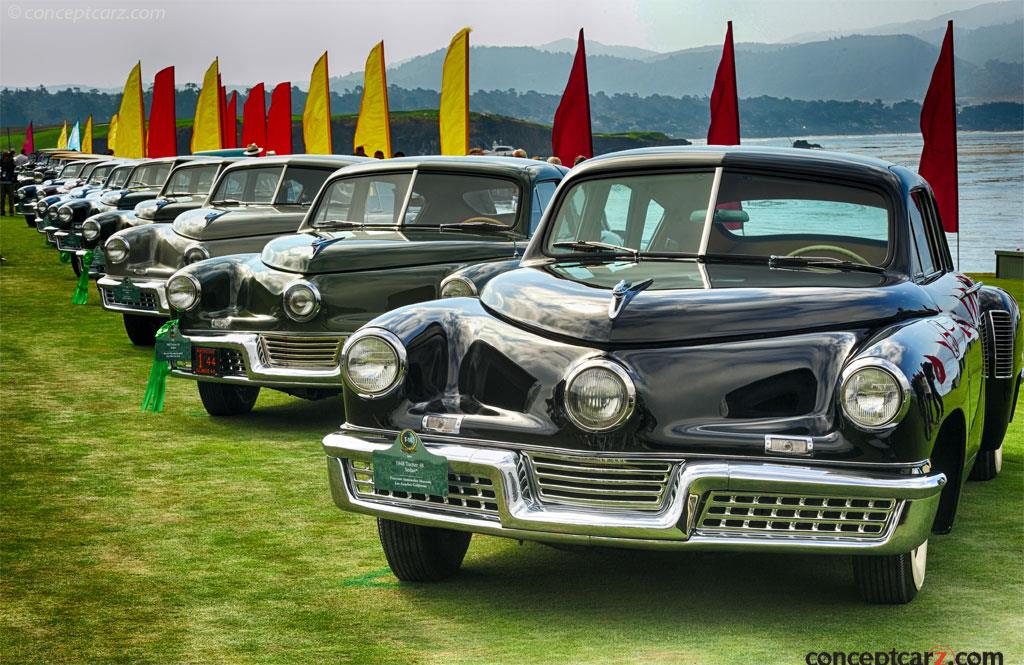
Built by Preston Thomas Tucker, 51 examples were built, of which 47 survive now. The car is called the 'Tucker 48' (for its model year). It was called the 'Tucker Torpedo' as it was being designed and promoted.

Though only 51 examples were ever produced, the work of Preston Tucker has firmly cemented itself in history and a legacy that resounds with automotive enthusiasts from all corners of the world. After the close of the Second World War, Tucker began work on a new breed of automobiles that would become and engineering marvel and a masterpiece of design.

The work was done in a Dodge aircraft engine plant located in Chicago, which Tucker had purchased. Two clay mockups were created, both identical in mechanical dimensions but varying in style. A final version was crafted from the best of both clay models. The final version was then made into a metal prototype which was dubbed the 'Tin Goose'. It was first shown to the public on June 19th, 1947.

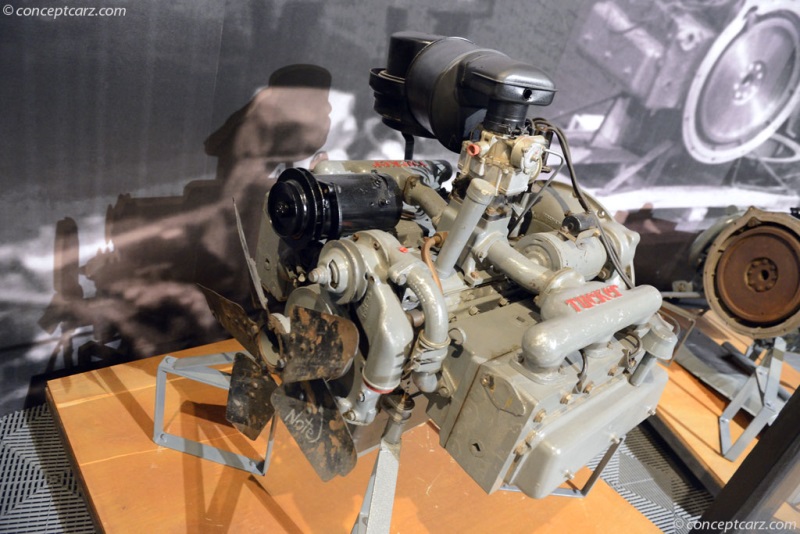
Though the design was moving along steadily, the engine was plagued with problems. Its shortcoming were its excess noise, lack of power, and requiring multiple batteries in order to start. A 6 ALV 335 Franklin helicopter engine was used as a replacement. The engine was modified to utilize liquid cooling and the adaptation of a Cord 810 transmission. When the process was complete, the engine produced 166 horsepower and 372 foot-pounds of torque.

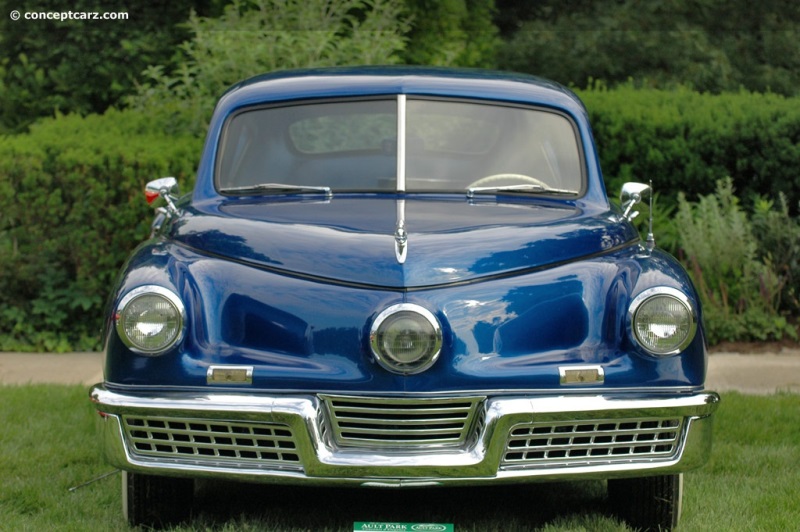
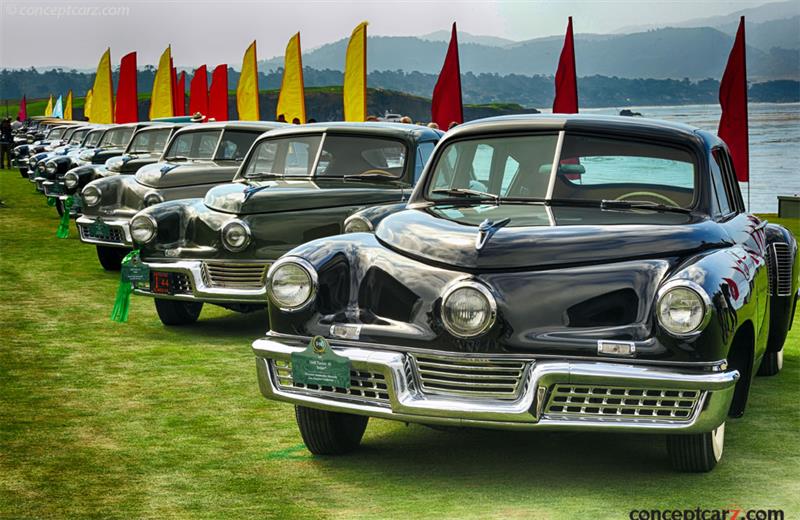
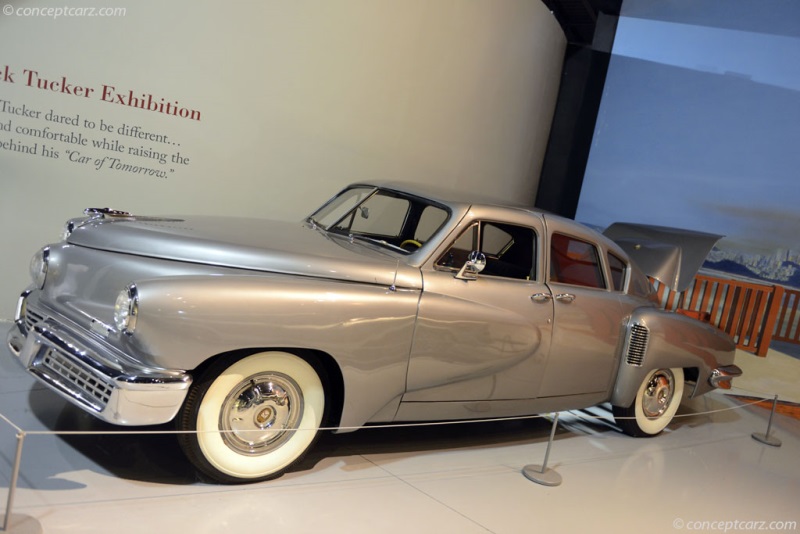
The Tucker was a model of safety. The interior cockpit was given padded dashboard and carried instrumentation that was grouped around the steering wheel. This meant that the protruding buttons and gauges would not cause damage to its occupants during an accident. The center-mounted headlight moved with the steering wheel providing light in the direction the vehicle would be traveling.

The front and rear seats could be interchanged which aided in the reduction of wear.

Soon after the Tucker automobiles began rolling off the assembly line in spring of 1948, the Securities and exchange Commission began investigating the allegations of mail fraud and other violations. The negative publicity sent stock plummeting and the facility was forced to close. Tucker assemble a skeleton crew and were able to continue production for a few more months, lasting until March of 1949, at which time the company fell into receivership and its assets were seized.
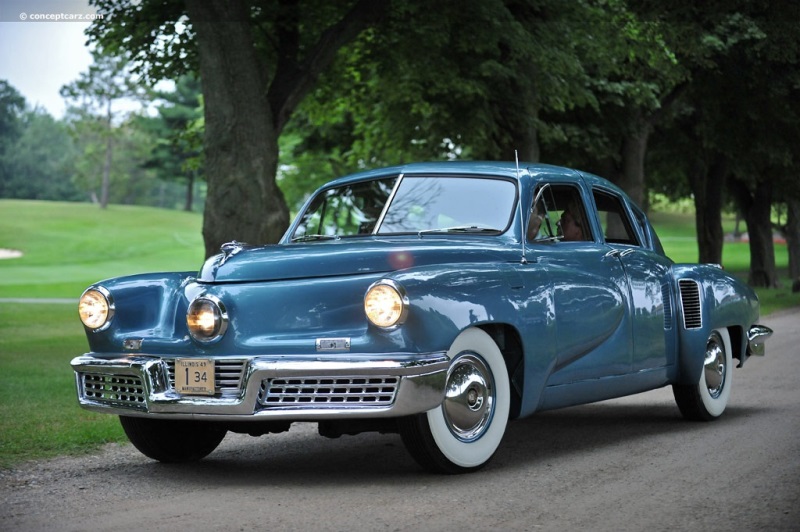
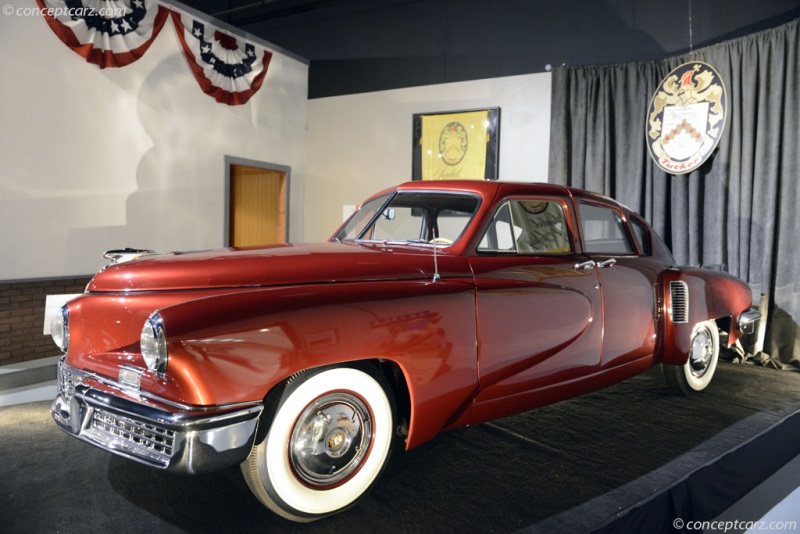
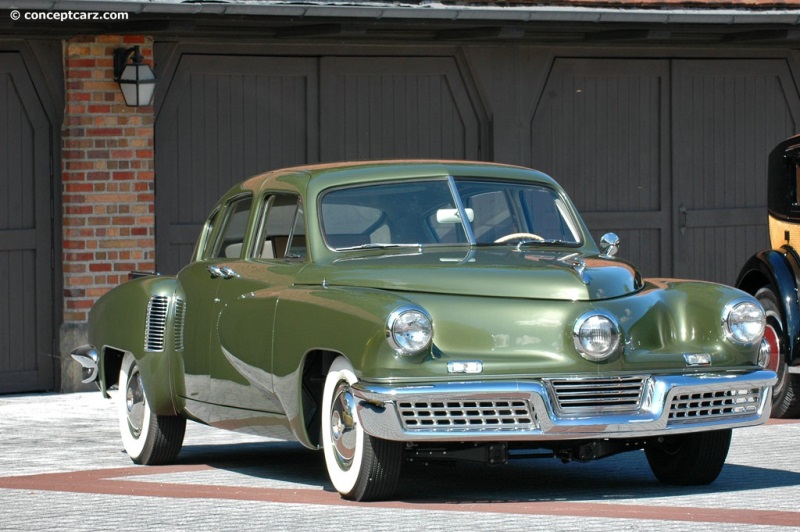
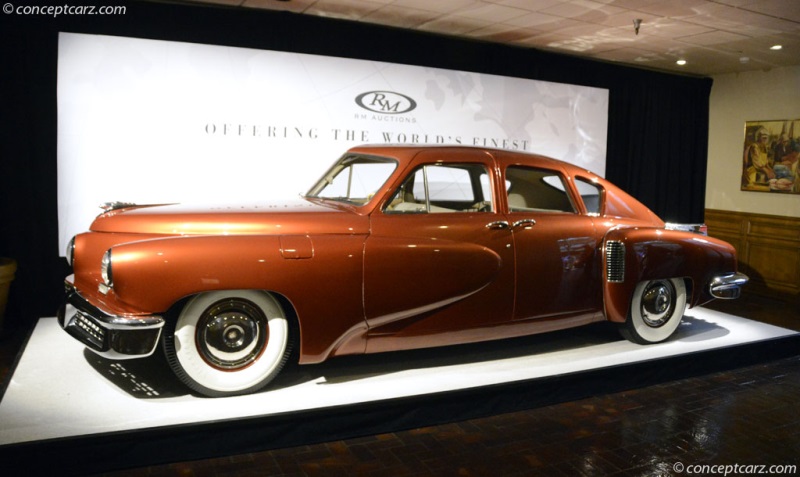
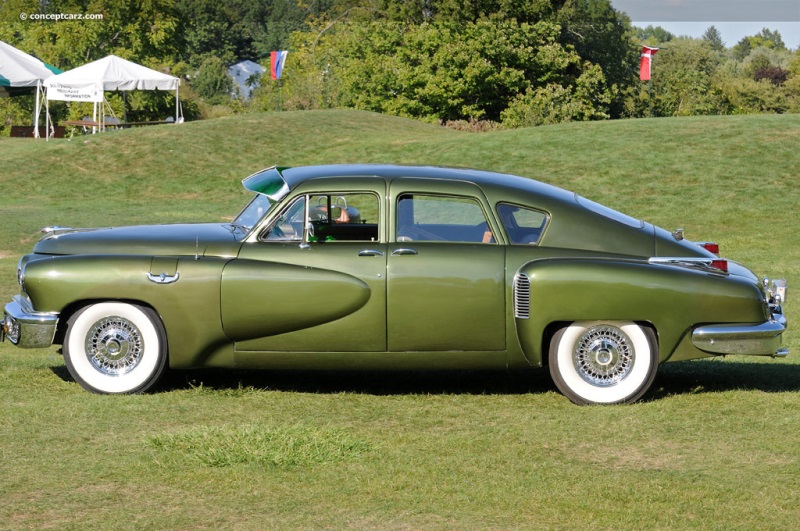
The Moss green colored Tucker Torpedo was offered for sale at the 2006 RM Auction held in Monterey, CA where it was expected to sell between $700,000-$900,000. It carries chassis number 1038 and was completed on October 25th, 1948. It was constructed without a transmission. Later, a Cord transmission was installed.

Since its assembly the car was given a comprehensive professional restoration. The car had traveled only 3100 miles since new. It was equipped from the factory with an AM radio and factory luggage.

At auction the vehicle was sold, fetching $577,500.

In 2008, this 1948 Tucker Sedan was offered for sale at the 'Sports & Classics of Monterey' presented by RM Auctions. It was estimated to sell for $500,000 - $600,000. An astonishing high bid of $1,017,500, including buyer's premium, was enough to secure new ownership. This bid was well above the estimated value, but with only 51 examples ever created, that was the price needed to own this car. Needless to say, the lot was sold.
Sedan
Chassis Num: 34
 
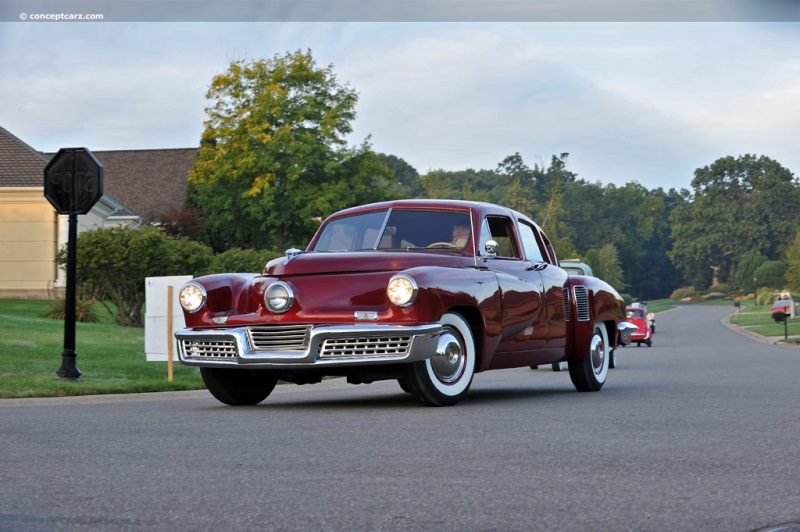
This Tucker, #34 of only 51 produced, sold for $2,450. It was originally titled to Samuel L. Winternitz & Co. of Chicago, IL, and was used as one of ten promotional cars that traveled the U.S. It was sold to Joy Brothers Motors of St. Paul, MN, for $1,800 on November 14, 1950, with only 339 miles on it. It was stored at the dealership for 18 years before being sold for $6,500 in 1968. The present owners purchased the car in 1985 when it only had 2,500 miles on it. It is presently driven on a regular basis and still only has 4,500 original miles on it.

The Tucker had many advanced ideas that were geared towards safety; it has a low profile roof (five feet above the pavement), and the floor is only nine inches above it. It has aircraft style doors for aerodynamics and ease of entry. It also has a non-shattering, pop-out windshield, padded dash and doors, a 'crash compartment' under the cowling at the front passenger seat area, into which the front passengers could duck for safety in the event of an accident. The car is powered by a 334.1-cubic inch, 6-cylinder, horizontally opposed, Franklin helicopter engine, developing 166 horsepower, located in the rear. The engine was fitted so it could be removed in a matter of minutes in order for it to be serviced by the dealer and a loaner engine would be installed so it could be driven while your engine was being worked on. This 4,235-pound car is capable of 109 mph and gets 24 miles to a gallon of gasoline.
Sedan
 
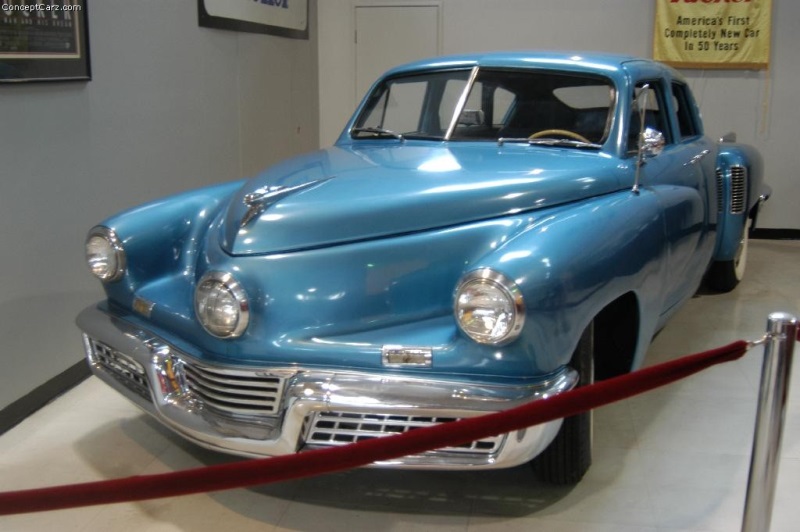
The only American car that received more publicity than the Kaiser in the post World War II years was the Tucker Torpedo. Preston Tucker was determined to build a new car with more forward-looking features - 'the first completely new car in fifty years' as the Tucker brochures stated. At his side, the flamboyant Tucker had Alex Tremulis, the renowned auto stylist who had learned his craft from E.L. Cord. The original design for the new car featured a center placed steering wheel and front fenders that would turn with the wheels. In the original design, the car used a horizontally opposed engine with hydraulically actuated valves, and an integrated crankshaft driving an automatic transmission. This engine could not be made function in time for production, so a Franklin helicopter engine, modified from air to liquid cooling, was used to drive a redesigned Cord front wheel drive transmission replacing the Tuckermatic (which was not developed in time to be installed in the production Tuckers).

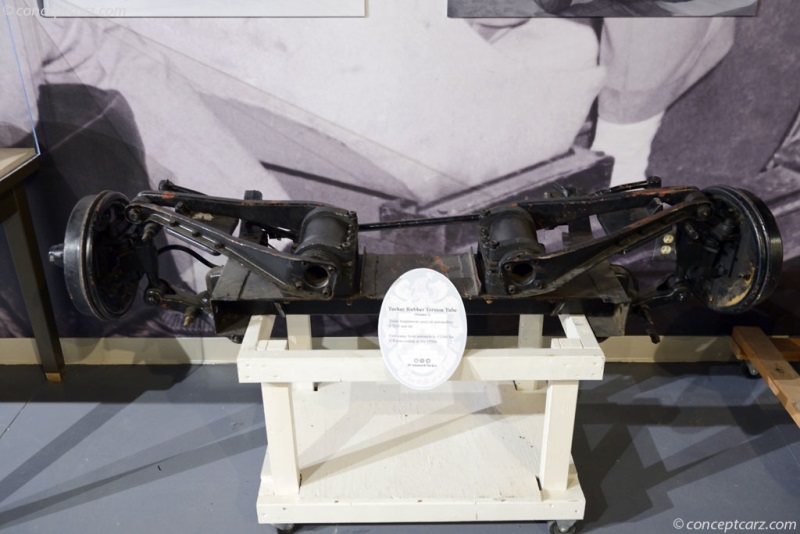
In place of the moving front fenders, Tucker installed a third headlight that turned with the steering wheel. The 'Cyclops Eye' headlight was just one of the several safety features that were placed in the tucker. The dash area was padded, the windshields could be popped out, and all controls were grouped in front of the driver. The area ahead of the front seat, called the Safety Chamber, was a large carpeted box that driver and front seat occupants could drop into if a crash was imminent. Tucker had considered safety belts, but they were abandoned because designers felt that they might imply his car was unsafe. The disc brakes planned for the car were abandoned because of cost, but the car retained all-independent suspension and tubular shocks. Tough not built with uni-body construction like Hudson, the Tucker had a step down passenger compartment, which gave the car a very low center of gravity. This, in turn, allowed the 4200-pound car to handle surprisingly well.

Collection of Debbie Hull

Source - SDAM
View more photos
Convertible
 
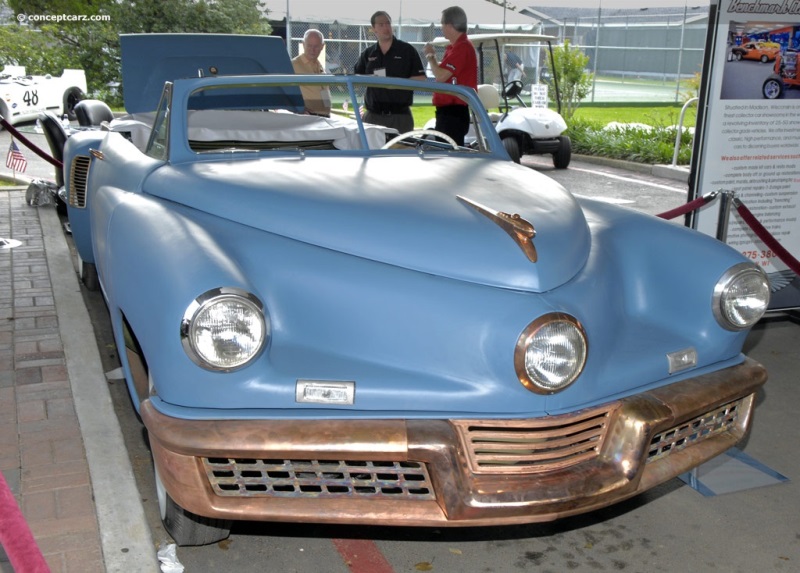
This is the only Tucker Convertible in existence. It has zero original miles, zero owners, never titled, correct Cord sourced transmission, and unique Tucker frame.

The work done to this car has been more of a completion project rather than a restoration project. The engine, transmission, frame, suspension, breaks, and many other components/parts are as new with zero original miles. Tuckers were originally outfitted with poorly designed Torsilastic (rubber bonded to metal) suspension. Due to this, many Tuckers are now outfitted with other suspension systems.
Sedan
 
The Tucker was powered by a rear-mounted helicopter engine and boasted many innovative safety features including the first pop-out safety windshield, first padded dash, and a center headlight that turned to light around corners.
© 1998-2009. All rights reserved. This material may not be published, broadcast, rewritten, or redistributed.

Vehicle Spotlight
Suzusho Supasse V2010 Lexus ES 3502010 Ford Edge2010 Devon GTXBugatti 16.4 Veyron Sang Bleu2010 Porsche 911 Turbo
2010 Scion xD2010 Toyota Camry2010 GMC Sierra Hybrid2010 Hyundai Genesis Coupe2010 Chevrolet Equinox2010 BMW X5 M
2010 Mazda CX-92010 Lincoln MKZ2010 Mercedes-Benz E-ClassChevrolet Corvette2010 Chevrolet Camaro2010 Ford Mustang


Tucker: 1941-1950
Similar Automakers
Other models by Tucker


Related Articles and Event Coverage
Meadow Brook Concours d'Elegance
32nd Annual Ault Park Concours d'Elegance
Keels & Wheels Concours d'Elegance
Sports & Classics of Monterey by RM Auctions
Monterey Sports & Classic Car Auction
2005 Amelia Island Concours d'Elegance
San Diego Automotive Museum