1955 Porsche 550 RS Spyder
1955 Porsche 550 RS Spyder Navigation
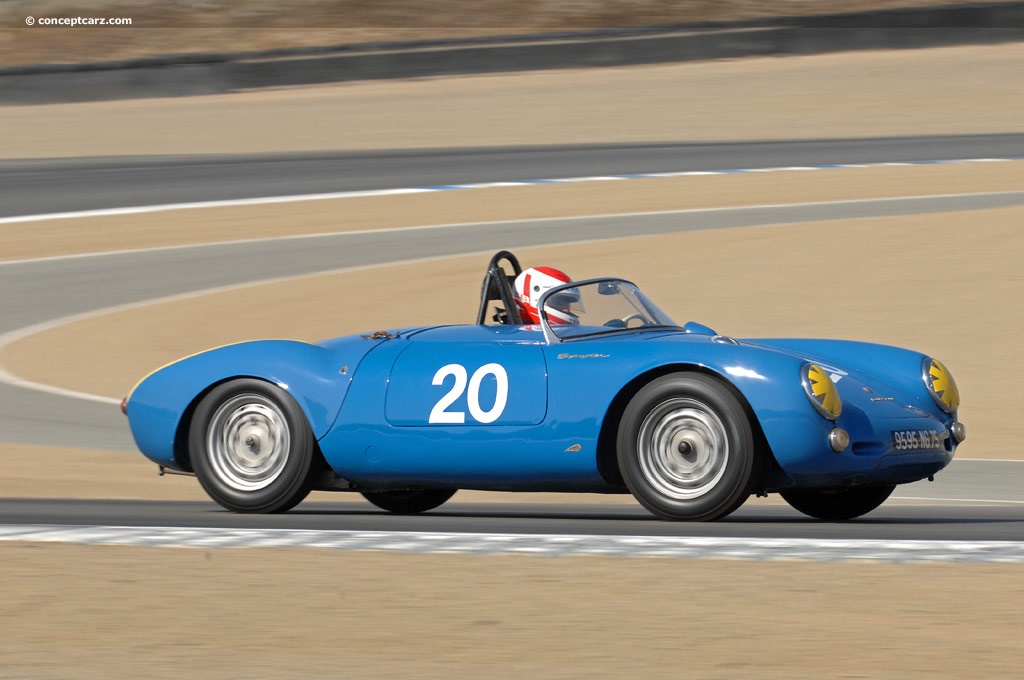
Porsche and motorsports have been inseparable throughout its existence, and its endeavors during the early 1950s relied on outsiders to explore the inherent performance potential of its offers. Among the more successful ventures were Walter Glöckler, a Frankfurt, Germany-based Volkswagen and Porsche dealer, and engineer Hermann Ramelow who constructed a series of racing specials beginning in the late 1940s. They used a welded tubular chassis frame and mounted a 1,086cc air-cooled Porsche 4-cylinder engine just ahead of the rear axle. With its low weight and potent engine, it had a promising power-to-weight ratio. The formula was improved upon with the 1.5-Liter Porsche engine which earned them the class lap record at the major Freiburg-Schauinsland mountain climb. The so-called Glöckler-Porsche lightweights, particularly the 1953 Glöckler-Porsche 1500 Super, are acknowledged as the inspiration for, and direct predecessors of, the Porsche 550. The Porsche-built 356 SL (Sport Light) 'Gmünd-Coupe' were raced with enviable success, competing at the 1951 Le Mans 24 Hours which made them the first and only German manufacturer to compete. The coupe, with its streamlined aluminum coachwork, won its class (751 to 1100cc) and placed 20th overall, with Auguste Veuillet and Edmond Mouche at the wheel. Additional accolades include class victories at the 1952 and 1954 Mille Miglia.
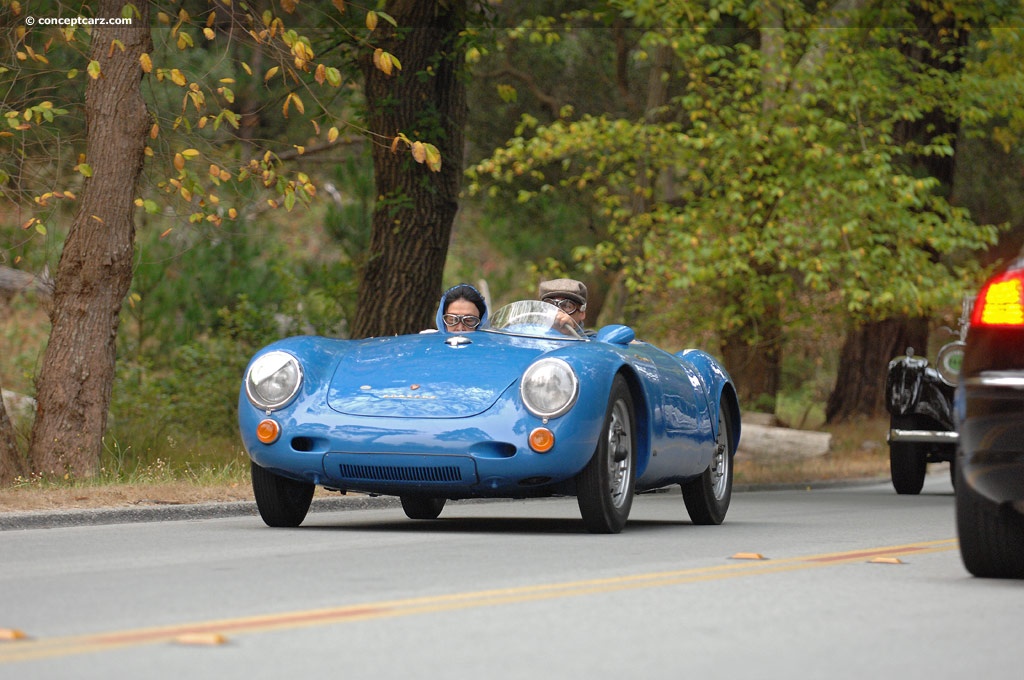
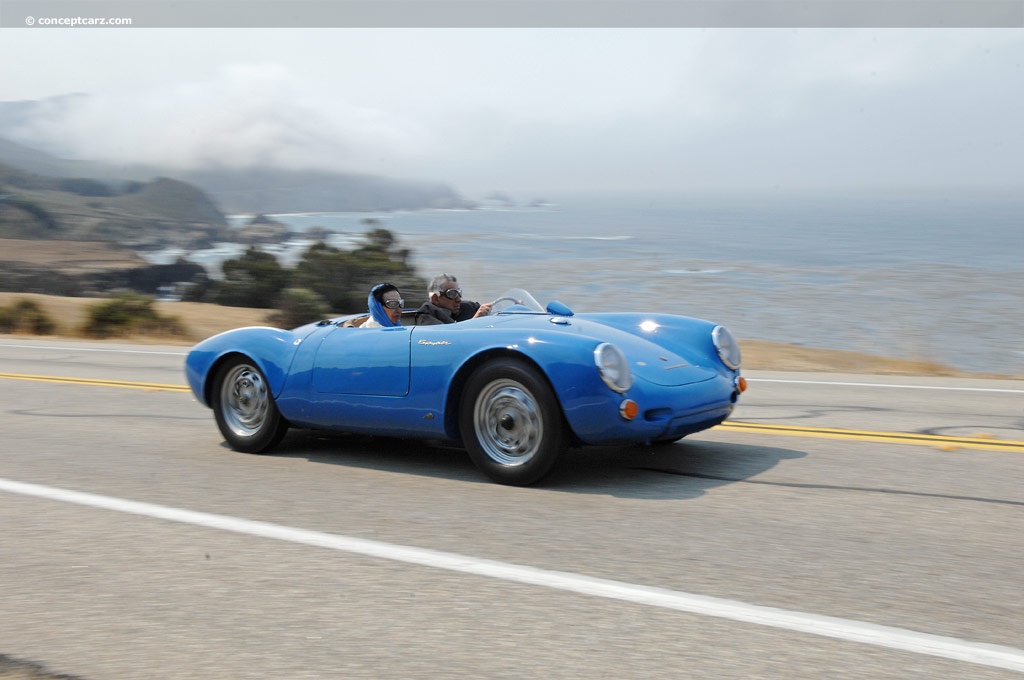
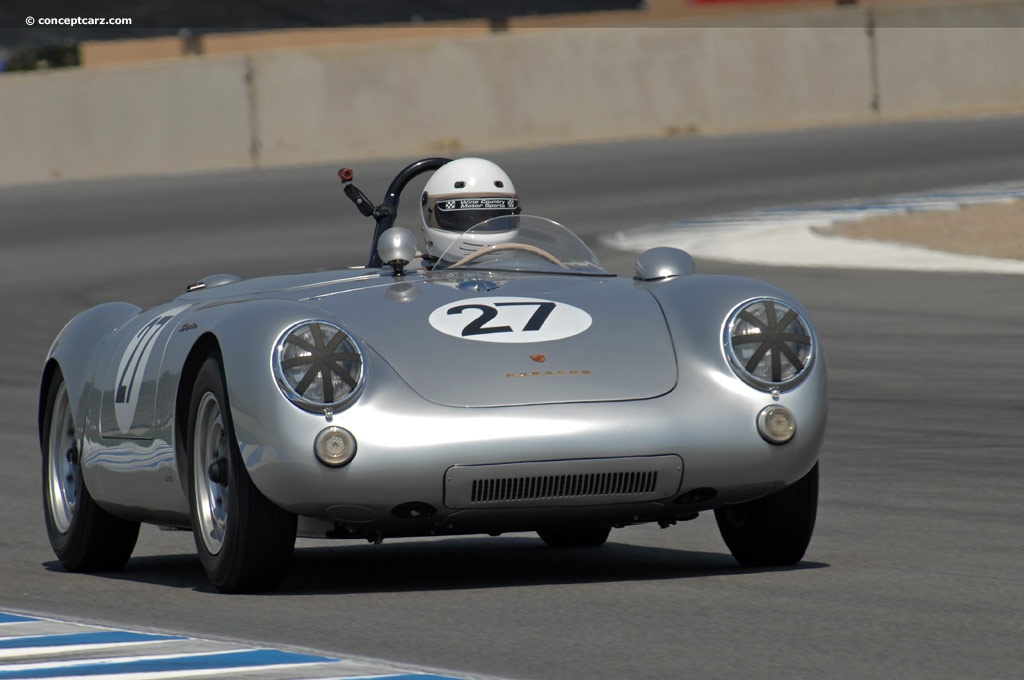
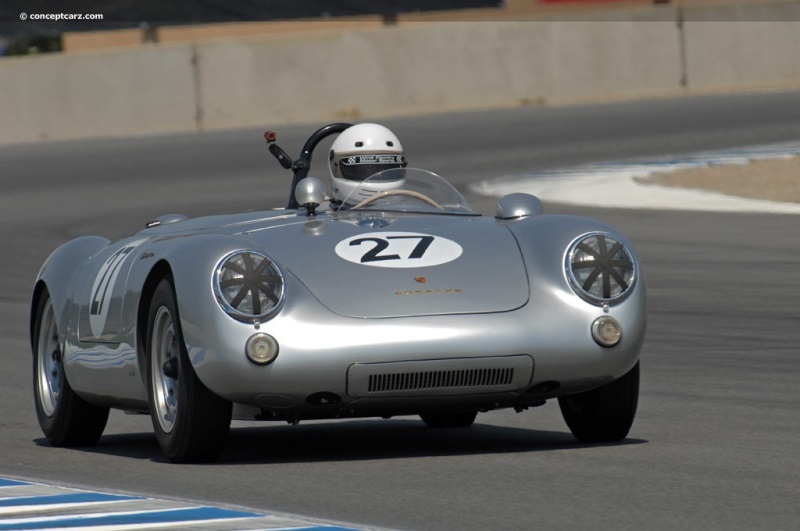
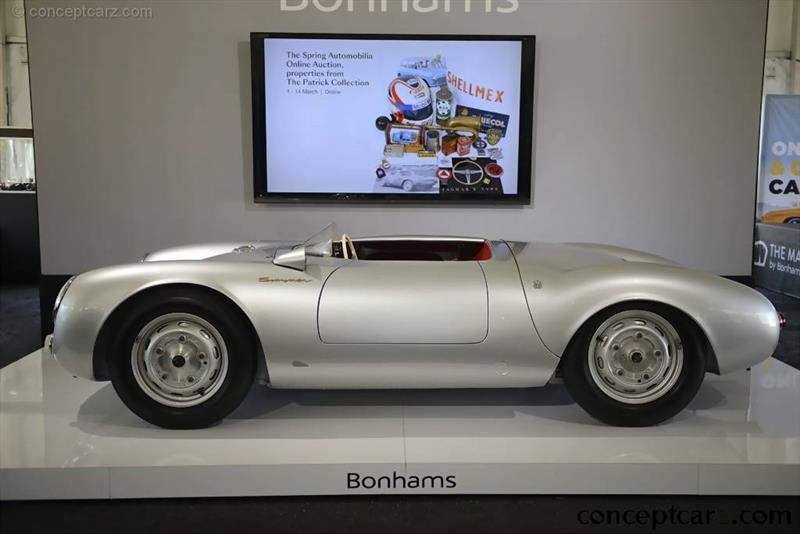
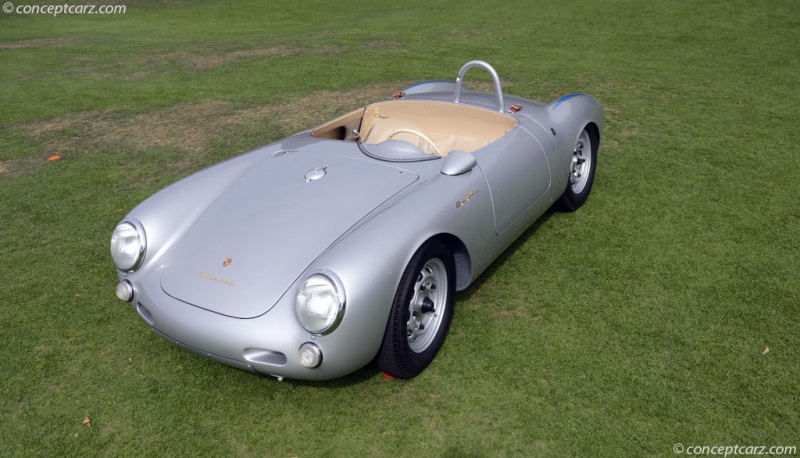
SpyderThe small-capacity aerodynamic production Coupe designs were based upon Volkswagen technology, with origins dating to the 1930s for 'the people's car' under Prof. Dr. Ferdinand Porsche's consultancy direction. The first genuine racing car design from Porsche was the 550 Rennsport Spyder, launched in 1953 at the Paris Salon and the catalyst that birthed the 550A and 718 successors. They would become some of history's most important and successful race cars, earning both class victories and overall wins. SpecificationThe Porsche 550 used a ladder frame composed of welded steel tubes and further strengthened by its aerodynamic lightweight aluminum body paneling, rigidly-attached to create a kind of semi-monocoque structure. Even the dash panel acted as a transverse stiffening member, welded to the sub-structure. An independent arrangement suspended the 550 at the front and rear, with twin trailing arms and transverse torsion-bar springs at the front and a leading-arm rear setup. The first two 550 prototypes used this rear setup, while subsequent examples used trailing arms to control the Porsche swing-axle system. The wheelbase measured 82.7 inches, had a width of 63.4-inches, stood a mere 38.6 inches tall, and had an overall length of 145.7 inches. Hydraulic drum brakes provided the stopping power.
Spyder
View info and historyEngine and TransmissionAn all-aluminum, naturally aspirated, 4-cylinder boxer engine, known as the 'Fuhrmann Engine' (Type 547), was mounted mid-ship, ahead of the rear axle, and had a displacement size of 1.5 liters (1,498cc). It featured four shaft-driven overhead camshafts, 9.5:1 compression, two heading each twin-barreled cylinder bank, twin-plug ignition with two plugs, two coils, and two distributors driven from the upper camshafts. There was an aluminum crankcase and two twin-choke downdraught Solex carburetors. Four roller-type main bearings were used to minimize friction loss, made possible by the Hirth-patent built-up type crankshaft and the inclined two valves per cylinder. There were 14 bevel gears to route the crank's rotation first to the exhaust cams and then to the intake cams. A very efficient v-belt-driven fan was mounted ahead of the rear axle line and provided the air-cooling to the engine. An external oil cooler in the nose joined the wet-sump lubrication system. The fully synchronized four-speed gearbox was overhung at the rear. A limited-slip differential controlled excessive slip to the drive wheels during cornering. The engine initially produced 110 horsepower at 7,000 RPM and 121 Nm (89 lb-ft) of torque at 5,000 RPM. Subsequent tuning revisions eventually raised that figure to 180 HP. A five-speed gearbox was put into service beginning in 1956.
Spyder
View info and historyThe positioning of the engine and transmission gave the Porsche 550 a balanced weight distribution and largely neutral handling. Its aerodynamic body, excellent weight distribution, low stance, and tipping the scales at a mere 1,200 pounds made it incredibly agile and its advanced four-cam engine meant it was quite powerful relative to its weight. Zero-to-sixty took less than 10 seconds and top speed was achieved at approximately 137 mph (220 km/h). The Type 547 engine could have used an engine-mounted chain or gear drive system which would have been much less complicated but would have increased the length of the engine. Fuhrmann was determined to keep the engine compact so it could fit in the confines of a regular production 356, a foresight that would eventually lead to the Carrera version of the 356. The complexity of the engine required over 120 hours from a skilled mechanic to assemble a single unit. Competition History
The 550 took its name because it was the 550th design project undertaken by the Porsche company.
Spyder
Chassis #: 550-0041
Engine #: 90037
View info and history
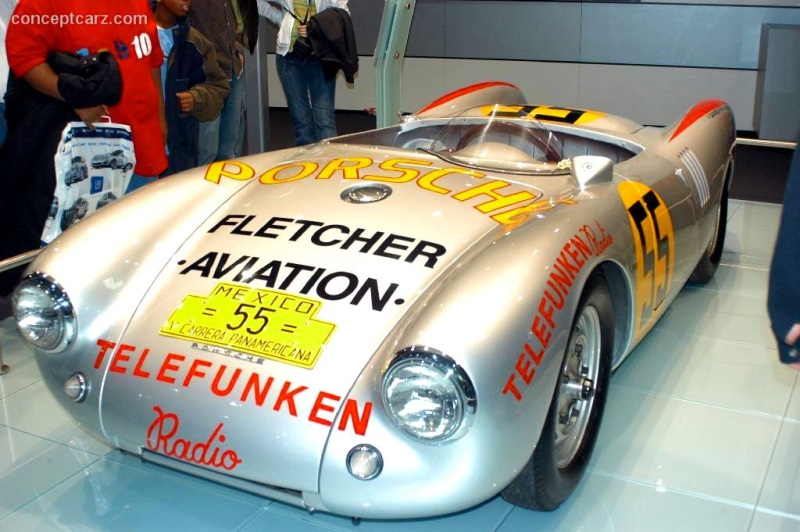
Auction entries : 1Weidenhausen of Frankfurt, who had earlier dressed the Glockler cars, provided the alloy bodies for the first two cars, built as coupes with a removable hardtop. The racing debut of the Porsche 550 was in May of 1953, and in roadster configuration, it won at the Nurburgring Eifel Race. At Le Mans, two Porsche 550s reached 124 mph on the Mulsanne straight during practice. Driven by Hans Hermann and Helm Glockler (Walter's cousin) along with two driver-journalists - Richard Von Frankenberg and Paul Frere - two cars finished the race within a lap of each other and crossed the finish line at the same interval at which they started. Chassis 550-02, driven by the journalists, won the 1500cc class and record. Both cars raced at the Carrera Panamericana Road Race in Mexico earning another class victory (third overall behind a pair of larger and more powerful Ferraris), then at the 1000-Kilometer Race in Buenos Aires where chassis 550-01 won, and both ran Sebring and other races.The first two prototypes were equipped with the 1500 Super pushrod engine which developed 80 horsepower on pump gasoline. Later in the season, the two cars raced again at the Nurburgring where they were joined by a third prototype. Although it did not race, its new Type 547 engine could be heard emitting a harsh bark from its single large exhaust outlet. This new 'Four-Cam' engine would be installed in all the 550s, 550As, RSKs, 356 Carreras, and 904s that were to follow.The victory at the Carrera Panamericana was commemorated by Porsche using the name Carrera to reference its performance options.
Spyder
Chassis #: 550-0031
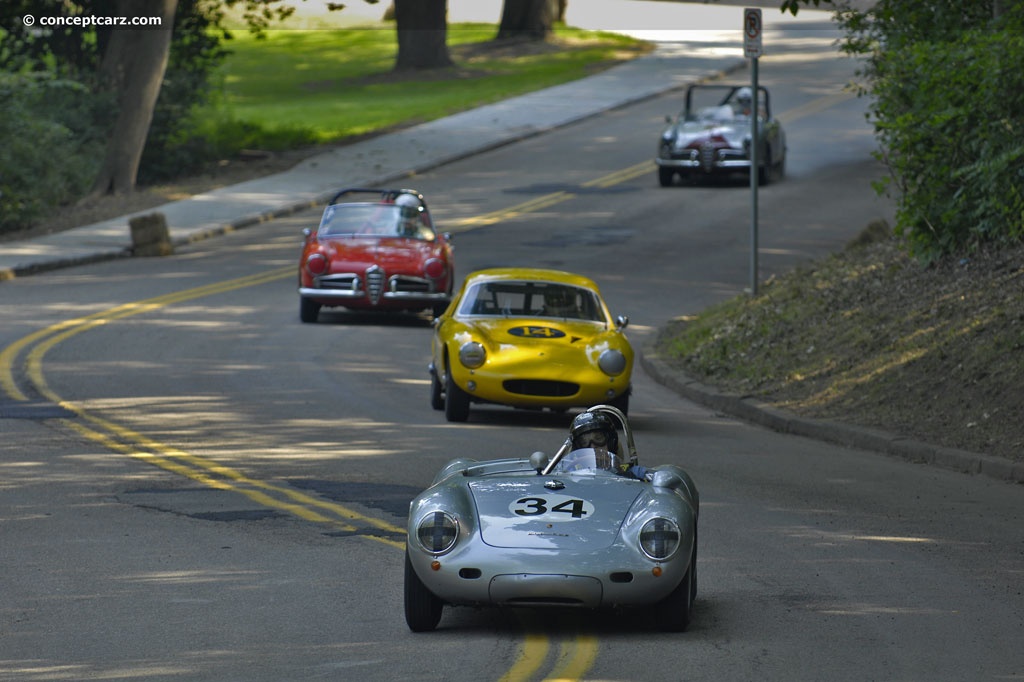
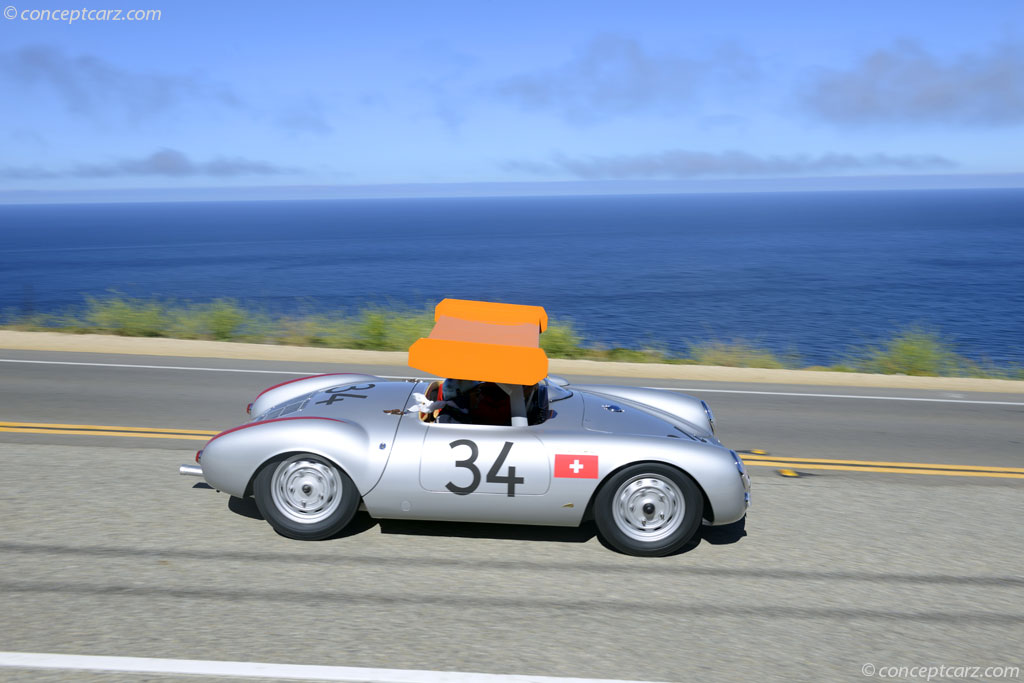
View info and historyChasis 550-07 was built as a prototype 550 and given to Wendler Karosserie in Reutlingen to demonstrate their coachbuilding skills. Porsche had not allocated a Weinsberg-designed chassis (550-07) to this build, but one of the new Wendler frames (550-0043), from the supply allocated for Porsche customer cars. Porsche welded a new identification plate of '550-07' over the existing chassis plate '550-0043' already on the frame. This is the only 550 chassis known to have been renumbered. It was the first Wendler-built car on a Wendler-built frame, and built as a Buckelwagen prototype, which consisted of a high rear body starting at the firewall between the rear of the seats and the engine bay. It had a full-frame windshield and angled side windows, making it one of the most aerodynamic designs tested by Porsche test pilots.A total of 90 prototype and customer builds were created, and they were raced with many successes around the world, often finishing in the top three results in their class, from Sebring to Le Mans, and from Torrey Pines to Watkins Glen. Between 1953 and as late as 1965, the 550 Spyders started in over 370 races around the European and U.S. circuits, winning 95 races outright along with 75 class victories. The factory Werke cars were painted silver with spears of different colors on the rear fenders to aid recognition from the pits. When production 550s were first sold to the public in January 1955, the Type 547 flat-4 engine had been refined by several seasons of racing development. These customer cars were built using alloy bodies by Wendler. Privateers continued to contribute to the 550's racing resume long after the works teams had moved on to the 718 (commonly known as the RSK) in 1957. Many of the greatest race drivers of the 1960s posted their early successes in 550 Spyders.
Spyder
Chassis #: 718-034
Engine #: 032
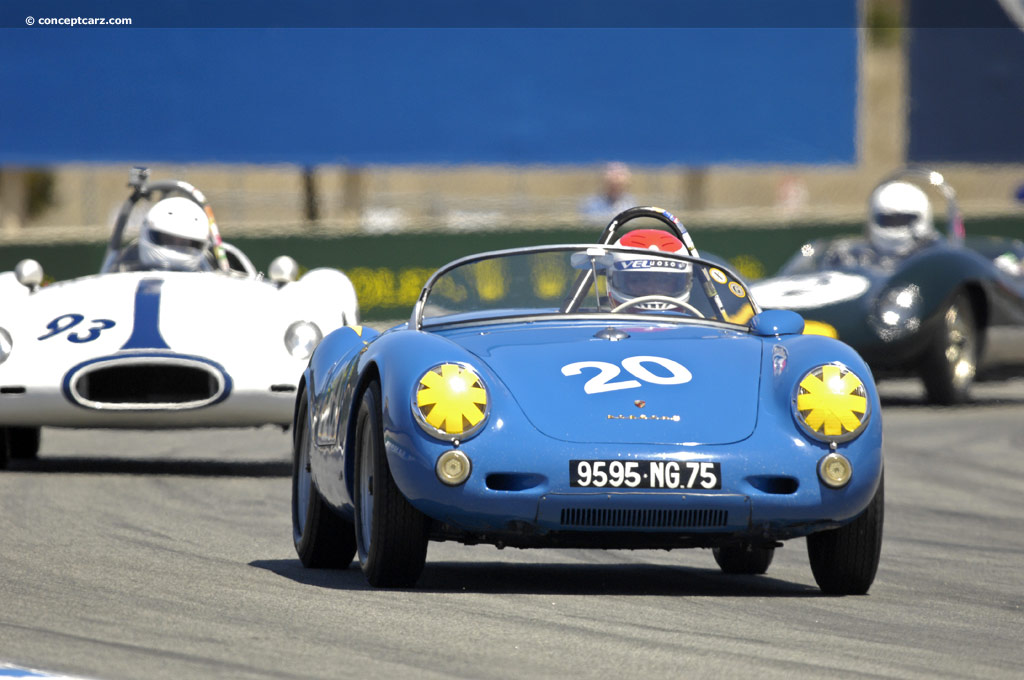
View info and historySince they were also road cars, it was not uncommon for the privateer to drive their 550 to the race track, race it, and then drive it home. Per the rulebook, these little roadsters were ostensibly required to be street driven, so they had a token canvas tonneau that could otherwise be left folded away in the garage.One of the earliest privateer Porsche 550s was acquired by James Dean (numbered 130 / VIN 550-0055), who traded his 356 Porsche Super Speedster at Competition Mtoros for the new 1955 550 Spyder on September 21st. Sadly, he crashed at the CA Rte 46/51 Cholame Junction on September 30, 1955, resulting in Dean's death.Porsche 550A
The Porsche 550A version of 1956 had a more rigid spaceframe chassis, altered rear suspension, and an even lower overall weight. It awarded Porsche with its first major sports car racing overall victory when it won the Targa Florio in 1956. An additional 39 550A's were built through 1957.
by Daniel Vaughan | Jun 2022
Spyder
Spyder
View info and history
Spyder
View info and history
The 550 took its name because it was the 550th design project undertaken by the Porsche company.
Spyder
Chassis #: 550-0041
Engine #: 90037
View info and history
Auction entries : 1
Spyder
Chassis #: 550-0031
View info and history
Spyder
Chassis #: 718-034
Engine #: 032
View info and history
The Porsche 550A version of 1956 had a more rigid spaceframe chassis, altered rear suspension, and an even lower overall weight. It awarded Porsche with its first major sports car racing overall victory when it won the Targa Florio in 1956. An additional 39 550A's were built through 1957.
by Daniel Vaughan | Jun 2022
Related Reading : Porsche 550/718 Sports Racing Cars History
After World War II, Walter Glockler of Frankfurt was one of the first to own a Volkswagen dealership. He was an amateur motorcycle racer that had ventured into auto racing once he had financial backing from his successful dealership. One of his engineers working at the dealership had worked on prewar Adler sports cars and had amassed a wealth of racing knowledge and expertise. In 1948 they modified....
Continue Reading >>
Continue Reading >>
1959/60 Porsche 718 RS 60 Spyder
Automobile sport was part of the picture for the fledgling Porsche sports car firm from the first. The 356 quickly became popular around the world, in the hands of private drivers with sporting ambitions. New racesports cars were developed in Zuffenhausen at the beginning of the fifties the1.5 liter 550 Spyder proved a shark in the goldfish bowl against larger-displacement competitors in major races.....
Continue Reading >>
Continue Reading >>
- 1955 Porsche 550 RS Spyder Menu
- Article
- Image gallery
- Valuation
- Specifications
- Profiles
Carrera Panamericana VehiclesSports Racer Vehicles
Similarly Sized Vehicles
Porsche
Similar Vehicles
Similar Automakers
Similarly Sized Vehicles
from 1955


1955 Porsche 550 RS Spyder Vehicle Profiles






Recent Vehicle Additions


Related Automotive News

'Hidden Treasure' Porsche Icon at Bonhams Amelia Island Auction
550 SPYDER WITH PERIOD RACE HISTORY OFFERED FOR FIRST TIME IN 50 YEARS
One of the most important Porsche models ever produced will headline Bonhams Amelia Island Sale on March 3 in Florida, being offered after 50 years of ownership and displayed...

Driven by the Greats: 1956 Ferrari 290 MM Leads RM Sotheby's Los Angeles Auction
FERRARI HEADLINES 40 ECLECTIC CARS OFFERED AT THE PETERSEN AUTOMOTIVE MUSEUM
RM Sothebys announces headline Ferrari entry for Petersen Automotive Museum Auction on 8 December
Ferrari 290 MM was campaigned by Scuderia Ferrari for 1956 and...

Techno Classica 2014: more than 30 racing cars to celebrate 120 years of Mercedes-Benz motor racing history
Cars that were the heroes of magical moments put their stamp on this high-powered, most comprehensive show presentation
With more than 30 vehicles, Mercedes-Benz Classic presents motor racing history in all its unique breadth and depth
120 years o...

1954 Carrera Panamericana: Courage to Go On
Suddenly the Ferrari 340 Mexico would break loose on Hill. Careening down over the ledge, the car would be battered and bruised, coming to a rest finally with its occupants none the worse for wear. It would be a scary moment and the mangled bodywork...

Goodwood Festival of Speed 2013: auction of Mercedes-Benz W 196 R one of highlights at world's 'largest motorised garden party'
Mercedes-Benz Classic presents great moments in motor-racing history at Goodwood
Motorsport festival celebrating its 20th anniversary
Auction of only privately owned post-war Silver Arrow by Bonhams sure to cause a stir
Stuttgart – This...