Had it not been for Alexander Winton, the legendary Packard automobile probably would never have been produced. When James Ward Packard purchased a 'Winton' in 1898, he was very dissatisfied with the car. He relayed his thoughts and experiences with the car to Mr. Winton who suggested that Mr. Packard should try to build a better car of his own. By November of 1899, with the assistance of his brother and two former Winton employees, Packard produced his first car. Four additional cars were built that year and 47 of a 'Model B' in 1900. It was not long before the slogan 'Ask the Man Who Owns One' was adopted. 
Coupe Roadster
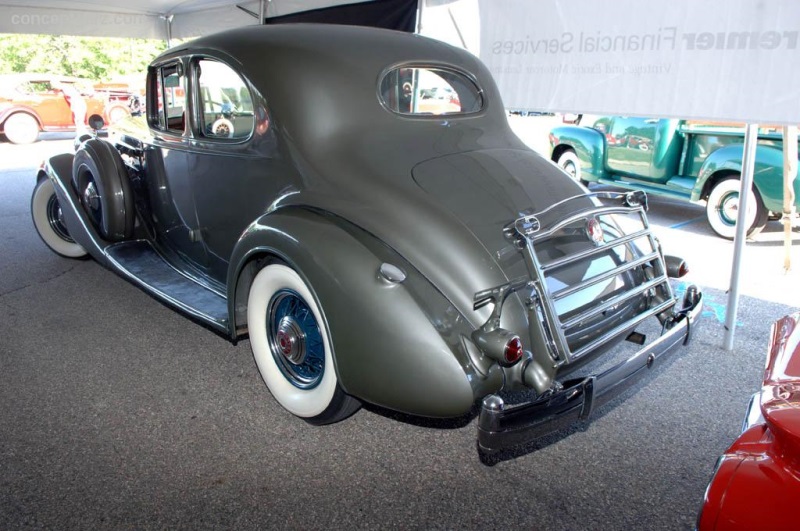
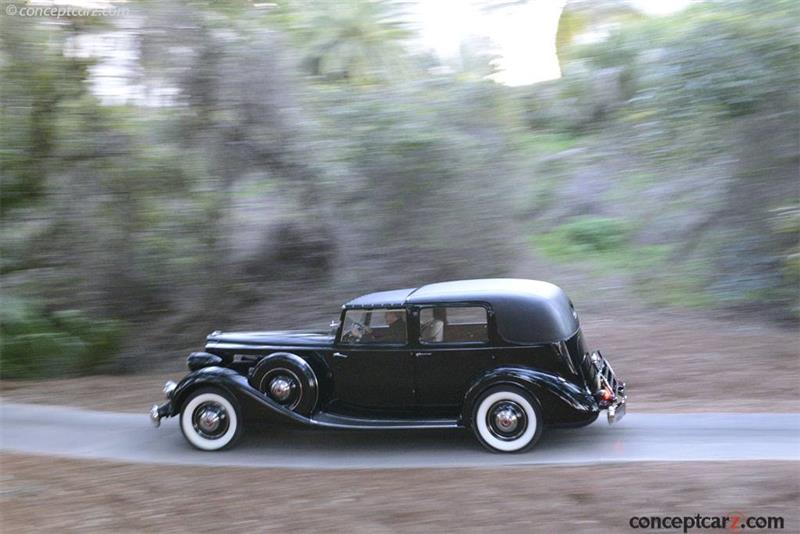
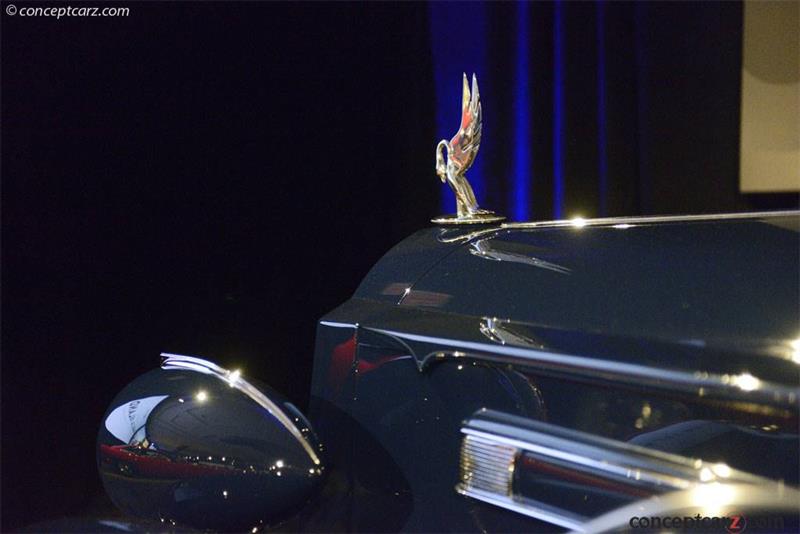
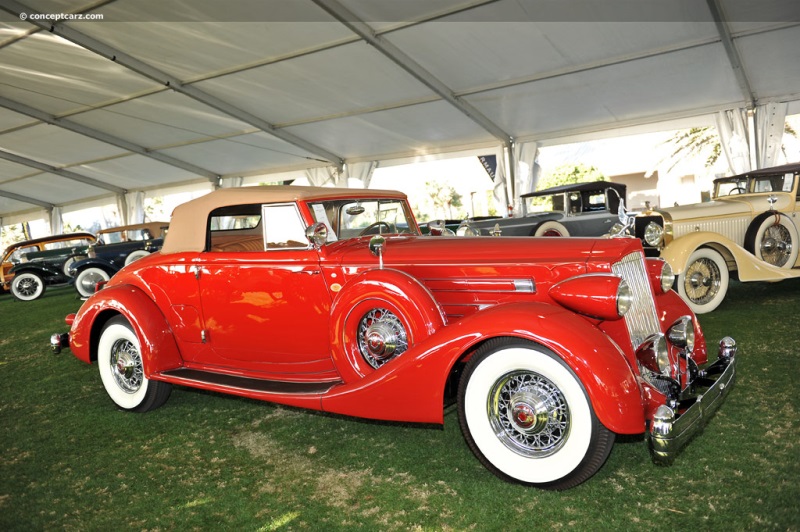
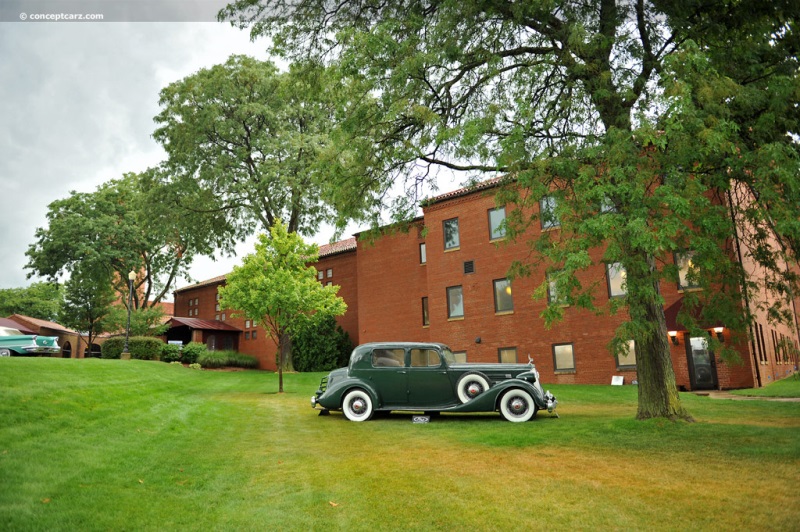
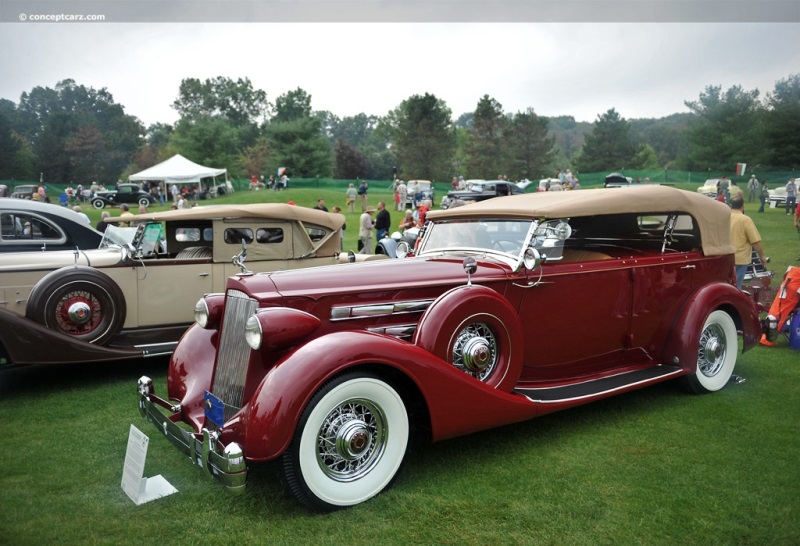
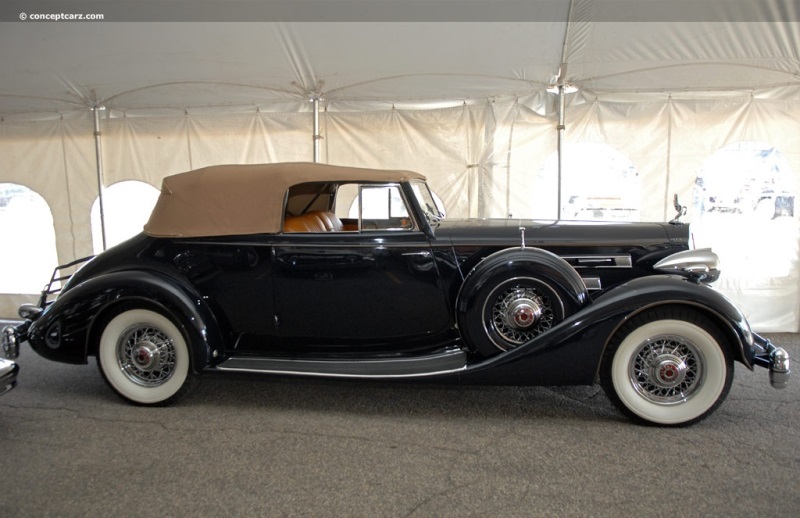
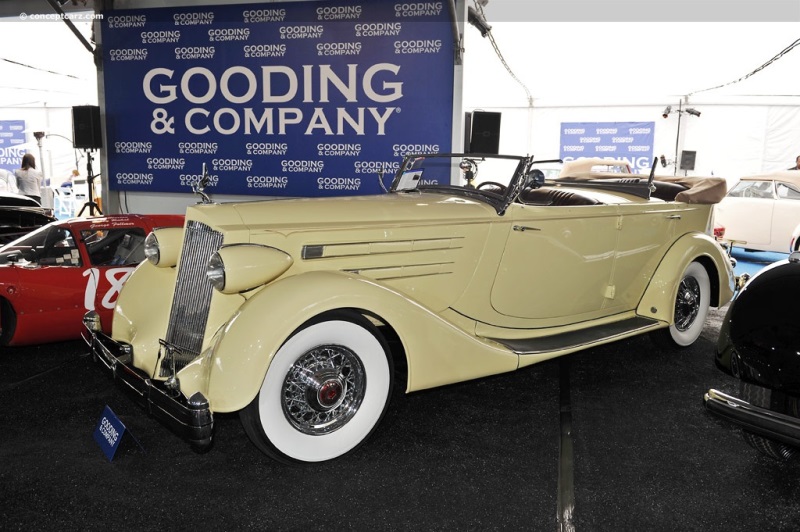
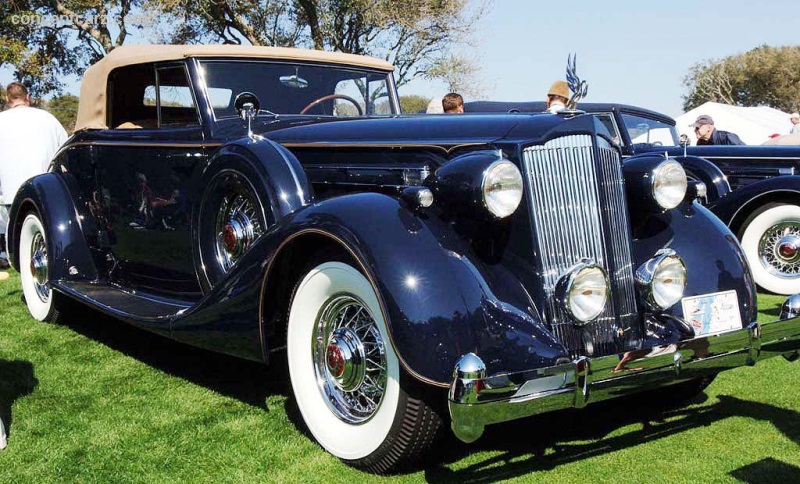
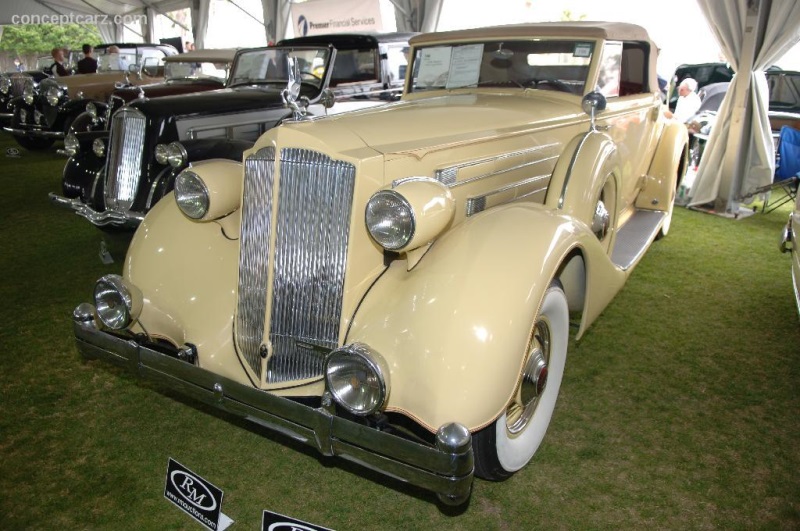
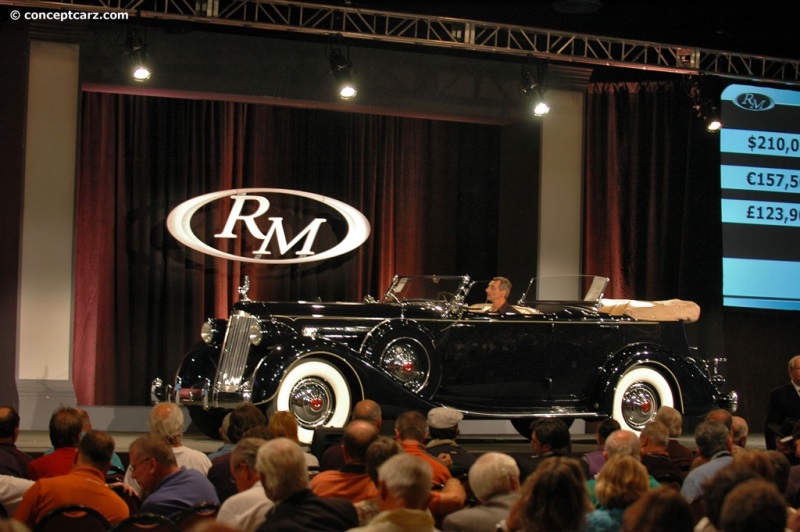
View info and historyPackard automobiles were in high demand until the Great Depression cut production by nearly half each year when compared with the previous. Even with slipping sales, Packard continued to refine their vehicles, making improvements from year to year. In 1936, Packard employed 5,100 production workers with 2,500 of them assigned to building the 5,985 senior cars that would be produced that year. The remaining 2,600 employees work on the other 55,042 Packard 120 Models created that year. This division of labor, with nearly half of the employees working on 10% of the vehicles, represented the level of detail, quality, and craftsmanship that went into the senior automobiles which were priced considerably higher than the 'Junior' model. The fourteenth series for 1936 had only minor differences from the cars of 1935, the most significant change being a new radiator, which was raked back five degrees to give the car a sleeker look. 1936 was the final year for the 17-inch wire wheels and the traditional double-blade bumpers with hydraulic dampers.
Speedster
Engine #: 904080
View info and history
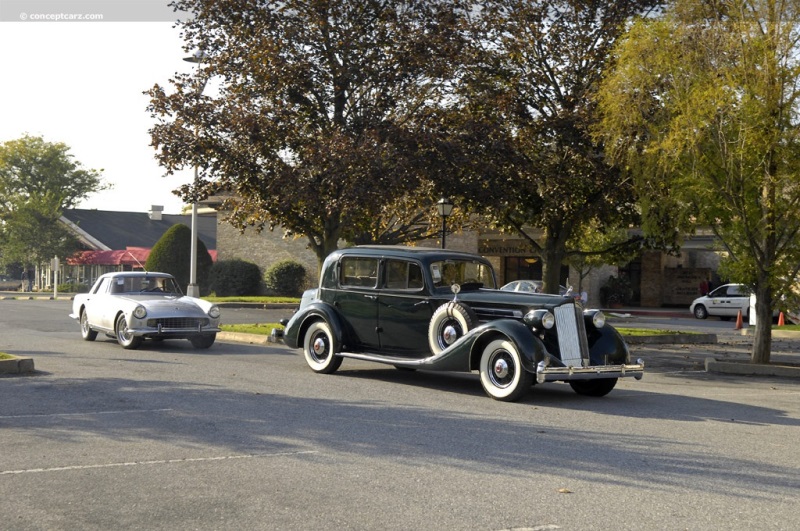
Auction entries : 1The Twelve was offered in many different body styles including several different four-door sedan configurations.The 473.3 cubic-inch twelve-cylinder engine had four main bearings, a Stromberg-Duplex carburetor, various compression ratios (6.0;1, 6.24:1, and 7.0:1), and developed 175 horsepower at 3,200 RPM. The engine was backed by a three-speed selective synchromesh transmission with a single plate clutch and floor shift controls. Mechanical-vacuum assist brakes at all four corners provided the stopping power. The Series 1407 rested on a 139-inch wheelbase (the same as the Super 8 Series 1404) and was priced from $3,850 to $6,400. The Seris 1408 had a 144-inch wheelbase (shared with the Super 8 Series1405) and was priced from $4,285 to $6,435. The total 1936 Packard Twelve production was 682 units.
by Daniel Vaughan | Aug 2019
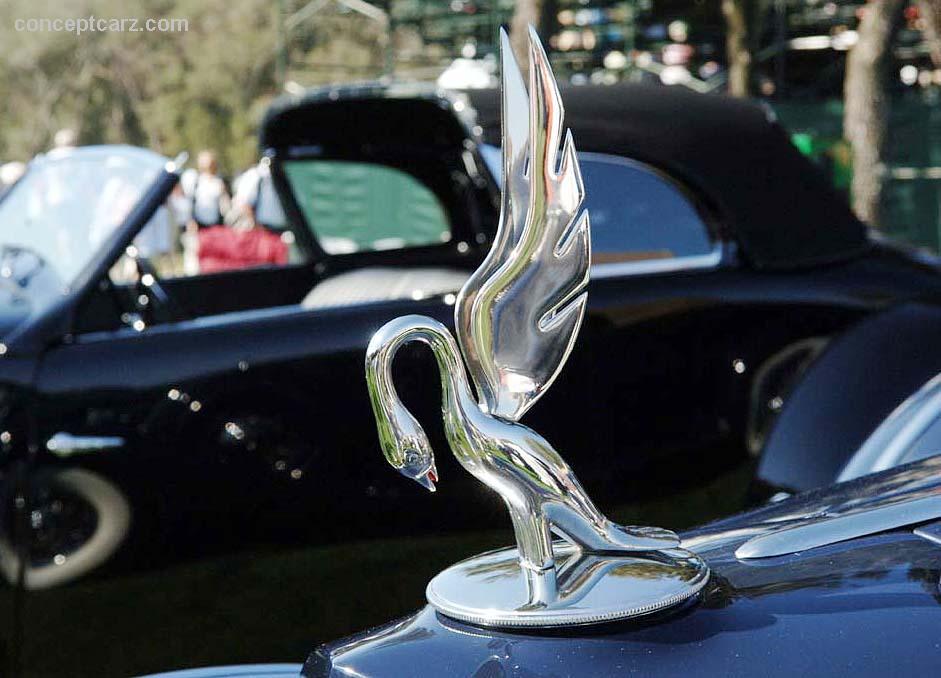
Coupe Roadster
View info and history
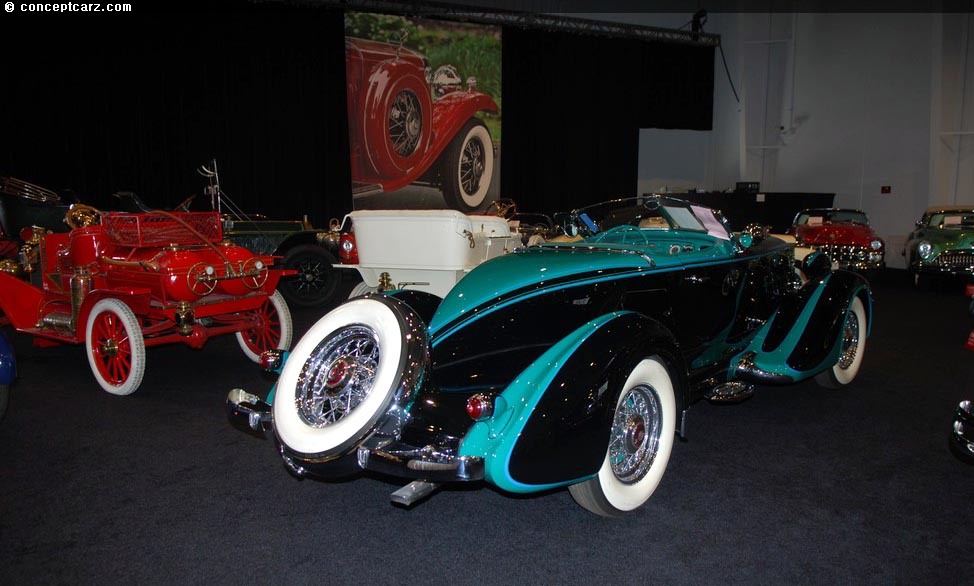
Speedster
Engine #: 904080
View info and history
Auction entries : 1
by Daniel Vaughan | Aug 2019
Related Reading : Packard Twelve History
The Packard Twelve was produced from 1933 to 1939 with over 35,000 examples produced. It is considered by many to be one of the finest automobiles produced by Packard and one of the most significant creations of the classic car era. The long and flowing front hood hid a 445 cubic-inch side-valve twelve-cylinder engine that was refined, powerful, smooth, and quiet. The engine was originally destined....
Continue Reading >>
Continue Reading >>
Similar Automakers
Similarly Priced Vehicles


1936 Packard Model 1407 Twelve Vehicle Profiles



Recent Vehicle Additions


Performance and Specification Comparison
Price Comparison
$995 - $1,400
$2,470 - $5,400
$2,560 - $5,240
$2,900 - $5,820
$3,690 - $4,010
$4,300 - $6,400
Twelve Fourteenth Series Specification Comparison by Year
Year
Production
Wheelbase
Engine
Prices
Related Automotive News

All-New Ford Mustang Redefines Driving Freedom With Immersive Digital Cockpit, Advanced Engines and Bold Style
Nearly 60 years after its debut, the all-new, seventh-generation Ford Mustang is the most exhilarating and fun-to-drive yet, thanks to a completely reimagined driving experience
Immersive digital cockpit inspired by fighter jets features two large...

Past Best of Show Winners at The Pebble Beach Concours d'Elegance
overview1
The 70th anniversary of the Pebble Beach Concours dElegance was celebrated with a spectacular display of previous Best of Show winners. Thirty-seven examples graced the showfield and many were still with the same owners who raised the trophy...

2019 Hyundai Kona Electric Recalibrates The Eco CUV Formula With An Impressive 250 Miles Of Estimated Range
Generous 250 Mile Estimated Range Meets More Varied Lifestyle Needs
New Electric CUV offers Youthful Design, Sporty Driving Character, Leading Safety Technology and Advanced Infotainment Features in an Affordable, Compact Footprint
Abundant Suite...
HILTON HEAD ISLAND MOTORING FESTIVAL & CONCOURS D'ELEGANCE PRESENTS 2015 PINNACLE AND HONORED COLLECTORS
Fred Guyton collection to feature 2014 Pebble Beach Concours Best in Class winner
William Tom Gerrard recognized for Post-War collection and key Concours contributions
HILTON HEAD ISLAND, S.C. – Each year, the Hilton Head Isla...

Magnificent Series of Coachbuilt Classics To Grace RM's Amelia Island Concours D'Elegance Sale
RM Auctions returns as the official auction house of the Amelia Island Concours dElegance, March 9, 2013
Single-day sale features breathtaking roster of more than 80 investment-quality collector cars
Notable highlights include an outstanding s...