1938 328 ![]() |
Image credits: © BMW.
1937 BMW 328 news, pictures, and information | ||
| Tweet | ||
![]() | ![]() | ![]() | Roadster Chassis Num: 85337 |
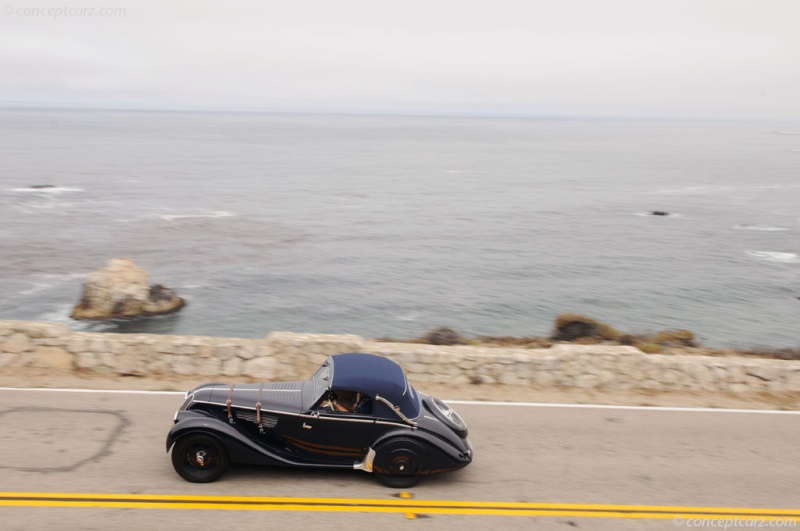
![]() | ![]() | ![]() | Cabriolet Coachwork: Autenrieth Chassis Num: 85112 Engine Num: 85112 |
| Sold for $302,500 at 2009 RM Auctions. | |||
BMW purchased the Dixi Werke of Eisenach and continued the manufacture of the smallest Dixi product, an Austin Seven built under license. The BMW badge became apart of the cars in January of 1929, even though Dixi remained part of the marque name for half-a-year.
In 1932, the Austin license was given up in favor of the 3/20PS Type AM. This had a 782cc engine with overhead valves, and independent rear suspension by swing axles and leaf springs, and bodies from Daimler-Benz at Sindelfingen.
The Typ 303 was introduced in spring of 1933. This had a six-cylinder engine that displaced 1173cc and rested in a tubular chassis. It had a rack-and-pinion steering system and hydraulic brakes.
In 1934, a 1490cc car was introduced, the Type 315. This was the first BMW designed by Fritz Fiedler, an engineer who had once worked at Stoewer and Horch. Mr. Fiedler would be responsible for the designs of every BMW model until his retirement in 1964.
In 1936, at the Berlin Auto Show, BMW introduced the 326. This was a very important model for BMW as it was their first four-door sedan. It had a 1971cc engine that offered 50 brake horsepower and was capable of carrying the car to 72 mph. It was a streamlined vehicle that sat on a new box-section frame, with torsion bars in the rear.
The engine in the 328 had hemispherical combustion chambers and used short horizontal pushrods to operated opposed exhaust valves from the single camshaft. By increasing the compression and with ported heads, even more performance could be gained from the engine.
In competition, the BMW 328 models were very successful. At Le Mans in 1939, a 328 won the two-liter class. The same car, part of a five-car team, won 1940's Mille Miglia.
This 1937 BMW 328 Cabriolet wears coachwork by Autenrieth. Georg Autenrieth partnered with Franz Eisenlohr after World War I. In 1921, he left to start his own business. He built a popular business building cabriolet and tourer bodies for Opel and Rohr. Autenrieth bought into Rohr Automobilwerke; when BMW introduced the 326/327/328 series in the mid-1930s, Authenrieth built cabriolets and coupes. On the longer 326 chassis, they offered a four-door bodystyle.
When World War II came to a close, Autenrieth built cabriolets and coupes for BMW on the 501 and 502 models. They were also responsible for the bodies on Opels 1959-62 Rekord. When orders from Opel ceased, the firm closed down in 1964.
This 1937 BMW 328 Cabriolet has had only five owners since new. When the current owner purchased the car in the 1970s, it was in original and unmolested condition. In the mid-1980s, it was completely restored. It is painted in depp red paint and has a tan convertible top. The interior is tan leather with matching carpets. There is a spare tire recessed nicely into the lid.
In 2009, this BMW 328 Cabriolet was offered for sale at the Automobiles of Amelia Island Auction presented by RM Auctions. It was estimated to sell for $250,000 - $350,000 and offered without reserve. The lot was sold for a high bid of $302,500, including buyer's premium.
By Daniel Vaughan | Mar 2009
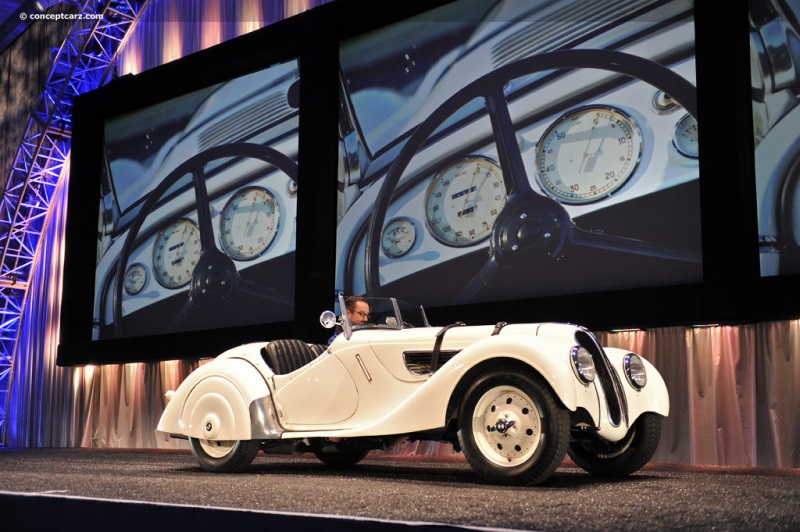
![]() | ![]() | ![]() | Roadster Coachwork: Touring Chassis Num: 85135 Engine Num: 85209 |
| Sold for $517,000 at 2012 Gooding & Company. | |||
The 328 won its class at the Mille Miglia, Le Mans, Spa 24 Hours and Britain's Tourist Trophy. Leading drivers included members of the factory team, as well as privateers and team drivers such as those supported by British importer Frazer Nash. Taking performance to another level, a special aerodynamic coupe body won the Mille Miglia outright in 1940.
This BMW 328 Roadster was in the ownership of a Russian military officer station in Germany in the post-War era. It was later acquired by an Austrian where it was dismantled with the intention of conducting a complete restoration. Discovered after many years in storage, the BMW was restored in Austria and prepared for vintage events.
In the mid-2000s, the car was purchased by Henry Petronis. During his ownership, the elegant BMW was displayed at the St. Michaels Concours d'Elegance on Maryland's Eastern Shore.
The 328 is finished in traditional white German racing livery and outfitted with rear-wheel spats, turn indicators and drilled wheels wearing period-appropriate Englebert competition tires. The seats are upholstered in black leather and the fascia features the full complement of Veigel and VDO instruments. There is a more modern Volvo gearbox and the engine is equipped with the high-performance OZ 80 aluminum cylinder heads and three Solex twin-choke carburetors.
In 2012, the car was offered for sale by Gooding & Company at their Scottsdale, Az. auction. The car was estimated to sell for $500,000 - $650,000. The car found new ownership for the sum of $517,000, inclusive of buyer's premium.
By Daniel Vaughan | Feb 2012
In 1936, BMW (Bavarian Motor Works) introduced the Type 328. The vehicle was stylish and aerodynamic. The design of the vehicle, courtesy of Fritz Fiedler, provided excellent handling and the inline-six cylinder engine produced excellent performance. The engine featured a cast iron block and dual overhead valves per cylinder bank. The total output was around 80 horsepower. The engine was placed in the front and provided power to the rear wheels. The body panels were constructed of a light-weight alloy. The chassis was comprised of a tubular space frame construction.
As was sometimes the custom with many early European vehicles, the coachwork was handled by a custom coachbuilder. Examples exist where the famous Figoni et Falaschi Carrosserie of Paris, France outfitted the vehicle with exquisit designs.
The vehicle was very successful on the racing circuit winning such races as a class win at the Mille Miglia in 1938. In 1940 it was first in class and first overall. At the 1939 Le Mans 24 Hour race it place fifth overall and first in class. A 328 won the RAC Rally in 1939.
During the close of the 1940's, Jaguar introduced the XK-120, a vehicle that was similar in design to the BMW Type 328.
By Daniel Vaughan | Sep 2006
As was sometimes the custom with many early European vehicles, the coachwork was handled by a custom coachbuilder. Examples exist where the famous Figoni et Falaschi Carrosserie of Paris, France outfitted the vehicle with exquisit designs.
The vehicle was very successful on the racing circuit winning such races as a class win at the Mille Miglia in 1938. In 1940 it was first in class and first overall. At the 1939 Le Mans 24 Hour race it place fifth overall and first in class. A 328 won the RAC Rally in 1939.
During the close of the 1940's, Jaguar introduced the XK-120, a vehicle that was similar in design to the BMW Type 328.
By Daniel Vaughan | Sep 2006
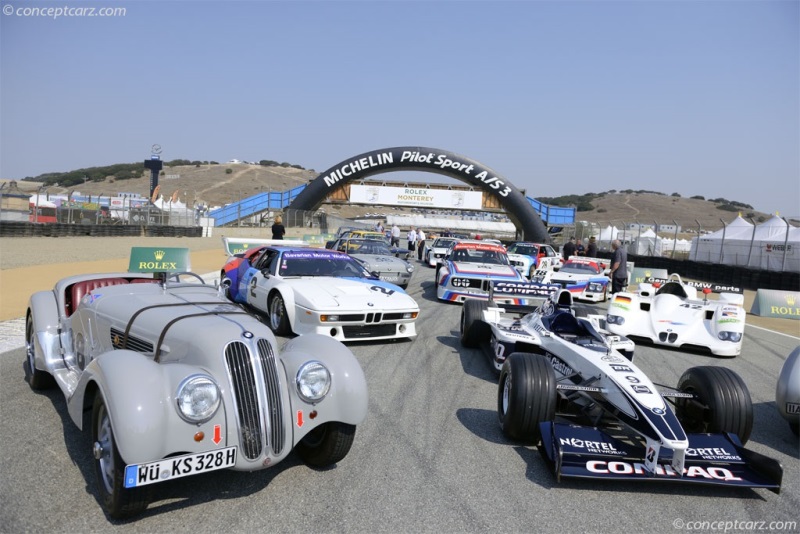
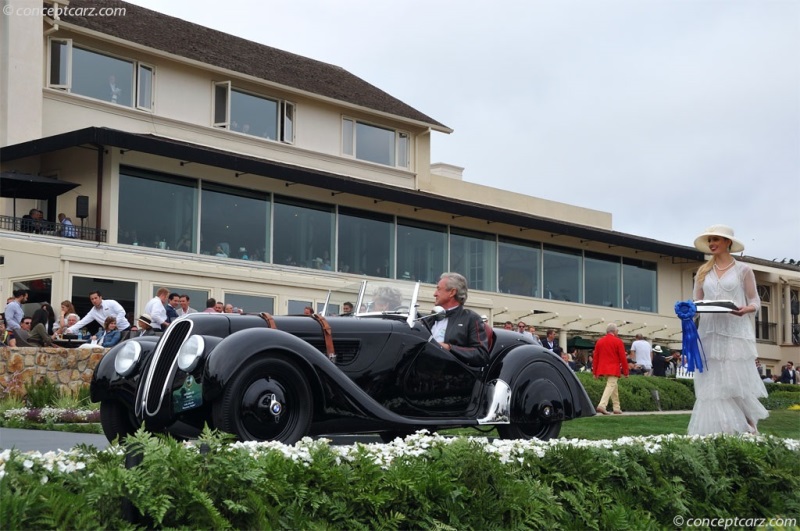
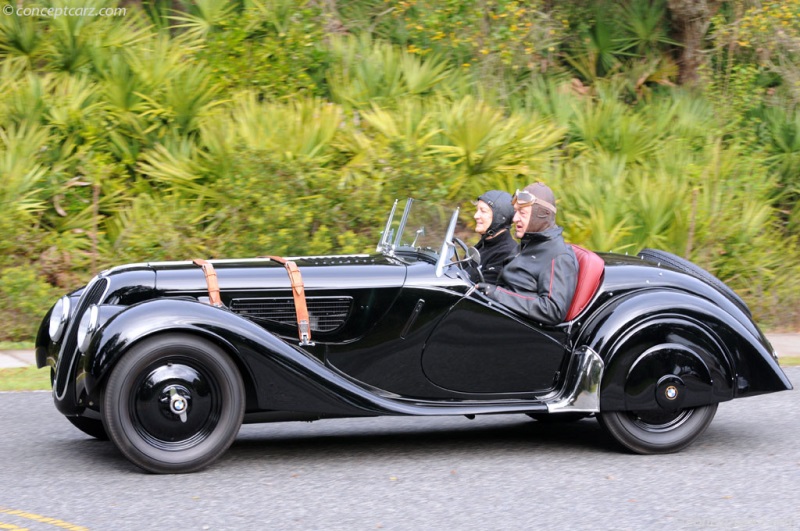
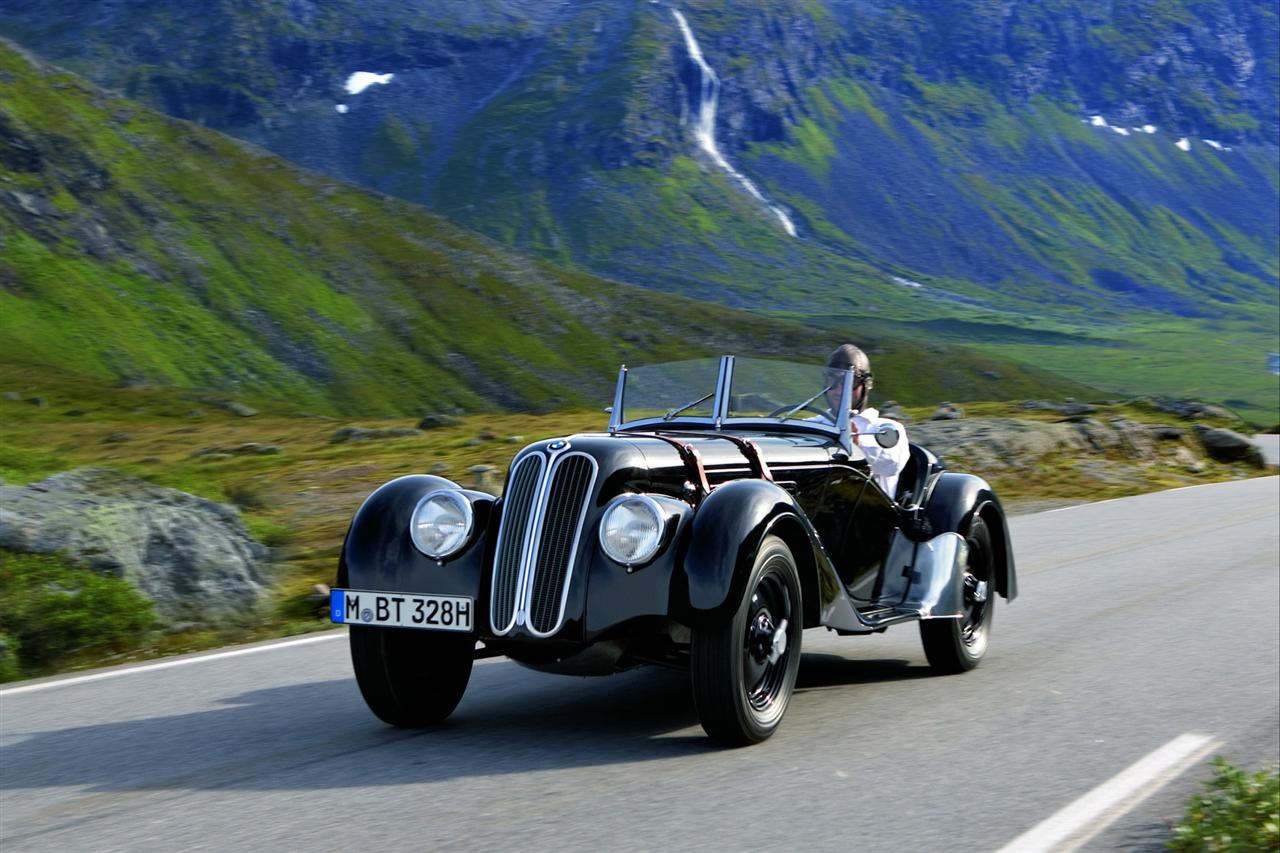
The BMW 328 Roadster was a compact two-seater with leather straps adorning the front hood and a very potent force in the racing scene. It was powered by a lightweight six-cylinder engine bred from the success of its siblings, and fitted to a short-wheelbase chassis, the 328's were very sporty, culminating with a win at the 1940 Mille Miglia.
Racing has always been important; it perfects the breed and promotes the brand. BMW's six-cylinder engine from the 1934 315 became the basis for 328. The 1.5-liter version had modest success in its racing class, but more was required to keep it competitive in the under 2-liter category. A new, larger version of the engine was developed, resulting in an increase in horsepower to 55 bhp. This was an increase by 15hp. The new engine was fitted to a chassis and dubbed the 319. Visually, few aesthetic differences existed between the 315 and the 319. They were nearly identical, except under-hood.
In 1936, the 326 was introduced. It was a larger vehicle to the 315 but had 55 horsepower. The increase in horsepower and size gave it only a slight increase in performance over its 315 sibling. The following year, a two-seater cabriolet version was introduced, called the 327. This, in similar guise to the 319, was unable to match its performance resulting in slow sales.
BMW responded by improving their engine, creating a new cylinder head, and modifying the valve train. The valve train was very similar to other marque's of the day, such as Riley and Talbot, where a lateral camshaft actuated the inlet and outlet valves with push-rods and rocker arms. Installed opposite to one another, with each on either sides of the engine, resulting in a hemispherical combustion chamber. These modifications gave the engine a significant boost in power, up by 25bhp over its predecessor, to 80bhp.
In 1936, the engine made its debut in the 328 at the Eiffel Rennen race. It was piloted by Ernst Henne and easily won the 2-liter class. On its inaugural race, the engine had proven to be reliable and powerful. Privateers took notice, and help make the vehicle both a sales success and a dominate force on the racing circuit.
The 328 was given drum brakes in both front and rear, a rack-and-pinon steering setup, and a tubular steel chassis. The lightweight aluminum body concealed the 2-liter, six-cylinder engine and its available 80 horsepower. The engine had a cast-iron block and aluminum heads with two-valves per cylinder. The front suspension featured swing axles and transverse leaf springs while in the rear there was a live axle and semi-elliptic leaf springs. The engine was mated to a ZF four-speed manual gearbox and sent power to the rear wheels. The standard wheelbase size for the roadsters was 94.5 inches and a length of 153.5 inches. With an overweight of around 1800 lbs, the pre-War BMW 328 was very lightweight, nimble, and fast.
The 328 came in various configurations, such as roadster and cabriolets. Custom coachbuilders such as Wendler and Drauz, and Glaeser created many of the cabriolet versions, noted for their luxurious amenities and elegant style. The Roadster bodies were the standard configuration with most assembled by the factory. Touring was tasked with creating purpose-built versions for the 1939 24 Hours of LeMans. The 'Superlegerra' (Meaning lightweight) construction methods were used coupled with a design meant to minimize drag. The result was astonishing, with a fifth place overall finish and an outright victory in the two-liter class.
For 1940, BMW turned their sights on the grueling Mille Miglia race. Five cars were entered and one emerged in first place. Baron Fritz Huschke von Kanstein drove a special-bodied BMW 328 Coupe to victory. It featured a streamlined body with aluminum and magnesium alloy construction. Overall, the 328's finished in first, third, fifth and sixth at the 1940 Mille Miglia. The 3rd, 5th, and 6th positions were captured by roadster bodied 328s. The final 328 version entered in the race was a limousine-bodied car that was tailored for racing and given aerodynamic features courtesy of Professor Wunibald Kamm. It was driven by Count Lurani but failed to finish the race.
During the production lifespan of the 328, BMW and Frazer Nash both produced 328s. BMW supplied the British-based Frazer Nash Company with rolling chassis. Total production for all 328 models was around 426 with around half still in existence.
The 328 engine would be used in the post-war Era, by BMW, Bristol, and AC in various forms. It would be used to power such cars as Cooper Bristols Formula 2 racers.
By Daniel Vaughan | Jul 2008
Racing has always been important; it perfects the breed and promotes the brand. BMW's six-cylinder engine from the 1934 315 became the basis for 328. The 1.5-liter version had modest success in its racing class, but more was required to keep it competitive in the under 2-liter category. A new, larger version of the engine was developed, resulting in an increase in horsepower to 55 bhp. This was an increase by 15hp. The new engine was fitted to a chassis and dubbed the 319. Visually, few aesthetic differences existed between the 315 and the 319. They were nearly identical, except under-hood.
In 1936, the 326 was introduced. It was a larger vehicle to the 315 but had 55 horsepower. The increase in horsepower and size gave it only a slight increase in performance over its 315 sibling. The following year, a two-seater cabriolet version was introduced, called the 327. This, in similar guise to the 319, was unable to match its performance resulting in slow sales.
BMW responded by improving their engine, creating a new cylinder head, and modifying the valve train. The valve train was very similar to other marque's of the day, such as Riley and Talbot, where a lateral camshaft actuated the inlet and outlet valves with push-rods and rocker arms. Installed opposite to one another, with each on either sides of the engine, resulting in a hemispherical combustion chamber. These modifications gave the engine a significant boost in power, up by 25bhp over its predecessor, to 80bhp.
In 1936, the engine made its debut in the 328 at the Eiffel Rennen race. It was piloted by Ernst Henne and easily won the 2-liter class. On its inaugural race, the engine had proven to be reliable and powerful. Privateers took notice, and help make the vehicle both a sales success and a dominate force on the racing circuit.
The 328 was given drum brakes in both front and rear, a rack-and-pinon steering setup, and a tubular steel chassis. The lightweight aluminum body concealed the 2-liter, six-cylinder engine and its available 80 horsepower. The engine had a cast-iron block and aluminum heads with two-valves per cylinder. The front suspension featured swing axles and transverse leaf springs while in the rear there was a live axle and semi-elliptic leaf springs. The engine was mated to a ZF four-speed manual gearbox and sent power to the rear wheels. The standard wheelbase size for the roadsters was 94.5 inches and a length of 153.5 inches. With an overweight of around 1800 lbs, the pre-War BMW 328 was very lightweight, nimble, and fast.
The 328 came in various configurations, such as roadster and cabriolets. Custom coachbuilders such as Wendler and Drauz, and Glaeser created many of the cabriolet versions, noted for their luxurious amenities and elegant style. The Roadster bodies were the standard configuration with most assembled by the factory. Touring was tasked with creating purpose-built versions for the 1939 24 Hours of LeMans. The 'Superlegerra' (Meaning lightweight) construction methods were used coupled with a design meant to minimize drag. The result was astonishing, with a fifth place overall finish and an outright victory in the two-liter class.
For 1940, BMW turned their sights on the grueling Mille Miglia race. Five cars were entered and one emerged in first place. Baron Fritz Huschke von Kanstein drove a special-bodied BMW 328 Coupe to victory. It featured a streamlined body with aluminum and magnesium alloy construction. Overall, the 328's finished in first, third, fifth and sixth at the 1940 Mille Miglia. The 3rd, 5th, and 6th positions were captured by roadster bodied 328s. The final 328 version entered in the race was a limousine-bodied car that was tailored for racing and given aerodynamic features courtesy of Professor Wunibald Kamm. It was driven by Count Lurani but failed to finish the race.
During the production lifespan of the 328, BMW and Frazer Nash both produced 328s. BMW supplied the British-based Frazer Nash Company with rolling chassis. Total production for all 328 models was around 426 with around half still in existence.
The 328 engine would be used in the post-war Era, by BMW, Bristol, and AC in various forms. It would be used to power such cars as Cooper Bristols Formula 2 racers.
By Daniel Vaughan | Jul 2008
| Andy Warhol'S 1979 Bmw M1 Art Car To Be Center Piece At Saratoga Automobile Museum | |
![]() | • BMW History and Heritage on four wheels and two on display from May – November, 2013 Woodcliff Lake, NJ – May 17, 2013… Andy Warhol's 1979 BMW M1 Art Car will be the center piece of the exhibition 'BMW – The Ultimate Driving Machine', which opens this weekend at the Saratoga Automobile Museum. The exhibition will also feature the BMW 3.0 CSL which won the Daytona 24 Hour race in 1976. The exhibition, which features a retrospective of BMW cars and motorcycles, will run until ...[Read more...] |
| BMW TO BE FEATURED AT SARATOGA AUTOMOTIVE MUSEUM | |
![]() | • BMW History and Heritage on four wheels and two on display from May – November, 2013 Woodcliff Lake, NJ – March 8, 2013… BMW's rich heritage will be showcased at the Saratoga Automobile Museum in an exhibition called 'BMW – The Ultimate Driving Machine.' The exhibition, which will feature a retrospective of BMW cars and motorcycles, will run from May 6 – November 3, 2013. The array of BMW automobiles will include road cars and race cars, both from the modern era, as well as p...[Read more...] |
| BMW POWER SWEEPS TOP-THREE STARTING POSITIONS FOR 51ST ROLEX 24 AT DAYTONA | |
![]() | BMW Power Sweeps Top-Three Starting Positions for 51st Rolex 24 at Daytona Chip Ganassi Racing with Felix Sabates BMW Rileys Qualify 1 - 2. Woodcliff Lake, N.J. - January 24, 2013 . . . Racer Scott Pruett led an all-Chip Ganassi Racing with Felix Sabates charge to the front of the grid for the Rolex 24 at Daytona as BMW Power swept the top-three starting positions in today's qualifying session for Saturday's 51st annual twice- around-the-clock endurance classic. Pruett, the...[Read more...] |
| Barrett-Jackson Breaks Sales And Attendance Records At Its Spectacular 5th Annual Las Vegas Auction | |
![]() | The World's Greatest Collector Car Auctions™ Brings Together Auto Enthusiasts from Near and Far Barrett-Jackson, The World's Greatest Collector Car Auctions™, announced today that it generated more than $23 million in sales of rare, high-end collectible vehicles, exotics, customs, classics and Shelbys during its 5th annual Las Vegas auction. The auction company increased its overall hammer average from 2011, proving that the car market is stronger than ever. Automobilia sales reached m...[Read more...] |
| BMW Group reports strongest first half year ever in sales | |
| BMW Group achieved record sales for the first six months of the year, with a total of 900,539 vehicles delivered worldwide, an increase of 8.1% over the same period last year (prev. yr. 833,391). The company also achieved its second highest sales volume ever in a single month, with 172,516 BMW, MINI and Rolls-Royce brand vehicles delivered worldwide in June (prev. yr. 165,868/ +4.0%). Ian Robertson, Member of the Board of Management, Sales and Marketing BMW, said in Munich on Friday: 'We are ...[Read more...] | |
| View more Mille Miglia vehicles |
1937
BMW
models |
| BMW 320 |
| BMW 328 Mille Miglia |
| Similar Vehicles | |
![]() | 1937 Frazer Nash BMW 328 |
| Similar Automakers | |
| Audi | Infiniti |
| Jaguar | Land Rover |
| Lexus | Mercedes-Benz |
| Similarly Sized Vehicles from 1937 |
| Frazer Nash BMW 328 |
| BMW: 1931-1940 |
| Similar Automakers |
| BMW History |
| Other models by BMW |
| Manufacturer Website |
| ||||||||||||||||||||||||||||||||||||||||||||
| 1 Series 1600 2002 2800 3 Series 3.0 CS | 3.0 CSL 3.5 CSL 318i 3200 CS 327/328 5-Series | 503 507 6 Series 7-Series 700 850 | Dixi Isetta M Coupe M1 M3 M5 | M6 New Class X1 X3 X5 X6 | Z1 Z3 Z4 Z8 |
1938 328 ![]() |


1937