1930 8 Litre | 1932 8-Litre ![]() |
1931 Bentley 8-Liter news, pictures, and information | ||
| Tweet | ||
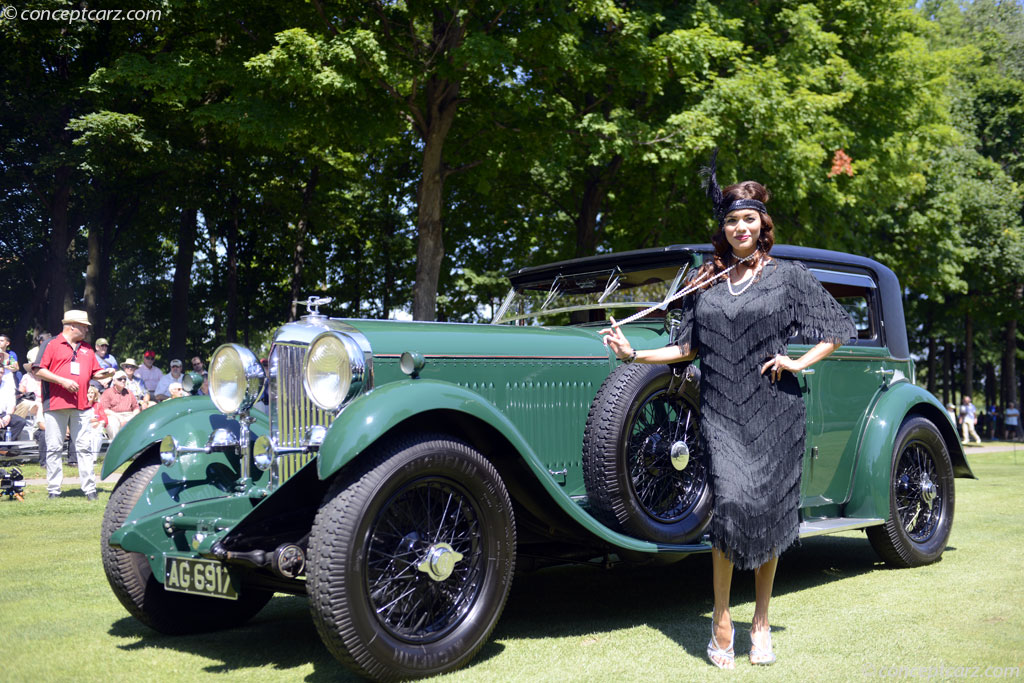
![]() | ![]() | ![]() | Sportsman Coupe Coachwork: Lancefield |
The car was conceived similarly to the Bugatti Royale - as a halo car to vault the maker into position as the supreme manufacturer of luxury cars in the world. However, like the Bugatti, the 8 Litre Bentley failed to sell in sufficient numbers to make a profit.
Just as the Great Depression was starting to affect Europe, Bentley unveiled the 8-Litre, its finest and most expensive model, at the 1930 London Auto Show. Set on either a 12- or 13-foot wheelbase, the 8 Litre was practically a yacht. It had a massive frame supported by tubular cross-members, and it weighed two tons. The six-cylinder engine displaced eight liters. The 8-Litre was as advanced as any existing Rolls-Royce, and was faster than any Rolls-Royce built before World War II. Many of the 100 produced still survive, although usually in modified form. Poor sales helped put the company into receivership in 1931, and some say that Rolls-Royce bought Bentley just to eliminate the competition from the 8-Litre. Rolls-Royce did, in fact, dispose of all 8-Litre spare parts after taking over the company.
The six-cylinder engine used a one-piece iron block and cylinder head with an electron crankcase. Four valves per cylinder were specified, as was twin-spark ignition - both were state of the art at the time. Bore was 110 mm (4.3 inches) and stroke was 140 mm (5.5-inches). A four-speed manual transmission with a single-plate dry clutch sent power to the rear wheels. Springs were used all around, and 4-wheel servo-assisted brakes were also fitted.
This example was purchased in 2004 from Mr. David Roberts, who had owned it in England since 1953. There were two owners prior to Mr. Roberts. The car had undergone a complete restoration, which lasted from July of 2004 through February of 2007.
By Daniel Vaughan | Aug 2008
![]() | ![]() | ![]() | Sportsman Coupe Coachwork: Gurney Nutting Chassis Num: YR 5088 Engine Num: YR 5088 |
| Sold for $1,485,000 at 2006 RM Auctions. | |||
The Bentley 8-Liter was first shown to the public at the 1930 London Motor Show. It was impressive in design, stature, and performance. It was capable of 100 mph, 10 mph faster than the comparable lightweight Rolls-Royce.
There were two platforms for the 8-Liter Bentley, a 144-inch and 156-inch wheelbase. The chassis on the 156-inch version weight 3700 pounds with the full-bodied versions tipping the scale at over two tones! The engineering of the 8-Liter was impressive, with its double-dropped frame and seven tubular cross members supporting the mammoth bodies. Aluminum was used throughout the bodies in an effort to reduce the weight.
Though the combination of beauty, power and prestige was enough to make the Bentley 8-Liter an instant success, the Great Depression was responsible for its low production figures, with only 100 examples being produced. Feeling the pressure of the Great Depression and slow sales, Bentley's chief financier, Woolf Barnato, severed his ties with Bentley and sending them spiraling into financial difficulty. Rolls-Royce intervened, saving the troubled company from receivership. They revamped the Bentley model line, brining their designs and mechanics inline with the Rolls-Royce family. The Bentley's now served as the entry-level cars into the ultra luxury department.
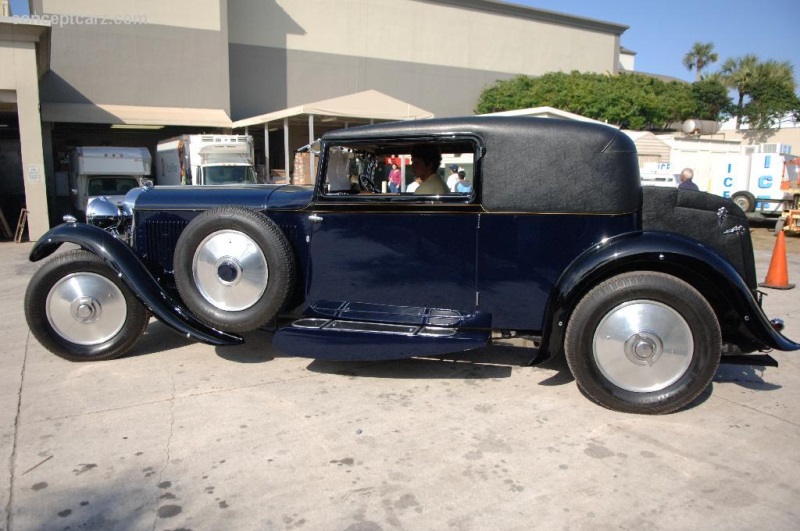
The 8-liters were adorned in stylish coachwork provided by reputable coachbuilders such as J. Gurney Nutting and Vanden Plas. Most of the bodies were graceful saloons and fixed head coupes.
This example has a blue leather interior. There is a sliding sunroof and ample space for luggage in the rear custom built compartment.
By Daniel Vaughan | Oct 2009
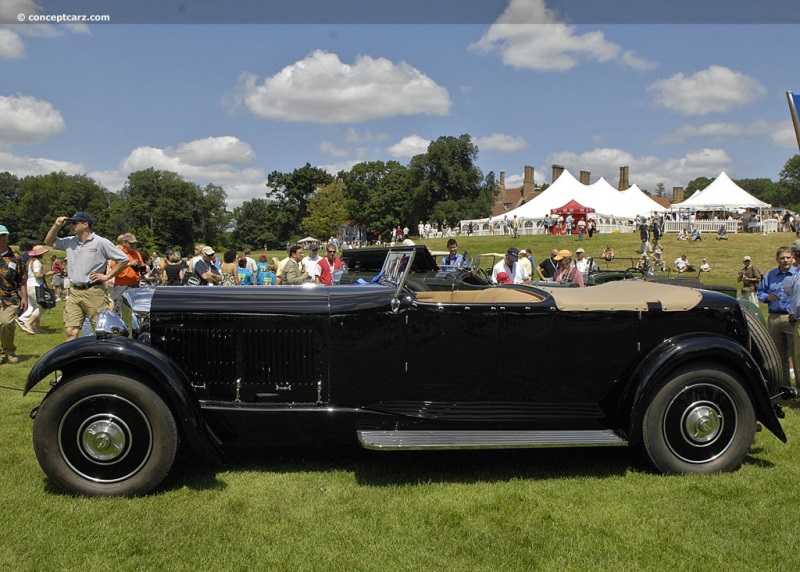
![]() | ![]() | ![]() | Murphy Convertible Victoria Coachwork: Murphy Chassis Num: YR5085 |
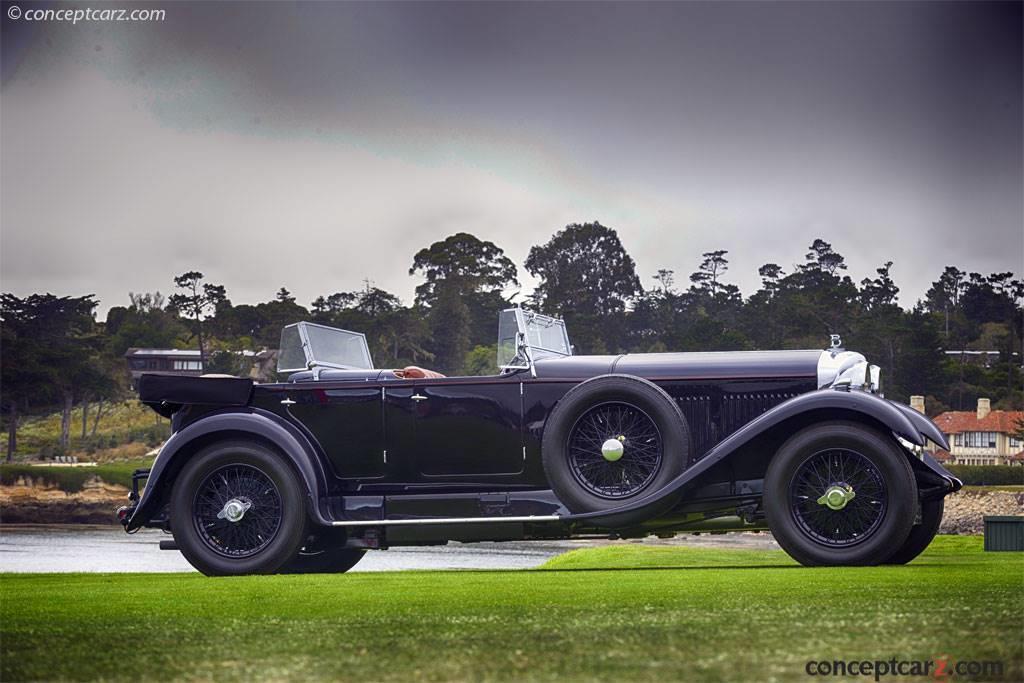
This is the only 8-Litre Bentley to be clothed with an American-made body. It was a special order for a gentlemen from Santa Barbara, California. When made, it was also the only Bentley to have all-metal bodywork. In 1931 the chassis was shipped by W.O. Bentley's company to another Walter - the W.M. Murphy Company of Pasadena, where this Franklin Hershey-designed Victoria convertible body was fitted. Victoria convertibles are basically two door, two window, roadsters seating at least four people. Only one hundred 8-Litre Bentleys were built, and they were amongst the most powerful cars of their day.
Of the 100 8-Liter Bentleys built, 35 were on a 145-inch wheelbase and 65 were on a 153-inch wheelbase. Very few of the original 8 Liters were open cars; fewer still were two-door open Victorias. One of the short wheelbase chassis was ordered by C.H. Mattheson of Santa Barbara, CA, for delivery to the Walter P. Murphy Coachworks. The body was designed by the famous Franklin Q. Hershey, and the coachwork was crafted out of alloy without using a wood substructure as was the practice of contemporary English coachbuilders.
Only 100 8 Litres were built - 65 long wheelbase and 35 short wheelbase. This car is a one-off all-alloy short wheelbase. It is one of only six open two-door 8 Litres.
![]() | ![]() | ![]() | Touring Car Coachwork: Vanden Plas |
The car was capable of 100 miles per hours powered by the 487 cubic-inch (8.0 Liter), overhead-cam, inline 6-cylinder engine with a power rating of 200-320 horsepower. It was coupled to a four-speed manual transmission. The chassis alone sold for $9,250.
The 8-Liter came at the end of Bentley's glory years as an independent automaker. Rolls-Royce, Bentley's competition, bought the company in 1931 and immediately disposed of all 8-Liter spare parts.
![]() | ![]() | ![]() | Open Tourer by Harrison Coachwork: Harrison Chassis Num: YR5076 |
| Sold for $2,200,000 at 2008 RM Auctions. Sold for $1,196,597 (756,000) at 2010 RM Auctions. | |||
Walter Owen Bentley, more commonly known as W.O. Bentley, was educated at Clifton College in Bristol and worked several jobs before building his first motorized transport - a Quadrant motorcycle. As time progressed so did his motorbikes. As they got better, he entered them in touring events and races; during one such campaign, he was awarded a gold medal for completing the London to Edinburgh trial. In 1909 he competed in the Tourist Trophy but crashed on the first lap.
In 1910 he purchased a Riley 9hp car and in 1911 purchased a French Sizaire-naudin. Not satisfied with these vehicles and feeling he could create a better car; he formed a partnership with his bother, Horace Milner Bentley, in March of 1912. He focused heavily on racing in the years to come, competing in hill climbs, endurance races, time trials, and many other events.
During the First World War, W.O. Bentley used his skill in modifying aero engines used by the Royal Naval Air Service. Later, he built aero engines of his own design.
After the war he began work on a new engine which was completed by September of 1919. The four-cylinder unit had a displacement size of 2996cc and developed maximum power at just 3500 rpm. After sufficient testing was performed, a mock-up chassis was created for the Olympia Motor Show in London. It was an impressive machine that received much attention and praise.
The 3.0-liter Bentley was later succeeded by 4.5- and 6.5-liter versions. And finally, between 1930 and 1931, the 8-liter was produced.
The 8-Liter Bentley's were very impressive machines that were, in respects, an enlarged version of the successful Speed Six models. They had a lowered chassis frame and an 'F' series gearbox. Larger bearings were used to increase strength and reduce engine noise. The top-gear speed range was 3.5:1 and the six-cylinder engine had a bore of 110 mm and a stroke of 140mm.
The first 8-Liter Bentley was shown at the Olympia Motor Show in October of 1930. Their appearance and stature was awe-inspiring - but equally as impressive was the vehicles performance. When fitted with a limousine body and carrying eight people, the 8-Liter Bentley's could still race to 100 mph. This was during an era when the 100 mph was nearly untouchable for road-going vehicles.
Bentley had a car that could outpace the competition and could rival the most exotic and luxurious car on the market. However, what they were unable to do was avoid the poor economic conditions of the time, nor their poor financial position. By 1931, the Bentley automaker notified London Life they were unable to make their mortgage payment - in other words, they company was broke. The company's assets were purchased by Rolls-Royce which provided sufficient funding for the Bentley marque to continue.
The first Rolls-Royce built Bentley was the 3.5-liter which would later become known as the 'The Silent Sports Car.'
Chassis number YR5076 was sent to W.B. Henderson of Somerset, England on January 3rd of 1931. Its first owner was G.R. Wilson and Lt. Col. A.J.A. Beck. In 1953 it was sent to the United States to Leo Pavelle from New York. Ownership later passed to Bill Klein. It passed through several other US owners, and even made an appearance at the 1989 Pebble Beach Concours d'Elegance. In 1995 it returned back to the United Kingdom when it was sold to Richard Procter. By this point in history, it had been driven 43,000 miles since new. While in Mr. Procter's care, the car was treated to a restoration. After completion, ownership passed to Mr. William Connor II in Hong Kong.
In 2008 the car was brought to the Automobiles of Amelia presented by RM Auctions where it was certainly one of the highlights of the event. Its $2.2 million selling price, including buyer's premium, was the second highest of the auction. It is a very rare car and one of the greatest examples of the Bentley pre-Rolls-Royce acquisition.
By Daniel Vaughan | Apr 2008
![]() | ![]() | ![]() | Corsica Tourer Coachwork: Corsica |
The model achieved lasting fame for W.O. Bentley but didn't, regrettably, earn the profit needed to keep the Bentley Company financially afloat. Sales figures were limited, not at least due to the world economic crisis.
The engine was a six-cylinder inline configuration, iron cylinder block and cylinder head cast in one piece, bore and stroke of 110 x 140 mm, displacement 7983cc; electron crankcase; four valves per cylinder, dual ignition by coil and separate magneto; single dry plate type clutch; four-speed gearbox, hypoid bevel final drive; suspension by semi-elliptic springs front and rear; 4-wheel brakes servo-assisted; wheelbase 3658.6mm or 3963.4 mm (114 inches or 156 inches); tire size of 21 inches.
Only 100 Bentley 8 Liters were manufactured.
![]() | ![]() | ![]() | Tourer |
The first 8-Litres appeared at the Olympia Motor Show in October 1930 and created a sensation. This magnificent machine would top 100 mph with limousine coachwork and eight people inside.
The 8-Litre was clearly aimed to go head-to-head with the Rolls-Royce Phantom II, challenging to be the best car in the world, although many were impressed by the fact that the Bentley outperformed the supercharged Mercedes of that time - on both acceleration and maximum speed - but it performed with a silence that was uncanny.
Bentley Motors effectively ended in 1931 when the company notified London Life that it would be unable to make its June 30th mortgage payment.
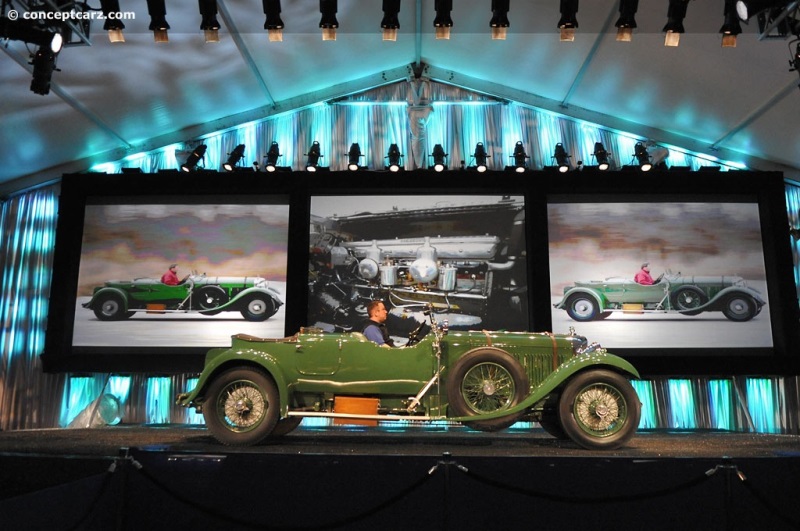
![]() | ![]() | ![]() | Open Tourer by Harrison Coachwork: Harrison Chassis Num: YR5076 |
| Sold for $2,200,000 at 2008 RM Auctions. Sold for $1,196,597 (756,000) at 2010 RM Auctions. | |||
The Bentley 8-Litre was an enlarged version of the Speed Six. It had a six-cylinder engine with a bore and stroke of 110 mm by 140 mm respectively, and a top gear speed range of a minimum of 6 mph and a maximum of 104 mph. It had acceleration capability of 10 to 100 mph in 50 seconds with a fully equipped saloon body.
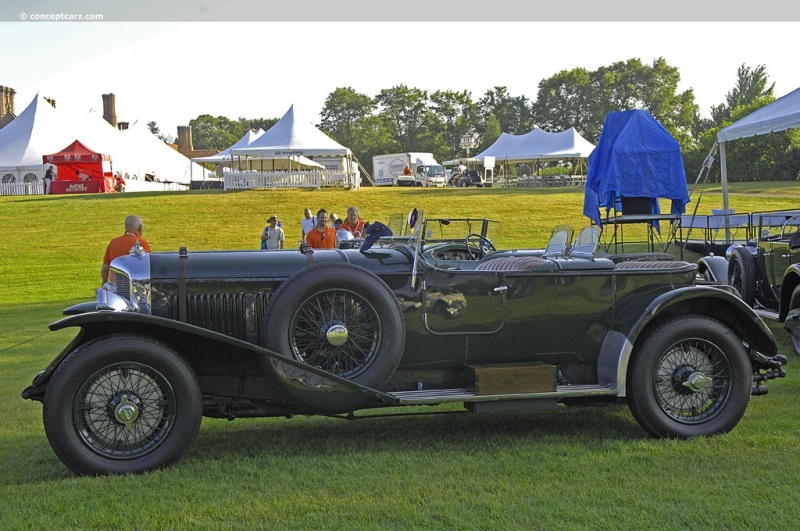
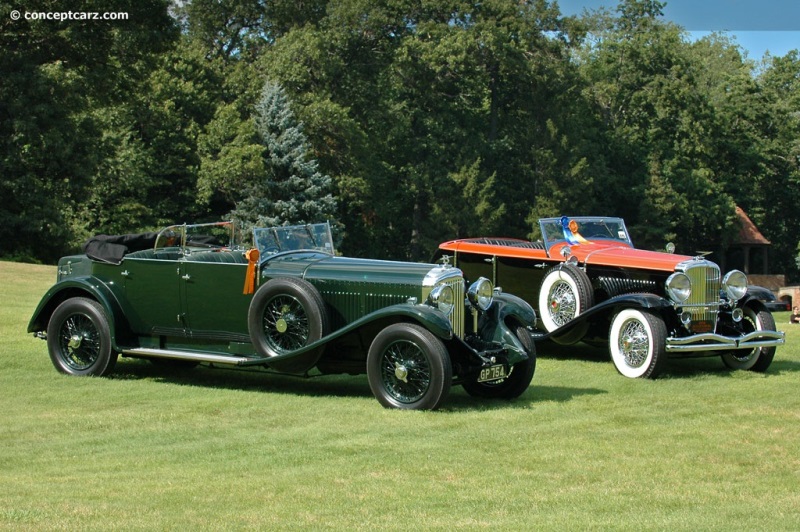
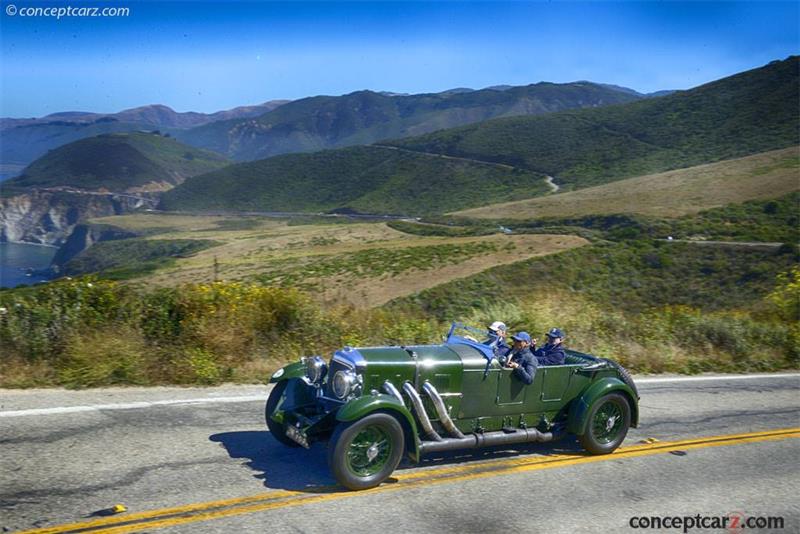
Only one hundred 8-Litre Bentleys were built. The car presented here has its original open tourer coachwork. This handsome car has velvet green paintwork with a green leather interior.
The 8-Litre was the last car designed by W.O. Bentley and of the 100 examples built, 78 are still in existence today. Only sixteen 8-Litres were built with open bodywork - six drophead coupes and ten tourers - and only twelve of these open cars survive today with their original coachwork. This is indeed a rare car.
This car was delivered to the original owner in Somerset, England on January 3, 1931. It was shipped to the United States in 1953. In 1995, the car's odometer read only 43,000. The Bentley was restored at that time and was repainted and re-trimmed.
![]() | ![]() | ![]() | Weymann Paneled Saloon Coachwork: Mulliner |
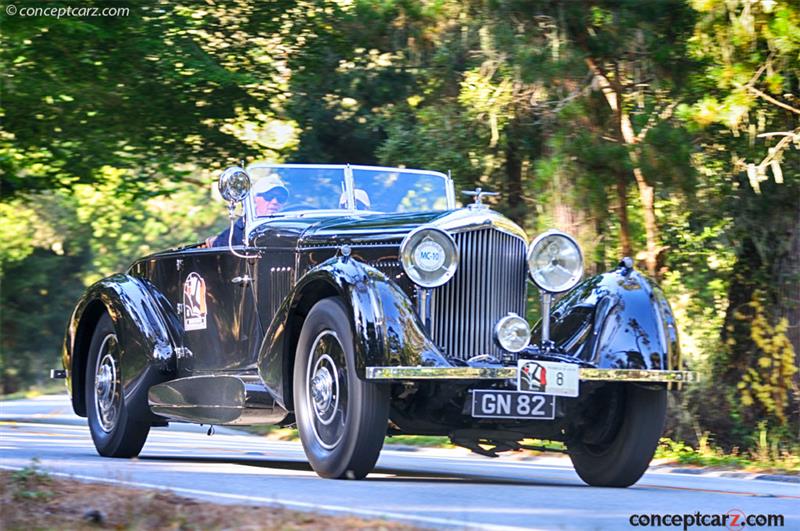
![]() | ![]() | ![]() | Tourer Coachwork: Wallis Chassis Num: YR5086 |
| High bid of $850,000 at 2008 RM Auctions. (did not sell) Sold for $605,000 at 2010 Gooding & Company. Sold for $585,003 (369,600) at 2010 RM Auctions. | |||
In the 1950s, the car was in the possession of Mr. Dale, who at some point had the engine rebuilt. A few UK owners followed and in the mid-1960s it was given a Vanden Plas style dual cowl tourer body by Wallis.
This Bentley has been in the United States since 1966. In 2008, the car was treated to a mechanical rebuild.
In 2010, this Bentley 8 Litre with coachwork by Wallis was offered for sale at the Gooding & Company Auction held in Amelia Island, Florida. The car was expected to sell for $700,000 - $900,000. As bidding came to a close, the car had been sold for the sum of $605,000, inclusive of buyer's premium.
By Daniel Vaughan | Apr 2010
The 8-Liter Bentley was introduced at the 1930 London Motor Show. It featured an 8-liter engine which was a development of Bentley's race-winning 6.5-liter unit. The main purpose of this model was to add competition in the luxury car segment and challenge the Rolls-Royce Phantom.
The power-plant was an engineering marvel, fitted with an Elektron crankcase and sump. The engine was a single iron block and cylinder head with four-valves per cylinder. It had an twin-spark ignition, a bore of 110 mm and a stroke of 140 mm. The straight-six engine carried chassis with wheelbases of 144 inches or 156 inches. The 156-inch wheelbase was the largest car produced in the UK up to that point in history. It could carry the large and luxurious bodies to speeds of 100 mph. To keep the weight of the vehicle to a minimum, many of the bodies and mechanical components were formed from aluminum. An overall weight of about 3700 pounds was typical for the chassis alone. A completed vehicle often tipped the scale at over 2.5 tons.
Four-wheel servo-assisted brakes helped keep the vehicle in the drivers control. There was a four-speed manual gearbox with a single-plate dry clutch and semi-elliptical springs on all four corners.
The launch of the Bentley 8-Liter coincided with the onset of the Great Depression. As a result, the small pool of wealthy individuals who could afford one of these machines, dwindled. Competition between marques became even more fierce, as prices dropped and more amenities and accessories were offered in an attempt to lure buyers. This model was financially devastating to Bentley. Bentley's principal backer at the time, Woolf Barnato, was enduring financial difficulty during this sad time in history. As a result, he severed his financial support with Bentley.
Production of the 8-Liter Bentley reached 100 units before production ceased. Rolls-Royce took the opportunity to rescue the struggling company and brought it under its financial protection. This move by Rolls-Royce, also ensured that the marque would never again offer competition to its luxury brand. The Bentley line was modified and acted as the entry-level cars in the luxury department.
Most of the Bentley 8-Liter cars were given limousine or four-door saloon coachwork. A few were outfitted with sporty coachwork. Most were in closed configuration with fewer than 25% outfitted with open bodies. The list of coachbuilders included Vanden Plas, Kellner, Thrupp and Maberly, Arthur Mulliner, Gurney Nutting, Park Ward, Freestone & Webb, Letourner et Marchand, Binder and Walter J. Murphy.
By Daniel Vaughan | Mar 2007
For more information and related vehicles, click hereThe power-plant was an engineering marvel, fitted with an Elektron crankcase and sump. The engine was a single iron block and cylinder head with four-valves per cylinder. It had an twin-spark ignition, a bore of 110 mm and a stroke of 140 mm. The straight-six engine carried chassis with wheelbases of 144 inches or 156 inches. The 156-inch wheelbase was the largest car produced in the UK up to that point in history. It could carry the large and luxurious bodies to speeds of 100 mph. To keep the weight of the vehicle to a minimum, many of the bodies and mechanical components were formed from aluminum. An overall weight of about 3700 pounds was typical for the chassis alone. A completed vehicle often tipped the scale at over 2.5 tons.
Four-wheel servo-assisted brakes helped keep the vehicle in the drivers control. There was a four-speed manual gearbox with a single-plate dry clutch and semi-elliptical springs on all four corners.
The launch of the Bentley 8-Liter coincided with the onset of the Great Depression. As a result, the small pool of wealthy individuals who could afford one of these machines, dwindled. Competition between marques became even more fierce, as prices dropped and more amenities and accessories were offered in an attempt to lure buyers. This model was financially devastating to Bentley. Bentley's principal backer at the time, Woolf Barnato, was enduring financial difficulty during this sad time in history. As a result, he severed his financial support with Bentley.
Production of the 8-Liter Bentley reached 100 units before production ceased. Rolls-Royce took the opportunity to rescue the struggling company and brought it under its financial protection. This move by Rolls-Royce, also ensured that the marque would never again offer competition to its luxury brand. The Bentley line was modified and acted as the entry-level cars in the luxury department.
Most of the Bentley 8-Liter cars were given limousine or four-door saloon coachwork. A few were outfitted with sporty coachwork. Most were in closed configuration with fewer than 25% outfitted with open bodies. The list of coachbuilders included Vanden Plas, Kellner, Thrupp and Maberly, Arthur Mulliner, Gurney Nutting, Park Ward, Freestone & Webb, Letourner et Marchand, Binder and Walter J. Murphy.
By Daniel Vaughan | Mar 2007
| ICONIC BLOWER BENTLEYS PRIMED FOR MILLE MIGLIA CHALLENGE | |
![]() | Famous, supercharged Bentleys set for 1,000 mile Italian epic •'Bentley Boy' Tim Birkin's 1930 Le Mans racer leads charge •Original Bentley Motors 'demonstrator' completes team (Crewe, 14 May 2013) Bentley Motors will compete in this year's Mille Miglia with two unique 4 ½ litre Supercharged 'Blowers'; a 1930 Le Mans race car belonging to perhaps the most famous and daring of the Bentley Boys and a company demonstrator that is still going strong even after nine decades on the road. The N...[Read more...] |
| TOPLINE COLLECTORS PLACE SPOTLIGHT on SPEED'S BARRETT-JACKSON BROADCAST FROM SCOTTSDALE | |
![]() | • TOPLINE COLLECTORS PLACE SPOTLIGHT on SPEED'S BARRETT-JACKSON BROADCAST FROM SCOTTSDALE • 'LOST' SHELBY DUAL PROTOTYPE, HAGERTY GIVEAWAY & SALON COLLECTION HIGHLIGHT 39 HOURS OF LIVE COVERAGE The 42nd annual Barrett-Jackson Scottsdale (Ariz.) Collector Car Event, the first of four set for live coverage in 2013, kicks off the auction season in grand style as some of the world's most sought-after machines cross the block starting Tuesday, Jan. 15 at 7 p.m. ET/4 p.m. PT. SP...[Read more...] |
| Famous Bentley 4¼-Litre 'Embiricos' Special Makes Star Appearance At Crewe Factory | |
![]() | One of the rarest and most valuable Bentleys in the world, the 4¼-Litre 'Embiricos' special, is making an historic appearance at the marque's home in Crewe. Fresh from taking part in the Louis Vuitton 'Serenissima Run' in Venice and featuring at the Le Mans Classic as part of the Bentley lineup, this magnificent car takes pride of place in the Lineage Showroom at the firm's Pyms Lane factory until September. Throughout the 1930s Bentley Motors, then owned by Rolls-Royce, was producing fast,...[Read more...] |
| Legendary Bentley Sets £4.5 Million Auction Record | |
![]() | •Tim Birkin's 4 ½ Litre Supercharged 'Blower' Bentley single seater sets new world best for a Bentley at Bonhams Goodwood auction •Beautiful Brooklands racing machine underlines enduring appeal of the 'Bentley Boy' racing spirit (Crewe and Goodwood, 29 June 2012) Just 35 miles away from the fabled Brooklands race circuit where it astonished thousands of spectators eight decades ago by sprinting its way into the record books, Sir Henry 'Tim' Birkin's dramatic 4 ½ Litre Supercharged...[Read more...] |
| Bentley Ready For Classic Thousand Mile Challenge | |
![]() | •Iconic Bentley Blowers ready for great Mille Miglia adventure •Bentley Continental W12 and V8 models join historic cars in Italy (Crewe, England & Brescia, Italy. 16 May, 2012) W.O. Bentley's gift for creating cars that combined the speed of a thoroughbred racing machine with an enviable reputation for strength and comfort, allowing them to effortlessly cover hundreds of miles, is set to be underlined once again at the 2012 Mille Miglia when two 4½ litre Bentley Blowers take on the ...[Read more...] |
1931
Bentley
models |
| Bentley 4.5-Liter |
| Bentley 4.5-Liter Blower |
| Similar Automakers | |
| Aston Martin | Bugatti |
| Devon | Ferrari |
| GTA | Koenigsegg |
| Lamborghini | Lotus |
| Maserati | Maybach |
| McLaren | Porsche |
| Rolls-Royce | Spyker |
| Tesla | |
| Bentley: 1931-1940 |
| Similar Automakers |
| Other models by Bentley |
| ||||||||||||||||||||||||||||||||||||||||||||
1930 8 Litre | 1932 8-Litre ![]() |


1930 8 Litre


1931