History
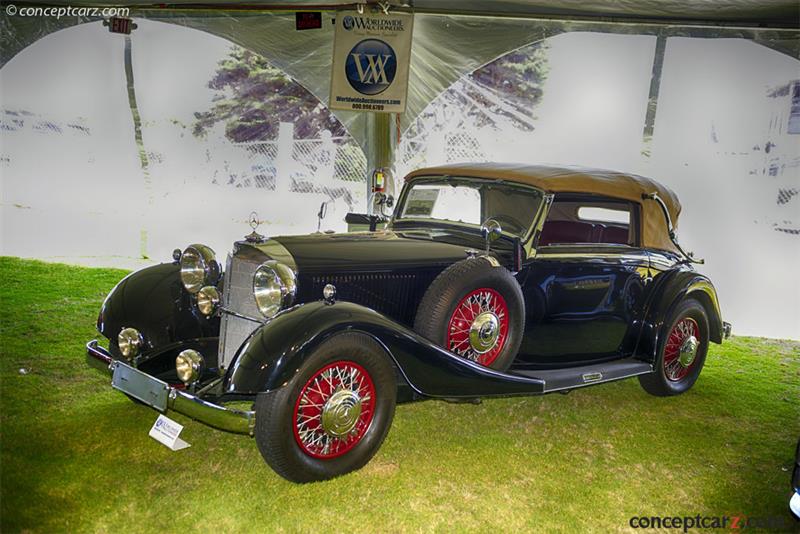
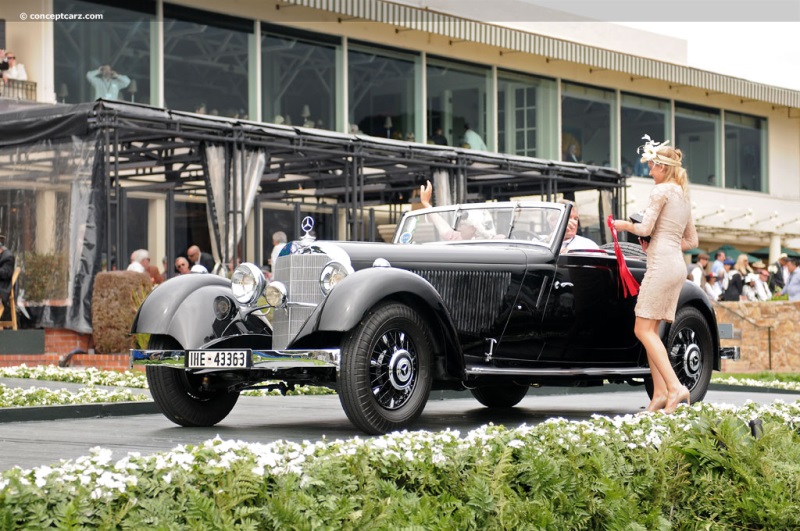
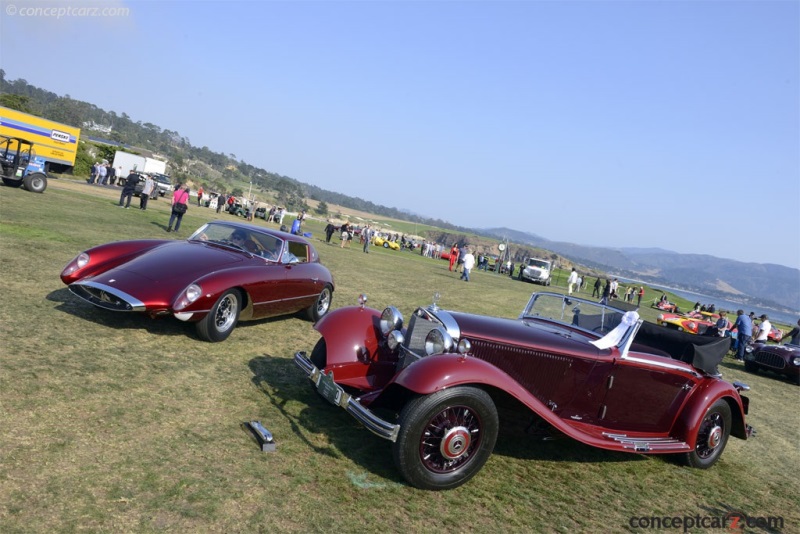
Two new – and very different – Mercedes models were displayed at the Berlin Motor Show in March 1934. One was the 130, Mercedes-Benz's first production car with a rear-mounted four-cylinder engine which developed 26 hp from a displacement of 1.3 liters. The other was the 500 K, an imposing, elegant sports car with supercharged eight-cylinder engine; with the supercharger engaged, it developed 160 hp from a displacement of 5,018 cc.
The 500 K was the successor to the 380 presented only one year earlier, and a descendant of the tremendously powerful, supercharged S, SS, SSK and SSKL sports cars – genuine muscle cars, as we would call them today, and virtually invincible in motor sport.
The first 500 K – 'K' for Kompressor = supercharger, to distinguish it from the 500 sedan without supercharger – had been designed as an elegant two- or four-seater sports car with roadster and cabriolet bodies tailored at the Daimler-Benz plant in Sindelfingen. With this model, the company bid farewell to the Roaring Twenties and the Big Four mentioned earlier. The latter had still had extremely firm chassis with rigid axles and leaf springs, i.e. hardly any damping at all, and their bodies were plain and above all functional, not to say uncomfortable.
The new supercharged Mercedes sports car appealed to well-heeled buyers because it was not only powerful but also more elegant, more comfortable and easier to handle than its predecessors – features welcomed in particular by the growing number of lady drivers.
Daimler-Benz had laid the foundations for this type of car as early as 1933 by introducing the 380, the first Mercedes-Benz sports car with swing axle. It was the first car that pampered its occupants with independent wheel suspension; the latter featured a sensational world first, a double-wishbone front axle that combined with the double-joint swing axle introduced in the 170 as early as 1931.
In this ground-breaking design, wheel location, springing and damping were for the first time separated from each other, creating a new level of precision in straightline stability. In its essence, this front axle, fitted like the rear axle with coil springs, has remained the design model for generations of automobiles throughout the world to this day, and it also featured in the 500 K, of course.
It was the customers' craving for power, however, that prompted the replacement of the 380, not exactly a lame duck with its supercharged 140 hp, by the 500 K only one year later. The newcomer's engine generated 160 hp with the supercharger engaged; even without the supercharger in action, it still had an impressive output of 100 hp at 3400 rpm. Depending on fuel quality, which varied greatly in those days, the compression ratio was between 1:5.5 and 1:6.5. The fuel was apportioned to the cylinders by a Mercedes-Benz double updraught carburetor. The driver engaged the double-vane Roots supercharger by depressing the accelerator pedal beyond a pressure point.
With the exception of first gear, both the standard four-speed and the optional five-speed transmissions were synchronized. A single-plate dry clutch linked the engine with the powertrain which transmitted engine power to the rear wheels. The car rolled along on wire-spoke wheels which were as elegant as they were robust.
All these features combined to permit a top speed of 160 kilometers per hour – a dream for sports cars in that day and age. The penalty was paid in the form of fuel consumption: between 27 and 30 liters were blown through the carburetor on 100 kilometers. The 110-liter tank in the rear gave the car a decent radius of action.
To meet the individual wishes of the demanding customers, three chassis variants were available for the 500 K: two long versions with a 3,290 millimeter wheelbase, differing in terms of powertrain and bodywork layout, and a short version with 2,980 millimeters.
The long variant, the so-called normal chassis with the radiator directly above the front axle, served as the backbone for the four-seater cabriolets 'B' (with four side windows) and 'C' (with two side windows) and, at a later stage, also for touring cars and sedans.
The roadsters, the two-seater cabriolet 'A' (with two side windows) and the ultra-modern, streamlined Motorway Courier, the first car with curved side windows and classified by the manufacturer as a sports sedan, were set up on a chassis on which radiator, engine, cockpit and all rearward modules were moved 185 millimeters back from the front axle. This configuration was a concession to the zeitgeist, a small trick that created the visual impression of a particularly long front-end and, therefore, the desired sporting appeal.
The most ravishing model of this species was the two-seater 500 K special roadster launched in 1936, a masterpiece in terms of its styling, with inimitably powerful and elegant lines. It has been filling onlookers with enthusiasm to this day, reflecting, as it does, the spirit of its day and age as well as the design perfection of the 500 K models. Its price tag – 28,000 Reichsmark – was 6,000 marks above the average price of 'simpler' models. People were able to buy a generously furnished house for that money.
The short-wheelbase chassis was used only for a few two-seaters with special bodies. On these models, the radiator was back right above the front axle, and the models carried the designations 500 K sports roadster, sports cabriolet and sports coupe.
The 500 K's chassis complete with helical-spindle steering had been adopted – though in further refined form – from the preceding 380: the new double-wishbone axle with coil springs at the front and the double-joint swing axle - complemented by double coil springs and additional transverse balancing spring – at the rear. The vacuum-boosted service brake acted hydraulically on all four wheels, the mechanical parking brake on the rear wheels. The chassis weighed as much as 1,700 kilograms; the complete car tipped the scales at 2,300 kilograms and the permissible gross weight was around 2,700 kilograms.
No matter what version of the 500 K you look at, the elegance of its body sends people into raptures even today: every single one had been given its own, unparalleled personality by the ingenious coachbuilders in Sindelfingen. Only few customers opted for bodywork tailored by independent bodybuilders to their own wishes (the price lists quoted the chassis as individual items), especially since the Sindelfingers rose above themselves in accommodating the customers' special wishes, for instance for individual fender versions, rear-end designs or interior appointments. Within two years, 342 units of the 500 K were produced.
In response to the virtually insatiable craving for performance on the part of well-heeled customers all over the world, the 500 K was replaced in 1936 by the 540 K with supercharged 180 hp engine. This model was sold to 319 motoring enthusiasts.
The history of supercharged Mercedes-Benz cars goes back to World War II and has its roots in aeroengine production. Daimler-Motoren-Gesellschaft had introduced mechanical air compressors which supercharged the engines and thereby compensated for the power loss of aeroengines at higher altitudes, ensuring their stable performance.
The first Mercedes models with supercharged engines were displayed at the Berlin Motor Show in 1921 – between bicycles with auxiliary engines and mini-cars. They caused quite a stir among automotive experts. With the supercharger, an engine booster had been introduced which, from 1926, catapulted Mercedes passenger, sports and racing cars into a new dimension of performance.Source - Mercedes-Benz
The 500 K was the successor to the 380 presented only one year earlier, and a descendant of the tremendously powerful, supercharged S, SS, SSK and SSKL sports cars – genuine muscle cars, as we would call them today, and virtually invincible in motor sport.
The first 500 K – 'K' for Kompressor = supercharger, to distinguish it from the 500 sedan without supercharger – had been designed as an elegant two- or four-seater sports car with roadster and cabriolet bodies tailored at the Daimler-Benz plant in Sindelfingen. With this model, the company bid farewell to the Roaring Twenties and the Big Four mentioned earlier. The latter had still had extremely firm chassis with rigid axles and leaf springs, i.e. hardly any damping at all, and their bodies were plain and above all functional, not to say uncomfortable.
The new supercharged Mercedes sports car appealed to well-heeled buyers because it was not only powerful but also more elegant, more comfortable and easier to handle than its predecessors – features welcomed in particular by the growing number of lady drivers.
Daimler-Benz had laid the foundations for this type of car as early as 1933 by introducing the 380, the first Mercedes-Benz sports car with swing axle. It was the first car that pampered its occupants with independent wheel suspension; the latter featured a sensational world first, a double-wishbone front axle that combined with the double-joint swing axle introduced in the 170 as early as 1931.
In this ground-breaking design, wheel location, springing and damping were for the first time separated from each other, creating a new level of precision in straightline stability. In its essence, this front axle, fitted like the rear axle with coil springs, has remained the design model for generations of automobiles throughout the world to this day, and it also featured in the 500 K, of course.
It was the customers' craving for power, however, that prompted the replacement of the 380, not exactly a lame duck with its supercharged 140 hp, by the 500 K only one year later. The newcomer's engine generated 160 hp with the supercharger engaged; even without the supercharger in action, it still had an impressive output of 100 hp at 3400 rpm. Depending on fuel quality, which varied greatly in those days, the compression ratio was between 1:5.5 and 1:6.5. The fuel was apportioned to the cylinders by a Mercedes-Benz double updraught carburetor. The driver engaged the double-vane Roots supercharger by depressing the accelerator pedal beyond a pressure point.
With the exception of first gear, both the standard four-speed and the optional five-speed transmissions were synchronized. A single-plate dry clutch linked the engine with the powertrain which transmitted engine power to the rear wheels. The car rolled along on wire-spoke wheels which were as elegant as they were robust.
All these features combined to permit a top speed of 160 kilometers per hour – a dream for sports cars in that day and age. The penalty was paid in the form of fuel consumption: between 27 and 30 liters were blown through the carburetor on 100 kilometers. The 110-liter tank in the rear gave the car a decent radius of action.
To meet the individual wishes of the demanding customers, three chassis variants were available for the 500 K: two long versions with a 3,290 millimeter wheelbase, differing in terms of powertrain and bodywork layout, and a short version with 2,980 millimeters.
The long variant, the so-called normal chassis with the radiator directly above the front axle, served as the backbone for the four-seater cabriolets 'B' (with four side windows) and 'C' (with two side windows) and, at a later stage, also for touring cars and sedans.
The roadsters, the two-seater cabriolet 'A' (with two side windows) and the ultra-modern, streamlined Motorway Courier, the first car with curved side windows and classified by the manufacturer as a sports sedan, were set up on a chassis on which radiator, engine, cockpit and all rearward modules were moved 185 millimeters back from the front axle. This configuration was a concession to the zeitgeist, a small trick that created the visual impression of a particularly long front-end and, therefore, the desired sporting appeal.
The most ravishing model of this species was the two-seater 500 K special roadster launched in 1936, a masterpiece in terms of its styling, with inimitably powerful and elegant lines. It has been filling onlookers with enthusiasm to this day, reflecting, as it does, the spirit of its day and age as well as the design perfection of the 500 K models. Its price tag – 28,000 Reichsmark – was 6,000 marks above the average price of 'simpler' models. People were able to buy a generously furnished house for that money.
The short-wheelbase chassis was used only for a few two-seaters with special bodies. On these models, the radiator was back right above the front axle, and the models carried the designations 500 K sports roadster, sports cabriolet and sports coupe.
The 500 K's chassis complete with helical-spindle steering had been adopted – though in further refined form – from the preceding 380: the new double-wishbone axle with coil springs at the front and the double-joint swing axle - complemented by double coil springs and additional transverse balancing spring – at the rear. The vacuum-boosted service brake acted hydraulically on all four wheels, the mechanical parking brake on the rear wheels. The chassis weighed as much as 1,700 kilograms; the complete car tipped the scales at 2,300 kilograms and the permissible gross weight was around 2,700 kilograms.
No matter what version of the 500 K you look at, the elegance of its body sends people into raptures even today: every single one had been given its own, unparalleled personality by the ingenious coachbuilders in Sindelfingen. Only few customers opted for bodywork tailored by independent bodybuilders to their own wishes (the price lists quoted the chassis as individual items), especially since the Sindelfingers rose above themselves in accommodating the customers' special wishes, for instance for individual fender versions, rear-end designs or interior appointments. Within two years, 342 units of the 500 K were produced.
In response to the virtually insatiable craving for performance on the part of well-heeled customers all over the world, the 500 K was replaced in 1936 by the 540 K with supercharged 180 hp engine. This model was sold to 319 motoring enthusiasts.
The history of supercharged Mercedes-Benz cars goes back to World War II and has its roots in aeroengine production. Daimler-Motoren-Gesellschaft had introduced mechanical air compressors which supercharged the engines and thereby compensated for the power loss of aeroengines at higher altitudes, ensuring their stable performance.
The first Mercedes models with supercharged engines were displayed at the Berlin Motor Show in 1921 – between bicycles with auxiliary engines and mini-cars. They caused quite a stir among automotive experts. With the supercharger, an engine booster had been introduced which, from 1926, catapulted Mercedes passenger, sports and racing cars into a new dimension of performance.Source - Mercedes-Benz
Similarly Sized Vehicles
from 1934


1934 Mercedes-Benz 380K Vehicle Profiles

Recent Vehicle Additions


Performance and Specification Comparison
380 Specification Comparison by Year
Year
Production
Wheelbase
Engine
Prices
Related Automotive News

Sportiness In The Brand DNA: Game-Changer With Mercedes-Benz At Goodwood Festival Of Speed 2017
With a dozen racing cars and sporty vehicles from over 100 years, Mercedes-Benz Classic sums up the motto of this years Goodwood Festival of Speed Peaks of Performance – Motorsports Game-Changers celebrates competition vehicles that have written...

80 years ago: victory by the Mercedes-Benz W 25 in the International Eifel Race gave birth to the legend of the Silver Arrows
The silver-coloured body of the W 25 gave this nickname to the racing cars from Mercedes-Benz
Successful new development by Mercedes-Benz for the750-kilogram racing formula
Manfred von Brauchitsch drove the W 25 to victory and established a new tr...

Techno Classica 2014: more than 30 racing cars to celebrate 120 years of Mercedes-Benz motor racing history
Cars that were the heroes of magical moments put their stamp on this high-powered, most comprehensive show presentation
With more than 30 vehicles, Mercedes-Benz Classic presents motor racing history in all its unique breadth and depth
120 years o...

Goodwood Festival of Speed 2013: auction of Mercedes-Benz W 196 R one of highlights at world's 'largest motorised garden party'
Mercedes-Benz Classic presents great moments in motor-racing history at Goodwood
Motorsport festival celebrating its 20th anniversary
Auction of only privately owned post-war Silver Arrow by Bonhams sure to cause a stir
Stuttgart – This...

Mercedes-Benz Classic at the 2012 Grossglockner Grand Prix
Revival of the mountain race from the 1930s
Mercedes-Benz SSK and W 125 at the start
92 bends, 14 hairpins, 15 kilometres and a 1300-metre altitude difference
The Grossglockner mountain race was one of the most prestigious motor sports event...