1952 Ferrari 340 Mexico news, pictures, and information | ||
| Tweet | ||
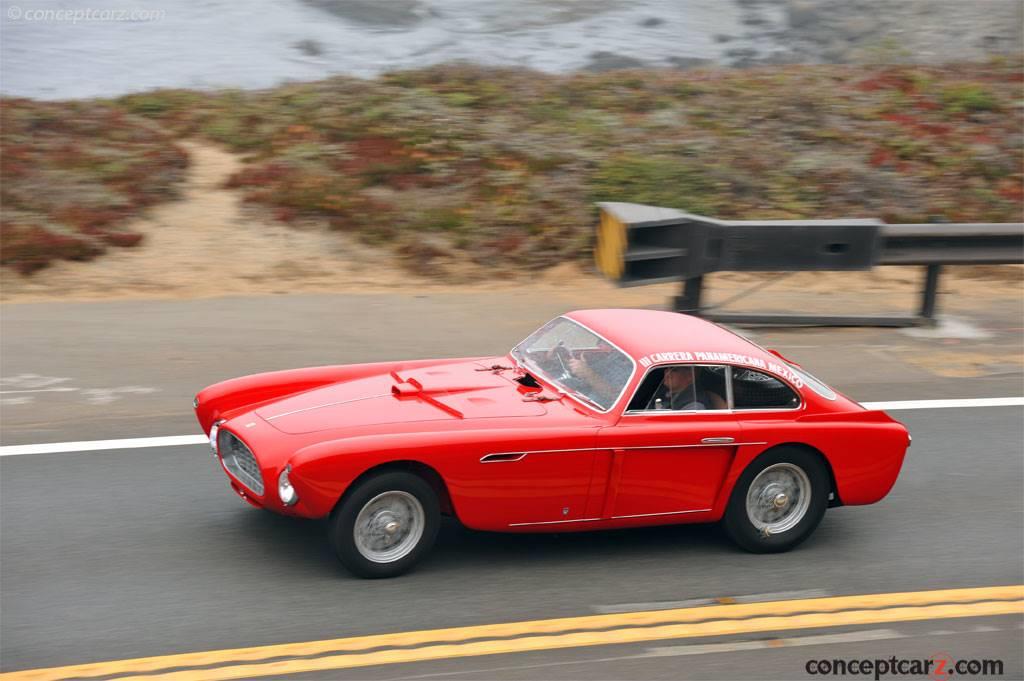
![]() | ![]() | ![]() | Berlinetta Coachwork: Vignale Chassis Num: 0226 AT |
| Sold for $3,685,000 at 2011 RM Auctions. | |||
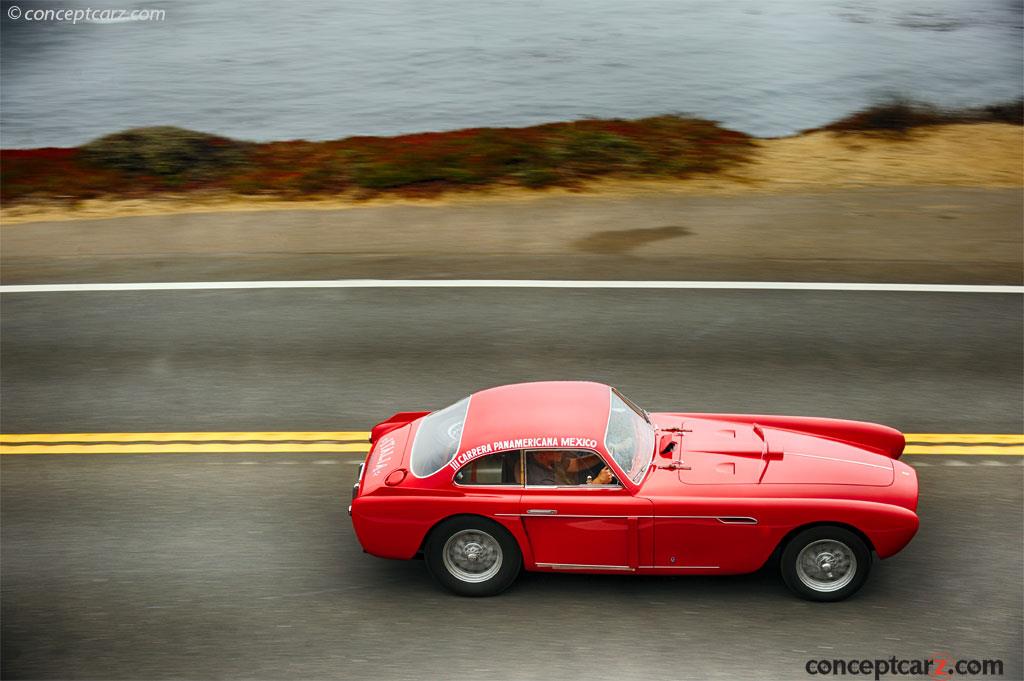
The 1952 La Carrera Panamericana race had two classes, sports and stock. There were 26 cars entered in the European sports-car category, and four of those were Ferrari's. Mercedes brought two 300 SL Gullwing coupes and a roadster, and there were entries from Jaguar, Gordini, Lancia and Porsche.
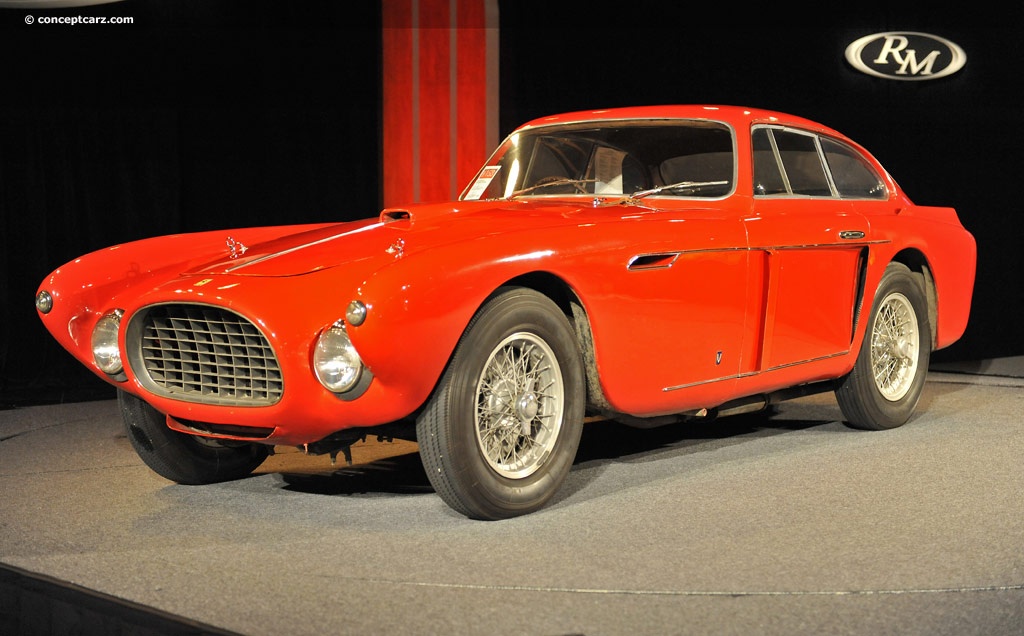
The factory Ferrari cars were named 'Mexico' for the event. The design was courtesy of Giovanni Michelotti for Vignale, who gave the cars a 77.5-inch hood (one of the longest ever seen on a Ferrari), and unique fenders that extended beyond the oval grille. They had a small-diameter Tuboscossia chassis, a Lampredi-designed 4.1-liter V12 that offered 280 horsepower, and constructed with as much lightweight material as possible. They had a top speed of 174 mph and could race from zero-to-sixty mph in six seconds.
The drivers selected to pilot the Ferraris included Alberto Ascari/Giuseppi Scotuzzi, Franco Cornacchia/Luigi Villoresi and Luigi Chinetti/Jean Lucas. Giovanni Bracco was given a lighter 250 MM Berlinetta and American Bill Spear was given a 340 Mexico barchetta, which did not start the race.
This example, chassis number 0226 AT, is a matching-numbers original example that was originally sold by Luigi Chinetti to Allen Guibertson of Dallas, Texas for $14,500. Chinetti also arranged for Ferrari team drivers Ascari and Scotuzzi to race the car in the 1952 Carrera Panamericana. Ascari started in 14th place and by the 50-mile mark, had moved into sixth. He continued the race as a very aggressive pace, especially considering this was a very dangerous event, and claimed many lives. His race came to a close when he lost control over loose stones, causing him to collide with a rocky ledge. The car driven by Chinetti/Jean Lucas finished third for Ferrari. From the 92 starters, there were only 39 finishers.
Chassis number 0226 AT was shipped back to Ferrari and Vignale for repairs, then returned to Guibertson in Dallas in the spring of 1953. The car was sold to A.V. Dayton, who entered it in the July 4th SCCA race at Offut Air Force Base in Omaha, Nebraska, driven by Carroll Shelby and Jack McAfee, who finished second. On October 25th, Dayton entered the car in the Sowega SCCA races in Atlanta, Georgia, where it was driven by Mr. Duncan. Unfortunately, it was sidelined due to electrical problems. Dayton sold the car back to Chinetti before the end of the year.
The car would trade hands on several occasions over the rest of the decade. Richard Londergan purchased the car in the late 1950s and put it on display at the 1958 Detroit Auto Show. It was sold a year later to General Motors designer and Ferrari Club of America co-founder Larry Nicklin of Indiana. At the time, Mr. Nicklin also owned the sister car, chassis number 0224 AT. Mr. Nicklin retained 0226 AT for a decade before selling it to Art Jacobs of Mineola, New York in 1969. A year later, the car was sold to Theodore Pratt in New York City. Five years later, it was purchased by David Carroll of Boston, Massachusetts, who kept it for another ten years.
In 1985, the car was sold to J. Willard Marriott Jr. of Chevy Chase, Maryland, who commissioned a ground-up, three-year restoration. It was restored to its correct 1952 Carrera Panamericana specification and livery. Upon complete, the car won the 1988 Ferrari Club of America's Concours at Elk Hart Lake, Wisconsin and also the Phil Hill Award for Best Competition Car. In 1989, it won the Honorary Chairman Award at the Ferrari National Meet at Lake Lanier Island, Georgia. It also won the Peter Helck Award for Best Race Car at the Meadow Brook Concours d'Elegance in Michigan. It earned a Best in Class award at the Pebble Beach Concours d'Elegance in Monterey, California.
In November of 1997, the car was sold to Carlos Monteverde in London. Mr. Monteverde kept the car for two years, selling it to the current owner in 199. Since then, it has competed in the Colorado Grand in 2001 and 2007 and raced in the Monterey Historic Races in 2002, 2005 and 2006. In 2007, the car was shown at the Pebble beach Concours d'Elegance in the Ferrari Competition class for exhibition only.
In 2011, the car was offered for sale the Monterey, CA auction presented by RM Auctions. As bidding came to a close, the car had been sold for the sum of $3,685,000 including buyer's premium.
By Daniel Vaughan | Oct 2011
![]() | ![]() | ![]() | Berlinetta Coachwork: Vignale Chassis Num: 0224 AT Engine Num: 0224 AT |
| Sold for $4,290,000 at 2011 RM Auctions. | |||
This example was built for the sole purpose of bringing victory to the Ferrari team in the Third Carrera Panamerica Road Race. The course stretched over 2000 miles of open road up the length of Mexico and was held in eight legs. Driven by Luigi Chinetti and Jean Lucas, this car took third, edged out by two Mercedes-Benz 300 SL prototypes. The body was designed by Michelotti and fabricated of aluminum by Vignale.
By Daniel Vaughan | Jul 2010
It was in 1948 when the newly formed Italian automobile company named Ferrari began selling a promising sports car named the 166. The two seater sports car featured a 12-cylinder engine mounted in the front and supplying over 100 horsepower to the rear wheels. The engine was just under two-liters in size and had a unitary displacement of 166 cc, thus, the evolution of the model name. Production would last until 1953 with only 38 examples being produced. Even though production was low, its accomplishments are large, with wins at LeMans, Mille Miglia, and the Targa Florio.
The 166 was a continuation of the 125, introduced a year earlier. The 125's size of 1497 cc was later enlarged to 1902cc, bringing about the Tipo 159. In 1948, it was enlarged to 1995 cc and became the 166.
Engineer Gioachino Colombo had been tasked with creating the engine to power the first Ferrari automobile. Both Enzo and Colombo had a history with working at Alfa Romeo, and were well versed on the rules and regulations of Grand Prix racing. Rules dictated that displacement size was limited to just 1.5-liters in forced induction engines, and 4.5-liters in naturally aspirated units. Colombo opted for the forced induction route, just as he had done while at Alfa Romeo, and designed for Ferrari their first V12 engine, as well as their first chassis. The engine was very different to the units Colombo had created while at Alfa Romeo, though sharing the same displacement size. Before the engine or chassis were ever created, Colombo left. Aurelio Lampredi was brought in to pick-up where Colombo had left off. Lampredi was a former Fiat employee who was a very talented and gifted engineer. He created the Colombo designed supercharged V12 engine, which would quickly grow in size to three liters.
The engine was potent, but still lacking. Lampredi was tasked with creating a new engine, larger in size, and aimed at propelling Ferrari's next generation of Grand Prix racing machines. Lampredi's goal was to create a powerful, yet fuel efficient engine that could keep with the competition. The Alfa Romeo engines were providing serious competition, and Lampredi questioned if the horsepower output could reach the figures Alfa Romeo was producing. Better fuel-efficiency, along with better tire wear, were two ways Lampredi was hoping to best the Alfa's.
The Lampredi designed 3.3-liter engine was ready by early 1950. Due to its size and configuration, it would eventually become known as the 'long-block' engine. It was constructed from a light-alloy metal, two valves per cylinder, single overhead camshaft and drew design inspiration from the prior Colombo engine.
Touring was tasked with creating the first two vehicles to house the Lampredi engines. They were entered in the 1950 Mille Miglia and carried the designation, 275 S, keeping with the traditional Ferrari naming scheme based on unitary displacement. The cars debut were less than stellar, as both were forced to retire prematurely due to tire and gearbox issues. As the year progressed, the issues were resolved and development continued on the engine, ultimately reaching 4.5-liters.
Other than being a very successful race car builder that enjoyed profound racing success, he was also a great business man and able to capitalize on racing success. Many of the road going cars Ferrari produced were derived from their racing program. Using the Lampredi engine, displacing 4.1 liters and producing 220 horsepower, the engine was mounted in a enlarged versions of the 275 S chassis, and the vehicle was named the 340 America. The 340 America's first public debut was at the Paris Auto Show where it was displayed wearing a Touring Barchetta body. a total of 23 examples would eventually be produced, with bodies supplied by Vignale, Touring and Ghia. As is popular with Ferrari automobiles, many of the 340 America's were used by privateers in racing competition.
Though rule changes at the close of hte 1951 season left the Lampredi engine obsolete, development continued. A total of six examples of the Ferrari 342 America were created. These were very exclusive machines catered to Ferrari's wealthiest clients. The 340 Mexico cars were true Ferrari racing bred machines. Four examples were specifically created to compete in the 1952 running of the Carrera Panamericana race. They were powered by a 280 horsepower version of the Lampredi engine and given a longer wheelbase to better traverse the rough and changing terrain.
In 1953, Ferrari introduced the 340 MM, which was a replacement for the 340 America. Under the bonnet was a 300 horsepower Lampredi engine.
By Daniel Vaughan | Oct 2007
For more information and related vehicles, click hereThe 166 was a continuation of the 125, introduced a year earlier. The 125's size of 1497 cc was later enlarged to 1902cc, bringing about the Tipo 159. In 1948, it was enlarged to 1995 cc and became the 166.
Engineer Gioachino Colombo had been tasked with creating the engine to power the first Ferrari automobile. Both Enzo and Colombo had a history with working at Alfa Romeo, and were well versed on the rules and regulations of Grand Prix racing. Rules dictated that displacement size was limited to just 1.5-liters in forced induction engines, and 4.5-liters in naturally aspirated units. Colombo opted for the forced induction route, just as he had done while at Alfa Romeo, and designed for Ferrari their first V12 engine, as well as their first chassis. The engine was very different to the units Colombo had created while at Alfa Romeo, though sharing the same displacement size. Before the engine or chassis were ever created, Colombo left. Aurelio Lampredi was brought in to pick-up where Colombo had left off. Lampredi was a former Fiat employee who was a very talented and gifted engineer. He created the Colombo designed supercharged V12 engine, which would quickly grow in size to three liters.
The engine was potent, but still lacking. Lampredi was tasked with creating a new engine, larger in size, and aimed at propelling Ferrari's next generation of Grand Prix racing machines. Lampredi's goal was to create a powerful, yet fuel efficient engine that could keep with the competition. The Alfa Romeo engines were providing serious competition, and Lampredi questioned if the horsepower output could reach the figures Alfa Romeo was producing. Better fuel-efficiency, along with better tire wear, were two ways Lampredi was hoping to best the Alfa's.
The Lampredi designed 3.3-liter engine was ready by early 1950. Due to its size and configuration, it would eventually become known as the 'long-block' engine. It was constructed from a light-alloy metal, two valves per cylinder, single overhead camshaft and drew design inspiration from the prior Colombo engine.
Touring was tasked with creating the first two vehicles to house the Lampredi engines. They were entered in the 1950 Mille Miglia and carried the designation, 275 S, keeping with the traditional Ferrari naming scheme based on unitary displacement. The cars debut were less than stellar, as both were forced to retire prematurely due to tire and gearbox issues. As the year progressed, the issues were resolved and development continued on the engine, ultimately reaching 4.5-liters.
Other than being a very successful race car builder that enjoyed profound racing success, he was also a great business man and able to capitalize on racing success. Many of the road going cars Ferrari produced were derived from their racing program. Using the Lampredi engine, displacing 4.1 liters and producing 220 horsepower, the engine was mounted in a enlarged versions of the 275 S chassis, and the vehicle was named the 340 America. The 340 America's first public debut was at the Paris Auto Show where it was displayed wearing a Touring Barchetta body. a total of 23 examples would eventually be produced, with bodies supplied by Vignale, Touring and Ghia. As is popular with Ferrari automobiles, many of the 340 America's were used by privateers in racing competition.
Though rule changes at the close of hte 1951 season left the Lampredi engine obsolete, development continued. A total of six examples of the Ferrari 342 America were created. These were very exclusive machines catered to Ferrari's wealthiest clients. The 340 Mexico cars were true Ferrari racing bred machines. Four examples were specifically created to compete in the 1952 running of the Carrera Panamericana race. They were powered by a 280 horsepower version of the Lampredi engine and given a longer wheelbase to better traverse the rough and changing terrain.
In 1953, Ferrari introduced the 340 MM, which was a replacement for the 340 America. Under the bonnet was a 300 horsepower Lampredi engine.
By Daniel Vaughan | Oct 2007
| Grand Prix Circuits: Pau Circuit | |
![]() | Some grand prix circuits just have a mythical status about them. Besides the drivers and great races, a lot of the equation comes down to how memorable the circuit truly is. In the case of the Pau Circuit, its sheer place in motorsport history and lore makes this tight, twisting circuit a true legend. From its very beginnings, Pau would be at the heart of travel and transportation. Situated in a rather deep valley with the Pyrenees mountains lending an imposing back-drop, the area that would ...[Read more...] |
| 1951 Italian Grand Prix: Promising Result Left Unfilfilled | |
![]() | In 1957, at the Italian Grand Prix, Andre Simon, almost as usual, would share a drive with Ottorino Volonterio and would finish his final Formula One grand prix in 11th place. And while the fact Simon would have to share his drive with another would not be all that surprising to many, it would be a far cry from what many believed would be the case after the 1951 Italian Grand Prix. Andre Simon had made an impressive debut at the 1949 24 Hours of Le Mans, which gained the attention of Amedee G...[Read more...] |
| 1957 Italian Grand Prix: A True Nobleman Stands Amongst Two of F1's Most Noble | |
![]() | The sea of spectators overwhelming the circuit would be a truly awe-inspiring sight to behold. The vast majority of this horde was there to celebrate the car adorned in red finishing in the top three. The car's driver, a true royal, would stand amongst the crowd as if standing amongst adoring and loving subjects. For the first time in his career, Wolfgang von Trips would be able to count himself amongst the elite of Formula One. Wolfgang von Trips had been born into a noble German family in ...[Read more...] |
| 1958 Moroccan Grand Prix: British All the Way | |
![]() | After years of frustration, and well past his life-expectancy, Mike Hawthorn would be on the verge of his first World Championship. This was more than likely Hawthorn's last and best hope at a World Championship title. Just one last race, and a fellow Brit, would separate Hawthorn from his World Championship. Emotionally, Hawthorn was done. The last few seasons had seen Hawthorn fail to experience anywhere near the level of success he had even in his rookie year of 1952. In 1952, with an unde...[Read more...] |
| 1952 Belgian Grand Prix: Youth Reigned Down | |
![]() | On a rain-soaked Spa-Francorchamps Circuit a tall, blonde-haired Brit by the name of Mike Hawthorn would stun the crowd and would make many within grand prix racing take notice of the 23 year old. Mike Hawthorn had started out racing motorbikes. In his first-ever event in a BSA trial bike, Hawthorn would take the victory. Michael's father, Leslie, recognized his son's skills as a racer and would invest in his talent by using his Tourist Trophy garage to help prepare racing cars for his son. ...[Read more...] |
| View more Carrera Panamericana vehicles |
| Similar Automakers | |
| Aston Martin | Bentley |
| Bugatti | Devon |
| GTA | Koenigsegg |
| Lamborghini | Lotus |
| Maserati | Maybach |
| McLaren | Porsche |
| Rolls-Royce | Spyker |
| Tesla | |
| Ferrari: 1951-1960 |
| Similar Automakers |
| Other models by Ferrari |
| Related Articles and Event Coverage |
| RM Auctions at Monterey |
| RM Auctions - Automobiles of Amelia Island |
| Auburn Cord Duesenberg Museum |
| Pebble Beach Concours d'Elegance |


1952