|
|
|
|
|
|
|
|
|
1959 Aston Martin DBR1 news, pictures, and information
![]() | ![]() | View more photos Roadster Chassis Num: DBR1/4 |
![]() | ![]() | Roadster |
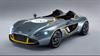
This example was driven by Stirling Moss to a victory at the 1000 Kilometer Nürburgrin. This was a very impressive victory for the legendary driver as he battled against time lost by co-driver Jack Fairman.
Bamford & Martin founded the Aston Martin Company in the early 1910's backed by their desire and passion for racing. Their first victory was at the Aston Hill Climb in 1914 and this victory became the basis for the company's name. Their early years of production focused heavily on racing and competition cars but a need for survival in a fierce marketplace led them to producing road cars.
In 1947 the company was purchased by David Brown and many viewed this as the company giving up on its racing heritage. David Brown quickly dismissed these fears by introducing racing inspired vehicles.
By 1951 the DB3 was introduced as a replacement for the DB2. In comparison to its predecessor, it was very similar. The DB3S was introduced in 1953 and even though it was modern and fast it was outclassed by Ferrari and Maserati. In 1956 the company introduced the DBR1 which was similar to the DB3S but far superior. With Stirling Moss, Tony Brooks, Jack Fairman, Carroll Shelby, and Roy Salvadori the company experienced some of its greatest victories ever. 1959 was the pinnacle of their success with a first and second place finish at Lemans and winning World SportsCar Championship.
After 1959, the company retired from the SportsCar Championship series so they could concentrate on Formula 1. To this day, the DBR1 is still considered one of the greatest racing cars in Aston Martin history. There were only five created with the fourth being constructed as a prototype.
In 1947 the company was purchased by David Brown and many viewed this as the company giving up on its racing heritage. David Brown quickly dismissed these fears by introducing racing inspired vehicles.
By 1951 the DB3 was introduced as a replacement for the DB2. In comparison to its predecessor, it was very similar. The DB3S was introduced in 1953 and even though it was modern and fast it was outclassed by Ferrari and Maserati. In 1956 the company introduced the DBR1 which was similar to the DB3S but far superior. With Stirling Moss, Tony Brooks, Jack Fairman, Carroll Shelby, and Roy Salvadori the company experienced some of its greatest victories ever. 1959 was the pinnacle of their success with a first and second place finish at Lemans and winning World SportsCar Championship.
After 1959, the company retired from the SportsCar Championship series so they could concentrate on Formula 1. To this day, the DBR1 is still considered one of the greatest racing cars in Aston Martin history. There were only five created with the fourth being constructed as a prototype.
Sir Stirling Moss returns to Le Mans with Aston Martin
Sir Stirling Moss – Britain's most celebrated racing driver – will later this month be re-united with the iconic Aston Martin DBR1 that he drove in the 1950s, helping Aston Martin to victory in the 1959 World Sportscar Championship.The Englishman will drive DBR1/2 – the car that claimed victory in the 1959 Le Mans 24 Hours – at this year's Le Mans Legends race, which takes place before the start of the endurance classic on Saturday 16 June. Moss will share the car with Dr Ulrich Bez, Chief Executive of Aston Martin.
Moss drove for Aston Martin at Le Mans three times, making his debut with the team in a DB3S for the 1956 race, before competing with a DBR1 in 1958 and 1959. Also in the DBR1, he claimed wins at the 1958 and 1959 Goodwood Tourist Trophy, as well as at the Nurburgring 1000 kilometres in Germany. After a brief test, the 77 year-old is looking forward to getting back behind the wheel of one of Aston Martin's most famous cars in order to demonstrate it to the public.
He commented: 'I tested the DBR1 at Silverstone last Friday and it felt wonderful. I am delighted to have the opportunity to race at Le Mans again.
Dr Bez said: 'I'm sure every racing enthusiast in the world would love to see Sir Stirling and the DBR1 in action again, and I am delighted that so many will have the opportunity at Le Mans this year, 48 years after they last appeared there together. To partner Sir Stirling in the race is a dream and a great honour for me.'
The Legends race has become a quintessential part of the Le Mans experience. This year the one-hour race will feature over 50 of the finest sports cars ever to grace the track, including the Ford GT40, Ferrari 250LM, Alfa Romeo Tipo 33 and of course the Aston Martin DBR1.
Duncan Wiltshire, Chairman of race organiser Motor Racing Legends, said: 'Sir Stirling's presence couldn't be better news. He is a true motor sport hero to all generations, and a real legend outside the sport as well.'
After the Legends race a record six Aston Martin DBR9s will be competing in the 24-hour race at Le Mans in the GT1 class, for production-based sportscars.Source - Aston Martin
| Vehicle Spotlight |
![]() | ![]() | ![]() | ![]() | ![]() | ![]() |
![]() | ![]() | ![]() | ![]() | ![]() | ![]() |
![]() | ![]() | ![]() | ![]() | ![]() | ![]() |
| 1959 Aston Martin models |
| Aston Martin DB2/4 Mark III |
| Aston Martin DB4 |
| Aston Martin DB4 GT |
| Aston Martin: 1951-1960 |
| Similar Automakers |
| Other models by Aston Martin |
![]() |
| Related Articles and Event Coverage |
| Simeone Foundation Museum |
| Pebble Beach Concours d'Elegance |