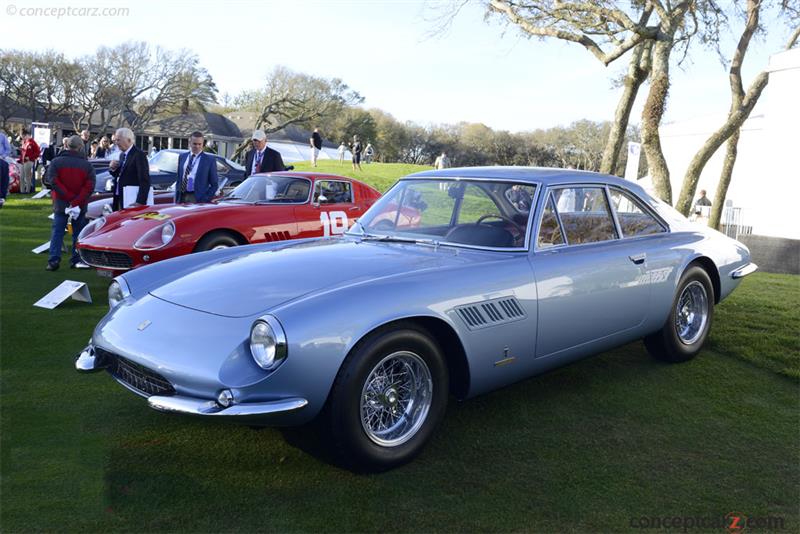
The Ferrari 500 Superfast was unveiled at the Geneva Auto Salon in 1964 and was the last in a series of ultra-exclusive Ferrari cars. It successfully combined high-performance and understated Italian style, with Pininfarina coachwork that struck a delicate balance of modern, fashionable trends and traditional elegance. The 500 Superfast, a refinement of the previous 400 Superamerica Aerodynamico Coupe design, had a large airy greenhouse, an aerodynamically effective Kamm tail, a spacious platform for fitted luggage, a sumptuous cabin, teak veneers, specialized instrumentation, a radio, and adjustable seat upholstered in the finest Connolly hides.
Coupe
Chassis #: 8083 SF
View info and historyThe bulk of Ferrari's expertise was dedicated to its racing programs during the late 1940s and 1950s, supplemented by luxury car construction to help support these endeavors. The earliest examples were the 342 America of 1952 with coachwork by Touring and its long-block engine being a derivative of the engine powering the 340 America sports racer, but with a larger chassis providing additional interior space. These were not series production vehicles and production remained exclusive with just six examples being built. The next Gran Turismo was the 250 Europa and the 375 America, both displaced at the 1953 Paris Motorshow and equipped with Lampredi's 'long block' V12 engine. The 4.5-liter engine powering the 375 America was shared with the company's sport car and Formula 1 races, making it the fastest luxury car in the world. Of the twelve examples built, two wore Vignale coachwork, but the majority had either three or five-window coupe bodies by Pinin Farina. Ferrari introduced a new luxury GT two years later at the Paris Show, this time in chassis form, with the completed car unveiled later in the year at the Brussels Motorshow. it was called the 410 SuperAmerica and wore Pinin Farina coachwork similar to the 250 GT competition car. It had a 2800mm wheelbase and powered by a five-liter, 335 horsepower V12 engine, the final development of the 'long-block' Lampredi V12. Custom bodywork was mostly handled by Pinin Farina, though Boano and Ghia bodied a few examples.
Coupe
Chassis #: 8083 SF
View info and historyWhen production of the Lampredi engine ended in 1959, its four-liter Colombo 'short block' V12 replacement made its debut at the Brussels show in 1960 in the form of the 400 SuperAmerica. Although its displacement was smaller, it produced as much power as its predecessor. Body styles included a coupe, cabriolet, and spider by Pinin Farina. Ferrari built 47 examples along 2 series including 32 coupe aerodinamico variants. Built between March of 1964 and August of 1966, Ferrari completed a mere 36 examples of the 500 Superfast at a pace of one or two cars each month, allowing Pininfarina to custom-tailor each car to its original owner's exacting specifications. Exclusivity was guaranteed by the price, being the most expensive Ferrari road car its day, costing twice that of a 275 GTB and nearly as much as a new 250 LM. The list of famous individuals who order one new include Prince Bernhard of the Netherlands, Shah Mohammad Reza Pahlavi of Iran, Prince Sadruddin Aga Khan, heiress Barbara Hutton, and actor Peter SellersThe Ferrari 500 Superfast Gran Turismo embodied the superlative qualities of its favored client and the highest road-going performance offered by the Italian marque. The Type 208 five-liter V-12 Colombo engine had the same dimensions as the Lampredi 'long-block' engine powering the 410 Superameria, but its design and detachable cylinder heads were based on the original Gioacchino Colombo-designed 'short block' engines. with the help of six twin-choke Weber carburetors, the V12 delivered nearly 400 horsepower at 6,500 RPM and had a top sped of nearly 175 mph. Early examples used a four-speed plus electronically operated overdrive, while the final twelve examples received a five-speed transmission. Pirelli Cinturato CN72 205 VR15 tires were originally fitted at all four corners. Four-wheel servo-assisted Dunlop disc brakes provided the stopping power. The front suspension was independent with coil springs, double wishbones, anti-roll bar, and telescopic shock absorbers. The live rear axle used semi-elliptic leaf springs, twin radius arms, and telescopic shock absorbers.
Coupe
Chassis #: 6043 SF
Engine #: 6043
View info and history
Auction entries : 3Twenty-four examples were built before cosmetic and mechanical alterations were made on the second series of 12 cars. The primary differences between the two series involve their pedal configurations, clutches, gearboxes, power steering, and other items, but like many Ferrari vehicles during this period, specifications fluctuated, with numerous running changes along the way.The design of the 500 Superfast was a progressive evolution of the 400 SuperAmerica, with a distinctive sloping rear fastback and generous rear glass, but devoid of the covered headlights and partially covered rear wheels. The 395 horsepower, 4.9-liter 500 Superfast was the ultimate expression of the company's flagship Superamerica series.
by Daniel Vaughan | Mar 2021
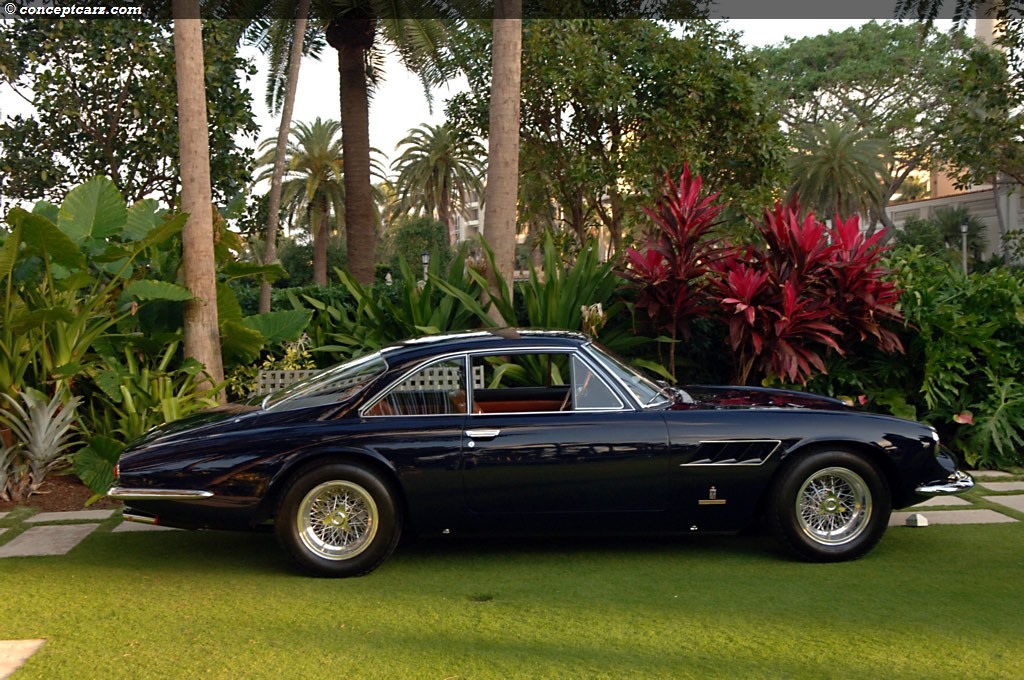
Coupe
Chassis #: 8083 SF
View info and history
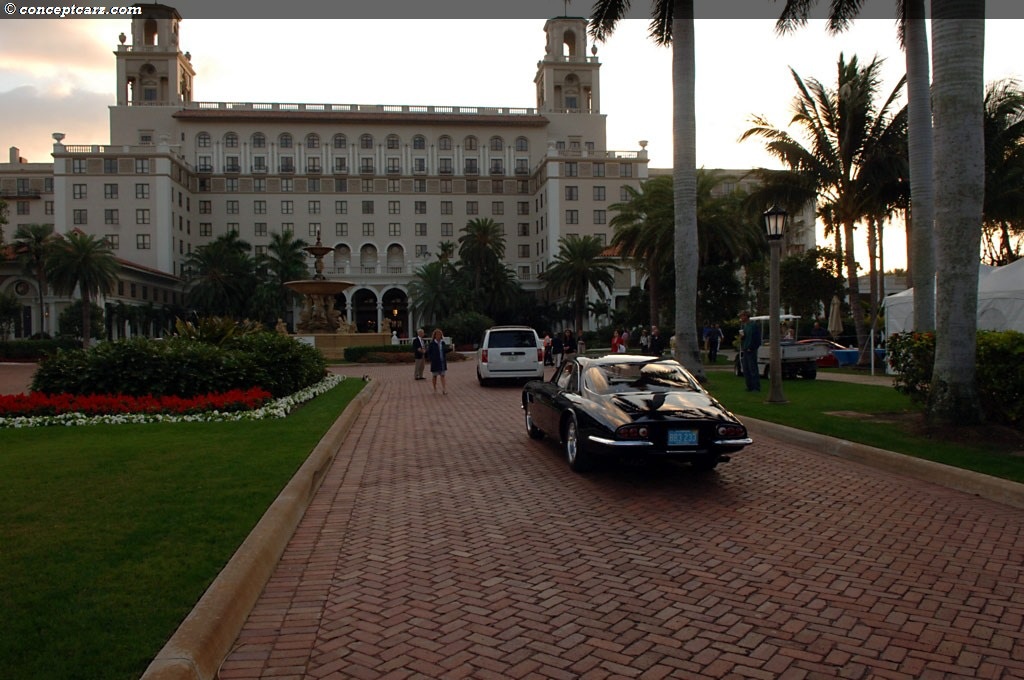
Coupe
Chassis #: 8083 SF
View info and history
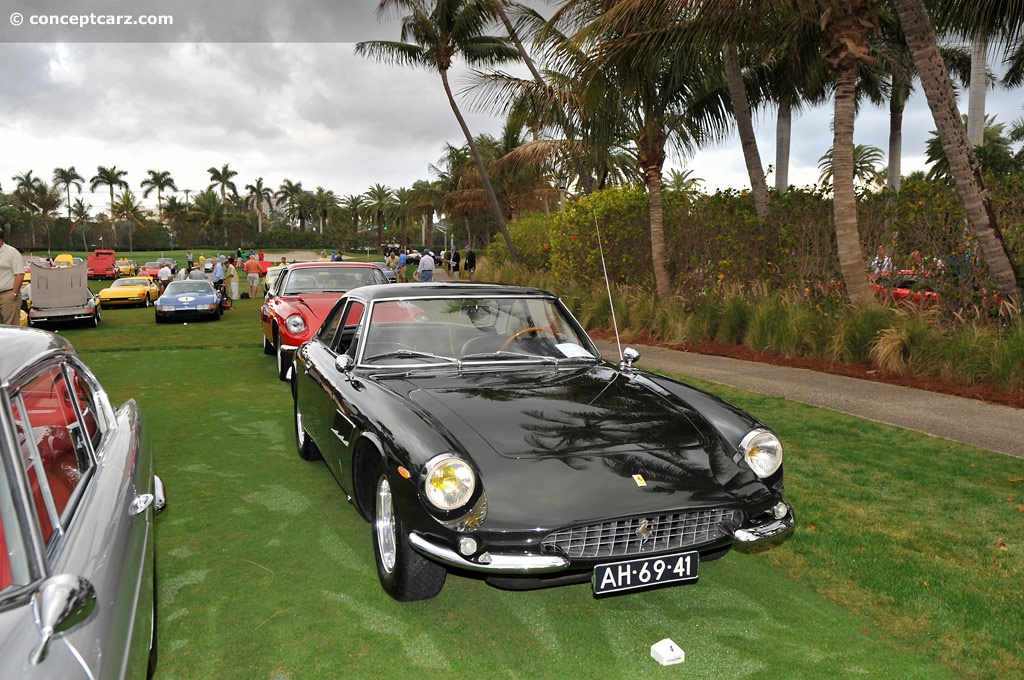
Coupe
Chassis #: 6043 SF
Engine #: 6043
View info and history
Auction entries : 3
by Daniel Vaughan | Mar 2021
Related Reading : Ferrari 500 Superfast History
The 500 Superfast was the last in a line of luxury Ferrari GTs. Introduced in 1964, production continued until 1966 with just 37 examples being produced. Production of luxury Ferrari GTs began during the early 1950s with the introduction of the 342 America. Based on the 340 America, it featured a chassis that had been extended to provide ample interior space. The mechanics were similar,....
Continue Reading >>
Continue Reading >>
Similar Automakers


1965 Ferrari 500 Superfast Vehicle Profiles



Recent Vehicle Additions


Performance and Specification Comparison
Price Comparison
$13,905
$14,200
$14,495
500 Superfast Specification Comparison by Year
Year
Production
Wheelbase
Engine
Prices
Related Automotive News
Pedigreed 500 Mondial Series I Spider, ex-Jo Siffert, Unrestored 275 GTB/4, and Dark Green 365 GTB/4 Daytona Spider Lead Ferrari Offerings at the Amelia Island Auction
Star Ferraris at Gooding %26 Companys Amelia Island Auctions include a 1954 Ferrari 500 Mondial Series I Spider, a garage-find 1967 Ferrari 275 GTB4, and a low-mileage 1972 Ferrari 365 GTB4 Daytona Spider
Gooding %26 Company has announced an...

Refined Maseratis Add Italian Flair to The Pebble Beach Auctions Presented by Gooding & Company
Selections include - five Maseratis from a single renowned collection, a 1957 Maserati A6G54 Spyder, a 1971 Maserati Ghibli 4.9 SS Spider, a 1963 Maserati Sebring Series I and a 1960 Maserati 3500 GT
SANTA MONICA, Calif. (July 8, 2016) –...

From Russo With Love! Ferrari with 007 Pedigree to Cross the Block at Russo and Steele Monterey!
1970 Ferrari 365 22 with 007 Pedigree Set to Cross the Block at Russo and Steeles 16th Annual Monterey Collector Automobile Auction Event!
Scottsdale, Arizona (June 24th, 2016) – First shown at Paris in 1967, the 365 GT 22 took place...

2015 Pebble Beach Concours d'Elegance Best of Show
PEBBLE BEACH, Calif. (August 17, 2015) -- An Italian Isotta Fraschini Tipo 8A Cabriolet that once turned heads and garnered top prizes in the classic era glided to victory at the 65th Pebble Beach Concours dElegance on Sunday.
The competition...

Celebrity Owned 1963 Ferrari 250GT Lusso Set to Take Center Stage at Russo and Steele Monterey 2015!
Scottsdale, Arizona (April 15, 2015) – By the early 1960s, Ferraris racing and street cars began to diverge in basic essence, with the Scuderias competition cars quickly becoming more specialized and the road cars reflecting the growing demand...