1922 Duesenberg Model A pictures and wallpaper 1922 Duesenberg Model A pictures and wallpaper 1922 Duesenberg Model A pictures and wallpaper 1922 Duesenberg Model A pictures and wallpaper 1922 Duesenberg Model A pictures and wallpaper
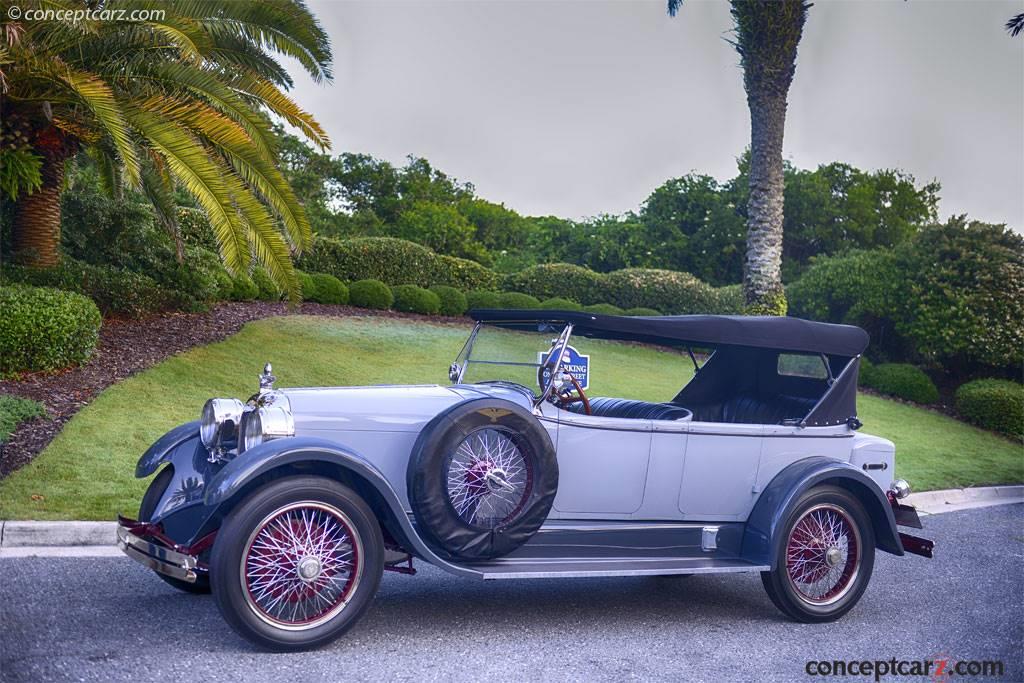
1922 Duesenberg Model A pictures and wallpaper 1922 Duesenberg Model A pictures and wallpaper 1922 Duesenberg Model A pictures and wallpaper


1922 Duesenberg Model A news, pictures, and information

View more photos
Rumble Seat Coupe
Coachwork: Fleetwood
 
Fred and August Duesenberg were born in Germany and immigrated to America where they begun designing and building automobiles. They formed the Duesenberg Automobiles and Motors Company in New Jersey and specialized in designing and building one-off and limited production automobiles as well as mechanical components that were purchased by other automobiles manufacturers. The company moved from New Jersey to Indianapolis, Indiana where they built their first production vehicle in 1921.

The new Duesenberg was called the Model A. It featured an inline, eight-cylinder engine with an overhead camshaft and was the first American production car to be sold with hydraulic brakes. Duesenberg used racing to promote its passenger car sales and in 1921, a Duesenberg race car driven by Jimmy Murphy became the first American car to win the French Grand Prix. In 1923, a Duesenberg Model A was used as the pace car for the Indianapolis 500. Duesenberg racecars won the Indianapolis 500 races in 1924, 1925 and 1927.

In 1914, Eddie Rickenbacker drove a Duesenberg to finish 10th place in the Indianapolis 500; and in 1924, 1925, and 1927 a Duesenberg finished in first place. 1923 saw a Duesenberg as the Indianapolis Pace Car. The A Model Duesenberg was introduced in 1921 and features a powerful 260 cubic-inch overhead cam Straight 8 that develops 87 horsepower and is capable of 85 mph. It was the first car to have hydraulic brakes. This Duesenberg A Model has Rumble-Seat Coupe custom coachwork by Fleetwood Metal Body Company of Fleetwood, PA (later to become a part of General Motors). This car is totally unrestored and is considered the best condition A Model Duesenberg to survive. Base price was $6,500 plus!

This 1922 Duesenberg has a rare coupe body built by the coachbuilder Fleetwood. Prior to becoming part of General Motors in the late 1920's, Fleetwood built bodies for many of the upscale American automobile manufacturers. This is the only Duesenberg known to exist with a Fleetwood coupe body and today remains in original condition throughout.
Attractively styled, with cutting-edge engineering for its time, such as an overhead cam engine and hydraulic 4-wheel brakes, Model A Duesenbergs were available with custom coachwork and also a range of production bodies built by Millspaugh & Irish, another Indianapolis firm.

However, despite the luster of important racing victories, the Model A's limited sales success - only about 600 were built in five years - had more to do with the high factory price than anything else, for there was certainly nothing wrong with the design and engineering of the cars themselves.

The Model A, though, is historically important, as it paved the way for the Model J and also demonstrated the Duesenbergs' exceptional engineering prowess and forward thinking at a time when most cars' features, including the most costly marques, went little beyond pedestrian L-Head engines and primitive mechanical brakes.

Seven standard body styles were offered for the 1923 Duesenberg models, in price from $5,500 to $7,300.

The Duesenberg's impressive in-line eight featured a single overhead camshaft driven off the crankshaft via beveled gears. Displacement was a relatively small 260 cubic inches, but it developed impressive horsepower ratings and 170 foot pounds of torque at 1500 rpm. An interesting induction system incldued a single Stromberg 1.5-inch updraft carburetor, utilizing a firewall-mounted vacuum tank. The fuel link ran up through the exhaust manifold to be preheated. Pistons would have been aluminum, unless the customer ordered otherwise.

A bright spot in 1923 was an endurance run that took place at the Indianapolis Speedway in April. A fully-equipped standard-bodied touring car drove non-stop for 3,155 miles that took 50 hours and 21 minutes at an average speed of 62.7 mph and required two tire changes.

All Duesenbergs were delivered with knock-off wire wheels mounted to 33 x 5-inch cord tires. The orthodox ladder frame featured Watson Stabilator shock absorbers hooked to semi-elliptic springs front and rear. Brakes were an industry-leading four-inch hydraulic system with 16-inch drums and circumferential cooling fins. Dual sidelamps (Searchlight made by Stewart-Warner Speedometer Corp.) had mirrors designed into the back of each and were standard equipment.
© 1998-2009. All rights reserved. This material may not be published, broadcast, rewritten, or redistributed.

Vehicle Spotlight
2010 Dodge Journey2010 Ford F-1502010 Subaru Impreza2010 Subaru Tribeca2010 Subaru ForesterSuzusho Supasse V
2010 Lexus ES 3502010 Ford Edge2010 Devon GTXBugatti 16.4 Veyron Sang Bleu2010 Porsche 911 Turbo2010 Scion xD
2010 Toyota Camry2010 GMC Sierra Hybrid2010 Hyundai Genesis Coupe2010 Chevrolet Equinox2010 BMW X5 M2010 Mazda CX-9
2010 Lincoln MKZ2010 Mercedes-Benz E-ClassChevrolet Corvette2010 Chevrolet Camaro2010 Ford Mustang
1922 Duesenberg models
Duesenberg Racer


Duesenberg: 1921-1930
Similar Automakers
Duesenberg History
Other models by Duesenberg


Related Articles and Event Coverage
Meadow Brook Concours d'Elegance
31st Annual Ault Park Concours d'Elegance