|
|
|
|
|
|
|
|
|
|
|
|
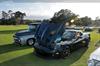
Image credits: © Chevrolet. GM Corp
MSRP: $48,565-103,970
Invoice: $43,465-95,650
2009 Chevrolet Corvette news, pictures, and information
2009 CORVETTE: ENHANCEMENTS BRING MORE CHOICES, REFINEMENT TO CHEVY'S LEGENDARY SPORTS CAR
After a milestone year in 2008 that saw the introduction of the LS3 6.2L V-8 as the new standard engine, a custom, leather-wrapped interior and more upgrades, the Corvette powers into 2009 with a raft of enhancements that further distinguish it and give customers more choices – including a lower-priced convertible model.Of course, that range of choices also includes the ZR1, with its 6.2L supercharged engine that produces 638 horsepower (476 kW). (Please see the separate Corvette ZR1 release for complete information on Chevy's world-class supercar.)
'The Corvette is an American icon with world-class credentials,' said Ed Peper, Chevrolet general manager. 'It's the car we all aspire to own and the 2009 edition, with more choices and features, only amplifies that craving.'
The '09 Corvette lineup includes the Corvette coupe and Corvette convertible, each powered by the 430-horsepower (321 kW) LS3 V-8, and the incomparable Corvette Z06. Equipped with the 505-horsepower (377 kW) LS7 engine and built on a lightweight chassis, the Z06 is a street-going descendent of the championship-winning Corvette racing program.
New for 2009
Here is a rundown of the new features and content changes for the '09 Corvette lineup:
Corvette 1LT convertible – Customers can slip into a Corvette convertible for a lower MSRP with this 1LT-equipped model. Additionally, a power top is now standard on 2LT convertible models.
Two new exterior colors – Cyber Gray Metallic and Blade Silver Metallic are added, while Machine Silver Metallic is discontinued. This brings the Corvette's exterior palette to nine colors.
Revised crossed flags emblem – The iconic Corvette crossed flags emblem is distinguished with a new, bright surround.
Two new custom leather-wrapped interiors – Dark Titanium and Ebony join Sienna and Linen as available selections.
Bluetooth capability – This option enables the Corvette to offer the convenience and safety of Bluetooth hands-free phone service.
Standard power hatch pull-down – This convenient feature is now standard on Corvette coupe and Z06 models.
Additionally, steering wheel audio controls and variable-ratio steering are standard on all models. Revisions also are incorporated to the hardware and software of the anti-locking braking, traction control and Magnetic Ride Control systems.
Several trim and content changes are incorporated on the Z06, too. They include:
• New, 'spider'-design 10-spoke Z06 wheel available in four versions: Sparkle Silver, Competition Gray and chrome
• Color-keyed door and instrument panels with red and titanium interiors
• Power-operated pull-down hatch now standard
• Gray stitching on Ebony base seats (previously red)
• New door sill plates with the Z06 logo
• Acoustic package standard on all Z06 models
The Z06 also receives a larger-capacity dry-sump oiling system. It upgrades to the 10.5-quart (9.9 liters) system of the new ZR1. The previous oil system held eight quarts (7.5 liters).
The popular museum delivery option (RPO R8C) remains available for all Corvette models.
LS3 engine
The 6.2L LS3 small-block V-8 is the standard engine in coupe and convertible models. It is rated at 430 horsepower (321 kW)* and 424 lb.-ft. of torque (575 Nm)* with the standard exhaust system. An optional two-mode exhaust system brings a power rating increase to 436 horses (325 kW) and 428 lb.-ft. (580 Nm).
The LS3 features an aluminum cylinder block with cast iron cylinder liners. The cylinder bores measure 4.06 inches (103.25 mm) in diameter and combine with a 3.62-inch (92 mm) stroke to deliver a 376-cubic-inch (6.2L) displacement. Breathing is accomplished via high-flow cylinder heads. They're based on the large port/large valve design found on the LS7 engine, with larger-capacity, straighter intake ports. The design optimizes intake flow to the combustion chamber and the exhaust ports are also designed for better flow.
Complementing the large-port design of the heads are commensurately sized valves. The intake valve size is a large, 2.16 inches (55 mm). The intake valves feature lightweight hollow stems, which enable the engine's 6,600-rpm capability. The exhaust valves also are large, measuring 1.60 inches (40.4 mm) in diameter.
To accommodate the engine's large valves and enable more direct intake port flow, the intake-side rocker arms are offset 6 mm between the valve tip and the push rod. Actuating the valves is a camshaft with 0.551-inch (14 mm) lift.
Dual-mode exhaust system
Optional on coupe and convertible models is a dual-mode performance exhaust system. It gives the Corvette a more aggressive exhaust sound character that appeals to performance enthusiasts, as well as a boost in horsepower.
Similar in design and function to the system used on the Z06 and ZR1, the dual-mode exhaust uses vacuum-actuated outlet valves, which control engine noise during low-load operation, but open for maximum performance during high-load operation. It is not identical to the Z06 system; it uses a 2.5-inch-diameter exhaust, while the Z06 uses a three-inch system.
Transmissions and axle ratios
The Corvette is offered with a standard six-speed manual transmission or an optional six-speed automatic with paddle-shift control. When ordered with the Z51 Performance Package, the six-speed manual comes with a more performance-oriented gearing, including a 'shorter' 2.97:1 first gear.
The shifting feel for both the six-speed manual transmission and paddle-shift six-speed automatic transmissions were improved in '08, with the manual transmission shifting improvements include a more positive and direct feel during gear changes, with better gate-to-gate location.
The six-speed paddle-shift automatic transmission on the coupe and convertible delivers quick shifts, with the '08 enhancements bolstering the feeling of performance and driver control when using the shifting paddles. A 2.73 performance axle ratio is available with the automatic transmission. It is included with the Z51 package.
Driving dynamics
Corvette coupe and convertible have a hydroformed steel rail backbone structure, which features cored composite floors, an enclosed center tunnel, rear-mounted transmission and aluminum cockpit structure. Suspension cradles, control arms, knuckles, springs, dampers, bushings, stabilizer bars and steering gear have all been redesigned. Goodyear Extended Mobility Tires (EMT) take advantage of the latest sidewall design and compound technology for run-flat capabilities.
Three suspension choices allow drivers to choose the setup that best suits their driving style. The standard suspension is tuned for a balance of ride comfort and precise handling. Corvette is now more poised at even higher handling levels, yet easier to drive.
The optional Magnetic Selective Ride Control suspension features magneto-rheological dampers able to detect road surfaces and adjust the damping rates to those surfaces almost instantly for optimal ride control. Cross-dilled brake rotors are included when this feature is selected, allowing customers to combine the larger brakes from the Z51 performance package with the comfort of Magnetic Selective Ride Control.
The Z51 Performance Package brings coupe and convertible performance very close to the widely admired previous generation Z06. The Z51 offers more aggressive dampers and springs, larger stabilizer bars, Goodyear Eagle F1 Supercar EMT tires, enhanced cooling and larger cross-drilled brake rotors (13.4 inches / 340 mm in front and 13 inches / 330 mm in rear) for optimum track performance while still providing a comfortable ride.
With each suspension, three standard dynamic chassis control systems – anti-lock braking, traction control and Active Handling – operate in concert. In all, the dynamic chassis control systems are smarter, less intrusive and more adept at making the total driving experience precisely what drivers have come to expect from their Corvette.
Corvette design
Dramatic fender forms and exposed headlamps combine with the grille to create a strong visual identity for the Corvette, while the tapered rear deck and fascia improve high-speed performance. The lean rear design sports round taillamps and center-exit exhaust. The fixed Xenon high-intensity discharge headlamps provide superior lighting performance. With a 0.286 coefficient of drag, the coupe models are the most aerodynamic Corvettes ever.
The Corvette convertible now features a power-operated soft top with the 2LT package; an easy-to-operate manual top is standard on the new 1LT convertible. Both configurations use a five-layer fabric that conceals the underlying structure for a good top-up appearance, plus it helps preserve the car's excellent aerodynamics and reduces road noise.
Interior details and technology
Corvette's interior is inspired by the car's dual-cockpit heritage. High-quality materials, craftsmanship and functionality help deliver premium quality meant to enhance performance driving. The instrument panel and doors are covered with cast-skin foam-in-place trim with the look of a leather panel. It is warm and inviting and has double the life of conventional trim materials.
An AM/FM/XM radio with CD player and audio input jack is standard. An optional Bose audio system with an in-dash six-disc changer adds to the choices available to the audiophile owner. Steering-wheel mounted audio controls are included on all models. XM Satellite Radio is standard.
A full-function OnStar system with Turn-by-Turn Navigation capability is standard and an onboard navigation system with voice recognition is available. Using a 6.5-inch (165 mm) color touch-screen display, the DVD-based system contains all the map data for the 48 contiguous states and most of Canada on two discs.
Corvette also features k eyless access. When the owner is in close proximity to the door, the key fob's signal unlocks the door. The system's emergency key and other remote-function controls are integrated in a single unit
Custom leather-wrapped interior package
Available on coupe, convertible, Z06 and ZR1 models is the custom leather-wrapped interior package. It offers a stylish, two-tone leather-appointed cabin with details that enhance the feeling of Corvette's craftsmanship. Details include:
• Leather-wrapped upper and lower instrument panel, door pads and seats
• Choice of new, exclusive colors: Dark Titanium, Ebony, Linen or Sienna, with unique color breakup
• Padded door panel armrests
• 'Corvette' embroidered on passenger-side dash pad
• Embroidered crossed flags logo on headrests
• Unique center trim plate with Bias pattern.
Corvette Z06 details
With racing-inspired powertrain and suspension features, the Corvette Z06 delivers exceptional levels of capability and technology, making it one of the best performance values on the market.
Design – The Z06 has an unmistakable and aggressive appearance, with design cues that include:
• A wide front fascia with a large, forward-facing grille opening, a splitter along the bottom and wheel opening extensions along the sides to provide aerodynamic downforce
• A cold-air scoop in front of the hood that integrates an air inlet system for the engine
• The trailing edge of the front wheel opening is radiused to achieve improved drag, but protects the body finish with a tough molding, and a large air extractor is located behind the wheel
• A fixed-roof body style optimizes body rigidity and mass
• Wider rear fenders with flares cover the massive rear tires and a brake cooling scoop in front of the wheels visually balances the fender extractor
• A tall rear spoiler houses the CHMSL on the top of the rear fascia
• 10-spoke spider-design wheels (18-inch, front; 19-inch, rear)
• Four large stainless steel exhaust outlets
• Z06 badging on the carbon fiber front fenders
The aerodynamics of the Z06's exterior were shaped by the experiences of the Corvette racing program, where high-speed stability and cornering capability are paramount. And while the race cars use large rear wings, the Z06's elevated spoiler provides sufficient downforce to balance the road-worthy front splitter without adversely affecting aerodynamic drag. The Z06's Cd is 0.34.
For all its race-inspired functionality, the Z06 is designed to be a daily-driveable high-performance vehicle. To that end, comfort and convenience are held to a very high standard. High-Intensity Discharge lighting, fog lamps, leather seating, dual-zone air conditioning, cabin air filtration and head-up display (HUD) with track mode and g-meter are standard.
The Z06 gauge cluster displays the Z06 logo on the 7000-redline tachometer and has a readout on the oil pressure gauge to reflect the higher standard pressure of the dry-sump oiling system. The seats feature two-tone leather surfaces, with Z06-logo embroidery and contrasting stitching.
Z06 options include a Bose audio system with an in-dash six-CD changer, Competition Gray or chrome wheels, a telescoping steering wheel, heated seats, side-impact air bags, a navigation system with GPS and universal home remote.
LS7 engine – The Z06's LS7 7.0L engine delivers 505 horsepower (377 kW) in a 3,180-pound (1,442 kg) package – a combination that delivers 0-60 performance of 3.7 seconds in first gear, quarter-mile times of 11.7 seconds at 125 mph and a top speed of 198 mph (as recorded on Germany's Autobahn). It also provides maximum lateral acceleration of 1.04 g and 60-0 braking in 111.3 feet; it also circuited Germany's famed N ü rburgring in a time of 7:43 from a standing start.
The LS7 reintroduced the 427-cubic-inch engine to the Corvette lineup. It is easily identified under the hood by red engine covers with black lettering. The LS7 shares the same basic Gen IV V-8 architecture as the Corvette's 6.2-liter LS3, but it uses a different cylinder block casting with pressed-in steel cylinder liners to accommodate the engine's larger diameter, 4.125-inch (104.8 mm) cylinder bores.
Internally, the LS7's reciprocating components make use of racing-derived lightweight technology, including titanium connecting rods and intake valves, to help boost horsepower and rpm capability. The rpm fuel shut-off limit is 7,100 rpm. The LS7's details include:
• Dry-sump oiling system
• Unique cylinder block casting with large, 104.8-mm bores and pressed-in cylinder liners
• Forged steel main bearing caps
• Forged steel crankshaft
• Titanium connecting rods with 101.6-mm stroke
• Cast aluminum flat-top pistons
• 11.0:1 compression
• High-lift camshaft
• Racing-derived CNC-ported aluminum cylinder heads with titanium intake valves and sodium-filled exhaust valves
• Low-restriction air intake system
• Hydroformed exhaust headers with unique 'quad flow' collector flanges.
One of the clearest examples of the LS7's race-bred technology is its use of titanium connecting rods. They weigh just 464 grams apiece and besides being lightweight, which enhances high-rpm performance and rpm range, titanium makes the rods extremely durable.
The LS7's CNC-ported aluminum cylinder heads are designed to meet the high airflow demands of the engine's 7.0-liter displacement. A hydraulic roller camshaft with 0.588/0.593-inch valve lift is used to allow plenty of air to circulate in and out of the engine. To ensure optimal, uninterrupted airflow, the LS7's heads have straight, tunnel-like intake runners. Very large by production-vehicle standards – even racing standards – they are designed to maintain fast airflow velocity, providing excellent torque at low rpm and exhilarating horsepower at high rpm. The heads feature 70-cc combustion chambers that are fed by huge, 56-mm-diameter titanium intake valves. They are complemented by 41-mm sodium-filled exhaust valves.
To accommodate the large valve face diameters, the heads' valve seats are siamesed; and, taken from experience with the engines of C6.R race cars, the LS7's valve angles are held at 12 degrees – vs. 15 degrees for the LS2 – to enhance airflow through the ports.
The LS7 has a dry-sump oiling system designed to keep the engine fully lubricated during the high cornering loads the Corvette Z06 is capable of producing. An engine compartment-mounted 10.5-quart (9.9 liters) reservoir delivers oil at a constant pressure to a conventional-style oil pump pick-up at the bottom of the engine. The pressurized oil feed keeps the oil pick-up continually immersed in oil at cornering loads exceeding 1 g.
Oil circulates through the engine and down to the oil pan, where it is sent back to the reservoir via a scavenge pump. The large-capacity reservoir, combined with a high efficiency air-to-oil cooler, provides necessary engine oil cooling under the demands of the engine's power output. With the dry-sump system, oil is added to the engine via the reservoir tank – which includes the oil level dipstick.
Drivetrain – The Corvette Z06's powertrain and drivetrain systems are matched to the LS7's performance capability. The light, four-into-one headers discharge into close-coupled catalytic converters and through two-mode mufflers. The mufflers each feature a vacuum-actuated outlet valve, which controls exhaust noise during low-load operation but opens for maximum power.
At the rear of the LS7 engine, a single-mass flywheel and lightweight, high-capacity clutch channel torque to the rear transaxle. The six-speed manual transmission has been strengthened to handle the LS7's increased torque load. The transmission includes a pump that sends transmission fluid to the front radiator for cooling. Upon its return, the fluid removes additional heat from the differential lube before returning to the transmission. The six-speed transmission connects to a limited-slip differential, with enlarged ring and pinion gears. Stronger axle half-shafts with tougher universal joints transmit power to the rear wheels.
Structure – The Z06 has a unique aluminum body structure for optimum stiffness and light weight for the fixed-roof body style. Perimeter rails are one-piece hydroformed aluminum members featuring cast suspension nodes, which replace many welded steel components on other Corvette models. Other castings, stampings and extrusions are combined into the innovative structure with state-of-the-art manufacturing technologies.
Advanced structural composites featuring carbon-fiber are bonded to the aluminum structure. The wider front wheelhouses, for example, are carbon composites and the passenger compartment floors combine carbon-fiber skins with an ultra-lightweight balsa wood core.
The Z06 has a new magnesium cradle that serves as the attachment point for the engine and some front suspension components. Magnesium is lighter than aluminum yet incredibly strong. The magnesium cradle helps improve the front-to-rear weight distribution, as do carbon-fiber front fenders and wheelhouses. Engineers also moved the battery from underhood to a position in the rear cargo area, behind one of the rear wheels.
The mass reductions are offset by some added performance enablers, including dry-sump lubrication, exhaust system with outlet valves, larger wheels and tires, larger brakes and larger roll stabilizers.
Suspension and brakes – The Z06 retains the 105.7-inch (2686-mm) wheelbase of other Corvette models, as well as the short-long arm suspension and transverse spring design, but it rides on all-new wheels, tires and brakes, as well as its own rear spring and roll stabilizer.
The firmer suspension works harmoniously with large 18 x 9.5-inch cast-spun aluminum wheels and 275/35ZR18 tires in the front, and 19 x 12-inch cast-spun aluminum wheels with 325/30ZR19 tires in the rear. The tires use the latest extended-mobility technology from Goodyear to provide a satisfactory ride, but still allow the vehicle to achieve lateral acceleration of more than 1 g. The extended-mobility tires eliminate the need – and weight – for a spare tire and jack or inflator kit, while also reducing the chance of a sudden loss of handling capability.
Complementing the suspension system and large rolling stock is an equally capable four-wheel disc brake system, consisting of 14-inch (355 mm) vented and cross-drilled front rotors and 13.4-inch (340 mm) vented and cross-drilled rear rotors.
The front rotors are acted upon by large, red-painted six-piston calipers that use six individual brake pads. Individual brake pads are used because they deliver more equalized wear compared to what would otherwise be a pair of very long single-piece pads. For the rear brakes, four-piston calipers with four individual brake pads are used. A four-channel ABS system is standard, as is a very competent active handling system – complete with a Competitive Driving mode.
*SAE certified. Source - GM
Chevrolet builds 1,500,000th Corvette
Pricing also announced for the 2010 Corvette Grand SportAt the June meeting of the Greater Atlanta Automotive Media Association, Karen Rafferty, Chevrolet Product Marketing Director, today announced the recent production of the 1,500,000th Corvette at GM Bowling Green Assembly.
'The 1.5 millionth Corvette is a great example of how Chevy is America's Brand,' Rafferty said. 'For nearly 60 years we have built America's Sports Car and this milestone is a solid proof point.'
The 1.5 millionth Corvette, built on May 28, is a white convertible 3LT with red interior and black top (similar to the first, 500,000th and 1 millionth Corvettes built in 1953, 1977 and 1992 respectively). The first Corvette rolled off the assembly line on June 30, 1953.
Rafferty also announced pricing of the all-new 2010 Corvette Grand Sport. Pricing for the Grand Sport coupe is $55,720 and GS convertible is $59,530. Both prices include a $950 destination freight charge.
'The Corvette Grand Sport achieves a 0 - 60 time in less than four seconds, pulls 1.0g on the skid pad and still boasts an impressive 26 highway mpg,' Rafferty said. 'These numbers are unmatched by any of Corvette's competitors.'Source - Chevrolet
Very few vehicles elicit the same kind of satisfaction as the Chevrolet Corvette. The ‘Vette is a symbol of childhood dreams and grown up triumph. The only true American Sports car, this car stands for excellence and became an icon as a high-performance and dynamic sports vehicle.
First introduced in January of 1953, the Corvette has only become more renowned as the years drift by. Undergoing many changes and restyles as any other vehicle will over the years, the Corvette has experienced new engines, transmission, chassis, features, body colors and so much more. Starting with a 235 cu-in 6-cylinder engine, the Corvette has since switched to a V8 with a horsepower that is improving each year. Over the years, the Corvette has also been offered in different trim models, the hardtops, coupes, convertibles, ZR-1s and Z06. Several different special editions models were also featured over the years to mark Corvette's step up into a new generation. The Corvette was always a 2-seater vehicle, Chevy has always offered and included features and equipments that were sophisticated enough to please owners and buyers.
A sports car manufactured by Chevrolet, the Corvette was originally handbuilt in Flint, Michigan and St. Louis, Missouri and is today built at a General Motors assembly plant in Bowling Green, Kentucky. Bowling Green, Kentucky is also the home of the National Corvette Museum and annual National Corvette. The Corvette is the first all-American sports car built by an American car manufacturer.
Automotive styling and design wasn't important to American automobile manufacturers until 1927 when General Motors hired designer Harley Earl. Earl is responsible for the majority of GM's amazing ‘dream car' designs of the 1950's. He had a passion for sports cars, and convinced GM that they needed to build a two-seat sports car much like the MGs, Alfa Romeos and Jaguars that GI's were bringing home following World War II.
Codenamed ‘Opel', Earl and his Special Projects crew began work on the new car later that year, and the result was the 1953 Corvette. Introduced to the public at the Motorama car show, the Corvette was an instant success. The Corvette emblem was originally going to have an American flag in the design, but was changed well before production. The name Corvette was chosen by Myron Scott who named it after the corvette, a small, maneuverable fighting frigate.
Considered to be revolutionary at the time, the outer body was originally made out of fiberglass, selected in part because of steel quotas left over from the war. Underneath the fiberglass lay the 'Blue Flame' inline six-cylinder truck engine, drum brakes from Chevrolet's regular car line, and two-speed Powerglide automatic transmission. The performance of the Corvette was considered lackluster and underpowered compared to the British and Italian sports cars of the day. Lacking an adequate manual transmission, it took a great deal of effort as well as a clear roadway to bring to a stop.
The Chevrolet division was GM's entry-level marque and until that time was known for its no-nonsense, though excellent vehicles. The Corvette was evidence to this. In 1954 the Paxton supercharger was made available as a dealer-installed option which greatly improved the Corvette's straight-line performance. Unfortunately sales continued to decline.
For some time GM seriously considered deleting the Corvette, leaving it little more than a footnote in automotive history, but two important events halted this. The introduction of Chevrolet's first V8 engine in 1955 and the influence of a Soviet émigré in GM's engineering department, Zora Arkus-Duntov. The new V8 was backed with a three-speed manual transmission, this was done by Arkus-Duntov, and became the single most important modification in the car's history. This took the Corvette from a two seat vehicle to a genuine performer. For his role in the modification, Zora received the inaccurate nickname 'Father of the Corvette'.
The two-seat Ford Thunderbird was introduced in 1955 and was labeled as a ‘personal luxury car', not a sports car. The arrival of the Thunderbird was yet another key factor in the Corvette's survival. The rivalry between Ford-Chevrolet demanded that GM not appear to back down from the challenge, and in 1958 the Thunderbird was changed to a four-seater vehicle.
Twice the size of the second biggest company in the world at the time, General Motors was so big that it made more than half of the vehicles sold in the United States. Entering the 1950's, the U.S. Department of Justice's antitrust division was threatening to break up the company. GM had a huge conglomeration of businesses that ranged from providing insurance, home appliances, buildings GMCs, Pontiacs, Chevrolets, Oldsmobiles, Cadillacs, Buicks and locomotives. But even with all of these achievements, GM didn't make the sports car. Producing a vehicle of this nature that could compare with MG, Triumph or Jaguar was a laughable concept at the time.
In charge of the corporation's ambitious musings, Harley J. Earl became working on a concept for an open sports car that would sell for around the price of a mainstream American sedan, about $2,000. Seemingly far-fetched, his ideas were passed on to Robert F. McLean, and the concept vehicle was produced.
Using off-the-shelf Chevy mechanical components to keep the costs at a minimum, McLean built the chassis and suspensions for all intents and purposes, the 1952 Chevy sedans. The drivetrain and passenger compartment were shoved rearward to achieve a 53/47 front-to-rear weight distribution within its 102-inch wheelbase. The same inline six that powered all Chevy's, the engine did receive a higher compression ratio, triple Carter side-draft carbs and a more aggressive cam that upped its output to 150 horsepower. A two-speed Powerglide automatic was bolted behind the six to calm the feat that the Chevy manual transmission couldn't handle the extreme power.
Though much attention to detail was put into this concept vehicle, the Corvette was only intended to be part of GM's Motorama exhibit at the 1953 New York Auto Show. This was until Chevy's then recently appointed chief engineer, Ed Cole saw the vehicle. Beyond impressed, Cole was responsible, after minor corporate machinations, for propelling it into production.
The viewers at the New Show loved the new 1953 Motorama Corvette nearly as much as Cole and thousands of potentials clamored for information as to when they could buy it. They were told six months later. On June 30th, 1953, the Corvette was available to the public.
Undeniably beautiful, with a fiberglass body that was quite innovative the 1953 Corvette wasn't as impressive as it could have been. Though the chassis handled better with the newly improved weight distribution, it still held a '52 Chevy suspension inside. The front end was suspended by a primitive independent system, while the rear was held up with leaf springs. The '53 Corvette wasn't as cheap as Earl had originally hoped either, priced at $3,498. Motor Trend rated the first Corvettes as reaching 0-60 in an unimpressive 11.5 seconds.
Due to the late start of the Corvette production, only 300 Polo White examples were built of the 1953 model before it was time to introduce the new 54. The 1954 Corvette was produced in an old millwork building in St. Louis and remained virtually unchanged except that it could be now ordered in Black, Sportsman Red, and Pennant Blue, in addition to Polo White. For the 1954 year, a total of 3,640 units were built, with many of them remaining on dealer lots. Until the Corvette produced performance to match its appearance, buyers were skeptical to purchase the new ‘sports car'.
In 1955 the Chevrolet Corvette achieved the single most important development in its history, Chevrolet's brilliant small-block V8. The first small-block was rated at 195 horsepower and displacing 265 cubic inches. Performance remained slightly unimpressive with the Powerglide transmission remaining. The oversize ‘V' along the front fenders was also tweaked this year. GM restricted production of the 1955 model to only 700 cars, while the previous year models were still clogging dealer lots.
Many consider the 1956 Corvette as the breakthrough year that established the vehicle as an American icon, and as a legitimate performance machine. The new body was stunning with flashy chrome teeth in the front, scalloped flanks, and curvy trunk area. The interior was fashioned into a cockpit-like style with bucket seats, and a body-colored frame that divided the passenger space. For the first time, a removable hardtop was offered as an option.
GM began racing the 1956 Corvette. Now rated at 210 horsepower, the only engine offered in the '56 Corvette was the 265-cubic-inch V8, backed, for the first time ever, with a three-speed manual transmission. In February of 1965, Duntov appeared with the new Corvette's for John Fitch and Betty Skelton at Florida's Daytona Speedweeks. With a compression ratio that was increased to 10.3 to 1, reworked cylinder heads and a few other emerging speed parts for the small-black had the V8 up to 255 horsepower.
Following the Speedweeks adventure, Corvette advertising took a monumental leap that now heralded the car's performance, competition and credentials.
The new 1957 Corvette resembled the '56 in appearance, but on the inside a new four-speed manual transmission, the great T-10, was available for the first time. Growing 283 cubic inches, the standard Corvette engine now achieved 220 horsepower through a single four-barrel carburetor. For this year, Chevrolet finally made available the performance-upgraded engines as options. The 283 could be had with dual-quad carbs that were rated at either 245 or 270 horsepower, or with Rochester mechanical fuel injection.
On top of the 283, fuel injection increased its output to either 250 or 283 horsepower, one horsepower per cubic inch. Driving beautifully, the Corvette was suddenly one of the world's truly quick cars. For the 1957 model year, Chevy built 6,339 models, with only 1,040 of then carrying the fuel-injected engine.
For 1958, both the exterior and interior of the Corvette were significantly restyled. The cockpit theme was exaggerated even more in this new model with a grab bar in front of the passenger rather than instrumentation. On the exterior, new dual headlights, simulated hood louvers and more chrome were added. The engine could still be any of the four different variations on the 283 small-block. Now making 230 horsepower, the single four-barrel version also had dual-quad versions that were rated at 245 and 270 horsepower and the fuelie engines now made either 250 or 290 horsepower. Chevy produced 9,168 units of the 1958 Corvette.
The 1959 Corvette was a much cleaner version with a lot less chrome, and the removal of the fake hood louvers. A total of 9,670 units were produced for the 1959 model year.
A year later, the Corvette didn't look much different, but the rated outputs of the fuel-injected versions grew to 275 and a full 315 horsepower. To tame the solid rear axle, a rear anti-sway bar was added. For the first time, more than 10,000 Corvettes were built.
For the 1961 Corvette, a brand new toothless front grill was at front and center, along with a new ‘duck tail' rear end. Besides the two exterior updates not much was changed on the '61 Corvette. This was the final year for the 1950's favorite, wide whitewall tires on the options list. This was the first year for a rare new option, the 24-gallon oversized fuel tank.
For 1962, the Chevy Corvette introduced a big new engine as the small-block V8 grew to 327 cubic inches. Now achieving 250 horsepower, the base four-barrel engine offered higher output versions available in 300 and 340 horsepower versions. For this year, the dual-quad option was dropped, but now rated at an impressive 360 horsepower, the fuel injection system was back.
Many enthusiasts claim that the '62 Corvette was the best, with its blacked-out grille and new rocker panel molding. Though the chassis was still closely related to the '52 Chevy sedan, this year the Corvette was certainly the best of the first-generation, solid rear axle Corvettes.
The most delightful automotive designs of all time, the 1963 Corvette was the ‘midyear' model, more than four decades after its introduction. Bill Mitchell, Harley Earl's successor as GM design chief was responsible for the new ‘provocative' look. Working with his assistant Larry Shinoda, back in the late ‘50s, Mitchell had designed a new body for an old SS chassis that had been built to race at Sebring. He created the Sting Ray by designing a new body for it with a high waistline, sharply creased fenders and a chiseled prow.
At the same time that Mitchell creating the Sting Ray body style, Zora Arkus-Duntov, Corvette chief engineer was constructing what he hoped would be a world-class chassis for his baby. Reducing the wheelbase down by four inches to 98, Zora built a much stiffer ladder frame than the previous X-member design, than now allowed the passenger compartment to be sunk down between the rails. Economical in both cost and usage of space, Arkus-Duntov also designed a new independent rear suspension that used a single transverse nine-leaf spring and the half shafts as part of the linkage.
For the first time ever, the fastback coupe was introduced by the culmination of the Mitchell/Shinoda body design with the new Duntov chassis that resulted in the 1963 Corvette roadster.
Outrageously attractive, the new 1963 Corvette featured rotating hidden headlamps across the front, and a boat tail-shaped rear window. A thick center bar spilt the rear window in two, a feature that nicknamed the car ‘split window coupe'. The most cluttered of the Sting Rays, the ‘3 model came with phony vent grilles in the hood, ribbed rocker moldings, non-functional gills in the front fenders, and the bar the bisected the rear window.
All of the engines still displaced 327 cubic inches, and most of the engines carried over from the ‘62 to the '63, along with the general styling of the rear quarters and the four-wheel drum brakes. The standard transmission was still a three-speed manual, and the base 327 V8 was still rated at 250 horsepower. Optional was 300 and 240 horsepower four barrel, and the 360-horsepower fuel-injected versions of the 327. Including such features as metallic brake pads, an oversize fuel tank, and heavy-duty suspension, the legendary ‘Z06' race pack option was also available. Production for the Z06 package was limited though, due the high priced fuel-injected engine.
Tested by Motor Trend, the 1963 Corvette reached zero to 60 seconds in 5.8 seconds, and reached the quarter-mile in 14.5 seconds at 102 mph. For the first time, sales toped 20,000 in a year as the Sting Ray sold 10,594 coupes and 10,919 convertibles.
The following year, the Sting Ray remained mostly the same as the previous year's model. The dummy hood vents were removed, the roof vents were restyled, while the center bar was taken out of the rear window to seriously improve visibility. For this year, the 360-horsepower four-barrel 327 was offered as an option, while the fuelie motor was now rated at an impressive 375 horsepower.
The 1965 Corvette featured three functional vertical louvers in each front fender. Newly available for this year, the 396-cubic-inch big-block V8 was available on this year's model. The final year for the mechanical fuel-injected 327 engine, GM introduced the ‘L78' 396 that produced 425 horsepower.
Lasting only one year, the 396 was replaced by the 427-cubic-inch version of the big-block V8 in 1966. Corvette buyers cold choose the standard 327, now rated at 300 horsepower, or a 350-horse version that inhaled through a single four-barrel, the 'L39' 427 which achieved 390 horsepower, or the ‘L72' 427 which was rated at 425 horsepower.
The parking brake was moved from underneath the dash to in between the bucket seats for 1967, and the louver count on each front fender went up to five. The new ‘L88' 427 engine featured aluminum cylinder heads and an impressive 12.5-to-1 compression ratio to make somewhere near 500 horsepower while carrying the large 850-cfm four-barrel carburetor. Ordering the L88 option automatically eliminated the radio, heater and fan shroud, and carried an extreme $947.90 price tag. Only 20 L88s were ever built, and today are considered to be the most desirable of the original Sting Rays.
The new ‘L68' 427 and rated at 400 horsepower was new to the Corvette option charts, along with the L71 427 rated at 435 horsepower that featured three two-barrel carburetors.
The third-generation Corvette was considered to be quite restrained in details, while quite flamboyant in its shape. No scoops, or extraneous chrome anywhere on the vehicle, and the fenders seem to envelop the tires. For 1968, the coupe and convertible Corvettes were again offered. The coupe showcased swooping buttresses on both sides of a tunneled-in rear window while the convertible stowed its top under a hinged hard cover. The first T-tops were introduced on the coupe, two removable roof panels, in this year. The body was all new, but the chassis and drivetrains remained the same. The standard engine continued to remain a 300-horsepower 327 small-block V8 that was topped by a four-barrel carburetor, the wheelbase remained at 98 inches. Optional engines included a 350-horsepower 327 and the L88, and the big-block 427. Selling a total of 9,936 coupes and 18,630 convertibles, the 1968 Corvette achieved yet another record year.
The Sting Ray name returned for the 1969 model year, now prominently displaying the name on the fenders in chrome script. The assembly quality was remarkably improved, with minor updated including relocating the ignition key to the steering wheel, and adding backup lights into the taillights. Mechanically, the largest change was the replacement of the 327-cubic-inch small-block V8s with the newer 350-cubic-inch versions. The 350 versions were rated at 300 horsepower in the base model, and the optional 'L46' featured 350 horsepower. Carrying the same power force as the 1968 models, the 427s returned.
An amazing addition to the Corvette line, the ZL-1 engine was introduced this year. Simply en L88 427 big-block V8 exceptionally done in all-aluminum construction, the new Corvette was 20 to 25 lbs lighter than a small-block. Only two of the 585-horsepower ZL-1s were ever produced and they were built simply for road racing and equipped accordingly.
The new 1970 Corvette was produced with four vertical side vents on each front ender, and amber from single lights along with square exhaust outlets. Standard equipment included a four-speed manual transmission which replaced the three-speed. A new 370-horsepower ‘LT-1' 350 entered the engine lineup with the new 1970 model. The 427 was replaced in favor of two new 454-cubic-inch big V8s, a 390-horsepower LS5 which carried a four-barrel carburetor, and a tri-power equipped ‘LS7' which reached an impressive 460 horsepower. Unfortunately the LS7 had a $3,000 price option, and no record has been found of any being built.
For 1971, compression ratios on all Corvette engines dropped due to stricter emission controls in force. The Lt-1 350 was reduced to 330 horsepower, while the base 350 now went to 270 horsepower. The detuned LS5 454 reached a minor 365 horsepower. The LS7 354 was deleted and replaced with an ‘LS6' 454 four-barrel V8 that was rated at 425 horsepower. Though these were still impressive numbers, it wasn't compared to previous Corvette performance.
For 1972, the power drain continued and was even more so exaggerated by a switch from SAE gross to SAE net power ratings. The base 350 only carried 200-horsepower rating, while the LT1 achieved only 255 horsepower. The sole big-block engine, an LS5 454 only achieved an unimpressive 270 horsepower. As part of a club-racing package, only 30 1972 Corvettes were powered by a special ‘ZR1' version of the LT-1 350.
The 1973 Corvette featured a body-colored rubberized front bumper that replaced the chrome strip that had taken precedence on earlier models. Standard for the first time were openings and radial tires, and now side vents were now single, almost vertical. Unfortunately power was reduced again, making the base 350 now rated at 190 horsepower. A brand new optional 'L-82' 350 featured 250 horsepower. Rated at 275 horsepower, the sold 454 was an 'LS4'.
The new nose on the Corvette also showcased with a matching wedge-shaped, body-colored tail for the 1974 model; the response from designers coping with new bumper regulations. 1974 was the final year for the big-block V8.
Only two engine choices were offered in 1975, the base engine being the 350 V8 which achieved only 165 horsepower, and the L82 which only reached 205 horsepower. Both engines exhaled through a catalytic converter. The 1975 Corvette featured a modification to the bumper system that transformed the rear bumper cover into a one-piece molding. For the 1975 model year, Chevy sold 33,836 coupes and 4,629 convertibles.
Production on the Corvette convertible was ended in 1976. The base ‘L48' was now rated at 180 horsepower as engineers were able to learn more about emission regulations, while the L82 350 reached 210 horsepower. Both of these engines exhaled through four-barrel carburetors. Similar to those used on the Camaro and Vega, the Corvette received a new four-spoke steering wheel for 1976; unfortunately this wheel was almost instantly despised by most fans. Also new this year was the newly grained dash with ‘stitching' molded in.
For the 1977 model year, the Stingray lettering was taken off the fenders. The car basically remained the same for this year with the only other change being the steel reinforcements being added to the hood.
Celebrating 25 years in automotive history, the 1978 Corvette featured a tail redesigned with a large wraparound rear window instead of the buttresses that had been one of the coupe's signature design elements for years. Though the new window did enlarge the luggage capacity, it unfortunately didn't open, so loading cargo was a matter of working around the seats. New instrumentation was added to the interior, which featured a lockable glove-box, and the windshield wiper controls being moved to a stalk on the steering column.
The base L48 350 was rated now at 185 horsepower, while a new dual-snorkel intake increased the output of theL82 version to 220 horsepower. The three-speed automatic was optional while standard transmission continued with a four-speed manual. Extremely popular, the 1978 Corvette was definitely not the quickest Corvette, but a total of 40,725 models were produced.
For the 1978 model year two special-edition models were featured. The ‘Silver Anniversary' edition showcased a two-tone silver-on-top/charcoal-on-bottom paint job while the limited-edition Indy Pace Car featured the iconic black-on-top/silver-on-bottom with a deep chin spoiler and ducktail rear spoiler. Buyers were very impressed with the pace car, this being the first time that the Corvette had paced the May classic. Only aout 6,500 pace cars were produced.
For the first time, production was boosted to beyond 50,000 units with the 1979 model. Changes on the exterior of the car were minor, but the main update was in a dual snorkel air cleaner that now fed the L48 350 that boosted output to 195 horsepower. The L82 now reached 225 horsepower with larger valves, a higher-compression ratio and a more efficient exhaust system.
The 1980 Corvette went through an extensive design update along with a weight reduction. Weighing 250 pounds lighter, the '80 Corvette was available in either manual or automatic transmission. The base L48 350 now achieved 190 horsepower in every state except California, while the L82 was rated at 230. In California the 305-cubic-inch V8 only reached 180 horsepower. Sales were decreased to 40,506 units for the 1980 year.
The 1981 Corvette introduced a new, much lighter fiberglass transverse rear leaf spring. The only engine available, the 190-horsepower ‘L81' version of the 350 V8 was all that was offered. Production of the Corvette moved from St. Louis to a new facility in Bowling Green, Kentucky in June of this year.
For the 1982 Corvette, manual transmission was eliminated, and all models were equipped with a four-speed automatic transmission for this year. Following 17 years of absence, fuel-injection was brought back during this model year, this time with the new ‘Cross-Fire Injection', an electronic throttle body system. The new fuel injection system upped the output of the L81 to 200 horsepower. Sales in 1982 ended with a total of 25,407 units.
The 'Collector Edition' was offered in 1982 and featured silver-beige paint, multivaned wheels, unique graphics, a rear glass window that opened hydraulically and bronze-colored glass roof panels.
The 1983 Corvette was radically updated from the previous year. None of the 43 preproduction '1983' C4 Corvettes were ever sold the general public. In March of 1983, Corvette introduced the 1984 model. The new model featured a 96.2-inch wheelbase, cast aluminum suspension components and a larger interior with fully digital instrumentation.
Keeping many of the C3 styling themes, though they were more conservatively expressed, the old coupe's T-tops were exchanged for a single fiberglass section easily removable with a wrench. Access to the engine was easy with the hood being a giant clamshell piece, and the hideaway headlights were now single square units on rotating mounts. Significantly improved from before, everything mechanical on the C4 Corvette was updated. Using composite transverse leaf springs both on the front and the back, the new suspension system was ideal. For the first time the steering was by rack-and-pinion, the brakes were oversized discs. Making for a stiffer structure, the frame itself featured a large aluminum C-section beam. The new C4 also featured huge tires, Goodyear P255/50VR16 unidirectional 'Gatorbacks' on 16-inch wheels. The small-block 350 V8 was carried over and was once again equipped with Cross-Fire throttle body fuel injection that was now rated at 205 horsepower.
The only transmission available at the start of the 1984 model run was the four-speed automatic, but by January of '84 a brand new Doug Nash '4+3' manual transmission was made available with an electronically engaged overdrive on the top three gears. With an amazing total of 53,877 models sold, the 1984 Corvette established itself as the dominant car in showroom stock racing.
For 1985 the Corvette received the new Tuned Port Injected (TPI) version of the 350-cubic-inch small block. The output of the V8 was increased to 230 horsepower due to the new and much more efficient induction system. The ‘L98' engine was joined to a more comfortable suspension resulting in a significantly improved Corvette.
For 1986 the Corvette lineup included a bright yellow version that was used to pace that year's Indianapolis 500. Bosch antilock brakes were also added for the first time, making the Corvette a safer ‘everyday' vehicle. All Corvette coupes received a third brake light that was placed over its rear hatch, while the convertible received one integrated into the rear fascia. A total of 7,315 convertibles and 27,794 Corvette coupes were sold in 1986.
In 1987 the Corvette received hydraulic roller lifters to the L98's valve train which boosted its output to 240 horsepower. Other than that adaptation the Corvette remained basically unchanged. The options list stretched to include a new Z-52 suspension system which gave higher performance with the sacrifice of comfort, along with new electronic tire-pressure monitors.
The 1988 model featured new 17-inch wheels inside P275/40ZR17 tires on the list of options. The L98 was boosted to 245 horsepower with the addition of new aluminum cylinder heads and a revised camshaft with more improved torque characteristics.
For 1989 the new manual transmission was a ZF 6-speed that had a ‘skip shift' feature that forced a shift from first to fourth gear under part throttle conditions to improve fuel economy. A new FX3 selective ride control system for the Z51-equipped coupes was featured, along with new optional fiberglass hardtop for the convertible.
Never available as a convertible, the ZR-1 was the big news for 1990. Designed and build around the Lotus-designed, Mercury Marine-built, all aluminum, 5.7-liter, DOHC, 32-valve LT5 V8, nicknamed ‘King of the Hill', the ZR-1 achieved an astonishing 375 horsepower. That amount of horsepower was reached only when an in-dash key was set in ‘full-power' mode, not the ‘valet' mode which limited it to just 250 horsepower. The ZR-1 only offered one transmission, the ZF six-speed with large P315/35ZR17 tires on very wide wheels. The ZR-1 received widened rear fenders that featured a new rear fascia that was distinguished by squared-off taillights and convex rear fascia. Nearly twice the price of a regular L98-powered Corvette, the ZR-1 was priced at an exorbitant $58,995.
1990 Corvettes featured a new dashboard with greatly improved mixture of both digital and analog instrumentation, better sound systems, improved ventilation, and a driver airbag.
The following year featured a restyling that included a slicker front end that incorporated wraparound foglights, and a new rear fascia that was similar to the ZR-1's. The rear fascia incorporated the third brake light. New wheels were also added to the '90 Corvette. The price of the ZR-1 skyrocketed to $64,138, and became the first GM automobile to carry a price higher that $60K.
The L98 was deleted in 1992 and replaced with new next-generation small-block V8, the LT1. The new engine was rated at 300 horsepower due to significant revisions to the accessory drives, cylinder heads, fuel injection and cooling system. ASR, Acceleration Slip Regulation was a new traction control feature that could be turned off.
With no other sports car ever coming close, on July 2, 1992, the millionth Chevy Corvette, a white 1992 convertible was built.
In 1993 a special 40th anniversary package was featured on both LT1 and ZR-1 Corvettes that basically consisted of badges and special Ruby Red paint. The LT5 engine was refined while the ZR-1 received boosted horsepower that leapt from 375 to an amazing 405. This was most the powerful production Corvette at the time.
1994 Corvettes featured the addition of a passenger airbag along with updated cockpit trim and steering wheel. To improve drivability and to simplify emission control, the LT1 was treated to sequential fuel injection that didn't increase total power output. New five-spoke wheels were added to the ZR-1.
The 1995 Corvette showcased new side gills that set it apart from previous edition. The brakes were improved for the year, along with revised springs, a quieter-running engine fan and de Carbon gas-charged shocks. A Corvette convertible for the third time paced the Indy 500. The final year for the ZR-1 was 1995.
The ZR-1 was replaced with two very unique editions that marked the end of C4 production in 1996. The ‘Collector's Edition' was offered on both coupes and convertibles and consisted mostly of five-spoke wheels, special emblems and Sebring Silver paint. The second was the Grand Sport, which took its name, along with its blue-with-white-stripe paint job, from an early 1960's racing Corvette and featured an amplified version of the LT1 small-block that was called the ‘LT4'. The small-block achieved a very impressive 330 horsepower.
Entering the fifth-generation of Corvettes, the 1997 edition was most wholly new Corvette since 1953. The complete concept of how the car was built was even changed, along with a brand new engine. Rather than like previous models, the '97 Corvette split the transmission off and placed it between the rear wheels in the back of the car to evenly offset the weight of the engine in front. Previous models bolted its transmission directly behind the engine. A radical innovation for the Corvette, this transaxle arrangement had been used on vehicles like the Porsche 928. The wheels and tires were now 18-inchers in the back, and 17s up front, though the suspension itself still used aluminum links and transverse leaf springs, there was no provision for a spare tire since all tires would be of run-flat design.
Relying on engineered wood products to make up part of the floor, the new frame utilized large, hydroformed rails along with a thick backbone for additional strength. Only offered for the year, the hatchback coupe body shared styling themes from the previous two generations of Corvettes though it did have reduced front and rear overhangs as the wheels moved out toward the corners of the vehicle. A less expensive conventional hood replaced the clamshell hood.
Unrelated to any previous Corvette V8, the C5's engine was brand new. Using all the latest production techniques, C5's 'Gen III' ‘LS1' was an all-new, all-aluminum design that still displaced a nominal 5.7 liters and using a single in-block camshaft to drive the two valves per cylinder via pushrods like the old small block. The C5 engine reached an impressive 345 horsepower. The rear-mounted transmissions were either a version of Chevy's own 4L60-E four-speed automatic or the Borg-Warner T56 six-speed manual or
Not much was changed for the 1998 Corvette except for the addition of a convertible model to the C5 Corvette range. The convertible included a trunk that was accessible from outside of the vehicle, a feat that had not been achieved since the 1962. Offered optional for this year was magnesium wheels. Corvette once again paced the Indianapolis 500, this time selling models to the public, in bluish purple.
The 1999 Corvette featured a fixed roof coupe that was much lighter than either the convertible or the hatchback coupe. New for this year to the options list was a head-up display unit that projected major information on the windshield in front of the driver.
The 2000 Convertible dismissed the passenger-side door lock cylinder as the keyless entry system made it virtually unnecessary. Two new exterior colors were also showcased in 2000, Millennium Yellow and Dark Bowling Green Metallic. The new interior color, Torch Red, was also featured, along with new five-spoke forged aluminum wheels.
The following year Chevy introduced the impressive Z06 Corvette for 2001. A high-compression, low-reciprocating-weight version of the LS1, the LS6 competed with the Z06 for 385 horsepower, while shooting its exhaust out a titanium system. Featuring a special FE4 suspension, the Z06 had a stiffer suspension and thicker anti-sway bars in comparison to other C5s. New lightweight wheels and more aggressive Goodyear tires that weren't run-flat in design were also featured. For much less cost, the Z06 matched or exceeded the ZR-1's performance. With an even more flexible and torque-rich engine, the LS1 had an output increase from 345 to 350 horsepower.
The 2003 Z06 was even better, reaching an amazing 405 horsepower that now matched the highest output of the ZR-1. The suspension of the Z06's was retuned to perform even better than previously. A new Electron Blue pain color was featured, along with a sound system revision.
The 50th Anniversary of the Corvette was celebrated in 2003 with the addition of a 50th Anniversary Edition Corvette that offered either an LS1-powered hatchback coupe or convertible. Showcasing a special deep red paint, the new Anniversary edition also featured a selection of new logos along with a new Magnetic Selective Ride Control system. Once again, the 2003 edition was paced at the Indianapolis 500. Regular Corvettes received new standard equipment that included a power passenger seat and a dual-zone climate control system. The Z06 remained virtually unchanged.
2004 did feature several commemorative editions of all three models. The Z06 featured a carbon-fiber hood along with revised shock valving.
Chevy engineers decided to roll all of the best aspects of the C5 and modify them for 2005, rather than starting with a clean slate. The design ideal was to create a vehicle that does more things effectively better than performance cars, and costing two or three times the price. The new Corvette would improve its refinement and performance, while fixing every notable imperfection of the previous generation. New exposed headlamps were featured, a design that had not been done since 1962, alongside a lean grille that created a distinctive ‘face'. To look less disproportionate, the backside of the Corvette was also slimmed down.
A new 6.0 liter ‘LS2' V8 was featured rather than an engine with 350 cubic inches (5.7 liters) of displacement. Output reached an incredible 400 hp and 400 lb-ft of torque now provided performance that was on a level with the world's best from Germany and Italy. The Corvette reached zero to 60 mph in an amazing adrenaline-pumping 4.2 seconds and continuing on to a top speed of 186 mph, according to Chevrolet. Receiving serious upgrades, the standard six-speed manual was also improved. The clutch was now much smoother and lighter with precise shift feel.
Not one suspension part was brought over from the C5, and three suspension setups were available for this model. The optional F55 Magnetic Selective Ride Control suspension automatically adjusts the shock damping rate instantly in response to any changing conditions. The closest thing to ‘Z06-like' performance, the Z51 package included more aggressive dampers and springs, larger cross-drilled brake rotors, larger stabilizer bars and shorter transmission gearing.
Greatly improved on the inside as well, the model featured seats that provided great support along with comfort while offering plenty of headroom to achieve an open and airy cockpit. Easy to remove and install, the standard removable top can be easily handled by just one person.
For 2005 the Chevrolet Corvette C6 convertible received an overhaul of the suspension geometry along with all new bodywork.
Keeping the relatively good fuel economy of the C5 the '06 C6 Coupe had a low drag coefficient and low weight and when equipped with an automatic transmission it achieved 18/27 mpg (city/highway). Slightly better at 18/28, the manual version is outfitted with CAGS, Computer Aided Gear Selection that has been included in all manual transmission since 1989. CAGS improves fuel economy by requiring drivers to shift from 1st gear directly to 4th when at lower RPM's.
A new LS3 engine with increased displacement to 6.2 liters was featured in 2008 and resulted in 430 hp and 424 lb·ft of torque. The 2008 Z06 received the all new TR6060 six speed manual transmission which replaced the T-56. The interior plastic bezel was improved along with the steering rack. Available in limited quantities due to constraints, an optional full leather interior was offered.
A C7 Corvette will debut in 2010 calendar year, according to several issues of Motor Trend magazine.Jessica Donaldson
For more information and related vehicles, click here© 1998-2009. All rights reserved. This material may not be published, broadcast, rewritten, or redistributed.
First introduced in January of 1953, the Corvette has only become more renowned as the years drift by. Undergoing many changes and restyles as any other vehicle will over the years, the Corvette has experienced new engines, transmission, chassis, features, body colors and so much more. Starting with a 235 cu-in 6-cylinder engine, the Corvette has since switched to a V8 with a horsepower that is improving each year. Over the years, the Corvette has also been offered in different trim models, the hardtops, coupes, convertibles, ZR-1s and Z06. Several different special editions models were also featured over the years to mark Corvette's step up into a new generation. The Corvette was always a 2-seater vehicle, Chevy has always offered and included features and equipments that were sophisticated enough to please owners and buyers.
A sports car manufactured by Chevrolet, the Corvette was originally handbuilt in Flint, Michigan and St. Louis, Missouri and is today built at a General Motors assembly plant in Bowling Green, Kentucky. Bowling Green, Kentucky is also the home of the National Corvette Museum and annual National Corvette. The Corvette is the first all-American sports car built by an American car manufacturer.
Automotive styling and design wasn't important to American automobile manufacturers until 1927 when General Motors hired designer Harley Earl. Earl is responsible for the majority of GM's amazing ‘dream car' designs of the 1950's. He had a passion for sports cars, and convinced GM that they needed to build a two-seat sports car much like the MGs, Alfa Romeos and Jaguars that GI's were bringing home following World War II.
Codenamed ‘Opel', Earl and his Special Projects crew began work on the new car later that year, and the result was the 1953 Corvette. Introduced to the public at the Motorama car show, the Corvette was an instant success. The Corvette emblem was originally going to have an American flag in the design, but was changed well before production. The name Corvette was chosen by Myron Scott who named it after the corvette, a small, maneuverable fighting frigate.
Considered to be revolutionary at the time, the outer body was originally made out of fiberglass, selected in part because of steel quotas left over from the war. Underneath the fiberglass lay the 'Blue Flame' inline six-cylinder truck engine, drum brakes from Chevrolet's regular car line, and two-speed Powerglide automatic transmission. The performance of the Corvette was considered lackluster and underpowered compared to the British and Italian sports cars of the day. Lacking an adequate manual transmission, it took a great deal of effort as well as a clear roadway to bring to a stop.
The Chevrolet division was GM's entry-level marque and until that time was known for its no-nonsense, though excellent vehicles. The Corvette was evidence to this. In 1954 the Paxton supercharger was made available as a dealer-installed option which greatly improved the Corvette's straight-line performance. Unfortunately sales continued to decline.
For some time GM seriously considered deleting the Corvette, leaving it little more than a footnote in automotive history, but two important events halted this. The introduction of Chevrolet's first V8 engine in 1955 and the influence of a Soviet émigré in GM's engineering department, Zora Arkus-Duntov. The new V8 was backed with a three-speed manual transmission, this was done by Arkus-Duntov, and became the single most important modification in the car's history. This took the Corvette from a two seat vehicle to a genuine performer. For his role in the modification, Zora received the inaccurate nickname 'Father of the Corvette'.
The two-seat Ford Thunderbird was introduced in 1955 and was labeled as a ‘personal luxury car', not a sports car. The arrival of the Thunderbird was yet another key factor in the Corvette's survival. The rivalry between Ford-Chevrolet demanded that GM not appear to back down from the challenge, and in 1958 the Thunderbird was changed to a four-seater vehicle.
Twice the size of the second biggest company in the world at the time, General Motors was so big that it made more than half of the vehicles sold in the United States. Entering the 1950's, the U.S. Department of Justice's antitrust division was threatening to break up the company. GM had a huge conglomeration of businesses that ranged from providing insurance, home appliances, buildings GMCs, Pontiacs, Chevrolets, Oldsmobiles, Cadillacs, Buicks and locomotives. But even with all of these achievements, GM didn't make the sports car. Producing a vehicle of this nature that could compare with MG, Triumph or Jaguar was a laughable concept at the time.
In charge of the corporation's ambitious musings, Harley J. Earl became working on a concept for an open sports car that would sell for around the price of a mainstream American sedan, about $2,000. Seemingly far-fetched, his ideas were passed on to Robert F. McLean, and the concept vehicle was produced.
Using off-the-shelf Chevy mechanical components to keep the costs at a minimum, McLean built the chassis and suspensions for all intents and purposes, the 1952 Chevy sedans. The drivetrain and passenger compartment were shoved rearward to achieve a 53/47 front-to-rear weight distribution within its 102-inch wheelbase. The same inline six that powered all Chevy's, the engine did receive a higher compression ratio, triple Carter side-draft carbs and a more aggressive cam that upped its output to 150 horsepower. A two-speed Powerglide automatic was bolted behind the six to calm the feat that the Chevy manual transmission couldn't handle the extreme power.
Though much attention to detail was put into this concept vehicle, the Corvette was only intended to be part of GM's Motorama exhibit at the 1953 New York Auto Show. This was until Chevy's then recently appointed chief engineer, Ed Cole saw the vehicle. Beyond impressed, Cole was responsible, after minor corporate machinations, for propelling it into production.
The viewers at the New Show loved the new 1953 Motorama Corvette nearly as much as Cole and thousands of potentials clamored for information as to when they could buy it. They were told six months later. On June 30th, 1953, the Corvette was available to the public.
Undeniably beautiful, with a fiberglass body that was quite innovative the 1953 Corvette wasn't as impressive as it could have been. Though the chassis handled better with the newly improved weight distribution, it still held a '52 Chevy suspension inside. The front end was suspended by a primitive independent system, while the rear was held up with leaf springs. The '53 Corvette wasn't as cheap as Earl had originally hoped either, priced at $3,498. Motor Trend rated the first Corvettes as reaching 0-60 in an unimpressive 11.5 seconds.
Due to the late start of the Corvette production, only 300 Polo White examples were built of the 1953 model before it was time to introduce the new 54. The 1954 Corvette was produced in an old millwork building in St. Louis and remained virtually unchanged except that it could be now ordered in Black, Sportsman Red, and Pennant Blue, in addition to Polo White. For the 1954 year, a total of 3,640 units were built, with many of them remaining on dealer lots. Until the Corvette produced performance to match its appearance, buyers were skeptical to purchase the new ‘sports car'.
In 1955 the Chevrolet Corvette achieved the single most important development in its history, Chevrolet's brilliant small-block V8. The first small-block was rated at 195 horsepower and displacing 265 cubic inches. Performance remained slightly unimpressive with the Powerglide transmission remaining. The oversize ‘V' along the front fenders was also tweaked this year. GM restricted production of the 1955 model to only 700 cars, while the previous year models were still clogging dealer lots.
Many consider the 1956 Corvette as the breakthrough year that established the vehicle as an American icon, and as a legitimate performance machine. The new body was stunning with flashy chrome teeth in the front, scalloped flanks, and curvy trunk area. The interior was fashioned into a cockpit-like style with bucket seats, and a body-colored frame that divided the passenger space. For the first time, a removable hardtop was offered as an option.
GM began racing the 1956 Corvette. Now rated at 210 horsepower, the only engine offered in the '56 Corvette was the 265-cubic-inch V8, backed, for the first time ever, with a three-speed manual transmission. In February of 1965, Duntov appeared with the new Corvette's for John Fitch and Betty Skelton at Florida's Daytona Speedweeks. With a compression ratio that was increased to 10.3 to 1, reworked cylinder heads and a few other emerging speed parts for the small-black had the V8 up to 255 horsepower.
Following the Speedweeks adventure, Corvette advertising took a monumental leap that now heralded the car's performance, competition and credentials.
The new 1957 Corvette resembled the '56 in appearance, but on the inside a new four-speed manual transmission, the great T-10, was available for the first time. Growing 283 cubic inches, the standard Corvette engine now achieved 220 horsepower through a single four-barrel carburetor. For this year, Chevrolet finally made available the performance-upgraded engines as options. The 283 could be had with dual-quad carbs that were rated at either 245 or 270 horsepower, or with Rochester mechanical fuel injection.
On top of the 283, fuel injection increased its output to either 250 or 283 horsepower, one horsepower per cubic inch. Driving beautifully, the Corvette was suddenly one of the world's truly quick cars. For the 1957 model year, Chevy built 6,339 models, with only 1,040 of then carrying the fuel-injected engine.
For 1958, both the exterior and interior of the Corvette were significantly restyled. The cockpit theme was exaggerated even more in this new model with a grab bar in front of the passenger rather than instrumentation. On the exterior, new dual headlights, simulated hood louvers and more chrome were added. The engine could still be any of the four different variations on the 283 small-block. Now making 230 horsepower, the single four-barrel version also had dual-quad versions that were rated at 245 and 270 horsepower and the fuelie engines now made either 250 or 290 horsepower. Chevy produced 9,168 units of the 1958 Corvette.
The 1959 Corvette was a much cleaner version with a lot less chrome, and the removal of the fake hood louvers. A total of 9,670 units were produced for the 1959 model year.
A year later, the Corvette didn't look much different, but the rated outputs of the fuel-injected versions grew to 275 and a full 315 horsepower. To tame the solid rear axle, a rear anti-sway bar was added. For the first time, more than 10,000 Corvettes were built.
For the 1961 Corvette, a brand new toothless front grill was at front and center, along with a new ‘duck tail' rear end. Besides the two exterior updates not much was changed on the '61 Corvette. This was the final year for the 1950's favorite, wide whitewall tires on the options list. This was the first year for a rare new option, the 24-gallon oversized fuel tank.
For 1962, the Chevy Corvette introduced a big new engine as the small-block V8 grew to 327 cubic inches. Now achieving 250 horsepower, the base four-barrel engine offered higher output versions available in 300 and 340 horsepower versions. For this year, the dual-quad option was dropped, but now rated at an impressive 360 horsepower, the fuel injection system was back.
Many enthusiasts claim that the '62 Corvette was the best, with its blacked-out grille and new rocker panel molding. Though the chassis was still closely related to the '52 Chevy sedan, this year the Corvette was certainly the best of the first-generation, solid rear axle Corvettes.
The most delightful automotive designs of all time, the 1963 Corvette was the ‘midyear' model, more than four decades after its introduction. Bill Mitchell, Harley Earl's successor as GM design chief was responsible for the new ‘provocative' look. Working with his assistant Larry Shinoda, back in the late ‘50s, Mitchell had designed a new body for an old SS chassis that had been built to race at Sebring. He created the Sting Ray by designing a new body for it with a high waistline, sharply creased fenders and a chiseled prow.
At the same time that Mitchell creating the Sting Ray body style, Zora Arkus-Duntov, Corvette chief engineer was constructing what he hoped would be a world-class chassis for his baby. Reducing the wheelbase down by four inches to 98, Zora built a much stiffer ladder frame than the previous X-member design, than now allowed the passenger compartment to be sunk down between the rails. Economical in both cost and usage of space, Arkus-Duntov also designed a new independent rear suspension that used a single transverse nine-leaf spring and the half shafts as part of the linkage.
For the first time ever, the fastback coupe was introduced by the culmination of the Mitchell/Shinoda body design with the new Duntov chassis that resulted in the 1963 Corvette roadster.
Outrageously attractive, the new 1963 Corvette featured rotating hidden headlamps across the front, and a boat tail-shaped rear window. A thick center bar spilt the rear window in two, a feature that nicknamed the car ‘split window coupe'. The most cluttered of the Sting Rays, the ‘3 model came with phony vent grilles in the hood, ribbed rocker moldings, non-functional gills in the front fenders, and the bar the bisected the rear window.
All of the engines still displaced 327 cubic inches, and most of the engines carried over from the ‘62 to the '63, along with the general styling of the rear quarters and the four-wheel drum brakes. The standard transmission was still a three-speed manual, and the base 327 V8 was still rated at 250 horsepower. Optional was 300 and 240 horsepower four barrel, and the 360-horsepower fuel-injected versions of the 327. Including such features as metallic brake pads, an oversize fuel tank, and heavy-duty suspension, the legendary ‘Z06' race pack option was also available. Production for the Z06 package was limited though, due the high priced fuel-injected engine.
Tested by Motor Trend, the 1963 Corvette reached zero to 60 seconds in 5.8 seconds, and reached the quarter-mile in 14.5 seconds at 102 mph. For the first time, sales toped 20,000 in a year as the Sting Ray sold 10,594 coupes and 10,919 convertibles.
The following year, the Sting Ray remained mostly the same as the previous year's model. The dummy hood vents were removed, the roof vents were restyled, while the center bar was taken out of the rear window to seriously improve visibility. For this year, the 360-horsepower four-barrel 327 was offered as an option, while the fuelie motor was now rated at an impressive 375 horsepower.
The 1965 Corvette featured three functional vertical louvers in each front fender. Newly available for this year, the 396-cubic-inch big-block V8 was available on this year's model. The final year for the mechanical fuel-injected 327 engine, GM introduced the ‘L78' 396 that produced 425 horsepower.
Lasting only one year, the 396 was replaced by the 427-cubic-inch version of the big-block V8 in 1966. Corvette buyers cold choose the standard 327, now rated at 300 horsepower, or a 350-horse version that inhaled through a single four-barrel, the 'L39' 427 which achieved 390 horsepower, or the ‘L72' 427 which was rated at 425 horsepower.
The parking brake was moved from underneath the dash to in between the bucket seats for 1967, and the louver count on each front fender went up to five. The new ‘L88' 427 engine featured aluminum cylinder heads and an impressive 12.5-to-1 compression ratio to make somewhere near 500 horsepower while carrying the large 850-cfm four-barrel carburetor. Ordering the L88 option automatically eliminated the radio, heater and fan shroud, and carried an extreme $947.90 price tag. Only 20 L88s were ever built, and today are considered to be the most desirable of the original Sting Rays.
The new ‘L68' 427 and rated at 400 horsepower was new to the Corvette option charts, along with the L71 427 rated at 435 horsepower that featured three two-barrel carburetors.
The third-generation Corvette was considered to be quite restrained in details, while quite flamboyant in its shape. No scoops, or extraneous chrome anywhere on the vehicle, and the fenders seem to envelop the tires. For 1968, the coupe and convertible Corvettes were again offered. The coupe showcased swooping buttresses on both sides of a tunneled-in rear window while the convertible stowed its top under a hinged hard cover. The first T-tops were introduced on the coupe, two removable roof panels, in this year. The body was all new, but the chassis and drivetrains remained the same. The standard engine continued to remain a 300-horsepower 327 small-block V8 that was topped by a four-barrel carburetor, the wheelbase remained at 98 inches. Optional engines included a 350-horsepower 327 and the L88, and the big-block 427. Selling a total of 9,936 coupes and 18,630 convertibles, the 1968 Corvette achieved yet another record year.
The Sting Ray name returned for the 1969 model year, now prominently displaying the name on the fenders in chrome script. The assembly quality was remarkably improved, with minor updated including relocating the ignition key to the steering wheel, and adding backup lights into the taillights. Mechanically, the largest change was the replacement of the 327-cubic-inch small-block V8s with the newer 350-cubic-inch versions. The 350 versions were rated at 300 horsepower in the base model, and the optional 'L46' featured 350 horsepower. Carrying the same power force as the 1968 models, the 427s returned.
An amazing addition to the Corvette line, the ZL-1 engine was introduced this year. Simply en L88 427 big-block V8 exceptionally done in all-aluminum construction, the new Corvette was 20 to 25 lbs lighter than a small-block. Only two of the 585-horsepower ZL-1s were ever produced and they were built simply for road racing and equipped accordingly.
The new 1970 Corvette was produced with four vertical side vents on each front ender, and amber from single lights along with square exhaust outlets. Standard equipment included a four-speed manual transmission which replaced the three-speed. A new 370-horsepower ‘LT-1' 350 entered the engine lineup with the new 1970 model. The 427 was replaced in favor of two new 454-cubic-inch big V8s, a 390-horsepower LS5 which carried a four-barrel carburetor, and a tri-power equipped ‘LS7' which reached an impressive 460 horsepower. Unfortunately the LS7 had a $3,000 price option, and no record has been found of any being built.
For 1971, compression ratios on all Corvette engines dropped due to stricter emission controls in force. The Lt-1 350 was reduced to 330 horsepower, while the base 350 now went to 270 horsepower. The detuned LS5 454 reached a minor 365 horsepower. The LS7 354 was deleted and replaced with an ‘LS6' 454 four-barrel V8 that was rated at 425 horsepower. Though these were still impressive numbers, it wasn't compared to previous Corvette performance.
For 1972, the power drain continued and was even more so exaggerated by a switch from SAE gross to SAE net power ratings. The base 350 only carried 200-horsepower rating, while the LT1 achieved only 255 horsepower. The sole big-block engine, an LS5 454 only achieved an unimpressive 270 horsepower. As part of a club-racing package, only 30 1972 Corvettes were powered by a special ‘ZR1' version of the LT-1 350.
The 1973 Corvette featured a body-colored rubberized front bumper that replaced the chrome strip that had taken precedence on earlier models. Standard for the first time were openings and radial tires, and now side vents were now single, almost vertical. Unfortunately power was reduced again, making the base 350 now rated at 190 horsepower. A brand new optional 'L-82' 350 featured 250 horsepower. Rated at 275 horsepower, the sold 454 was an 'LS4'.
The new nose on the Corvette also showcased with a matching wedge-shaped, body-colored tail for the 1974 model; the response from designers coping with new bumper regulations. 1974 was the final year for the big-block V8.
Only two engine choices were offered in 1975, the base engine being the 350 V8 which achieved only 165 horsepower, and the L82 which only reached 205 horsepower. Both engines exhaled through a catalytic converter. The 1975 Corvette featured a modification to the bumper system that transformed the rear bumper cover into a one-piece molding. For the 1975 model year, Chevy sold 33,836 coupes and 4,629 convertibles.
Production on the Corvette convertible was ended in 1976. The base ‘L48' was now rated at 180 horsepower as engineers were able to learn more about emission regulations, while the L82 350 reached 210 horsepower. Both of these engines exhaled through four-barrel carburetors. Similar to those used on the Camaro and Vega, the Corvette received a new four-spoke steering wheel for 1976; unfortunately this wheel was almost instantly despised by most fans. Also new this year was the newly grained dash with ‘stitching' molded in.
For the 1977 model year, the Stingray lettering was taken off the fenders. The car basically remained the same for this year with the only other change being the steel reinforcements being added to the hood.
Celebrating 25 years in automotive history, the 1978 Corvette featured a tail redesigned with a large wraparound rear window instead of the buttresses that had been one of the coupe's signature design elements for years. Though the new window did enlarge the luggage capacity, it unfortunately didn't open, so loading cargo was a matter of working around the seats. New instrumentation was added to the interior, which featured a lockable glove-box, and the windshield wiper controls being moved to a stalk on the steering column.
The base L48 350 was rated now at 185 horsepower, while a new dual-snorkel intake increased the output of theL82 version to 220 horsepower. The three-speed automatic was optional while standard transmission continued with a four-speed manual. Extremely popular, the 1978 Corvette was definitely not the quickest Corvette, but a total of 40,725 models were produced.
For the 1978 model year two special-edition models were featured. The ‘Silver Anniversary' edition showcased a two-tone silver-on-top/charcoal-on-bottom paint job while the limited-edition Indy Pace Car featured the iconic black-on-top/silver-on-bottom with a deep chin spoiler and ducktail rear spoiler. Buyers were very impressed with the pace car, this being the first time that the Corvette had paced the May classic. Only aout 6,500 pace cars were produced.
For the first time, production was boosted to beyond 50,000 units with the 1979 model. Changes on the exterior of the car were minor, but the main update was in a dual snorkel air cleaner that now fed the L48 350 that boosted output to 195 horsepower. The L82 now reached 225 horsepower with larger valves, a higher-compression ratio and a more efficient exhaust system.
The 1980 Corvette went through an extensive design update along with a weight reduction. Weighing 250 pounds lighter, the '80 Corvette was available in either manual or automatic transmission. The base L48 350 now achieved 190 horsepower in every state except California, while the L82 was rated at 230. In California the 305-cubic-inch V8 only reached 180 horsepower. Sales were decreased to 40,506 units for the 1980 year.
The 1981 Corvette introduced a new, much lighter fiberglass transverse rear leaf spring. The only engine available, the 190-horsepower ‘L81' version of the 350 V8 was all that was offered. Production of the Corvette moved from St. Louis to a new facility in Bowling Green, Kentucky in June of this year.
For the 1982 Corvette, manual transmission was eliminated, and all models were equipped with a four-speed automatic transmission for this year. Following 17 years of absence, fuel-injection was brought back during this model year, this time with the new ‘Cross-Fire Injection', an electronic throttle body system. The new fuel injection system upped the output of the L81 to 200 horsepower. Sales in 1982 ended with a total of 25,407 units.
The 'Collector Edition' was offered in 1982 and featured silver-beige paint, multivaned wheels, unique graphics, a rear glass window that opened hydraulically and bronze-colored glass roof panels.
The 1983 Corvette was radically updated from the previous year. None of the 43 preproduction '1983' C4 Corvettes were ever sold the general public. In March of 1983, Corvette introduced the 1984 model. The new model featured a 96.2-inch wheelbase, cast aluminum suspension components and a larger interior with fully digital instrumentation.
Keeping many of the C3 styling themes, though they were more conservatively expressed, the old coupe's T-tops were exchanged for a single fiberglass section easily removable with a wrench. Access to the engine was easy with the hood being a giant clamshell piece, and the hideaway headlights were now single square units on rotating mounts. Significantly improved from before, everything mechanical on the C4 Corvette was updated. Using composite transverse leaf springs both on the front and the back, the new suspension system was ideal. For the first time the steering was by rack-and-pinion, the brakes were oversized discs. Making for a stiffer structure, the frame itself featured a large aluminum C-section beam. The new C4 also featured huge tires, Goodyear P255/50VR16 unidirectional 'Gatorbacks' on 16-inch wheels. The small-block 350 V8 was carried over and was once again equipped with Cross-Fire throttle body fuel injection that was now rated at 205 horsepower.
The only transmission available at the start of the 1984 model run was the four-speed automatic, but by January of '84 a brand new Doug Nash '4+3' manual transmission was made available with an electronically engaged overdrive on the top three gears. With an amazing total of 53,877 models sold, the 1984 Corvette established itself as the dominant car in showroom stock racing.
For 1985 the Corvette received the new Tuned Port Injected (TPI) version of the 350-cubic-inch small block. The output of the V8 was increased to 230 horsepower due to the new and much more efficient induction system. The ‘L98' engine was joined to a more comfortable suspension resulting in a significantly improved Corvette.
For 1986 the Corvette lineup included a bright yellow version that was used to pace that year's Indianapolis 500. Bosch antilock brakes were also added for the first time, making the Corvette a safer ‘everyday' vehicle. All Corvette coupes received a third brake light that was placed over its rear hatch, while the convertible received one integrated into the rear fascia. A total of 7,315 convertibles and 27,794 Corvette coupes were sold in 1986.
In 1987 the Corvette received hydraulic roller lifters to the L98's valve train which boosted its output to 240 horsepower. Other than that adaptation the Corvette remained basically unchanged. The options list stretched to include a new Z-52 suspension system which gave higher performance with the sacrifice of comfort, along with new electronic tire-pressure monitors.
The 1988 model featured new 17-inch wheels inside P275/40ZR17 tires on the list of options. The L98 was boosted to 245 horsepower with the addition of new aluminum cylinder heads and a revised camshaft with more improved torque characteristics.
For 1989 the new manual transmission was a ZF 6-speed that had a ‘skip shift' feature that forced a shift from first to fourth gear under part throttle conditions to improve fuel economy. A new FX3 selective ride control system for the Z51-equipped coupes was featured, along with new optional fiberglass hardtop for the convertible.
Never available as a convertible, the ZR-1 was the big news for 1990. Designed and build around the Lotus-designed, Mercury Marine-built, all aluminum, 5.7-liter, DOHC, 32-valve LT5 V8, nicknamed ‘King of the Hill', the ZR-1 achieved an astonishing 375 horsepower. That amount of horsepower was reached only when an in-dash key was set in ‘full-power' mode, not the ‘valet' mode which limited it to just 250 horsepower. The ZR-1 only offered one transmission, the ZF six-speed with large P315/35ZR17 tires on very wide wheels. The ZR-1 received widened rear fenders that featured a new rear fascia that was distinguished by squared-off taillights and convex rear fascia. Nearly twice the price of a regular L98-powered Corvette, the ZR-1 was priced at an exorbitant $58,995.
1990 Corvettes featured a new dashboard with greatly improved mixture of both digital and analog instrumentation, better sound systems, improved ventilation, and a driver airbag.
The following year featured a restyling that included a slicker front end that incorporated wraparound foglights, and a new rear fascia that was similar to the ZR-1's. The rear fascia incorporated the third brake light. New wheels were also added to the '90 Corvette. The price of the ZR-1 skyrocketed to $64,138, and became the first GM automobile to carry a price higher that $60K.
The L98 was deleted in 1992 and replaced with new next-generation small-block V8, the LT1. The new engine was rated at 300 horsepower due to significant revisions to the accessory drives, cylinder heads, fuel injection and cooling system. ASR, Acceleration Slip Regulation was a new traction control feature that could be turned off.
With no other sports car ever coming close, on July 2, 1992, the millionth Chevy Corvette, a white 1992 convertible was built.
In 1993 a special 40th anniversary package was featured on both LT1 and ZR-1 Corvettes that basically consisted of badges and special Ruby Red paint. The LT5 engine was refined while the ZR-1 received boosted horsepower that leapt from 375 to an amazing 405. This was most the powerful production Corvette at the time.
1994 Corvettes featured the addition of a passenger airbag along with updated cockpit trim and steering wheel. To improve drivability and to simplify emission control, the LT1 was treated to sequential fuel injection that didn't increase total power output. New five-spoke wheels were added to the ZR-1.
The 1995 Corvette showcased new side gills that set it apart from previous edition. The brakes were improved for the year, along with revised springs, a quieter-running engine fan and de Carbon gas-charged shocks. A Corvette convertible for the third time paced the Indy 500. The final year for the ZR-1 was 1995.
The ZR-1 was replaced with two very unique editions that marked the end of C4 production in 1996. The ‘Collector's Edition' was offered on both coupes and convertibles and consisted mostly of five-spoke wheels, special emblems and Sebring Silver paint. The second was the Grand Sport, which took its name, along with its blue-with-white-stripe paint job, from an early 1960's racing Corvette and featured an amplified version of the LT1 small-block that was called the ‘LT4'. The small-block achieved a very impressive 330 horsepower.
Entering the fifth-generation of Corvettes, the 1997 edition was most wholly new Corvette since 1953. The complete concept of how the car was built was even changed, along with a brand new engine. Rather than like previous models, the '97 Corvette split the transmission off and placed it between the rear wheels in the back of the car to evenly offset the weight of the engine in front. Previous models bolted its transmission directly behind the engine. A radical innovation for the Corvette, this transaxle arrangement had been used on vehicles like the Porsche 928. The wheels and tires were now 18-inchers in the back, and 17s up front, though the suspension itself still used aluminum links and transverse leaf springs, there was no provision for a spare tire since all tires would be of run-flat design.
Relying on engineered wood products to make up part of the floor, the new frame utilized large, hydroformed rails along with a thick backbone for additional strength. Only offered for the year, the hatchback coupe body shared styling themes from the previous two generations of Corvettes though it did have reduced front and rear overhangs as the wheels moved out toward the corners of the vehicle. A less expensive conventional hood replaced the clamshell hood.
Unrelated to any previous Corvette V8, the C5's engine was brand new. Using all the latest production techniques, C5's 'Gen III' ‘LS1' was an all-new, all-aluminum design that still displaced a nominal 5.7 liters and using a single in-block camshaft to drive the two valves per cylinder via pushrods like the old small block. The C5 engine reached an impressive 345 horsepower. The rear-mounted transmissions were either a version of Chevy's own 4L60-E four-speed automatic or the Borg-Warner T56 six-speed manual or
Not much was changed for the 1998 Corvette except for the addition of a convertible model to the C5 Corvette range. The convertible included a trunk that was accessible from outside of the vehicle, a feat that had not been achieved since the 1962. Offered optional for this year was magnesium wheels. Corvette once again paced the Indianapolis 500, this time selling models to the public, in bluish purple.
The 1999 Corvette featured a fixed roof coupe that was much lighter than either the convertible or the hatchback coupe. New for this year to the options list was a head-up display unit that projected major information on the windshield in front of the driver.
The 2000 Convertible dismissed the passenger-side door lock cylinder as the keyless entry system made it virtually unnecessary. Two new exterior colors were also showcased in 2000, Millennium Yellow and Dark Bowling Green Metallic. The new interior color, Torch Red, was also featured, along with new five-spoke forged aluminum wheels.
The following year Chevy introduced the impressive Z06 Corvette for 2001. A high-compression, low-reciprocating-weight version of the LS1, the LS6 competed with the Z06 for 385 horsepower, while shooting its exhaust out a titanium system. Featuring a special FE4 suspension, the Z06 had a stiffer suspension and thicker anti-sway bars in comparison to other C5s. New lightweight wheels and more aggressive Goodyear tires that weren't run-flat in design were also featured. For much less cost, the Z06 matched or exceeded the ZR-1's performance. With an even more flexible and torque-rich engine, the LS1 had an output increase from 345 to 350 horsepower.
The 2003 Z06 was even better, reaching an amazing 405 horsepower that now matched the highest output of the ZR-1. The suspension of the Z06's was retuned to perform even better than previously. A new Electron Blue pain color was featured, along with a sound system revision.
The 50th Anniversary of the Corvette was celebrated in 2003 with the addition of a 50th Anniversary Edition Corvette that offered either an LS1-powered hatchback coupe or convertible. Showcasing a special deep red paint, the new Anniversary edition also featured a selection of new logos along with a new Magnetic Selective Ride Control system. Once again, the 2003 edition was paced at the Indianapolis 500. Regular Corvettes received new standard equipment that included a power passenger seat and a dual-zone climate control system. The Z06 remained virtually unchanged.
2004 did feature several commemorative editions of all three models. The Z06 featured a carbon-fiber hood along with revised shock valving.
Chevy engineers decided to roll all of the best aspects of the C5 and modify them for 2005, rather than starting with a clean slate. The design ideal was to create a vehicle that does more things effectively better than performance cars, and costing two or three times the price. The new Corvette would improve its refinement and performance, while fixing every notable imperfection of the previous generation. New exposed headlamps were featured, a design that had not been done since 1962, alongside a lean grille that created a distinctive ‘face'. To look less disproportionate, the backside of the Corvette was also slimmed down.
A new 6.0 liter ‘LS2' V8 was featured rather than an engine with 350 cubic inches (5.7 liters) of displacement. Output reached an incredible 400 hp and 400 lb-ft of torque now provided performance that was on a level with the world's best from Germany and Italy. The Corvette reached zero to 60 mph in an amazing adrenaline-pumping 4.2 seconds and continuing on to a top speed of 186 mph, according to Chevrolet. Receiving serious upgrades, the standard six-speed manual was also improved. The clutch was now much smoother and lighter with precise shift feel.
Not one suspension part was brought over from the C5, and three suspension setups were available for this model. The optional F55 Magnetic Selective Ride Control suspension automatically adjusts the shock damping rate instantly in response to any changing conditions. The closest thing to ‘Z06-like' performance, the Z51 package included more aggressive dampers and springs, larger cross-drilled brake rotors, larger stabilizer bars and shorter transmission gearing.
Greatly improved on the inside as well, the model featured seats that provided great support along with comfort while offering plenty of headroom to achieve an open and airy cockpit. Easy to remove and install, the standard removable top can be easily handled by just one person.
For 2005 the Chevrolet Corvette C6 convertible received an overhaul of the suspension geometry along with all new bodywork.
Keeping the relatively good fuel economy of the C5 the '06 C6 Coupe had a low drag coefficient and low weight and when equipped with an automatic transmission it achieved 18/27 mpg (city/highway). Slightly better at 18/28, the manual version is outfitted with CAGS, Computer Aided Gear Selection that has been included in all manual transmission since 1989. CAGS improves fuel economy by requiring drivers to shift from 1st gear directly to 4th when at lower RPM's.
A new LS3 engine with increased displacement to 6.2 liters was featured in 2008 and resulted in 430 hp and 424 lb·ft of torque. The 2008 Z06 received the all new TR6060 six speed manual transmission which replaced the T-56. The interior plastic bezel was improved along with the steering rack. Available in limited quantities due to constraints, an optional full leather interior was offered.
A C7 Corvette will debut in 2010 calendar year, according to several issues of Motor Trend magazine.Jessica Donaldson
| Vehicle Spotlight |
![]() | ![]() | ![]() | ![]() | ![]() | ![]() |
![]() | ![]() | ![]() | ![]() | ![]() | ![]() |
![]() | ![]() | ![]() | ![]() | ![]() | ![]() |
| Chevrolet: 2001-2010 |
| Similar Automakers |
| Chevrolet History |
| Manufacturer Website |
| Other models by Chevrolet |
![]() |
| Similar Vehicles | |
![]() | 2010 SV 9 Competizione |
| Comparable Vehicles | |
| Mercedes-Benz CLK-Class | ($48,100-64,800) |
| Mercedes-Benz SLK-Class | ($45,950-65,700) |