1940 Newport Concept |
1941 Chrysler Newport Concept news, pictures, and information | ||
| Tweet | ||
![]() | ![]() | ![]() | Dual Cowl Phaeton Chassis Num: C7807503 |
| Sold for $687,500 at 2009 RM Auctions. High bid of $1,000,000 at 2012 RM Auctions. (did not sell) | |||
Driving these custom creations on the streets provided visual reinforcement of the skills employed. In August of 1940, K.T. Keller was approached by Ralph Roberts from LeBaron with an idea for two show cars that would become known as the Thuderbolt and the Newport. The Thunderbolt was a two-seater design while the Newport was a dual cowl phaeton with seating for four.
Keller commissioned Roberts for LeBaron to construct six Thunderbolts and six Newports to be put on the national show circuit. LeBaron was given a mere 90 days to complete the cars in anticipation of the 1941 auto show season.
The impossible task was nearly accomplished; only five examples of each concept were created before the start of the New York show. They were then distributed around the country to inspire traffic to Chrysler showrooms. They were shown in parades and dealer showrooms, seen by thousands of people, and helped inspire sales and excitement for the Chrysler marque.
Though LeBaron was only able to create five of each custom, it was far more than Ford's one-off idea car and GM's sole Y-Job Concept. Chrysler had their own mini-fleet of Newports and Thunderbolts.
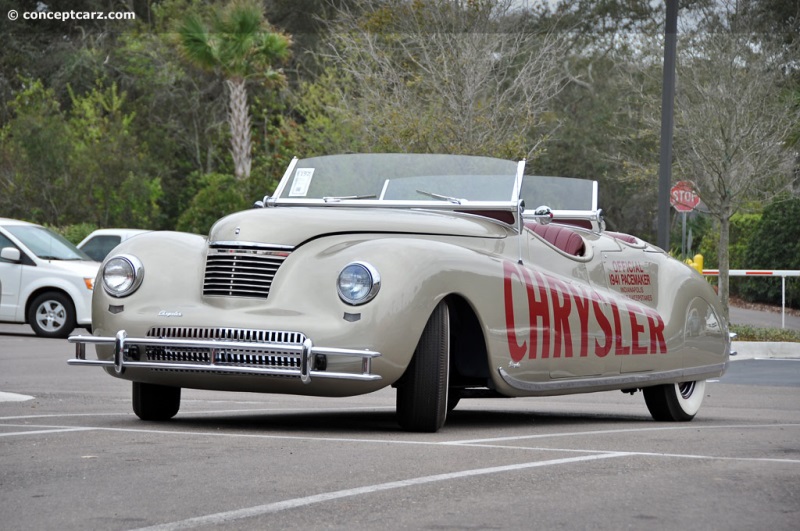
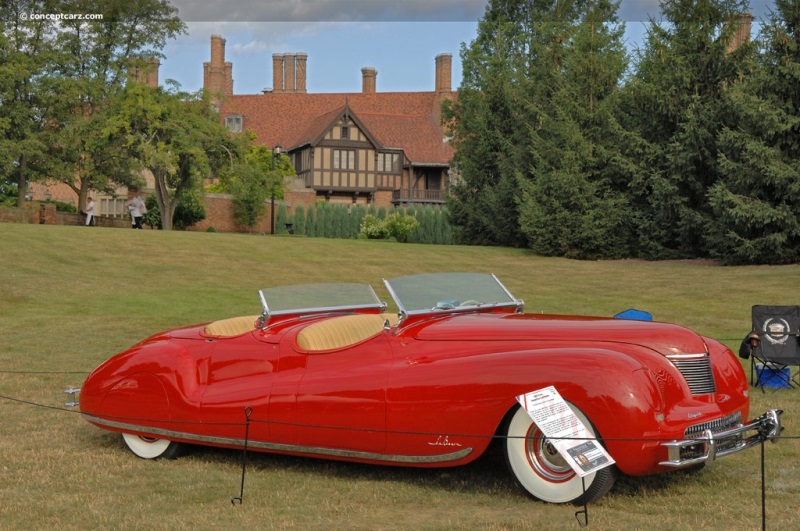
The Newport was designed by Roberts and Alex Tremulis and given a classic dual cowl phaeton body style. The chassis had a wheelbase that measured 145.5-inches, the same used on the Chrysler Imperial chassis. This was the first American car to have a fender line that flows from the front to rear. There were no body seams or bolt-on fenders, and the smooth, un-interrupted, flowing design continued in all aspects of the car including the hood, doors, and deck. There were no excessive ornamentation. It was aerodynamic, with integrated rear fender skirts in the shape of teardrops, a flush cover for the top, and even a recessed license plate. Many of these design cues would maker their way into future production cars. Manufacturers and designers were inspired by the designs, using their creativity to craft future vehicles. Earl copied the front to rear fender line and used them on the more expensive Buicks in years to come. His cars, though, had bolt-on fenders.
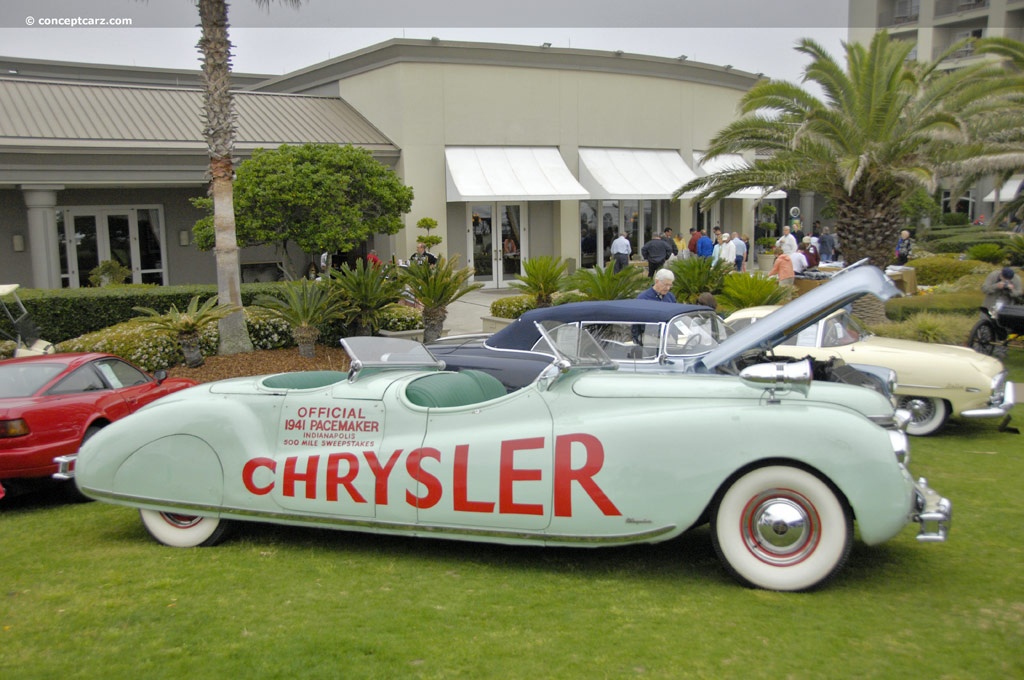
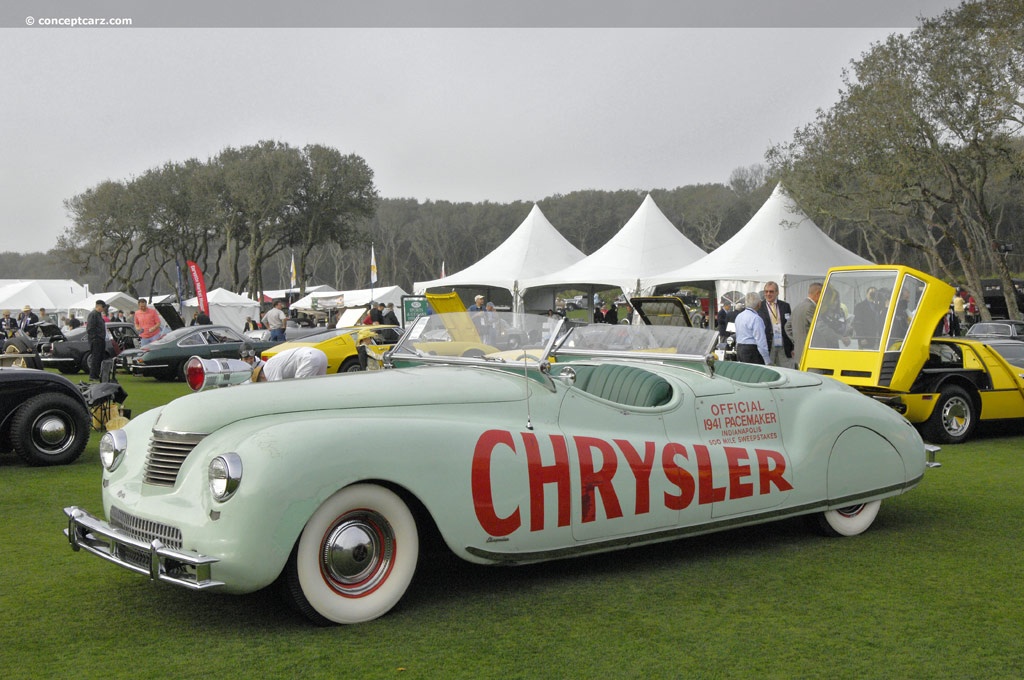
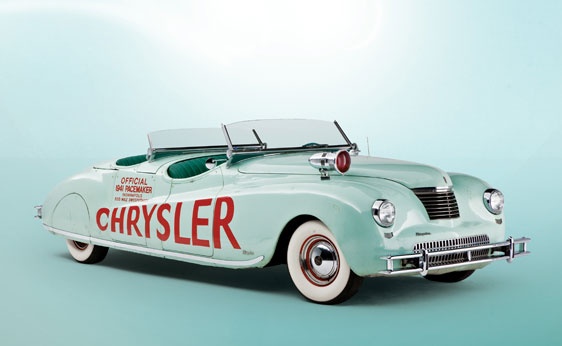
Since the concepts were hand made, each were slightly different than the others. Four of the five Newports had their headlights recessed into the front fenders behind retracting headlight doors. The fifth car had a clean front fender design with exposed headlights. This was the car that would be given the honor being the pace car at the 1941 Indianapolis 500.
This car, chassis number C7807503, was the pace car and the personal property of Walter P. Chrysler, Jr. This car is fitted with a 'Vacamatic' three-speed overdrive transmission allowing clutch-less shifting between standard and overdrive ratios in second and third. The eight-cylinder engine displaces 323 cubic-inches and capable of producing 143 horsepower. There are four-wheel drum brakes, and independent front suspension and a live rear axle.
This car is painted in pastel green and reupholstered in dark green leather. It has been fitted with a top, by Chrysler and LeBaron, which folded under an integrated metal boot cover. To aid entry and exit to and from the rear seat, the cowl was modified to be raised and lowered electrically.
The current owner acquired this car in 2000. The car is almost completely original, including the paint and upholstery, and the monogrammed badges on the front doors.
In 2008, this Newport Concept was brought to the 'Automobiles of Amelia Island' presented by RM Auctions. Also, it was extended an invitation to be show at the Amelia Island Concours d'Elegnace a day later. The car has an estimated value of $800,000 - $1,200,000.
By Daniel Vaughan | Mar 2009
![]() | ![]() | ![]() | Dual Cowl Phaeton Chassis Num: C331001 |
| Sold for $748,000 at 2008 RM Auctions. | |||
The Chrysler Newport first appeared in the early 1940's. It was known as the Newport Phaeton and production lasted from 1940 through 1941 partly due to low production numbers. Only five were produced. The design was by Ralph Roberts. It was powered by an eight-cylinder engine and used a three-speed manual gearbox to send the power to the rear wheels. A Newport appeared at the Indianapolis 500 race in 1941 and served as a pace car.
The name was revised in the 1950s and was a trim level on each of the Chrysler series. The Newport signified a two-door hardtop bodystyle.
In 1961 the Newport name reappeared as its own Model. It was immediately popular and was responsible for most of Chrysler's sales. At a price of just $2964 the vehicle featured full-wheel covers, and minimal amounts of exterior and interior trim. Under the hood was an eight-cylinder engine that produced 265 horsepower. It was available as a two- and four-door convertible, and two- and four-door hardtop.
In 1963 the design was update and again in 1965. It now sat atop of the Chrysler C-platform with the station wagon being renamed to the Town and Country lineup. The convertibles were discontinued in 1971.
By Daniel Vaughan | Nov 2006
The name was revised in the 1950s and was a trim level on each of the Chrysler series. The Newport signified a two-door hardtop bodystyle.
In 1961 the Newport name reappeared as its own Model. It was immediately popular and was responsible for most of Chrysler's sales. At a price of just $2964 the vehicle featured full-wheel covers, and minimal amounts of exterior and interior trim. Under the hood was an eight-cylinder engine that produced 265 horsepower. It was available as a two- and four-door convertible, and two- and four-door hardtop.
In 1963 the design was update and again in 1965. It now sat atop of the Chrysler C-platform with the station wagon being renamed to the Town and Country lineup. The convertibles were discontinued in 1971.
By Daniel Vaughan | Nov 2006
The name Newport was first used by Chrysler on a 1940 showcar of which five actual vehicles were produced. Between 1961 and 1981 the Newport was a name used by the Chrysler division of the Chrysler Corporated used as both a hardtop body designation and for its entry level model.
Unveiled in 1940, the Chrysler Newport Phaeton was a 2-door low production roadster than utilized an I8 engine that was linked to a 3-speed manual transmission. Only produced for one year, the first generation Newport was based on the Chrysler New Yorker and was designed by Chrysler designer Ralph Roberts. A total of five units were produced. Chrysler founder Walter P. Chrysler had one that he used as a personal vehicle. Another owner was actress Lana Turner. The 1941 indianapolis 500 race featured the Newport Phaeton as the pace car.
From 1949 through 1961 the second generation of Newport was featured to designate the 2-door hardtop body style in Chrysler's lineup. A new hardtop Newport model was placed in each Chrysler series, Saratoga, the Windsor and the New Yorker. Orginally, the totally redesigned '49 Chrysler Town and Country was proposed as a hardtop, but in the end the body style only appeared during the model's final year in 1950.
In 1961 Chrysler revived the Newport name for their full-size entry-level model. Priced at $2,964, the Newport was strategically placed to fill the price gap between Dodge and Chrysler that emerged when DeSota was deleted. Quite successful, the Newport comprised the bulk of Chrysler production. The base Newport sedans were detrimmed versions of Chrysler's traditional upmarket models that featured hubcaps rather than full-wheel covers, very plain interiors and a minimal amount of exterior trim. Unfortunately, in the long run, cheapening the brand's cache with an inexpensive model wasn't good for Chrysler.
The '61 Newport was available to the buying public as either a 2-door convertible, 2-door hardtop, 4-door sedan, 4-door hardtop and 4-door station wagon. Though most Newports were equipped with the 305 hp 383 in³ V8, the base engine was the 361 in³ V8 engine that was rated at 265 hp. The trademark fins were removed for the 1962 model year. For 1963 the Newport was restyled next to the New Yorker and Chrysler 300. This body style remained until 1964. The Newport received the small, chrome-topped fins again in 1964.
The fourth generation Newport was assembled at Jefferson Assembly Plant in Detroit Michigan. Redesigned on the then-new Chrysler C platform, the next Newport ran from 1965 through 1968. The Newport station wagon was renamed the Chrysler Town and Country.
Assembled in Belvidere, Illinois, the fifth generation of the Newport was again built on the C-body platform. Redesigned for the 1969 model year, the Newport now featured the ‘Fuselage Styling' that would eventually become symbolic of Chrysler's full-size vehicles until the end of the 1973 model year.
After 1970, Newport convertibles were discontinued. In 1978 production of the C-body Newport also ended along with the Chrysler New Yorker. During the previous year, related Dodge and Plymouth C-body car had already been dropped. The American car industry's last true two-door and four-door hardtops were offered with the 1978 Newport.
A newly resized Newport was introduced in 1979 on the Chrysler R platform which was a derivative of the circa 1962 Chrysler B platform. This downsized model reduced model availability to a single ‘pillared hardtop' 4 door sedan. Chrysler went about the reduction of their vehicle a different way from GM and Ford who downsized their big cars by chopping with an ax. Chrysler improved fuel efficiency by reducing weght but retaining as much of the traditional full-size look and feel as possible.
A much more attractive vehicle was built from this process, but unfortunately some of the weight-saving measures proved to be more trouble then they were worth. The plastic brake wheel-cylinder pistons that had the tendency to swell and bind up the brakes following a couple of years of service. Another new innovation where chrome-plated aluminum bumpers that were replaced in 1980 with a newer and stronger steel rear bumper.
Sales were strong at the beginning of 1979, but unfortunately due to Chrysler's unsteady financial condition, along with tightening oil and gasoline supplies, all of the R-body models were discontinued following a short run of 1981 models. Chrysler began to shift towards smaller front-wheel drive vehicles and the Newport was replaced with the front-wheel drive Chrysler Executive for 1983.By Jessica Donaldson
For more information and related vehicles, click hereUnveiled in 1940, the Chrysler Newport Phaeton was a 2-door low production roadster than utilized an I8 engine that was linked to a 3-speed manual transmission. Only produced for one year, the first generation Newport was based on the Chrysler New Yorker and was designed by Chrysler designer Ralph Roberts. A total of five units were produced. Chrysler founder Walter P. Chrysler had one that he used as a personal vehicle. Another owner was actress Lana Turner. The 1941 indianapolis 500 race featured the Newport Phaeton as the pace car.
From 1949 through 1961 the second generation of Newport was featured to designate the 2-door hardtop body style in Chrysler's lineup. A new hardtop Newport model was placed in each Chrysler series, Saratoga, the Windsor and the New Yorker. Orginally, the totally redesigned '49 Chrysler Town and Country was proposed as a hardtop, but in the end the body style only appeared during the model's final year in 1950.
In 1961 Chrysler revived the Newport name for their full-size entry-level model. Priced at $2,964, the Newport was strategically placed to fill the price gap between Dodge and Chrysler that emerged when DeSota was deleted. Quite successful, the Newport comprised the bulk of Chrysler production. The base Newport sedans were detrimmed versions of Chrysler's traditional upmarket models that featured hubcaps rather than full-wheel covers, very plain interiors and a minimal amount of exterior trim. Unfortunately, in the long run, cheapening the brand's cache with an inexpensive model wasn't good for Chrysler.
The '61 Newport was available to the buying public as either a 2-door convertible, 2-door hardtop, 4-door sedan, 4-door hardtop and 4-door station wagon. Though most Newports were equipped with the 305 hp 383 in³ V8, the base engine was the 361 in³ V8 engine that was rated at 265 hp. The trademark fins were removed for the 1962 model year. For 1963 the Newport was restyled next to the New Yorker and Chrysler 300. This body style remained until 1964. The Newport received the small, chrome-topped fins again in 1964.
The fourth generation Newport was assembled at Jefferson Assembly Plant in Detroit Michigan. Redesigned on the then-new Chrysler C platform, the next Newport ran from 1965 through 1968. The Newport station wagon was renamed the Chrysler Town and Country.
Assembled in Belvidere, Illinois, the fifth generation of the Newport was again built on the C-body platform. Redesigned for the 1969 model year, the Newport now featured the ‘Fuselage Styling' that would eventually become symbolic of Chrysler's full-size vehicles until the end of the 1973 model year.
After 1970, Newport convertibles were discontinued. In 1978 production of the C-body Newport also ended along with the Chrysler New Yorker. During the previous year, related Dodge and Plymouth C-body car had already been dropped. The American car industry's last true two-door and four-door hardtops were offered with the 1978 Newport.
A newly resized Newport was introduced in 1979 on the Chrysler R platform which was a derivative of the circa 1962 Chrysler B platform. This downsized model reduced model availability to a single ‘pillared hardtop' 4 door sedan. Chrysler went about the reduction of their vehicle a different way from GM and Ford who downsized their big cars by chopping with an ax. Chrysler improved fuel efficiency by reducing weght but retaining as much of the traditional full-size look and feel as possible.
A much more attractive vehicle was built from this process, but unfortunately some of the weight-saving measures proved to be more trouble then they were worth. The plastic brake wheel-cylinder pistons that had the tendency to swell and bind up the brakes following a couple of years of service. Another new innovation where chrome-plated aluminum bumpers that were replaced in 1980 with a newer and stronger steel rear bumper.
Sales were strong at the beginning of 1979, but unfortunately due to Chrysler's unsteady financial condition, along with tightening oil and gasoline supplies, all of the R-body models were discontinued following a short run of 1981 models. Chrysler began to shift towards smaller front-wheel drive vehicles and the Newport was replaced with the front-wheel drive Chrysler Executive for 1983.By Jessica Donaldson
| Auctions America Announces Exciting List of Attractions for its Auburn Spring Collector Car Weekend | |
![]() | • Final countdown underway to Auctions America's Auburn Spring collector car weekend, May 9 – 11 at the historic Auburn Auction Park in Auburn, Indiana • Sale lifts the gavel on approximately 500 quality collector cars and features full day of memorabilia • Latest auction highlights include a 1930 Packard Dual Cowl Sport Phaeton, a 1938 Cadillac V-16 Convertible Coupe, and a very rare 1967 Ford Fairlane 500XL R-Code in addition to the previously announced John Soneff estate collection • Week...[Read more...] |
| Auctions America's 2013 Auburn Spring Event Offers Ultimate Collector Car Weekend | |
![]() | • Auctions America presents the first of two annual Auburn sales, May 9 – 11 at historic Auburn Auction Park in Auburn, Indiana • Multi-day sale lifts gavel on 600 quality collector cars and an assortment of memorabilia • Notable early highlights include selection of Hudsons from the respected John Soneff Collection • Weekend also features inaugural Antique Automobile Club of America Central Division National Spring Meet, and an extensive car corral and swap meet presented by Carlisle Events...[Read more...] |
| Edsel Ford's Speedster Stars at 'The Amelia' | |
![]() | Edsel Ford's 'continental car', a custom boattail speedster, will take its rightful place in the Sports Car Class of the 18th annual Amelia Island Concours d'Elegance. In the shape of Edsel's seminal speedster is the genesis of Ford's legendary design department. Edsel Ford was hardly 'a chip off the old block'. The acorn fell well away from the mighty oak that was Henry Ford, founder of the Ford Motor Company. Edsel was not just the President of Ford, he was a car guy to his core. His ta...[Read more...] |
| The Champion in Touring Car Racing : The BMW M3 | |
![]() | In August 1985, a rumour surfaced in motor magazine Auto-Deutschland which emanated from a new sports car. An A Group Car from BMW that was a thoroughbred racing car according to the rules but was also to be produced in a version licensed to drive on open roads for everyday use. Speculation about this dream car that could take to normal roads and was intended for the 'Most dynamic among BMW 3 Series drivers' was right on target. But the pundits missed the mark about the motor-sport car by a mile...[Read more...] |
| Auctions America By RM's 2012 Auburn Spring Auction | |
![]() | 'Variety' is the buzzword for this year's Auctions America by RM June 1-3 Auburn Spring auction, which will offer a huge range of collector vehicles and an enormous private collection of automotive memorabilia. More than 600 American muscle cars, Classics, foreign sports cars and hot rods will cross the block at the historic Auburn Auction Park, the company's national headquarters in Auburn, Indiana. 'Last year was our first spring event at the park,' said Auctions America by RM's President ...[Read more...] |
1941
Chrysler
models |
| Chrysler Royal |
| Chrysler Thunderbolt |
| Chrysler Town and Country |
| Chrysler Windsor |
| Similar Vehicles | |
![]() | 1941 Chrysler Thunderbolt |
![]() | 1940 Chrysler Newport Concept |
| Similar Automakers | |
| Cadillac | Chevrolet |
| Dodge | Ford |
| GMC | Hummer |
| Jeep | Lincoln |
| Mercury | Pontiac |
| Saturn | |
| Chrysler: 1941-1950 |
| Similar Automakers |
| Other models by Chrysler |
| ||||||||||||||||||||||||||||||||||||||||||||
1940 Newport Concept |


1940 Newport Concept


1941