1934 Aston Martin MK II
1934 Aston Martin MK II Navigation
Founded in 1913, Aston Martin was already a respected maker of sporting cars by the time the 15/98 arrived in 1936. The company had a strong competition record, earning an excellent third place finish in the 24 Hours of Le Mans in 1935. Aston Martin didn't just build sports and race cars, though. The maker's street cars were very well-appointed and, while some remained singularly sporty, cars like the Mark II Sports Saloon offered signature Aston Martin style in a larger and more comfortable package.
Tourer
Chassis #: F4/446/S
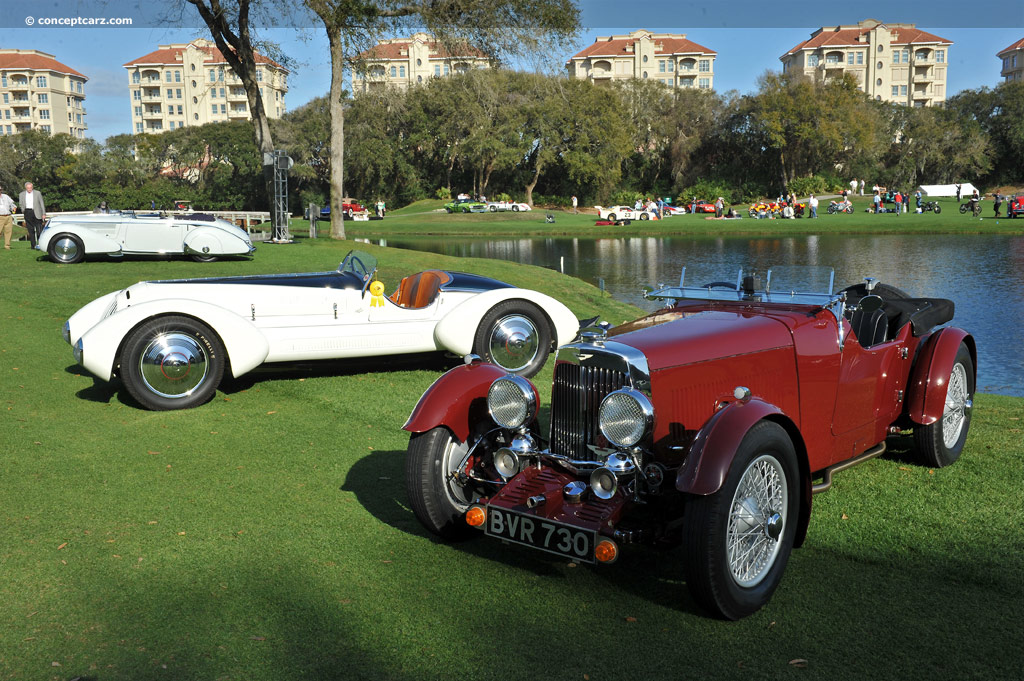
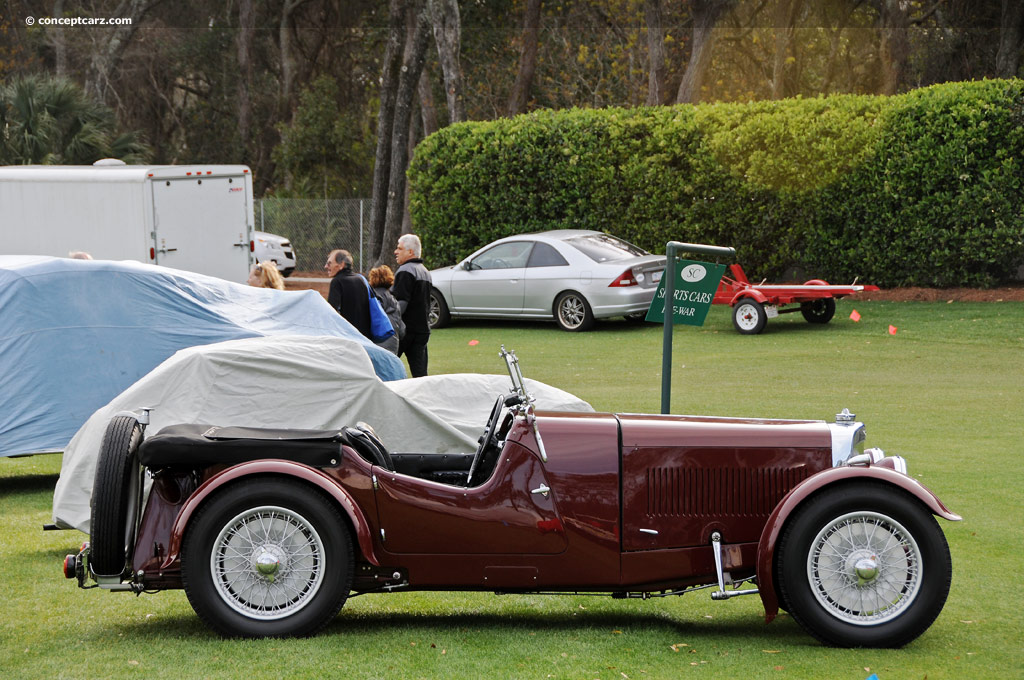
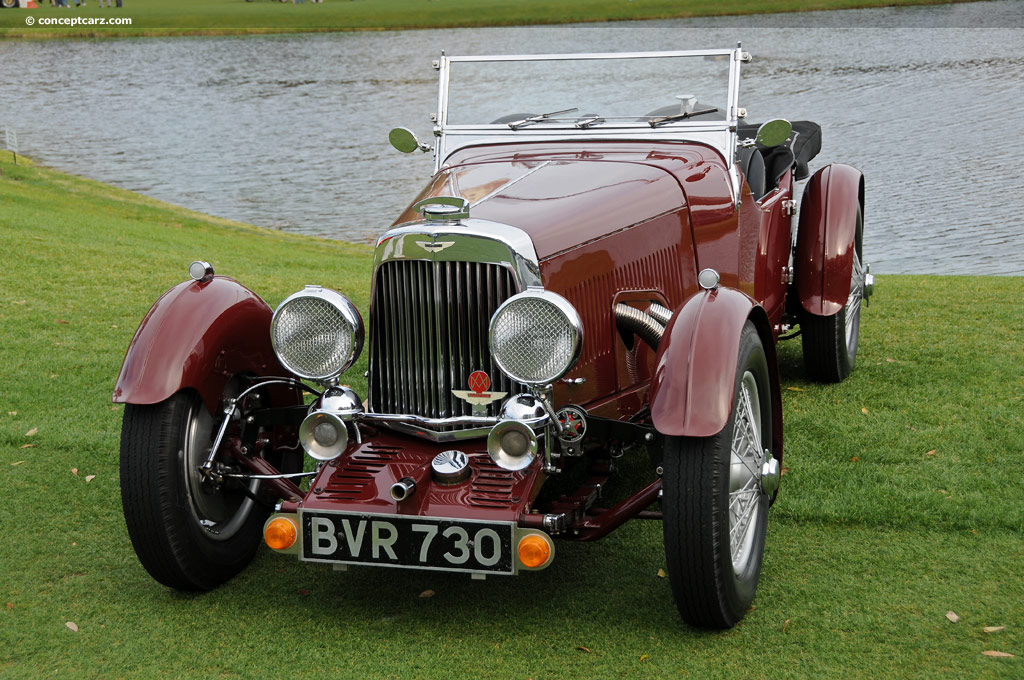
View info and historyWith the 15/98, Aston Martin sought to further diversify its product line. With open and closed coachwork by several prestigious names, the 15/98 was offered as a fairly large Saloon (sedan) or Tourer (drop-head coupe), and as a Short-Chassis sports car.The Saloon was the least desirable of the models. Though its styling was well executed, the look was not as racy as prior Aston Martins. The car appeared stately and elegant, not sporting. This may have been less of a problem had the car been supremely refined and civilized. Its mechanicals, however, were not given adequate time for development before being used on the production car, so the Saloon was unexpectedly gruff for what looked like a luxury car. Also, the bodies were heavy. The small engines couldn't cope well enough with the high weight to make the Saloons drive like other Aston Martins. The company saw that the car needed improvement, but as they couldn't easily revise the entire vehicle they instead decided to simply shorten the production run. From an initial projection of 100, the number of 15/98 Saloons built was cut to 50. Despite their rarity, the Saloons now change hands for quite low prices relative to other pre-war Astons. If nothing else, they are sound investments as there will always be a market for such an exclusive automobile. Based on the same 9'8' chassis of the Saloon, the Tourer was a sizeable two-door convertible with seating for four. At 575 British pounds, it was slightly less expensive than the Saloon. Equipped with more exciting bodies, the Tourers are now more highly sought vehicles. Only 24 were produced.
Tourer
Chassis #: F4/446/S
View info and historyThe most well respected and highly valued of the 15/98 models were not based on the chassis of the Saloon or Tourer but on shortened 8'6' variations of the same design. The Short-Chassis cars came about as something of an accident. After the decision was made to build only half the number of Saloons as originally intended, a new car was needed to maintain production capacity at Aston Martin. The first Short-Chassis was shown at the 1937 Motor Show at Earls Court. With a body by Abbey Coachworks of Willesden, it was the most pure and attractive model yet of the 15/98 line. With classic 1930's British sports car styling and a price lower than the Saloon, the Short-Chassis 15/98 was a much better proposition than the other members of the series. The mechanicals of the car were shared with the more mundane variants, but this was not a problem. The shortened chassis weighed less, and the simple coachwork was lighter than the bodies of the longer models. The rough engine that seemed so out of place in a luxury sedan was standard fare for a sports car, and its power was more than adequate for such a light car. A top speed in excess of 85mph could be achieved, an impressive number for a car of the era.Early 15/98 vehicles were bodied by E. Bertelli Ltd. The head of Aston Martin in 1936 was the brother of Enrico Bertelli, the owner of the coachwork company of the same name. An agreement was worked out between the two brothers that lasted until Aston head A.C. Bertelli's resignation in 1937. The Saloons, produced from 1936-1938, and the Tourers, produced from 1936-1939, were bodied primarily by E. Bertelli. The Short-Chassis, though, were produced only after A.C. Bertelli left from 1937-1938. Bodies by Abbott and Abbey were used on these cars instead.
Tourer
Chassis #: F4/446/S
View info and historyMechanically, all 15/98 Astons were alike. Power came from a 2-litre four that had first been used at Le Mans in early 1936. The more advanced Le Mans racer engine had dry sump lubrication, but the version used in the 15/98 was of a more conventional wet sump design. The cars had hydraulic brakes and synchromesh transmissions. The 15/98 title was based on the engine's power output. The '15' was the Royal Automobile Club's horsepower rating. Found through an antiquated formula, the first number was not as meaningful as the '98' that followed. That second number stood for the car's brake horsepower rating, a more modern power rating that allows the Aston's actual output to be understood in today's terms. The 2-litre Aston Martin engine was the source of propulsion for some very important Aston Martin race and street cars alike, and its presence in the 15/98 cars has guaranteed that the Saloon, Tourer and Short-Chassis models will remain coveted Aston Martins. The Saloon and even more so the Tourer have become significant cars, but the Short-Chassis models will always be the most prized. By combining wonderful looks and capable performance in a sporting and distinctly British package, the Short-Chassis followed the same recipe for delicious automotive delights that Aston Martin continues to use when creating new cars.Sources:
Tourer
Chassis #: F4/446/S
View info and historyCottingham, Tim. 'Pre War Aston Martins.' AstonMartins.com Web.8 Jul 2009. http://www.astonmartins.com/prewar/index.html.Serio, Stephen. '1938 Aston Martin 15/98 Short-Chassis.' Sports Car Market Oct 2006 Web.8 Jul 2009. http://www.sportscarmarket.com/profiles/2006/October/English/index.html.By Evan Acuña
Tourer
Chassis #: F4/446/S
View info and history
Tourer
Chassis #: F4/446/S
View info and history
Tourer
Chassis #: F4/446/S
View info and history

Tourer
Chassis #: F4/446/S
View info and history
- 1934 Aston Martin MK II Menu
- Article
- Image gallery
- Valuation
- Specifications
- Profiles
Aston Martin
Similar Vehicles

Similar Automakers


1934 Aston Martin MK II Vehicle Profiles


Recent Vehicle Additions


Performance and Specification Comparison
Mk II Specification Comparison by Year
Year
Production
Wheelbase
Engine
Prices
103.00 in.
Related Automotive News

Aston Martin celebrates new era of performance with its most powerful line-up ever at Goodwood Festival of Speed
Aston Martins limited and final-edition V12 Vantage to make public dynamic debut on Goodwoods famous hillclimb
DBX707, the worlds fastest and most powerful ultra-luxury SUV to make public debut
Aston Martin Valkyrie hypercar returns with its c...

Brooklands Museum to celebrate 95th Anniversary of first ever British Grand Prix
Brooklands hosted the first ever British Grand Prix in 1926
Examples of Grand Prix cars from each decade from 1920s to 2010s, will be at Brooklands Relived on 7th August
Display will show development of motorsport engineering over the past 95 year...

Fighting spirit: The history of Aston Martin in Grand Prix racing
Aston Martin is returning to the F1TM grid in 2021 for the first time in over 60 years
Better known for its achievements in sports car racing Aston Martin also has a fascinating Grand Prix history, rich with anecdotes and characters
Key figure...

Salon Privé Pays Tribute To 60 Years Of Short Wheelbase Style, Elegance & Excitement; The Ferrari 250 GT SWB Berlinetta
Amazing line-up of 8 Ferrari GT 250 SWBs confirmed for Salon Privé
3 historic competition cars all with notable racing achievements
5 Road cars including 1st RHD 250 GT SWB built to semi-comp specification
Windsor, 19th July 2019. One of...
The Stuff of Legend: Prince Bira, The Mighty Mouse of Siam
In the film Tombstone there is an exchange of dialogue between Wyatt Earp and Doc Holliday. The subject is life. Earp says, All I ever wanted was to live a normal life. To which Holliday responds, There is no normal life, theres just life......