1966 AMC Marlin news, pictures, and information | ||
| Tweet | ||
![]() | ![]() | ![]() | Hardtop Fastback |
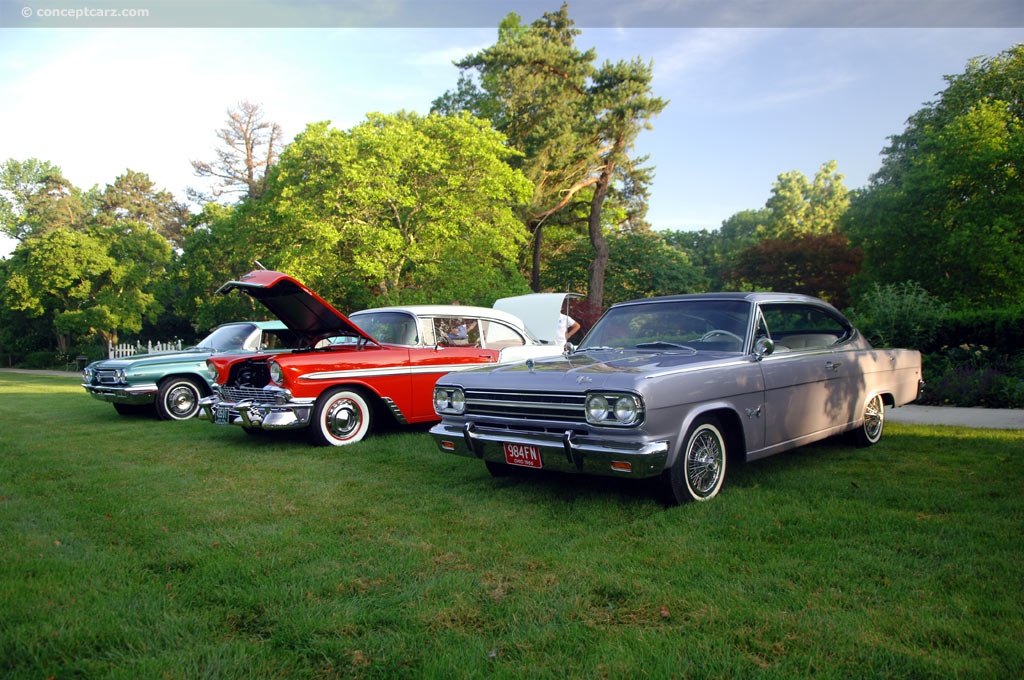
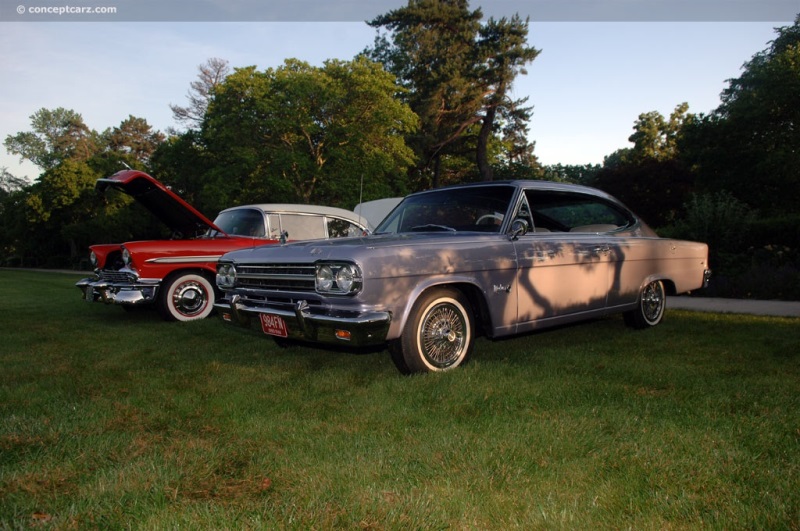
The engine is a 327 cubic-inch V8 that develops 250 horsepower, making it a competitor with the Mustang and the Barracuda. 4,547 Marlin's were produced.
![]() | ![]() | ![]() | Hardtop Fastback |
The Marlin was created to compete with Ford's Mustang and Plymouth's Barracuda, but was built on the 112 inch wheelbase Rambler Classic chassis placing it in the midsize class. It was the first fastback in the segment and was offered with a variety of engines from a 232 cubic-inch 6-cylinder producing 155 horsepower to a 327 cubic-inch V8 producing 270 horsepower. Prices for the car started at $3,100 and although over 10,000 cars were sold in 1965, sales dropped to 4,457 in 1966.
The Marlin was a midsize sport fastback luxury sedan. Introduced in January of 1965, it featured a 4 bbl 327 cubic-inch V8 matted to a four-speed manual transmission and sat atop a 118-inch wheelbase. It was given a base price of $3100 and went on sale in March of 1965. During its introductory year, 10,327 examples were sold. There were many options available making the vehicle customizable to the users desires. The options ranged from engine and transmission choices, to air conditioning, AM/FM radio, power windows, and more.
It was a fastback, but the roofline was high to accommodate extra headroom for rear passengers. Fourteen inch steel wheels and Marlin wheel covers accented the two-color paint scheme and chrome trim. Excellent stopping power was provided by front 4-piston disc brakes and non-servo type rear drum brakes.
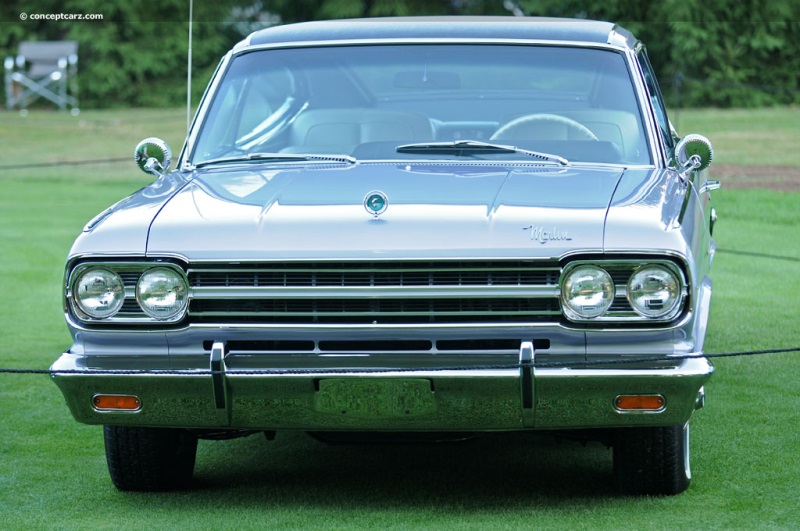
Not much changed for the 1966 version of the Marlin. A new grill was placed on the front, the Rambler logo was removed from the rear and front, and a few extra options became available. The big news was in the engine department, where a new 232 cubic-inch inline six and 327 cubic-inch V8 became available. The six-cylinder produced 155 horsepower while the eight-cylinder produced 250 horsepower. Performance could be increased further with the new optional four-speed manual gearbox. Unfortunately, the front drum brakes were now standard on the front but the disc brakes could still be had for an additional cost. AMC was unable to capture the sales that it had achieved in the prior year. Sales had dipped by more than half to 4,547.
In 1967, the Marlin was redesigned, giving it a wider stance and more interior room. It borrowed design cues from the Ambassador, including the vertical dual headlights, V-profile grille, and parking and turn signal lights. It was even placed on the Ambassador's chassis increasing its size in all directions. The interior received new bucket seats and an overall increase in hip and shoulder room. The interior was outfitted with power windows and cruise control as standard equipment, a rarity for cars at the time. Due to the increase in size, larger engines could be placed under the hood, including an all new 290 and 343 cubic-inch V8's. Even with all these changes, sales continued to fall. With a pitiful 2545, the Marlin was nearing the end. The end of 1967 was the end of production for the Marlin. AMC began focusing on their smaller fastback sedan named the Javelin. It was their attempt to add competition to the 'pony' market.
By Daniel Vaughan | Aug 2011
It was a fastback, but the roofline was high to accommodate extra headroom for rear passengers. Fourteen inch steel wheels and Marlin wheel covers accented the two-color paint scheme and chrome trim. Excellent stopping power was provided by front 4-piston disc brakes and non-servo type rear drum brakes.
Not much changed for the 1966 version of the Marlin. A new grill was placed on the front, the Rambler logo was removed from the rear and front, and a few extra options became available. The big news was in the engine department, where a new 232 cubic-inch inline six and 327 cubic-inch V8 became available. The six-cylinder produced 155 horsepower while the eight-cylinder produced 250 horsepower. Performance could be increased further with the new optional four-speed manual gearbox. Unfortunately, the front drum brakes were now standard on the front but the disc brakes could still be had for an additional cost. AMC was unable to capture the sales that it had achieved in the prior year. Sales had dipped by more than half to 4,547.
In 1967, the Marlin was redesigned, giving it a wider stance and more interior room. It borrowed design cues from the Ambassador, including the vertical dual headlights, V-profile grille, and parking and turn signal lights. It was even placed on the Ambassador's chassis increasing its size in all directions. The interior received new bucket seats and an overall increase in hip and shoulder room. The interior was outfitted with power windows and cruise control as standard equipment, a rarity for cars at the time. Due to the increase in size, larger engines could be placed under the hood, including an all new 290 and 343 cubic-inch V8's. Even with all these changes, sales continued to fall. With a pitiful 2545, the Marlin was nearing the end. The end of 1967 was the end of production for the Marlin. AMC began focusing on their smaller fastback sedan named the Javelin. It was their attempt to add competition to the 'pony' market.
By Daniel Vaughan | Aug 2011
The AMC Marlin was a vehicle aimed at competing with a new breed of vehicles. Ford had their Mustang, Chrysler had the Barracuda, and General Motors had their pony cars such as the Camero and Firebird. AMC decided to enter this segment of the market with the Marlin, a vehicle that could best be classified as an intermediate sports sedan. Under the leadership and direction of Roy Abernethy, the AMC Marlin was introduced in early February of 1965 and offered at a base price of $3100. It was in dealer show rooms in March of 1965.
The vehicle was equipped with four-piston front disc brakes and non-servo type rear drums. A three-speed gearbox came standard. Power windows, AM/FM radio, tilt steering, and air conditioning were offered as optional equipment. A wide range of interior and exterior colors allowed even further customization.
The Marlin was an immediate success for the company, helping to create a profit of over 5 million dollars. In its first year, 10,327 Marlins were sold.
The 1966 Marlin did not sell as well as the prior year. Sales plummeted by nearly half; only 4547 examples were sold.
In 1966, the Rambler logo was removed from the hood and rear of the vehicle. Minor styling and mechanical changes occurred in 1966, but for the most part, the vehicle remained the same. The base price was lowered to around $2600. A four-speed manual gearbox was not offered. The ability to customize the vehicle continued with the addition of two new engines, a 232 cubic-inch six, and a 327 cubic-inch V8. The 232 cubic-inch, inline-six cylinder engine was capable of producing 155 horsepower, while the V8 produced 250 horsepower.
Drastic changes occurred for the Marlin in 1967. It began using the chassis used on the AMC Ambassador, which increased the size of the vehicle. The length grew by six and one-half inches, the wheelbase by six inches, and the width by four inches. This greatly increased the weight of the vehicle. That being the case, it also created more room for larger engines. A new 290 cubic-inch and 343 cubic-inch V8s were offered.
Sadly, even with all these changes, sales still were slow. In 1967, only 2545 units were sold.
By Daniel Vaughan | May 2008
The vehicle was equipped with four-piston front disc brakes and non-servo type rear drums. A three-speed gearbox came standard. Power windows, AM/FM radio, tilt steering, and air conditioning were offered as optional equipment. A wide range of interior and exterior colors allowed even further customization.
The Marlin was an immediate success for the company, helping to create a profit of over 5 million dollars. In its first year, 10,327 Marlins were sold.
The 1966 Marlin did not sell as well as the prior year. Sales plummeted by nearly half; only 4547 examples were sold.
In 1966, the Rambler logo was removed from the hood and rear of the vehicle. Minor styling and mechanical changes occurred in 1966, but for the most part, the vehicle remained the same. The base price was lowered to around $2600. A four-speed manual gearbox was not offered. The ability to customize the vehicle continued with the addition of two new engines, a 232 cubic-inch six, and a 327 cubic-inch V8. The 232 cubic-inch, inline-six cylinder engine was capable of producing 155 horsepower, while the V8 produced 250 horsepower.
Drastic changes occurred for the Marlin in 1967. It began using the chassis used on the AMC Ambassador, which increased the size of the vehicle. The length grew by six and one-half inches, the wheelbase by six inches, and the width by four inches. This greatly increased the weight of the vehicle. That being the case, it also created more room for larger engines. A new 290 cubic-inch and 343 cubic-inch V8s were offered.
Sadly, even with all these changes, sales still were slow. In 1967, only 2545 units were sold.
By Daniel Vaughan | May 2008
Introduced in 1950, the Nash Rambler was designed to be much smaller than other contemporary vehicles, while still able to accommodate five passengers easily and comfortably. Produced by the Nash Motors division of Nash-Kelvinator Corporation for six years only, the Rambler was responsible for establishing a new segment in the automotive market. Widely considered to be the original modern American compact vehicle, the Nash Rambler was orginally going to be called the Nash Diplomat. Dodge had already reserved the Diplomat name for a two-door hardtop body style, so the Rambler name was resurrected instead.
Introduced during the 1950 model year, the Nash Rambler was the entry model for the low-price segment that had been dominated by models from Ford, Chevrolet, and Plymouth. Riding on a 100' wheelbase, the new model was designed to be smaller in dimension, and lighter in weight than the other popular cars of the time. Nash was able to save on materials in its productions and owners would have better fuel economy by keeping the vehicle smaller. Producing 82 hp, the Rambler's power came from a 173 in³ L-head 6-cylinder engine.
The 'landau' was the designation for the up-maret two-door convertible new Rambler. The Rambler was attempting to gain a positive public image, rather than being seen as an inexpensive little vehicle. The Nash Rambler was equipped with various features that included wheel covers, electric clock, pushbutton radio and whitewall tires.
The Rambler was compact, and the design had a rounded form with an envelop body that enclosed the front wheels. Fortunately thedesign did not impair the vehicles cornering abilities. The Nash Rambler kept the fixed roof structure above the vehicles doors and rear side window frames unlike the traditional convertible of that time period that used frame-free windows. The retractable canvas top used this metal structure as the side rails or guides. The body of the vehicle was considered to be rigid for an open top vehicle, though this design did allow Nash to use its monocque unibody construction on its new compact.
The Rambler line was enhanced to include the Country Club in 1951, a two-door station wagon and a two door hardtop. It wasn't until 1953 that the Nash Rambler received it's first significant restyling which included an all-new ‘Airflyte' styling that the ‘senior' Nash models had received the previous year. Also in this year, a new two-door sedan was added to the lineup.
In 1954 the Cross Country was added to the line-up, which included a four-door station wagon and four-door sedan. The Cross Country rode on a 108' wheelbase, and during the following year, the traditional front wheel wells were open and exposed.
The Hudson Motor Car Company merged with Nash in 1954, with the successor being the American Motors Corpoation.Soon after the merge, Ramblers were badged as Hudson brand cars. Nash Ramblers and Hudson Ramblers were virtually identical, except fo the brand name and some minor brand badging.
A all-new Rambler was introduced in 1956 by American Motors which featured an increase in the overall length of the vehicle, though still riding on the same 108' (2743mm) wheelbase. Ramblers now only were sold as four-door models, alongside four-door sedans, station wagon, and a new four-door hardtop sedan. A new four-door hardtop station wagon was featured in 1956, an industry first.
The Rambler was no longer branded as either a Nash or Hudson in 1957, but simply as a Rambler in it's own right. A 250-cid V8 engine was finally made available in Ramblers for the first time in 1957. Also, new for this year only was a unique high-performance four-door hardtop sedan model that was named the Rambler Rebel. The Rebel was fitted with AMC's new 327-cid V8 engine which was also used the larger Nash Ambassador and the Hudson Hornet earlier that year.By Jessica Donaldson
For more information and related vehicles, click hereIntroduced during the 1950 model year, the Nash Rambler was the entry model for the low-price segment that had been dominated by models from Ford, Chevrolet, and Plymouth. Riding on a 100' wheelbase, the new model was designed to be smaller in dimension, and lighter in weight than the other popular cars of the time. Nash was able to save on materials in its productions and owners would have better fuel economy by keeping the vehicle smaller. Producing 82 hp, the Rambler's power came from a 173 in³ L-head 6-cylinder engine.
The 'landau' was the designation for the up-maret two-door convertible new Rambler. The Rambler was attempting to gain a positive public image, rather than being seen as an inexpensive little vehicle. The Nash Rambler was equipped with various features that included wheel covers, electric clock, pushbutton radio and whitewall tires.
The Rambler was compact, and the design had a rounded form with an envelop body that enclosed the front wheels. Fortunately thedesign did not impair the vehicles cornering abilities. The Nash Rambler kept the fixed roof structure above the vehicles doors and rear side window frames unlike the traditional convertible of that time period that used frame-free windows. The retractable canvas top used this metal structure as the side rails or guides. The body of the vehicle was considered to be rigid for an open top vehicle, though this design did allow Nash to use its monocque unibody construction on its new compact.
The Rambler line was enhanced to include the Country Club in 1951, a two-door station wagon and a two door hardtop. It wasn't until 1953 that the Nash Rambler received it's first significant restyling which included an all-new ‘Airflyte' styling that the ‘senior' Nash models had received the previous year. Also in this year, a new two-door sedan was added to the lineup.
In 1954 the Cross Country was added to the line-up, which included a four-door station wagon and four-door sedan. The Cross Country rode on a 108' wheelbase, and during the following year, the traditional front wheel wells were open and exposed.
The Hudson Motor Car Company merged with Nash in 1954, with the successor being the American Motors Corpoation.Soon after the merge, Ramblers were badged as Hudson brand cars. Nash Ramblers and Hudson Ramblers were virtually identical, except fo the brand name and some minor brand badging.
A all-new Rambler was introduced in 1956 by American Motors which featured an increase in the overall length of the vehicle, though still riding on the same 108' (2743mm) wheelbase. Ramblers now only were sold as four-door models, alongside four-door sedans, station wagon, and a new four-door hardtop sedan. A new four-door hardtop station wagon was featured in 1956, an industry first.
The Rambler was no longer branded as either a Nash or Hudson in 1957, but simply as a Rambler in it's own right. A 250-cid V8 engine was finally made available in Ramblers for the first time in 1957. Also, new for this year only was a unique high-performance four-door hardtop sedan model that was named the Rambler Rebel. The Rebel was fitted with AMC's new 327-cid V8 engine which was also used the larger Nash Ambassador and the Hudson Hornet earlier that year.By Jessica Donaldson
| Aluminum, Structural Adhesive Help Boost Cadillac Performance and Quietness | |
![]() | Bonding agent reduces squeaks and rattles; aluminum cuts ATS and CTS weight Greater use of structural adhesive and aluminum is helping Cadillac reduce overall weight of the ATS and all-new CTS sedans, contributing to better ride and handling and reduced cabin noise in both models. The new CTS uses 387 feet of structural adhesive – more than the length of a football field – as a bonding agent that holds together and stiffens load-bearing parts and components. The extensive use of adh...[Read more...] |
| GM GROWS RANGE OF VEHICLES FOR NGOS IN EMERGING MARKETS | |
![]() | -Isuzu DMAX and Chevrolet N300 latest vehicles to be offered -Vehicle offering part of GM's International Aid & Development Program -International Fleet Sales is GM's dealer for export of specialized products DUBAI, U.A.E. – As part of its ongoing support for humanitarian work in emerging markets, General Motors announced today at the Dubai International Humanitarian Aid & Development Conference that it will offer two new specialized products to Non-Governmental Organizations to assist the...[Read more...] |
| FORD SEES SALES GROWTH IN CRITICAL ‘SUPER SEGMENT' VEHICLES | |
| -Small cars, small utility vehicles and midsize sedans represent Ford's plan for growth in the United States -Two-thirds of all customers first shop Ford Escape and Fusion when they begin looking at vehicles -Since 2009, 38 percent of Ford's growth has come from vehicles in the 'super segment,' which includes Fiesta, Focus, Fusion and Escape -Super segment is half of new vehicle sales nationwide, compared to 35 percent in 2004 DEARBORN, Mich., March 22, 2013 – Call it the battle for the 's...[Read more...] | |
| Toyota Motor Sales Outpaces Industry with 17.2 Percent November Sales Increase | |
| Best-Ever RAV4 November, Strong Camry and Corolla Sales Among Highlights TORRANCE, Calif. (Dec. 3, 2012) – Toyota Motor Sales (TMS), U.S.A., Inc., today reported November 2012 sales results of 161,695 units, an increase of 17.2 percent compared to the same period last year on both a daily selling rate (DSR) and a raw volume basis. The Toyota Division posted November total sales of 138,976 units, an increase of 17.3 percent on a DSR basis from November 2011. 'Replacement...[Read more...] | |
| Lincoln at Los Angeles Auto Show Press Days: Celebration of Its Past and Future As Brand Rolls Out Its Reinvention | |
![]() | > The brand pays tribute to its heritage today, displaying seven of the most influential Lincoln designs > Thursday sees a display full of the all-new MKZ premium midsize sedan and MKZ Hybrid, the future of Lincoln, on the Lincoln stand > Lincoln launches on Tumblr http://lincolnnow.tumblr.com beginning with the visually stunning classic Lincolns shown on the stand and select images from archives. Continues with an all-new collection of photographs by photographers Jamie Beck and Kevin Burg ...[Read more...] |
| 1966 AMC Concepts |
| AMC AMX Prototype |
| AMC: 1961-1970 |
| Similar Automakers |
| Other models by AMC |
| Ambassador | AMX | Javelin | Matador | Pacer | Rambler |