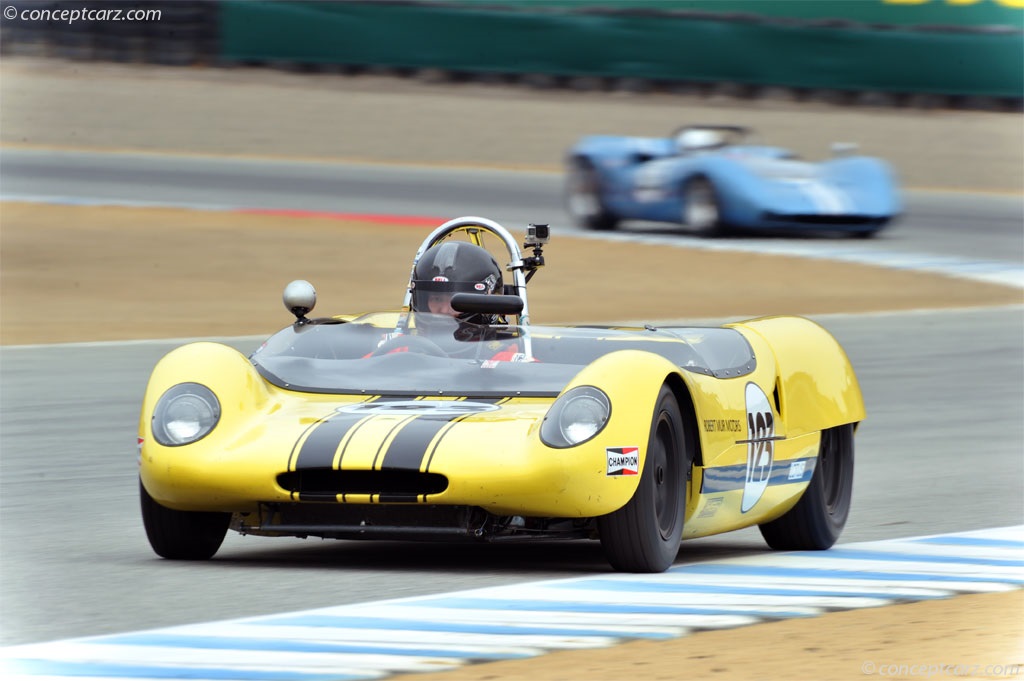
1966 Lotus 23C news, pictures, and information | ||
| Tweet | ||
![]() | ![]() | ![]() | Roadster Chassis Num: 23-S-129 |
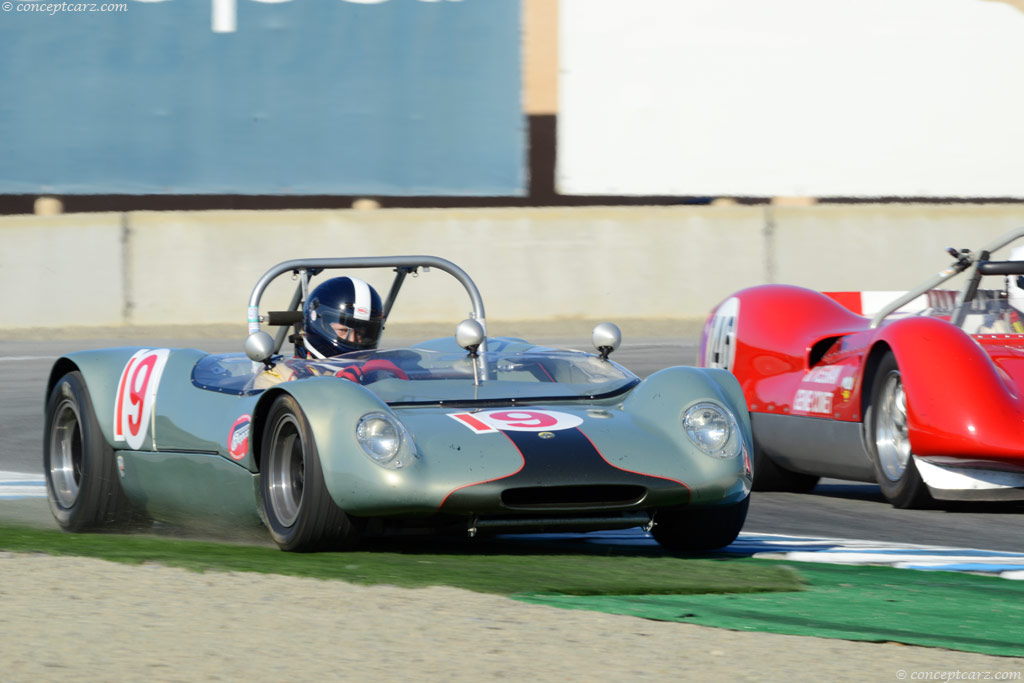
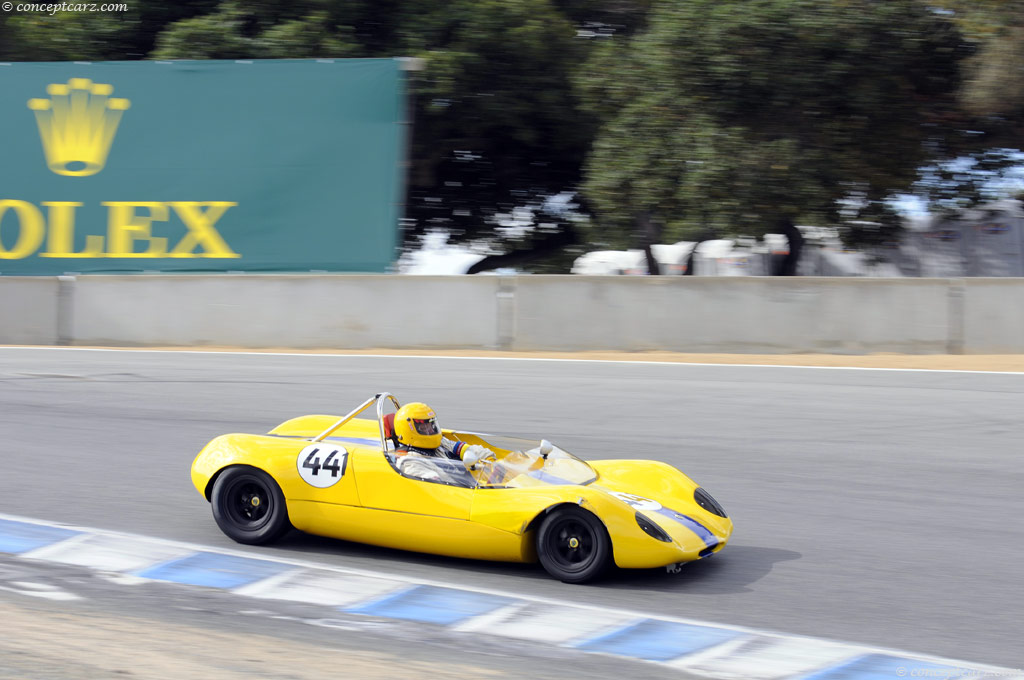
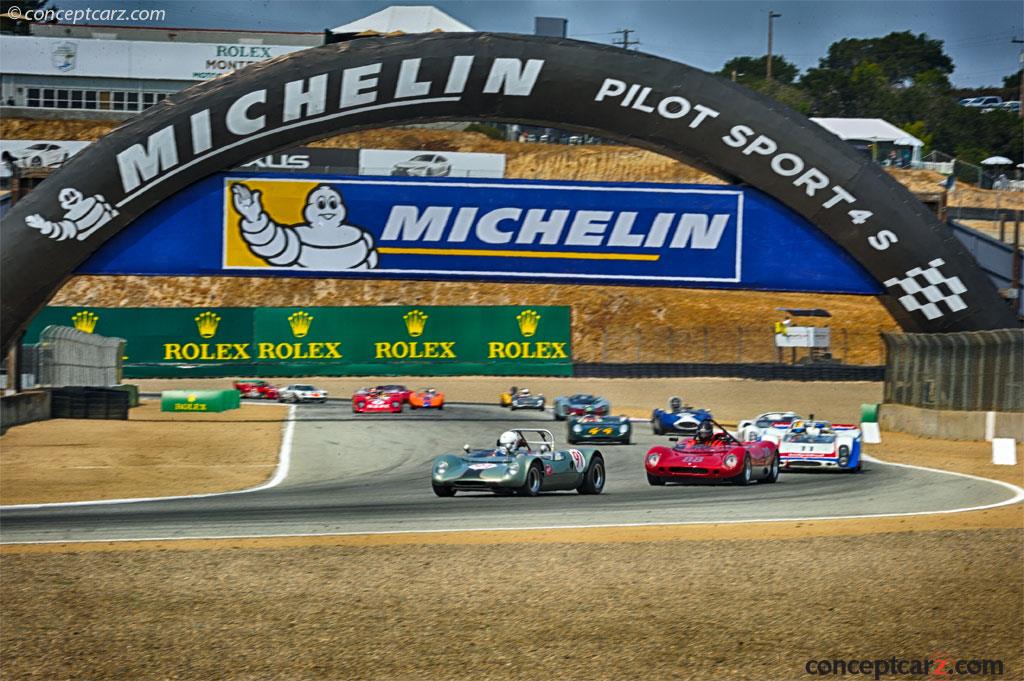
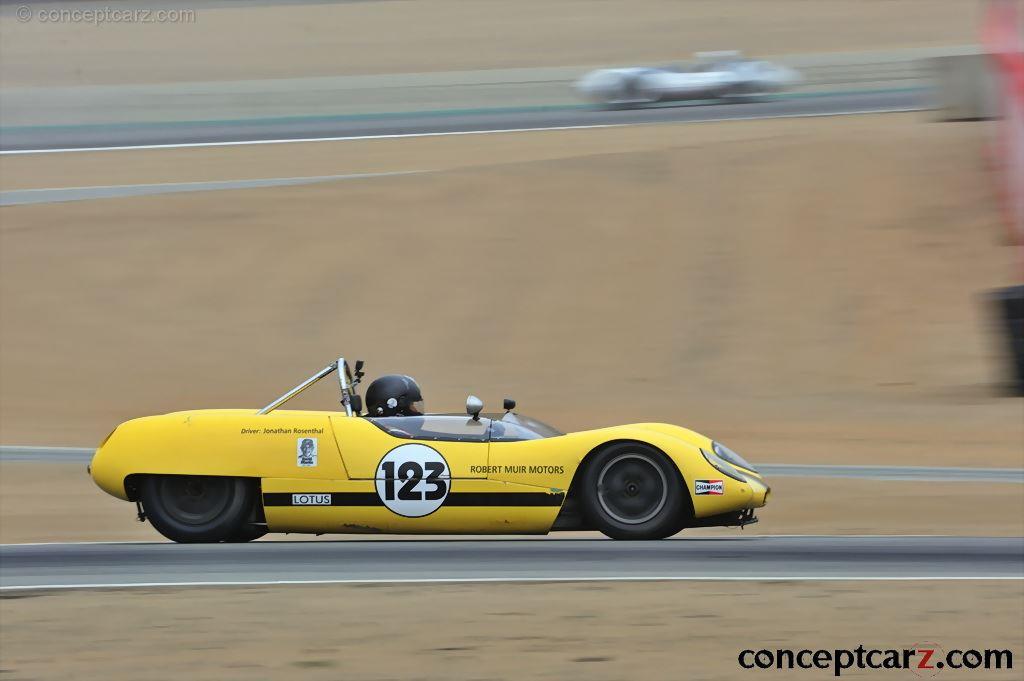
Imported by Dutchess Auto, this is one of six 23Cs produced. It sports a Hewland five-speed gearbox, a 25-gallon fuel tank and a 1600 cubic centimeter twin cam engine. It was run in an endurance event in Chicago, prior to its 1968 sale to Stefan Rzesnowiecky of Dayton, Ohio. He campaigned it for many years, with family as his crew. It passed to James Wilson in 1984, and was purchased by the current owner in 2001. It has been vintage raced ever since.
In 1962 Lotus introduced their next iteration of the compact, rear-engined sports cars, the Type 23. It was a derivative of the Lotus 19 which had been produced from 1960 through 1961, as well as the Lotus 20, 21, and 22 cars.
The Type 23 was raced extensively in national and international races winning many class victories and often times beating large-engined competition. It quickly became a popular favorite with many racers and one of Lotus's best selling race cars of all time.
During its production lifespan Louts offered the lightweight car with a variety of options that included the Coventry Climax 750 cc four-cylinder engine and even a 12-cylinder Rotorvic motor for competition at LeMans. In standard form the Type 23 came equipped with an 1100 cc engine. A popular option was to upgrade to the Type 23B specification which included the 1600cc Lotus/Ford twin-cam engine.
In 1962 a Type 23B driven by Jim Clark easily proved its potential by leading the Ferrari and Jaguar cars at Nurburgring 1000KM before mechanical difficulty led to a crash. The cars dominated many of the races they were entered; even in modern times they still provide podium time for their drivers in vintage and historic racing events.
The Type 23 was constructed of fiberglass and outfitted with a Hewland MK gearbox. The suspension was comprised of double wishbones and dual trailing arms. The steering was rack-and-pinion.
By Daniel Vaughan | Feb 2008
The Type 23 was raced extensively in national and international races winning many class victories and often times beating large-engined competition. It quickly became a popular favorite with many racers and one of Lotus's best selling race cars of all time.
During its production lifespan Louts offered the lightweight car with a variety of options that included the Coventry Climax 750 cc four-cylinder engine and even a 12-cylinder Rotorvic motor for competition at LeMans. In standard form the Type 23 came equipped with an 1100 cc engine. A popular option was to upgrade to the Type 23B specification which included the 1600cc Lotus/Ford twin-cam engine.
In 1962 a Type 23B driven by Jim Clark easily proved its potential by leading the Ferrari and Jaguar cars at Nurburgring 1000KM before mechanical difficulty led to a crash. The cars dominated many of the races they were entered; even in modern times they still provide podium time for their drivers in vintage and historic racing events.
The Type 23 was constructed of fiberglass and outfitted with a Hewland MK gearbox. The suspension was comprised of double wishbones and dual trailing arms. The steering was rack-and-pinion.
By Daniel Vaughan | Feb 2008
A British manufacturer of sports and racing vehicles, Lotus Cars is based at Hethel, Norfolk, England. Lotus is best known for their race and production vehicles that are lightweight and have high handling characteristics. Lotus Cars is currently owned by Proton, a Malaysian carmaker, who took over Lotus in 1994 during the bankruptcy of its former owner Bugatti.
In 1952, engineer Colin Chapman a recent graduate of University College, London formed the company as Lotus Engineering Ltd. The original factory was in old stables behind the Railway Hotel in Hornsey, North London Team Lotus, which was separate from Lotus Engineering in 1954. From 1958 until 1994 Team Lotus was active and competitive in Formula One racing. In 1959 the Lotus Group of Companies was formed and this was made up of Lotus Cars Limited and Lotus Components Limited that focused on road vehicles and customer competition car production respectively. In 1971 Lotus Components Limited became Lotus Racing Limited, but unfortunately this newly renamed company ceased operation the same year.
In 1959 the company relocated to a purpose built factory at Cheshunt and since 1966 the company has occupied a modern factory and road test facility at Hethel, near Wymondham. This location is the former RAF Hethel base and the testing track utilitzes sections of the old runway.
In a rags-to-riches story, Colin Chapman died of a heart attack in 1982 at the young age of 54, starting out as an innkeeper's son and ending as a multi-millionaire industrialist in post-war Britain. Chapman is best known for building tens of thousands of successful racing and road cars. He also won the Formula One World Championship seven times. Chapman was linked with the DeLorean scandal at the time of his death over the use of government subsidies for the production of the De Lorean DMC-12 for which Lotus had designed the chassis.
The Lotus Company was purchased by General Motors in 1986. GM sold the company for £30 million on August 27, 1993 to A.C.B.N. Holdings S.A. of Luxembourg, a company that was controlled by Romano Artioli, Italian businessman, who also owned Bugatti Automobili SpA. A majority share in Lotus was sold to Perusahaan Otomobil Nasional Bhd, a Malaysian car company in 1996 which was listed on the Kuala Lumpur Stock Exchange. The Lotus Company also acts as an engineering consultancy which provides engineering development, especially of suspension, for other car manufacturers. The Powertrain department is not as well known, was responsible for the design and development of the 4-cylinder Eco-Tec engine found in a variety of GM's Opel, Saab, Vauxhall, Chevrolet and Saturn cars.
The Lotus Type 23 was specially designed by Colin Chapman as a small-displacement sports racing vehicle. To comply with formula rule the Type 23 was nominally a two-seater, it was a purpose-built for racing with a driver alone. The Type 23 utilized a wider version of the Lotus 20 space frame, with identical suspension, wrapped neatly in a fiberglass body. The 23 was initially intended for engines of 750 cc to 1300 cc and the revised 23B featured a stronger chassis tubes to take the torque of Ford-based 1.5/1.6 liter Lotus Twincam power plants.
In May of 1962 the Lotus Type 23 was debuted at the Nordschleife, Nürburgring. The Type 23 is one of the most popular sports racers in Lotus history. Its debut was one of the most astonishing drives ever seen in motor racing and at the end of the first lap, the diminutive 100bhp Lotus was nearly 30 seconds ahead of the field. Produced from 1962 until 1964 the 23 was powered by Ford based engines, 1100cc and eventually by the Lotus Twin Cam. The Type 23 used Type 19 suspension, but with larger tanks. The Type 23 was commemorated by being used as the styling inspiration for the Lotus Elise Type 23.
The 70 k/w Type 23 sped away from the field with Jim Clark at the wheel. Clark was unfortunately overcome by exhaust fumes from a damaged exhaust manifold on lap 12 and was forced to retire. Two Lotus 23s were entered at Le Mans in June 1962, a 750 cc and a one liter 45ci and 61ci. The 23s were disallowed on technical grounds due to political pressure brought to bear by French teams. Colin Chapman was enraged and vowed that they would never again race at Le Mans, and Team Lotus has not entered the race since.
Despite these initial issues, the Lotus 23 proved to be a popular, competitive and durable little race car. More than 130 Type 23's were produced in three versions; the standard 23, 23B and 23C. These vehicles continue today to be a mainstay of vintage racing in both Europe and the United States.
Early on in the 1980's a small group of enthusiasts began to remanufacture parts which made it possible to restore an original Lotus 23. These parts are now easily available and it was about this time that a Register was established for the Lotus 23. Today that Register is pat of the Historic Lotus Register of the UK.
Today there are several sources of replicas of Lotus 23 cars with the Xanthos 23 being the most accurate reproduction of the original car and using the same design and materials as the 1960s original. The Xanthos is powered by Lotus twincam and is still constructed by Xanthos Sports Cars in the traditional way near Bristol, UK. The Noble 23 was a Lotus 23 replica created by Lee Noble with a wider track than the original which allowed for true two seater use. This replica was very successful in racing and more than 60 cars were produced using either Lotus twincam or Renault V6 engines. This version continues to be produced, first by Auriga Design and now by Mamba Motorsport.By Jessica Donaldson
In 1952, engineer Colin Chapman a recent graduate of University College, London formed the company as Lotus Engineering Ltd. The original factory was in old stables behind the Railway Hotel in Hornsey, North London Team Lotus, which was separate from Lotus Engineering in 1954. From 1958 until 1994 Team Lotus was active and competitive in Formula One racing. In 1959 the Lotus Group of Companies was formed and this was made up of Lotus Cars Limited and Lotus Components Limited that focused on road vehicles and customer competition car production respectively. In 1971 Lotus Components Limited became Lotus Racing Limited, but unfortunately this newly renamed company ceased operation the same year.
In 1959 the company relocated to a purpose built factory at Cheshunt and since 1966 the company has occupied a modern factory and road test facility at Hethel, near Wymondham. This location is the former RAF Hethel base and the testing track utilitzes sections of the old runway.
In a rags-to-riches story, Colin Chapman died of a heart attack in 1982 at the young age of 54, starting out as an innkeeper's son and ending as a multi-millionaire industrialist in post-war Britain. Chapman is best known for building tens of thousands of successful racing and road cars. He also won the Formula One World Championship seven times. Chapman was linked with the DeLorean scandal at the time of his death over the use of government subsidies for the production of the De Lorean DMC-12 for which Lotus had designed the chassis.
The Lotus Company was purchased by General Motors in 1986. GM sold the company for £30 million on August 27, 1993 to A.C.B.N. Holdings S.A. of Luxembourg, a company that was controlled by Romano Artioli, Italian businessman, who also owned Bugatti Automobili SpA. A majority share in Lotus was sold to Perusahaan Otomobil Nasional Bhd, a Malaysian car company in 1996 which was listed on the Kuala Lumpur Stock Exchange. The Lotus Company also acts as an engineering consultancy which provides engineering development, especially of suspension, for other car manufacturers. The Powertrain department is not as well known, was responsible for the design and development of the 4-cylinder Eco-Tec engine found in a variety of GM's Opel, Saab, Vauxhall, Chevrolet and Saturn cars.
The Lotus Type 23 was specially designed by Colin Chapman as a small-displacement sports racing vehicle. To comply with formula rule the Type 23 was nominally a two-seater, it was a purpose-built for racing with a driver alone. The Type 23 utilized a wider version of the Lotus 20 space frame, with identical suspension, wrapped neatly in a fiberglass body. The 23 was initially intended for engines of 750 cc to 1300 cc and the revised 23B featured a stronger chassis tubes to take the torque of Ford-based 1.5/1.6 liter Lotus Twincam power plants.
In May of 1962 the Lotus Type 23 was debuted at the Nordschleife, Nürburgring. The Type 23 is one of the most popular sports racers in Lotus history. Its debut was one of the most astonishing drives ever seen in motor racing and at the end of the first lap, the diminutive 100bhp Lotus was nearly 30 seconds ahead of the field. Produced from 1962 until 1964 the 23 was powered by Ford based engines, 1100cc and eventually by the Lotus Twin Cam. The Type 23 used Type 19 suspension, but with larger tanks. The Type 23 was commemorated by being used as the styling inspiration for the Lotus Elise Type 23.
The 70 k/w Type 23 sped away from the field with Jim Clark at the wheel. Clark was unfortunately overcome by exhaust fumes from a damaged exhaust manifold on lap 12 and was forced to retire. Two Lotus 23s were entered at Le Mans in June 1962, a 750 cc and a one liter 45ci and 61ci. The 23s were disallowed on technical grounds due to political pressure brought to bear by French teams. Colin Chapman was enraged and vowed that they would never again race at Le Mans, and Team Lotus has not entered the race since.
Despite these initial issues, the Lotus 23 proved to be a popular, competitive and durable little race car. More than 130 Type 23's were produced in three versions; the standard 23, 23B and 23C. These vehicles continue today to be a mainstay of vintage racing in both Europe and the United States.
Early on in the 1980's a small group of enthusiasts began to remanufacture parts which made it possible to restore an original Lotus 23. These parts are now easily available and it was about this time that a Register was established for the Lotus 23. Today that Register is pat of the Historic Lotus Register of the UK.
Today there are several sources of replicas of Lotus 23 cars with the Xanthos 23 being the most accurate reproduction of the original car and using the same design and materials as the 1960s original. The Xanthos is powered by Lotus twincam and is still constructed by Xanthos Sports Cars in the traditional way near Bristol, UK. The Noble 23 was a Lotus 23 replica created by Lee Noble with a wider track than the original which allowed for true two seater use. This replica was very successful in racing and more than 60 cars were produced using either Lotus twincam or Renault V6 engines. This version continues to be produced, first by Auriga Design and now by Mamba Motorsport.By Jessica Donaldson
| FORD'S SUPPLIER DIVERSITY DEVELOPMENT PROGRAM: 35 YEARS OF EMPOWERING MINORITY, WOMEN AND VETERAN BUSINESS OWNERS | |
| ◾ Ford's award-winning Supplier Diversity Development (SDD) program celebrates its 35th anniversary; since 1978 Ford has spent more than $67 billion with diverse suppliers ◾ In 2012 Ford spent $5.7 billion with tier-one minority-owned suppliers, $1.2 billion with tier-one women-owned suppliers, and $2.1 billion with tier-one suppliers who use tier-two minority- and women-owned businesses ◾ A diverse supplier base brings a fresh perspective that can lead to cutting-edge innovations and help ac...[Read more...] | |
| Grand Prix Circuits: Pau Circuit | |
![]() | Some grand prix circuits just have a mythical status about them. Besides the drivers and great races, a lot of the equation comes down to how memorable the circuit truly is. In the case of the Pau Circuit, its sheer place in motorsport history and lore makes this tight, twisting circuit a true legend. From its very beginnings, Pau would be at the heart of travel and transportation. Situated in a rather deep valley with the Pyrenees mountains lending an imposing back-drop, the area that would ...[Read more...] |
| ALL-AMERICAN CAR TO BE CONSERVED BY ALL-AMERICAN RACERS | |
![]() | One of the race cars American racing legend Dan Gurney is most closely associated with is the Ford Mark IV that he and A.J. Foyt took to a historic victory at the 1967 24 Hours of Le Mans. Gurney will get a chance to become even more familiar with the car he helped make famous when his All-American Racers shop in California takes possession of the car's conservation on behalf of Henry Ford Museum, it was announced today. 'I don't think we could have found a better person or better organiza...[Read more...] |
| 1957 Italian Grand Prix: A True Nobleman Stands Amongst Two of F1's Most Noble | |
![]() | The sea of spectators overwhelming the circuit would be a truly awe-inspiring sight to behold. The vast majority of this horde was there to celebrate the car adorned in red finishing in the top three. The car's driver, a true royal, would stand amongst the crowd as if standing amongst adoring and loving subjects. For the first time in his career, Wolfgang von Trips would be able to count himself amongst the elite of Formula One. Wolfgang von Trips had been born into a noble German family in ...[Read more...] |
| 1958 Moroccan Grand Prix: British All the Way | |
![]() | After years of frustration, and well past his life-expectancy, Mike Hawthorn would be on the verge of his first World Championship. This was more than likely Hawthorn's last and best hope at a World Championship title. Just one last race, and a fellow Brit, would separate Hawthorn from his World Championship. Emotionally, Hawthorn was done. The last few seasons had seen Hawthorn fail to experience anywhere near the level of success he had even in his rookie year of 1952. In 1952, with an unde...[Read more...] |
| View more Sports Racer vehicles |
1966
Lotus
models |
| Lotus 23B |
| Lotus 47 Europa |
| Lotus Cortina MKI |
| Lotus Elan |
| Similar Automakers | |
| Aston Martin | Bentley |
| Bugatti | Devon |
| Ferrari | GTA |
| Koenigsegg | Lamborghini |
| Maserati | Maybach |
| McLaren | Porsche |
| Rolls-Royce | Spyker |
| Tesla | |
| Lotus: 1961-1970 |
| Similar Automakers |
| Lotus History |
| Other models by Lotus |
| Manufacturer Website |
| Related Articles and Event Coverage |
| 2011 Rolex Monterey Motorsports Reunion |
| Portland Historic Races |
| Kohler International Challenge |
| Mid-Ohio Vintage Grand Prix |
| 2006 Amelia Island Concours d'Elegance |
| 16 18 FJ 340R 51 and 51A 61 | 81 Carlton Cortina Elan Eleven | Elise Elite Type 14 Coupé Esprit Europa Evora | Excel Exige Fifteen Mark VI Seven | Type 19 Type 20 Type 21 Type 22 Type 23 | Type 24 Type 25 Type 27 Type 30 Type 38 | Type 49 |


1966