Concept Cars Home
 

1931 Chrysler CG Imperial news, pictures, and information

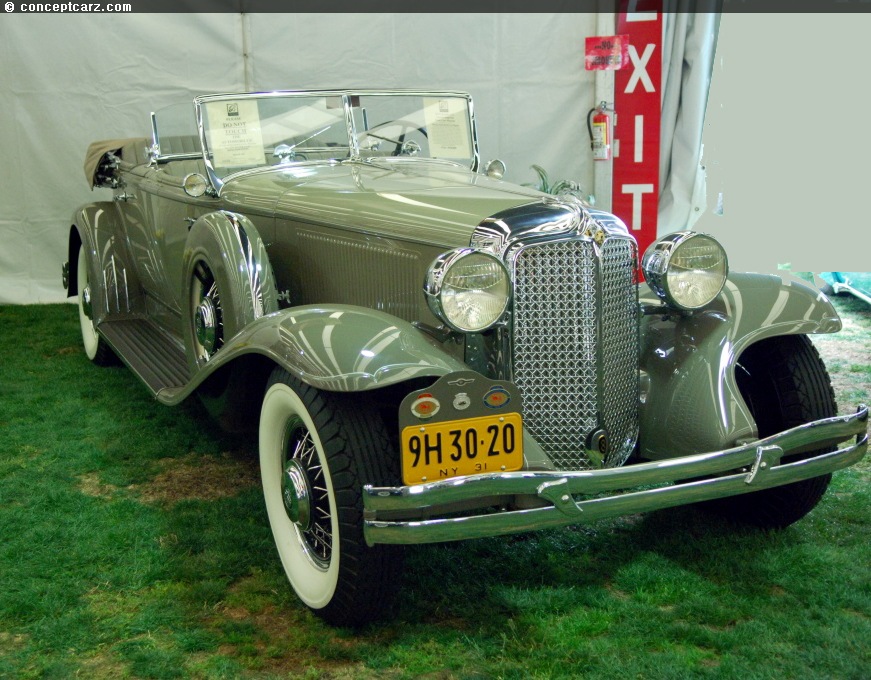
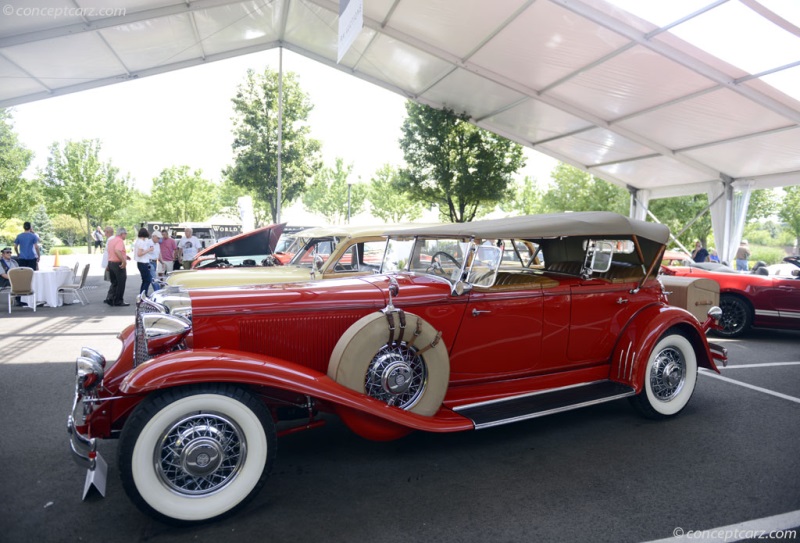
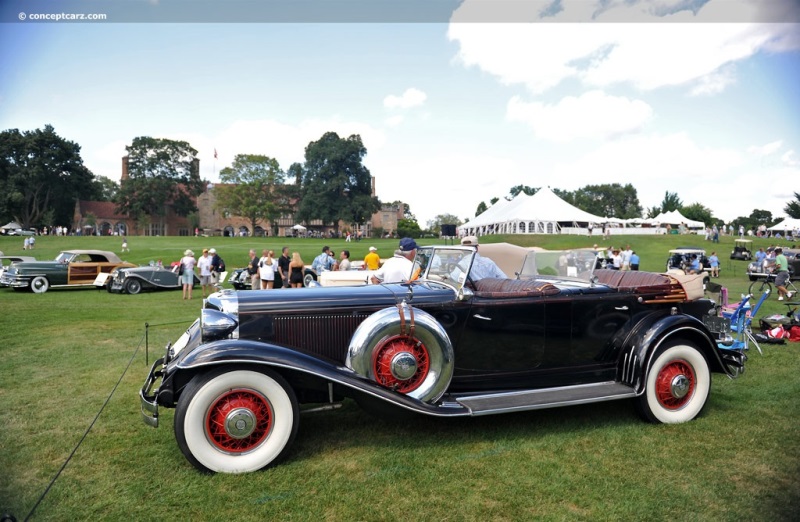
Convertible Victoria
Coachwork: Waterhouse
Chassis Num: 7801063
 
Sold for $522,500 at 2010 RM Auctions.
By 1931, the Great Depression was settling in for a long stay, but Chrysler introduced its first eight-cylinder models, including a top-of-the-line Imperial series on a lordly 145-inch wheelbase. Because it imitated the renowned Cord L-29 of 1929, this new Chrysler was the best-looking American car of the year, and is often considered to be the best looking Chrysler ever built. A total of 99 chassis were supplied to custom coachbuilders during 1931 for individuals to have built to their own specifications by Waterhouse & Company of Webster, Massachusetts. It is believed that there are only 25 Waterhouse-bodied cars known to exist today. Of those 25, three are Chryslers. Waterhouse built some 300 bodies for various marques, and their legacy continues through the reputation of their coachwork.

In 1931 Chrysler accomplished a new vibrant look. At the top of Chrysler's line was the incredible Chrysler Imperial with its V-eed radiator, exceptionally long hood and broad sweeping fenders accented by chrome and accessories. Walter P. Chrysler understood the prestige of offering a premium automobile product directed at this country's wealthy.

The CG Series Imperial was produced in limited quantities for only three years, between 1931 and 1933. In total only 339 CG Imperial models were made. These Imperials rode on a long 145-inch wheelbase and were powered by a super smooth nine main bearing Chrysler '8' engine capable of carrying the car to a top speed of 100 miles per hour. The car has a very low, 66-inch high roof line, typical of a Waterhouse Victoria.

In 2010, this car was offered for sale at RM Auctions 'Automobiles of Amelia Island' event, where it was estimated to sell for $450,000 - $600,000. As bidding came to a close, the car had been sold for the sum of $522,500, inclusive of buyer's premium.
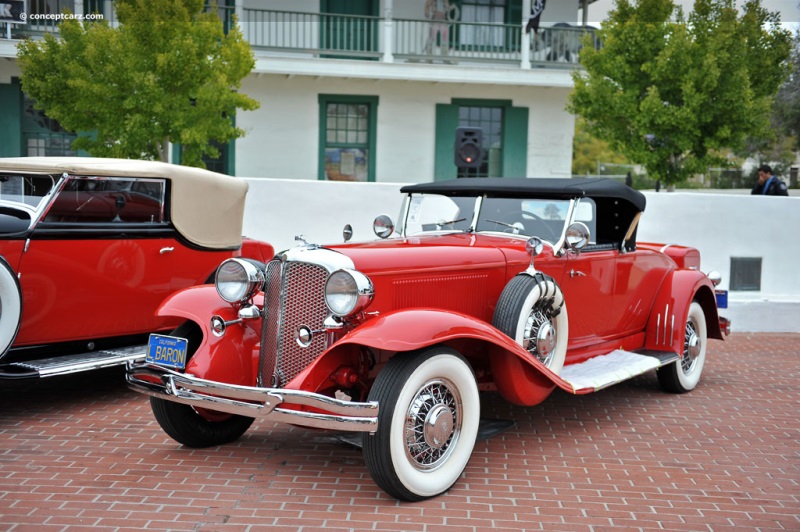
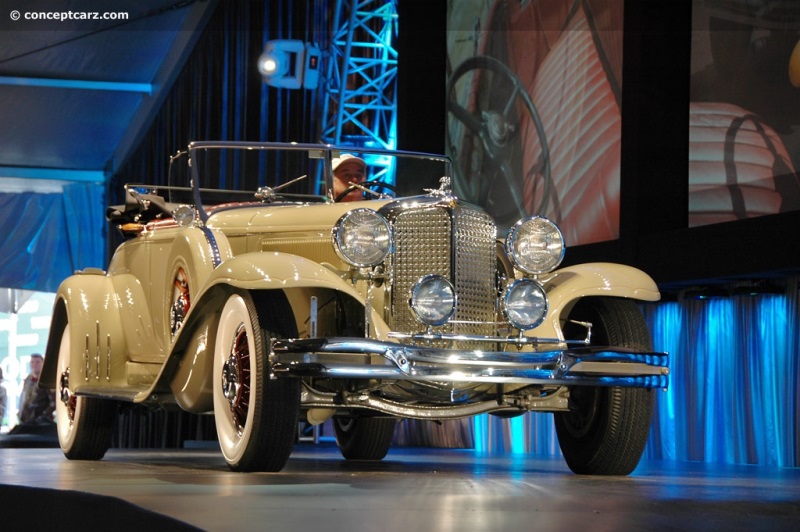
Convertible Coupe
Coachwork: LeBaron
 
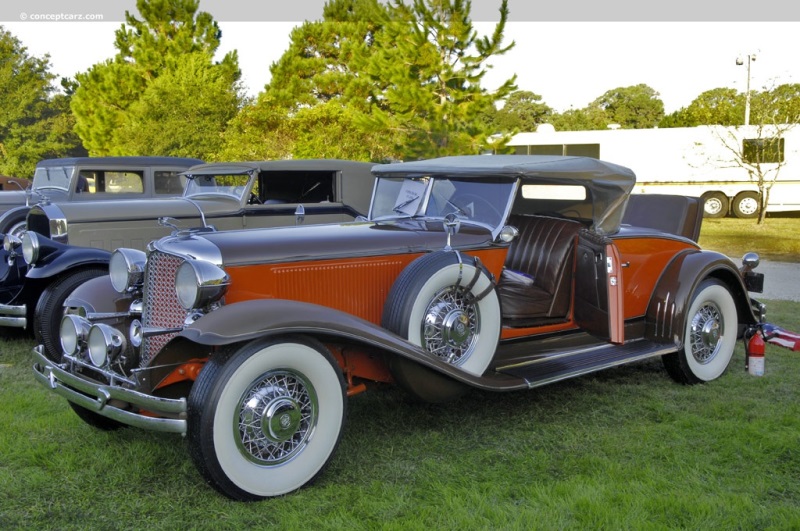
The remarkable styling of the CG Imperials was the work of LeBaron, one of the greatest design firms of the classic era. The firm was founded by Thomas L. Hibbard, who was later joined by Ralph Roberts. LeBaron's CG Imperial followed closely the lines of the Corld L29, designed by Al Leamy. This 1931 Chrysler convertible coupe was one of just 10 such bodies built, and is the rarest of the open style Imperials. Chrysler's reputation for performance did not disappoint, with 125 horsepower on tap and a four-speed transmission, a new automatic spark advance mechanism, 'floating power' suspension, free-wheeling and an eight-cylinder engine, all firsts for Chrysler. The cars were quick and refined to drive. In 1931, Billy Arnold use a Chrysler roadster to capture several stock car records at Daytona Beach.
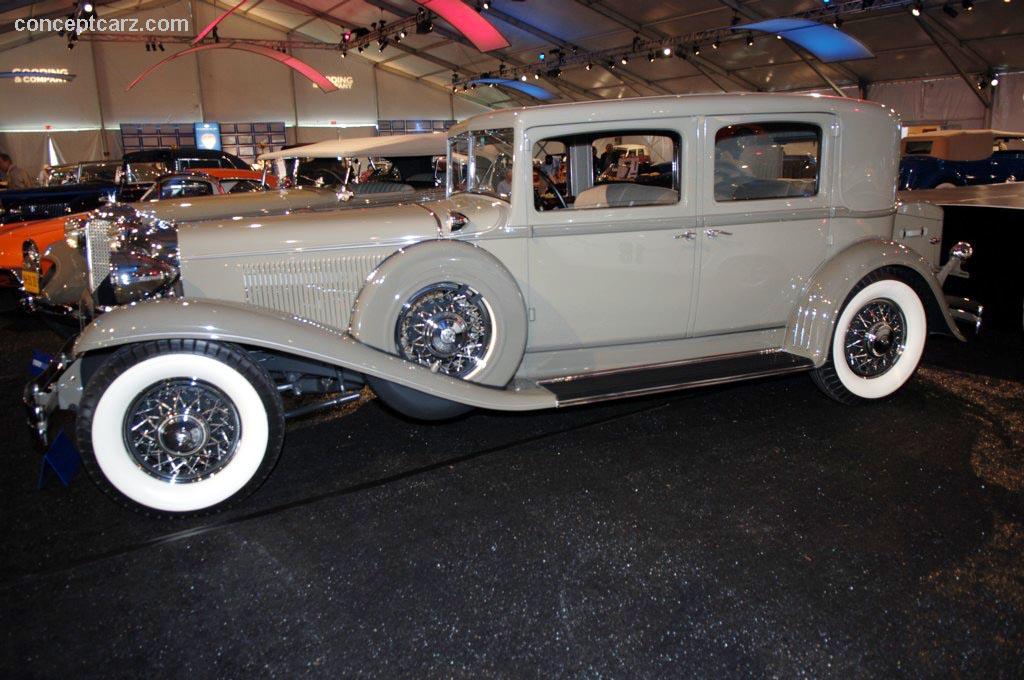
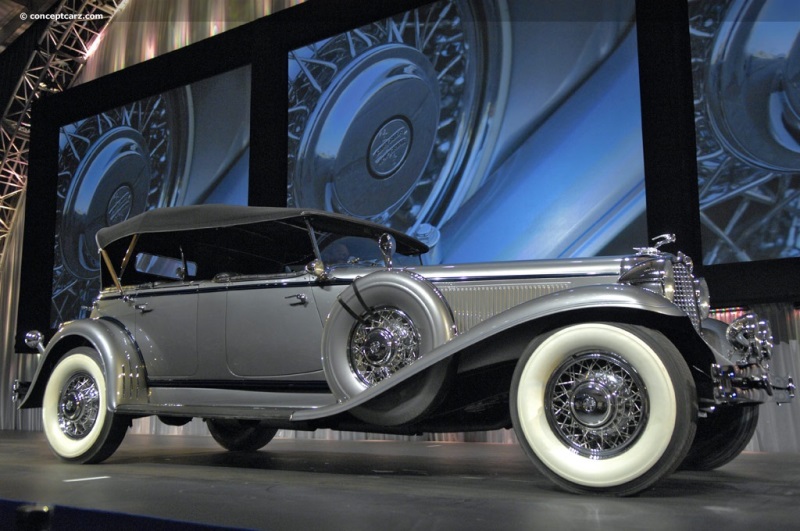
Imperial Sedan
Designer: LeBaron
Chassis Num: 7803131
 
Sold for $627,000 at 2006 Gooding & Company.
Sold for $139,000 at 2009 Bonhams.
The 1931 Chrysler CG Custom Imperial Dual Cowl Phaeton with chassis number 7801539 and 1931 Chrysler Imperial Sedan with chassis number 7803131 were both offered for sale at the Gooding & Company Auction held in Pebble Beach. They were sold as a pair. Both have custom coachwork by Lebaron and finished in two-tone gray color combination. They have racked up numerous awards at prestigious events such as Best of Show at the Hilton Head Concours d'Elegance and First in Class at Pebble Beach and Amelia Island Concours. At the Burn Foundation Concours in Pennsylvania the award First in Class and Most Elegant Open car was awarded to these vehicles. The list of awards continues and a testament to the wonderful three-year restoration that occurred.

The vehicles were estimated to sell for $600,000-$750,000 which proved to be accurate, as the selling price was $627,000.

In 2007 the pair returned to Pebble Beach to be sold by the Blackhawk Collection.

• Multiple First Place Awards at Leading Concours Multiple AACA and CCCA

• First Place Awards Best of Show at Hilton Head Concours

• The Only Known Sedan Imperial Restored To The Highest Level

• The subject of a three-year 8,000-hour restoration from 1997-2000 by specialist Curt Austin of Sanford, Florida


This car along with the Dual Cowl Phaeton emerged to win numerous awards, including Best of Show at the Hilton Head Concours d'Elegance, First in Class at Pebble Beach and Amelia Island concours, and First in Class. Both cars have made a clean sweep of Antique Automobile Club of America firsts by winning Junior, Senior, Grand National, Grand National Senior and the AACA President's Award. The two cars have also won Classic Car Club of America Primary, Senior and Premier awards, scoring 100 points in each divisional judging. With a subtle and correct two-tone gray finish complemented by gray leather upholstery these cars possess a presence and beauty of fine few classics can match. The detailing on the restoration is amazing in its thoroughness, right down to the correct etching of the original supplier's name on the windshield glass! Wire wheels, dual sidemounts, correct trunk and chrome accents all add to the aura of these true classics, whose previous owners include retired Chrysler executive Darrell Davis, who had the cars restored to their impeccably high standard, well-known Chrysler Imperial enthusiast Willard Pike and prominent classic car collector Roger Willbanks.

By Daniel Vaughan | Aug 2007
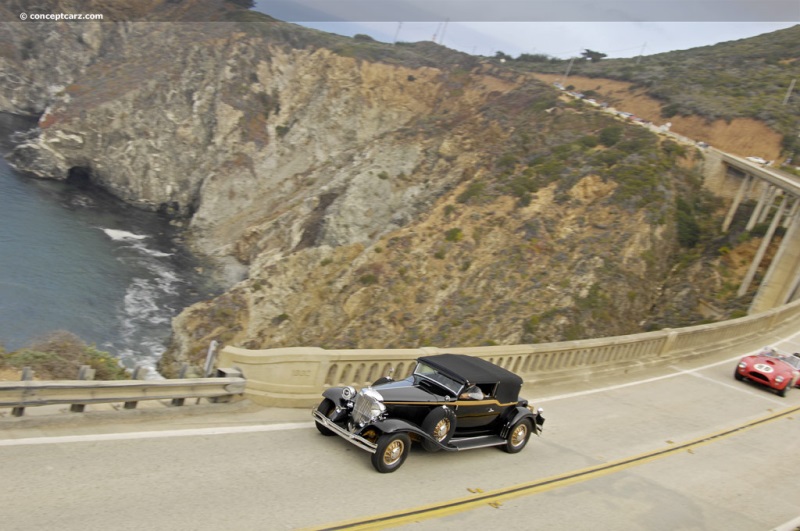
Roadster
Designer: LeBaron
 
This is one of the last 1931 Chrysler CGs built and it is body number 99 out of 100 roadsters. The car has a 145-inch wheelbase and is equipped with a 384 cubic inch flat head, eight cylinder engine with a four-speed transmission and hydraulic brakes.

The car was purchased new by the famous featherweight price fighter 'Battalino.' Battalino owned the car until 1941; it was then purchased by two of his friends who lost the car in a card game to a Mr. Sage, a nuclear physicist, who used the vehicle as his daily car. The car, as this point was a great original with a tan body, and red leather interior with a tan cloth top.
Rumble Seat Coupe
Coachwork: LeBaron
Chassis Num: 7802358
Engine Num: CG3399
 
Sold for $170,500 at 2007 RM Auctions.
Sold for $126,500 at 2010 RM Auctions.
This 1931 Chrysler CG Imperial Rumble Seat Coupe was offered for sale at the 2007 RM Auctions held in Amelia Island, Florida. It is one of just two surviving examples. It was estimated to sell between $200,000 - $250,000. It is powered by a 384 cubic-inch nine-main bearing eight-cylinder engine capable of producing 125 horsepower. There is a four-speed synchromesh gearbox and four-wheel hydraulic drum brakes. When new, it was ordered with the optional radiator stone guard and metal sidemount covers.

LeBaron created coachwork for the vast majority of bodies on the Imperial Custom Line. The Rumble Seat Coupe was the rarest of the CG Imperial bodystyles. It featured a low windshield and seating for up to three passengers in the main compartment. The rumble seat provided additional seating for passengers.

This vehicle has been treated to a complete restoration and shown at the 2006 Pebble Beach Concours d'Elegance. It is finished in tan with dark red trim accents and a black top. The interior is finished in red leather.

The rarity and quality of the recent restoration, plus its visit to Pebble Beach made this an attractive vehicle to purchase at auction. Bidding rose quickly but failed to meet the estimated value. Still, the car was sold, netting $170,500.

By Daniel Vaughan | Mar 2007
Roadster
Designer: LeBaron
Chassis Num: 7802053
 
Sold for $172,500 at 2007 Worldwide Auctioneers.
Sold for $159,500 at 2007 RM Auctions.
This 1931 Chrysler CG Imperial Roadster was offered for sale at the 2007 Sports and Classic Car Auction presented by The Worldwide Group, in Hilton Head Island, SC where it was estimated to sell for $190,000 - $200,000. It is powered by a 'Red-Head' straight-eight engine that produces 125 horsepower and mated to a four-speed manual gearbox. There is a leaf spring and beam axle front suspension and leaf springs and live axle in the rear. The four-wheel hydraulically-operated drum brakes keep the car, which has a wheelbase of 146-inches, in the drivers control.

The Imperial line, which was first introduced by Chrysler in the 1920s, was a very popular and luxurious model. The 'L' line was used in 1929 and 1930; it was replaced by the CG in 1931 and the CL for 1932 and 1933. These impressive machines were powered by an eight-cylinder car that complimented the very stylish and attractive bodies.

The CG series Imperials were given custom coachwork by LeBaron, one of the classic builders of the era. The LeBaron company was the work of Raymond Dietrich and Thomas Hibbard; Ralph Roberts later joined the firm and greatly added to the company's success.

This example was the subject of a restoration performed only a few years ago. It is believed that this vehicle began its life with a closed body but was later converted to the roadster configuration. It has dual mounted spare tires, top-mount mirrors, twin font-mounted Pilot Ray driving lights, and a grille mounted stone guard. It has achieved a CCCA National First Prize award and still proudly wears this badge in modern times.

Though this was one of the higher priced cars to cross the auction block, which was fitting, as it was one of the more prestigious, rare and well preserved examples on display. Though this vehicle had a reserve, it would appear the reserve was lifted, as a high bid of $172,500 (including buyer's premium) was suitable to secure new ownership.

By Daniel Vaughan | Nov 2007
Club Sedan
Coachwork: Briggs Manufacturing
Chassis Num: 7800705
 
Sold for $104,500 at 2008 RM Auctions.
High bid of $85,000 at 2009 Worldwide Auctioneers. (did not sell)
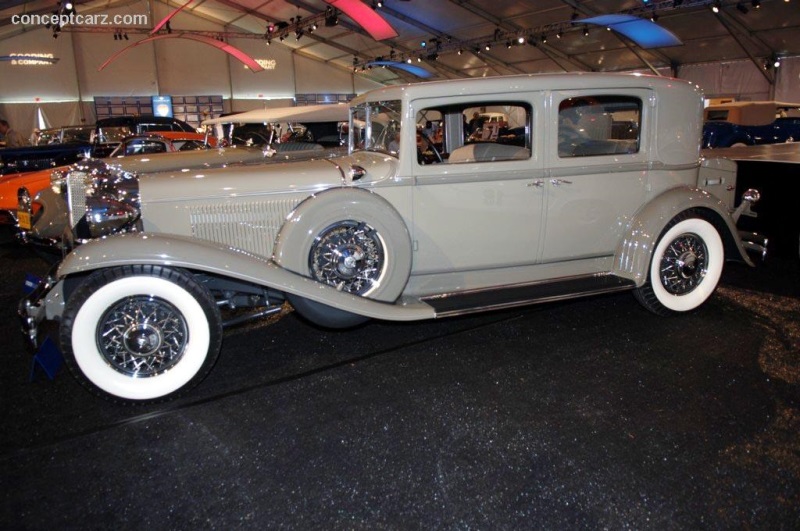
There were 3,228 Imperials built in 1931 with 1,195 examples fitted with close-coupled club sedan bodywork by Briggs Manufacturing Company. Many of these club sedans were later re-bodied to make dual cowl phaetons. As a result, this original example is quite rare. It was given a professional restoration that was completed in 1999. It is painted in two-tone brown with a dark brown beltline. The list of accessories included with this vehicle are dual side-mounted spare tires with chrome-accented hard covers, dual cowl lights, dual windshield wipers, and a rear-mounted trunk. There are wide whitewall tires with dark brown painted wire wheels, with chrome-plated hubcaps and trim rings.

The interior has tan cloth upholstery with dark brown piping and matching tan carpets and floor mats. The dash board and steering wheel are black, while the window cranks and door handles are gold-plated.

The Chrysler CG Series Imperials were the work of designer Herb Weissinger. The overall height of the vehicle was relatively low at 70-inches, giving them a sporty persona. They rode on 145-inch wheelbases and featured a vee-shaped radiator shell and gracefully swept fenders.

The engine displaces 384 cubic-inches and promises 125 horsepower which is sent to the rear wheels via a four-speed manual gearbox with freewheeling. There are four-wheel hydraulic drum brakes and a well-tuned suspension.

In 2008 this 1931 Cadillac V12 Series 370-A Five-Passenger Phaeton with coachwork by Fleetwood was brought to RM Auctions 'Vintage Motor Cars of Meadow Brook' where it was estimated to sell for $225,000-$275,000. Though bidding did not reach those estimates, it was high enough to satisfy the vehicles reserve and the lot was sold. A high bid of $192,500 was enough to secure new ownership.

This Imperial Club Sedan is believed to have been sold in Chicago when new. It was fitted at some pint with a surreptitious tank within its chassis frame. It is believed that the tank may have at one time served to transport then-illicit alcohol products, as it is unconnected to the fuel, lubrication, or cooling system.

The car was bodied by Chrysler's regular sedan supplier Briggs, and was restored in 1999 to very high standards. It is painted in two-tone brown and beige exterior color scheme. Inside, there is beige cloth piped in brown. There are dual side-mounted tires with chrome enclosures, wind wings, wire wheels painted body color, wide white wall tires, dual windshield wipers, and a luggage rack.

In total, there were only 909 examples of the 1931 Chrysler CG Eight Sedan produced.

In 2009, this CG Imperial Sedan was offered for sale at the Houston Classic Auction presented by Worldwide Auctioneers and held in Seabrook, Texas. The lot was estimates to sell for $120,000 - $150,000. The lot failed to sell after achieving a high bid of $85,000. Its reserve was not satisfied and the lot was left unsold.

By Daniel Vaughan | May 2009
Dual Cowl Phaeton
Coachwork: LeBaron
Chassis Num: 7802482
 
Sold for $137,500 at 2008 Worldwide Auctioneers.
Sold for $150,000 at 2009 Bonhams.
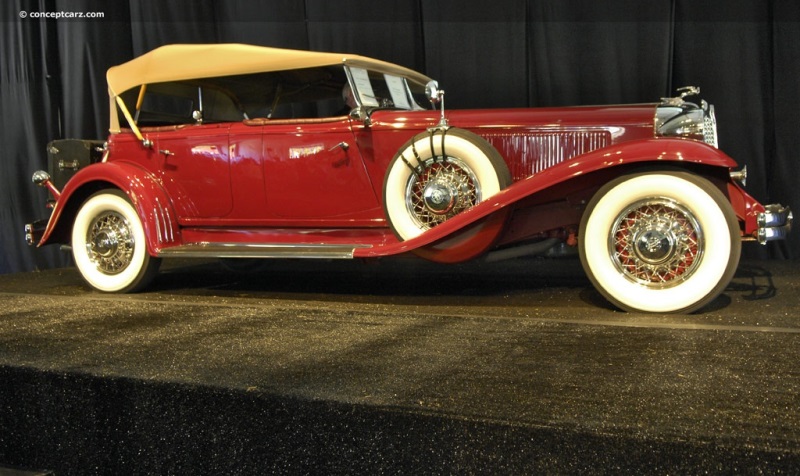
There were fewer than 90 Chryslers in 1931 with LeBaron coachwork. Many believe that the dual cowl phaetons are the most attractive and important of the Chrysler Corporation during this period. With the rarity of the LeBaron coachwork in mind, and the desirability of the DC Phaeton, this vehicle now wears a recreation body done in the style of LeBaron. It has been given a very detailed restoration and is in excellent condition. It is finished in Royal Red with a new parchment tan top and a complementing Bordeaux interior.

There are red matching carpets when most carpets of the period were tan in color. There are many period features such as a trunk rack, cowl lights, dual trumpet horns, and the Chrysler Imperial hood ornament. There are correct white wall tires on wire wheels with dual side mounts and accessories throughout.

In 2008, this Chrysler CG Imperial was offered for sale at the Hilton Head Sports & Classic Car Auction presented by Worldwide Auctioneers. It had an estimated value of $160,000 - $180,000. As the gavel fell for the third and final time, the lot had been sold for a high bid of $137,500, including buyer's premium.

By Daniel Vaughan | Nov 2008
Dual Cowl Phaeton
Coachwork: LeBaron
Chassis Num: 7801711
Engine Num: CG-3458
 
High bid of $310,000 at 2008 RM Auctions. (did not sell)
The very elegant Chrysler CG Imperial models were introduced in July of 1930 and rode on a massive 145-inch wheelbase. It was a new car that had been completely transformed from the prior models. The radiator shell had become a grille which was positioned at a rakish angle. The forward surface was defined by a wire mesh screen. The fenders had flowing curves and had Duesenberg-style bumpers. The engine was a 384.8 cubic-inch, nine-main bearing unit that offered 125 brake horsepower.

There were four 'production' bodies by Briggs and four cataloged custom styles. Various individual customs for construction were available on the Imperial chassis. LeBaron performed the coachwork for the semi-custom bodies, roadster, coupe, convertible coupe, and the dual-cowl phaeton.

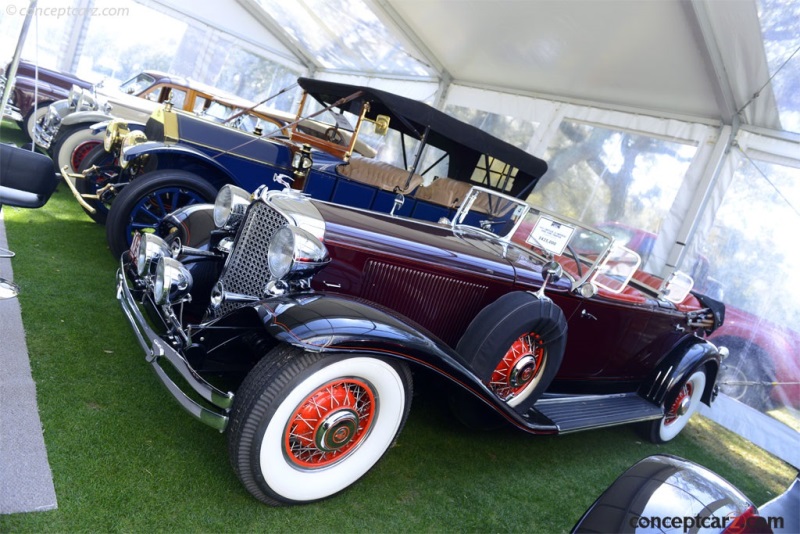
This car was acquired by the current owner in 1986. It has been given a show-quality restoration and painted in dark red with maroon fenders and accented belt moldings. It is one of 85 LeBaron Dual Cowl Phaetons built on the CG chassis in 1931.

In 2008, this Imperial DC Phaeton was offered for sale at the 'Sports & Classics of Monterey' presented by RM Auctions. It was estimated to sell for $400,000 - $500,000 and carried a reserve. A high bid of $310,000 including buyer's premium was enough to establish new ownership. The lot was sold.

By Daniel Vaughan | Jan 2009
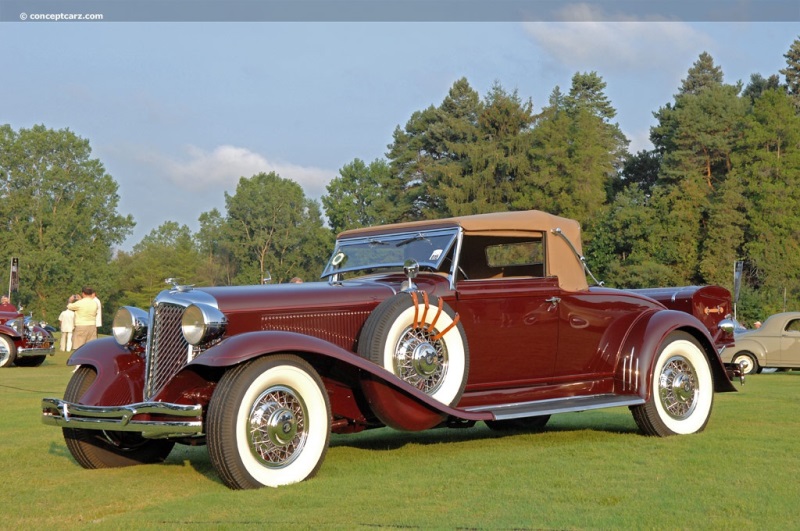
Convertible Coupe
Coachwork: LeBaron
 
The Chrysler Convertible Coupe with LeBaron coachwork was the height of Thirties luxury and style. The 1931 Chrysler Imperial CG model was the first Imperial with custom body by LeBaron, but that wasn't the only thing that made these Imperials special. The 385 cubic-inch engine delivered remarkable performance, capable of 0-60 in 20 seconds, and able to achieve 100 mph, with comfortable cruising speeds of 90 mph. These numbers are very impressive, considering the conditions of the roads at the time. These cars were powerhouses with luxury, and had a strong following, even today. It is believed that only 10 convertible coupes were built, and only six remain today. This example underwent a complete restoration in 2008.
Dual Cowl Phaeton
Coachwork: LeBaron
Chassis Num: 7802662
Engine Num: CG3682
 
Sold for $605,000 at 2009 Gooding & Company.
This 1931 Chrysler CG Imperial Dual Cowl Phaeton is one of only 85 examples produced during 1931. It is a four-door rare original example with one of the most elegant designs of the era. This car was inspected at the Jefferson plant in Detroit on May 6th of 1931. It was loaded for delivery on May 29th and sent to Greensboro, North Carolina, where it was eventually sold to H.P. Sewell of Carthedge.

In the 1980s, the car was purchased by Dr. Fay Culbreth of Charlotte, North Carolina who obtained it from its original owner. It was later sold to Paul Quinn of Boston, Massachusetts who then commissioned a restoration. After it was restored it scored 97.5 points during competition at the Classic Car Club of America's Eastern Grand Classic event in July of 1988.

The current owner took possession of the car in December of 1988, at which time the car had 60,000 original miles on its odometer. The car is finished in classic gray metallic paint and features plush leather upholstery, door caps and padded dash. There are unique LeBaron windshield wiper mechanisms that are drilled through the windshield glass.

In 2009, this LeBaron Dual Cowl Phaeton was offered for sale at the Gooding & Company auction in Scottsdale, Arizona. It was estimated to sell for $500,000 - $550,000. As the gavel came down for the third and final time, the lot had been sold for the sum of $605,000 including buyer's premium.

By Daniel Vaughan | Apr 2009
Roadster
Designer: LeBaron
Chassis Num: 7801812
 
Sold for $291,500 at 2010 Gooding & Company.
This LeBaron bodied Roadster was originally delivered to Belgium. it would remain in continental Europe for nearly seven decades before returning to the United States in 2000 when collector David Kane purchased it from its second owner. This car was been given a comprehensive restoration by Mr. Kane, even though it is believed that the second owner had conducted a thorough 25-year restoration.

The car is finished in its original color combination of Pembroke Grey (tan) with a red leather interior. Accessories include dual side-mounted spares, wind wings, chrome radiator stone guard and twin Pilot Ray driving lights.

Upon completion of its restoration, the car was put on display at the Pebble Beach Concours d'Elegance, where it was awarded Second in Class.

The current owner purchased the car in 2004 and has seen little use since that time. There are only nine examples of the Imperial Roadsters believed to have survived.

In 2010, this Chrysler CG Imperial was offered for sale at the Gooding & Company Auction held in Scottsdale, Arizona. The lot was estimated to sell for $250,000 - $350,000. As bidding came to a close, the lot had been sold for the sum of $291,500, inclusive of buyer's reserve.

By Daniel Vaughan | Feb 2010
Dual Cowl Phaeton
Coachwork: LeBaron
 
This 1931 Chrysler Imperial CG Dual Cowl Phaeton with coachwork by LeBaron was delivered new to two doctors (a man and wife) in Reading, Pennsylvania in May of 1931. They maintained the car until the late 1950s. The current owner acquired the car in 2008 and it presently has 61,000 miles.

The car has a 145-inch wheelbase and features curved fenders and a rakish vee'd radiator grille. The engine is a 384 cubic-inch straight-8 unit capable of carrying the car from zero-to-sixty mph in 20 seconds. It could achieve 100 mph and cruise at 90 mph.

By Daniel Vaughan | Aug 2010
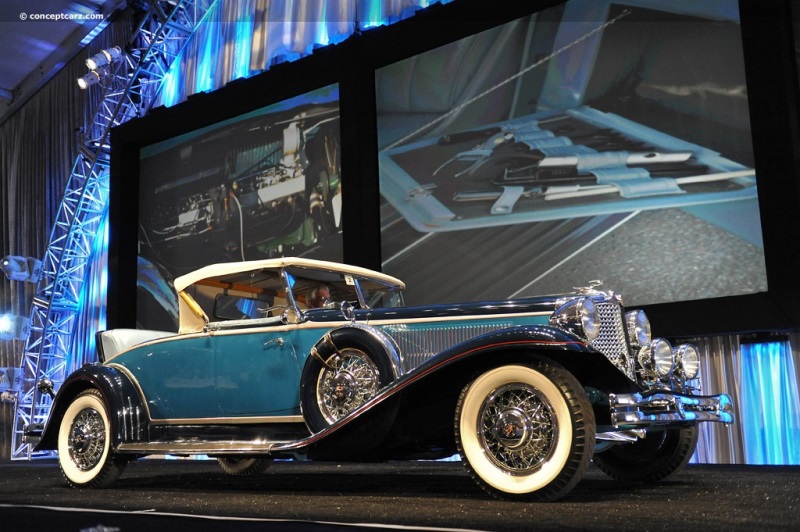
Roadster
Designer: LeBaron
Chassis Num: 7802327
 
Sold for $396,000 at 2011 Gooding & Company.
This roadster is the 64th of the 100 roadster built between 1932 and 19323. It wears the factory LeBaron-designed coachwork and rides on the long wheelbase of the CG chassis. The car was built on March 24th of 1931 at the Jefferson Avenue factory in Detroit, Michigan and was delivered to Los Angeles, California on May 6th of 1931. By 1950, the car was in the care of Bob Hoffman of Los Angeles, California who gave it its first restoration. In the 1970s, the car was sold to Don Criteser of Oregon who gave it another restoration in the mid-1990s. The next owner was Joe Morgan of New Hampshire, who sold it in 1999 to Mr. Tillou. The current owner purchased the car in 2009.

The car is finished in two-tone blue with a gray beltline and chassis-edge accent.

In 2011, this vehicle was offered for sale at the Gooding & Company auction in Scottsdale, Az. where it was estimated to sell for $300,000 - $350,000. Sadly, it would leave the auction unsold.

By Daniel Vaughan | Feb 2011
Convertible Victoria
Coachwork: Waterhouse
Chassis Num: CG 3843
 
Sold for $522,500 at 2012 RM Auctions.
Walter P. Chrysler followed a successful career in railroading with a move to Buick and then Willy-Overland. In 1921 he took over the Maxwell Company and in 1924 introduced an all-new car bearing his name. The first Chrysler six was well-engineered and featured four-wheel hydraulic brakes, an uncommon feature at the time, particularly in a moderately priced car. After adding Dodge, Plymouth and DeSoto to the portfolio, Chrysler was ready to move up-market in 1931.

The CG model featured a 384 cubic-inch straight eight-cylinder engine that allowed the car to race from zero-to-sixty in 20 seconds. It could reach 100 mph and cruise comfortably at 90 mph. Riding on a 145 inch wheelbase chassis, it featured curved fenders and a rakish vee'd radiator grille.

This Convertible Victoria was one of only six of this model produced by the Waterhouse coach building company in 1931. Waterhouse was only in business for five years, but produced 300 cars. The price for this car when new was $4,850. It has remained in the same family since 1939.

The Convertible Victoria was coachbuilder Waterhouse's trademark and is notable as one of the earliest American-built bodies to feature European styling. The design was penned by George Weaver and Waterhouse would build approximately 296 bodies, with approximately 251 of those resting on-top of Lincoln, DuPont and Packard chassis. Of 31 Waterhouse bodies built on various chassis, only six or less are believed to have been mated to the CG Imperial.

This example was built on June 15ht of 1931. In 1939, it was in the care of Mr. Calvin Collins of New York who purchased it from McComick Garage. It was used by the Collins family for several years but was almost lost to the scrap drives of World War II. At the insistence of his son Scott, the Imperial was spared, though they did give up the single heaviest piece of metal that could serve as war material - its engine.

The car was placed into storage in the family's barn. In 2009, after being in the family for 70 years, it was purchased from the Collins family by Canadian restorer Richard Grenon.

After the vehicle was restored, the car made its debut at Cincinnati's Ault Park Concours d'Elegance where it won the Early Prewar Best of Class Award, followed by the William K. Victor Best of Show Award. At the Concours d'Elegance of America at St. John's, it was awarded Most Significant Chrysler in Show.

In 2012, this vehicle was offered for sale at RM Auctions sale in Scottsdale, Arizona. It was estimated to sell for $40,000-$60,000. Bidding exceeded those estimates, settling at $96,250, inclusive of buyer's premium.
Roadster
Designer: LeBaron
Chassis Num: 7801798
 
Sold for $258,500 at 2011 RM Auctions.
It is believed that about 12 examples of the LeBaron bodied Roadster remain in existence. This example is an early example that was delivered in February 1931 finished in Pembroke Gray and likely had a red leather interior. It has a 3.82:1 rear end gear ratio and only two owners since the late 1950s. It was owned in the 1940s by a gentleman in San Bruno, California and then lived in Oakland, California before being acquired by Chrysler enthusiast Doug O'Connell of Sunnyvale. While in his care, the car was treated to a restoration. It was shown at a number of concours events including Pebble Beach where it secured a class award.

The current owner acquired the LeBaron Roadster from the O'Connell Estate in the late '70s, and in the early '80s the car was stripped down to the bare chassis for a restoration to modern standards.

The engine, which is not original to this chassis but reportedly a correct 1931 unit, does have the rare 'Red Head' cylinder head as opposed to the 'Silver Dome' head and in this case was likely added after delivery. It also has a four-speed transmission. The first gear is an ultra-low ratio which a period literature state is only to be used in emergencies for climbing steep grades. This first gear also allowed the Chrysler engineers to install higher ratios for the other three gears, resulting in a higher top speed.

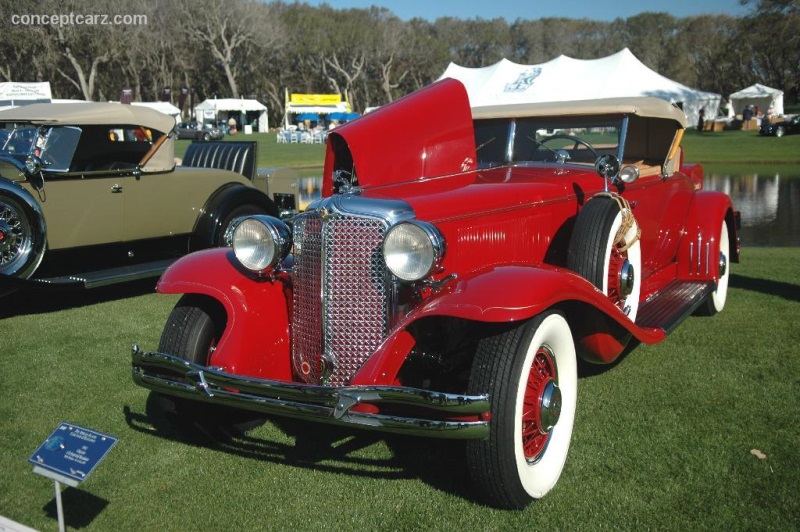
A restoration was finished in 2001 and is finished in red with black cloth top and black leather interior. It won its CCCA National First Senior Badge #2331 in 2001 and was displayed for the second time in its life at Pebble Beach in 2002. The list of features includes dual Klaxons, radiator stone guard, Trippe lights, rear trunk, dual spotlights, chrome wire wheels with dual open sidemounts and mirrors, wind wings, dual wipers and altimeter.

In 2011, the car was offered for sale in Monterey, Ca. presented by RM Auctions. It was estimated to sell for $250,000-$300,000. As bidding came to a close, the car had been sold for the sum of $258,500, including buyer's premium.

By Daniel Vaughan | Oct 2011
Sedan
Chassis Num: 7803256
 
Sold for $101,750 at 2012 RM Auctions.
Introduced in July 1930, the CG Imperial was only produced through December 1931. The prior owner of this Close-Coupled CG Imperial Sedan acquired it in 1989 and commissioned a body-off restoration in 1995. At the time, the fenders were missing and new stock pieces were acquired before finishing the car in Royal Maroon lacquer with a casino Red pinstripe and wheels. The original interior was restored using new Bedford cord upholstery and maroon leather trim. When the work was completed, the car was driven on CCCA tours. In 2009, it was purchased by the present owner.

The car has an extensive list of awards including AACA Senior and Grand National honors in 1996, an AACA Southeast Region President's Award, a 100-point CCCA Premier Award, and a Mid-America Old Time Auto Association First Prize.

In 2012, the car was offered for sale at the St. Johns sale presented by RM Auctions. It was estimated to sell for $110,000 - $130,000. As bidding came to a close, the car had been sold for the sum of $101,750 inclusive of buyer's premium.

By Daniel Vaughan | Oct 2012
Dual Cowl Phaeton
Coachwork: LeBaron
Chassis Num: 7802580
Engine Num: CG3417
 
Sold for $363,000 at 2012 RM Auctions.
This Chrysler CG Imperial Dual Cowl Phaeton by LeBaron was purchased sometime in the mid- to late-1930s, at auction, from the city of New York, having been seized for unpaid taxes or its possible association with organized crime. Though not confirmed, it is believed that car was originally owned by Arthur Flegenheimer, also known in the underworld as Dutch Schultz. Mr. Flegenheimer was killed in the late summer of 1935 and had amassed substantial debt fighting tax evasion charges, and that the mayor, Fiorello La Guardia, had a standing order for his arrest, should he return to the city from a self-imposed exile upstate. The mayor may have had the car seized, legally or illegally, before or after the gangster's death.

The presumed second owner retained the Imperial until the late-1950s. At that time, it was sold to Joe Fischer, of Media, Pennsylvania, and restored by him in 1965. It won a First in AACA judging and was retained by him until his death in 1982. It was then purchased by Terry Redy, who commissioned a second restoration from Bud Hicks in 1995, and it was subsequently awarded a CCCA National First Prize. It was owned by a gentleman from Minnesota for a brief period before being acquired by Joe Morgan and subsequently sold to the current owner in 1999.

The car is finished in medium yellow with green leather interior and a tan top with green piping. It is equipped with yellow wire wheels with stainless steel spokes shod in whitewall tires, dual side-mounted spare tires with the rare full metal covers, a radiator stone guard, a right-hand taillight, and dual exterior horns.

There were approximately 85 CG LeBaron Dual Cowl Phaetons originally built, and it is believed that less than 10 authentic examples survive. It is one of the few remaining examples with its original drivetrain, including the optional high-compression 'Red Head' cylinder head, which adds approximately 10 horsepower to the stock 125.

In 2012, this car was offered for sale by RM Auctions at their Monterey, CA sale. The car was estimated to sell for $350,000 - $425,000. As bidding came to a close, the car had been sold for the sum of $363,000 inclusive of buyer's premium.

By Daniel Vaughan | Nov 2012
Roadster
Designer: LeBaron
 
This car is a former Chicago Show car and one of two pre-production cars by LeBaron.

In 1931, Chrysler produced this CG series in limited quantities for only three years, between 1931 and 1933. In total, only 339 CG Imperial models were produced. These Imperials ride on a 145-inch wheelbase and are powered by a smooth, nine main bearing, Chrysler 8 engine, capable of carrying the car to a top speed of 100 miles per hour. This example has a unique windshield and running boards delete.

The car completed a ground-up restoration in October of 2012.
The name Imperial had been used by Chrysler since 1924 representing their top models. These models were more expensive, larger, faster and more elaborate than the base model Chryslers. Two years later the Imperial became its own series. The 1926 version, dubbed the E-80, was powered by a 288.7 cubic-inch six cylinder engine capable of producing an astonishing 92 horsepower. Its impressive looks matched its 80 mph top speed.

In 1928, the L-80 series was introduced. With a 309.3 cubic-inch engine and more than 100 horsepower on tap, the Chrysler L-80 was faster and more powerful than its predecessor, raising the luxury performance bar even higher.

The early 1930 Imperial's continued the tradition of beauty, luxury, and impressive performance. They offered a gentle ride that was soft yet able to keep the car level in turns. The 51 percent front and 49 percent rear weight distribution amplifies Chryslers advanced engineering genius of its time. Under the hood was an enormous 384.8 cubic-inch straight-eight cylinder powerplant. The 'vee' shape radiator grill and fenders were courtesy of Chryslers Art and Color staff employee Herb Weissinger, patterned and inspired after the front-wheel drive Cord L-29. The windshield was split and slanted. Spare tires were mounted in the traditional location, on the side close to the engine.

From 1931 through 1932 the famous coachbuilder LeBaron produced most of Chrysler's custom and semi-custom Imperial bodies. Waterhouse was given six vehicles to create into Convertible Victoria's. Though the CG Imperials were very impressive, they were introduced during the Great Depression which meant only 339 custom and semi-custom CG' vehicles would be created. They were elegant with their sweeping fenders, and a vee-shaped radiator. The long hood hid the 125 horsepower engine which was matted to a four-speed manual transmission.

The early 1930's were tough times. Unemployment was at an all-time high. The stock market crash and the onset of the Great Depression meant the short list of individuals capable of purchasing a luxury automobile was dwindling. The competition was stiff, filled with famous marque's such as Cadillac, Marmon, Auburn, Packard, and more. To stay in business, the manufacturers need to remain competitive. Chrysler responded in 1932 by shortening the wheelbase by ten inches and slashing the price by $800 and offering the Imperial CH. The straight-eight cylinder was retained. The goal was to provide moderately priced cars that could sustain a steady cash flow and keep the company in business. The result was a phenomenal car for the money and brilliant manufacturing economy for Chrysler.

The big-image builder automobiles were retained. The 145-inch wheelbase Imperial Custom Eight, Series CL was still available. These machines were identical to the 1931 versions except for the elimination of the traditional cowl. The hood reached from the windshield to the radiator in one unbroken line, a design courtesy of LeBaron. Mechanically, the chassis received modifications that gave it extra strength and lowered its center of gravity. The steering ratio was reduced from three turns lock-to-lock to four. The result was a vehicle that was more stable at speed and easier to park. New for 1932 was the vacuum-operated automatic clutch and vacuum-assisted brakes. The automatic clutch made it possible for the driver to switch gears without de-clutching. Since it was a new system it did not always work properly. The vacuum-assisted brakes were a welcome change and provided superb stopping power. For 1932 only 220 examples were produced.

For 1933 the Imperial was basically just a name slapped on a Series CP Chrysler Eight. The wheelbase was 126 inches and the engine displayed 298.6 cubic-inches and rated at 108 horsepower. The Custom Imperial, however, continued unchanged. For the 1933 production year, 151 examples of the Customer Imperial models were produced.

The Custom Imperials were easy to drive, fast, full of style, and superb automobiles that represented styling and mechanical advancements in the automotive community.

By Daniel Vaughan | Dec 2006
The work of LeBaron is considered to be the most remarkable styling of the CG Series Imperials. LeBaron was one of the greatest design firms of the classic era, and was established as innovative, creative and completely responsive. LeBaron was founded by Wand Ray Dietrich and was later joined by Ralph Roberts, and though Dietrich eventually left the firm to pursue other interests, the company continued to flourish at the hands of Roberts.

Hired to style the CG Imperial, Al Leamy was held in great regard for the L29 Cord, which was considered to be the most striking design in existence. The CG was long and low, much like the L29, and featured gracefully swept fenders along with a v-shaped radiator. The CG's design was improved by LeBaron with a swept-back grille, a much more elegant body-side treatment and a longer hood.

A variety of L29 Cord styling designs were incorporated into the design of the CG Imperial, and since the CG had a larger platform on which to display the styling, it was considered even more aesthetically successful than the Cord. Chryslers have held a reputation for performance the CG Imperial was no exception with 125 horsepower, along with a four-speed transmission. Along with a well-tuned suspension and Chrysler's 'floating power', the Imperial was a refined vehicle to drive. The Imperial was the first vehicle in the country that employed fluid coupling. This was also offered as optional equipment on the 1939 model.

Considered by many to be the most beautiful Imperial ever, the CG series was biggest change in 1931. The CG came with the new corporate work-horse, the Flathead Eight as Chrysler was in the process of narrowing engine production. Much advertising for the Imperial references the '8' in regards to the new engine. Becoming the standard wheel treatment until the 1940's, new tire wheels for the Chrysler Imperial were introduced with the Imperial CG.

In 1927, the first Imperials began appearing on the market utilizing a 92-horsepower flathead-six. Imperials would continue to be powered by the same engine until 1931 when the CG series was introduced in 1931. A Imperial was driven on a double cross-country run from San Francisco to New York, to Los Angeles, a total of 6,726-mile trek, at which the Imperial average 40.2 miles per hour to introduce the new line of luxury Chryslers.

Unfortunately, since the Great Depression was in full swing at the time of introduction, sales of the 1931 and 1932 Imperial were not as high as hoped. At an original list price of $3,575, only a total of 339 custom and semi-custom CG's were sold, making these vehicles even rarer than the Model J and SJ Duesenbergs.

Continuing to be produced until 1933, the Imperial CG's were updated with styling and even smaller semi-custom and custom sales, before eventually being replaced by the radical Airflow Imperials in 1934. These new radical airflow vehicles sold an amazing 2,000-plus models in that year.

Many enthusiasts consider the CG Imperial dual cowl phaeton to be among the best driving vehicle of the era along with one of the finest looking cars. Today this vehicle is extremely rare as only a handful of these vehicles are known to exist. At RM Classic Cars' Novi sale held on November 15, 2002, the CG Imperial dual cowl phaeton was sold at $214,500 that included buyer's premium.

By Jessica Donaldson
For more information and related vehicles, click here

Edsel Ford's Speedster Stars at 'The Amelia'
Edsel Ford's 'continental car', a custom boattail speedster, will take its rightful place in the Sports Car Class of the 18th annual Amelia Island Concours d'Elegance. In the shape of Edsel's seminal speedster is the genesis of Ford's legendary design department. Edsel Ford was hardly 'a chip off the old block'. The acorn fell well away from the mighty oak that was Henry Ford, founder of the Ford Motor Company. Edsel was not just the President of Ford, he was a car guy to his core. His ta...[Read more...]
CHRYSLER GROUP LLC AND FIAT S.P.A. ANNOUNCE MOST ACCESSORIZED VEHICLES AND TOP-SELLING ACCESSORIES
Mopar Offers More Than 25,000 Accessories Worldwide •Ram 1500, Jeep Wrangler and Dodge Challenger are most accessorized vehicles in North America •Side steps, Jeep Wrangler tops and floor mats are best-selling accessories in North America •Fiat 500, Fiat 500L and Jeep Grand Cherokee among most accessorized vehicles in other global regions •Top-selling accessories announced for Europe, Middle East, Africa, Asia Pacific and Latin America February 11, 2013 , Auburn Hills, Mich....[Read more...]
Magnificent Series of Coachbuilt Classics To Grace RM's Amelia Island Concours D'Elegance Sale
• RM Auctions returns as the official auction house of the Amelia Island Concours d'Elegance, March 9, 2013 • Single-day sale features breathtaking roster of more than 80 investment-quality collector cars • Notable highlights include an outstanding series of coachbuilt classics headlined by a multi-million-dollar 1935 Duesenberg Model SJ Walker-LaGrande Convertible Coupe and a trio of Cords from the personal collection of Jim Fasnacht • Frequently updated list of entries available online at r...[Read more...]
Final Countdown Underway to RM's Michigan Sale
RM Auctions, the official auction house of the Concours d'Elegance of America, has secured a wonderful selection of classic automobiles for its St. John's sale, July 28, in Plymouth, Michigan. Hosted on the beautiful grounds of the Inn at St. John's, the single-day sale is a mainstay on the auction concours circuit and boasts a reputation for including exceptional American classics. The upcoming sale, featuring more than 70 quality collector cars, presents nearly a century of American and Eu...[Read more...]
Auctions America By RM's 2012 Auburn Spring Auction
'Variety' is the buzzword for this year's Auctions America by RM June 1-3 Auburn Spring auction, which will offer a huge range of collector vehicles and an enormous private collection of automotive memorabilia. More than 600 American muscle cars, Classics, foreign sports cars and hot rods will cross the block at the historic Auburn Auction Park, the company's national headquarters in Auburn, Indiana. 'Last year was our first spring event at the park,' said Auctions America by RM's President ...[Read more...]

Arrow Right 1931 Chrysler models
Chrysler CD-8 Le Mans
Chrysler CM Six
Chrysler Series 70

Similar Vehicles
Cadillac 370A V121931 Cadillac 370A V12
Packard Model 8451931 Packard Model 845
Lincoln Model K1931 Lincoln Model K
Pierce Arrow Model 431931 Pierce Arrow Model 43
Duesenberg Model J1931 Duesenberg Model J

Similar Automakers
CadillacChevrolet
DodgeFord
GMCHummer
JeepLincoln
MercuryPontiac
Saturn
Similarly Priced Vehicles from 1931
Packard Model 833 Standard Eight ($2,400-$3,475)
Cadillac 355 Eight ($2,700-$3,800)
Packard Model 840 DeLuxe Eight ($3,500-$3,860)
Pierce Arrow Model 43 ($2,700-$3,700)
LaSalle Model 345A ($2,195-$3,245)
Ruxton Model C ($3,195-$3,195)

Average Auction Sale: $237,209

 
Chrysler: 1931-1940
Similar Automakers
Other models by Chrysler

Related Articles and Event Coverage
Amelia Island Concours d'Elegance
RM Auctions - Monterey
Pebble Beach Concours d'Elegance
RM Auctions - St. Johns, Michigan
RM-Automobiles of Arizona
Gooding and Company - Pebble Beach Auctions
RM Auctions at Monterey
Concours d'Elegance of America at St. John's
RM Auctions - Concours d'Elegance at St. Johns
The Scottsdale Auction - Gooding & Company
RM Auctions - Vintage Motor Cars of Meadow Brook
Concours d'Elegance of America at Meadow Brook
RM Auctions - Automobiles of Amelia Island
Gooding and Company - Scottsdale Auction
Glenmoor Gathering of Significant Automobiles
Meadow Brook Concours d'Elegance
Greenwich Concours d'Elegance : American Car Display
Worldwide Auctioneers : The Houston Classic Auction
Amelia Island Concours d'Elegance
The Scottsdale Auction : Gooding & Company
Sports & Classics of Monterey by RM Auctions
Eastern Division AACA National Fall Meet
Hilton Head Sports & Classic Car Auction
Hilton Head Island Concours d'Elegance & Motoring Festival
Vintage Motor Cars of Meadow Brook
31st Annual Ault Park Concours d'Elegance
Amelia Island Concours d'Elegance
The Hilton Head Sports & Classic Car Auction
Meadow Brook Concours d'Elegance
Blackhawk Collection at the Pebble Beach Concours
Ault Park Concours d'Elegance
Vintage Motor Cars at Amelia Island
Amelia Island Concours d'Elegance
Pebble Beach Concours d'Elegance
Hilton Head Concours d'Elegance & Motoring Festival
Gooding & Company Pebble Beach Auction
2006 Meadow Brook Concours d'Elegance
2005 Amelia Island Concours d'Elegance

Chrysler
Monthly Sales FiguresVolume
May 201329,070 
April 201327,836 
March 201333,905 
February 201325,083 
January 201320,696 
December 201225,513 
November 201218,766 
October 201222,222 
September 201224,850 
August 201228,070 
July 201220,792 
June 201226,863 
(More Details)

 
200
300
Airflow
Aspen
Cirrus
Concorde
Cordoba
Crossfire
Daytona
Fifth Avenue
Idea Cars
Imperial
LeBaron
LHS
New Yorker
Newport
Pacifica
Prowler
PT Cruiser
Royal
Saratoga
Sebring
Series 70
TC
Town & Country
Town & Country Mini Van
Windsor

© 1998-2012. All rights reserved. The material may not be published, broadcast, rewritten, or redistributed.