1935 Alfa Romeo 8C 35
1935 Alfa Romeo 8C 35 Navigation
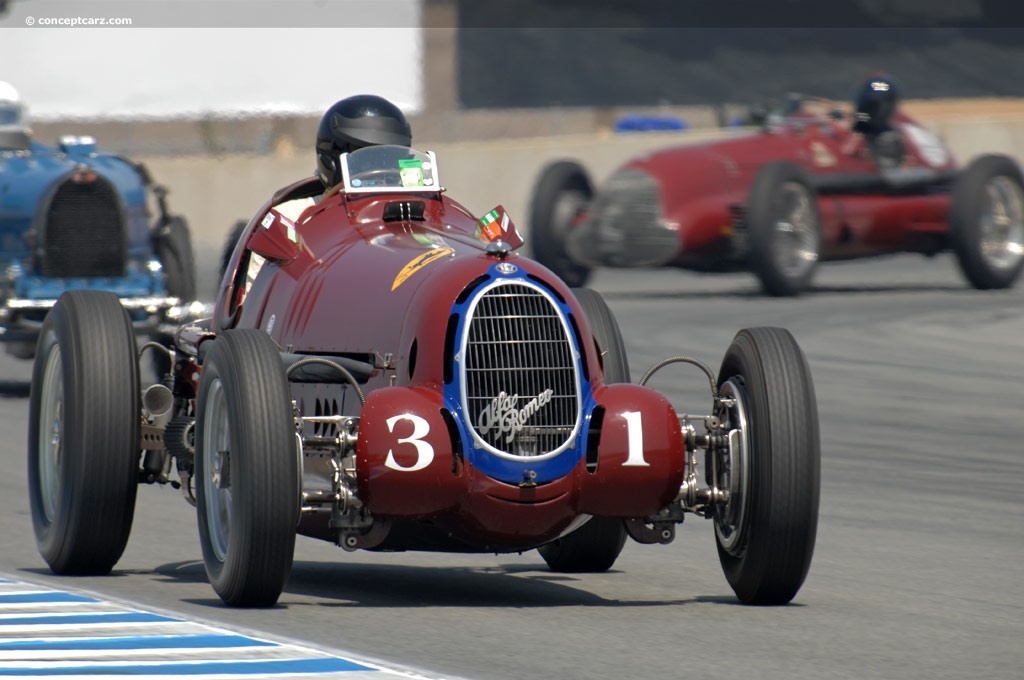
Alfa Romeo had been dominating Grand Prix racing and motorsports racing during the early 1930s. Their cars were innovative, powerful, agile, and driven by some of the greatest drivers of their time. With the engineering prowess of Vittorio Jano and the management skills of Enzo Ferrari combined with the driving skills of Tazio Nuvolario, the Alfa Romeo team was a dominant force. The German government's decision to provide financial support for German Grand Prix teams meant Alfa Romeo's stronghold on the sport would soon dwindle. 
Roadster
Chassis #: 50014
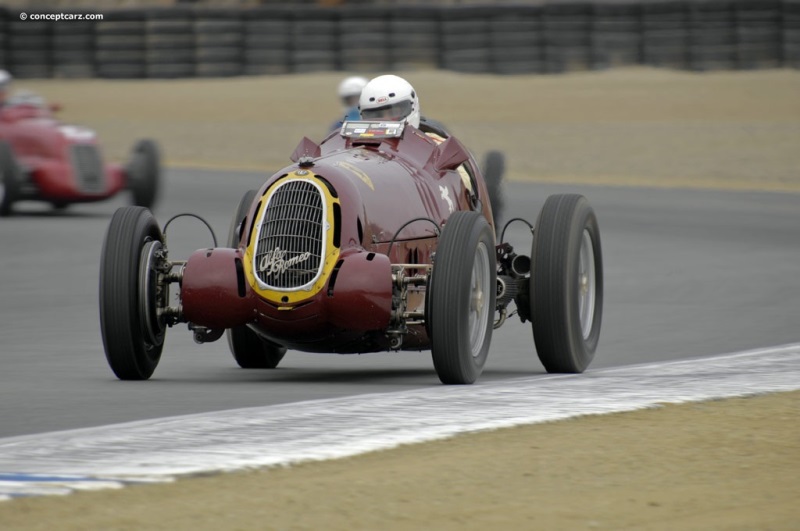
View info and historyVittorio Jano's eight-cylinder engine had proven its potential by capturing four consecutive LeMans victories and many podium finishes in Grand Prix competitions for the Alfa Romeo 8C 2300 and Tipo B P3. The Tipo B had been powered by a supercharged eight-cylinder version of the engine, which was far superior to the competition. The Tipo B was introduced in 1932, and for the first few years, it was unbeatable. Within a few years, the Alfa Romeo team was in need of a new machine to match the competition. The eight-cylinder engine had been modified to its highest capacity, and a twelve-cylinder engine was needed. The Tipo C, commonly known as the 8C 35, was given a round, curvy, and aerodynamic body. The prior vehicles had been square and boxy, so this was a rather large leap in design. Borrowing German innovation, the 8C was given independent suspension in both the front and rear, which greatly improved the vehicle's performance. When the Tipo C began to lose ground to the competition, the 4.1 liter 12C 36 was introduced. It made its inaugural appearance at the Tripoli Grand Prix in May 1936. Throughout the season, the 8C and 12C would score a few wins for the Alfa Romeo team. Their best result came at Monza, where the 12C finished in second place. The 12C had proven its potential, and Alfa Romeo continued work on an updated racer for 1937. The Alfa Romeo 12C 37 was Alfa Romeo's next iteration and was introduced for the 1937 season. It was powered by a twelve-cylinder 4.5-liter engine with twin-stage superchargers and capable of developing 430 horsepower. Though Alfa Romeo had a formidable contender, other key ingredients began to fall apart. Their star driver, Nuvolari, left to join the Auto Union team. This was the same year that Enzo Ferrari and Jano made the decision to leave Alfa Romeo.
by Daniel Vaughan | Jan 2007

Roadster
Chassis #: 50014
View info and history
by Daniel Vaughan | Jan 2007
- 1935 Alfa Romeo 8C 35 Menu
- Article
- Image gallery
- Valuation
- Specifications
Alfa Romeo
Similar Automakers
Similarly Sized Vehicles
from 1935


1935 Alfa Romeo 8C 35 Vehicle Profiles

Chassis #: 50013
Engine #: 50013
Recent Vehicle Additions


Related Automotive News

Bonhams sell ex-Tazio Nuvolari 1935 Alfa Romeo for world record breaking price of £5.9 million at Goodwood Revival Sale
One of the most charismatic of all the great pre-war Grand Prix racing cars - the ex-Tazio Nuvolari 1935 Alfa Romeo Tipo C 8C-35 50013 - Scuderia Ferrari Nr 65 sold for £5,937,500 at Bonhams Goodwood Revival Meeting today (Saturday 14 September),...

Concours of Elegance 2021: The rarest cars in the world
The Concours of Elegance has revealed the full list of vehicles that make up its Main Concours display of the rarest cars in the world
From trailblazing pre-war Grand Prix cars to the very Rolls-Royce that gave birth to the best car in the world...

Ex-Scuderia Ferrari Alfa Romeo 8C 2300 Monza Spider By Zagato Scoops Best Of Show At Salon Privé
Alfa Romeo 8C 2300 Monza Spider by Zagato raced by Tazio Nuvolari wins top award
Leading designers present inaugural Churchill Cup to rare Lancia Astura
Duke of Marlborough selects his favourites on two wheels and four
Record entry for the UKs...

ICONIC RACING NAMES TO BE HONOURED ON TRACK AT DONINGTON HISTORIC FESTIVAL
Two fascinating characters from the early days of motor racing will be honoured at this years Donington Historic Festival (30th April, 1st %26 2nd May). Tazio Nuvolari will be celebrated in the HGPCAs Nuvolari Trophy for pre-1950 Grand Prix cars, while...

Dario Resta: A Man of Many Nations
Dario Resta would be born in August of 1882 in the Italian town of Faenza, not far from Imola. But though he would be Italian by birth, Resta would race under the Union Jack and the Stars and Stripes. It would not matter for what nation he drove, for...

The Trident is Raised
One of Italys most famous marks, and perhaps most troubled, the trident-bearing automaker continues to provoke passion through its search of excellence.
Five brothers would come together in December of 1914 to found a motor company bearing their name—Maserati....
Vehicle information, history, and specifications from concept to production.