1963 23B ![]() |
1962 Lotus 23B news, pictures, and information | ||
| Tweet | ||
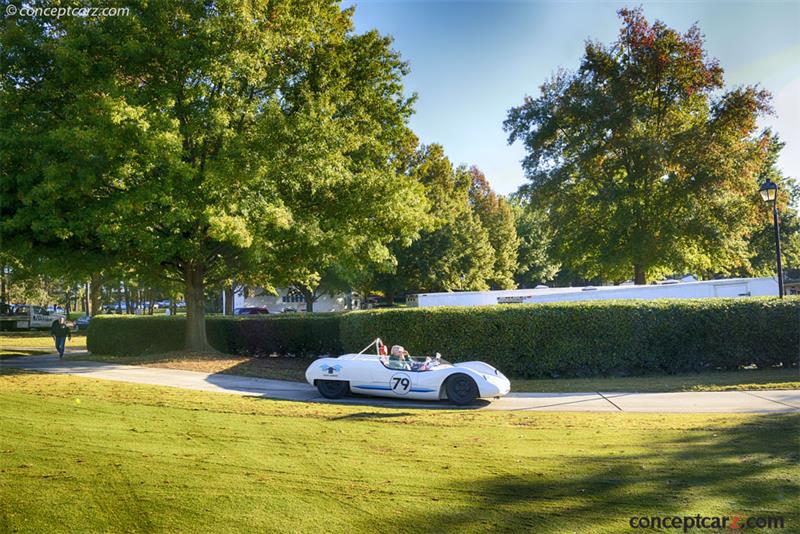
![]() | ![]() | ![]() | Roadster Chassis Num: 23 S 80 |
| Sold for $203,500 at 2011 Gooding & Company. High bid of $130,000 at 2012 RM Auctions. (did not sell) | |||
The controversy that would lead up to Lotus' absence from the 1962 Le Mans and every subsequent Le Mans until 1997, long after Colin Chapman's death, wouldn't necessarily be about wobbly-web wheels. French teams would bring about some political pressure that would end up having Lotus' car disallowed on technical grounds. But the teams had good reason for the action.
In May of 1962, Lotus would arrive at the Nurburgring, and the 14 mile Nordschleife, with a brand new car. Compared to the Porsches, Aston Martins and Ferraris in the field the new car was small, with a small amount of horsepower. However, the team would have Jim Clark at the wheel.
Colin Chapman's designs were all classic emulations of his philosophy. Chapman was a firm believer in making car designs that were extremely lightweight and simple. He then knew that a lightweight and well-balanced design could make due with a smaller engine. A smaller engine, despite producing less horsepower, had such advantages as better weight distribution and much more compact designs given the smaller engine size.
On a wet day in May, Lotus' new chassis would take to the infamous Nordschleife in preparation to take on the other mighty teams assembled. With Jim Clark at the wheel, the Lotus would tear away from the line on the very first lap of the race and would begin to steadily pull away from the other cars. This seemingly upstart chassis would continue to pull away from the rest of the field until Clark enjoyed a nearly 30 second lead over Dan Gurney in a Porsche. Clark continued to pull away or maintain his advantage, even when the track dried out. It seemed more than clear that Clark would take this new chassis on to victory. However, a crack in the exhaust header would cause Clark to become overwhelmed by the fumes. This would lead to Clark eventually crashing the car after victory seemed absolutely certain.
While the debut would not be successful, it would certainly be a noteworthy performance. It would be such a performance that it would be rumored the big teams were scared about their prospects when Le Mans rolled around in June. The small car that would have the big teams scared would be Lotus' model 23.
Colin Chapman's move to designing small, compact mid-engine single-seater grand prix cars would make Lotus successful. In 1960, Lotus had produced its 18 single-seater and the lightweight car would quickly prove to be faster than just about every other grand prix car in history. The success of the single-seater model would cause Chapman to wonder about making a two-seater sports car model.
Designer Frank Costin had gained invaluable experience in aviation engineering and would become well known for design incredibly sleek designs. He would help Chapman by designing and building the Mark IX. Utilizing space frame construction, the aluminum-bodied sports car would measure just a little over two feet high. This model would be very popular and quite successful.
Fiberglass would fit neatly into Chapman's penchant for simplicity and futuristic and sleek design. The molding of the fiberglass enabled much more sleek designs with lower profiles and rounded shapes. Fiberglass also made things simpler since whole panels could be made and formed from fiberglass instead of individual panels of aluminum needing to be made. Of course, the major advantage of the fiberglass body came in its strength and its lightweight properties.
Chapman and Costin would use the advantages offered by fiberglass to design the Lotus 20. Because of the properties of fiberglass, Chapman could design a strong lightweight car with a very low profile and with a very sleek design. Simplistic meant low drag. And being for Formula Junior, the Lotus 20 was certainly small. It would then dawn on Chapman about just doubling the width of the 20 to create a sports car. Quite literally, the attempt wasn't to make a sports car but to make a single-seater legal for sports car racing.
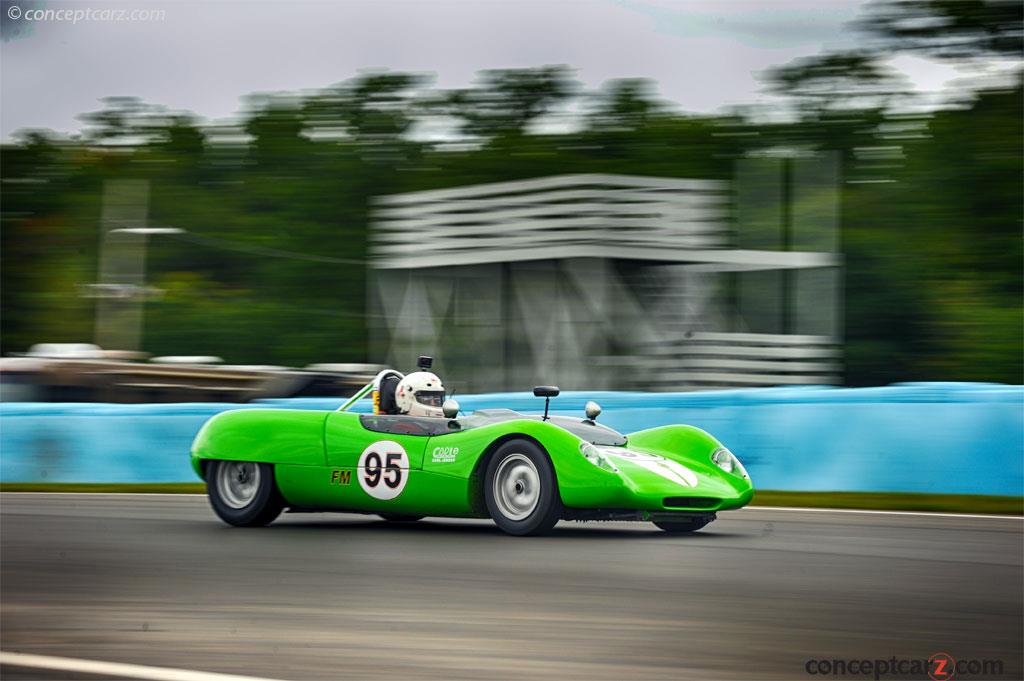
At just a little less than 12 feet long and a height of just 2 feet and 3 inches at the top of the windscreen, the car was certainly molded and shaped like a single-seater grand prix car. The car was, for all intents and purposes, a grand prix car just widened. The design would be the 20 just widened. It would use the same four-wheel independent coil-spring suspension and would also have the four-wheel hydraulic disc brakes. About the only difference between the two would be the fact the 23 would have elegantly shaped fenders covering the wheels. And while the 23 would have two seats, it would be very much just an expanded single-seater cockpit.
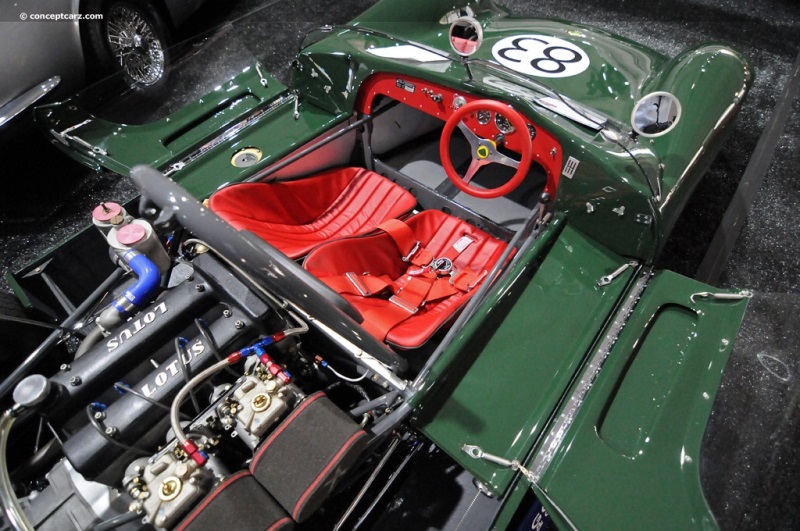
Because of small size and incredible light weight of only around 1,030 pounds, an engine with a small displacement would be good enough and would remain hidden under the bodywork. The original 23 would use a 750cc up to a 1300cc engine. A revised 23, called the 23B, had stronger chassis tubes, and therefore, had the ability to handle the greater torque produced by the Lotus Twincam 1.5/1.6-liter engine. The 1.6-liter, four-cylinder engine producing 187 bhp would certainly be a strong enough competitor, especially considering the fact the original 23 would be called the 'giant killer'. Considering the Lotus 23 would only go on to be produced between 1962 and 1963, the car would have to be considered one of the best sports cars of its day as it would go on to earn a great deal of success in the smaller classes and would consistently give the more powerful cars fits due to its lightweight design that enabled it to be very quick and very nimble. Even years after its incredible debut at the Nurburgring in the wet when Clark had the race sown up, the car would continue to be a strong contender and would be a favorite in vintage sports car races.
Considered one of Costin and Chapman's greatest designs, especially in sports cars, a 23B Sports Racer would be made available at the 2012 RM Auction in Arizona. Chassis 23S80 was expected to earn between $175,000 and $225,000 at auction in no small way due to its intriguing history.
Completed late in 1962, this 23B would be sold to a Mr. W. Bradshaw in November of 1962. It would remain in England taking part in races through the U.K. and Europe. It would continue to take part in races all the way into the 1980s where it would then be shipped to the United States.
In 1986, upon its arrival in the United States, Mike Rahal would acquire the car from the famous Brumos Racing organization. Mike's last name probably looks a little familiar as he is the father of Bobby Rahal, who was, at the time of Mike coming to own the Lotus, the Indianapolis 500 champion. Mike Rahal would take the car and would compete in a number of vintage racing events for the next couple of years.
Then, in 1988, after just two years of owning the Lotus, Rahal would sell the car to Ed Henning of Charleston, South Carolina. Henning would continue to race the car for a few years. After a while, Henning would decide to have the car completely restored. This would not be scheduled to take place until 2000. Keith Mastriforte of Special Cars Only in Oldsmar, Florida would be chose to perform the work. However, Mr. Henning's passing in July of 2001 would delay the restoration of the car for a number of years. It would finally be restarted in 2006 by Henning's wife.
The car would finally be completed in 2008. Upon completion of the work the car would turn a few laps during the Targa Sixty-Six. Brian Redman would have the honor of taking the car through some of its paces and would be delighted with the experience. He would be noted as saying the car was, 'set up perfectly'.
Finished in British Racing Green, which was the livery of Team Lotus, and the bright red interior, this 23B would make an appearance at the 2008 Amelia Island Concours d'Elegance. Accented by signature yellow 'wobbly web' wheels this car, if it can be seen because of its size, certainly attracts attention. And what people will be looking at, when they peer at this incredibly small sports car is a race car that likely had the best manufacturers in the world rather scared and not wanting to race against it at Le Mans either.
Sources:
'Feature Lots: Lot No. 254: 1962 Lotus 23B Sports Racer', (http://www.rmauctions.com/FeatureCars.cfm?SaleCode=AZ12&CarID=r227&fc=0). RM Auction. http://www.rmauctions.com/FeatureCars.cfm?SaleCode=AZ12&CarID=r227&fc=0. Retrieved 10 January 2012.
'Lotus 23B', (http://regogoracing.com/?page_id=123). Regogo Racing. http://regogoracing.com/?page_id=123. Retrieved 10 January 2012.
'Welcome', (http://www.xanthoscars.co.uk/uk/WelcomePage.htm). Xanthos Sports Cars: Real Racing Cars. http://www.xanthoscars.co.uk/uk/WelcomePage.htm. Retrieved 10 January 2012.
Wikipedia contributors, 'Lotus 23', Wikipedia, The Free Encyclopedia, 20 September 2011, 22:43 UTC, http://en.wikipedia.org/w/index.php?title=Lotus_23&oldid=451580727 accessed 11 January 2012
Wikipedia contributors, 'Lotus 20', Wikipedia, The Free Encyclopedia, 11 August 2011, 12:10 UTC, http://en.wikipedia.org/w/index.php?title=Lotus_20&oldid=444251752 accessed 11 January 2012
Wikipedia contributors, 'Lotus 18', Wikipedia, The Free Encyclopedia, 11 August 2011, 21:01 UTC, http://en.wikipedia.org/w/index.php?title=Lotus_18&oldid=444331848 accessed 11 January 2012By Jeremy McMullen
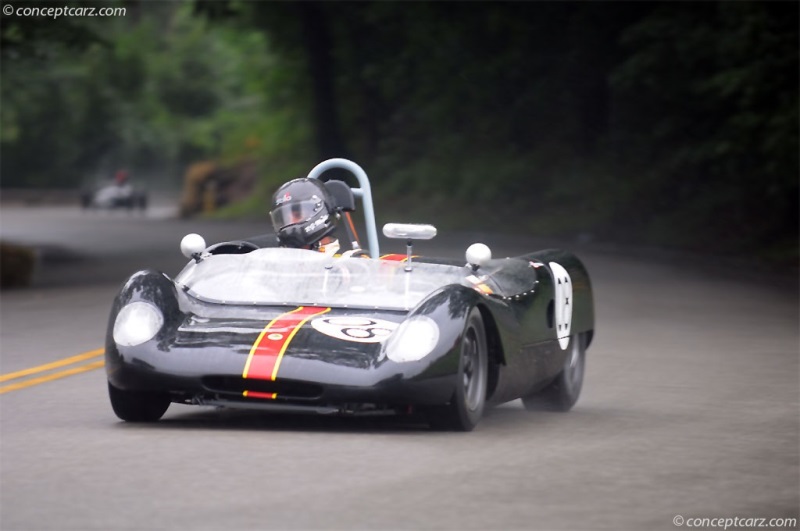
![]() | ![]() | ![]() | Roadster Chassis Num: 23-S-62 |
M. Webster had a 4-valve, twin cam cylinder head developed based on the Indy Ford V8 and one engine was built. This engine is on display here.
The car was sold to Tony Settember and he and Chuck Parsons raced the car in USRRC from 1964 through 1966. The frame was replaced in 1965 with a Webster modified frame with extra outriggers and strengthening.
The car continued to race on the West Coast and eventually vintage raced.
Mike Stott, the current owner, purchased the car in 2001 and actively races the Webster Lotus 23 in GRL and SVRA events.
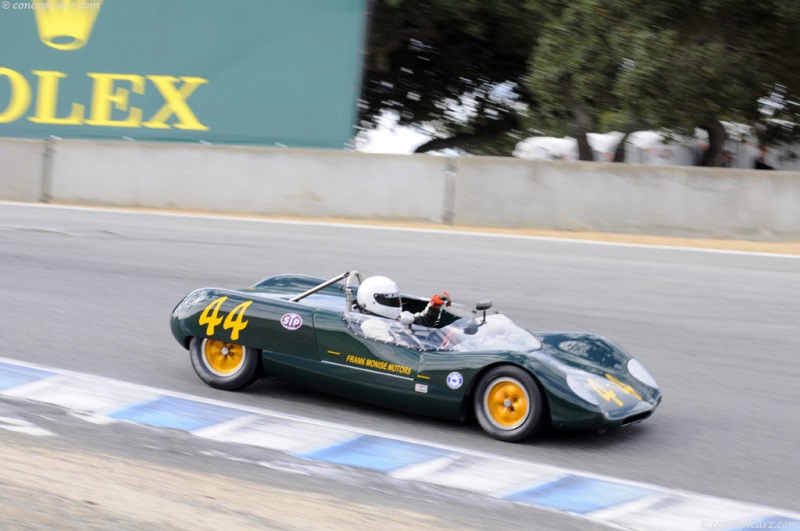
![]() | Roadster Chassis Num: 23-S-53 |
Frank Monise Sr. purchased this 23B, serial number 23-S-53 new, from Lotus importer, Bob Challman, in January of 1963. Monise owned and raced the Lotus for the next 15 years, competing in nearly 200 races.
During that time period, Monise entered and drove the car in four Únited States Road Racing Championship (ÚSRRC) races:
- April 1964: Riverside
- May 1964: Laguna Seca
- May 1964: Kent Washington
- May 1965: Riverside
23-S-53 is noted several times in the 'History of the Lotus Twenty Three' book by Graham Capel and was the first production 1600cc Lotus 23 sold by Colin Chapman.
23-S-53 has changed hands several times over the past 45 years eventually going to current owners Michael Summers and Nancy Boemer of California. Summers personally watched Monise race the Lotus at Riverside in 1964 in the LA Times Grand Prix and has done extensive research on the history of the car. With assistance from the Monise family, Summers has been able to document over 185 individual races the car had competed in, as well as holding the original shipping invoice for the car.Source - Michael Summers and Nancy Boemer
In 1962 Lotus introduced their next iteration of the compact, rear-engined sports cars, the Type 23. It was a derivative of the Lotus 19 which had been produced from 1960 through 1961, as well as the Lotus 20, 21, and 22 cars. The Type 23 made its inaugural racing debut at the Nordschleife in May of 1962. The Lotus was fitted with a 100 horsepower engine, but it was enough to propel the car to the front of the pack, ahead of the Porsches, Ferraris, and Aston Martins. At the wheel was the very capable Jim Clark who had brought the car to the front after the first lap, in the wet. Some of the other cars have as much as four-times the horsepower. Sadly, on lap 12 Clark was forced to retire when a damaged exhaust manifold leaked exhaust fumes.
The Type 23 was raced extensively in national and international races winning many class victories and often times beating large-engined competition. It quickly became a popular favorite with many racers and one of Lotus's best selling race cars of all time.
During its production lifespan Louts offered the lightweight car with a variety of options that included the Coventry Climax 750 cc four-cylinder engine and even a 12-cylinder Rotorvic motor for competition at LeMans. In standard form the Type 23 came equipped with an 1100 cc engine. A popular option was to upgrade to the Type 23B specification which included the 1600cc Lotus/Ford twin-cam engine. The Lotus 23B was given a stronger chassis tubes and fitted with a more potent Ford-based 1.5 and 1.6-liter Lotus Twincam engine.
In 1962 a Type 23B driven by Jim Clark easily proved its potential by leading the Ferrari and Jaguar cars at Nurburgring 1000KM before mechanical difficulty led to a crash. The cars dominated many of the races they were entered; even in modern times they still provide podium time for their drivers in vintage and historic racing events.
The Type 23 was constructed of fiberglass and outfitted with a Hewland MK gearbox. The suspension was comprised of double wishbones and dual trailing arms. The steering was rack-and-pinion.
By Daniel Vaughan | Jul 2008
The Type 23 was raced extensively in national and international races winning many class victories and often times beating large-engined competition. It quickly became a popular favorite with many racers and one of Lotus's best selling race cars of all time.
During its production lifespan Louts offered the lightweight car with a variety of options that included the Coventry Climax 750 cc four-cylinder engine and even a 12-cylinder Rotorvic motor for competition at LeMans. In standard form the Type 23 came equipped with an 1100 cc engine. A popular option was to upgrade to the Type 23B specification which included the 1600cc Lotus/Ford twin-cam engine. The Lotus 23B was given a stronger chassis tubes and fitted with a more potent Ford-based 1.5 and 1.6-liter Lotus Twincam engine.
In 1962 a Type 23B driven by Jim Clark easily proved its potential by leading the Ferrari and Jaguar cars at Nurburgring 1000KM before mechanical difficulty led to a crash. The cars dominated many of the races they were entered; even in modern times they still provide podium time for their drivers in vintage and historic racing events.
The Type 23 was constructed of fiberglass and outfitted with a Hewland MK gearbox. The suspension was comprised of double wishbones and dual trailing arms. The steering was rack-and-pinion.
By Daniel Vaughan | Jul 2008
A British manufacturer of sports and racing vehicles, Lotus Cars is based at Hethel, Norfolk, England. Lotus is best known for their race and production vehicles that are lightweight and have high handling characteristics. Lotus Cars is currently owned by Proton, a Malaysian carmaker, who took over Lotus in 1994 during the bankruptcy of its former owner Bugatti.
In 1952, engineer Colin Chapman a recent graduate of University College, London formed the company as Lotus Engineering Ltd. The original factory was in old stables behind the Railway Hotel in Hornsey, North London Team Lotus, which was separate from Lotus Engineering in 1954. From 1958 until 1994 Team Lotus was active and competitive in Formula One racing. In 1959 the Lotus Group of Companies was formed and this was made up of Lotus Cars Limited and Lotus Components Limited that focused on road vehicles and customer competition car production respectively. In 1971 Lotus Components Limited became Lotus Racing Limited, but unfortunately this newly renamed company ceased operation the same year.
In 1959 the company relocated to a purpose built factory at Cheshunt and since 1966 the company has occupied a modern factory and road test facility at Hethel, near Wymondham. This location is the former RAF Hethel base and the testing track utilitzes sections of the old runway.
In a rags-to-riches story, Colin Chapman died of a heart attack in 1982 at the young age of 54, starting out as an innkeeper's son and ending as a multi-millionaire industrialist in post-war Britain. Chapman is best known for building tens of thousands of successful racing and road cars. He also won the Formula One World Championship seven times. Chapman was linked with the DeLorean scandal at the time of his death over the use of government subsidies for the production of the De Lorean DMC-12 for which Lotus had designed the chassis.
The Lotus Company was purchased by General Motors in 1986. GM sold the company for £30 million on August 27, 1993 to A.C.B.N. Holdings S.A. of Luxembourg, a company that was controlled by Romano Artioli, Italian businessman, who also owned Bugatti Automobili SpA. A majority share in Lotus was sold to Perusahaan Otomobil Nasional Bhd, a Malaysian car company in 1996 which was listed on the Kuala Lumpur Stock Exchange. The Lotus Company also acts as an engineering consultancy which provides engineering development, especially of suspension, for other car manufacturers. The Powertrain department is not as well known, was responsible for the design and development of the 4-cylinder Eco-Tec engine found in a variety of GM's Opel, Saab, Vauxhall, Chevrolet and Saturn cars.
The Lotus Type 23 was specially designed by Colin Chapman as a small-displacement sports racing vehicle. To comply with formula rule the Type 23 was nominally a two-seater, it was a purpose-built for racing with a driver alone. The Type 23 utilized a wider version of the Lotus 20 space frame, with identical suspension, wrapped neatly in a fiberglass body. The 23 was initially intended for engines of 750 cc to 1300 cc and the revised 23B featured a stronger chassis tubes to take the torque of Ford-based 1.5/1.6 liter Lotus Twincam power plants.
In May of 1962 the Lotus Type 23 was debuted at the Nordschleife, Nürburgring. The Type 23 is one of the most popular sports racers in Lotus history. Its debut was one of the most astonishing drives ever seen in motor racing and at the end of the first lap, the diminutive 100bhp Lotus was nearly 30 seconds ahead of the field. Produced from 1962 until 1964 the 23 was powered by Ford based engines, 1100cc and eventually by the Lotus Twin Cam. The Type 23 used Type 19 suspension, but with larger tanks. The Type 23 was commemorated by being used as the styling inspiration for the Lotus Elise Type 23.
The 70 k/w Type 23 sped away from the field with Jim Clark at the wheel. Clark was unfortunately overcome by exhaust fumes from a damaged exhaust manifold on lap 12 and was forced to retire. Two Lotus 23s were entered at Le Mans in June 1962, a 750 cc and a one liter 45ci and 61ci. The 23s were disallowed on technical grounds due to political pressure brought to bear by French teams. Colin Chapman was enraged and vowed that they would never again race at Le Mans, and Team Lotus has not entered the race since.
Despite these initial issues, the Lotus 23 proved to be a popular, competitive and durable little race car. More than 130 Type 23's were produced in three versions; the standard 23, 23B and 23C. These vehicles continue today to be a mainstay of vintage racing in both Europe and the United States.
Early on in the 1980's a small group of enthusiasts began to remanufacture parts which made it possible to restore an original Lotus 23. These parts are now easily available and it was about this time that a Register was established for the Lotus 23. Today that Register is pat of the Historic Lotus Register of the UK.
Today there are several sources of replicas of Lotus 23 cars with the Xanthos 23 being the most accurate reproduction of the original car and using the same design and materials as the 1960s original. The Xanthos is powered by Lotus twincam and is still constructed by Xanthos Sports Cars in the traditional way near Bristol, UK. The Noble 23 was a Lotus 23 replica created by Lee Noble with a wider track than the original which allowed for true two seater use. This replica was very successful in racing and more than 60 cars were produced using either Lotus twincam or Renault V6 engines. This version continues to be produced, first by Auriga Design and now by Mamba Motorsport.By Jessica Donaldson
For more information and related vehicles, click hereIn 1952, engineer Colin Chapman a recent graduate of University College, London formed the company as Lotus Engineering Ltd. The original factory was in old stables behind the Railway Hotel in Hornsey, North London Team Lotus, which was separate from Lotus Engineering in 1954. From 1958 until 1994 Team Lotus was active and competitive in Formula One racing. In 1959 the Lotus Group of Companies was formed and this was made up of Lotus Cars Limited and Lotus Components Limited that focused on road vehicles and customer competition car production respectively. In 1971 Lotus Components Limited became Lotus Racing Limited, but unfortunately this newly renamed company ceased operation the same year.
In 1959 the company relocated to a purpose built factory at Cheshunt and since 1966 the company has occupied a modern factory and road test facility at Hethel, near Wymondham. This location is the former RAF Hethel base and the testing track utilitzes sections of the old runway.
In a rags-to-riches story, Colin Chapman died of a heart attack in 1982 at the young age of 54, starting out as an innkeeper's son and ending as a multi-millionaire industrialist in post-war Britain. Chapman is best known for building tens of thousands of successful racing and road cars. He also won the Formula One World Championship seven times. Chapman was linked with the DeLorean scandal at the time of his death over the use of government subsidies for the production of the De Lorean DMC-12 for which Lotus had designed the chassis.
The Lotus Company was purchased by General Motors in 1986. GM sold the company for £30 million on August 27, 1993 to A.C.B.N. Holdings S.A. of Luxembourg, a company that was controlled by Romano Artioli, Italian businessman, who also owned Bugatti Automobili SpA. A majority share in Lotus was sold to Perusahaan Otomobil Nasional Bhd, a Malaysian car company in 1996 which was listed on the Kuala Lumpur Stock Exchange. The Lotus Company also acts as an engineering consultancy which provides engineering development, especially of suspension, for other car manufacturers. The Powertrain department is not as well known, was responsible for the design and development of the 4-cylinder Eco-Tec engine found in a variety of GM's Opel, Saab, Vauxhall, Chevrolet and Saturn cars.
The Lotus Type 23 was specially designed by Colin Chapman as a small-displacement sports racing vehicle. To comply with formula rule the Type 23 was nominally a two-seater, it was a purpose-built for racing with a driver alone. The Type 23 utilized a wider version of the Lotus 20 space frame, with identical suspension, wrapped neatly in a fiberglass body. The 23 was initially intended for engines of 750 cc to 1300 cc and the revised 23B featured a stronger chassis tubes to take the torque of Ford-based 1.5/1.6 liter Lotus Twincam power plants.
In May of 1962 the Lotus Type 23 was debuted at the Nordschleife, Nürburgring. The Type 23 is one of the most popular sports racers in Lotus history. Its debut was one of the most astonishing drives ever seen in motor racing and at the end of the first lap, the diminutive 100bhp Lotus was nearly 30 seconds ahead of the field. Produced from 1962 until 1964 the 23 was powered by Ford based engines, 1100cc and eventually by the Lotus Twin Cam. The Type 23 used Type 19 suspension, but with larger tanks. The Type 23 was commemorated by being used as the styling inspiration for the Lotus Elise Type 23.
The 70 k/w Type 23 sped away from the field with Jim Clark at the wheel. Clark was unfortunately overcome by exhaust fumes from a damaged exhaust manifold on lap 12 and was forced to retire. Two Lotus 23s were entered at Le Mans in June 1962, a 750 cc and a one liter 45ci and 61ci. The 23s were disallowed on technical grounds due to political pressure brought to bear by French teams. Colin Chapman was enraged and vowed that they would never again race at Le Mans, and Team Lotus has not entered the race since.
Despite these initial issues, the Lotus 23 proved to be a popular, competitive and durable little race car. More than 130 Type 23's were produced in three versions; the standard 23, 23B and 23C. These vehicles continue today to be a mainstay of vintage racing in both Europe and the United States.
Early on in the 1980's a small group of enthusiasts began to remanufacture parts which made it possible to restore an original Lotus 23. These parts are now easily available and it was about this time that a Register was established for the Lotus 23. Today that Register is pat of the Historic Lotus Register of the UK.
Today there are several sources of replicas of Lotus 23 cars with the Xanthos 23 being the most accurate reproduction of the original car and using the same design and materials as the 1960s original. The Xanthos is powered by Lotus twincam and is still constructed by Xanthos Sports Cars in the traditional way near Bristol, UK. The Noble 23 was a Lotus 23 replica created by Lee Noble with a wider track than the original which allowed for true two seater use. This replica was very successful in racing and more than 60 cars were produced using either Lotus twincam or Renault V6 engines. This version continues to be produced, first by Auriga Design and now by Mamba Motorsport.By Jessica Donaldson
| BMW of North America Adds Support to RRDC Evening with Brian Redman | |
![]() | HILLIARD, Ohio (April 16, 2013) - BMW of North America, LLC, will support the RRDC Evening with Brian Redman presented by Firestone at the Road Racing Drivers Club's fifth annual West Coast banquet on April 18, held prior to the Toyota Grand Prix of Long Beach (Calif.). Redman raced for BMW in 1975 and '76, winning the 12 Hours of Sebring in 1975 (with co-drivers Hans Stuck, Sam Posey and Allan Moffat), the first year of BMW's official foray into American sports-car racing. He also won...[Read more...] |
| ALL-AMERICAN CAR TO BE CONSERVED BY ALL-AMERICAN RACERS | |
![]() | One of the race cars American racing legend Dan Gurney is most closely associated with is the Ford Mark IV that he and A.J. Foyt took to a historic victory at the 1967 24 Hours of Le Mans. Gurney will get a chance to become even more familiar with the car he helped make famous when his All-American Racers shop in California takes possession of the car's conservation on behalf of Henry Ford Museum, it was announced today. 'I don't think we could have found a better person or better organiza...[Read more...] |
| Firestone Returns As Presenting Sponsor of RRDC Evening With Brian Redman in Long Beach | |
![]() | The Firestone brand will return as presenting sponsor of the Road Racing Drivers Club's fifth annual West Coast banquet honoring auto racing's most influential leaders. This year, on Thursday, April 18, prior to the running of the Toyota Grand Prix of Long Beach, the 'RRDC Evening with Brian Redman presented by Firestone' will highlight the career of one of the sport's most popular, talented and successful race-car drivers. This is the Firestone brand's fourth straight year as a supporter of the...[Read more...] |
| Limited-Edition Ford Racing History Artwork Unveiled at SEMA; Limited-Edition Print Sales to Benefit JDRF | |
![]() | •Special limited-edition Ford Racing history artwork is unveiled at the annual SEMA show as part of the Ford press conference •Famed automotive artist Sam Bass created the artwork at the request of Edsel B. Ford II, with proceeds from sales of limited-edition autographed prints benefiting JDRF •Drivers and Ford race vehicles featured on the special artwork include Henry Ford (Sweepstakes), Trevor Bayne (No. 21 Fusion), Dan Gurney/A.J. Foyt (Ford Mark IV), Bob Glidden (NHRA Thunderbird), Jack...[Read more...] |
| 1967 Can-Am Road America: The Beginning of the 'Bruce and Denny Show' | |
![]() | While Formula One will be forever considered the pinnacle of motorsport, from a period between 1966 and 1986 there existed a series that would likely be the closest to 'anything goes' as any motor racing series could truly get. Based upon the FIA Group 7 cars but allowed to showcase unlimited engine sizes and unfettered aerodynamics, the Can-Am cars would have to be considered the pinnacle of motorsport technology and power of their era. And for more than a couple of years there would be one tea...[Read more...] |
| View more USRRC vehicles |
| View more Sports Racer vehicles |
1962
Lotus
models |
| Lotus 24 |
| Lotus 25 |
| Lotus Elite |
| Lotus Seven |
| Lotus Super Seven |
| Lotus Type 19 |
| Lotus Type 22 |
| Lotus Type 23A |
| Lotus Type 27 |
| Similar Vehicles | |
![]() | 1963 Elva MK7 |
| Similar Automakers | |
| Aston Martin | Bentley |
| Bugatti | Devon |
| Ferrari | GTA |
| Koenigsegg | Lamborghini |
| Maserati | Maybach |
| McLaren | Porsche |
| Rolls-Royce | Spyker |
| Tesla | |
| Lotus: 1961-1970 |
| Similar Automakers |
| Lotus History |
| Other models by Lotus |
| Manufacturer Website |
| 16 18 FJ 340R 51 and 51A 61 | 81 Carlton Cortina Elan Eleven | Elise Elite Type 14 Coupé Esprit Europa Evora | Excel Exige Fifteen Mark VI Seven | Type 19 Type 20 Type 21 Type 22 Type 23 | Type 24 Type 25 Type 27 Type 30 Type 38 | Type 49 |
1963 23B ![]() |


1962