1927 Bugatti Type 37A
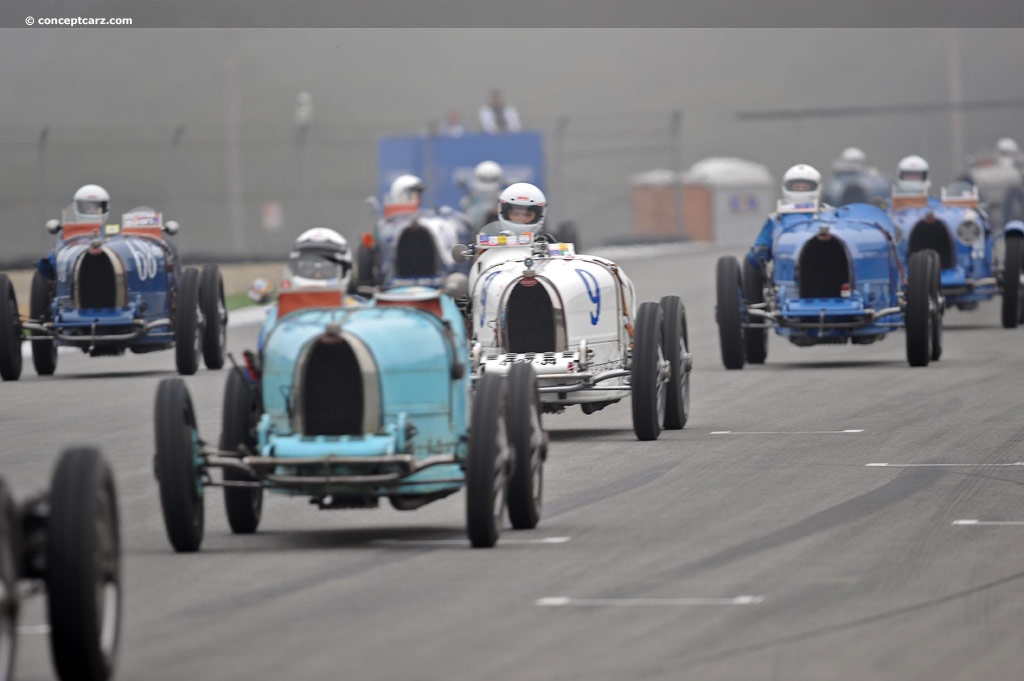
1927 Bugatti Type 37A Navigation
The Automobiles Ettore Bugatti Company was founded in 1909 in the then-German city of Molsheim Alsace by Ettore Bugatti. The Bugatti Type 13, generally known as the Brescia, is considered the first true Bugatti car. The four-cylinder 1,327-1,496cc engine was increasingly refined and developed and would be the basis upon which the Bugatti's company, reputation, and success were based. During the sixteen-year production run, approximately 2,000 examples were built.
Boattail Speedster
Chassis #: 37319The Type 13 had a 4-valve head design, one of the earliest to use this configuration. With the help of dual Zenith carburetors, the engine produced 30 horsepower which was more than adequate for the small, 600 lb car. With a lack of power, the Type 13 made up in steering, braking, and handling. At the 1910 French Grand Prix at LeMans in 1911, the small Bugatti lineup against a much larger, and more powerful field of contenders. After seven hours of racing, the Bugatti had proven its potential by taking second place. By the mid-twenties, the Brescia had lost its competitive edge and was replaced by the eight-cylinder Type 35 and its many variants. The Type 35 had a tapered hood and body tail, a narrow two-seat body, a distinctive horseshoe radiator, a slightly curved front axle, and eight-spoke aluminum alloy wheels. Under the bonnet was a 2.3-liter, single overhead cam, four-cylinder engine often paired with a supercharger. It was a commercial and racing success, with over 1,000 victories in its time. It was the Grand Prix World Champion in 1926 after winning 351 races and setting 47 records in the two prior years. From 1925 through 1929, Bugatti won the Targa Florio for five consecutive years.
Boattail SpeedsterThe success of the Type 35 presented Bugatti an opportunity to design a reasonably priced and easily maintainable successor to the Brescia. The forthcoming vehicle was designated the Bugatti Type 37. It had the elegance of the Type 35's engines, carved from a single block of metal, a one-piece crankshaft, a two-piece aluminum crankcase, and plain bearings. It had the proven three-valve per cylinder breathing with two intake valves and a single exhaust valve, actuated by a shaft-driven single overhead camshaft. This 1.5-liter straight-4-cylinder engine was later used in the Type 40.The Type 37 used the chassis and body from the Type 35, with 290 total examples built (some sources say 268 built). 67 were the Type 37A (other sources say 77), which was a supercharged version with larger drum brakes and an increase of about 25 horsepower over the Type 37. One a few Type 37s were built in the first year, but the following year saw 120 Type 37s built, followed by 87 in 1927 and 45 in 1928. In naturally aspirated form, the 1.5-liter engine offered 50-60 horsepower. For those seeking more, Bugatti added a shortened version of the Type 35's Roots supercharger, developing over 80 horsepower. Other refinements fitted to the Type 37A were a magneto ignition and the optional aluminum wheels in place of the wire wheels. One example, driven by Louis Chiron, was victorious at the 1928 Italian Grand Prix. Another example driven by Bill Thompson won at the Australian Grand Prix in 1930.
by Daniel Vaughan | Feb 2020
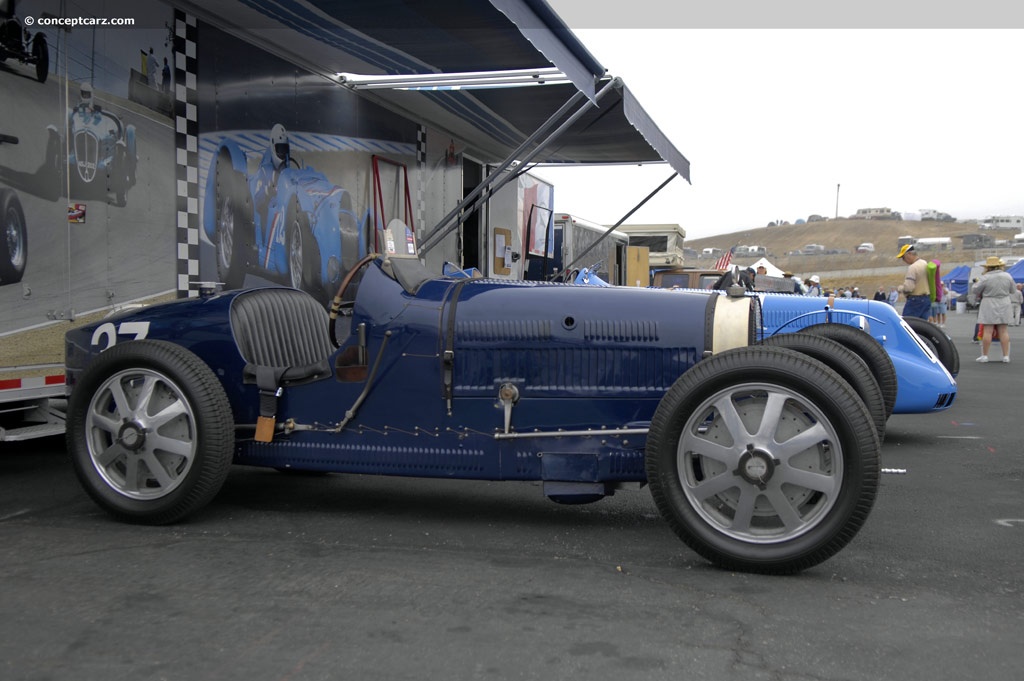
Boattail Speedster
Chassis #: 37319
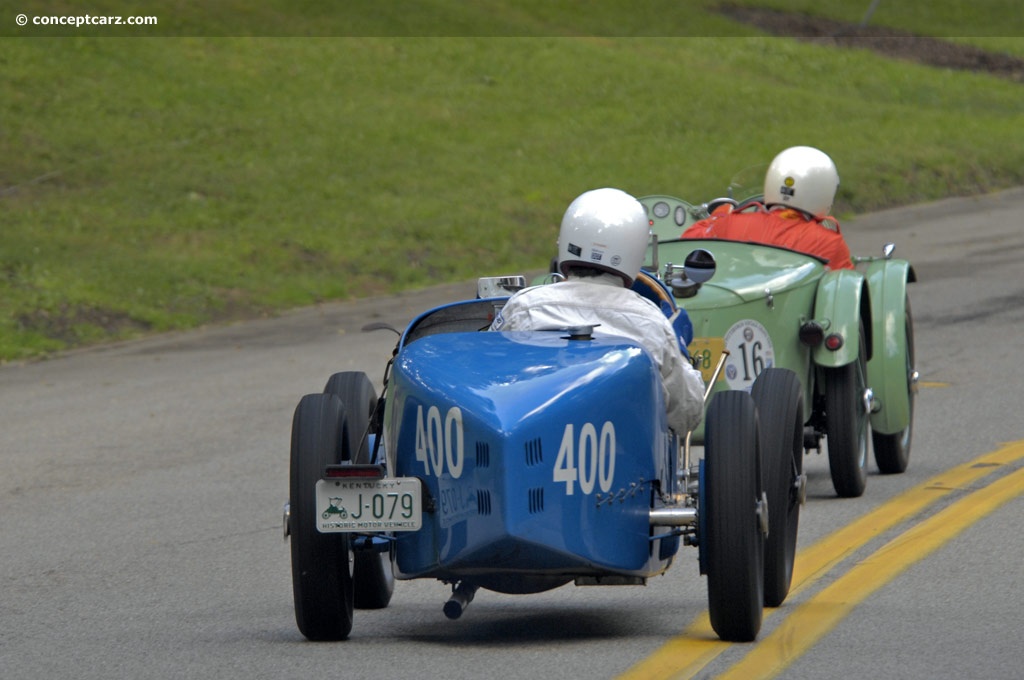
Boattail Speedster
by Daniel Vaughan | Feb 2020
Related Reading : Bugatti Type 37 History
The Type 37 was first introduced in 1926 and available in two forms - normal and supercharged. The Supercharged versions were dubbed the 37A. Production lasted until 1930. During its production lifespan, around 290 examples were produced. The vehicle was powered by a 2-liter four-cylinder engine with a Zenith or Solex carburetor. With the use of the supercharger, the engine produced 90 horsepower.....
Continue Reading >>
Continue Reading >>
- 1927 Bugatti Type 37A Menu
- Article
- Image gallery
- Valuation
- Specifications
- Profiles
- Production figures


1927 Bugatti Type 37A Vehicle Profiles


Recent Vehicle Additions


Related Automotive News

Bugatti's greatest racer celebrates centenary at Salon Privé Concours
Bugatti Type 35 turns 100 in style at the UKs most lavish Concours
Highly original Type 35 B with continuous history represents models nadir
Part of exclusive Bugatti class including competition and touring models
Former Pebble Beach Show-winn...
Britain's Automotive Greats to be Celebrated at London Concours in 2022
Rarest and most significant pre-war British cars to be savoured at Londons Honourable Artillery Company later this month.
Examples from this countrys great marques – from Rolls-Royce to Bentley - will be united at the capitals leading concours d...

Bugatti Baby Reborn: A 110Th Surprise Birthday Present
500 limited-edition junior Bugatti cars built to celebrate the brands 110th anniversary
The car that brought Automobiles Ettore Bugatti to fame in the 1920s, the Bugatti Type 35, is generally acknowledged as the most successful racing car of...

Kia Enters Europe's Fastest-Growing Market Sector With Stonic SUV
Kias first entry into the B-segment SUV market
Sector expected to double to 2.2 million sales a year in Europe by 2020
Five versions based on two trim lines and three powertrains
Fuel economy of up to 67.3mpg, with CO2 emissions as low as 109gk...

The ‘Quadrifoglio Verde' is back on Giulietta and MiTo
The legendary Quadrifoglio Verde that has identified the top performing cars by Alfa Romeo since 1923 is back on the new versions
Giulietta celebrates its 60th anniversary with a new Quadrifoglio Verde
True expression of Alfa Romeos DNA, thi...