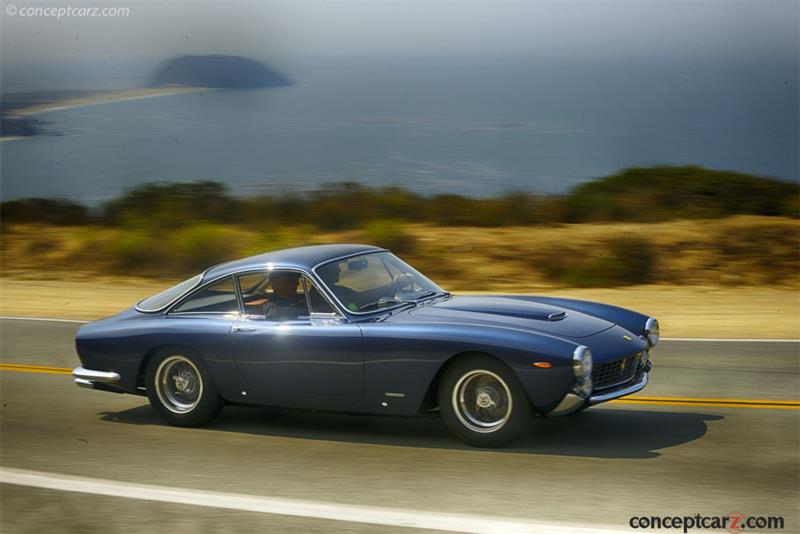
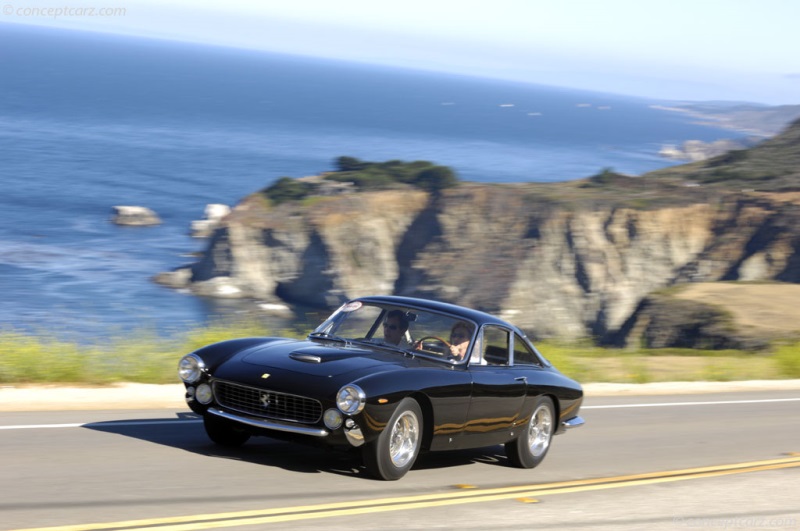
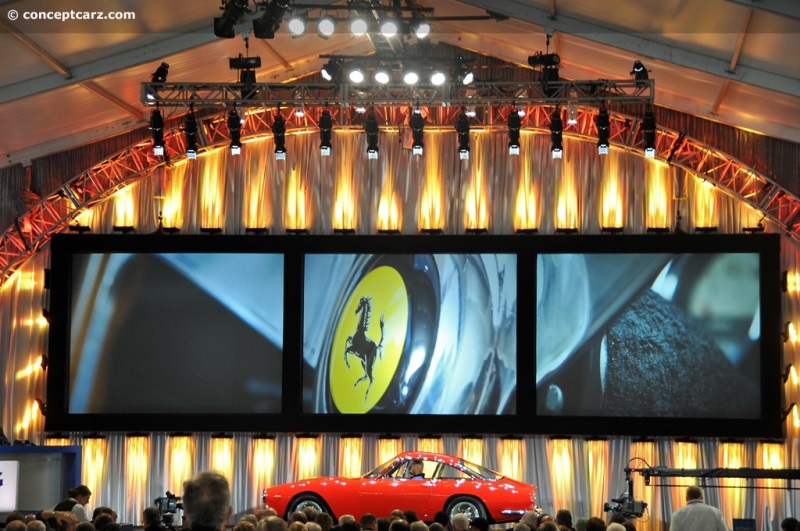
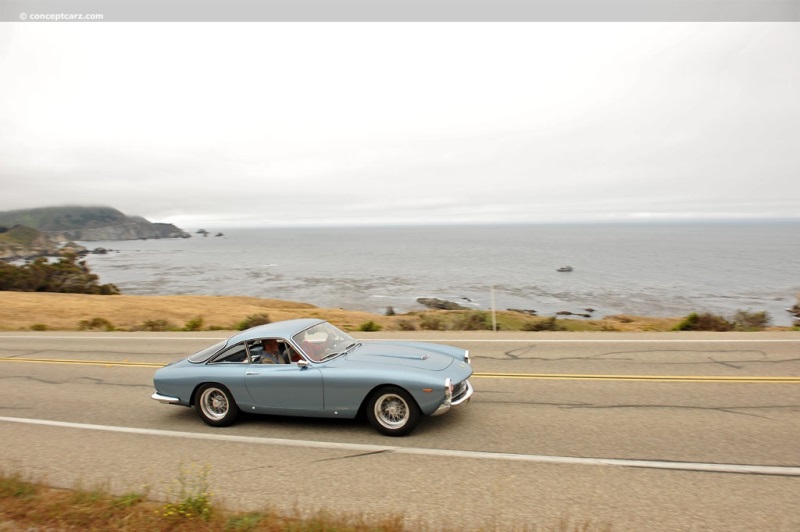
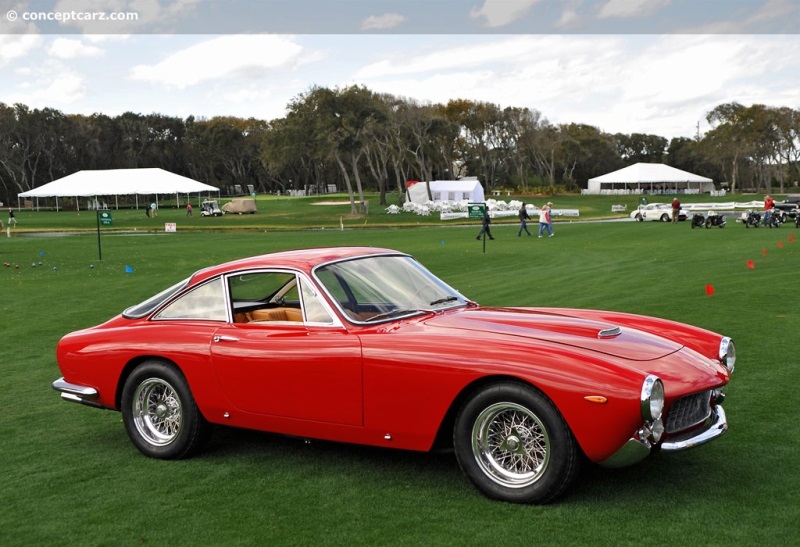
1963 250 GT Lusso |
1964 Ferrari 250 GT Lusso news, pictures, and information | ||
| Tweet | ||
![]() | ![]() | ![]() | Berlinetta Coachwork: Scaglietti Designer: Pininfarina Chassis Num: 5247 |
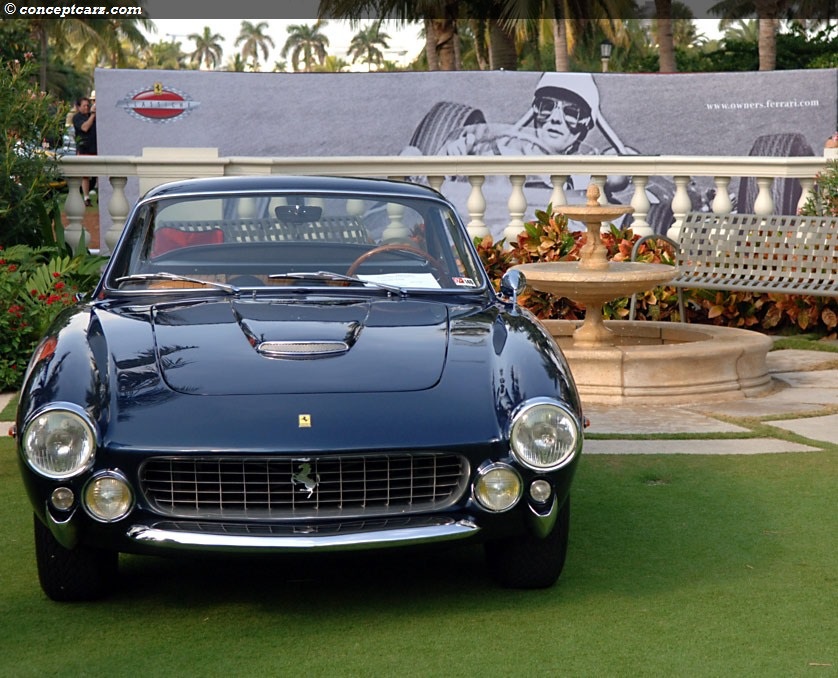
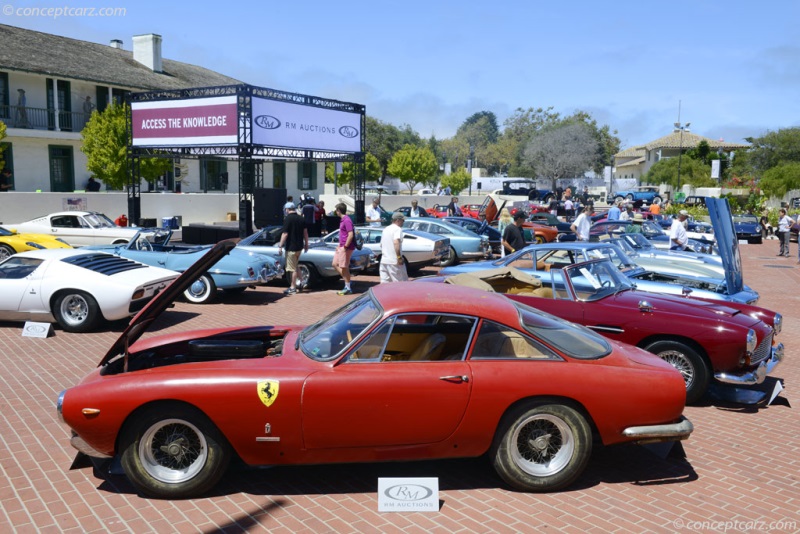
Ferrari 250 GT Lusso with chassis number 5247GT is a left hand drive finished in dark red and a tan interior. It was sold to Michael A. Yedor of California some time prior to 1995. The history prior to 1995 is still being compiled.
Yedor entered the car into the 1995 Rosso Rodeo in Beverly Hills. In August of that year it was entered into the 3rd FCA Vintage Ferrari Concours at Carmel Valley where it was awarded a second in class. At the Newport Beach Concours in 1996 the car was awarded a first in class. It was invited to the prestigious Pebble Beach Concours in 1996.
In 1997 it was apart of the Cavallino Classic where it was awarded Best of Show and Coppa Bella Macchini. At the Rodeo Drive Concours it was awarded Class Awards. Also in 1997, it attended the Ferrari Club of America Field & Driving Concours in Washington DC.
In 1999 the car passed ownership to Jeffrey Fisher of Palm Beach. 5247GT was invited back tot he Cavallino Classic XV in 2006.
By Daniel Vaughan | Aug 2009
![]() | ![]() | ![]() | Berlinetta Coachwork: Scaglietti Designer: Pininfarina Chassis Num: 5675GT |
The coachwork combines a low slung nose with sculpted Kamm tail. Specifications would be varied to suit individual customer requests. Competition cars carried lightweight aluminum alloy bodies, while road going cars featured a fully trimmed interior and a soft suspension. The interior offered new standards in sports car passenger comfort. Ferrari produced 350 250 GT Lussos.
Mechanically, the cars used a 3.0 liter twelve-cylinder engine and a four-speed gearbox. Motivated by 250 horsepower, the Lussos ran 0 to 60 mph in eight seconds and topped out at 150 mph.
The Ferrari 250 GT Lusso with chassis number 5675GT is a Left Hand Drive vehicle.
By Daniel Vaughan | Apr 2011
![]() | ![]() | ![]() | Berlinetta Coachwork: Scaglietti Designer: Pininfarina Chassis Num: 5287 |
It was developed from the dual-purpose 250 GT Short Wheelbase (SWB), which was delivered as both as a full-on competition or a steel-bodied grand touring car. When the SWB's time was up, its road-going version was replaced in 1962 with the more curvaceous 250 GT Lusso.
Inside, the Lusso was well appointed with ample room for two and luggage area behind with retention straps. This was possible because although the Lusso used the earlier SWB chassis, its engine was mounted much more forward to increase passenger space.
Although the Lusso's primary intent was grand touring, it shared many racing features with the all-conquering 250 GTO race car. Both had the same wheelbase, disc brakes, Boranni wheels, suspension and all-aluminum engine. Despite the Lusso's less robust chassis, steel bodywork and more forward mounted engine, many owners rigged their cars with a harness and went racing with it when a GTO couldn't be ordered.
![]() | ![]() | ![]() | Berlinetta Coachwork: Scaglietti Designer: Pininfarina Chassis Num: 250GTL5475 |
| Sold for $550,000 at 2009 RM Auctions. | |||
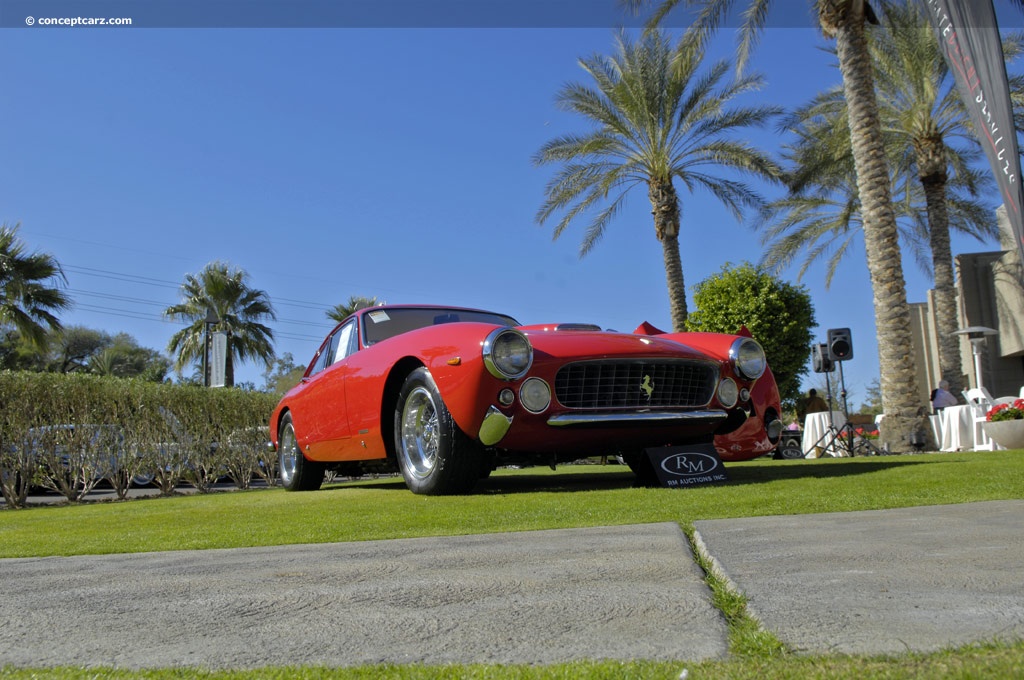
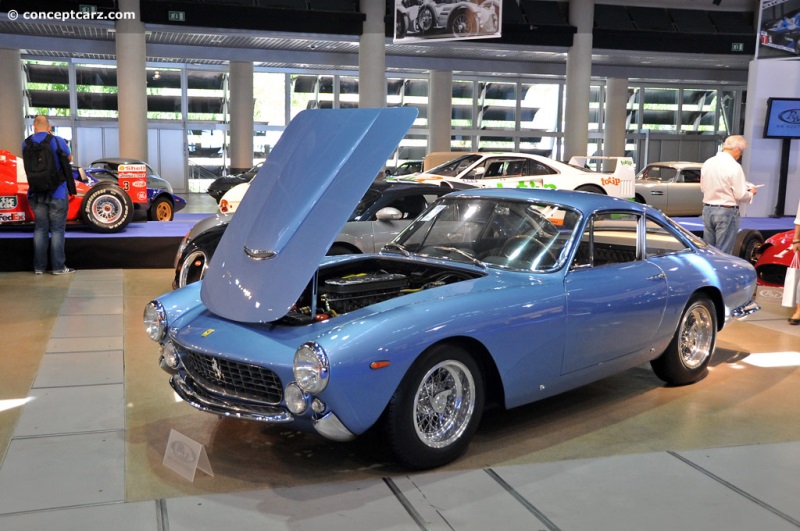
The 250 GT/L Berlinetta was the final iteration of the 250 GT series. A prototype of the new 250 GT Lusso Berlinetta, was first shown at the Paris Motor Show in October of 1962. The 'Lusso' cars that followed, were given a new rear suspension features that were from the legendary GTO. The list includes a tubular shock absorbers with concentric helper springs, and a Watts linkage setup.
This 250 GT/L is finished in Rosso Corsa and was given a restoration from the ground up between 1999 and 2000. When the work was finished, it was shown at the Monterey Concorso Italian in 2000, where it was the event's featured car. The car was awarded both Platinum and Best of Show awards. It was shown at the 2001 edition of the Cavallino Classic, and in 2002, it received a Platinum Award at the Ferrari Club of America meeting in Century City.
The car rides on Borrani 'knock off' wire wheels. The interior is trimmed in tan hides with darker brown carpeting. The engine is a 250 horsepower unit with three Weber twin-choke carburetors. There is a four-speed manual gearbox and four-wheel hydraulic disc brakes.
In 2009, chassis number 250GTL5475 was offered for sale at the Automobiles of Arizona presented by RM Auctions. The lot was estimated to sell for $600,000 - $700,000. It was sold for the sum of $550,000, including buyer's premium.
By Daniel Vaughan | Apr 2009
![]() | ![]() | ![]() | Berlinetta Coachwork: Scaglietti Designer: Pininfarina Chassis Num: 5295 |
By Daniel Vaughan | May 2009
![]() | ![]() | Berlinetta Coachwork: Scaglietti Designer: Pininfarina |
The 250 GT Berlinetta Lusso is a true grand touring car. Built on a shorter wheelbase than its predecessors, it was given a steel body , with aluminum hood, doors and trunk lid and such stunningly luxurious interior trimmings as plush carpets, leather trim and sound insulation. The unique instrument panel had the speedometer and tachometer directly in the center of the panel flanked by the smaller gauges in front of the driver. Designed by Pininfarina and built by Scaglietti, the Lusso's styling redefines the word classic.
Intended as a road car, the Lusso came with a Colombo V12 engine that was officially rated at 250 horsepower and had a top speed of 150 mph. The outstanding suspension included telescopic shock absorbers with 'helper' springs wound around them. The 1964 model marked the end of 250 series that had started a decade earlier.
This vehicle changed hands about 20 times before being acquired by the current owner on August 15, 2009.
![]() | ![]() | ![]() | Berlinetta Coachwork: Scaglietti Designer: Pininfarina |
The 250 GT Lusso (also known as the GTL) was designed by Pinin Farina and first shown at the 1962 Paris Show. The engine was a Tipo 168 unit that offered 247 horsepower and three Weber 36DCS carburetors. Scaglietti was tasked with the construction of the Lusso, and production lasted through 1964 with few modifications during that time.
This Lusso Berlinetta has been owned by the same caretaker for the past 35 years. It was featured in the Ferrari Club's magazine in 1999, is highly original, and has no modifications.
By Daniel Vaughan | Aug 2010
![]() | ![]() | ![]() | Berlinetta Coachwork: Scaglietti Designer: Pininfarina |
This is the last of the 350 Lussos built by Ferrari. It was shown at the 1968 Pebble Beach Concours d'Elegance, where it came second in class. It has been carefully preserved since then and is one of the most original Ferraris in the world.
![]() | ![]() | ![]() | Berlinetta Coachwork: Scaglietti Designer: Pininfarina Chassis Num: 250GTL5345 |
| Sold for $561,000 at 2010 RM Auctions. | |||
Registered on Italian plates in Rome, the car was sold to its second owner just one year later on January 16th, 1965 through Sport Auto Roma S.r.l. to Ottavio Capuani of Rome. Just two years later, the car was serviced and maintained at the factory's Assistenza Clienti in Modena. That year, it is known to have been owned by Mr. Richardson in Rome and to have been painted red with a black interior.
The car was later exported from Italy to the United States and owned for a number of years by an individual in Michigan.
During the 1990s, the car was owned by Dave Jordano of Chicago. It was later acquired by Neil Shevin of Eanston, Illinois in 2003. It was offered for sale in 2006, still finished in red with a black interior.
The current owner acquired the car in 2007 and has resided in California ever since.
In 2010, this car was offered for sale at the 'Sports & Classics of Monterey' presented by RM Auctions. It was estimated to sell for $500,000 - $600,000. As bidding came to a close, the car had been sold for the sum of $561,000 inclusive of buyer's premium.
By Daniel Vaughan | Dec 2010
![]() | ![]() | ![]() | Berlinetta Coachwork: Scaglietti Designer: Pininfarina Chassis Num: 5529 GT |
| Sold for $632,500 at 2011 Gooding & Company. | |||
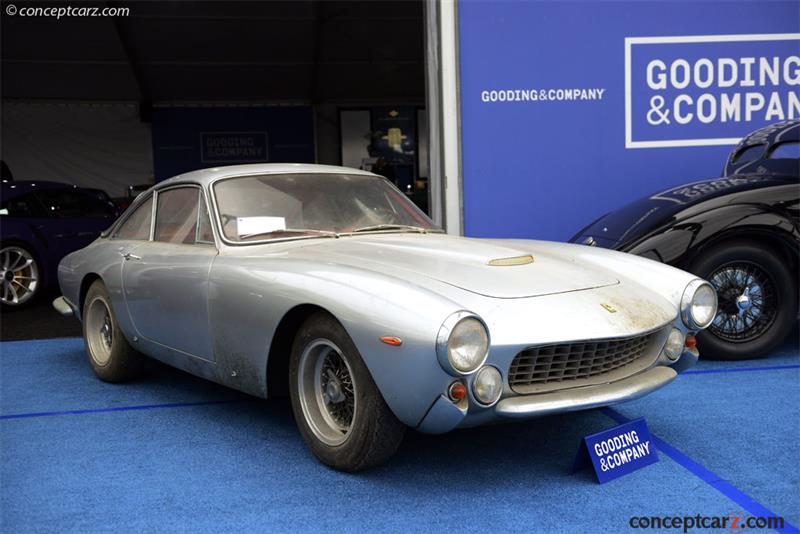
By 1968, the car had been moved to the West Coast and into the care of Louis Mouton Jr. It would remain in his care for almost three decades. It would not re-appear on the open market until January of 1987, when Steve Forristall's GT Cars of Houston, Texas offered it for sale. In February of the following year, the car was sold to Mike Sheehan, who later sold it to John Ortega. Shortly after taking delivery of the car, Mr. Ortega began a comprehensive restoration. Two years later, the work was complete, and had been re-finished in the original, factory-delivered color combination.
In November of 1989, David Livingston became the car's next caretaker. It would remain in his collection until 1993, at which time it was sold through the Vintage Motor Car Company in Encinitas to Skeets Dunn. The current owner took possession of the car in 2000.
In 2011, the car was offered for sale at the Gooding & Company auction held in Amelia Island, Florida where it was estimated to sell for $600,000 - $750,000. As bidding came to a close, the car had been sold for the sum of $632,500 including buyer's premium.
By Daniel Vaughan | Apr 2011
![]() | ![]() | Berlinetta Coachwork: Scaglietti Designer: Pininfarina Chassis Num: 5947 GT |
| Sold for $969,446 (€750,400) at 2012 RM Auctions. | ||
In 2012, the car was offered for sale at the RM Auction's Monaco sale. The car was estimated to sell for €620.000-€680.000. As bidding came to a close, the car had been sold for the sum of €750.400 inclusive of buyer's premium.
By Daniel Vaughan | Jul 2012
Production of the 250 Series began in 1954 and continued on through the early part of the 1960's. There were numerous variations of the 250 and would ultimately become Ferrari's most successful line of vehicles to date. The 250 is also recognized as the first Ferrari to ever receive disc brakes. This did not take place until the end of the 1950's. Also, the 250 was the first four-seater.
Ferrari's were custom built cars. They were not mass-produced. Ferrari provided the engine and chassis while Italian coach builders provided the body. This meant the specifications varied. Engines also varied in horsepower rating, torque, and displacement. This was no different for the 250 GT which saw many different variations in body style and body types.
Ferrari built the road-going Ferrari's to fuel his passion for racing. Many of the vehicles he built for the road had a competition model. That is, a modified version of the road-going model. An example of this was the 1959 short-wheel base (SWB) Berlinetta (Berlinetta which means coupe) and given an aluminum body. It was debuted in October 1959 at the Paris Salon. GT cars were road-legal vehicles that could also be taken to the track and compete without the need for modifications. Although this was their purpose, Ferrari realized that many customers would not race their vehicle, but rather wanted the power and performance that sports cars offered. To comply, Ferrari built these cars to be powerful and luxurious. The vehicles could still be run on the track, mostly on requiring the adoption of stickers and complying with any safety requirements.
The 250 road-going vehicles mostly shared two wheelbase sizes, a 2400 mm and 2600 mm. The 2400 wheelbase were referred to as the SWB (Short wheel base) while the other was the LWB (long wheel base).
The base engine was a Colombo 60-degree, single-over-head cam, 'vee' type 12-cylinder, with aluminum alloy block and heads, and cast-iron cylinder liners. The displacement was 180 cubic inch (2953 cc). Horsepower production was around 220-260. The front suspension was independent with double wishbones and coil springs. The rear suspension was a live axle.
The first 250 introduced was the 250S and available in either berlinetta or spider configuration. Introduced in 1952, they were powered by a 3-liter Colombo engine producing about 230 horsepower.
At the 1953 Paris Motor Show, Ferrari introduced the 250 Europa and Export. These were the only models in the series that were powered by a Lampredi v-12 engine also seen in Formula 1. The 250 Export had a 2400 MM wheelbase, similar tot he 250 MM. The 250 Europa had a larger, 2800 mm wheelbase which allowed more interior room. During their short production lifespan, only 18 examples were produced. Pininfarina and Vignale were tasked with creating the coachwork.
In 1954 four specialty built 250 Monza were built for racing. They shared many similarities with the 750 Monza's, but were equipped with the 3-liter Colombo engine.
At the 1957 Geneva auto show, Ferrari displayed their 250 GT Cabriolet. Coachwork was courtesy of Pininfarina; the wheelbase was 2600 mm in size. In 1959 the second in the 250 GT Cabriolet series production began after only 36 examples being produced.
From 1957 through 1959 Ferrari produced the 250 GT Berlinetta 'Tour de France' (TdF). The name had been given for the 10-day automobile race. Originally the engine produced 240 horsepower but was later modified to 260 horsepower. Carrozzeria Scaglietti was responsible for creating the bodies based on Pinin Farina's design.
Scaglietti was responsible for constructing the 1957 250 GT California Spyder. These sat atop a long, 2600 mm chassis and aluminum was used throughout the body in efforts to reduce the overall weight. In total, around 45 examples were created before they were replaced by the SWB version in 1960.
There were 250 examples of the 250 GT Berlinetta SWB produced. Production began in 1959 and used the shortened, sportier wheelbase. Giotto Bizzarrini, Carlo Chiti, and Mauro Forghieri were responsible for the development. Some were built for racing while others were meant for daily transportation. Horsepower ranged from 240 to 280. Steel or aluminum bodies were used. The steel bodies were suited for the road-going vehicles, also known as Lusso. The racing trim vehicles were powerful and had low weight. They were vary competitive and are regarded as the most important GT racers of its time. In 1961 the SWB Berlinetta captured the GT class of the Constructor's Championship.
In 1960 a Scaglietti 250 GT Spyder California SWB was shown at the Geneva Motor Show. Built as a replacement for the LWB and based on the 250 GT SWB, around 55 examples were produced.
The Ferrari 250TR was produced from 1957 through 1958 during which only 19 examples were created. The 'pontoon' fender body was designed by Scaglietti and the power was supplied through a Colombo 12-cylinder engine mounted at a sixty-degree angle and outfitted with six Weber 38 DCN carburetors. Power was sent to the rear wheels via a four-speed manual gearbox. With 300 horsepower, the 800 kg vehicle was able to achieve a 168 mph top speed. From 1958 through 1961, the 250 TR was entered in 19 championship races where they emerged victorious ten times.
The 250 in 250 TR represented the unitary displacement while the TR was an acronym meaning Testa Rossa. Testa Rossa translates to 'red head' which referred to the color of the engine's cylinder head.
The 250 TR series was built to capture the world championship which was experience questionable times. During the 1955 24 Hours of Lemans a fatal accident occurred and the Commissione Sportiva Internazionale (CSI) began investigating ways to make the sport safer for the drivers and the spectators. Their efforts were escalated in 1967 when another fatal accident occurred at the 1957 Mille Miglia. The committee decided upon a displacement limit but they were in disagreement on the size; the proposed figures ranged from 3 to around 3.5 liters.
1958 was the introductory year for the new regulations, which had been announced during the later part of 1957. Ferrari had been building, testing, and racing the 250 GT which had performed well during the 1957 Mille Miglia. The Colombo V12 260 horsepower engine received a larger bore, camshaft, and other improvements resulting in a 3.1 liter displacement and 320 horsepower. Testing continued throughout the 1957 season in both body configuration and mechanical components.
Ferrari had anticipated the new engine size regulations and thus had been sufficiently prepared to capture the world championship. Due to the potential of negative publicity caused by the fatal accidents, other manufacturers, such as Aston Martin, Lotus, Cooper and Jaguar, were hesitant to continue racing. Ferrari believed their closest competitor would be the powerful and technologically advanced Maserati 450 S which featured a quad-cam eight-cylinder engine.
Ferrari quickly began capturing victories during the 1958 season. The 250 TR was a solid vehicle thanks to the preparation and testing. The steel tubular ladder frame was of traditional Ferrari construction; a DeDion rear axle was used on the works racers. Customer cars were outfitted with a live axle. Drum brakes were placed on all four corners of the car. The engine had been modified to comply with regulations and to fit in the engine bay. In reality, the vehicle was an outdated car having only the benefit of proper planning and proven technology. Most cars featured disc brakes which provided superior stopping power. The Colombo engine dated back to the beginning of Ferrari and was antiquated in comparison to the modern power-plants.
Nearing the close of the 1958 season, the competition began to rise. Aston Martin had a lethal combination, a 3 liter DBR1 racer and Stirling Moss as the driver. Even though the Aston Martins did score a victory at Nurburgring 1000 KM, Ferrari was able to capture the World Championship. The legendary Phil Hill and Olivier Gendebien easily capture a third victory for Ferrari at the grueling 24 Hours of Lemans. The 250 TR works cars were referred to as TR58, to distinguish them from the customer TRs.
For the 1959 season, the vehicles received slight modifications which made the vehicle lighter and more powerful. The big news was the use of Dunlop disc brakes. The engine received coil valve springs and the horsepower increased slightly to 306. A Colotti designed five speed gearbox replaced the four-speed unit. Pininfarina was tasked with designing a new body and the construction was handled by Fantuzzi. As a result of the improvements, the name was changed to TR59. At their inaugural race, the TR59 finished first and second. This streak did not last and at the end of the season, it was Aston Martin who emerged as the world champion. The TR59 was plagued with reliability issues mostly due to the gearbox. The vehicles were forced to retire early from races, including Le Mans.
For the 1960 season, the TR was modified slightly to comply with new regulations and to rectify the transmission issues. These vehicles are commonly referred to as the TR59/60. Aston Martin had withdrawn from the championship which left no factory opposition for Ferrari. Porsche and Maserati provided competition, especially at Targa Florio and the Nurburgring 1000 km where they scored victories. At Le Mans, Ferrari finished first and second and captured the word championship, beating Porsche by only four points.
For the 1961 season, Ferrari introduced the mid-engined 246 SP. The TRI61 was given a new spaceframe chassis and was able to capture victories at Sebring 12 Hours and Le Mans. With victories between the 246 SP and the TRI61, Ferrari once again captured the world championship.
The CSI implemented stricter rules for the 1962 season which meant the TR was unable to score points for the factory. It was still allowed to race for the overall victory.
By Daniel Vaughan | Feb 2007
For more information and related vehicles, click hereFerrari's were custom built cars. They were not mass-produced. Ferrari provided the engine and chassis while Italian coach builders provided the body. This meant the specifications varied. Engines also varied in horsepower rating, torque, and displacement. This was no different for the 250 GT which saw many different variations in body style and body types.
Ferrari built the road-going Ferrari's to fuel his passion for racing. Many of the vehicles he built for the road had a competition model. That is, a modified version of the road-going model. An example of this was the 1959 short-wheel base (SWB) Berlinetta (Berlinetta which means coupe) and given an aluminum body. It was debuted in October 1959 at the Paris Salon. GT cars were road-legal vehicles that could also be taken to the track and compete without the need for modifications. Although this was their purpose, Ferrari realized that many customers would not race their vehicle, but rather wanted the power and performance that sports cars offered. To comply, Ferrari built these cars to be powerful and luxurious. The vehicles could still be run on the track, mostly on requiring the adoption of stickers and complying with any safety requirements.
The 250 road-going vehicles mostly shared two wheelbase sizes, a 2400 mm and 2600 mm. The 2400 wheelbase were referred to as the SWB (Short wheel base) while the other was the LWB (long wheel base).
The base engine was a Colombo 60-degree, single-over-head cam, 'vee' type 12-cylinder, with aluminum alloy block and heads, and cast-iron cylinder liners. The displacement was 180 cubic inch (2953 cc). Horsepower production was around 220-260. The front suspension was independent with double wishbones and coil springs. The rear suspension was a live axle.
The first 250 introduced was the 250S and available in either berlinetta or spider configuration. Introduced in 1952, they were powered by a 3-liter Colombo engine producing about 230 horsepower.
At the 1953 Paris Motor Show, Ferrari introduced the 250 Europa and Export. These were the only models in the series that were powered by a Lampredi v-12 engine also seen in Formula 1. The 250 Export had a 2400 MM wheelbase, similar tot he 250 MM. The 250 Europa had a larger, 2800 mm wheelbase which allowed more interior room. During their short production lifespan, only 18 examples were produced. Pininfarina and Vignale were tasked with creating the coachwork.
In 1954 four specialty built 250 Monza were built for racing. They shared many similarities with the 750 Monza's, but were equipped with the 3-liter Colombo engine.
At the 1957 Geneva auto show, Ferrari displayed their 250 GT Cabriolet. Coachwork was courtesy of Pininfarina; the wheelbase was 2600 mm in size. In 1959 the second in the 250 GT Cabriolet series production began after only 36 examples being produced.
From 1957 through 1959 Ferrari produced the 250 GT Berlinetta 'Tour de France' (TdF). The name had been given for the 10-day automobile race. Originally the engine produced 240 horsepower but was later modified to 260 horsepower. Carrozzeria Scaglietti was responsible for creating the bodies based on Pinin Farina's design.
Scaglietti was responsible for constructing the 1957 250 GT California Spyder. These sat atop a long, 2600 mm chassis and aluminum was used throughout the body in efforts to reduce the overall weight. In total, around 45 examples were created before they were replaced by the SWB version in 1960.
There were 250 examples of the 250 GT Berlinetta SWB produced. Production began in 1959 and used the shortened, sportier wheelbase. Giotto Bizzarrini, Carlo Chiti, and Mauro Forghieri were responsible for the development. Some were built for racing while others were meant for daily transportation. Horsepower ranged from 240 to 280. Steel or aluminum bodies were used. The steel bodies were suited for the road-going vehicles, also known as Lusso. The racing trim vehicles were powerful and had low weight. They were vary competitive and are regarded as the most important GT racers of its time. In 1961 the SWB Berlinetta captured the GT class of the Constructor's Championship.
In 1960 a Scaglietti 250 GT Spyder California SWB was shown at the Geneva Motor Show. Built as a replacement for the LWB and based on the 250 GT SWB, around 55 examples were produced.
The Ferrari 250TR was produced from 1957 through 1958 during which only 19 examples were created. The 'pontoon' fender body was designed by Scaglietti and the power was supplied through a Colombo 12-cylinder engine mounted at a sixty-degree angle and outfitted with six Weber 38 DCN carburetors. Power was sent to the rear wheels via a four-speed manual gearbox. With 300 horsepower, the 800 kg vehicle was able to achieve a 168 mph top speed. From 1958 through 1961, the 250 TR was entered in 19 championship races where they emerged victorious ten times.
The 250 in 250 TR represented the unitary displacement while the TR was an acronym meaning Testa Rossa. Testa Rossa translates to 'red head' which referred to the color of the engine's cylinder head.
The 250 TR series was built to capture the world championship which was experience questionable times. During the 1955 24 Hours of Lemans a fatal accident occurred and the Commissione Sportiva Internazionale (CSI) began investigating ways to make the sport safer for the drivers and the spectators. Their efforts were escalated in 1967 when another fatal accident occurred at the 1957 Mille Miglia. The committee decided upon a displacement limit but they were in disagreement on the size; the proposed figures ranged from 3 to around 3.5 liters.
1958 was the introductory year for the new regulations, which had been announced during the later part of 1957. Ferrari had been building, testing, and racing the 250 GT which had performed well during the 1957 Mille Miglia. The Colombo V12 260 horsepower engine received a larger bore, camshaft, and other improvements resulting in a 3.1 liter displacement and 320 horsepower. Testing continued throughout the 1957 season in both body configuration and mechanical components.
Ferrari had anticipated the new engine size regulations and thus had been sufficiently prepared to capture the world championship. Due to the potential of negative publicity caused by the fatal accidents, other manufacturers, such as Aston Martin, Lotus, Cooper and Jaguar, were hesitant to continue racing. Ferrari believed their closest competitor would be the powerful and technologically advanced Maserati 450 S which featured a quad-cam eight-cylinder engine.
Ferrari quickly began capturing victories during the 1958 season. The 250 TR was a solid vehicle thanks to the preparation and testing. The steel tubular ladder frame was of traditional Ferrari construction; a DeDion rear axle was used on the works racers. Customer cars were outfitted with a live axle. Drum brakes were placed on all four corners of the car. The engine had been modified to comply with regulations and to fit in the engine bay. In reality, the vehicle was an outdated car having only the benefit of proper planning and proven technology. Most cars featured disc brakes which provided superior stopping power. The Colombo engine dated back to the beginning of Ferrari and was antiquated in comparison to the modern power-plants.
Nearing the close of the 1958 season, the competition began to rise. Aston Martin had a lethal combination, a 3 liter DBR1 racer and Stirling Moss as the driver. Even though the Aston Martins did score a victory at Nurburgring 1000 KM, Ferrari was able to capture the World Championship. The legendary Phil Hill and Olivier Gendebien easily capture a third victory for Ferrari at the grueling 24 Hours of Lemans. The 250 TR works cars were referred to as TR58, to distinguish them from the customer TRs.
For the 1959 season, the vehicles received slight modifications which made the vehicle lighter and more powerful. The big news was the use of Dunlop disc brakes. The engine received coil valve springs and the horsepower increased slightly to 306. A Colotti designed five speed gearbox replaced the four-speed unit. Pininfarina was tasked with designing a new body and the construction was handled by Fantuzzi. As a result of the improvements, the name was changed to TR59. At their inaugural race, the TR59 finished first and second. This streak did not last and at the end of the season, it was Aston Martin who emerged as the world champion. The TR59 was plagued with reliability issues mostly due to the gearbox. The vehicles were forced to retire early from races, including Le Mans.
For the 1960 season, the TR was modified slightly to comply with new regulations and to rectify the transmission issues. These vehicles are commonly referred to as the TR59/60. Aston Martin had withdrawn from the championship which left no factory opposition for Ferrari. Porsche and Maserati provided competition, especially at Targa Florio and the Nurburgring 1000 km where they scored victories. At Le Mans, Ferrari finished first and second and captured the word championship, beating Porsche by only four points.
For the 1961 season, Ferrari introduced the mid-engined 246 SP. The TRI61 was given a new spaceframe chassis and was able to capture victories at Sebring 12 Hours and Le Mans. With victories between the 246 SP and the TRI61, Ferrari once again captured the world championship.
The CSI implemented stricter rules for the 1962 season which meant the TR was unable to score points for the factory. It was still allowed to race for the overall victory.
By Daniel Vaughan | Feb 2007
| RM Offers Distinguished Don Davis Collection Without Reserve | |
![]() | • Final countdown underway to RM Auctions' Don Davis Collection sale, April 27, in Fort Worth, Texas • Single-day auction features 64 motor cars without reserve • Offering comprises diverse roster of European sports and GT cars and American horsepower, including superb series of Porsche and Corvette automobiles • Complete digital catalogue now available online at rmauctions.com Following its record-setting sale of the Bruce Weiner Microcar Museum earlier this year, RM Auctions is proud to c...[Read more...] |
| RM Auctions Announces Consignment of Ex-Works Ferrari 340/375 MM For Its Concorso D'Eleganza Villa D'Este Auction | |
![]() | • Wonderful and historically significant Ferrari 340/375 MM to be offered at RM's exclusive evening sale on the banks of Lake Como, Italy, 25th May • Chassis 0320AM boasts unsurpassed provenance with Le Mans history and drivers, including world champions Hawthorn, Farina, and Ascari • Winner of the Pescara 12 Hours, piloted by Hawthorn and Maglioli • The car established a never broken, record setting pace in the Carrera Panamericana in the hands of Maglioli • Chassis 0320AM on preview at ...[Read more...] |
| RM Group of Companies Enjoys Significant Growth and Record $360 Million in Auction Sales During 2012 | |
![]() | • RM group of companies, including RM Auctions and Auctions America, generates more than $360 million in auction sales in 2012 • Results tally represents best performance in the history of the collector car hobby • RM Auctions secures 49 individual million-dollar-plus transactions and a string of new auction records • Biennial Monaco sale enters history books as one of the most successful collector car auctions ever staged in Europe • Auctions America enjoys significant growth and puts Aubur...[Read more...] |
| Ferrari 'Tour De France' Joins RM's Monterey Sale | |
![]() | • RM Auctions announces a rare and coveted 1956 Ferrari 250 GT LWB Berlinetta Scaglietti 'Tour de France' as the latest feature attraction for its Monterey sale, August 17–18 • The first 14-Louver TdF built and one of just nine examples of its kind, 0585 GT is Ferrari Classiche certified and boasts a well-documented history, including a co-starring role in the 1966 Disney classic, The Love Bug • Exclusive TdF joins previously announced Ferrari 410 S to lead an exceptional roster of more than a...[Read more...] |
| RM Secures One-Of-A-Kind Ferrari and Talbot-Lago For its Monterey sale | |
![]() | RM Auctions, the world's largest collector car auction house for investment-quality automobiles, is delighted to announce two new headline attractions for its highly anticipated Monterey, California sale, August 17–18: a spectacular 1955 Ferrari 410 Sport Berlinetta and a flawless 1938 Talbot-Lago T23 Teardrop Coupe. On display at the company's sale in Monaco this week (May 11–12), both automobiles represent the pinnacle of exclusivity and style. The extraordinarily rare 410 S, chassis 0594 C...[Read more...] |
1964
Ferrari
models |
| Ferrari 1512 |
| Ferrari 250 GTO |
| Ferrari 250 LM |
| Ferrari 275 GTB/4 |
| Ferrari 275 P |
| Ferrari 330 America |
| Ferrari 330 GT |
| Ferrari 400 Superamerica |
| Similar Vehicles | |
![]() | 1963 Mercedes-Benz 230SL |
| Similar Automakers | |
| Aston Martin | Bentley |
| Bugatti | Devon |
| GTA | Koenigsegg |
| Lamborghini | Lotus |
| Maserati | Maybach |
| McLaren | Porsche |
| Rolls-Royce | Spyker |
| Tesla | |
| Similarly Sized Vehicles from 1964 |
| Ferrari 250 GTO |
| Jaguar XKE E-Type |
| Porsche 356 |
| Porsche 356 Carrera 2 |
| Porsche 901 Prototype |
| Volkswagen Karmann-Ghia |
| Ferrari: 1961-1970 |
| Similar Automakers |
| Other models by Ferrari |
1963 250 GT Lusso |


1963 250 GT Lusso


1964