1934 Alfa Romeo Tipo B P3
1934 Alfa Romeo Tipo B P3 Navigation
History
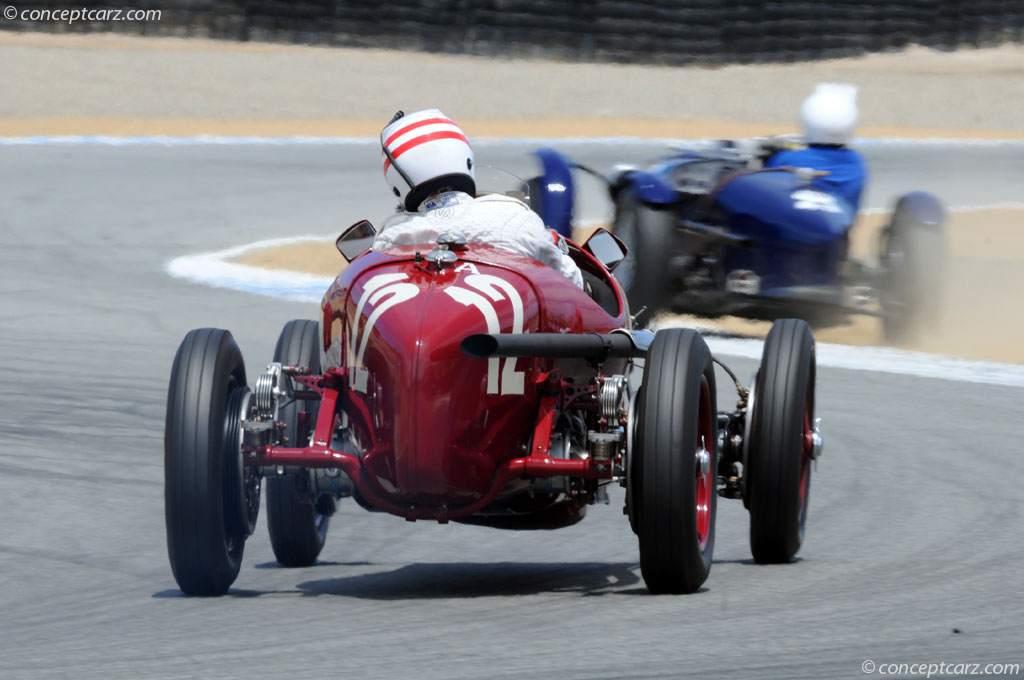
The Alfa Romeo Tipo B P3 was designed by Vittorio Jano and was Alfa Romeo's second monoposto (single-seater) racer, the first being the Tipo A of 1931. Four Tipo A's had been constructed and none have survived; the closest Tipo A in existence is a replica that now resides in the Alfa Romeo Museum.
The Tipo A had been powered by two six-cylinder engines and matted to two gearboxes and dual propeller shafts. Though much of the design had carried over from the Tipo A, the Tipo B was equipped with a single eight-cylinder engine and drive-train in an effort to reduce the weight of the vehicle. The Tipo B made its inaugural appearance on June 5th, 1932 at the Monza Grand Prix. It was equipped with an eight-cylinder engine similar to the one Jano had created for the road-going 8C 2300. There were differences from the double overhead camshaft unit, such as the engine's intake being mounted on the driver's left side. The engine capacity was larger due to an increase of stroke from 88 to 100 mm. Dual superchargers powered the front and rear testa fissa alloy blocks which resulted in nearly 200 horsepower. The single differential sat behind the three-speed gearbox. Power was sent to each rear wheels thanks to two propeller shafts designed in a triangular setup. These shafts ran beside the driver which allowed a lower sitting position and improved handling characteristics.
At Monza, the Tipo B proved its potential by emerging victorious. In the hands of Tazio Nuvolari and Rudolf Caracciola, the Tipo B dominated the season with wins at the French and German Grand Prix's, among others. Part of its success was its excellent power-to-weight ratio. The body was constructed of aluminum and mechanical drums were used to keep the racer in the driver's control.
The P3 was raced from 1932 through 1935 and provided many podium finishes for its drivers. In 1933 Alfa Romeo retired from racing and soon shifted the racing activities to Scuderia Ferrari. Ferrari's main driver was Tazio Nuvolari. Many of Tipo B cars were sold to privateers. Rule changes in 1934 meant the car was modified to accommodate the new regulations. One of the rules stated that the chassis was to be 33.5 inches wide, which meant the P3 was to be enlarged.
As the years progressed, the car began to show its age. The competition was coming from teams such as Mercedes and Auto Union. Jano and Ferrari worked on improving the car throughout the years. In 1935, Nuvolari's car was given a larger engine, now having a bore of 71mm and a stroke of 100mm. This resulted in a displacement size of 3165cc and horsepower in the 265 neighborhood. Cantilever rear springs were adapted to improve upon the vehicle's performance and handling. Later in the year, some of the Tipo B's were outfitted with hydraulic brakes and Dubonnet independent front suspension.
Nuvolari's most famous and remembered race came in 1935 at the German Grand Prix. His car was now outclassed by the more powerful Mercedes and Auto Union cars. At the end of the race, it was Nuvolari in his Scuderia Ferrari Tipo B outpacing the rest of the competition and finishing in a very impressive and memorable first place.
Near the close of the 1935 season, the engine was again enlarged, now displacing 3822cc and producing 330 horsepower. The chassis was new incorporating a rear transaxle and an independent rear suspension. It was now known as the Tipo C.
By Daniel Vaughan | Feb 2008
The Tipo A had been powered by two six-cylinder engines and matted to two gearboxes and dual propeller shafts. Though much of the design had carried over from the Tipo A, the Tipo B was equipped with a single eight-cylinder engine and drive-train in an effort to reduce the weight of the vehicle. The Tipo B made its inaugural appearance on June 5th, 1932 at the Monza Grand Prix. It was equipped with an eight-cylinder engine similar to the one Jano had created for the road-going 8C 2300. There were differences from the double overhead camshaft unit, such as the engine's intake being mounted on the driver's left side. The engine capacity was larger due to an increase of stroke from 88 to 100 mm. Dual superchargers powered the front and rear testa fissa alloy blocks which resulted in nearly 200 horsepower. The single differential sat behind the three-speed gearbox. Power was sent to each rear wheels thanks to two propeller shafts designed in a triangular setup. These shafts ran beside the driver which allowed a lower sitting position and improved handling characteristics.
At Monza, the Tipo B proved its potential by emerging victorious. In the hands of Tazio Nuvolari and Rudolf Caracciola, the Tipo B dominated the season with wins at the French and German Grand Prix's, among others. Part of its success was its excellent power-to-weight ratio. The body was constructed of aluminum and mechanical drums were used to keep the racer in the driver's control.
The P3 was raced from 1932 through 1935 and provided many podium finishes for its drivers. In 1933 Alfa Romeo retired from racing and soon shifted the racing activities to Scuderia Ferrari. Ferrari's main driver was Tazio Nuvolari. Many of Tipo B cars were sold to privateers. Rule changes in 1934 meant the car was modified to accommodate the new regulations. One of the rules stated that the chassis was to be 33.5 inches wide, which meant the P3 was to be enlarged.
As the years progressed, the car began to show its age. The competition was coming from teams such as Mercedes and Auto Union. Jano and Ferrari worked on improving the car throughout the years. In 1935, Nuvolari's car was given a larger engine, now having a bore of 71mm and a stroke of 100mm. This resulted in a displacement size of 3165cc and horsepower in the 265 neighborhood. Cantilever rear springs were adapted to improve upon the vehicle's performance and handling. Later in the year, some of the Tipo B's were outfitted with hydraulic brakes and Dubonnet independent front suspension.
Nuvolari's most famous and remembered race came in 1935 at the German Grand Prix. His car was now outclassed by the more powerful Mercedes and Auto Union cars. At the end of the race, it was Nuvolari in his Scuderia Ferrari Tipo B outpacing the rest of the competition and finishing in a very impressive and memorable first place.
Near the close of the 1935 season, the engine was again enlarged, now displacing 3822cc and producing 330 horsepower. The chassis was new incorporating a rear transaxle and an independent rear suspension. It was now known as the Tipo C.
By Daniel Vaughan | Feb 2008
- 1934 Alfa Romeo Tipo B P3 Menu
- Article
- Image gallery
- Valuation
- Specifications
- Profiles


1934 Alfa Romeo Tipo B P3 Vehicle Profiles

Recent Vehicle Additions


Performance and Specification Comparison
P3 Tipo B Specification Comparison by Year
Year
Production
Wheelbase
Engine
Prices
Related Automotive News

Kia Set To Debut One-Of-A-Kind Stinger And K900 At SEMA Built By DUB
Kia has teamed up with DUB to develop an aggressively styled K900 and a fierce Stinger GT built to the exacting standards of todays hottest athletes and musicians.
DUB took the already aggressive Stinger GT fastback sedan and made a series of menacing...

Cars and Courage: Iron Mike Rally Kicks off Pinehurst Concours Weekend
VILLAGE OF PINEHURST, N.C. (April 28, 2014) – The 2014 Pinehurst Concours dElegance weekend will begin in style with a display of cars and courage Friday morning as selected vintage autos and their owners will head to Fort Bragg to spend a day...

Land Rover Celebrates 65 Years Of Technology And Innovation
SIXTY-FIVE YEARS OF LAND ROVER
From our earliest days, the desire to create a vehicle that will tackle any terrain has made Land Rover famous around the world. Over the past 65 years, the Land Rover family has grown into the highly respected...

Keels & Wheels Concours d'Elegance
Nearly 12,000 people gathered on the lush grounds of Lakewood Yacht Club to get an up close look at some of the most pristine, classic automobiles and vintage wooden boats in the United States at the 17th Annual Keels %26 Wheels Concours dElegance. The...

Bentley Ready For Classic Thousand Mile Challenge
Iconic Bentley Blowers ready for great Mille Miglia adventure
Bentley Continental W12 and V8 models join historic cars in Italy
(Crewe, England %26 Brescia, Italy. 16 May, 2012) W.O. Bentleys gift for creating cars that combined the speed o...