|
|
|
|
|
|
|
|
|
|
|
|
|
|
|
|
|
|
|
|
|
|
1933 Packard 1005 Twelve news, pictures, and information
![]() | ![]() | View more photos Convertible Coupe |
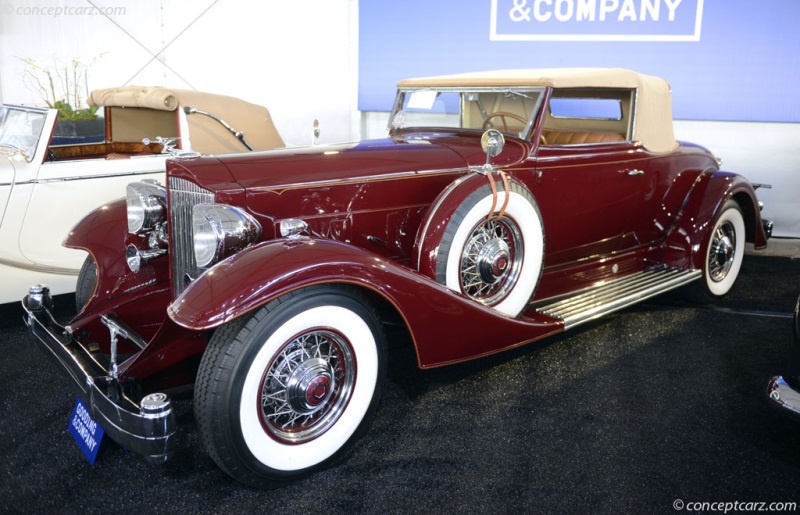
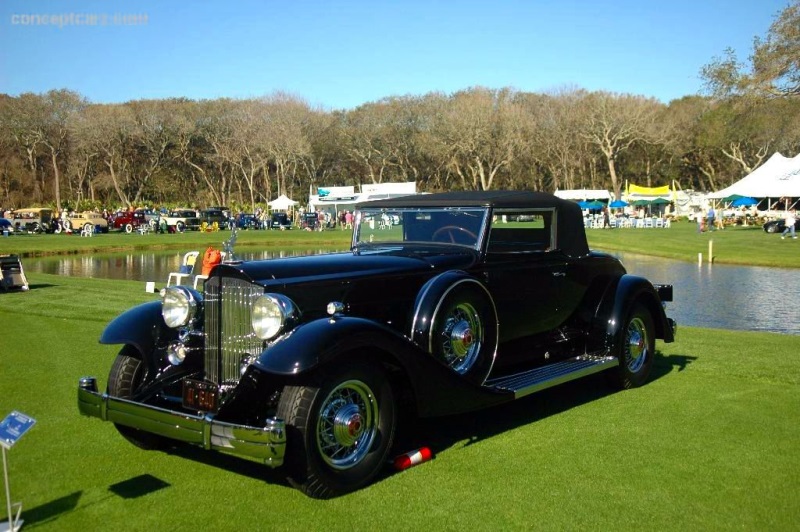
This was the second year for the new V-12, 445.5 cubic inch engine developing 160 horsepower. The factory claimed a sustained 100 mph was well within the new V-12's capabilities, but that was under test conditions; the 160-hp engine usually ran out of breath at about 90 mph. At 60 to 70 mph, it was whisper quiet and highly refined.
Lavine Restoration of Nappanee, IN, completed a 2002 restoration.
![]() | ![]() | View more photos Convertible Coupe |
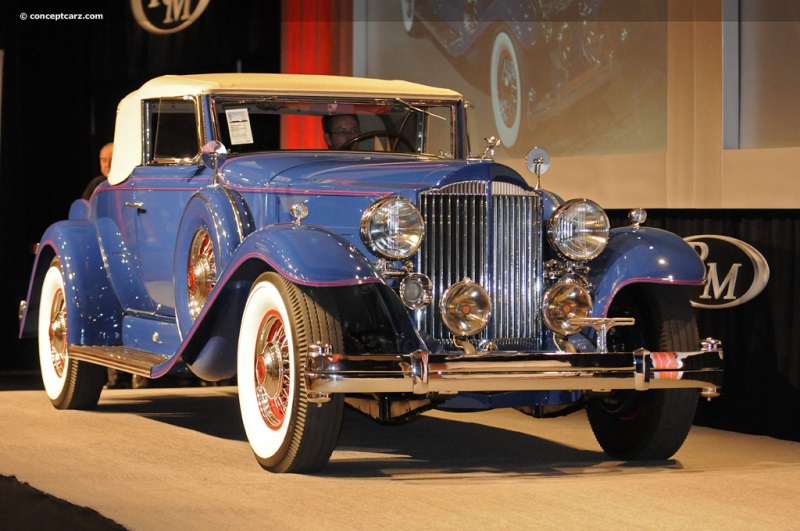
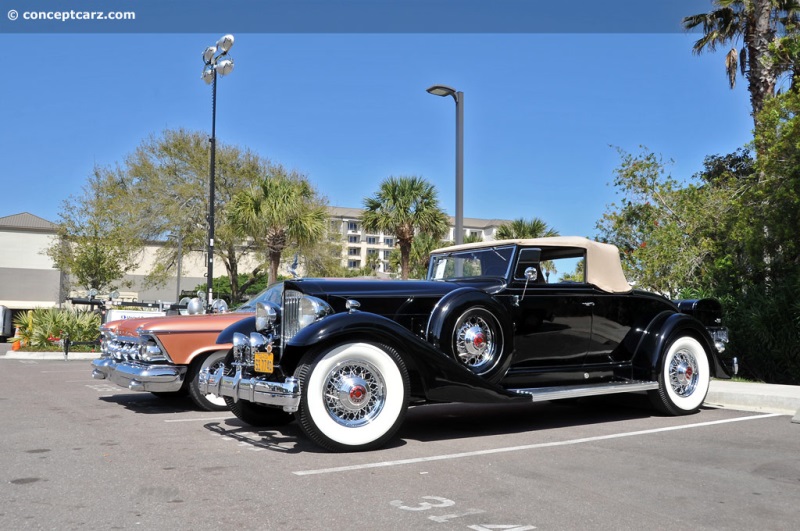
The 1005 series Packards were built on a 142-inch wheelbase chassis. Body styles that were offered included this handsome convertible coupe, which was sold new by the famed west coast Packard dealer Earl C. Anthony of Los Angeles. For 1933 only 520 total Packard Twelve's were sold. It's estimated 50 of those were convertible coupes; 16 survive today.
The 1933 V-12 coupe sold new for $4,500. It weighed 5,500 lbs with a 142 inch wheelbase. It came with a 445 cubic-inch engine generating 160 horsepower. There were 50 V-12 Convertible Coupe Roadsters produced in 1933. This car was delivered on January 27, 1933 in Los Angeles, California. It is one of 14 accounted for.
The Weber family purchased the car several years ago and are completing a total restoration of the car. It has been a winner at many concours events throughout the country.
![]() | ![]() | View more photos Convertible Coupe |
There was a major change in Packard styling and chassis design for 1933, which brought across-the-board usage of V-type radiators with thermostatic shutters and painted shells, skirted fenders and new controlled body ventilation (a concept similar to Fisher Body's 'No-Draft').
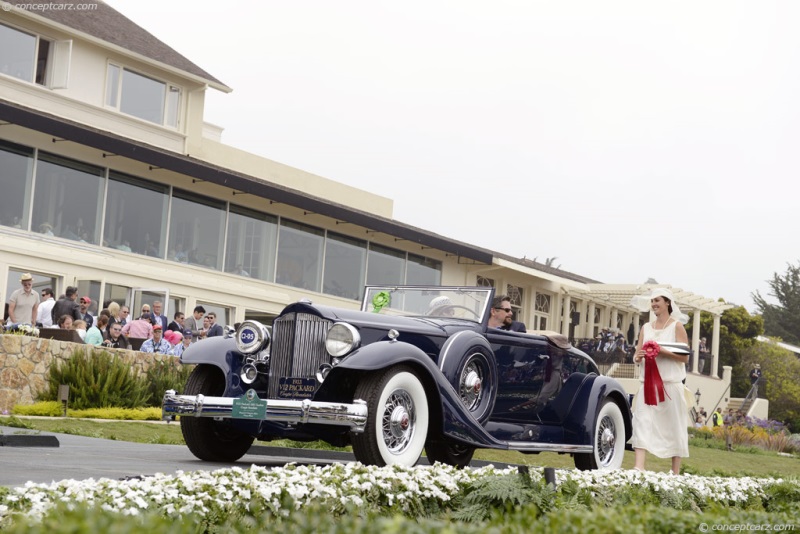
V-12 powered Convertibles such as this Series 1005 Custom Twelve were built from 1932 until 1939 and were typically catalogued as Convertible Roadsters. The massive engine underhood was a 445 cubic-inch L-head type that developed 160 horsepower.
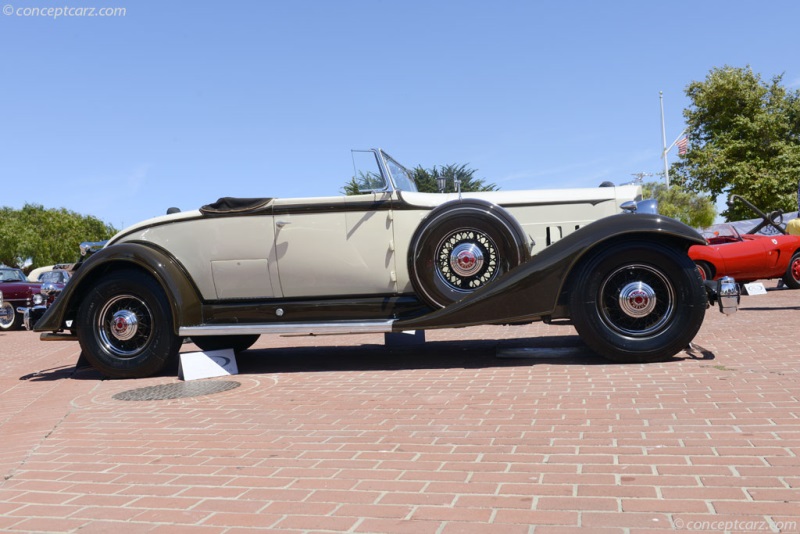
One of 50 similar 142-inch wheelbase Series 1005 models produced, the car displayed here weighed 5,160 pounds as shipped and had a base list price of $3,850. However, equipped with options, this example sold new for $4,000.
The serial number on original body structural wood reads '639-11,' suggesting it was first of the 50 eventually made. Final restoration of this car occurred in 2004-2005. Prior restoration (1984-1987) was limited to 80 percent of the vehicle. Sixteen 1933 Packard Twelve's in this style are registered by the Classic Car Club of America.
![]() | ![]() | Touring Chassis Num: 1005 14 Engine Num: 901317 |
The Tenth Series of Packards were available in two models, the 1005 that rode a wheelbase that measured 142-inches, and the 1006 which had a 147-inch wheelbase. Between these two versions, there were around 520 examples of the twelve-cylinder Tenth Series cars produced.
Differences between the 9th and 10th series cars were many, such as more rounded bodies due in part to their window glass being moved. This re-positioning made it flusher with the exterior surface and Packard claimed it reduced noise by as much as 50-percent.
There were 244 examples of the Model 1005 cars produced in 1933, and this example is a 1005 Twelve Touring and wears body number 630. It has seating for up to seven individuals which it can do through the use of jump seats that fold down from the rear surface of the front seats. Many believe that this may be the sole example of a Packard 1005 Touring car ever produced. It was the 14th example of the twelve-cylinder 1005 produced, and it was delivered to its first owner on March 25th of 1933. Since the late 1970s, it has had only two owners. It was shown at the Classic Car Club of America's Rocky Mountain Grand Classic in July of 1984 where it scored 98 points.
Near the close of 1984, it was sold to its current owner; it has not been shown outside the mid-west since that time. It has been shown at a few local concours events and at the Meadow Brook Concours.
It is painted in two-tone color scheme of navy blue and white paint. The undercarriage and wheels are light blue highlighted by identically toned pinstripes along the fenders and hood. There are whitewall tires and a Packard swan hood ornament.
There are four-wheel vacuum-assisted mechanical drum brakes, a three-speed synchromesh gearbox, and a 67-degree, L-head, V-12 engine that displaces 446 cubic-inches.
In 2009, this 1005 Twelve Touring Packard was offered for sale at the Gooding & Company auction held in Scottsdale, Arizona where it was estimated to sell for $350,000 - $450,000. The lot was sold for the sum of $275,000 including buyer's premium.
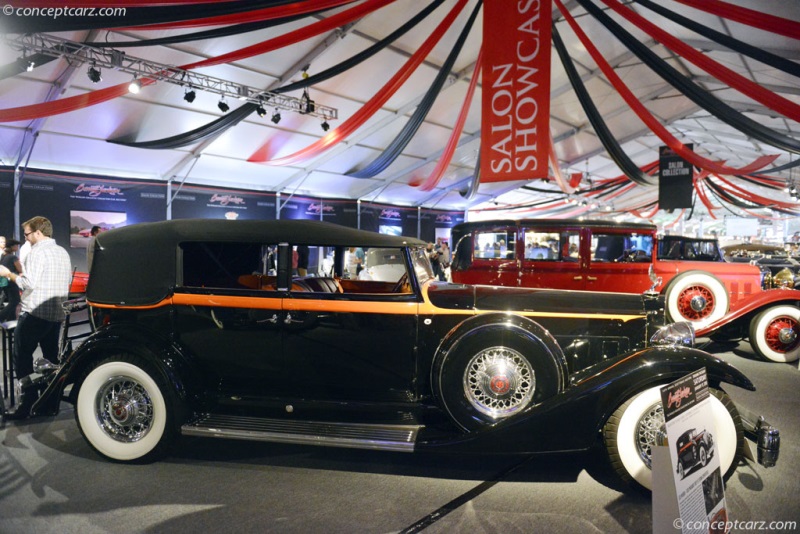
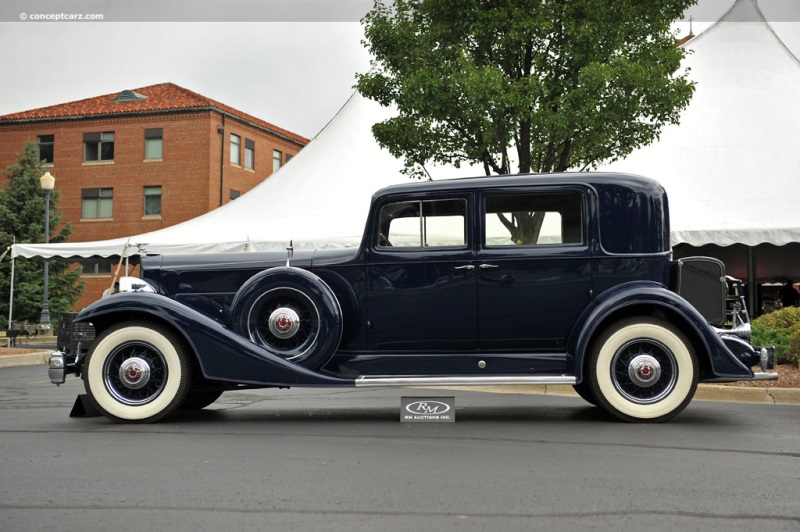
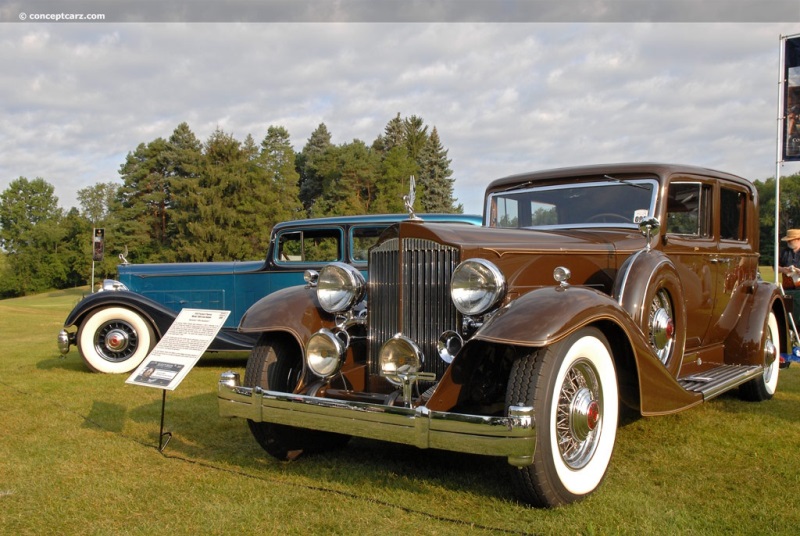
![]() | ![]() | View more photos Club Sedan |
![]() | ![]() | View more photos Sport Phaeton Chassis Num: 901241 Engine Num: 64113 |
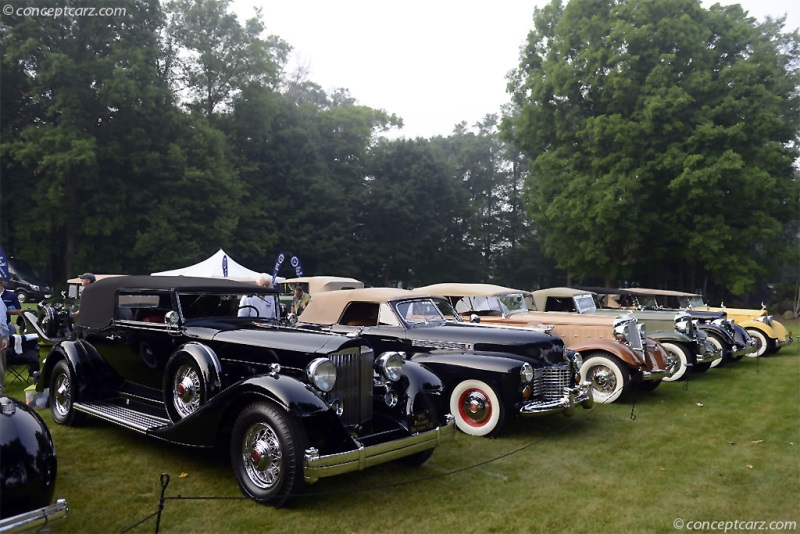
The Tenth Series Packard Twelve models rested along two basic wheelbase lengths, able to accommodate an array of factory-built and custom body designs. There were nine possible body styles available on the 142-inch Model 1005 chassis. The 147-inch Model 1006 was graced by three open and three closed designs by Dietrich, plus a number of custom bodies by Brunn and other coachbuilders of the era. Production was limited, totaling just 520 examples.
The Five-Passenger Sport Phaeton was priced from $4,090 and weighing nearly 5,200 pounds. It has an older restoration that remains highly presentable in modern time. There is a tan cloth top, a tan interior and a number of period accessories including a grille guard, dual Pilot-Ray lamps, dual side-mounted spare tires, dual spotlights and a rear-mounted luggage rack.
In 2009, this example was offered for sale at the Vintage Motor Cars of Meadow Brook presented by RM Auctions. It was estimated to sell for $300,000 - $400,000. As bidding came to a close, the lot failed to sell after reaching a high bid of $120,000.
![]() | ![]() | View more photos Roadster Coupe Chassis Num: 63937 |
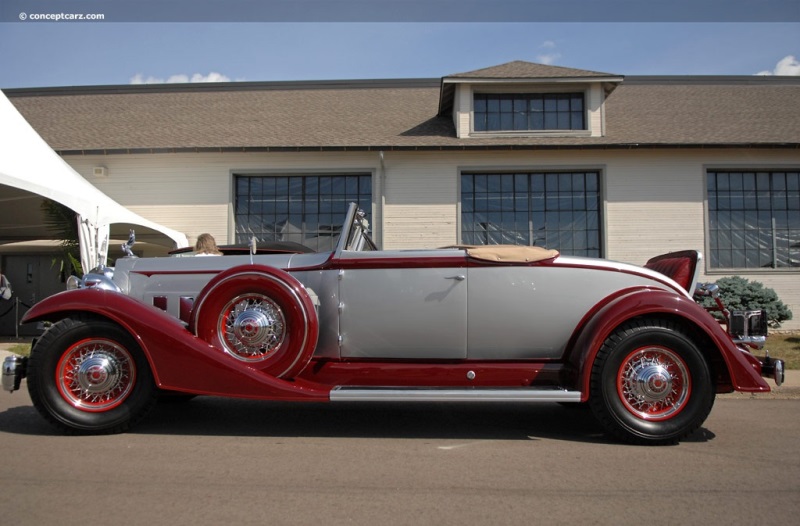
This example is a 2/4-Passenger Coupe Roadster. It is one of 50 original examples produced and one of 20 still believed to remain in existence. It is finished in a two-tone exterior finish in red and silver, and accented by a red beltline rib. It has an older restoration which is still presentable in modern time.
In 2009, this example was offered for sale at the Vintage Motor Cars of Meadow Brook presented by RM Auctions. It was estimated to sell for $275,000 - $325,000. As bidding came to a close, the lot failed to sell after reaching a high bid of $$225,000.
The Packard Twelve was produced from 1933 to 1939 with over 35,000 examples produced. It is considered by many to be one of the finest automobiles produced by Packard and one of the most significant creations of the classic car era. The long and flowing front hood hid a 445 cubic-inch side-valve twelve cylinder engine that was refined, powerful, smooth, and quiet.
The engine was originally destined for a front wheel drive project which eventually proved to have weaknesses. That and the anticipated development cost were too much to be practical so Packard decided to scrap the idea. Cadillac had introduced their 16-cylinder engine and other marques such as Pierce-Arrow were improving the performance of their offerings. Packard was feeling the pressure and decided to place the engine into the Deluxe Eight Chassis and dubbed it the Twin Six. The name was in honor of Packard's achievement fifteen years earlier when the introduced their first 12-cylinder engine. By 1933 the name was changed to Twelve to be inline with the rest of the Packard models.
Most of the Packard production Twelve's received factory bodies. Only a handful received custom coachwork by such greats as LeBaron and Dietrich.
In 1935 Packard introduced more horsepower and mechanical improvements. The suspension became more plush and comfortable while the steering became easier to operate. The cars were designed and built as one unit including the fenders, running boards, hood and body.
1936 the final year for 17 inch wire wheels and the double blade bumpers with hydraulic dampers.
For more information and related vehicles, click here© 1998-2009. All rights reserved. This material may not be published, broadcast, rewritten, or redistributed.
The engine was originally destined for a front wheel drive project which eventually proved to have weaknesses. That and the anticipated development cost were too much to be practical so Packard decided to scrap the idea. Cadillac had introduced their 16-cylinder engine and other marques such as Pierce-Arrow were improving the performance of their offerings. Packard was feeling the pressure and decided to place the engine into the Deluxe Eight Chassis and dubbed it the Twin Six. The name was in honor of Packard's achievement fifteen years earlier when the introduced their first 12-cylinder engine. By 1933 the name was changed to Twelve to be inline with the rest of the Packard models.
Most of the Packard production Twelve's received factory bodies. Only a handful received custom coachwork by such greats as LeBaron and Dietrich.
In 1935 Packard introduced more horsepower and mechanical improvements. The suspension became more plush and comfortable while the steering became easier to operate. The cars were designed and built as one unit including the fenders, running boards, hood and body.
1936 the final year for 17 inch wire wheels and the double blade bumpers with hydraulic dampers.
| Vehicle Spotlight |
![]() | ![]() | ![]() | ![]() | ![]() | ![]() |
![]() | ![]() | ![]() | ![]() | ![]() | ![]() |
![]() | ![]() | ![]() | ![]() | ![]() | ![]() |
| 1933 Packard models |
| Packard 1001 Standard Eight |
| Packard 1004 Super Eight |
| Packard 1006 Twelve |
| Packard Twelve |
| Packard: 1931-1940 |
| Similar Automakers |
| Packard History |
| Other models by Packard |
![]() |