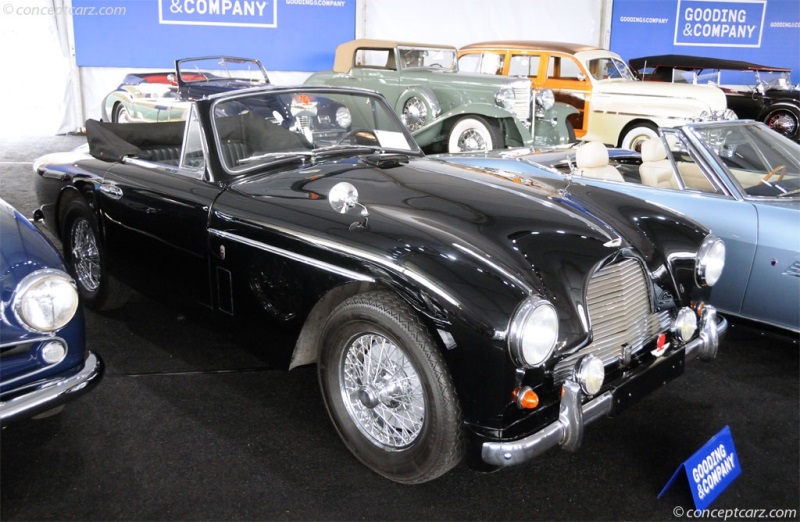
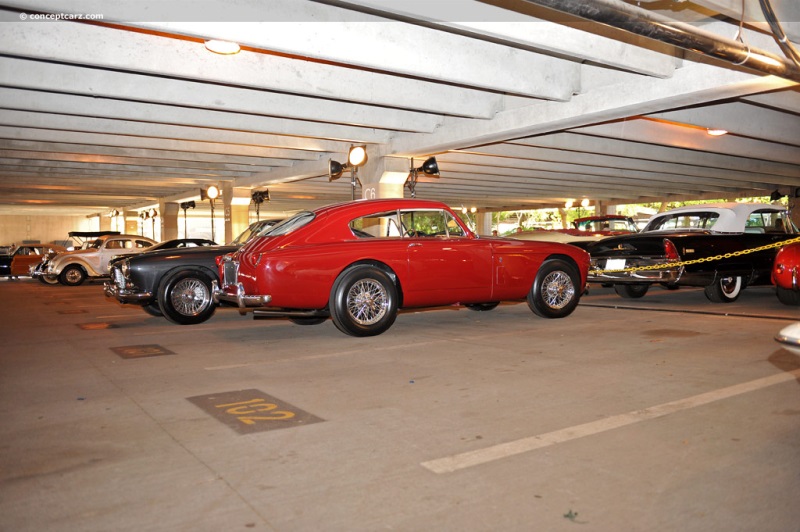
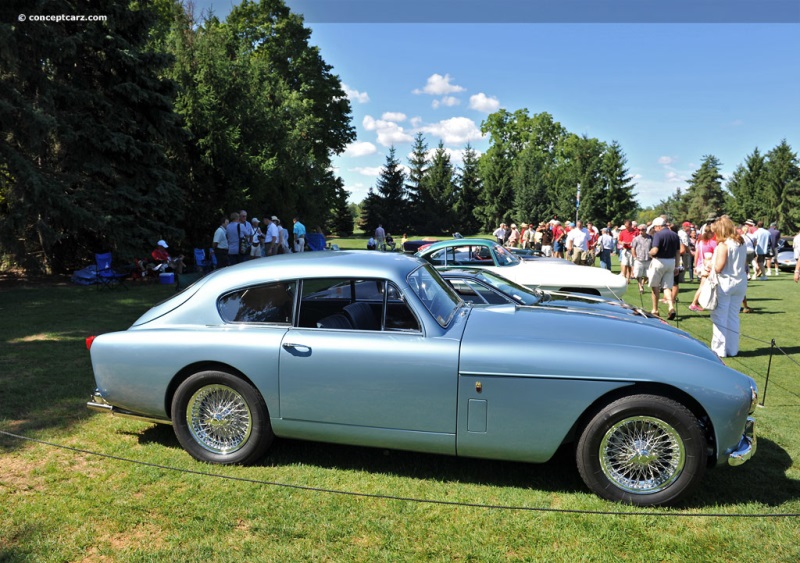
1957 Aston Martin DB 2/4 MKIII pictures and wallpaper 1957 Aston Martin DB 2/4 MKIII pictures and wallpaper 1957 Aston Martin DB 2/4 MKIII pictures and wallpaper 1957 Aston Martin DB 2/4 MKIII pictures and wallpaper
1957 Aston Martin DB 2/4 MKIII pictures and wallpaper 1957 Aston Martin DB 2/4 MKIII pictures and wallpaper
More Photographs    Interior Photos   Engine Photos   

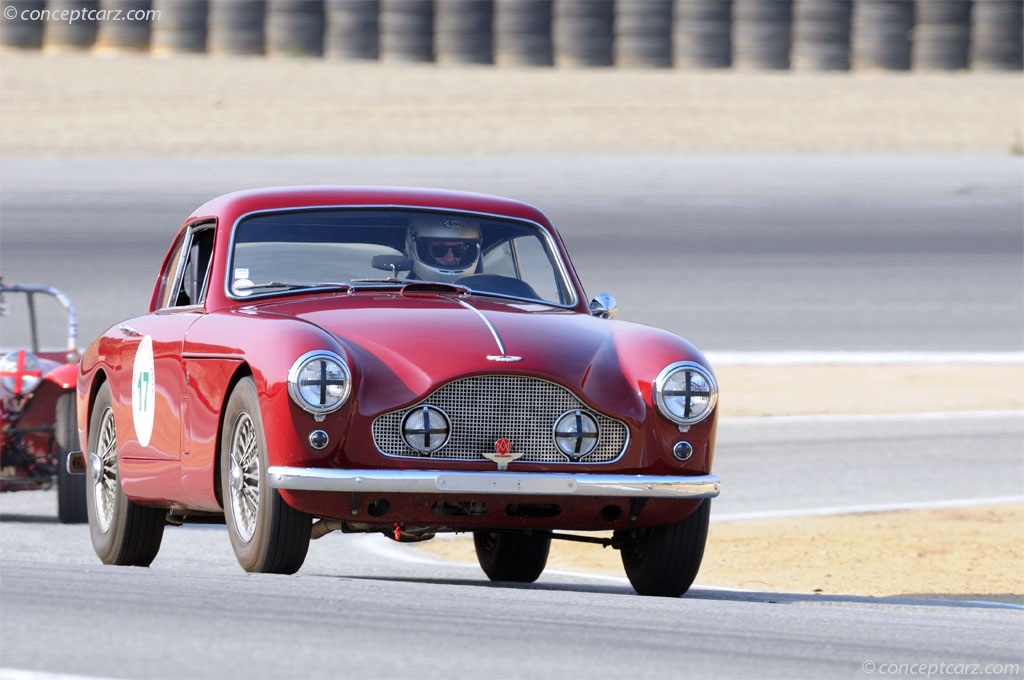
Production of the Mark III lasted just a shade over two years and actually overlapped the DB4 by seven months. Production of all variants during this time was 551 cars. The standard 3 litre (2922cc, twin SU carbs) engine fitted to the Mark III was designated as the DBA version and produced 162 bhp @5500 rpm.
View more photos
 
Aston Martin was founded in 1913 by Lionel Martin and Robert Bamford. The two had joined forces as Bamford & Martin the previous year to sell cars made by Singer from premises in Callow Street, London. In 1947, David Brown Limited bought the company. David Brown also acquired Lagonda that year, and both companies shared resources and workshops. In 1955, David Brown bought the Tickford coachbuilding company in Newport Pagnell, and that was the beginning of the classic series of cars bearing the initials 'DB'.

In 1957, Aston Martin introduced the final derivation of the DB2 series, the DB MK III. It would continue production until 1959 and amass a production total of 551 units. It was offered in Saloon or Convertible body styles and consisted of 4 seats. The base engine produced 162 horsepower, propelling the vehicle to a top speed of 120 mph.
The DB name came from the name David Brown (later Sir David Brown), an individual who had purchased the Aston Martin Company.
The DB series was built from 1950 through 1953 with only 411 examples being produced. Power was supplied by a W.O. Bentely designed Lagonda six-cylinder engine that was capable of producing 116 bhp and could propel the car to a top speed of 117 mph. The zero-to-sixty time was around 11.2 seconds. The Vantage series received 125 bhp.

The two-seater DB2's were available in two body styles, the coupe and drophead.

In 1953, the DB2/4 MK1 became available. This series featured a four seater, 2+2, saloon or drop head body style. The design went through minor changes with the most notable changes appearing in the front of the vehicle. The early versions of the vehicle featured a hatchback rear window.

The DB2/4 MK1's were originally powered by a 2.6 liter Vantage engine but was later replaced with a 3-liter, 140 bhp engine that was not only more powerful, it was heavier.

The MK1 series ended in 1955 with 565 examples being produced, 73 being dropheads.

The DB2/4 MK2 series began in 1995 and would continue until 1957. During this time frame, 199 examples were produced. There were two body styles available; a coupe and a convertible. Both had 2 doors and 4 seats. A hardtop style saloon was also available although less than 35 were produced.

Most MK2's were mechanically similar to the MK1's, however, later version received engine modifications that included larger valves and different cam shafts. The horsepower output was increased to 165.

In 1957, Aston Martin introduced the final derivation of the DB2 series, the DB MK III. It would continue production until 1959 and amass a production total of 551 units. It was offered in Saloon or Convertible body styles and consisted of 4 seats. The base engine produced 162 horsepower, propelling the vehicle to a top speed of 120 mph.
The first Aston Martin was built in 1913 by London Singer dealers Robert Bamford and Lionel Martin. It was comprised of a Coventry Simplex engine and an Isotta Fraschini chassis. They were later joined by Count Louis Zborowski, who provided finical backing and was an avid racer. Under the patronage of Augustus Bertelli, the legacy of Aston Martin continued to grow in motorsports throughout the years. Motorsports was expensive, and by 1925 the company had entered into receivership, a trend common to the company throughout its lifetime.

In 1926 the Aston Martin Motors Ltd. was incorporated with A.C. (Bert) Bertelli as one of the new directors. With the help of Bertelli, the company weathered the run years and the various financial backers. To many, Bertelli is the father of Aston Martin and some of the greatest pre-War era cars were created under his guidance. Their Ulster and 1.5-liter cars enjoyed much success including at the 24 Hours of LeMans.

A.C. Bertelli left Aston Martin in 1937, soon after the arrival of the new 2-liter car. This car was a shift in the way the company did business, as it was less sporty and marketed more towards civilized driving. In 1939 the company introduced a prototype designed by Claude Hill dubbed the Atom. It was comprised of a steel spaceframe chassis and given a four door sedan body. When gearbox manufacturer David Brown was given the opportunity to drive the Atom in 1947, he decided to buy the company.

The Atom was a slightly odd looking vehicle but possessed many modern features which would become the starting-point for many new models in the years to come. Aston Martins push-rod engines, however, were deemed inadequate by Mr. Brown. Rather than creating a new engine design he simply purchased Lagonda and the rights to produce the W.O. Bentley designed twin-cam six-cylinder engine. This engine would become the basis for Aston Martin engines in the years to come, and would give the company many podium finishes.

While negotiations were still in process with Lagonda, a small number of two-liter Aston Martins were created based on the Atom design. At the time, they were called 2-Liter Sports; in modern times they are commonly referred to as the DB1.

A six-cylinder Aston Martin racer made its racing debut at the first 24 Hours of LeMans in the post-War era. The production version was show in April of 1950 at the New York Auto Show. It was called the DB2 and powered by a 2.6-liter Lagonda six clothed in a two-door coupe body designed by Frank Freely. The design was well received by the public and it appeared as though financial stability would soon become part of the company's lineage. The small factory struggled to keep pace with the demand for the new coupe as more interest was created by the Works DB2s as they scored several important victories including first and second in class at LeMans in 1950.

The first fifty cars created had large grilles which were later removed. In 1951, the Vantage model was introduced which was an upgraded version of the DB2. The DB3 became the company's racing entrant while the DB2 was their road going model.

The two-seater DB2's first major update came in 1953 when it was given two rear seats and a name change to DB2/4. This, as was the DB2, was available in either fixed or drop head configuration. Several chassis were delivered to custom coachbuilders to be fitted with unique creations orchestrated by customers desires and demands. Among them were the 'Wacky' Arnolt commissioned Bertone Spiders which were very attractive and equally as popular.

Though meant for the road, the DB2/4 models were used by privateers in many various sporting events with much success. This inspired the Works to prepare three examples for the Rallye Monte Carlo in 1955. Their efforts were rewarded with a first in class and a Team Prize.

Another major revision occurred in 1956 with the introduction of the DB2/4 MKII featuring a three-liter version of the six-cylinder engine producing 140 horsepower. An even more powerful version was available, featuring a high-lift camshaft, larger valves, and 165 horsepower. Coachbuilders were still given the opportunity to create their versions of the car. The most memorable was a Touring created Spyder shown at the 1956 Earls Court show in London. Three additional orders were placed but never materialized. Nevertheless, this would be the start of a relationship between the British based Aston Martin Company and the Touring Coachbuilding firm, resulting in spectacular creations throughout the years.

The fourth and final update to the DB2/4 was the MKIII, also known as the DB MK III, introduced in 1957. The basic design of the prior DB cars was retained, as it had proven to be very popular and versatile. The most noticeable change was to the front which received a revised frontal region. The big changes occurred elsewhere, with the vehicles mechanical components, including the standard 162 horsepower engine and front disc brakes. Both of these changes greatly improved the vehicles performance and handling capabilities.

In 1958 the DB2 Series was replaced by the DB4 which were powered by a 3.7-liter version of the six-cylinder engine.

Photos grouped by event

Pebble Beach Concours d'Elegance

Ault Park Concours d'Elegance

2006 Blackhawk Collection

2005 PVGP Car Show

2005 Scarsdale Concours, New York
     

1957 Aston Martin DB 2/4 MKIII
Year1957
MakeAston Martin
ModelDB 2/4 MKIII
Engine LocationFront
Drive TypeRear Wheel
Body / ChassisAluminium
Production Years for Series1957 - 1960
Price$6,995.00
Weight2850 lbs | 1292.8 kg
Combined MPG0.00

Engine  
Engine ConfigurationI
Cylinders6
Solid valve lifters
Aspiration/InductionNormal
Displacement178.00 CU IN. | 2917.4 cc. | 2.9 L.
ValvetrainDOHC
Horsepower162.00 @ 5500.00 RPM
Torque180.00 Ft-Lbs (244.1 NM) @ 4000.00 RPM
Compression Ratio8.16:1
Main Bearings4
Engine Electronics12-Volt electrical system
Fuel TypeGasoline - Petrol
Fuel FeedCarburetor
2 SU Variable-Jet carburetors
BlockCast-iron

Standard Transmission
Gears4
TransmissionManual
with overdrive
Final Drive3.77:1


View more photographs
View Specifications
Similar Automakers
Add Review
Other models by Aston Martin
AddThis Social Bookmark Button

Related Articles and Event Coverage
Pebble Beach Concours d'Elegance
Ault Park Concours d'Elegance
2006 Blackhawk Collection
2005 PVGP Car Show
2005 Scarsdale Concours, New York

1957 Aston Martin models
DBR2
DBR4

Vehicle Spotlight
Pininfarina B0 ConceptFord Kuga Show CarVenturi Volage Concept
Nissan Nuvu EV ConceptAudi A1 Sportback ConceptAudi A4 Concept e
Renault Megane TrophyRenault Z.E. ConceptRenault Mégane Coupé
BMW X1 Concept2009 Lotus Exige Cup 260Lamborghini Estoque Concept
Bentley Arnage Final SeriesLancia Ypsilon VERSUS ConceptVolkswagen Pickup Concept
Peugeot Prologue ConceptSpyker C8 Laviolette LM85Peugeot 908 HY
Citroen Hypnos Hybrid ConceptRenault Ondelios ConceptMercedes-Benz ConceptFASCINATION
Chevrolet Orlando ConceptMazda Kiyora ConceptMazda Kazamai Concept