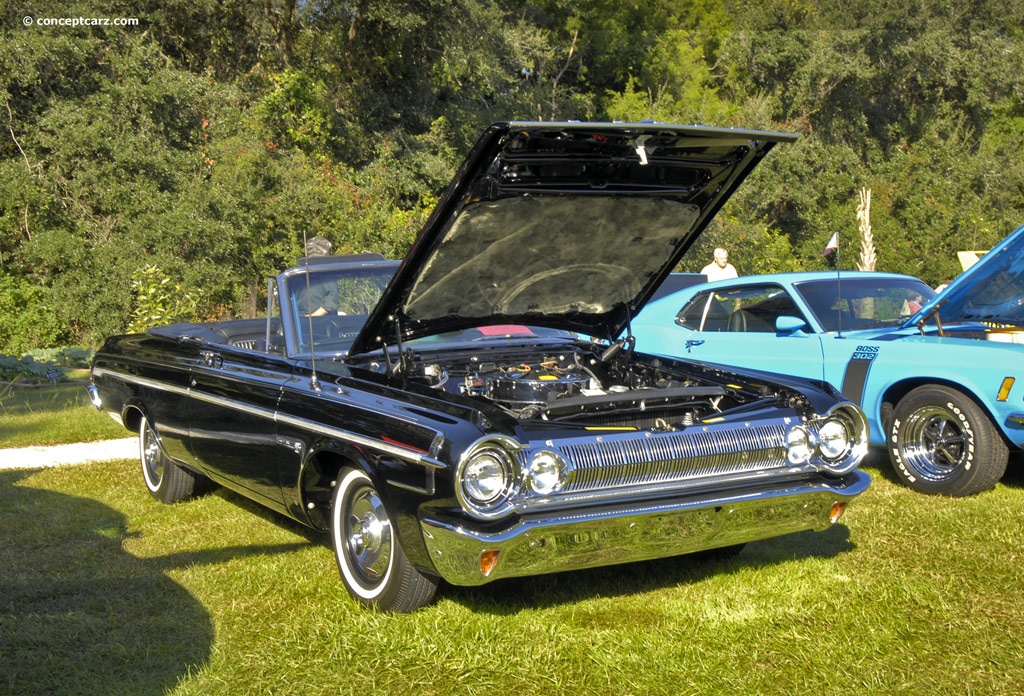
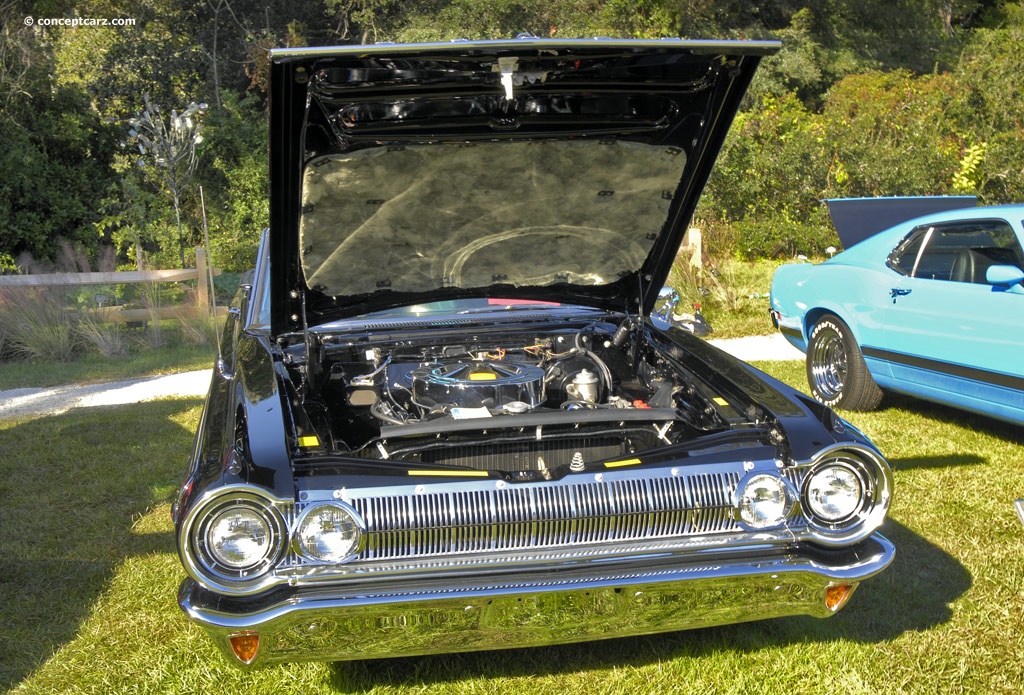
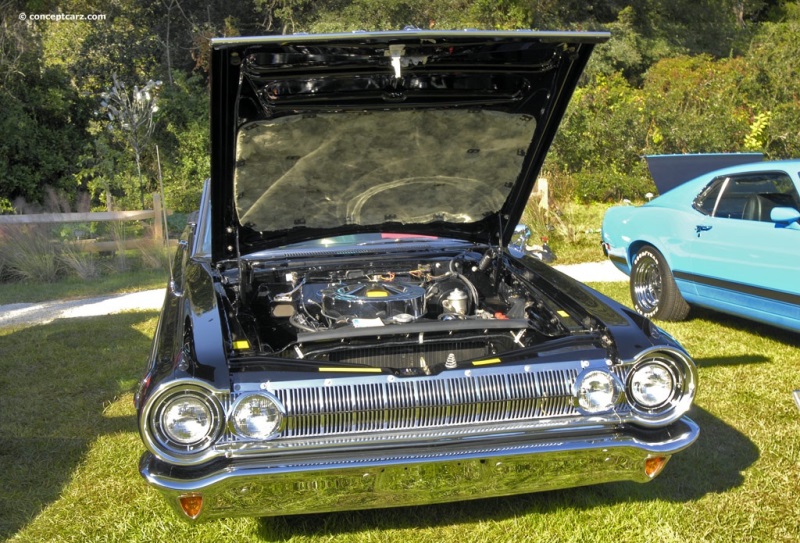
1963 Polara |
1964 Dodge Polara news, pictures, and information | ||
| Tweet | ||
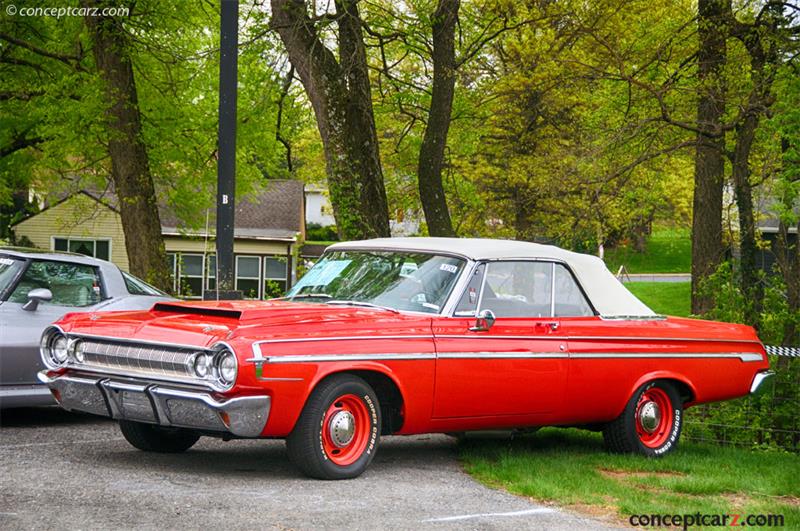
![]() | ![]() | ![]() | Convertible |
The name Dodge Polara first appeared in 1960 and was used on Dodge's full-size vehicle. The name would continue to adorned Dodge vehicles in various forms unti 1973.
When introduced, the Dodge Polara's design was similar to vehicles of the prior years, continuing the 'Forward Look' design of Virgil Exner. In the front was a small grille accompanied by a large front bumper. In the rear were taillights termed 'jet pods'. The lights were larger than what they needed to be with part of their purpose to aid in the futuristic look of the vehicle. Tail fins were part of the ensemble. There were to tail lights with the lower light built into the rear bumper. Chrome and trim were used extensively on the vehicles exterior. On the interior the vehicle was adorned in plush fabrics, appropriate since this was Dodge's near top-of-the-line vehicle.
The jet influenced tail lights, futuristic looking tail-fins, extensive use of chrome, and 'Forward Look' design of the Dodge Polara was not enough to stimulate sales in 1960. The Matador was partly responsible for the slow sales so in the following year, the Matador was no longer offered for sale. The Polara was given styling updates and various changes but this did little to increase sales as many consumers were more interested in the conventionally style, mid-sized Dodge Dart.
A few of the changes that occurred on the Dodge Polara in 1961 were enlarging the cars tail fins and reversing their direction, meaning they grew larger as they crept towards the rear window. In the front the larger bumper treatments were replaced in favor of a more simple design. The concave grille from the Dodge Dart could now be found on the Dodge Polara. The result of the work of Exner's styling department was a unique design and something that was different from anything else on American roads at the time. Unfortunately, the American public did not favor the design and sales were dismal, with only 14,032 units produced. This was one of the lowest figures for the Dodge Marque since the early 1910's.
Change was obviously needed. For 1962 the Polara was moved to a smaller platform, now just 116 inches. The change had come as a last-minute decision in an effort to mirror the moves Chevrolet were making with their designs. Chevrolet was downsizing all of their products. Dodge designers were forced to revise their designs to more compact configurations. When Chevrolet rolled out their new products in 1962, the Chrysler Corporation were surprised to see that what was thought to be a down-size of all their products was merely the inclusion of smaller products to their mid and full-size line-up. Chevrolet had their full-size Biscayne, Bel Air, and Impala. The Chevy II was now their compact vehicle. As a result Dodge and Chrysler offered smaller cars than their competitors in 1962. The public and press were not impressed with the new designs, finding them awkward. Sales remained low.
The Dodge Polara 500 was introduced in 1962 as a two-door hardtop coupe. A few months later a convertible and four-door hardtop version was added.
It took a few years to recover but by 1965 the Dodge Polara was again sitting atop of a full-size platform and offered in a variety of body styles including sedans, hardtops, station wagons, and more. From 1965 through 1968 the vehicle was given yearly updates to its square-edged styling design. The square design of the Polara was a major departure of the rounded design of just a few years prior. In the front were dual headlights on each side of the vehicle. The dual headlight design was integrated into the grill and positioned above the chrome bumper.
Revisions to the interior occurred in 1966 with the inclusion of a telescopic and tilt steering wheel and four-passenger seat belts. Front shoulder belts were offered as optional equipment. The automatic transmission was given a reverse lockout button. The door handles were moved to the front edge of the armrests in an effort to improve safety.
The top-of-the-line Polara was the Monaco two-door hardtop in 1965 and the following year it became its own model. When it became its own model it was offered in a variety of body styles. The Monaco of 1966 was very similar to the Polara. The rear tail-lights gave the greatest clue to the vehicles differences. The Monaco had full-length tail lights which extended the entire length of the trunk area. The Polara's taillights were much smaller.
In 1966 both the Monaco and the Polar grew by six inches. Disc brakes were available on all full-size Dodge vehicles. Station wagons were given disc brakes as standard equipment.
In 1969 the Chrysler line-up received updating with the designs becoming more round. This was called the 'Fuselage Look.' There were few changes for the Polara from 1969 until its demise in 1973.
The name 'Polara' resurfaced in 1977 in Brazil where it was used on re-badged versions of Chrysler Avenger. Production continued in this region until 1981.
By Daniel Vaughan | Dec 2006
When introduced, the Dodge Polara's design was similar to vehicles of the prior years, continuing the 'Forward Look' design of Virgil Exner. In the front was a small grille accompanied by a large front bumper. In the rear were taillights termed 'jet pods'. The lights were larger than what they needed to be with part of their purpose to aid in the futuristic look of the vehicle. Tail fins were part of the ensemble. There were to tail lights with the lower light built into the rear bumper. Chrome and trim were used extensively on the vehicles exterior. On the interior the vehicle was adorned in plush fabrics, appropriate since this was Dodge's near top-of-the-line vehicle.
The jet influenced tail lights, futuristic looking tail-fins, extensive use of chrome, and 'Forward Look' design of the Dodge Polara was not enough to stimulate sales in 1960. The Matador was partly responsible for the slow sales so in the following year, the Matador was no longer offered for sale. The Polara was given styling updates and various changes but this did little to increase sales as many consumers were more interested in the conventionally style, mid-sized Dodge Dart.
A few of the changes that occurred on the Dodge Polara in 1961 were enlarging the cars tail fins and reversing their direction, meaning they grew larger as they crept towards the rear window. In the front the larger bumper treatments were replaced in favor of a more simple design. The concave grille from the Dodge Dart could now be found on the Dodge Polara. The result of the work of Exner's styling department was a unique design and something that was different from anything else on American roads at the time. Unfortunately, the American public did not favor the design and sales were dismal, with only 14,032 units produced. This was one of the lowest figures for the Dodge Marque since the early 1910's.
Change was obviously needed. For 1962 the Polara was moved to a smaller platform, now just 116 inches. The change had come as a last-minute decision in an effort to mirror the moves Chevrolet were making with their designs. Chevrolet was downsizing all of their products. Dodge designers were forced to revise their designs to more compact configurations. When Chevrolet rolled out their new products in 1962, the Chrysler Corporation were surprised to see that what was thought to be a down-size of all their products was merely the inclusion of smaller products to their mid and full-size line-up. Chevrolet had their full-size Biscayne, Bel Air, and Impala. The Chevy II was now their compact vehicle. As a result Dodge and Chrysler offered smaller cars than their competitors in 1962. The public and press were not impressed with the new designs, finding them awkward. Sales remained low.
The Dodge Polara 500 was introduced in 1962 as a two-door hardtop coupe. A few months later a convertible and four-door hardtop version was added.
It took a few years to recover but by 1965 the Dodge Polara was again sitting atop of a full-size platform and offered in a variety of body styles including sedans, hardtops, station wagons, and more. From 1965 through 1968 the vehicle was given yearly updates to its square-edged styling design. The square design of the Polara was a major departure of the rounded design of just a few years prior. In the front were dual headlights on each side of the vehicle. The dual headlight design was integrated into the grill and positioned above the chrome bumper.
Revisions to the interior occurred in 1966 with the inclusion of a telescopic and tilt steering wheel and four-passenger seat belts. Front shoulder belts were offered as optional equipment. The automatic transmission was given a reverse lockout button. The door handles were moved to the front edge of the armrests in an effort to improve safety.
The top-of-the-line Polara was the Monaco two-door hardtop in 1965 and the following year it became its own model. When it became its own model it was offered in a variety of body styles. The Monaco of 1966 was very similar to the Polara. The rear tail-lights gave the greatest clue to the vehicles differences. The Monaco had full-length tail lights which extended the entire length of the trunk area. The Polara's taillights were much smaller.
In 1966 both the Monaco and the Polar grew by six inches. Disc brakes were available on all full-size Dodge vehicles. Station wagons were given disc brakes as standard equipment.
In 1969 the Chrysler line-up received updating with the designs becoming more round. This was called the 'Fuselage Look.' There were few changes for the Polara from 1969 until its demise in 1973.
The name 'Polara' resurfaced in 1977 in Brazil where it was used on re-badged versions of Chrysler Avenger. Production continued in this region until 1981.
By Daniel Vaughan | Dec 2006
| The Mecum Marathon In Kissimmee Sets New Record As World's Largest | |
![]() | Unprecedented 10-day Auction Goes Where No Other Auction Has Ever Gone Before Mecum Auctions' record-setting 10-day auction, held Jan. 18-27, exceeded all expectations transforming more than 100 acres of land at Osceola Heritage Park in Kissimmee, Fla., into the nation's collector car epicenter. A total of 3,337 lots filled every building and 15 acres of tents with a total of 2,610 cars crossing the auction block and a huge selection of Road Art and memorabilia. With 1,811 vehicles sol...[Read more...] |
| Barrett-Jackson Generates Nearly $109 Million In Sales | |
![]() | • Sets Record Attendance At The 42nd Annual Scottsdale Auction • Batmobile sells for $4.62 million dollars to a lifelong fan to worldwide audience; marks second-highest single-car sale at Barrett-Jackson •1,343 cars sold •$108,766,069 gross sales – A 17% increase over 2012 •300,000 in attendance •Charity cars – 21 total for $5,005,000 Scottsdale, Ariz. – Jan. 22, 2013 – Barrett-Jackson Auction Company, The World's Greatest Collector Car Auctions™, generated nearly $1...[Read more...] |
| Steve McQueen Chevrolet Styleline Leads Exciting List of Celebrity Rides At Auctions America's Ford Lauderdale Sale | |
![]() | • Auctions America kicks off its 2013 calendar, March 22 – 24, 2013 in Fort Lauderdale, Florida • Regarded as South Florida's premier collector car auction, multi-day sale expected to feature more than 550 quality collector cars • Star attraction: 1951 Chevrolet Styleline DeLuxe Convertible formerly owned by Steve McQueen to be offered at no reserve • Additional highlights include a diverse assortment of 1950s convertibles from 'The Gauthier Collection', 1967 Dodge Coronet WO23 Hemi Super Sto...[Read more...] |
| Sold! Barrett-Jackson's 5000 Series Generates More Than $29.2 Million In Scottsdale | |
![]() | Original 1966 TV Batmobile Sells for $4.62 Million at The World's Greatest Collector Car Auctions™ and New World Records are Set January 19, 2013 •LOT #5037 The Original Batmobile is the highest selling car at the company's annual Scottsdale Auction •LOT #5019 1947 Talbot-Lago T-26 Grand Sport sets a new world record for the model •LOT #5034 1956 Chrysler Diablo Concept Convertible sets a new world record for Chrysler concept cars Scottsdale, Ariz. (Jan. 20, 2013) – Barr...[Read more...] |
| Barrett-Jackson Breaks Sales And Attendance Records At Its Spectacular 5th Annual Las Vegas Auction | |
![]() | The World's Greatest Collector Car Auctions™ Brings Together Auto Enthusiasts from Near and Far Barrett-Jackson, The World's Greatest Collector Car Auctions™, announced today that it generated more than $23 million in sales of rare, high-end collectible vehicles, exotics, customs, classics and Shelbys during its 5th annual Las Vegas auction. The auction company increased its overall hammer average from 2011, proving that the car market is stronger than ever. Automobilia sales reached m...[Read more...] |
1964
Dodge
models |
| Dodge 330 Lightweight Superstock |
| Dodge Dart | 1964 Dodge Concepts |
| Dodge Hemi Charger Concept |
| Similar Automakers | |
| Cadillac | Chevrolet |
| Chrysler | Ford |
| GMC | Hummer |
| Jeep | Lincoln |
| Mercury | Pontiac |
| Saturn | |
| Dodge: 1961-1970 |
| Similar Automakers |
| Dodge History |
| Other models by Dodge |
| ||||||||||||||||||||||||||||||||||||||||||||
1963 Polara |


1963 Polara


1964