1981 Ferrari 400i news, pictures, and information | ||
| Tweet | ||
![]() | Coupe Chassis Num: 35097 | |
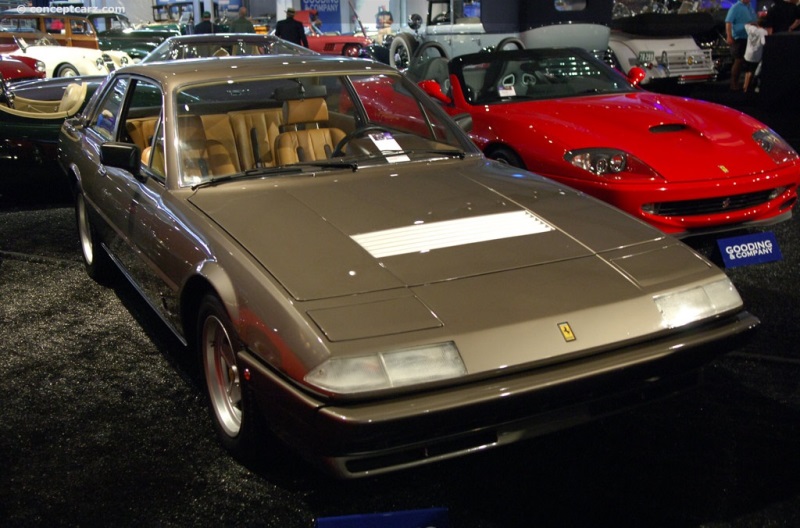
| Sold for $52,800 at 2007 Gooding & Company. Sold for $30,250 at 2009 RM Auctions. | ||
In 2007 it was brought to the Gooding & Company auction held in Pebble Beach, CA where it was estimated to sell for $30,000 - $40,000 and offered without reserve. The lot surpassed those estimates, settling at $52,800 including buyer's premium.
By Daniel Vaughan | Apr 2008
The 400 was Ferrari's first machine to stray from the company's racing roots. Sure, it had sharp Pininfarina styling and a thirsty V12. But the 400 also had four seats and, most significantly, an available automatic transmission.
Today, with the vast majority of cars sold being supplied with automatics, that little detail seems unimportant. Ferrari, though, was one of the most successful race car builders of all time. Its street cars exuded track-refined engineering, and they were all devastatingly fast and steadfastly hardwired to the human in the driver's seat. An automatic transmission signaled a disruption in that philosophy of car building. A transmission that shifts for you, especially when three other people are in the car, creates a great distance between mankind and machine.
At least the logic behind Ferrari's decision to introduce its auto was clear: Americans loved automatic transmissions. Sure enough, there's proof that we still do. Ferrari saw a market they were missing in the GT world, and decided to go ahead and create a Gran Turismo that was more about gulping down the miles in high fashion than submersing the driver in total mechanical involvement.
The automatic used in these cars was a GM Turbo-Hydramatic. If that sounds familiar, it's because the same tranny was used in familiar greats by Jaguar, Cadillac, and Rolls-Royce. What do those three companies have in common with Ferrari? Nothing. Price, maybe, but surely no driving characteristics were ever shared between the brands. This meant that the auto was mismatched to the 400's V12. It was a great, smooth transmission, but it was lazy and luxurious, not quick and concise.
For the enthusiasts, a proper gearshift was still available. It was a 5-speed, and it allowed the pilot to harness the V12 with finesse. But the success of the auto proved something about Ferrari's wealthy clientele, many of whom were clearly more concerned with their image than with a Ferrari's phenomenal road manners.
The 400's engine, at least, was thoroughly Ferrari. It was based on the Daytona's excellent powerhouse, and made about 340hp out of 4.4 liters when first used in the car. It had twin overhead cams, and, beginning in 1979, fuel injection. The 'i' in 400i stood for injection, a feature that replaced the original 400's carburetors and followed through to the updated 412 model that carried much of the original 400's styling and character up until 1989.
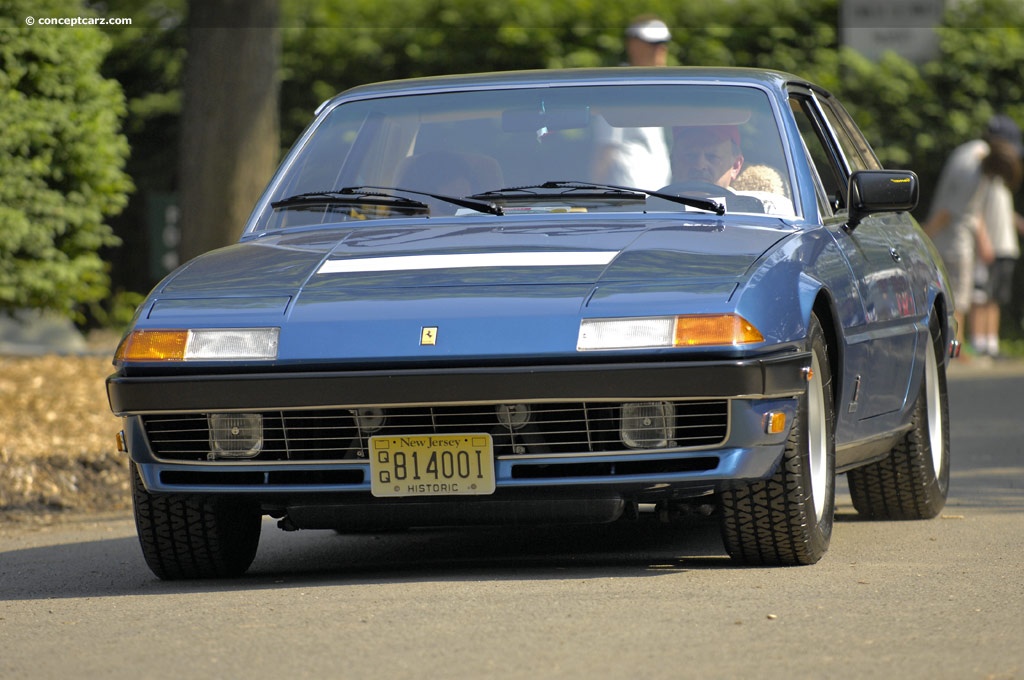
Crisply styled by Pininfarina, the 400 looked the part of a proper Gran Turismo. It was comfortable, fast, and could handle four people with effortless ease. Was it really a Ferrari, though? Regardless of the controversy behind it, the 400 was a good car that added another type of vehicle to Ferrari's repertoire.
The influences of the 400 can be seen in some modern Ferraris, notably the 456 and 612, both of which have sold successfully in the United States. Ferrari used the 400 to show that it could build more than temperamental, racy machines for driving die-hards. It proved that the storied company could also make a brilliant GT.
Sources Used:
Wilson, Quentin. The Ultimate Classic Car Book. First. London: Dorling Kindersley Limited, 1995. By Evan Acuña
Today, with the vast majority of cars sold being supplied with automatics, that little detail seems unimportant. Ferrari, though, was one of the most successful race car builders of all time. Its street cars exuded track-refined engineering, and they were all devastatingly fast and steadfastly hardwired to the human in the driver's seat. An automatic transmission signaled a disruption in that philosophy of car building. A transmission that shifts for you, especially when three other people are in the car, creates a great distance between mankind and machine.
At least the logic behind Ferrari's decision to introduce its auto was clear: Americans loved automatic transmissions. Sure enough, there's proof that we still do. Ferrari saw a market they were missing in the GT world, and decided to go ahead and create a Gran Turismo that was more about gulping down the miles in high fashion than submersing the driver in total mechanical involvement.
The automatic used in these cars was a GM Turbo-Hydramatic. If that sounds familiar, it's because the same tranny was used in familiar greats by Jaguar, Cadillac, and Rolls-Royce. What do those three companies have in common with Ferrari? Nothing. Price, maybe, but surely no driving characteristics were ever shared between the brands. This meant that the auto was mismatched to the 400's V12. It was a great, smooth transmission, but it was lazy and luxurious, not quick and concise.
For the enthusiasts, a proper gearshift was still available. It was a 5-speed, and it allowed the pilot to harness the V12 with finesse. But the success of the auto proved something about Ferrari's wealthy clientele, many of whom were clearly more concerned with their image than with a Ferrari's phenomenal road manners.
The 400's engine, at least, was thoroughly Ferrari. It was based on the Daytona's excellent powerhouse, and made about 340hp out of 4.4 liters when first used in the car. It had twin overhead cams, and, beginning in 1979, fuel injection. The 'i' in 400i stood for injection, a feature that replaced the original 400's carburetors and followed through to the updated 412 model that carried much of the original 400's styling and character up until 1989.
Crisply styled by Pininfarina, the 400 looked the part of a proper Gran Turismo. It was comfortable, fast, and could handle four people with effortless ease. Was it really a Ferrari, though? Regardless of the controversy behind it, the 400 was a good car that added another type of vehicle to Ferrari's repertoire.
The influences of the 400 can be seen in some modern Ferraris, notably the 456 and 612, both of which have sold successfully in the United States. Ferrari used the 400 to show that it could build more than temperamental, racy machines for driving die-hards. It proved that the storied company could also make a brilliant GT.
Sources Used:
Wilson, Quentin. The Ultimate Classic Car Book. First. London: Dorling Kindersley Limited, 1995. By Evan Acuña
Considered to be the lesser-known front-engined 2+2 coupes, the Ferrari 400 and 412 began production in 1976.
First introduced in 1976, the Ferrari 400i lasted until 1984. A total of 507 of the Ferrari 400i were produced and introduced at the Paris Show in 1972.
The body style was coupe and had a 4.8 L FI V12 engine.
At first, the chisel-edged Pininfarina shape was showcased as the 365 GT4 2+2 with a four-cam 4.4-litre V12 with a five-speed manual gearbox only. A short lived variant, the 365 was a 150 mph 4-seater that was replaced in 1976 by the 400GT.
In 1979 the 400i came with Bosch injection to enhance smoothness though it robbed the V12 of 30 bhp. The Bosch K-Jetronic fuel injection replaced the carburetors on the 400. The emissions were much improved but the power was down substantially.
1985 introduced the 412 the last of the 400 line and considered to be the best model lasted until 1989. Improved with an increase in displacement to 4943 cc, the newest 400, now came with ABS.
The most civilized Ferrari of its generation, they were the first models to offer automatic transmission. Introduced in 1976 at the Paris Motor Show, the 400 Automatic (or 400A) offered a 3-speed unit from General Motors.
The engine was based on the Daytona, was a 4.8 L (4823 cc) V12 that was capable of producing 340 hp. It carried the traditional GT car layout with driving rear wheels mounted in front.
Only 147 models were five-speed manuals which showed the direction that the market was heading.By Jessica Donaldson
First introduced in 1976, the Ferrari 400i lasted until 1984. A total of 507 of the Ferrari 400i were produced and introduced at the Paris Show in 1972.
The body style was coupe and had a 4.8 L FI V12 engine.
At first, the chisel-edged Pininfarina shape was showcased as the 365 GT4 2+2 with a four-cam 4.4-litre V12 with a five-speed manual gearbox only. A short lived variant, the 365 was a 150 mph 4-seater that was replaced in 1976 by the 400GT.
In 1979 the 400i came with Bosch injection to enhance smoothness though it robbed the V12 of 30 bhp. The Bosch K-Jetronic fuel injection replaced the carburetors on the 400. The emissions were much improved but the power was down substantially.
1985 introduced the 412 the last of the 400 line and considered to be the best model lasted until 1989. Improved with an increase in displacement to 4943 cc, the newest 400, now came with ABS.
The most civilized Ferrari of its generation, they were the first models to offer automatic transmission. Introduced in 1976 at the Paris Motor Show, the 400 Automatic (or 400A) offered a 3-speed unit from General Motors.
The engine was based on the Daytona, was a 4.8 L (4823 cc) V12 that was capable of producing 340 hp. It carried the traditional GT car layout with driving rear wheels mounted in front.
Only 147 models were five-speed manuals which showed the direction that the market was heading.By Jessica Donaldson
| Bonhams to offer the renowned Oldenburg family collection of classic automobiles at Scottsdale | |
![]() | More than 30 American, British and Italian cars of various vintages head to Scottsdale, Arizona Bonhams is honored to have been chosen to represent the highly esteemed Oldenburg Family Automobile Collection at its second annual Scottsdale Auction in January. The extensive collection of more than 30 cars from the prominent horse breeding family includes multiple models of the same marque, including Ferrari and Jaguar. The Italians Leading the impressive assembly are ...[Read more...] |
| Corvette's Chassis Innovations Refined on the Race Track | |
![]() | Zora Arkus-Duntov's racing-bred development legacy continues to improve Corvette It's been said that racing improves the breed, and when it comes to the Chevrolet Corvette, nearly six decades of checkered flags are the proof. As Corvette marks its 60th anniversary in 2013, the design of the chassis, suspension and other drivetrain features are rooted in the rigors of competition. 'Candidly, Corvette was not a high-performance car until Zora Arkus-Duntov fitted it with a V-8, and be...[Read more...] |
1981
Ferrari
models |
| Ferrari 308 |
| Ferrari 512 BBLM |
| Ferrari 512BB |
| Similar Automakers | |
| Aston Martin | Bentley |
| Bugatti | Devon |
| GTA | Koenigsegg |
| Lamborghini | Lotus |
| Maserati | Maybach |
| McLaren | Porsche |
| Rolls-Royce | Spyker |
| Tesla | |
| Similarly Sized Vehicles from 1981 |
| Avanti II |
| BMW M1 |
| Buick Regal |
| Ford Fairmont |
| Jaguar XJR-4 |
| Mercedes-Benz 300 SD |
| Ferrari: 1981-1990 |
| Similar Automakers |
| Other models by Ferrari |
| Related Articles and Event Coverage |
| Greenwich Concours d'Elegance : European Car Display |
| Gooding & Company |
| PVGP Car Show |
| 2005 PVGP Car Show |


1981