1987 Buick Regal news, pictures, and information | ||
| Tweet | ||
![]() | ![]() | ![]() | Coupe Chassis Num: 1G4GJ1178HP447803 |
| Sold for $77,000 at 2009 RM Auctions. | |||
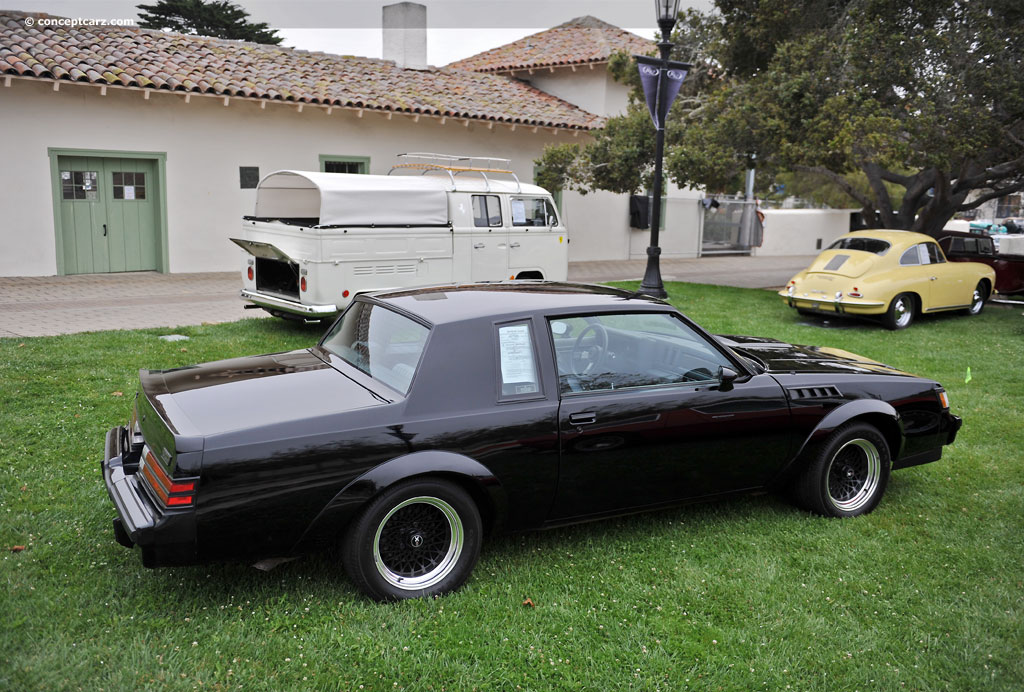
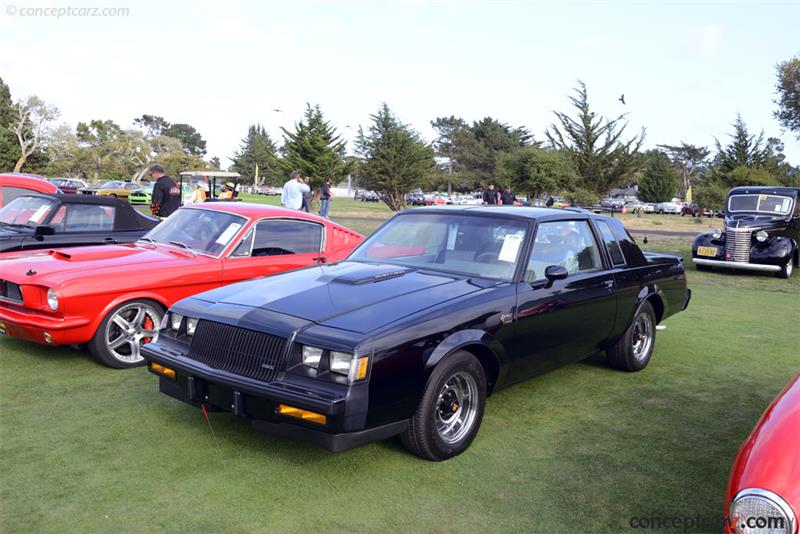
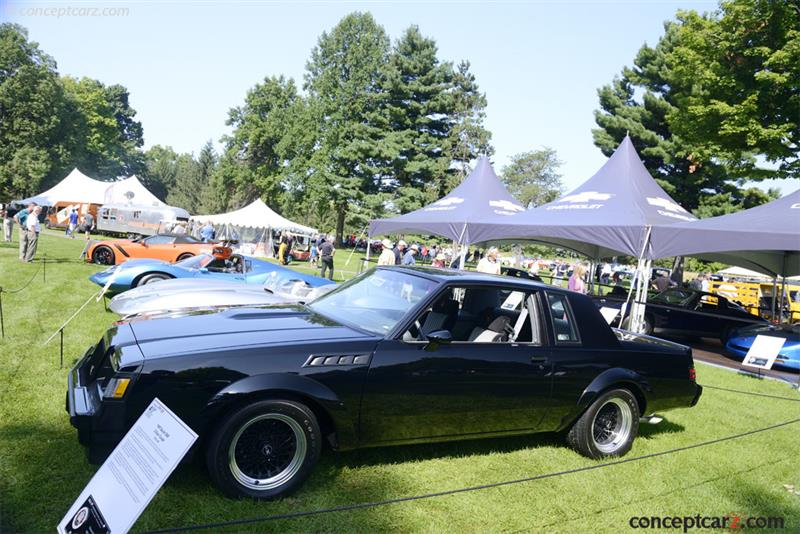
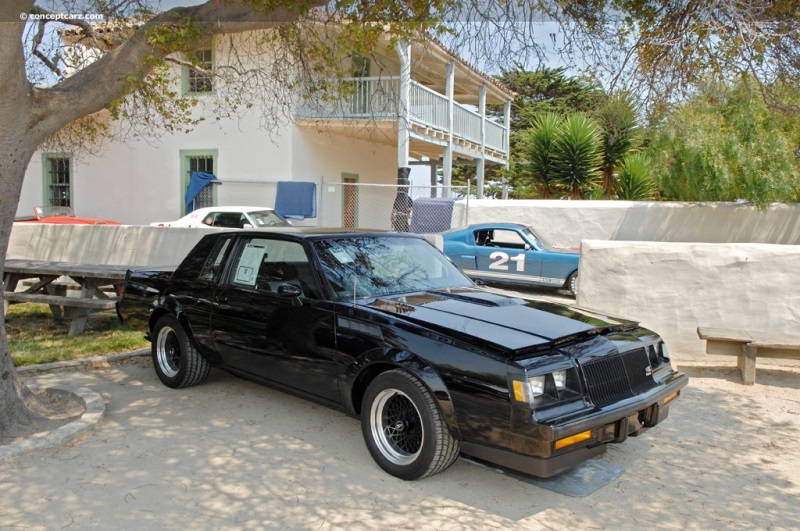
Partway through the production run of the Grand Nationals, Buick authorized a limited run of 547 specials, called the GNX. They were built by ASC/McLaren and powered by a high-performance Garrett turbocharger with a ceramic impeller, improved intercooler, revised engine management calibration, high performance transmission valving and free-flow exhaust. With this potent powerplant, horsepower rose to over 275 and torque was rated at 360 lb-ft. Completing the package included larger tires, special alloy wheels, rear axle torque arm and panhard bar, plus added frame stiffening were standard fare for the beefed-up GNX package. There was a full load of factory options, additional front fender vents to aide in engine cooling, and an analog gauge instrument panel and logo package.
This GNX has a mere 56 original miles showing on its odometer. The car has been in single family ownership from new, and was part of a highly respected Pennsylvania-based collection. IT retains its original window sticker, affixed to the driver's side window. It is painted in black and fitted with comfort features that include power windows, door locks and seats, tilt steering, cruise control, stereo, and air conditioning.
In 2009, this Buick GNX was offered for sale at the Sports & Classics of Monterey auction in Monterey, California presented by RM Auctions. The car was estimated to sell for $80,000-$100,000. The lot was sold for the sum of $77,000 including buyer's premium.
By Daniel Vaughan | Dec 2009
![]() | Coupe |
Frequently sharing the same body and power-train as the Century, the Buick Regal was a mid-size vehicle that was produced by General Motors' Buick division from 1973 through 2004. Slow to react to develop in the lower priced mid-size personal luxury market, Buick wanted to market to compete against the Olds Cutlass Supreme, the Grand Prix and the Monte Carlo.
The Regal was introduced in 1973 as a top line coupe located in the GM intermediate A-body line, the Century. This same year also marked the unveiling of the first major restyling of the GMs intermediate A-body design since 1968. This was also the first major restyling for the intermediate based G-body that was used in both the Monte Carlo and the Grand Prix.
The original Regal shared the front and rear styling of the Century, though subtle distinctions separated them and included differing grilles and taillight lenses. The same 'Colonnade' pillared hardtop roofline and greenhouse were shared with the Grand Prix, Monte Carlo, Cutlass Supreme, and the lower-priced Buick Century Luxus coupe. The newly fashionable opera windows were also featured in the Buick Regal rather than the traditional roll-down windows. A new four-door Colonnade sedan was debuted in 1974 until 1977, while the Colonnade hardtop coupe was featured in the Regal line in 1973.
More often, Regal interiors were found to be much more luxurious than lesser Century models and featured wood-grain trim on both dashboard and door panels, and notchback bench seats with center armrests with velour, cloth or vinyl upholstery, and door-pull straps. A 60-40 split bench seat with armrest was featured as an available option, and for 1976 and 1977 the coupe showcased the S/R option with included reclining bucket seats with corduroy upholstery.
Very minimal changes were made for the first five years. A substantial facelift was given to the coupe only in 1976, the sedan kept the original sheetmetal from 1973 through 1977. These changed included square headlights that were recently legalized and were horizontally-mounted on coupes, and vertically on sedans.
Standard equipment in 1973 and 1974, the Buick's 350 in³ (5.7L) V8 was made optional from 1975 through 1977 while the larger 455 cubic-inch V8 was optional in 73 and 74 only. Previously offered on the Skylark from 1964 through 1967, the 231 cubic V6 engine from Buick became standard for both Regal and Century models beginning in 1975. Buick Regal's and Century's became the only mid-sized vehicles to offer V6 engines from 1975 to 1976. In 1975, the Century designation was dropped from the Regal line.
Showcasing a newer version of Buick's venerable 231 in³ (3.8L) V6, a downsized Regal appeared in 1978 and lasted for the next nine years. Giving an unexpected reputation for performance, the Regal was still unfortunately held back with a soft suspension, the unavailability of a manual transmission and small wheels and tires. This was mainly due to the fact that the Regal was targeting the intermediate personal luxury market rather than the sports car segment.
A new, aerodynamic profile was given to the Buick Regal in 1981 along with a much needed facelift. This facelift prepared the Regal for competition on the NASCAR racing circuit. As the V6 was growing in popularity, V8s for street use were still available, but they had shrunk to 265 in³ (4.3L). A new Century appeared on the market in 1982 and was featured on the front-wheel drive A-body, but the Century sedan and wagon, former rear wheel drive were not discontinued. Re-badged as Buick Regals, these new models were featured for the first time with the name on a full model lineup. A 307ci (5.0L) V8 was offered as an option in 86 and 87.
Aiming at the performance market, T-Type Regal coupes were showcased in 81. This was minor in comparison to the introduction of the Regal Grand National, named for the NASCAR Grand National racing series that was featured in 1982. With a 4.1 liter V6 with 125 hp or an optional 180 hp turbocharged 3.8 V6 engine, the Grand National didn't appear again until 1984. Remaining standard, the turbocharged 3.8 continued to be refined with fuel injection and inter-cooling, and in 1987, it reached 245 hp (182 kW).
A lightweight WE4 (Turbo T) option, an extremely rare option today, was available in 1987 with only a total of 1,547 units of this variant produced. Featuring the same blackout package as the Grand National, these units were painted black, including the bumpers, head light, grill and tail light trim. The interior trim package, exterior badging, aluminum bumper supports, aluminum rear brake drums and the wheels were the main differences that set apart the base Grand National and a WE4.
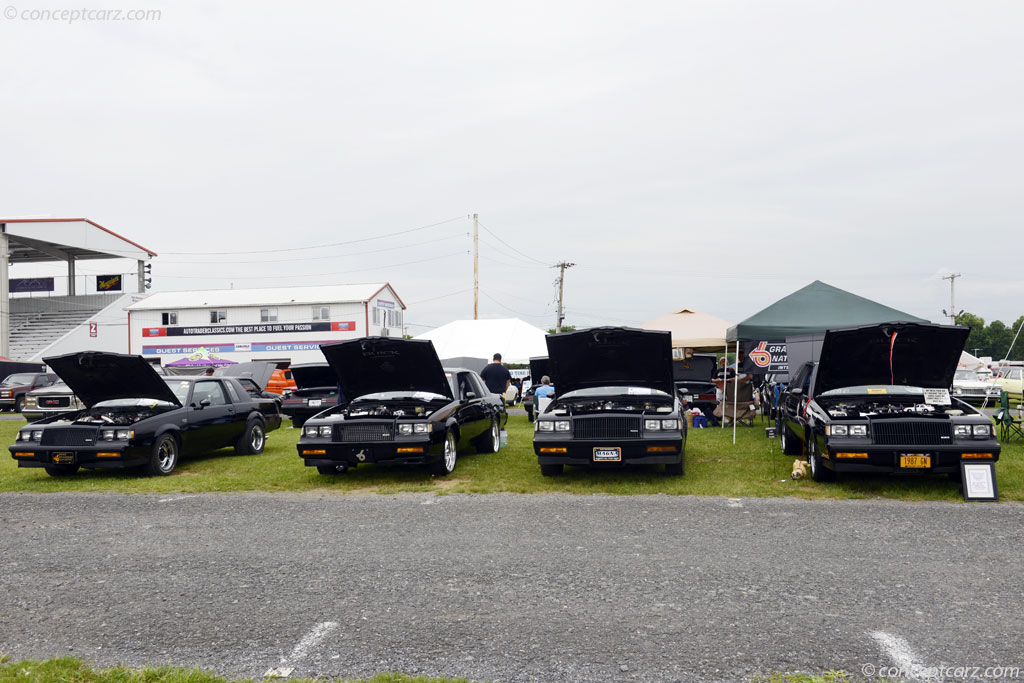
Gaining a reputation as a modern muscle vehicle, the Grand National was acquiring quite a popular status by 1985. Unfortunately the days of the G-body was drawing to a close. The GNX was featured for its final year in 1987 at a US$11,000 premium. Advertised as the 'Grand National to end all Grand Nationals,' the GNX was under-rated by Buick at 275 hp with a substantial 360 lbf-ft of torque. The following years model converted the chassis to front wheel drive which wouldn't be able to put down that much power.
The plug was eventually pulled on the GNX as Buick didn't want one if its own vehicles outperforming their flagship, the Corvette. Though the muscle cars of the 1960s had the power to beat the GNX, the tires of the time couldn't transform this into speed.
Appearing on the GM W platform, a new Regal appeared in 1988 in a version which both departed and returned to the traditional Regal style. Returning to the original concept, being offered as a coupe only, and aimed specifically to the personal luxury buyer, the new Regal became the first front wheel model and had no serious performance option or edition. This new model also did not have a V8 engine, and the V6 no longer offered a turbocharger.
In 1990, the Regal once again had a four-door sedan version that ran with few changes for the next nine years. A Grand Sport appearance package was added in 1991, and the Regal was offered in both base Customer and upscale Limited trim lines. Giving the vehicle some performance that would differentiate it from the Oldsmobile Cutlass Supreme and the Pontiac Grand Prix, the 3.8 L V6 was unique to the Buick W-body. In 1992, anti-lock brakes were made a standard option on all but the base Custom cars and the following year the grille was redesigned. At the same time, an electronically-controlled automatic transmission and LeSabre-like rear lights and bumper was added.
In 1994, the motorized seatbelts remained a standard, and a driver's-side airbag was the new addition. The Limited coupe was taken off the lineup, standard ABS was deleted on all models, along with power windows. The following year, the Buick Regal featured a brand new interior along with dual airbags. Gaining an additional 35 hp in this large engine, though 1996 was the final year of this model, production remained the same into 1997. Only the Custom coupe remained in 96.
Simply morphing into versions of the same vehicle by 1997, both the Regal and the Century were built on the same revised W platform as the Pontiac Grand Prix, Chevrolet Impala and the Oldsmobile Intrigue. Mostly cosmetic difference separated the Regal and the Century, though the Regal kept a longer length, and a four-door sedan was the only model available. The Regal was considered to be the up-market version, and featured larger engines along with fancier trim, and a newer version of the 231 (3.8 L) V6. The Regal showcased a variety of amenities that included expansive interior space, a Monsoon 8-speaker surround system, dual climate control, and heated leather seats, while the Century became mainly a reliable, economy-based vehicle based upon the W-body. Throughout this version's seven-year run, very few changes or updates were made.By Jessica Donaldson
For more information and related vehicles, click hereThe Regal was introduced in 1973 as a top line coupe located in the GM intermediate A-body line, the Century. This same year also marked the unveiling of the first major restyling of the GMs intermediate A-body design since 1968. This was also the first major restyling for the intermediate based G-body that was used in both the Monte Carlo and the Grand Prix.
The original Regal shared the front and rear styling of the Century, though subtle distinctions separated them and included differing grilles and taillight lenses. The same 'Colonnade' pillared hardtop roofline and greenhouse were shared with the Grand Prix, Monte Carlo, Cutlass Supreme, and the lower-priced Buick Century Luxus coupe. The newly fashionable opera windows were also featured in the Buick Regal rather than the traditional roll-down windows. A new four-door Colonnade sedan was debuted in 1974 until 1977, while the Colonnade hardtop coupe was featured in the Regal line in 1973.
More often, Regal interiors were found to be much more luxurious than lesser Century models and featured wood-grain trim on both dashboard and door panels, and notchback bench seats with center armrests with velour, cloth or vinyl upholstery, and door-pull straps. A 60-40 split bench seat with armrest was featured as an available option, and for 1976 and 1977 the coupe showcased the S/R option with included reclining bucket seats with corduroy upholstery.
Very minimal changes were made for the first five years. A substantial facelift was given to the coupe only in 1976, the sedan kept the original sheetmetal from 1973 through 1977. These changed included square headlights that were recently legalized and were horizontally-mounted on coupes, and vertically on sedans.
Standard equipment in 1973 and 1974, the Buick's 350 in³ (5.7L) V8 was made optional from 1975 through 1977 while the larger 455 cubic-inch V8 was optional in 73 and 74 only. Previously offered on the Skylark from 1964 through 1967, the 231 cubic V6 engine from Buick became standard for both Regal and Century models beginning in 1975. Buick Regal's and Century's became the only mid-sized vehicles to offer V6 engines from 1975 to 1976. In 1975, the Century designation was dropped from the Regal line.
Showcasing a newer version of Buick's venerable 231 in³ (3.8L) V6, a downsized Regal appeared in 1978 and lasted for the next nine years. Giving an unexpected reputation for performance, the Regal was still unfortunately held back with a soft suspension, the unavailability of a manual transmission and small wheels and tires. This was mainly due to the fact that the Regal was targeting the intermediate personal luxury market rather than the sports car segment.
A new, aerodynamic profile was given to the Buick Regal in 1981 along with a much needed facelift. This facelift prepared the Regal for competition on the NASCAR racing circuit. As the V6 was growing in popularity, V8s for street use were still available, but they had shrunk to 265 in³ (4.3L). A new Century appeared on the market in 1982 and was featured on the front-wheel drive A-body, but the Century sedan and wagon, former rear wheel drive were not discontinued. Re-badged as Buick Regals, these new models were featured for the first time with the name on a full model lineup. A 307ci (5.0L) V8 was offered as an option in 86 and 87.
Aiming at the performance market, T-Type Regal coupes were showcased in 81. This was minor in comparison to the introduction of the Regal Grand National, named for the NASCAR Grand National racing series that was featured in 1982. With a 4.1 liter V6 with 125 hp or an optional 180 hp turbocharged 3.8 V6 engine, the Grand National didn't appear again until 1984. Remaining standard, the turbocharged 3.8 continued to be refined with fuel injection and inter-cooling, and in 1987, it reached 245 hp (182 kW).
A lightweight WE4 (Turbo T) option, an extremely rare option today, was available in 1987 with only a total of 1,547 units of this variant produced. Featuring the same blackout package as the Grand National, these units were painted black, including the bumpers, head light, grill and tail light trim. The interior trim package, exterior badging, aluminum bumper supports, aluminum rear brake drums and the wheels were the main differences that set apart the base Grand National and a WE4.
Gaining a reputation as a modern muscle vehicle, the Grand National was acquiring quite a popular status by 1985. Unfortunately the days of the G-body was drawing to a close. The GNX was featured for its final year in 1987 at a US$11,000 premium. Advertised as the 'Grand National to end all Grand Nationals,' the GNX was under-rated by Buick at 275 hp with a substantial 360 lbf-ft of torque. The following years model converted the chassis to front wheel drive which wouldn't be able to put down that much power.
The plug was eventually pulled on the GNX as Buick didn't want one if its own vehicles outperforming their flagship, the Corvette. Though the muscle cars of the 1960s had the power to beat the GNX, the tires of the time couldn't transform this into speed.
Appearing on the GM W platform, a new Regal appeared in 1988 in a version which both departed and returned to the traditional Regal style. Returning to the original concept, being offered as a coupe only, and aimed specifically to the personal luxury buyer, the new Regal became the first front wheel model and had no serious performance option or edition. This new model also did not have a V8 engine, and the V6 no longer offered a turbocharger.
In 1990, the Regal once again had a four-door sedan version that ran with few changes for the next nine years. A Grand Sport appearance package was added in 1991, and the Regal was offered in both base Customer and upscale Limited trim lines. Giving the vehicle some performance that would differentiate it from the Oldsmobile Cutlass Supreme and the Pontiac Grand Prix, the 3.8 L V6 was unique to the Buick W-body. In 1992, anti-lock brakes were made a standard option on all but the base Custom cars and the following year the grille was redesigned. At the same time, an electronically-controlled automatic transmission and LeSabre-like rear lights and bumper was added.
In 1994, the motorized seatbelts remained a standard, and a driver's-side airbag was the new addition. The Limited coupe was taken off the lineup, standard ABS was deleted on all models, along with power windows. The following year, the Buick Regal featured a brand new interior along with dual airbags. Gaining an additional 35 hp in this large engine, though 1996 was the final year of this model, production remained the same into 1997. Only the Custom coupe remained in 96.
Simply morphing into versions of the same vehicle by 1997, both the Regal and the Century were built on the same revised W platform as the Pontiac Grand Prix, Chevrolet Impala and the Oldsmobile Intrigue. Mostly cosmetic difference separated the Regal and the Century, though the Regal kept a longer length, and a four-door sedan was the only model available. The Regal was considered to be the up-market version, and featured larger engines along with fancier trim, and a newer version of the 231 (3.8 L) V6. The Regal showcased a variety of amenities that included expansive interior space, a Monsoon 8-speaker surround system, dual climate control, and heated leather seats, while the Century became mainly a reliable, economy-based vehicle based upon the W-body. Throughout this version's seven-year run, very few changes or updates were made.By Jessica Donaldson
| Land Rover Celebrates 65 Years Of Technology And Innovation | |
![]() | SIXTY-FIVE YEARS OF LAND ROVER From our earliest days, the desire to create a vehicle that will tackle any terrain has made Land Rover famous around the world. Over the past 65 years, the Land Rover family has grown into the highly respected range of vehicles that are sold in record numbers today. As Land Rover continues to go from strength to strength, we thought it was time to look back at the milestones in our history that have got us here. The last 65 years have been an adventure. ...[Read more...] |
| VOLKSWAGEN BEETLE TURBO AND JETTA GLI RECEIVE POWER BOOST | |
| - New EA888 Gen 3 engine, produced in Silao, Mexico, makes its U.S. debut - Engine offers 10 hp increase over previous Gen 2 powerplant - Beetle models have a manufacturer estimated fuel economy improvement of up to eight percent on the combined cycle - Beetle R-Line® coupe will be priced from $30,135 with the six-speed manual transmission Herndon, VA - The Volkswagen Beetle Turbo, Beetle Turbo Convertible, and the Jetta GLI receive a number of running changes to 2013 model year car...[Read more...] | |
| BRITAIN'S BEST-VALUE PICK-UP GETS TWO NEW SPECIAL EDITIONS | |
![]() | •Steed special editions to go on sale in 1 March priced at £14,998 •'Steed Chrome' enhances bold styling with styling upgrades •'Steed Tracker' features make it even more practical •Special editions benefit from recent increase in towing capacity The Great Wall Steed, the UK's most affordable 4x4 double-cab pick up, has just become even more appealing to trade and recreational users alike with the introduction of two special edition models - the 'Steed Chrome' and 'Steed Tracker'. Both...[Read more...] |
| GRAVEL, ALTITUDE, HEAT: VOLKSWAGEN POLO R WRC MAKES MEXICAN DEBUT | |
![]() | ¡Viva México! The Volkswagen Polo R WRC is just a matter of days away from its much-anticipated competitive debut on gravel in the FIA World Rally Championship. The 315 hp four-wheel drive powerhouse from Wolfsburg will take on very specific conditions when it rolls down the starting ramp at the third round of the season, the Rally Mexico, from 7th to 10th March. Reaching altitudes of up to 2,700 metres above sea level, the special stages are the highest the teams will face all season – a true c...[Read more...] |
| Mopar® Customized Rides Take Spotlight at Beijing International Automotive Exhibition | |
| Company's Service, Parts and Customer-care Brand to Display 'Moparized' Chrysler 300 Ruyi Design Concept, Jeep® Wrangler Arctic and Fiat® Freemont • Fiat Freemont features numerous Mopar accessories • Jeep® Wrangler Arctic gets 'Moparized' • 'Moparized' Chrysler 300 Ruyi Design Concept to make debut • New 172,222 square-foot Mopar product distribution center in Shanghai distributes more than 35,000 parts and accessories Auburn Hills, Mich. - Chrysler Group LLC will head to the...[Read more...] | |
| Buick: 1981-1990 |
| Similar Automakers |
| Buick History |
| Other models by Buick |
| Manufacturer Website |
| Vehicle Recall Information |
| Related Articles and Event Coverage |
| RM Auctions at Monterey |
| GM Heritage Museum |
| Sports & Classics of Monterey |
| Kruse International at Hershey, PA |
| 2006 Barrett-Jackson - Scottsdale 2006 |
| 2006 Harrisburg PA |
| ||||||||||||||||||||||||||||||||||||||||||||