Concept Cars Home
Image Left 1920 Silver Ghost1922 Silver Ghost Image Right
 

1921 Rolls-Royce Silver Ghost news, pictures, and information

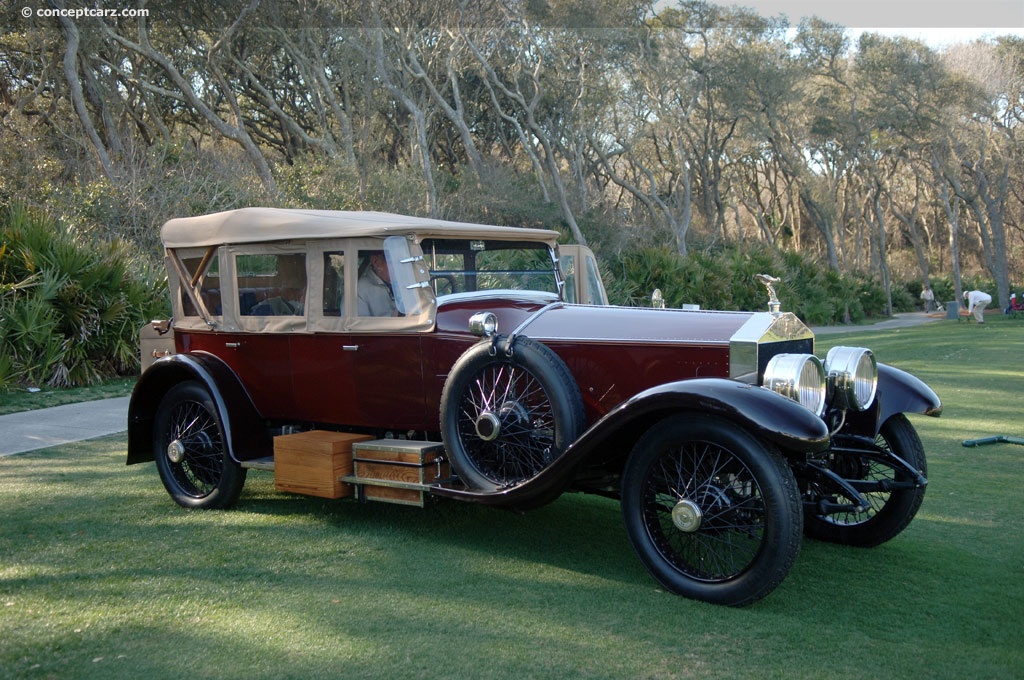
LWB Touring Car
Chassis Num: 72 LG
 
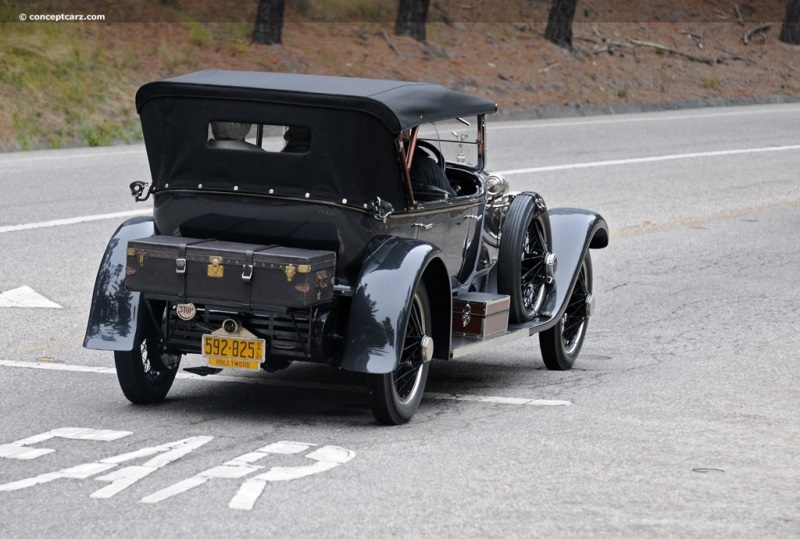
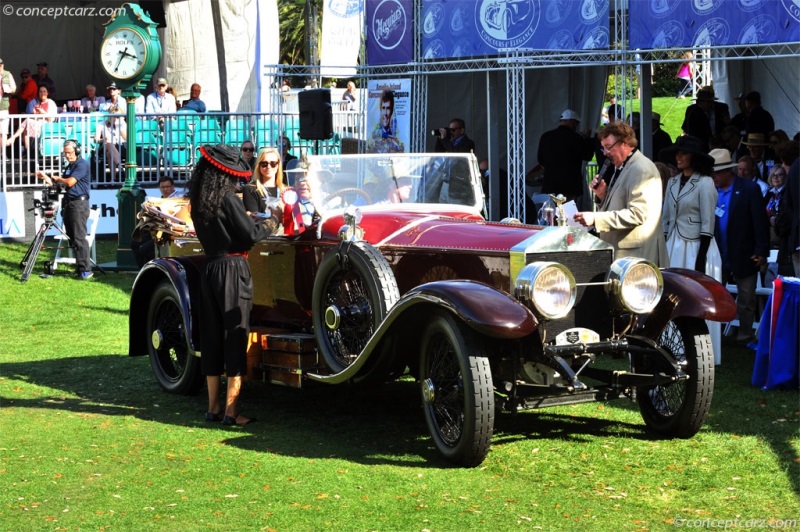
In 1919, after World War I, Rolls-Royce England was two years behind in filling chassis orders. For this and other economic reasons, the decision was made to build up to 350 chassis each year in Springfield, MA. The chassis were to be identical to the English-built Rolls, but the Springfield chassis were to be fitted with some standard type bodies, which the American market desired. This car was ordered by Mrs. Vallerie Timken with a RRCCW touring body. The car was delivered in May of 1921, at her Beverly Hills summer estate. Records indicate that this chassis was number 55 out of 132 built in 1921. It is the fourth oldest Silver Ghost known to survive. The car was still in her possession in 1933, when an interior fire rendered it undriveable. This car has a 144-inch wheelbase and a six-cylinder, 453 cubic-inch engine developing 48 horsepower. The car weighs 4,000 pounds and has a top speed of 65 mph. The cost new was about $12,000 or the equivalent of three new Cadillacs.
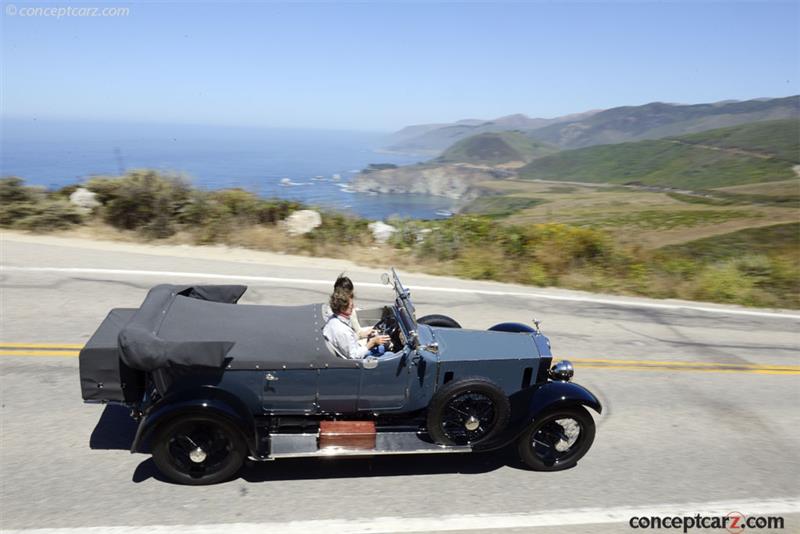
Tourer
Coachwork: Locke
 
This vehicle is a 1921 Rolls-Royce Silver Ghost Tourer with coachwork by Locke.
By Daniel Vaughan | Jun 2009
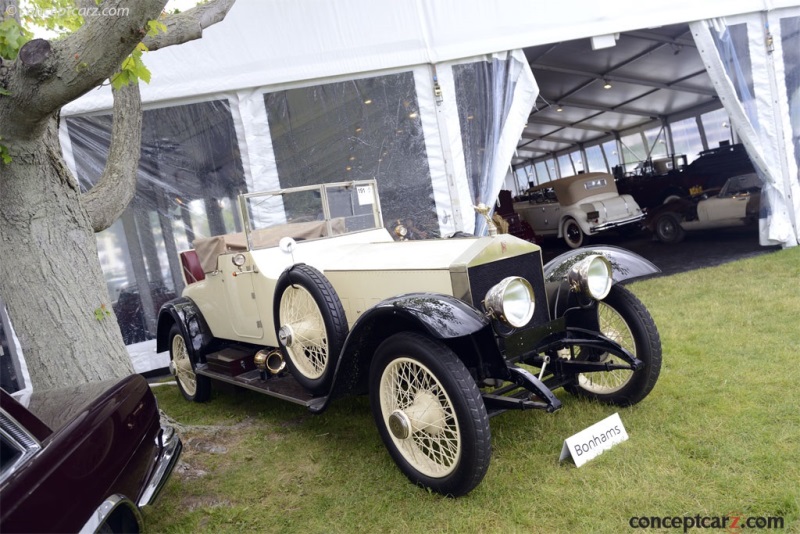
Roadster
Coachwork: Plaxton
 
Records indicate this chassis was ordered by a brewery owner in Liverpool. The son of the owner oversaw the construction of the body by the Laxton Company in Scarborough. He was said to be a large man and hence the oversized passenger side of the seat. He was also an avid cigar smoker and had a solid silver ash tray installed. The Plaxton Company is still in business today.

The second owner bought the car in 1934 with 75,000 miles on it. He only put 5,000 miles on the vehicle and sold it in 1965. Additional notes say the car was not driven from 1949 through 1965. It changed hands a couple more times before the current owners purchased the car and, within months, bravely drove it on their first Wholly Ghost Tour in North Carolina.
Pall Mall Tourer
 
This car is the earliest open Springfield-built Rolls-Royce known to exist. In 1921, Rolls-Royce decided to build some motor cars in the United States, and it chose Springfield, Massachusetts, as its base. That location was chosen for its proximity to major northeastern markets and important suppliers as well as the supply of skilled craftsmen trained in the armories of the Connecticut River valley and the New England machine tool industry. The 40/50 horsepower Silver Ghosts were shipped from England and assembled in Springfield.

This particular Springfield-built motor car was sold new in Los Angeles and was owned by a number of prominent people there before being purchased by the Bothwell family and stored for over sixty years.
Torpedo Phaeton
Coachwork: Barker
Chassis Num: 50UG
 
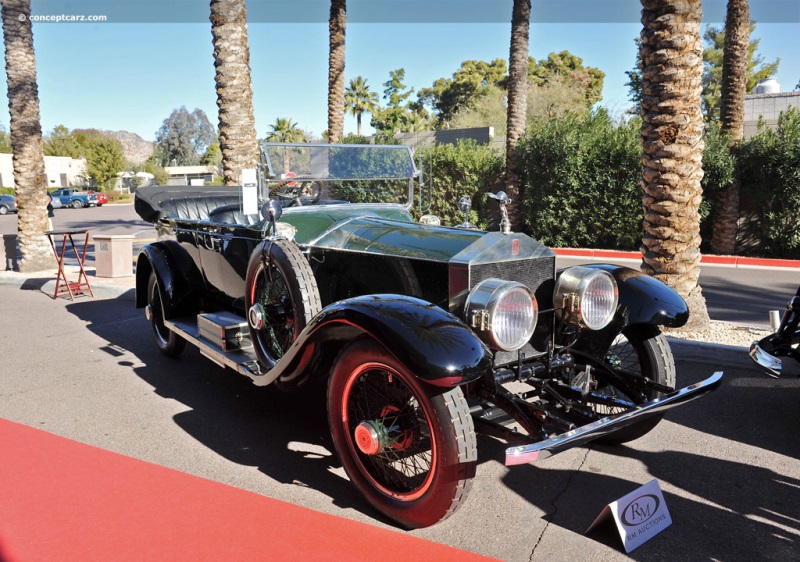
Sold for $379,500 at 2011 RM Auctions.
Chassis number 50UG was given the higher compression engine, higher speed gearing and 'D' rake steering and levers. After its testing was complete, the car was sent to Hooper & Co, where a Touring Phaeton body was fitted. It was fitted in ivory with a black chassis, under-fenders and wheels, as well as apple green leather.

The car was built for Rolls-Royce of Bombay and shipped on board the S.S. 'Nankin' on November 4th of 1921 for the Calcutta Motor Show held on December 19th of 1921. This car, along with a Barker Cabriolet (chassis number 126 AG), were both featured in the December 17th issue of The Autocar.

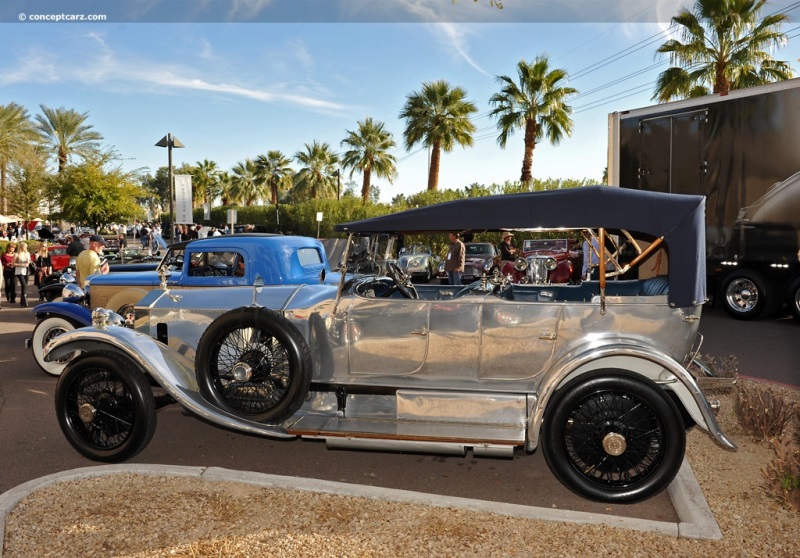
H.H. the Maharajah of Charkhari acquired the car at the Motor Show. On March 31st of 1926, His Highness returned the car to the factory, where it was given a polished alloy Torpedo Phaeton body with the work performed by Barker.

Years ago, the car was discovered in India where it still wore its period Barker polished alloy coachwork, and showing approximately 10,000 miles on the odometer.

The prior owner acquired the car in 1990 and immediately commissioned a professional restoration. After the work was completed in 1995, the car was shown at a number of events, including the Meadow Brook Concours in 1995, Amelia Island Concours in 1999, and the Pebble Beach Concours d'Elegance. In every event it attended, it was an award winner.

In early 2007, the car was sold to Mr. John O'Quinn.

In 2011, the car was offered for sale at RM Auction's Arizona sale where it was estimated to sell for $300,000 - $450,000. As bidding came to a close, the car had been sold for the sum of $379,500, inclusive of buyer's premium.

By Daniel Vaughan | Jan 2011
Oxford Tourer
Chassis Num: 95MG
Engine Num: 20-92
 
High bid of $220,000 at 2013 RM Auctions. (did not sell)
Rolls-Royce had an American factory at Springfield, Massachusetts from 1919 to 1931. Rolls-Royce offered a range of bodies to be sold under the name 'Rolls-Royce Custom Coachwork.' Most of these were built by Brewster, but some were commissioned by Merrimack, Willoughby, Holbrook, and Biddle & Smart. They all carried the names of British landmarks—Croydon and Henley convertibles, St. Stephen and St. Alban town cars, and the Piccadilly roadster, to name but a few.

Rolls-Royce built 77 examples of the Oxford Touring Car. This example is one of the first 'Springfield Ghosts' produced. It was originally delivered to J.G. McHenry, a prominent Detroit attorney, apparently following use as a trials car at the Thompson Automobile Company. Mr. McHenry eventually sold the car to John S. Riggs, of New York, who, in 1948, passed it into the hands of Barney Pollard. The Rolls was eventually sold from the Pollard Collection into the care of Robert Merrifield, and it was maintained by him until late-2009.

The car retains its original engine chassis frame, and body. The Rolls-Royce still has under 25,000 actual miles. It is believed that the majority of the miles were acquired during the ownership of its first two caretakers. It has recently been repainted and re-chromed.

In 2013, the car was offered for sale in Scottsdale, Arizona by RM Auctions. Bidding reached $220,000 but was not enough to satisfy the vehicle's reserve. It would leave the auction unsold.

By Daniel Vaughan | Feb 2013
In 1906 a new model, the 40/50 horsepower, was developed wîth a longer chassis and a six-cylinder engine. The popularity of the new Rolls-Royce grew quickly as it developed a reputation for smoothness, silence, flexibility and, above all, reliability. In 1907 a writer from the 'Autocar' described riding in the Rolls-Royce 40/50 hp as '....the feeling of being wafted through the countryside.' Engineers at Rolls-Royce coined the word 'waftability' to encapsulate that sensation. Today it is a word that cannot be found in any direction but it is a key design and engineering criterion.

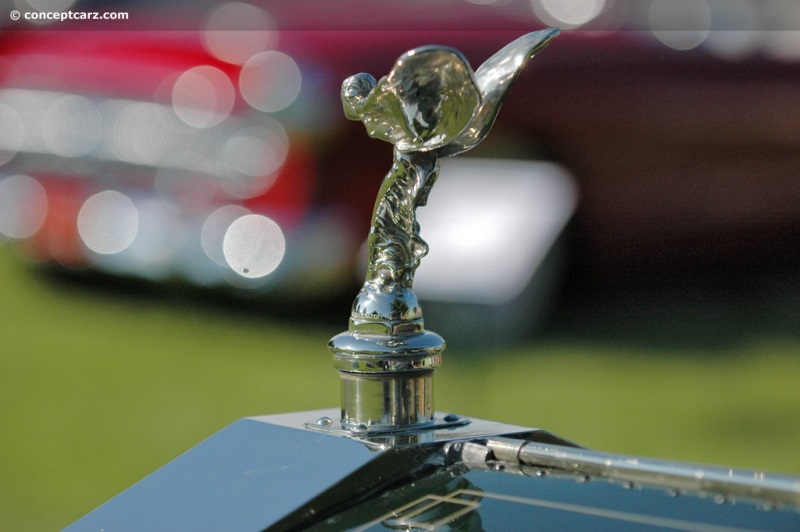
The twelfth 40/50 produced had all its fittings silver-plated and the coachwork painted in aluminum paint. This car became known as the Silver Ghost and is probably the most famous car in the world. The name was later adopted for all the 40/50 hp car and had an immediate international impact, enhanced by the coachbuilders of the day, who could produce bodies of breathtaking beauty. The Silver Ghost was, quite simply, in a class of its own.

The motor car's versatility is legendary. It overwhelmingly won every reliability trial and distance record, dominated the great Alpine Trial of 1913 and won the Spanish Grand Prix of that year.

In May 1907, Claude Johnson drove the car to Scotland and back. This run was a precursor to the Scottish Reliability Trial for which the motor car was later awarded a gold model by the RAC.

The original idea was to drive 10,000 miles without stopping the engine, but the Silver Ghost proved so reliable that the target was raised to 15,000 miles. Despite a stall at 629 miles, when rough roads shook the petrol switch to the off position, the Silver Ghost ran faultlessly for 40 days and nights.

A further challenge was designed by Napier for Rolls-Royce to compete against them in a run from London to Edinburgh followed by high-speed runs at Brooklands. But the challenge was to complete the distance without changing gear, as opposed to how far you could travel. The car, driven by Ernest Hives, averaged 24.3 mpg between London and Edinburgh and attained a speed of 78.2 mph at Brooklands.

As an armored car in the First World War The Silver Ghost delivered exemplary service to the extent that Colonel T.E Lawrence (Lawrence of Arabia) is quoted as saying, 'A Rolls in the desert is above rubies'.

In more elegant guise the Silver Ghost was the choice of the rich and famous across the globe. Kings, queens, maharajas, tsars and emperors owned them. The demand for the Silver Ghost was so high that manufacture was started in the Únited States in 1921 and continued in production wîth worldwide success until 1925.

Source - Rolls-Rocye Motor Cars Limited
The Rolls-Royce vehicles have always been the pinnacle of design, technology, and ambiance. The loudest noise that could be heard by occupants of their vehicles was said to be the clock. In 1904 engineer Frederick Henry Royce joined with the entrepreneur and businessman, the Honorable Charles Stewart Rolls. This union became known as the Rolls-Royce Company.

The Silver Ghost became available in 1906 and brought with it quality and technology to a level that had never been seen before on a motor vehicle. Most engines of the time had long and flexible crankshafts that were prone to vibration and noise. The Rolls-Royce engines had large bearings and pressurized oiling systems, secured by seven main bearings. This was then enclosed in a strong aluminum alloy crankcase eliminating much noise and creating a pleasurable driving experience for the occupants of the vehicle. The crankshaft had an accuracy of .00025 on its bearing surface. They were hand polished to remove any surface cracks left by the grinder. Instead of using noisy chains to drive the ignition, Royce used gears. Phosphor bronze and nickel steel were used in the construction of the timing gears which were then ground and polished by hand. The engine was further shortened by casting in triplets. Cooling problems and leaks were eliminated by the removable cylinder blocks and fixed heads. A Royce designed twin jet carburetor gave the engine all the breathing it required.

The Rolls Royce vehicles could accelerate from zero to top speed without shifting. Shifting during the early 1900's was a chore, with the lower gears never being smooth. It was not until top gear was achieved that the automobiles would operate properly. The Rolls-Royce Ghosts would accelerate as though they were being pulled. This feature, coupled with the vehicles silent operation amplified the vehicles prestige and was the ultimate driving experience of its day.

When first introduced, the Ghosts were given a four-speed gearbox with a direct drive third and an overdrive fourth. As time passed, the overdrive was dropped. The chassis was mostly conventional. Royce had fine-tuned the chassis to standards much higher than most marque's of the day. The body was held in place by a live rear axle carried in three quarter elliptical springs. In the front there was a solid axle supported by semi-elliptic leaf springs. Braking was by a food pedal connected to a transmission brake. A hand brake operated twin rear drums.

Where Royce excelled in engineering, Rolls excelled in promoting and marketing. In 1906 a Ghost was entered in the Tourist Trophy Race, one of the most prestigious races of the time. The Ghost emerged victorious - well, much more than that. It had beaten the next nearest competitor by 27 minutes. Next, Rolls and Royce entered a Ghost in a 15,000 mile reliability run in 1907 which it did without incident. Upon its return to the Rolls-Royce shop, it took a small amount of money, about two-pounds or roughly ten-dollars by today's exchange rates, to restore the vehicle back to new condition.

The Silver Ghosts were entered in the Austrian Alpine Trials where the hoods were sealed shut to prevent any maintenance. The Silver Ghosts again dominated the competition and traversed the Alpine passes which were impassable for many motor cars.

This marketing worked and soon the Rolls-Royce vehicles became legendary and renowned for their durability, reliability, and style. To improve upon the prestige even further, Rolls supplied the Silver Ghosts to British royalty, a move that made sure the vehicles were seen in the right places by the right people.

The first Rolls-Royce distributor in the United States was Walter Martin of New York City, who was also a Cadillac distributor. As Cadillac continued to improve the ambiance of their vehicles, Martin naturally gave them more attention as the logistics of company location was in their favor. Rolls-Royce, on the other hand, was an ocean apart.

Over the early years of Rolls-Royce production, Brewster would become more effective in bringing Rolls-Royce chassis to America than Martin. Brewster imported several dozen chassis to supply its coachwork clients.

In 1913, the business manager for Rolls-Royce, Claude Johnson, formed a factory depot in New York and rented space from Brewster. Baker's US agent, Robert W. Schuette was appointed as Rolls-Royce distributor. At the time, Schuette also represented Fleetwood, Holbrook, Brewster, and Quinby. Around 100 Rolls-Royce's were imported over the next two years by Schuette, with around half of them bodied by Brewster.

As the First World War began to escalate, the production of Rolls-Royce automobiles slowed considerably. The factory's attention was turned to cars for military clients. Engines were produced for aircraft. By 1916, there were no more new Rolls-Royces available. Schuette and Brewster were still able to satisfy US demand for Rolls-Royce's by buying up existing chassis, renovating, and then fitting them with new coachwork.

By Daniel Vaughan | May 2008
For more information and related vehicles, click here

20/25HP
20HP
25/30HP
Camargue
Corniche
Ghost
Phantom
Phantom I
Phantom II / Phantom II Continental
Phantom III
Phantom IV
Phantom V
Phantom VI
Silver Cloud I, II, and III
Silver Dawn
Silver Ghost
Silver Seraph / Park Ward
Silver Shadow I, II/Silver Wraith II
Silver Spirit
Silver Wraith
Wraith

Image Left 1920 Silver Ghost1922 Silver Ghost Image Right
© 1998-2012. All rights reserved. The material may not be published, broadcast, rewritten, or redistributed.