1961 Lotus 20
1961 Lotus 20 Navigation
History
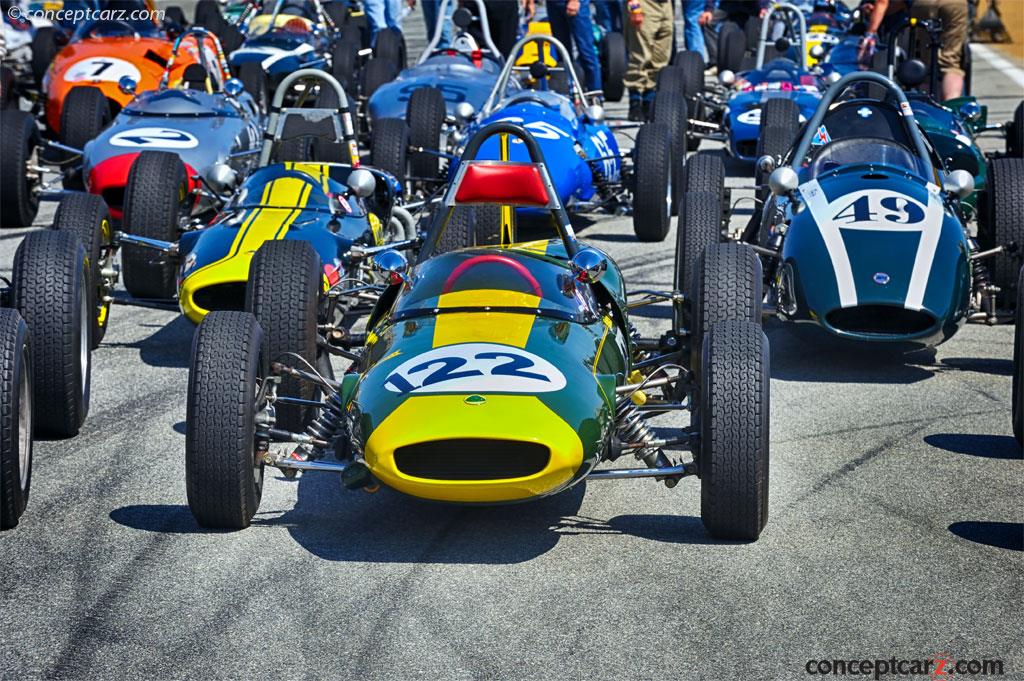
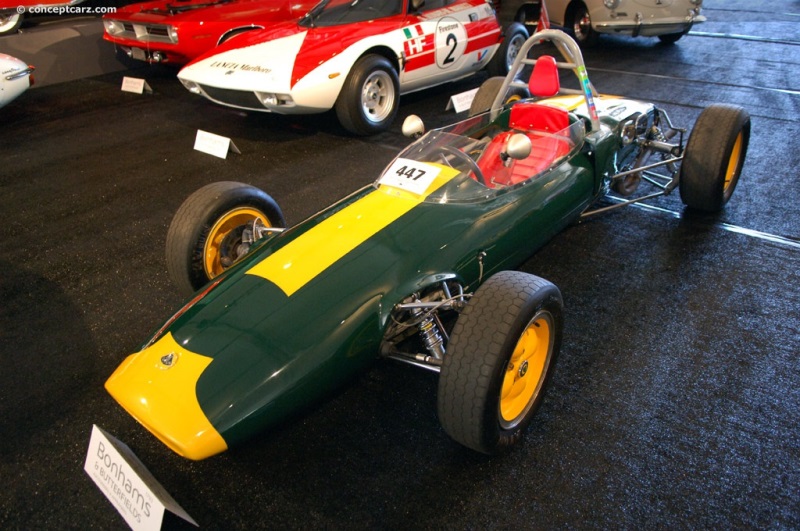
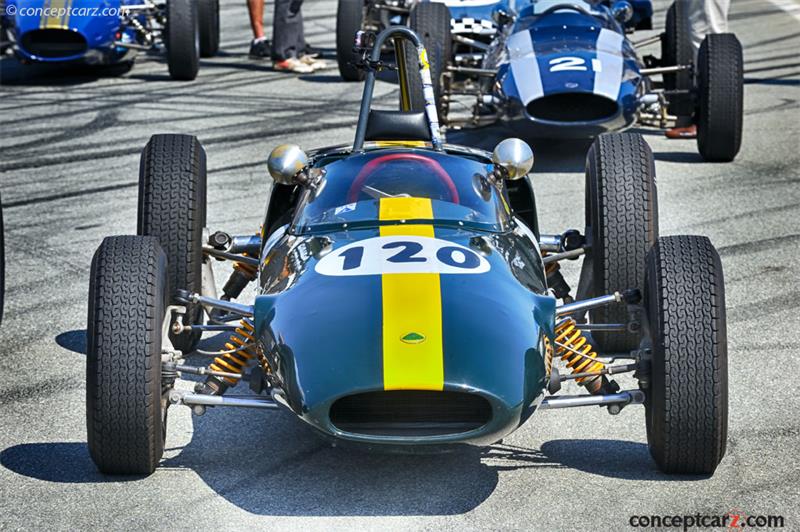
The Lotus Formula Junior 20 was first shown at the Racing Car Show in January of 1961. It shared some similarities to the prior units, such as the suspension bearing many similarities to the Lotus 18. The body was small and aerodynamic and mounted on a space-frame chassis. The fiber-glass body was courtesy of Williams & Pritchard. Mounted mid-ship was a Cosworth developed Ford 105E 998cc engine.
For the 1961 season Trevor Taylor and Peter Arundell drove works cars. Alan Rees and Mike McKee raced Lotus 20 with factory support. Taylor was able to win eight races while Arundell accounted for seven victories.
In total, 118 examples of the Lotus 20 were produced.
The Lotus 21 was the first works Lotus to win a Formula One Grand Prix. The victory came in 1961 at the United States Grand Prix driven by Innes Ireland. The Lotus 21 utilized a mid-engined design and was comprised of a tubular space-frame with fiberglass panels. Power was from a Coventry Climax FPF four-cylinder engine similar to that of the Lotus 20. Disc brakes could be found at all four corners.
The Lotus 21 was raced by Team Lotus and by the Rob Walker Racing Team during the 1961 season.
The Lotus 22 was introduced for the 1962 seasons and was based on the Lotus Formula Junior 20 but brought with it many new changes. It was powered by a Ford-Cosworth 1098cc engine which produced about 100 horsepower. The engine was mated to a four-speed gearbox. The gearbox units were came from both Volkswagen and Renault. The suspension from the Lotus 21 was used in the rear. The Lotus 22 had a wider track than the Lotus 21. The 13-inch wheels were made of magnesium-alloy and disc brakes could be found in both the front and rear.
Team Lotus entered the Formula Junior 22 driven by Peter Arundell in 25 races and was rewarded with podium finishes 18 times. Peter Arundell was the team's primary driver with Alan Rees and Bob Anderson serving as his replacement.
The Lotus 22 was surrounded by controversy during the 1962 season. Canadian Pete Ryan was involved in a collision with Bill Moss at Reims. Reporters interviewed Ryan at the hospital; he mentioned, though heavily medicated, that Formula Junior cars were being operated with engine capacities higher than the allowable limit. Reporters assumed that he was speaking about Peter Arundell and stories and allegations quickly erupted. Part of the stories that appeared made alleged claims that the Lotus 22s were running with 1450cc engines (rules specified 1100cc units). In true sporting fashion, Colin Chapman responded to the claims with a challenge. He stated that, under supervision, he would 'repeat their race-winning speeds at any European circuit'. The results were to be closely monitored and supervised. Chapman stated that if the vehicles were to match their winning speeds, von Frankenberg, a former racer and editor, would have to make a public apology. von Frankenberg had made many of the allegations so the challenge seemed appropriate.
von Frankenberg accepted and the Monza circuit was selected. Arundell had won the 107-mile Grand Prix at 113.4 mph with a fast lap of 115.9. On the day of the challenge, Arundell drove the racer to a speed of 117.1 mph. At the conclusion of the challenge, the engine was disassembled and thoroughly inspected. The engine had met all the requirements and the vehicles weight was within acceptable limits. Chapman had made his point and von Frankenberg made his apology.
By Daniel Vaughan | Jan 2007
For the 1961 season Trevor Taylor and Peter Arundell drove works cars. Alan Rees and Mike McKee raced Lotus 20 with factory support. Taylor was able to win eight races while Arundell accounted for seven victories.
In total, 118 examples of the Lotus 20 were produced.
The Lotus 21 was the first works Lotus to win a Formula One Grand Prix. The victory came in 1961 at the United States Grand Prix driven by Innes Ireland. The Lotus 21 utilized a mid-engined design and was comprised of a tubular space-frame with fiberglass panels. Power was from a Coventry Climax FPF four-cylinder engine similar to that of the Lotus 20. Disc brakes could be found at all four corners.
The Lotus 21 was raced by Team Lotus and by the Rob Walker Racing Team during the 1961 season.
The Lotus 22 was introduced for the 1962 seasons and was based on the Lotus Formula Junior 20 but brought with it many new changes. It was powered by a Ford-Cosworth 1098cc engine which produced about 100 horsepower. The engine was mated to a four-speed gearbox. The gearbox units were came from both Volkswagen and Renault. The suspension from the Lotus 21 was used in the rear. The Lotus 22 had a wider track than the Lotus 21. The 13-inch wheels were made of magnesium-alloy and disc brakes could be found in both the front and rear.
Team Lotus entered the Formula Junior 22 driven by Peter Arundell in 25 races and was rewarded with podium finishes 18 times. Peter Arundell was the team's primary driver with Alan Rees and Bob Anderson serving as his replacement.
The Lotus 22 was surrounded by controversy during the 1962 season. Canadian Pete Ryan was involved in a collision with Bill Moss at Reims. Reporters interviewed Ryan at the hospital; he mentioned, though heavily medicated, that Formula Junior cars were being operated with engine capacities higher than the allowable limit. Reporters assumed that he was speaking about Peter Arundell and stories and allegations quickly erupted. Part of the stories that appeared made alleged claims that the Lotus 22s were running with 1450cc engines (rules specified 1100cc units). In true sporting fashion, Colin Chapman responded to the claims with a challenge. He stated that, under supervision, he would 'repeat their race-winning speeds at any European circuit'. The results were to be closely monitored and supervised. Chapman stated that if the vehicles were to match their winning speeds, von Frankenberg, a former racer and editor, would have to make a public apology. von Frankenberg had made many of the allegations so the challenge seemed appropriate.
von Frankenberg accepted and the Monza circuit was selected. Arundell had won the 107-mile Grand Prix at 113.4 mph with a fast lap of 115.9. On the day of the challenge, Arundell drove the racer to a speed of 117.1 mph. At the conclusion of the challenge, the engine was disassembled and thoroughly inspected. The engine had met all the requirements and the vehicles weight was within acceptable limits. Chapman had made his point and von Frankenberg made his apology.
By Daniel Vaughan | Jan 2007
- 1961 Lotus 20 Menu
- Article
- Image gallery
- Valuation
- Specifications
- Profiles


1961 Lotus 20 Vehicle Profiles


Recent Vehicle Additions


Related Automotive News
RRDC VOTES IN 37 NEW MEMBERS FOR 2013
HILLIARD, Ohio (Nov. 7, 2013) - Thirty-seven race-car drivers and motorsports professionals have been voted into the Road Racing Drivers Club in 2013. The group includes 13 Regular Members from the open-wheel and sports-car racing ranks, 20 Associate...

1969 United States Grand Prix: The Rise of Rindt
If there was one racer in the Formula One paddock that drivers and spectators alike believed should have scored his first victory before the start of the 1969 season it would almost unanimously be Jochen Rindt. Fast and flamboyant, the Austrian exhibited...

1967 Can-Am Road America: The Beginning of the 'Bruce and Denny Show'
While Formula One will be forever considered the pinnacle of motorsport, from a period between 1966 and 1986 there existed a series that would likely be the closest to anything goes as any motor racing series could truly get. Based upon the FIA Group...

1968 Belgian Grand Prix: A First for McLaren
McLaren and Formula One are truly synonymous. Over the course of its history, McLaren has completed 714 races and have garnered no less than 178 victories. But while McLaren and victory in Formula One are an almost certainty, the very first would be...

EXCEPTIONAL ROSTER OF PORSCHE RACE CARS JOIN THE STARTING GRID FOR RM'S EAGERLY AWAITED MONTEREY SALE
RM Auctions, the worlds largest collector car auction house for investment-quality automobiles, has announced more star consignments for its highly anticipated Monterey sale, August 17–18, in California, this time a remarkable group of Porsches. Comprising...