1915 Ford Old Number 4 Racer
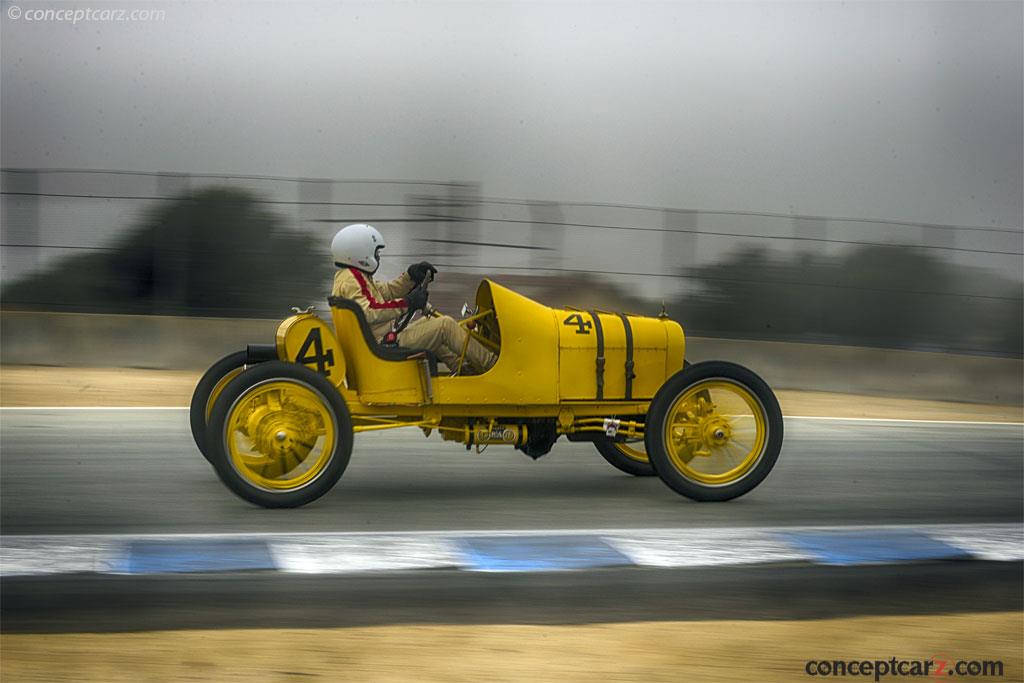
1915 Ford Old Number 4 Racer Navigation
1915 Ford Old Number 4 Racer Model Years
History
The Ford Model T has an extensive history in the automotive market lasting for nearly 20 years. It is often called the 'Tin Lizzie' and the 'Flivver' and is credited with 'putting America on wheels.' During the early 1900's, the automobile was very new and the marketplace was adjusting to having these horseless carriages carry its passengers rather than bicycles or horses. Steam, electricity, and gasoline were the three means of powering the vehicles. Up until about 1915, no one really knew which would be the favorable power-source. Steam provided many benefits such as being quiet, clean, and cheap. Gasoline or kerosene fuel was used to heat water in a boiler; the steam produced was channeled to the cylinders, where the pressure drives the pistons up and down. The shortcomings were that it took a while to start, having to wait for the steam to prepare. It was dangerous, often exploding and causing injury. It had a limited range, lasting about 20-40 miles before requiring refueling. Electricity was popular but it too had a limited range. It was easy to start and was very popular with the ladies for driving around town. Then there was gasoline, which was dirty and hard to start. It required fueling stations that were sometimes difficult to find in this new and evolving marketplace. The main benefit of the gasoline engine was that it had the most potential and an ever-increasing amount of power. It was said that how a vehicle finished on the race track often determined the success of sales. With gasoline engines winning most of the races, the other sources of power were eventually doomed.
There were over 200 automobile manufacturers during the early 1900's. The average production figures for a factory were a couple of hundred vehicles a year. This, of course, varied greatly due to the complexity and prestige of the vehicle being produced. Henry Ford, the founder of the Ford Motor Company, produced a vehicle that was affordable but, more importantly, mass-produced. By using an assembly line to construct parts, rather than the traditional hand assembly, the process was streamlined. Using an assembly line process was not new, it had been done before in the meatpacking industry. William C. Klan had visited a slaughterhouse in Chicago. Upon returning from his visit, he proposed the idea to Peter Martin. A team was assembled and perfected through trial and error. The assembly line did not begin operation on the Model T until 1914. The assembly line process streamlined the production greatly, now averaging just over 90 minutes to assemble a car. During 1914, there were more Ford's produced than all other manufacturers combined. At that point 'you get it in any color you wanted so long as it was black'. Henry Ford favored the black color because it dried the fastest. During the years 1917 through 1923, Ford did not do any advertising, with 9 out of 10 cars being Ford, none was necessary.
He paid his workers a wage proportionate to the cost of the automobile, so they would be able to buy what they produced. By introducing these innovations, his factories were able to out-produce and outsell the rest of the industry and mobilize the country. When production of the Model T began, the cost was around $850, around $1200 less than most cars. By the early 1920's, the price of the Model T cost about $300. Ford had found many ways to cut costs and offer the least expensive product. He instructed his suppliers on how to assemble the wood crates that were used to ship him parts. The crates were then dismantled and used within the bodies of the car. The scrapes were made into charcoal and sold under the name 'Kingsford'.
The first Model T was produced on September 27th, 1908, at the Piquette Plant in Detroit, Michigan. There are two classes of the Model T, those that were produced before 1919 and after 1919. The pre-1919 Model T's are known as veteran cars, while the later models are called vintage cars. Even though the name Model T was used for almost twenty years, it was much improved both visually and mechanically over the years. At all times, the vehicle could be had in a wide variety of body styles. The open touring cars and roadsters were cheaper to produce and thus, built in greater numbers. The Volkswagen 'Beetle' is the only car model to outsell the Model T Ford.
The Model T was designed by Henry Ford, Childe Harold Wills, Joseph A. Galamb, and Eugene Farkas. A 177 cubic-inch four-cylinder motor was placed in the front and powered the rear wheels. The 20 horsepower engine was capable of carrying the vehicle to a top speed of around 45 mph. There were three main bearings and side valves. A ten-gallon fuel tank could be found beneath the front seat, mounted to the frame. The engine started by a hand crank located at the front of the vehicle. The crank was very difficult to operate and has been the cause of many broken arms.
The smaller engines were favored by Henry Ford. His Model K had used a six-cylinder engine, but when production ceased around 1908, Ford would not use a six-cylinder engine again until 1941. The Model K had not been a sales success. While Ford had wanted to produce small and inexpensive vehicles, his board of directors had persuaded him to produce a larger, luxurious, and expensive model. In 1906, Henry Ford purchased the majority of stock, leaving him in control and in charge of the direction of the company. After World War I, he purchased the remaining Ford stock so he could dispense with the board of directors entirely. From 1906 through 1908, Ford created the Model N, R, and S which eventually evolved into the Model T.
A 'three speed' planetary gear type transmission was used. This had been used in the Model K but was not suited to such a large vehicle. As a result, it suffered from frequent breakdowns but worked fine in the Model T. The 3-speed unit was actually two-speeds forward plus one reverse. With no clutch pedal, shifting was handled by floor pedals that did not require a clutch. Also located on the floor was a third pedal that operated the reverse gear. The throttle was controlled by a lever on the steering column. Neutral was located by the parking brake lever. The other foot pedal applied a band around a drum in the transmission. The parking brake lever operated the band brakes on the outside of the rear brake drums. When the hand lever was pulled back, the brake was engaged and the drive gears were disengaged.
Wooden 'artillery wheels' were standard until 1926 when they were replaced with steel wire wheels. The suspension was a transversely mounted semi-elliptical spring for both the front and rear axles. Brass was used throughout the earlier vehicles for items such as horns, radiators, and headlights. Headlights were acetylene lamps but later switched to electric lights.
Sales peaked in 1924, and over 2 million automobiles left the assembly line. By this time, many of Ford's competitors had switched to the same principles that had made the Model T successful: a cheap and reliable vehicle built on an assembly line produced in mass quantities. Other manufacturers started attracting new buyers by offering amenities, extras, or larger engines. Popular options included windshield wipers, anti-theft locks, and light dimmers. Chevrolet vehicles had three forward gears, while the Model T still used only two. Also, since the Model T's were so durable, they were still in functioning order. This means that many owners did not need a car, and when they did, they usually bought a more luxurious vehicle. The used Model T's were then sold for next to nothing. Sales began to dip in 1925 and dramatically in 1926. Production ceased in 1927 for nearly six months while preparations were made for the production of the Model A.
The Model T mobilized a nation, not only the United States but many other countries. With dealerships and factories set up throughout the world, the Model T was mass-produced and easily available to many buyers. Often, the factories were established in other countries to get around an import tax, thus keeping the cost low. The innovative Model T served its purpose. It was inexpensive and reliable, many lasting even to this day.
By Daniel Vaughan | Mar 2006
There were over 200 automobile manufacturers during the early 1900's. The average production figures for a factory were a couple of hundred vehicles a year. This, of course, varied greatly due to the complexity and prestige of the vehicle being produced. Henry Ford, the founder of the Ford Motor Company, produced a vehicle that was affordable but, more importantly, mass-produced. By using an assembly line to construct parts, rather than the traditional hand assembly, the process was streamlined. Using an assembly line process was not new, it had been done before in the meatpacking industry. William C. Klan had visited a slaughterhouse in Chicago. Upon returning from his visit, he proposed the idea to Peter Martin. A team was assembled and perfected through trial and error. The assembly line did not begin operation on the Model T until 1914. The assembly line process streamlined the production greatly, now averaging just over 90 minutes to assemble a car. During 1914, there were more Ford's produced than all other manufacturers combined. At that point 'you get it in any color you wanted so long as it was black'. Henry Ford favored the black color because it dried the fastest. During the years 1917 through 1923, Ford did not do any advertising, with 9 out of 10 cars being Ford, none was necessary.
He paid his workers a wage proportionate to the cost of the automobile, so they would be able to buy what they produced. By introducing these innovations, his factories were able to out-produce and outsell the rest of the industry and mobilize the country. When production of the Model T began, the cost was around $850, around $1200 less than most cars. By the early 1920's, the price of the Model T cost about $300. Ford had found many ways to cut costs and offer the least expensive product. He instructed his suppliers on how to assemble the wood crates that were used to ship him parts. The crates were then dismantled and used within the bodies of the car. The scrapes were made into charcoal and sold under the name 'Kingsford'.
The first Model T was produced on September 27th, 1908, at the Piquette Plant in Detroit, Michigan. There are two classes of the Model T, those that were produced before 1919 and after 1919. The pre-1919 Model T's are known as veteran cars, while the later models are called vintage cars. Even though the name Model T was used for almost twenty years, it was much improved both visually and mechanically over the years. At all times, the vehicle could be had in a wide variety of body styles. The open touring cars and roadsters were cheaper to produce and thus, built in greater numbers. The Volkswagen 'Beetle' is the only car model to outsell the Model T Ford.
The Model T was designed by Henry Ford, Childe Harold Wills, Joseph A. Galamb, and Eugene Farkas. A 177 cubic-inch four-cylinder motor was placed in the front and powered the rear wheels. The 20 horsepower engine was capable of carrying the vehicle to a top speed of around 45 mph. There were three main bearings and side valves. A ten-gallon fuel tank could be found beneath the front seat, mounted to the frame. The engine started by a hand crank located at the front of the vehicle. The crank was very difficult to operate and has been the cause of many broken arms.
The smaller engines were favored by Henry Ford. His Model K had used a six-cylinder engine, but when production ceased around 1908, Ford would not use a six-cylinder engine again until 1941. The Model K had not been a sales success. While Ford had wanted to produce small and inexpensive vehicles, his board of directors had persuaded him to produce a larger, luxurious, and expensive model. In 1906, Henry Ford purchased the majority of stock, leaving him in control and in charge of the direction of the company. After World War I, he purchased the remaining Ford stock so he could dispense with the board of directors entirely. From 1906 through 1908, Ford created the Model N, R, and S which eventually evolved into the Model T.
A 'three speed' planetary gear type transmission was used. This had been used in the Model K but was not suited to such a large vehicle. As a result, it suffered from frequent breakdowns but worked fine in the Model T. The 3-speed unit was actually two-speeds forward plus one reverse. With no clutch pedal, shifting was handled by floor pedals that did not require a clutch. Also located on the floor was a third pedal that operated the reverse gear. The throttle was controlled by a lever on the steering column. Neutral was located by the parking brake lever. The other foot pedal applied a band around a drum in the transmission. The parking brake lever operated the band brakes on the outside of the rear brake drums. When the hand lever was pulled back, the brake was engaged and the drive gears were disengaged.
Wooden 'artillery wheels' were standard until 1926 when they were replaced with steel wire wheels. The suspension was a transversely mounted semi-elliptical spring for both the front and rear axles. Brass was used throughout the earlier vehicles for items such as horns, radiators, and headlights. Headlights were acetylene lamps but later switched to electric lights.
Sales peaked in 1924, and over 2 million automobiles left the assembly line. By this time, many of Ford's competitors had switched to the same principles that had made the Model T successful: a cheap and reliable vehicle built on an assembly line produced in mass quantities. Other manufacturers started attracting new buyers by offering amenities, extras, or larger engines. Popular options included windshield wipers, anti-theft locks, and light dimmers. Chevrolet vehicles had three forward gears, while the Model T still used only two. Also, since the Model T's were so durable, they were still in functioning order. This means that many owners did not need a car, and when they did, they usually bought a more luxurious vehicle. The used Model T's were then sold for next to nothing. Sales began to dip in 1925 and dramatically in 1926. Production ceased in 1927 for nearly six months while preparations were made for the production of the Model A.
The Model T mobilized a nation, not only the United States but many other countries. With dealerships and factories set up throughout the world, the Model T was mass-produced and easily available to many buyers. Often, the factories were established in other countries to get around an import tax, thus keeping the cost low. The innovative Model T served its purpose. It was inexpensive and reliable, many lasting even to this day.
By Daniel Vaughan | Mar 2006
- 1915 Ford Old Number 4 Racer Menu
- Article
- Image gallery
- Specifications
- Profiles


1915 Ford Old Number 4 Racer Vehicle Profiles

Recent Vehicle Additions


Performance and Specification Comparison
Model T Specification Comparison by Year
Year
Production
Wheelbase
Engine
Prices
4 cyl., 176.00 CID., 22.00hp
4 cyl., 176.70 CID., 20.00hp
Related Automotive News

WeatherTech Raceway Laguna Seca Launches 'Then & Now' Series and Social Media Content Featuring 50 Years of Historic Racing
WeatherTech Raceway Laguna Seca proudly announces the launch of an exciting new feature series titled Then %26 Now, dedicated to exploring the rich stories, news, facts, and photos that encapsulate the 50-year history of historic races. This series is...

Chip Ganassi Named The Amelia's 2022 Honoree
Hagerty announced today that racer and racing legend Chip Ganassi will serve as Honoree of The 27th Annual Amelia on March 3-6, 2022. Tickets for the 2022 event are available online now through the recently launched AmeliaConcours.com website.
Ganassi...
IMRRC Receives Corporate Support for Argetsinger Award Dinner Honoring Mario Andretti
Watkins Glen, N.Y. (Aug. 3, 2017) – Bosch and Firestone have joined the team of racing industry giants honoring Mario Andretti at the International Motor Racing Research Centers Cameron R. Argetsinger Award dinner on Aug. 31, a sold-out event.
The...
Roger Penske to be Honored with IMRRC's 2016 Argetsinger Award for Contributions to Racing
WATKINS GLEN, N.Y. (April 6, 2016) – Roger Penske, one of auto racings most notable team owners, will be honored in June by the International Motor Racing Research Center (IMRRC) with the 2016 Cameron R. Argetsinger Award for Outstanding Contributions...

€3 Million One-Off Super Car, The Icona Vulcano, To Make UK Debut At Salon Privé 2013
Salon Privé 2013 - 4th to 6th September
Syon Park, London, 4 July 2013 – Salon Privé confirms the Icona Vulcano will make its UK debut this September.
Icona was established in 2010 and launched with an electric concept car the Fuselage, which...

Chevy Performance Rolls with Hot Rod Magazine Power Tour
Weeklong drive kicks off with unprecedented access to GMs Milford Proving Ground
Road trip! Its that time of year again for the annual automotive pilgrimage known as the Hot Rod Magazine Power Tour® and Chevrolet Performance helps get it started...