History
The Ferrari 330 series was produced from 1963 through 1968. They were replacements for the Ferrari 250 GT 2+2 with many of the series retaining the style and mechanical components of their predecessors.
The front-engined, rear-wheel drive vehicle were powered by a derivative of the 400 Superamerica's four-liter Colombo 12-cylinder engine.
The first in the series was the 330 America, which was actually a 250 with a new engine. During its production lifespan, lasting only a year, 50 examples were produced of the 2+2 sports car.
The 330 GT 2+2 was introduced to the public at the 1964 Brussels Motor Show, built as a replacement for the 330 America. The 330 GT 2+2 is unique in that it provided ample seating for four individuals plus luggage. These were the ultimate road-going, practical sports cars that could be used for every-day transportation. The 330 GT 2+2 was a new product, not just an engine modification. Under the hood was a Tipo 209, twelve-cylinder engine capable of producing 300 horsepower. Disc brake were placed on all four corners to provided the stopping power. The 1964 model used a four-speed manual gear box with overdrive. The 1965 version, known as the Series II, received a 5-speed manual gearbox. Other changes included alloy wheels, dual-light front clip, and optional power steering and air conditioning.
The 330 GT 2+2 was produced from 1963 through 1968. Around 1080 models were produced of the 330 GT with 50 of them being Type 330 GTE Americas.
The 330 was a replacement for the 275. The shortened wheelbase and independent rear suspension was courtesy of its predecessor. The GTC (Gran Turismo Coupe) Pininfarina designed vehicle was debuted in 1966 at the Geneva Auto Show. It had a V-12 engine mounted in the front that was capable of producing 300 horsepower. The five-speed manual gearbox was located in the rear transaxle.
The 330 GTS (Gran Turismo Spyder) was shown in October 1966 at the Paris Auto Show.
There were around 600 coupes and 100 spyders produced during the production lifespan. In 1968 they were replaced by the 365 GTC/4 Daytona.
By Daniel Vaughan | Oct 2006
The front-engined, rear-wheel drive vehicle were powered by a derivative of the 400 Superamerica's four-liter Colombo 12-cylinder engine.
The first in the series was the 330 America, which was actually a 250 with a new engine. During its production lifespan, lasting only a year, 50 examples were produced of the 2+2 sports car.
The 330 GT 2+2 was introduced to the public at the 1964 Brussels Motor Show, built as a replacement for the 330 America. The 330 GT 2+2 is unique in that it provided ample seating for four individuals plus luggage. These were the ultimate road-going, practical sports cars that could be used for every-day transportation. The 330 GT 2+2 was a new product, not just an engine modification. Under the hood was a Tipo 209, twelve-cylinder engine capable of producing 300 horsepower. Disc brake were placed on all four corners to provided the stopping power. The 1964 model used a four-speed manual gear box with overdrive. The 1965 version, known as the Series II, received a 5-speed manual gearbox. Other changes included alloy wheels, dual-light front clip, and optional power steering and air conditioning.
The 330 GT 2+2 was produced from 1963 through 1968. Around 1080 models were produced of the 330 GT with 50 of them being Type 330 GTE Americas.
The 330 was a replacement for the 275. The shortened wheelbase and independent rear suspension was courtesy of its predecessor. The GTC (Gran Turismo Coupe) Pininfarina designed vehicle was debuted in 1966 at the Geneva Auto Show. It had a V-12 engine mounted in the front that was capable of producing 300 horsepower. The five-speed manual gearbox was located in the rear transaxle.
The 330 GTS (Gran Turismo Spyder) was shown in October 1966 at the Paris Auto Show.
There were around 600 coupes and 100 spyders produced during the production lifespan. In 1968 they were replaced by the 365 GTC/4 Daytona.
By Daniel Vaughan | Oct 2006
The Ferrari 330 series belonged to a long line of Ferrari road cars with front-mounted V12 engines, cars that were members of a bloodline whose history is still being written by the 612 Scaglietti and 599 GTB Fiorano. The 330's name derived from the then-familiar Ferrari practice of naming cars for their per-cylinder displacement in cubic centimeters, indicating that the engines used to power this series of cars displaced a total of 12x330cc, or about four liters. Preceded by the 275 and replaced by the 365, the 330 was caught right in the middle of a glorious era for Ferrari road cars.
The 330 spawned the vaunted 330 P series of mid-engined racers, which battled Ford's GT-40 in sports car racing throughout the mid-1960s. A successor to the legendary 250 GTO was also created using the 330 motor, named the 330 LMB. Ferrari produced only four of these latter models.
The 330 road cars were decidedly more relaxed and less exhilarating than the racing cars mentioned above, but their relatively high sales numbers and use of race-bred components meant that they were still important cars to Ferrari's history. Ferrari produced the 330 road cars primarily in four guises: the 330 America, the 330 GT 2+2, and the coupe/spider couple named 330 GTC and 330 GTS.
Ferrari introduced the 330 America first. It was a transitional model, essentially a 250 GTE 2+2 with the new 330 motor. The 330 GT 2+2 followed in 1964, and was a more thoroughly revised grand tourer built on a chassis stretched by 50mm compared to the America. This newer model, though still closely related to its predecessor, wore a controversial body design by the familiar Pininfarina. Its front end styling used an unconventional quad-headlight arrangement that mounted the two lights per side in clusters canted down toward the egg crate grille, creating an aggressive but cumbersome appearance of slanted eyes. The Mulliner Park Ward-bodied Rolls-Royce Silver Cloud III of the mid-1960s used a similar frontal treatment, also with questionable results.
A more harmonious front end debuted on the 1965 Ferrari 330 GT 2+2, reverting to a more traditional twin-headlight approach. Other changes for 1965 included the replacement of the four-speed with overdrive gearbox by a 5-speed unit, and the introduction of power steering and air conditioning as options. Production of the 330 GT 2+2 continued until late 1967, by which time Ferrari had produced some 1,075 examples of the model. This was an excellent figure for a 1960s Ferrari, especially when compared to the 50 examples of the transitional 330 America that the company produced.
At the Geneva Motor Show of 1966, Ferrari introduced a two-seater 330 coupe called the GTC. Also styled by Pininfarina, the GTC looked surprisingly sultry given that its design was an amalgamation of prior cues. From the front the GTC aspired to 500 Superfast or 400 Superamerica greatness, while from the back the car looked like a 275 GTS with a fixed roof. Somehow the look came together remarkably well, though, creating an iconic Ferrari design without the hand-me-down flavor that could have resulted from the borrowed styling features.
Later in 1966, at Paris, the spider version of the 330 appeared. Named 330 GTS and clearly an open version of the GTC, it too was a lovely design. Production of both the GTC and GTS ended in 1968, after Ferrari produced approximately 600 coupes and 100 spiders.
The engine common to all 330 series road cars was a 60-degree V12 of 3,967cc displacement. The block and heads were cast silumin, an aluminum and silicon alloy. A chain-driven single overhead camshaft per cylinder bank operated two inclined valves per cylinder that opened into hemispherical combustion chambers. Ferrari employed three Weber carburetors and an 8.8:1 compression ratio in the 330 motor to create a power plant that was capable of 300bhp at 6,600rpm in street tune. The V12 was bolted to a 5-speed gearbox in all 330 road cars, excepting the 330 America and early 330 GT 2+2, which used 4-speed gearboxes with overdrive.
Double wishbones and coil springs suspended the front end of all 330 road cars. The GTC and GTS used independent rear suspensions, but the 2+2 models retained live axles. Brakes were assisted four wheel discs on all models, using an unconventional dual-circuit design that incorporated two master cylinders and two servos.
Pininfarina styled and bodied all four standard versions of the 330 road car, though there were bespoke examples crafted by other coachbuilders including Michelotti and Drogo. The 330 chassis was made of tubular steel, and the Pininfarina bodies too were primarily steel, but with opening panels in aluminum.
As witnesses of Ferrari's finest days, the 330 series road cars have become historically important and commensurately collectible. The GTC and GTS remain the thoroughbred sophisticates of the series and command high prices. The 2+2 models, though, especially the oddly styled early 330 GT 2+2s, represent good value and are some of the most attainable machines to emit the distinctive mechanical symphony of a 1960s Ferrari V12.
Sources:
'Ferrari 330.' CarsfromItaly.net n. pag. Web. 27 Dec 2010. http://carsfromitaly.net/ferrari/index.html.
'Specifications.' 330 Register n. pag. Web. 27 Dec 2010. http://www.330register.com/models.cfm.
Tyer, Ben. 'Ferrari 330 GTC.' Supercars.net n. pag. Web. 27 Dec 2010. http://www.supercars.net/cars/551.html.By Evan Acuña
The 330 spawned the vaunted 330 P series of mid-engined racers, which battled Ford's GT-40 in sports car racing throughout the mid-1960s. A successor to the legendary 250 GTO was also created using the 330 motor, named the 330 LMB. Ferrari produced only four of these latter models.
The 330 road cars were decidedly more relaxed and less exhilarating than the racing cars mentioned above, but their relatively high sales numbers and use of race-bred components meant that they were still important cars to Ferrari's history. Ferrari produced the 330 road cars primarily in four guises: the 330 America, the 330 GT 2+2, and the coupe/spider couple named 330 GTC and 330 GTS.
Ferrari introduced the 330 America first. It was a transitional model, essentially a 250 GTE 2+2 with the new 330 motor. The 330 GT 2+2 followed in 1964, and was a more thoroughly revised grand tourer built on a chassis stretched by 50mm compared to the America. This newer model, though still closely related to its predecessor, wore a controversial body design by the familiar Pininfarina. Its front end styling used an unconventional quad-headlight arrangement that mounted the two lights per side in clusters canted down toward the egg crate grille, creating an aggressive but cumbersome appearance of slanted eyes. The Mulliner Park Ward-bodied Rolls-Royce Silver Cloud III of the mid-1960s used a similar frontal treatment, also with questionable results.
A more harmonious front end debuted on the 1965 Ferrari 330 GT 2+2, reverting to a more traditional twin-headlight approach. Other changes for 1965 included the replacement of the four-speed with overdrive gearbox by a 5-speed unit, and the introduction of power steering and air conditioning as options. Production of the 330 GT 2+2 continued until late 1967, by which time Ferrari had produced some 1,075 examples of the model. This was an excellent figure for a 1960s Ferrari, especially when compared to the 50 examples of the transitional 330 America that the company produced.
At the Geneva Motor Show of 1966, Ferrari introduced a two-seater 330 coupe called the GTC. Also styled by Pininfarina, the GTC looked surprisingly sultry given that its design was an amalgamation of prior cues. From the front the GTC aspired to 500 Superfast or 400 Superamerica greatness, while from the back the car looked like a 275 GTS with a fixed roof. Somehow the look came together remarkably well, though, creating an iconic Ferrari design without the hand-me-down flavor that could have resulted from the borrowed styling features.
Later in 1966, at Paris, the spider version of the 330 appeared. Named 330 GTS and clearly an open version of the GTC, it too was a lovely design. Production of both the GTC and GTS ended in 1968, after Ferrari produced approximately 600 coupes and 100 spiders.
The engine common to all 330 series road cars was a 60-degree V12 of 3,967cc displacement. The block and heads were cast silumin, an aluminum and silicon alloy. A chain-driven single overhead camshaft per cylinder bank operated two inclined valves per cylinder that opened into hemispherical combustion chambers. Ferrari employed three Weber carburetors and an 8.8:1 compression ratio in the 330 motor to create a power plant that was capable of 300bhp at 6,600rpm in street tune. The V12 was bolted to a 5-speed gearbox in all 330 road cars, excepting the 330 America and early 330 GT 2+2, which used 4-speed gearboxes with overdrive.
Double wishbones and coil springs suspended the front end of all 330 road cars. The GTC and GTS used independent rear suspensions, but the 2+2 models retained live axles. Brakes were assisted four wheel discs on all models, using an unconventional dual-circuit design that incorporated two master cylinders and two servos.
Pininfarina styled and bodied all four standard versions of the 330 road car, though there were bespoke examples crafted by other coachbuilders including Michelotti and Drogo. The 330 chassis was made of tubular steel, and the Pininfarina bodies too were primarily steel, but with opening panels in aluminum.
As witnesses of Ferrari's finest days, the 330 series road cars have become historically important and commensurately collectible. The GTC and GTS remain the thoroughbred sophisticates of the series and command high prices. The 2+2 models, though, especially the oddly styled early 330 GT 2+2s, represent good value and are some of the most attainable machines to emit the distinctive mechanical symphony of a 1960s Ferrari V12.
Sources:
'Ferrari 330.' CarsfromItaly.net n. pag. Web. 27 Dec 2010. http://carsfromitaly.net/ferrari/index.html.
'Specifications.' 330 Register n. pag. Web. 27 Dec 2010. http://www.330register.com/models.cfm.
Tyer, Ben. 'Ferrari 330 GTC.' Supercars.net n. pag. Web. 27 Dec 2010. http://www.supercars.net/cars/551.html.By Evan Acuña
Similar Automakers
Similarly Sized Vehicles
from 1965
Similarly Priced Vehicles


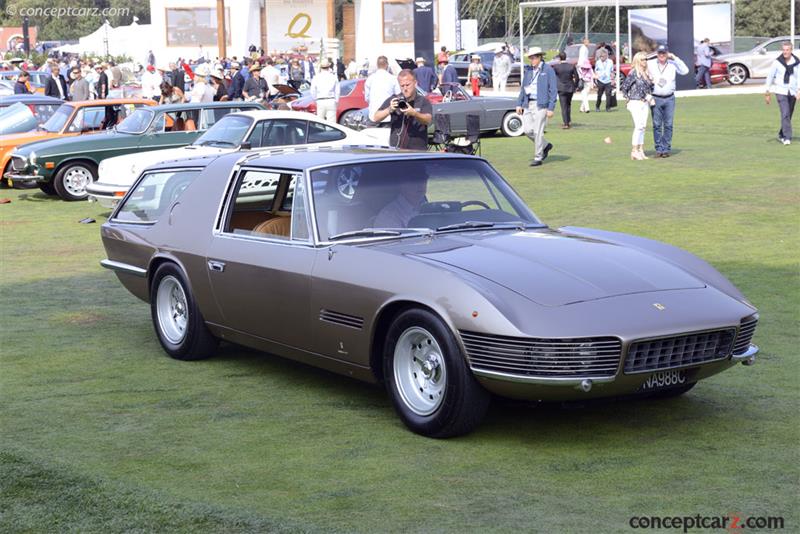
1965 Ferrari 330 GT Shooting Brake Vehicle Profiles
Recent Vehicle Additions


Performance and Specification Comparison
Price Comparison
$13,905
$14,200
$14,495
$24,400
330 GT 2+2 Specification Comparison by Year
Year
Production
Wheelbase
Engine
Prices
Related Automotive News

THE 20TH CENTURY COLLECTION: 16 RARE CLASSICS HEADING TO RM SOTHEBY'S MONACO AUCTION
RM Sothebys is delighted to announce The 20th Century Collection, which will be offered in Monaco on 10-11 May
The collection includes 16 desirable European classics, including models from Aston Martin, Ferrari, and Rolls-Royce
Many cars...

1962 Ferrari 250 GT SWB California Spider to Lead Gooding & Company's Amelia Island Auctions Alongside Stable of the Finest Ferraris
The star car of the auctions will be a one-off 1962 Ferrari 250 GT SWB California Spider, joined by a 250 GT Tour de France Berlinetta, a 250 MM Vignale Spider, and other examples of Maranellos finest models.
Leading international auction...

Sensational Quartet Of Rare Classic Ferrari Americas Set To Wow At Salon Privé
Top-end Ferrari America models created for the lucrative post-war American market
All designed as V12, front-engined grand tourers, built between 1950 - 1957
Two of the six 342 Americas including unique one-off Vignale Cabriolet
End of the line 5...

One Off 1965 Ferrari 330 GT 'Shark Nose' to Cross the Block at Russo and Steele's 2016 Arizona Auction Event
Scottsdale, Arizona (December 1st, 2015) – Combining avant-garde Pininfarina styling with outstanding V-12 performance, Ferraris 330 GT 22 was a comfortable 22 model and while following in the footsteps of the prior 250 GTE 22, the 330 GT...

REVERED FERRARI 250 LM LEADS SUPERLATIVE ROSTER OF ITALIAN SPORTS CARS AT RM'S FLAGSHIP MONTEREY SALE
· RM Auctions announces a legendary 1964 Ferrari 250 LM by Scaglietti as the latest multi-million-dollar highlight for its flagship Monterey sale, August 15–16 in California
· 250 LM leads a superb roster of no less than 26 Ferraris at...