History
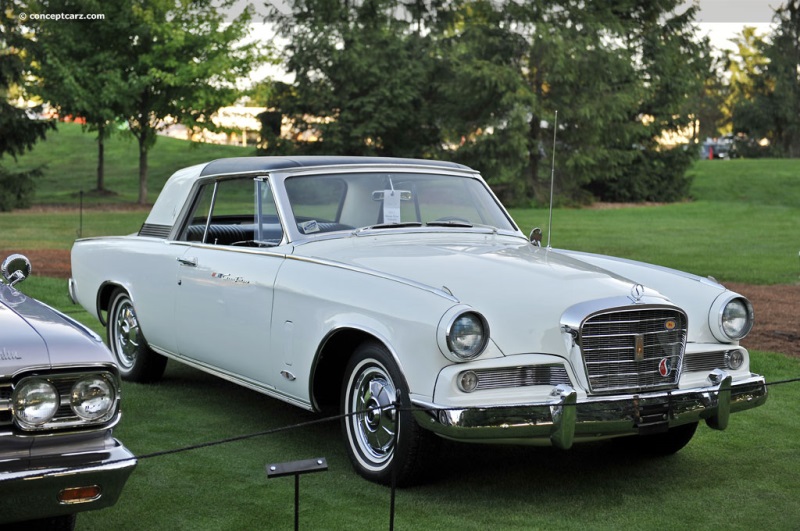
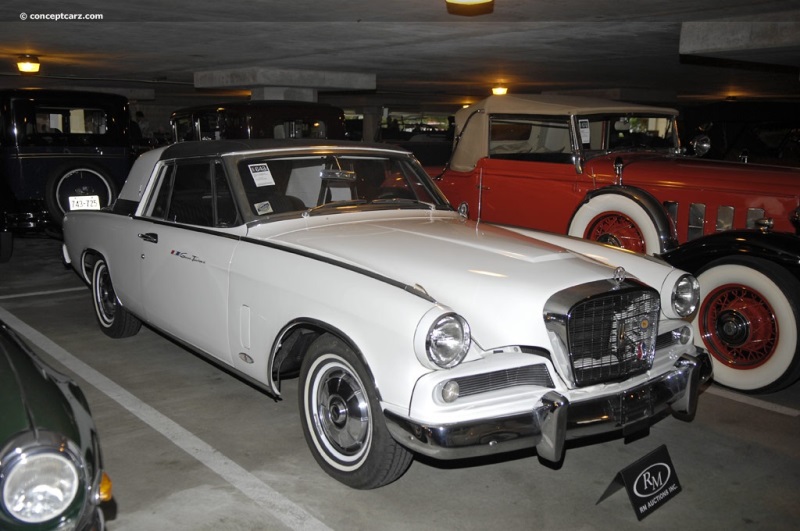
From 1962 through 1964 Studebaker produced the Gran Turismo Hawk, also known as the GT Hawk. The GT Hawk was an iteration of the Hawk series which had begun with the Golden Hawk in 1956. The styling was performed by Brooks Stevens using the prior Hawk cars as a starting point. The hood was retained while the radiator and grille borrowed inspiration from Mercedes-Benz. The GT Hawks was a marriage of both European and American styling and influences. The rear end was similar to that of a Lincoln while the roofline closely resembled a Ford Thunderbird. The result was a modern car that was both smooth and aerodynamic. It was sold in the US and other countries, such as Great Britain and Australia. In the US, sales were slow, with only 8,388 examples being produced in its inaugural year. 947 were produced for other countries during that year. This would be its strongest year, as sell fell to 4,009 for 1962, plus an additional 625 for export. Only 1,484 US examples were produced in 1964 and 283 for export.
Many areas of the vehicles were designed to be inexpensive to produce. The rear window was flat and recessed; the underpinnings and chassis of the car were nearly identical to prior Hawks. The engine bay could accept a variety of Studebaker engines that could be mated to a three-speed manual, four-speed, or Flight-O-Matic automatic gearbox. The engines ranged from a 4.7-liter V8 engine that produced just over 210 horsepower to a supercharged 5-liter engine that produced over 330 horsepower. The car's low weight and front disc brakes made it a solid performance machine.
Minor styling improvements were made for 1963. The rectangular parking lights were replaced with round units. The side of the dash was wood grain which made it similar in appearance to the rest of the instruments. Changes followed in 1964 such as a 'Studebaker Hawk' nameplate appearing on the trunk lid. The grille was again updated, now having a Hawk emblem in the center of the grille. A circle-S ornament could also be found on the grille shell. The top was a half-vinyl-covered roof which had been part of Steven's original designs but never made it into production in prior models. Wheel covers, similar to the other Studebaker models, were added. A silver-threaded cloth upholstery was added to the list of options, and for the first time, AM/FM radio could be ordered on the GT Turismo.
By Daniel Vaughan | Sep 2007
Many areas of the vehicles were designed to be inexpensive to produce. The rear window was flat and recessed; the underpinnings and chassis of the car were nearly identical to prior Hawks. The engine bay could accept a variety of Studebaker engines that could be mated to a three-speed manual, four-speed, or Flight-O-Matic automatic gearbox. The engines ranged from a 4.7-liter V8 engine that produced just over 210 horsepower to a supercharged 5-liter engine that produced over 330 horsepower. The car's low weight and front disc brakes made it a solid performance machine.
Minor styling improvements were made for 1963. The rectangular parking lights were replaced with round units. The side of the dash was wood grain which made it similar in appearance to the rest of the instruments. Changes followed in 1964 such as a 'Studebaker Hawk' nameplate appearing on the trunk lid. The grille was again updated, now having a Hawk emblem in the center of the grille. A circle-S ornament could also be found on the grille shell. The top was a half-vinyl-covered roof which had been part of Steven's original designs but never made it into production in prior models. Wheel covers, similar to the other Studebaker models, were added. A silver-threaded cloth upholstery was added to the list of options, and for the first time, AM/FM radio could be ordered on the GT Turismo.
By Daniel Vaughan | Sep 2007
Similarly Sized Vehicles
from 1964
Similarly Priced Vehicles


1964 Studebaker Gran Turismo Hawk Vehicle Profiles
Recent Vehicle Additions


Performance and Specification Comparison
Price Comparison
$1,935 - $2,525
$2,055 - $2,550
$2,071 - $2,960
$2,310 - $2,840
$4,445
Gran Turismo Hawk Specification Comparison by Year
Year
Production
Wheelbase
Engine
Prices
9,335
120.50 in.
6 cyl., 169.60 CID., 112.00hp
8 cyl., 259.20 CID., 180.00hp
8 cyl., 289.00 CID., 210.00hp
8 cyl., 259.20 CID., 180.00hp
8 cyl., 289.00 CID., 210.00hp
$3,100 - $3,100
4,634
120.50 in.
8 cyl., 289.01 CID., 175.00hp
8 cyl., 259.23 CID., 180.00hp
8 cyl., 289.00 CID., 210.00hp
8 cyl., 289.00 CID.
8 cyl., 259.23 CID., 180.00hp
8 cyl., 289.00 CID., 210.00hp
8 cyl., 289.00 CID.
$3,095 - $3,095
109.00 in.
6 cyl., 169.60 CID., 112.00hp
8 cyl., 259.20 CID., 180.00hp
8 cyl., 289.00 CID., 210.00hp
8 cyl., 289.00 CID., 240.00hp
8 cyl., 289.00 CID., 290.00hp
8 cyl., 259.20 CID., 180.00hp
8 cyl., 289.00 CID., 210.00hp
8 cyl., 289.00 CID., 240.00hp
8 cyl., 289.00 CID., 290.00hp
$2,960 - $2,960
Related Automotive News

2019 Pebble Beach Concours d'Elegance Best of Show Winner
1931 Bentley 8 Litre Named Best of Show at the 69th Pebble Beach Concours dElegance
PEBBLE BEACH, Calif. (August 18, 2019) — Every August, the history of the automobile rolls onto the competition field of the Pebble Beach Concours dElegance...

Alfa Romeo Named Best of Show at the 68th Pebble Beach Concours d'Elegance
Touring-Bodied Alfa Romeo 8C 2900B Named Best of Show at the 68th Pebble Beach Concours dElegance
PEBBLE BEACH, Calif. (August 26, 2018) — After an intense competition that drew diverse cars from around the globe, the coveted gold Best of Show...

Countdown to Auburn Fall: 'Preservation Class' Cord Completes ACD Trifecta for Auctions America's Labor Day Weekend Sale
Highly original multi award-winning Cord leads latest highlights for Auctions Americas Auburn Fall weekend, August 31 – September 4 at Indianas historic Auburn Auction Park
Lovingly preserved over the past 79 years, Cord exhibits fantastic pat...

JOE MCMURREY COLLECTION TO HEADLINE DANA MECUM'S 29TH ORIGINAL SPRING CLASSIC
Rare Shelby 427 Cobra Roadster, GT350s and more head to Indianapolis, May 17-21
Walworth, Wis. – April 7, 2016 – An impressive array of 17 prized and desirable vehicles from the collection of noted Shelby aficionado Joe McMurrey of Longview,...

Bonhams smashes multiple world records at $32.7 million Quail Lodge motorcar auction
Bonhams 16th annual Carmel automotive auction – the longest running sale during the Monterey Peninsula Car Week – was a resounding success with a nearly 90 per cent sale-through rate and nearly %2433 million realized.
The Bonhams pavilion, situated on...