1953 Siata 208CS
1953 Siata 208CS Navigation
The SIATA Company, an acronym for Societa Italiana Applicazione Trasformazione Automobilistiche, was founded in the mid-1920s by Giorgio Ambrosini. They became known as one of the premier Italian operations specializing in transforming production cars into high-performance specialty vehicles. The Company remained in business until 1974. During that time, they transformed over 13,000 vehicles. Their business was much more than just tuning automobiles; they also created a line of 'speed equipment' such as superchargers, twin-carburetor manifolds, high-compression alloy heads, and OHV conversion kits. 
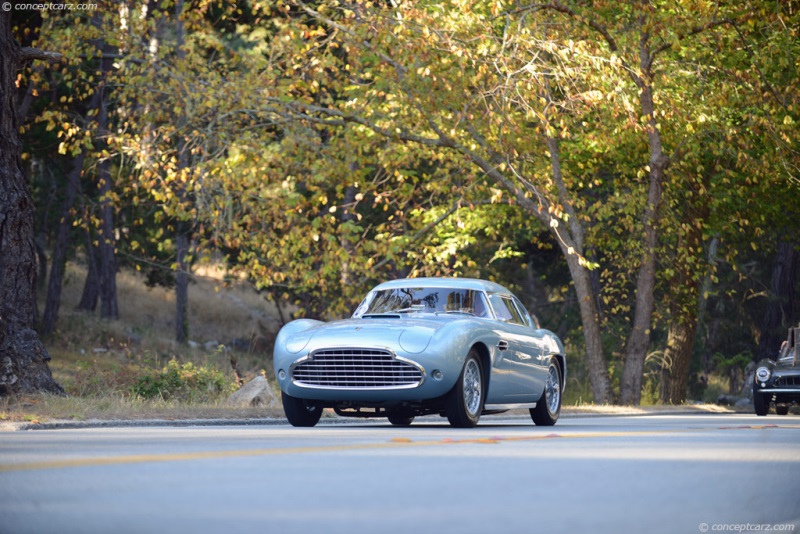
Spyder by Farina
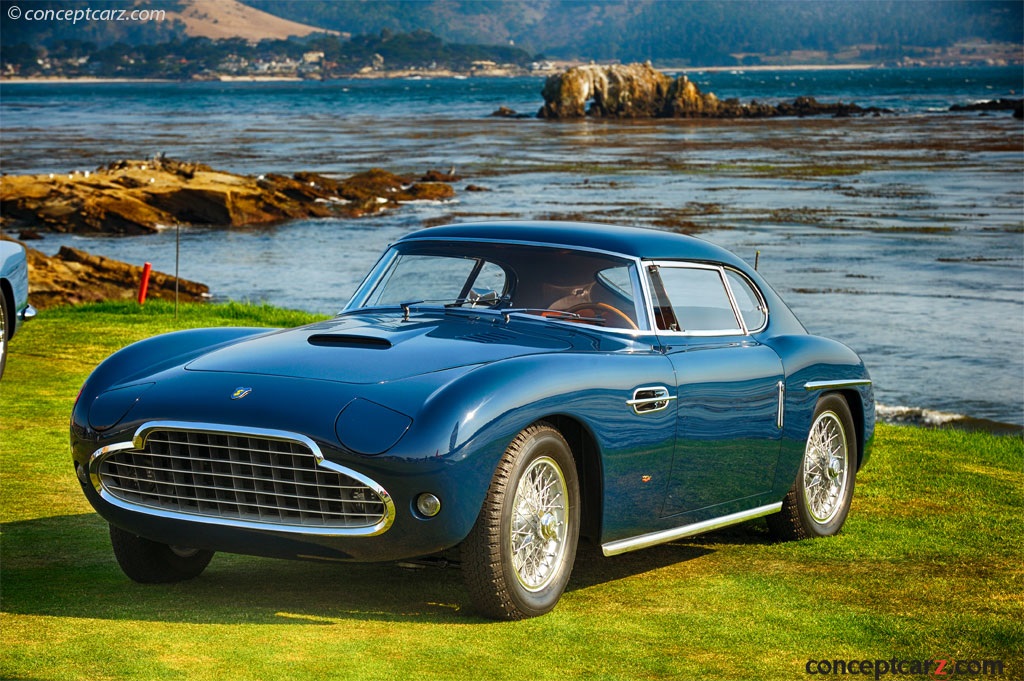
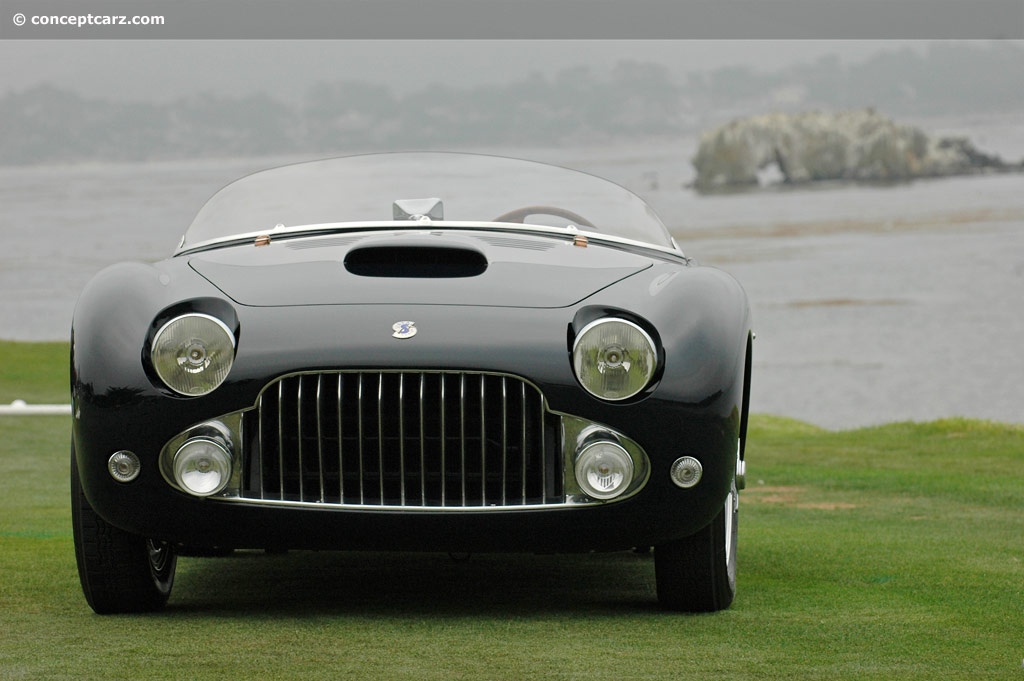
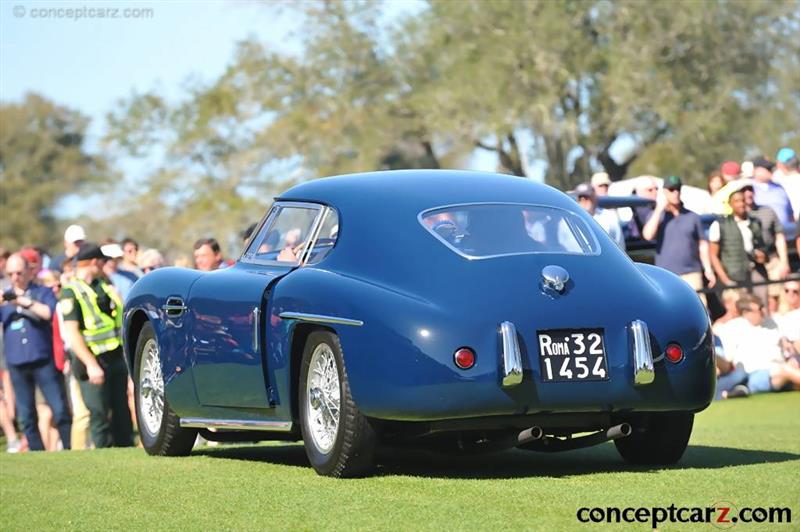
View info and historySiata's association with Fiat dates to 1926 when Giorgio Ambrosini's firm became the first to specialize in overhead-valve conversions, aftermarket components, and speed tuning services. In 1950, Siata launched the Daina series, the first chassis developed in-house. This was quickly followed by the Farina-bodied Gran Sport and the 750 Spider. In the early 1950s, Fiat introduced their 8V as a limited-production high-end sports car powered by a compact, all-alloy V8 engine. The chassis had been designed specifically for the 'Otto Vu' Fiat 2-liter V8 engine but could house other V8s. Only one engine - a Chrysler powerplant - would replace the 70-degree Fiat V8 engine. The Fiat unit was fitted with two Weber carburetors and was capable of producing 110 horsepower. With triple Weber carburetors, the power rose even further. There were aluminum drum brakes and an independent suspension at all four corners. The 208 CS Coupe used a lightweight, oval-tube chassis similar in design to the prototypes that had been manufactured for the Fiat factory. The 8V engine received a five-speed gearbox, four-wheel hydraulic drum brakes provided the stopping power, and the suspension was an independent-wishbone setup with coil springs. The first six examples were clothed by Stabilimenti Farina featuring retractable headlamps, a low stance, and a competition-oriented cockpit. Approximately nine examples of the fifteen (as many as eighteen) total 208 CS models were bodied by Balbo. Stabilimenti Farina closed unexpectantly near the end of 1952, so nearby Carrozzeria Successori Balbo took over the production of the coupes. The Balbo-bodied coupes wore eggcrate grilles and their overall proportions were slightly revised.
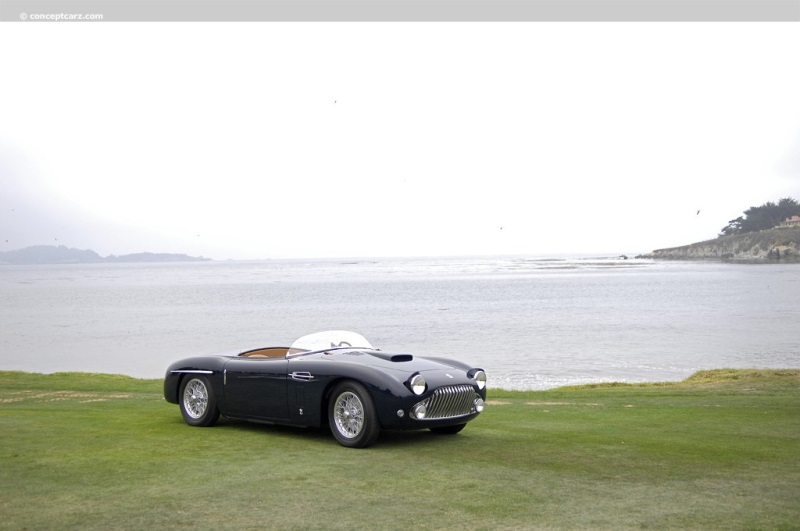
Spyder by Farina
View info and historyThe Siata 208 CS made its debut in 1952 at the Torino Motor Show and were soon entered into prominent road races of the era such as the Mille Miglia, Giro di Sicilia, and Tour de France Automobile, along with sprints, hill climbs, and rallies. They were later granted homologation in the Sport Commerciale class.
by Daniel Vaughan | Oct 2009

Spyder by Farina
View info and history
Spyder by Farina
View info and history
by Daniel Vaughan | Oct 2009
Related Reading : Siata 208S History
Siata, meaning Societa Italiana Applicazioni Trasformazioni Automobilistiche, was created in 1926 by Georgio Ambrosini of Turin. They specialized in producing tuning accessories for Italian automobiles, mainly Fiat. Among the speed equipment produced were dual carburetor manifolds, overhead valve conversions, superchargers, high compression cylinder heads, gearsets, and even complete gearboxes. Throughout....
Continue Reading >>
Continue Reading >>
- 1953 Siata 208CS Menu
- Article
- Image gallery
- Valuation
- Specifications
- Profiles
- Production figures


1953 Siata 208CS Vehicle Profiles



Recent Vehicle Additions


Related Automotive News

Landmark Ferraris trace Maranello's race-to-road lineage at Salon Privé
Salon Privé Concours Ferraris of the 50s and 60s class is set to showcase Maranellos remarkable progress from a purely competition-focused manufacturer to one now renowned for building some of the greatest road-going sports cars in the world.
S...

Ex-Surtees race-winner and rare Chinetti-commissioned Spider join Salon Privé's Ferrari 75th Anniversary class
Salon Privé Concours dElégance presented by Aviva introduces pair of important Maranello models - from road and track - in its Ferrari 75th Anniversary class
#1 - One of only two Ferrari 275 GTB4 S NART Spiders built with an aluminium body, and...

Make Lancia Great Again: London Concours Reveals Lancia Legends Display
The London Concours has announced its Lancia Legends display – a celebration of cars from the golden era of Lancia
Line-up includes icons like Henri Toivonens Lancia 037 Rally Evo 2, a one-of-59 B24 Spider and the ultimate Flaminia a Super Sport...

Gooding & Company Presents Three Significant Competition Ferrari Berlinettas At The Company's 15Th Annual Pebble Beach Auctions
These three cars showcase Ferraris lineage of competition GT cars. Selections include the 1966 Ferrari 275 GTBC, the 1959 Ferrari 250 GT Tour de France, and the 1950 Ferrari 166 MM195 S Berlinetta Le Mans.
Santa Monica, Calif. (June 28,...

Italian Racing Classics Lead Gooding & Company's 10th Anniversary
SANTA MONICA, Calif. (June 4, 2013) – Gooding %26 Company, the official auction house of the Pebble Beach Concours dElegance acclaimed for selling the worlds most significant and valuable collector cars, will be hosting the 10th Anniversary sale...