1953 Aston Martin DB3S

1953 Aston Martin DB3S Navigation
Lionel Martin and Robert Bamford founded Aston Martin in 1913. In 1947, it was acquired by David Brown, becoming the company's latest savior. He also acquired the Lagonda business for its 2.6-liter W.O. Bentley-designed engine. Thus began the classic 'DB' series of road-going and racing cars.
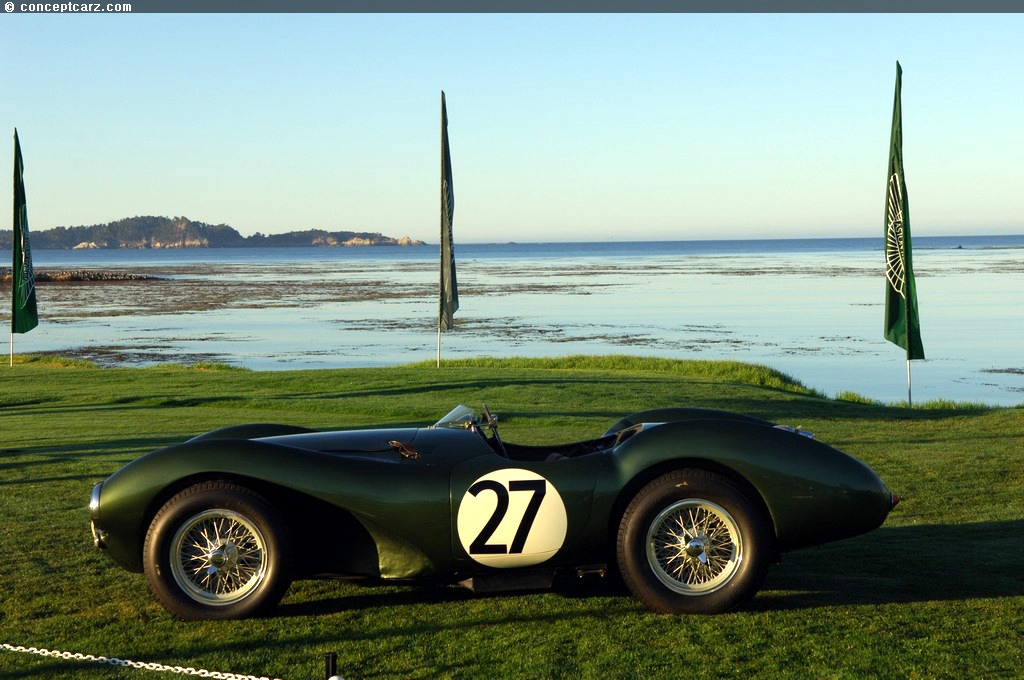
Roadster
Chassis #: DB3S/4
View info and historyThe DB3 was introduced in 1951. It was powered by the 2.6-liter Lagonda straight engine from the DB2 Vantage. The design was by Eberan von Eberhorst (a former Auto Union designer) and its aluminum two-seater open body rested on a twin-tubular platform with a torsion bar and trailing arms in the front and torsion bars, parallel links, Panhard rod, and DeDion axle in the rear. Between 1951 and 1953, a total of 10 examples were built, with chassis numbers from DB3/1 to DB3/10. The first five cars were Works car while the remaining examples were sold to privateers. The DB3 proved to be uncompetitive, partially due to its weight. Engineer A.G. 'William' Watson approached Aston Martin competition director John Wyer with an alternative design, in hopes of presenting it to Mr. Brown without upsetting the more senior designer. The tactic worked and the first DB3S was ready for competition by May of 1953. The DB3S had a smaller footprint than the DB3, being both shorter and less wide. Its height was just an inch taller than the outgoing model. The Lagonda straight-six engine was enlarged to 2,992cc and fitted with three twin-choke Weber 35 DCO carburetors and backed by a David Brown S430 4-speed manual transmission. Initially, the engine offered just over 180 horsepower, but by the time production of the DB3S had come to a close, a twin-spark version helped raise output to nearly 230 horsepower. The aluminum bodywork was designed by in-house stylist Frank Feeley.
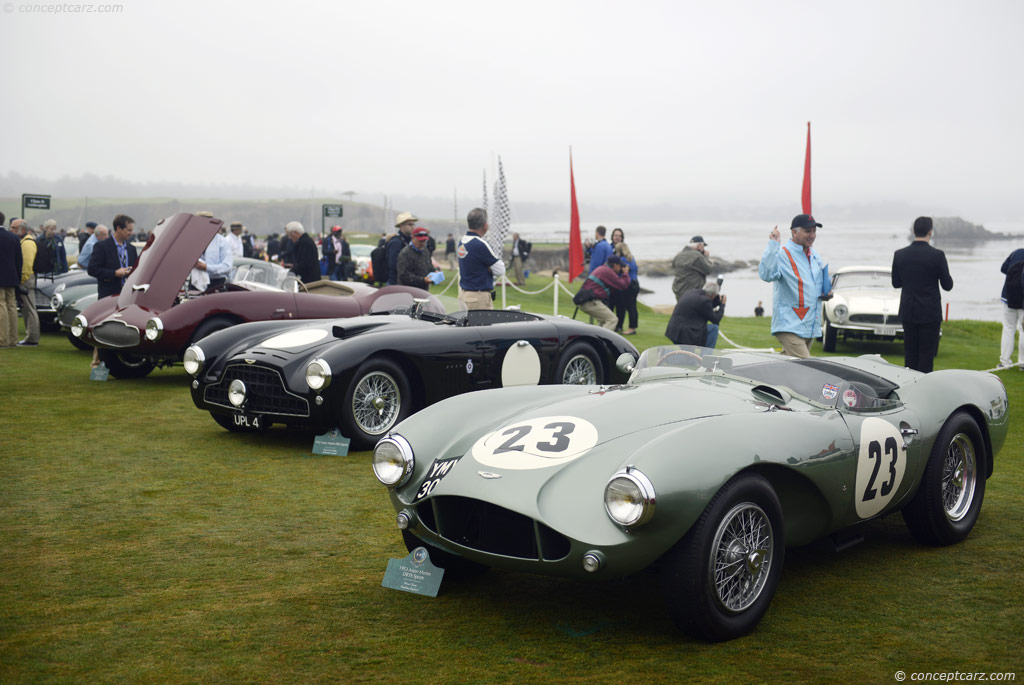
Roadster
Chassis #: DB3S/1
View info and historyThe refined DB3S raced in May of 1953 at Charterhall where Reg Parnell drove it to its first victory. Next came the 24 Hours of LeMans, where two examples were entered to contest this grueling race. Unfortunately, both were forced to retire prematurely due to accident damage and ignition failure. Despite this setback, it would win at the Tourist Trophy (a 1-2 victory), Goodwood Nine Hours, and British Empire Trophy in 1953. Aston Martin would finish the 1953 season 3rd in the championship.Modifications, improvements, and further refinement continued on the DB3S into the 1954 season. The most significant of these was a low-drag body specifically designed and fine-tuned in wind-tunnel testing for the high-speed Le Mans track. A prototype example was also given disc brakes at the front and the engine was fitted with a supercharger. The 1954 season, however, would be a disappointment. The highest place finished was a third place in the Buenos Aires 1000 km. The team would miss the opening two rounds of the 1955 season at Buenos Aires and Sebring. A single DB3S was entered at the Mille Miglia but it failed to finish. At LeMans, the DB3S driven by Collins/Frere finished 2nd (1st in class). Walker/Poore drove a DB3S to 4th overall at the Tourist Trophy which helped Aston Martin finish the season in 5th place.
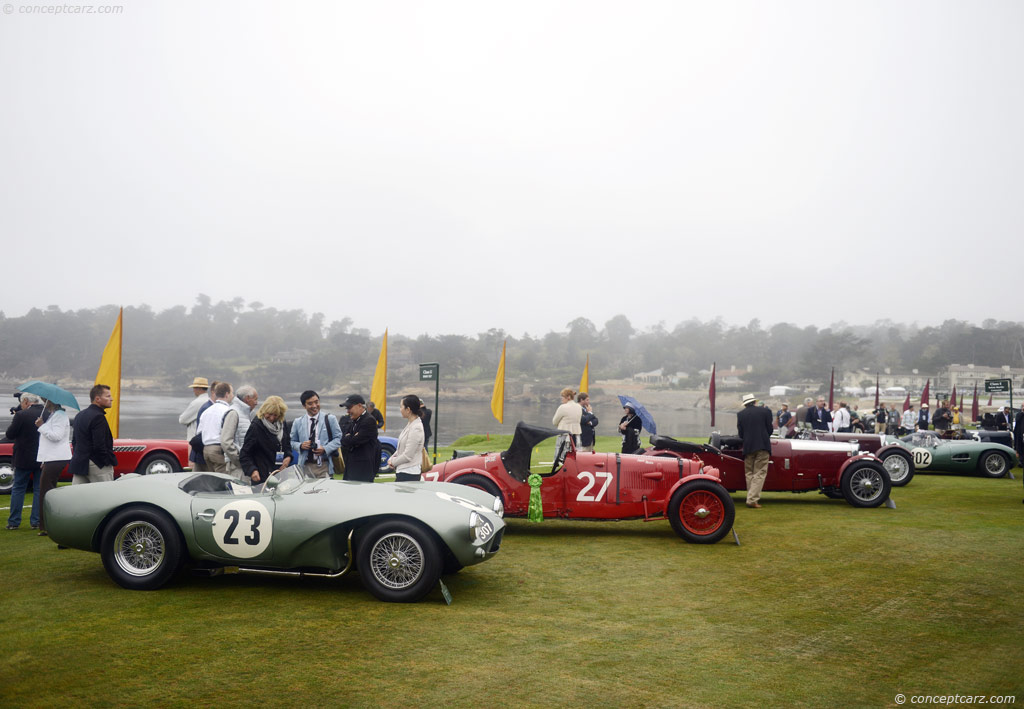
Roadster
Chassis #: DB3S/1
View info and historyFor the 1956 season, Aston Martin was focusing their resources on the development of the new DBR1. While work continued, the factory raced the DB3S at Sebring where it finished in 4th. At the Nurburgring 1000Km, it finished 5th. Another second place overall (1st in class) was cored at Le Mans in the hands of Moss/Collins although due to the change of regulations after the 1955 tragic disaster this event was a non-championship race. Aston Martin would finish the season 4th in the championship. For the 1957 season, the Aston Martin DBR1 became the company's main sports racer. The racing resume of the DB3S was not quite over yet, as the Whitehead brothers raced an example at LeMans in 1958 and finished in second place after all the works DBR1s failed to finish. During the production lifespan of the DB3S, 31 examples were built with 11 being Works cars and the other 20 sold to privateers.
by Daniel Vaughan | Dec 2019
Roadster
Chassis #: DB3S/4
View info and history
Roadster
Chassis #: DB3S/1
View info and history
Roadster
Chassis #: DB3S/1
View info and history
by Daniel Vaughan | Dec 2019
Related Reading : Aston Martin DB3S History
The DB3 was not as successful as Aston Martin had intended so they tasked Watson to design and engineer a new car. The result was the DB3S, a design that was based on its predecessor but featured a smaller wheelbase and a lighter chassis. The DB3S were built in two series, the first being numbered one through ten, from 1953 through 1956, and built primarily for the works team. The second series was....
Continue Reading >>
Continue Reading >>
Related Reading : Aston Martin DB3S History
David Brown, who later became Sir David, purchased the Aston Martin and Lagonda companys from receivership in 1948. The Lagonda Company appealed to Mr. Brown for its W.O. Bentley-designed twin-cam, 2.6-liter six-cylinder engine. The Aston martin company had a modern chassis, a solid reputation, and a sporting heritage. From the purchase, David was committed to motorsport competition. One of the earliest....
Continue Reading >>
Continue Reading >>
- 1953 Aston Martin DB3S Menu
- Article
- Image gallery
- Valuation
- Specifications
- Profiles
Aston Martin
Similar Automakers
Similarly Sized Vehicles
from 1953


1953 Aston Martin DB3S Vehicle Profiles



Recent Vehicle Additions


Performance and Specification Comparison
DB3S Specification Comparison by Year
Year
Production
Wheelbase
Engine
Prices
Related Automotive News

RM Sotheby's Presents Highly Original Aston Martin DB3S Works at Monterey Auction
SECOND WORKS CAR, CAMPAIGNED BY MOTORSPORT HERO PETER COLLINS
DB3S WORKS JOINS LIST OF STUNNING MODELS THROUGH THE DECADES SET FOR AN EVENING WITH ASTON MARTIN ON 15 AUGUST
RM Sothebys offers highly original and matching numbers 1953...

HISTORIC EX-ROY SALVADORI FRAZER-NASH LE MANS REPLICA TO BE OFFERED AT BONHAMS GOODWOOD REVIVAL SALE
In 1951, the celebrated British racing driver, Roy Salvadori, debuted his glorious new Frazer-Nash Le Mans Replica at Silverstone for the BRDC International Trophy Meeting.
It was the race that would forever haunt him due to a crash that very nearly...
R.H.H. Parnell: 1959 Formula One Season
In 1951, Reg Parnell pulled off a huge upset surviving an absolute deluge of rain that flooded the Silverstone circuit during the BRDC International Trophy race. Parnell would manage to keep his Ferrari 375 under control long enough to be declared the...

1956 24 Hours of Le Mans: Collins and Moss Come Close
The 1955 24 Hours of Le Mans would be forever remembered, not for the 24 hours of racing, but for the tragic and terrible events that would take place after just two. The consequences would be dire and would send shockwaves throughout the racing world....
1958 12 Hours of Sebring: Collins and Hill Escort a Red-Head Home to Victory
In a matter of months Peter Collins would lay dying of wounds received in a violent crash at the Nurburgring during the German Grand Prix. While many would be holding their breaths and facing the cold-hard truth of another motor racing death, there would...