Image credits: © Lamborghini.
2001 Lamborghini Diablo VT 6.0 news, pictures, and information | ||
| Tweet | ||
![]() | ![]() | ![]() | Coupe |
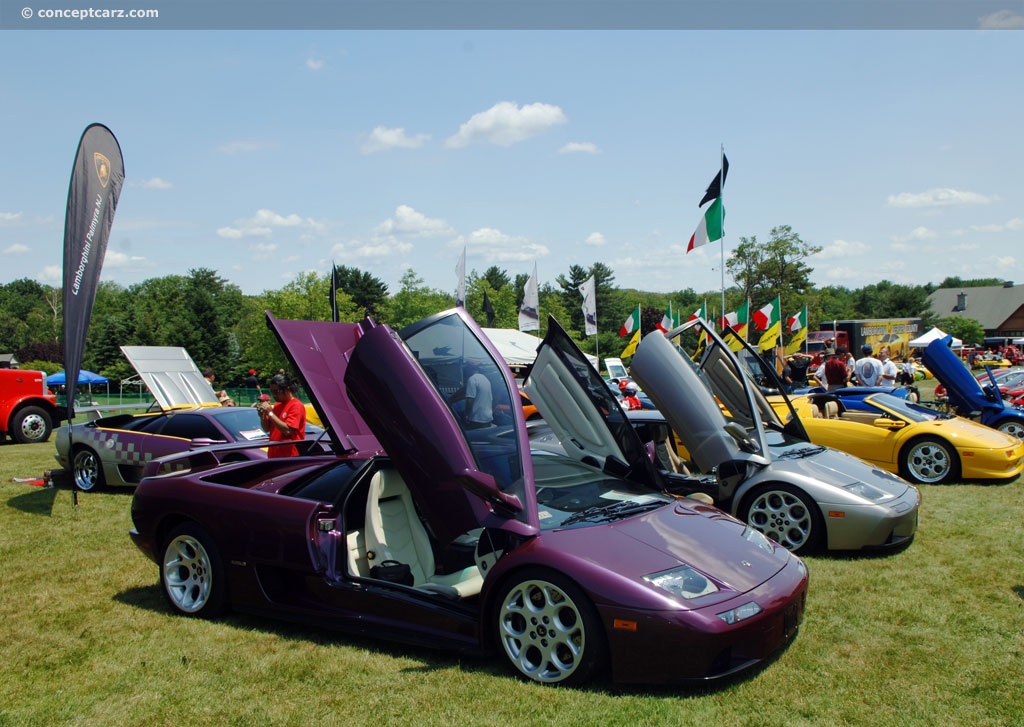
For the 2000 model year Lamborghini launched a face lifted version of the Diablo that carried over in 2001 (the last year of the Diablo.) Lamborghini updated the exterior, the V12 engine and the chassis. Based on the high level know-how reached by Lamborghini's composite material department, most of the body parts are made of carbon fibre except for the roof and the doors. The new-design front bumper integrates air intakes for the brakes, as well as new head lamps. new design front and rear fenders match the wider track and the improved water radiator air intakes. A rear spoiler was available, as an option, for high level sports driving.
This example has been with its current owner since new.
In 1985 Lamborghini began designing and developing a replacement for their successful Countach model. The Lamborghini Diablo was introduced in 1990 and stayed in production until 2001. The name Diablo is Spanish meaning 'devil' and was borrowed from a type of legendary bull raised by the Duke of Veragua in the 19th century. The goal for the Countach replacement was to achieve a 315 Km/h top speed. Marcello Gandini was commissioned to design the bodywork. Chrysler purchased Lamborghini in 1987 which meant Gandini's designs had to pass Chrysler approval. Adjustments were made that took away from the aggressiveness of the vehicle and focused more on the driver and passenger comfort. The modifications did not draw drastically away from the initial designs and Gandini was satisfied with the outcome. Chryslers influence continued to the interior of the vehicle. The Italian leather seats, steering wheel, and dashboard were all adjustable. The seats could be ordered specifically to fit the driver. The stereo system was an Alpine unit, customizable to the user's preferences with offerings of either a CD or cassette player. An optional remote CD changer and sub woofer cost additional, but was still available. A Breguet clock would set the buyer back an additional $10,500 while the factory fitted luggage cost $2600.
The Lamborghini V-12 cylinder was enlarged to 5.7 liters and given a multi-point fuel injection system. It was placed mid-ship in the Diablo and provided power to the rear wheels. The powerplant was capable of producing nearly 500 horsepower and gave the super-car a top speed of over 325 Km/h. Zero-to-sixty took just over four-seconds.
For an additional $4500, a rear wing could be added to the vehicle. The engine remained cool thanks to the rear bumper which served as a spoiler that recycled the warm air from the engine with cool air. The body was mostly comprised of aluminum alloy.
The doors opened up and forward and had side windows which could be rolled down electronically. Visibility was much improved over the Countach. The side windows were designed to allow ample viewing. The rear view mirror was functional and not hindered by the engine lid.
Throughout the years, Lamborghini made subtle improvements to the vehicle. To increase sales and attract new customers, Lamborghini introduced AWD versions, Targa editions, and limited edition variants. Limited edition versions offered customers unique customization, such as the 'Victoria's Secret' theme car. In addition to the specialty and limited editions, Lamborghini offered racing variants. A version was created to compete in the GT1 class at the 24 Hours of Le Mans. Other racing versions, such as the SVS and SV-R were factory created racing ready vehicles.
In 1993 to celebrate Lamborghini's 30th anniversary of automobile production they introduced the Diablo SE 30. In an effort to reduce the overall weight, the vehicle was deprived of luxurious amenities. The brakes were enlarged and the suspension was improved, giving the driver the ability to adjust the stiffness of the vehicles suspension.
The Diablo VT was introduced in 1993 and stayed in production until 1998. The VT, meaning Viscous Traction, was given an all-wheel drive system, power steering, four-piston Brembo brakes, computerized suspension system with Koni shock absorbers, and an improved interior. The suspension had two settings that could be selected by the driver. The traction-control system shifted power to the front wheels when the rear wheels lost grip. The first setting was an 'automatic' mode meaning the suspension was controlled by a computer. The 'manual' mode allowed the driver to select between four different driving selection depending on the terrain and driving conditions.
A Roadster version of the VT was introduced in 1995. It had been debuted with the coupe at the 1992 Geneva Auto Show but it took another few years before it was ready for production. It was similar to the coupe but was given a removable carbon fibre roof panel. Production continued until 1998.
The Diablo SV (Sport Volce), introduced in 1995 and produced until 1998, was an optional package the included larger brakes, three-piece adjustable spoiler, revised dashboard, and an enlarged engine. The 5.7 liter twelve-cylinder engine produced 520 horsepower. The pop-up head lights were replaced with an exposed headlight system.
Auto König of Germany produced a kit for the SV that added to the mechanical capabilities of the vehicle. A twin-turbocharger system increased the engines output to over 800 horsepower. To combat the extra power, the suspension and brakes received modifications.
1998 was the final year for the pop-up headlights. All models were built with the built-in headlight design.
1999 brought the second versions of the Diablo VT, Diablo VT Roadster, and Diablo SV. All new was the Diablo GT. These versions were only produced for the 1999 model year. The Diablo VT was a combination of mechanical and aesthetic modifications. The pop-up headlights were replaced with exposed headlamps. The dashboard was redesigned and new wheels adorned the exterior of the vehicle. ABS finally made its way onto the Diablo. The brakes were enlarged and a new variable valve timing system (VVT) was added to the V12 engine. With 530 horsepower on tap, the Diablo VT raced from zero-to-sixty in less than four seconds. A Roadster version was available which added a removable roof.
The Diablo ST was similar to the Diablo VT. Its engine featured a 530 horsepower VVT engine. The brakes were enlarged and the exposed headlamps were standard. The main distinguishing features were aesthetics.
The Diablo GT was a limited edition version that was meant for the race track and when introduced, was the fasted production car in the world. Only eighty examples were produced, all were sold in Europe. The engine was enlarged to 6.0 liters and horsepower skyrocketed to 575. The suspension was lowered and given modifications. The brakes were enlarged and provided excellent stopping power. The weight of the vehicle was reduced wherever possible, meaning the interior was void of amenities or luxury items. Wider wheels, flared fenders, and modified bodywork gave the Diablo an aggressive stance and appearance.
The third version of the Diablo VT was introduced in 2000 and produced until 2001. During its production lifespan, only 260 examples were produced. A new hybrid engine replaced the aging 5.7 liter unit. Based on the Diablo GT, the 6.0 liter VVT engine had updated software and new intake and exhaust system, resulting in 550 horsepower. Titanium connecting rods and a lighter crankshaft added to the engines improvements. Most of the vehicles were AWD however, upon customer request, rear-wheel drive could be ordered. To improve visibility at high speeds, the windshield wipers were improved. The interior and exterior of the vehicle received styling and modernization updates, including the bumper, dashboards, seats, and more. The interior was lined in leather and airbags were standard for both the driver and passenger. Carbon fibre and aluminum were used throughout the cockpit.
In 2000 production of the Diablo ceased. However, Audi had purchased Lamborghini from Chrysler in the 1990's and decided to produced two special edition versions of the Diablo, the Millennium Roadster and the VT 6.0 Special Edition. The rear-wheel drive Millennium Roadster was painted in 'Millennium Metallic Silver', featured a carbon fibre rear spoiler, and given the VT roadster's body. The VT 6.0 Special Edition was offered in two colors, 'Oro Elios' (gold) and 'Marrone Eklipsis' (metallic brown). The interior color matched the exterior color. Special electrically adjustable leather seats and dashboard accompanied the Alpine stereo system and DVD audio/navigation system. Twenty-one examples in each color were created, resulting in a total of 42 produced.
In September of 2001, the Diablo was replaced by the Murcielago. The SE was the final installment of the exclusive super-car, the Diablo.
By Daniel Vaughan | Dec 2006
The Lamborghini V-12 cylinder was enlarged to 5.7 liters and given a multi-point fuel injection system. It was placed mid-ship in the Diablo and provided power to the rear wheels. The powerplant was capable of producing nearly 500 horsepower and gave the super-car a top speed of over 325 Km/h. Zero-to-sixty took just over four-seconds.
For an additional $4500, a rear wing could be added to the vehicle. The engine remained cool thanks to the rear bumper which served as a spoiler that recycled the warm air from the engine with cool air. The body was mostly comprised of aluminum alloy.
The doors opened up and forward and had side windows which could be rolled down electronically. Visibility was much improved over the Countach. The side windows were designed to allow ample viewing. The rear view mirror was functional and not hindered by the engine lid.
Throughout the years, Lamborghini made subtle improvements to the vehicle. To increase sales and attract new customers, Lamborghini introduced AWD versions, Targa editions, and limited edition variants. Limited edition versions offered customers unique customization, such as the 'Victoria's Secret' theme car. In addition to the specialty and limited editions, Lamborghini offered racing variants. A version was created to compete in the GT1 class at the 24 Hours of Le Mans. Other racing versions, such as the SVS and SV-R were factory created racing ready vehicles.
In 1993 to celebrate Lamborghini's 30th anniversary of automobile production they introduced the Diablo SE 30. In an effort to reduce the overall weight, the vehicle was deprived of luxurious amenities. The brakes were enlarged and the suspension was improved, giving the driver the ability to adjust the stiffness of the vehicles suspension.
The Diablo VT was introduced in 1993 and stayed in production until 1998. The VT, meaning Viscous Traction, was given an all-wheel drive system, power steering, four-piston Brembo brakes, computerized suspension system with Koni shock absorbers, and an improved interior. The suspension had two settings that could be selected by the driver. The traction-control system shifted power to the front wheels when the rear wheels lost grip. The first setting was an 'automatic' mode meaning the suspension was controlled by a computer. The 'manual' mode allowed the driver to select between four different driving selection depending on the terrain and driving conditions.
A Roadster version of the VT was introduced in 1995. It had been debuted with the coupe at the 1992 Geneva Auto Show but it took another few years before it was ready for production. It was similar to the coupe but was given a removable carbon fibre roof panel. Production continued until 1998.
The Diablo SV (Sport Volce), introduced in 1995 and produced until 1998, was an optional package the included larger brakes, three-piece adjustable spoiler, revised dashboard, and an enlarged engine. The 5.7 liter twelve-cylinder engine produced 520 horsepower. The pop-up head lights were replaced with an exposed headlight system.
Auto König of Germany produced a kit for the SV that added to the mechanical capabilities of the vehicle. A twin-turbocharger system increased the engines output to over 800 horsepower. To combat the extra power, the suspension and brakes received modifications.
1998 was the final year for the pop-up headlights. All models were built with the built-in headlight design.
1999 brought the second versions of the Diablo VT, Diablo VT Roadster, and Diablo SV. All new was the Diablo GT. These versions were only produced for the 1999 model year. The Diablo VT was a combination of mechanical and aesthetic modifications. The pop-up headlights were replaced with exposed headlamps. The dashboard was redesigned and new wheels adorned the exterior of the vehicle. ABS finally made its way onto the Diablo. The brakes were enlarged and a new variable valve timing system (VVT) was added to the V12 engine. With 530 horsepower on tap, the Diablo VT raced from zero-to-sixty in less than four seconds. A Roadster version was available which added a removable roof.
The Diablo ST was similar to the Diablo VT. Its engine featured a 530 horsepower VVT engine. The brakes were enlarged and the exposed headlamps were standard. The main distinguishing features were aesthetics.
The Diablo GT was a limited edition version that was meant for the race track and when introduced, was the fasted production car in the world. Only eighty examples were produced, all were sold in Europe. The engine was enlarged to 6.0 liters and horsepower skyrocketed to 575. The suspension was lowered and given modifications. The brakes were enlarged and provided excellent stopping power. The weight of the vehicle was reduced wherever possible, meaning the interior was void of amenities or luxury items. Wider wheels, flared fenders, and modified bodywork gave the Diablo an aggressive stance and appearance.
The third version of the Diablo VT was introduced in 2000 and produced until 2001. During its production lifespan, only 260 examples were produced. A new hybrid engine replaced the aging 5.7 liter unit. Based on the Diablo GT, the 6.0 liter VVT engine had updated software and new intake and exhaust system, resulting in 550 horsepower. Titanium connecting rods and a lighter crankshaft added to the engines improvements. Most of the vehicles were AWD however, upon customer request, rear-wheel drive could be ordered. To improve visibility at high speeds, the windshield wipers were improved. The interior and exterior of the vehicle received styling and modernization updates, including the bumper, dashboards, seats, and more. The interior was lined in leather and airbags were standard for both the driver and passenger. Carbon fibre and aluminum were used throughout the cockpit.
In 2000 production of the Diablo ceased. However, Audi had purchased Lamborghini from Chrysler in the 1990's and decided to produced two special edition versions of the Diablo, the Millennium Roadster and the VT 6.0 Special Edition. The rear-wheel drive Millennium Roadster was painted in 'Millennium Metallic Silver', featured a carbon fibre rear spoiler, and given the VT roadster's body. The VT 6.0 Special Edition was offered in two colors, 'Oro Elios' (gold) and 'Marrone Eklipsis' (metallic brown). The interior color matched the exterior color. Special electrically adjustable leather seats and dashboard accompanied the Alpine stereo system and DVD audio/navigation system. Twenty-one examples in each color were created, resulting in a total of 42 produced.
In September of 2001, the Diablo was replaced by the Murcielago. The SE was the final installment of the exclusive super-car, the Diablo.
By Daniel Vaughan | Dec 2006
| 12C SPIDER TO MAKE ITALIAN PREMIERE AT THE 37TH BOLOGNA MOTOR SHOW | |
![]() | •Italian debut of the 12C Spider – new Spider version of highly acclaimed 12C •Developed alongside 12C as a 'pure McLaren' – including revised 625PS 3.8-litre V8 twin-turbo engine •Carbon fibre MonoCell ensures class-leading rigidity, handling and safety •Fully automatic two-piece Retractable Hard Top (RHT) can be raised or lowered in less than 17 seconds and on the move up to 30 km/h •Official retail location represented by Gruppo Fassina at McLaren Milan The innovative new McLaren ...[Read more...] |
| INFINITI SALES INCREASE 56.8 PERCENT IN JULY | |
| Luxury automaker's best July since 2005, Infiniti G Sedan sets new July record while all-new Infiniti JX luxury crossover continues strong sales - FRANKLIN, Tenn., Aug. 1, 2012 - Infiniti today reported U.S. sales of 11,619 units for July, an increase of 56.8 percent versus 7,410 units a year earlier. Calendar year-to-date Infiniti sales of 65,996 are up 20.7 percent compared to the 54,678 units sold during the same period last year. Highlights of Infiniti's sales for Jul...[Read more...] | |
| Audi factory drivers look into the future with a digital rear-view mirror | |
![]() | • Advanced AMOLED technology provides clear vision • Significant contribution to active safety in the Audi R18 • Three more weeks to go before the start of the Le Mans 24 Hours Ingolstadt, May 24, 2012 – When the Audi factory drivers tackle the Le Mans 24 Hours (June 16/17, 2012) a very special technology will enhance their vision. Used for the first time in a closed LMP sports prototype, the digital rear-view mirror provides a clear view of the rear and thus ...[Read more...] |
| The Champion in Touring Car Racing : The BMW M3 | |
![]() | In August 1985, a rumour surfaced in motor magazine Auto-Deutschland which emanated from a new sports car. An A Group Car from BMW that was a thoroughbred racing car according to the rules but was also to be produced in a version licensed to drive on open roads for everyday use. Speculation about this dream car that could take to normal roads and was intended for the 'Most dynamic among BMW 3 Series drivers' was right on target. But the pundits missed the mark about the motor-sport car by a mile...[Read more...] |
| Auctions America By RM's 2012 Auburn Spring Auction | |
![]() | 'Variety' is the buzzword for this year's Auctions America by RM June 1-3 Auburn Spring auction, which will offer a huge range of collector vehicles and an enormous private collection of automotive memorabilia. More than 600 American muscle cars, Classics, foreign sports cars and hot rods will cross the block at the historic Auburn Auction Park, the company's national headquarters in Auburn, Indiana. 'Last year was our first spring event at the park,' said Auctions America by RM's President ...[Read more...] |
2001
Lamborghini
models |
| Lamborghini Diablo |
| Lamborghini Diablo SV |
| Similar Automakers | |
| Aston Martin | Bentley |
| Bugatti | Devon |
| Ferrari | GTA |
| Koenigsegg | Lotus |
| Maserati | Maybach |
| McLaren | Porsche |
| Rolls-Royce | Spyker |
| Tesla | |
| Lamborghini: 2001-2010 |
| Similar Automakers |
| Lamborghini History |
| Other models by Lamborghini |
| |||||||||||||||||||||||||||||||||||
| 350/400 Aventador Countach | Diablo Espada F1 | Gallardo Islero Jalpa | Jarama LM 002 Miura | Murcielago Murciélago LP 670-4 SuperVeloce Silhouette | Urraco |


2001