1929 L-29 | 1931 L-29 ![]() |
1930 Cord L-29 news, pictures, and information | ||
| Tweet | ||
![]() | ![]() | ![]() | Cabriolet Chassis Num: 2928297 |
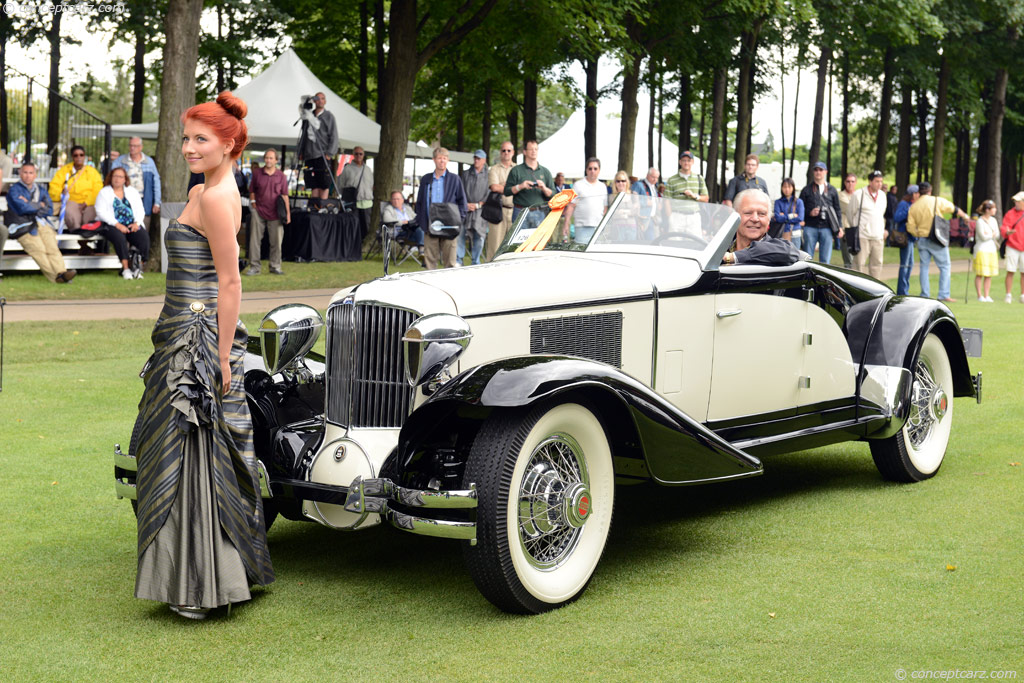
The dark blue example with silver accents and grey leather interior carries chassis number 2928297. It was offered for sale at the 2006 Worldwide Group Auction held on Hilton Head Island. It was expected to fetch between $150,000-$175,000. It is an ACD Certified Category 1 automobile and was originally owned by Mr. Biff Behr, of Bloomingdale, Illinois. Many optional accessories were ordered such as a grille guard, dual side mounted covered tires with attached mirrors, six wire wheels, rumble seat, trunk rack, and cowl lights. At the conclusion of the auction, the vehicle was left unsold.
By Daniel Vaughan | Jun 2009
![]() | ![]() | ![]() | Convertible Sedan Chassis Num: FD2936A |
| Sold for $99,000 at 2006 RM Auctions. | |||
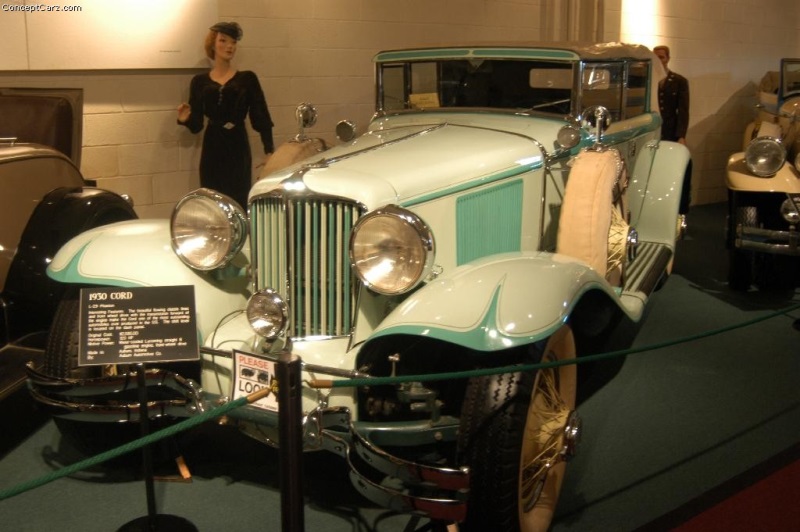
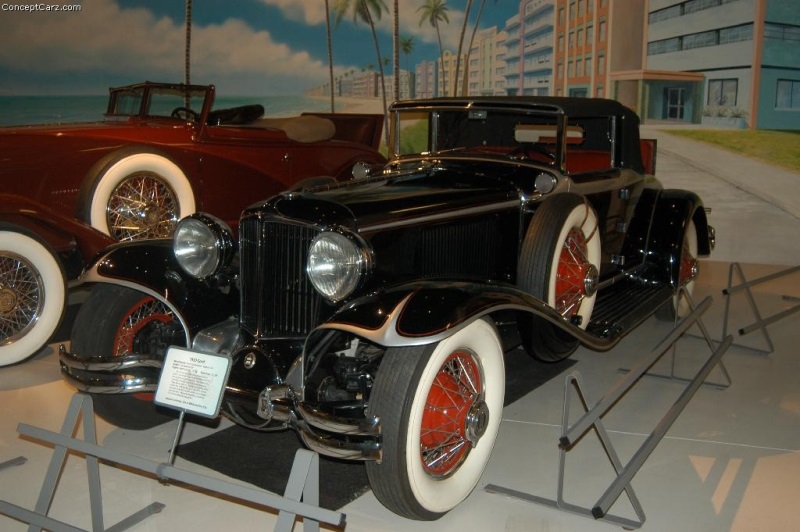
There were only 1873 Cords produced in 1930, and just over 5000 produced from 1929 through 1932. Only a handful of the four-door convertible sedans were produced. This example was one of the first full production front-wheel drive automobiles built. It has been on display at the Smokey Mountain Car Museum in Pigeon Forge, Tennessee for a number of years. It is finished in light gray with royal blue beltlines and trim and a tan top.
By Daniel Vaughan | Jun 2009
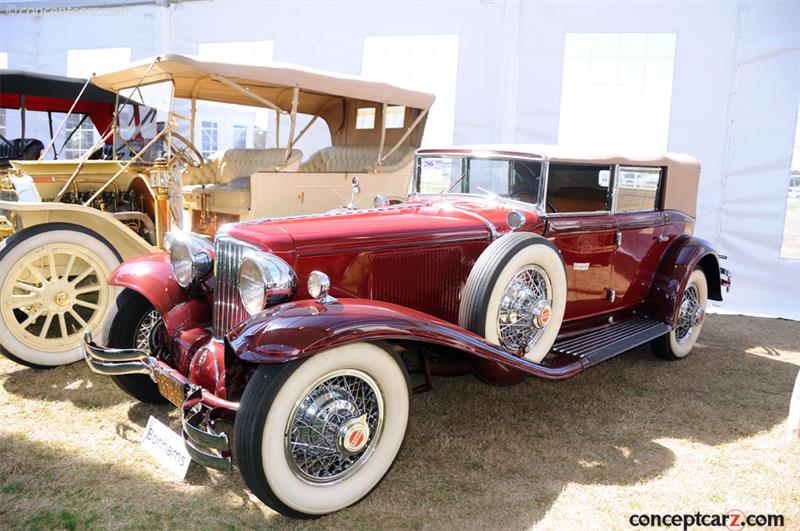
![]() | ![]() | ![]() | Convertible Sedan Chassis Num: FDA 3837 |
| Sold for $192,500 at 2006 RM Auctions. Sold for $184,250 at 2012 RM Auctions. | |||
By Daniel Vaughan | Jun 2009
![]() | ![]() | Phaeton |
In 1927, E.L. Cord was a star salesman at the John Quinlan, Moon car agency in Chicago. He was approached by local bankers to see if he could make the Auburn Company profitable again. He accepted the challenge and became president.
The new Cord, a product of the Auburn Company, and the 1929 Duesenberg, were introduced under Cord's leadership. Powered by a Lycoming straight eight of 299 cubic-inches and 125 horsepower, it was priced at $3,295. The economic depression effectively killed its chance of success as a product slotted between the popularly priced Auburn, and the high-end Duesenberg. The total production was 5,010 units, from 1930 to 1932. Al Leamy is credited with the low, sweeping lines on the low-slung chassis, made possible by the front-wheel-drive configuration that created a sensation here and abroad. The L-29 received 39 awards at 23 concours events on the continent. Frank Lloyd Wright remarked that, 'it looked becoming to the houses I design!'
This car was purchased by B.J. Hall in Baltimore, Maryland in January of 1930. A collector completely disassembled the car for restoration in 1958, but never did work on it. In 2004, the current owner purchased it from the collector, then had all pieces restored and reassembled.
| Cabriolet |
![]() | ![]() | ![]() | Hayes Coupe Coachwork: Hayes Body Company Chassis Num: 2927005 Engine Num: FD2638A |
| Sold for $1,078,000 at 2008 Gooding & Company. | |||
The ultimate representation of a 'one-off-custom-bodied' automobile is this stunning coupe designed for the Hayes Body Corporation of Grand Rapids, Michigan. Its main purpose was to promote the Hayes potential for contract body building and to attract the attention of Cord and the world's automakers.
Upon its completion, this car was sent to Europe and entered in a number of prestigious French concours d'Elegances. Concours rules of the time stated that the car must be driven to the show, and Hayes' first challenge was to get the car from Michigan to Paris for the 1930 Concours.
In 1991, after 50 years of ownership, Brook Stevens sold his masterpiece to Blackhawk Museum. The Hayes Coupe was sold again only a few months later to the current owner. Under current ownership the car was sent to the 1993 ACD National Meet where it was certified as a Category 1 Original Car, and awarded First in Class.
This perfection - combined with the lovely proportions, long hood, extremely low profile, lack of running boards, unique window shape and the luxurious materials in the cockpit - presents a singular automobile that owes nothing to previous designs from any manufacturer or coachbuilder. Put quite simply, the stylistic features of the Hayes Coupe was way ahead of their time.
| Cabriolet |
![]() | Phaeton |
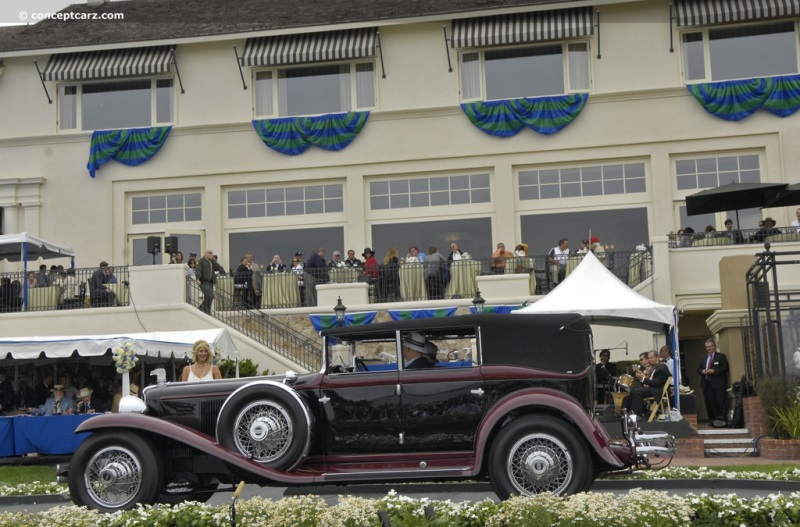
![]() | ![]() | ![]() | Phaeton |
This car was originally purchased in 1930 by a prominent Baltimore banker. The current owner acquired the car in 2005, 47 years after he initially offered to purchase it from a friend. The car had been completely disassembled by the previous owner, existing in marked, but deteriorating, plastic bags. A full 8-month restoration was initiated and completed in 2007.
![]() | ![]() | ![]() | Cabriolet Convertible Speedster |
Stevens wanted more than a cabriolet - he wanted a unique speedster. He extensively restyled the car, adding skirted fenders, a speedster tail and Woodlites. He drove it in races, hill climbs and other sporting events until his death in 1995.
The Current owners purchased the Cord from the Stevens family in 1997 and commissioned a two-year restoration.
![]() | ![]() | ![]() | Town Car Coachwork: Murphy |
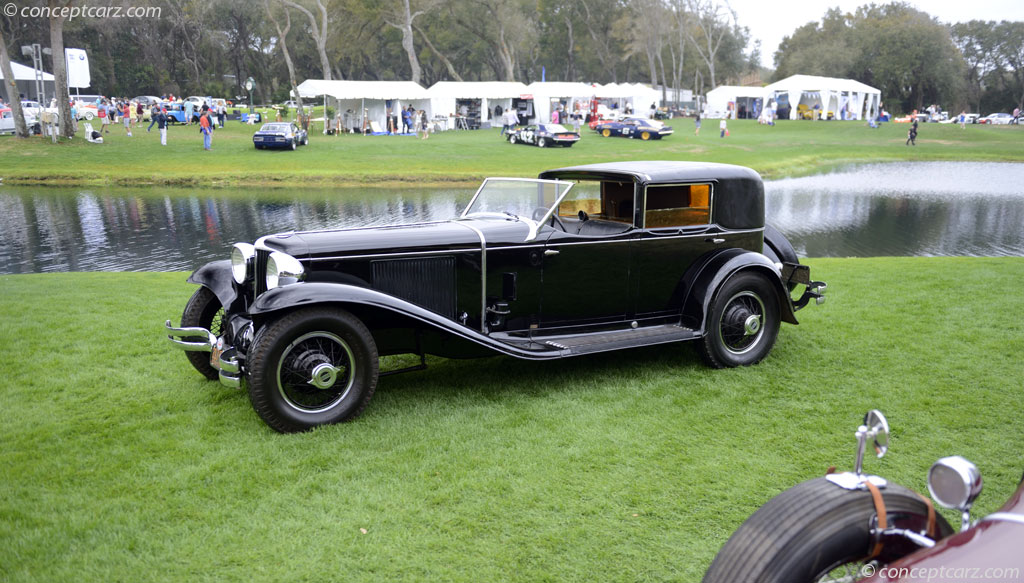
While the four factory bodies for the L-29 Cord were stunning, E.L. Cord wanted to offer a full line of coachbuilt bodies for his namesake car. Having a close relationship with the Murphy Body Company regarding the Duesenberg Model J, it was only natural that Murphy built at least one half of the coachbuilt L-29s. Among the most breathtaking are the Town Cars, built on both the standard 137.5-inch wheelbase and the stretched 152.5-inch wheelbase. The profile of these cars with their low height, raked windshield and close-coupled bodies is simply perfect. Movie stars, including Dolores Del Rio and John Barrymore, loved these cars.
![]() | ![]() | ![]() | Dual Cowl Phaeton Coachwork: Murphy |
This car was first owned by W.A. Clark III, owner of the Pilot Ray Turing Light Co. Clark was also the Auburn-Cord-Duesenberg dealer in Phoenix, AZ. He took delivery on November 30, 1930, after the car made the show circuit tour. Clark owned the car only three years.
Franklin Hershey, the car's designer for Murphy, was a mere 23 at that time. He gave the present owner guidance as to details and colors during the car's 18 years of restoration. Designing the top bows to fold into a neat package at the rear was an art form at the time. Similar body designs, but higher, were later fitted to several Duesenbergs. Murphy Body Company closed its doors in late 1930, avoiding the rush in 1931-1932.
The chassis frame was lengthened 9-inches to give an even longer, lower look to the already silhouette of the Cord, which was made possible by the lack of a drive shaft to the rear. Power is a 298.6 cubic-inch straight-8, L-head Lycoming engine that developed 125 horsepower and tons of torque. Cost, new, for chassis and body, was around $15,000 (about 30 Fords). Two of the original seven phaetons still exist today.
![]() | Cabriolet Chassis Num: 2928140 | |
| Sold for $187,000 at 2009 RM Auctions. | ||
This particular car has styling by Count Alexis de Sakhnoffsky, a young Russian nobleman who began designing automobiles in the 1920s. He would win five Grands Prix at the Monte Carlo Concours d'Elegance, and the L-29 was his fifth win and the first for an American car.
The front wheel drive configuration allowed for a design that was lower than most other cars on the road. It was given a streamlined grille, the first to surround the radiator with sheet metal. Riding on a 137-inch wheelbase, the chassis consisted of the industry's first X-braced frame and front brakes mounted inboard to reduce unsprung weight. The transmission was mounted behind the front axle in combination with the Lycoming 298.6 cubic-inch straight-eight motor.
Between the 1929 introduced and when production ceased on December 31, 1931, Cord produced 5,010 units. It was followed by a new L-30 but the Great Depression had taken its toll on the company, and full production never happened.
This L-29 was purchased by Ernest Cook in 1939 and remained in his care until 1982, when it was acquired by the current owner. The car has been restored several years ago and painted in classic dark blue and power blue combination with tan canvas top with light blue leather interior. There are dual side-mounted spares and side view mirrors, leather straps and oak tire locks, chrome wire wheels, trunk rack, rumble seat, and its original windshield wipers and wiper motor.
In 2009, this Cord L-29 was offered for sale at the Sports & Classics of Monterey auction in Monterey, California presented by RM Auctions. The car was estimated to sell for $200,000-$250,000. The lot was sold for the sum of $187,000, including buyer's premium.
By Daniel Vaughan | Dec 2009
![]() | ![]() | ![]() | Sedan |
![]() | ![]() | ![]() | Cabriolet Convertible Speedster Chassis Num: FDA1423 |
| Sold for $165,000 at 2011 RM Auctions. | |||
The finished product was put on display at the New York Auto Show. It was purchased by MGM executive Paul Bern for his wife, actress Jean Harlow. The car was then taken to France, with the intent of exhibiting it at the Paris Salon. When they returned to the United States, the car was left in France. Since then, the history of the car is not fully known. A reproduction was later created, with financing from North Carolina orthodontist Fay Culbreth. Upon completion, the car became a permanent exhibit at the Auburn Cord Duesenberg Museum. Several other reproductions have been built, the last example was created in 2005.
This reproduction was acquired in 2005 from the Al Wiseman Collection in Florida. It is finished in red and black and rides on chrome wire wheels. It is a 1999 AACA National First Prize winner, with Senior status.
In 2011, this vehicle was offered for sale at the Hershey Auction presented by RM Auctions. It was estimated to sell for $150,000 - $190,000. As bidding came to a close, the vehicle had been sold for the sum of $165,000 including buyer's premium.
By Daniel Vaughan | Dec 2011
The Cord L-29 was revolutionary, using a front-wheel drive system rather than the popular rear-wheel drive configuration. Many believed that having the front wheels be responsible for turning, carrying the bulk of the weight, providing stopping power and for driving were too much. With the rear wheel drive systems, the weight could be dispersed throughout the body to take advantage of weight distributed. Cord wanted to be different and explore the possibilities of a front-wheel configuration.
Errett Lobban Cord was a visionary, promoter, young and intelligent individual when in 1924 he joined the Auburn Automobile Company which was under performing in respects to sales. Cord was able to revitalize sales and by 1926 he was in control of the company. He then began buying up companies such as Duesenberg Motor Company and Lycoming and brought them under the Cord Corporation.
With control of Duesenberg and Auburn automobiles, the Cord Corporation was positioned for success. What the company lacked was an automobile that could fill the price gap that existed between these two nameplates. The result was a luxury car named after himself, the Cord L-29. The Cord L-29 used a front-wheel drive system. Many people believe Cord used the front-wheel drive configuration because he wanted to exploit the advantages of a low-profile design. Rear-wheel-drive cars sat higher above their driveshafts because the engineers had not figured out how to let the shaft run through the passenger compartment.
Cornelius Van Ranst was tasked as the chief engineer for this unique automobile. John Oswald, a man responsible for many of the Auburn designs, contributed to the L-29. The result was dramatic styling that was attractive and elegant.
Under the hood lurked an 299 cubic-inch eight-cylinder Lycoming engine. The 125 horsepower engine could carry the 4600 pound vehicle to a top speed of just 77 mph, a respectable speed but not the fastest vehicle available.
Since it was a front-wheel drive system, the normal mechanical configuration needed rearrangement. The transmission and differential were in the front, ahead of the engine. The hood was very long, a result of having so many mechanical components in the front. The rear suspension used leaf springs and a beam axle while the front used a deDion type solid axle with quarter elliptic leaf springs.
As was the case in early years of automotive construction, custom coachbuilders were often tasked with providing the bodywork and designs. In 1930 an L-29 with styling courteous of Count Alexis de Sakhnoffsky was bestowed with prestigious awards at the Monaco Concours d'Elegance.
Two months after the introduction of the Cord L-29 the stock market crashed and the Great Depression began. Just like many other manufacturers during this time, sales plummeted and production was low. To compete, Cord dropped prices in 1930 in an attempt to stimulate sales. For 1931 a large engine producing just over 130 horsepower was installed under the hood. Unfortunately, this was not enough and production ceased at the close of 1931.
During its production run lasting from 1929 through 1931, fewer than 5,000 total examples were created. In 1930 only 1,873 united were produced. Although production was halted in 1931, there were 157 L-29's dubbed as 1932 models.
By Daniel Vaughan | Mar 2006
For more information and related vehicles, click here
blog comments powered by DisqusErrett Lobban Cord was a visionary, promoter, young and intelligent individual when in 1924 he joined the Auburn Automobile Company which was under performing in respects to sales. Cord was able to revitalize sales and by 1926 he was in control of the company. He then began buying up companies such as Duesenberg Motor Company and Lycoming and brought them under the Cord Corporation.
With control of Duesenberg and Auburn automobiles, the Cord Corporation was positioned for success. What the company lacked was an automobile that could fill the price gap that existed between these two nameplates. The result was a luxury car named after himself, the Cord L-29. The Cord L-29 used a front-wheel drive system. Many people believe Cord used the front-wheel drive configuration because he wanted to exploit the advantages of a low-profile design. Rear-wheel-drive cars sat higher above their driveshafts because the engineers had not figured out how to let the shaft run through the passenger compartment.
Cornelius Van Ranst was tasked as the chief engineer for this unique automobile. John Oswald, a man responsible for many of the Auburn designs, contributed to the L-29. The result was dramatic styling that was attractive and elegant.
Under the hood lurked an 299 cubic-inch eight-cylinder Lycoming engine. The 125 horsepower engine could carry the 4600 pound vehicle to a top speed of just 77 mph, a respectable speed but not the fastest vehicle available.
Since it was a front-wheel drive system, the normal mechanical configuration needed rearrangement. The transmission and differential were in the front, ahead of the engine. The hood was very long, a result of having so many mechanical components in the front. The rear suspension used leaf springs and a beam axle while the front used a deDion type solid axle with quarter elliptic leaf springs.
As was the case in early years of automotive construction, custom coachbuilders were often tasked with providing the bodywork and designs. In 1930 an L-29 with styling courteous of Count Alexis de Sakhnoffsky was bestowed with prestigious awards at the Monaco Concours d'Elegance.
Two months after the introduction of the Cord L-29 the stock market crashed and the Great Depression began. Just like many other manufacturers during this time, sales plummeted and production was low. To compete, Cord dropped prices in 1930 in an attempt to stimulate sales. For 1931 a large engine producing just over 130 horsepower was installed under the hood. Unfortunately, this was not enough and production ceased at the close of 1931.
During its production run lasting from 1929 through 1931, fewer than 5,000 total examples were created. In 1930 only 1,873 united were produced. Although production was halted in 1931, there were 157 L-29's dubbed as 1932 models.
By Daniel Vaughan | Mar 2006
| Similar Vehicles | |
![]() | 1930 Ruxton Model C |
| Tags | |
| Alan Leamy, Brooks Stevens, E.L. Cord, eight-cylinder, Errett Lobban Cord, Harry Miller, hydraulic drum, Lycoming, running boards, Woodlite, 1930, 1930 Cord, L-29 | |
| Cord: 1920-1930 |
| Similar Automakers |
| Cord History |
| Other models by Cord |
| 810/812 L-29 |
1929 L-29 | 1931 L-29 ![]() |


1929 L-29