1959 MG MGA
1959 MG MGA Navigation
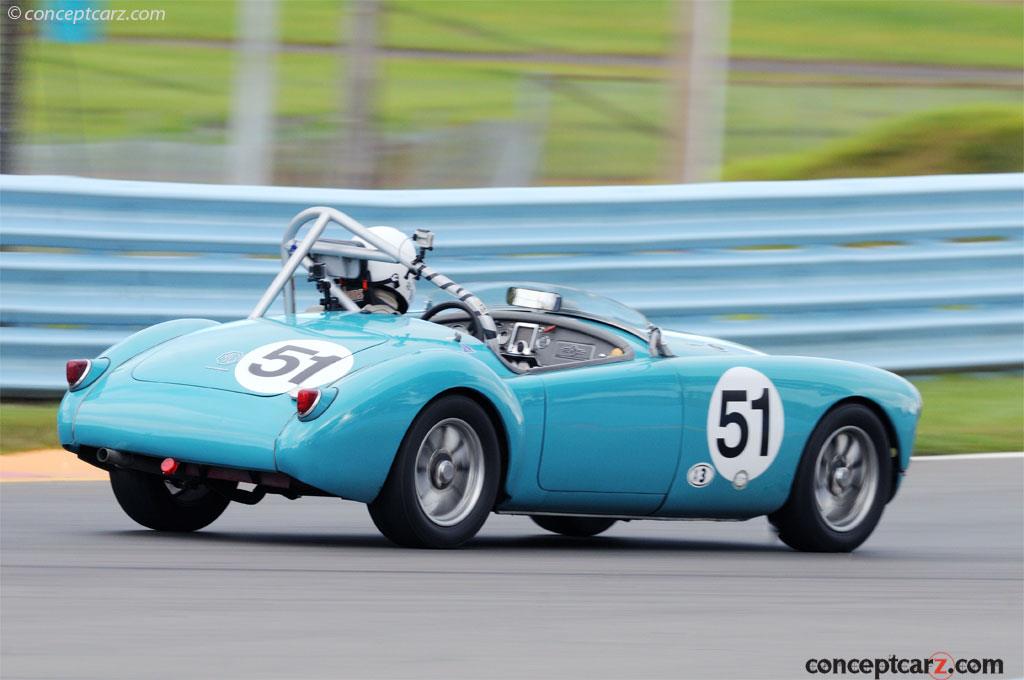
As the 1950s were nearing the end, the Abingdon, England-based sports car builder, MG, reset its naming scheme by introducing the 'A'. A long-overdue replacement for the traditional 'T' Series, the MGA was given a rigid chassis with the Austin-designed, 1489cc B-Series engine that had first appeared in the ZA Magnette. The running gear was based on the TF, with independent, coil-sprung wishbone front suspension and a live rear axle. The body was modern, curvaceous, and aerodynamic; it aided in helping the vehicle achieve a top speed approaching 100 mph. During its first full year of production, over 13,000 examples were sold.Although attractive and popular, the MGA faced stiff competition from the larger-engined Austin-Healey 100/6 and Triumph TR3. Finding more power from the standard engine was becoming increasingly difficult, so MG turned its attention on developing a twin-overhead-camshaft cylinder head for the B-Series block. Conceived at Cowley by BMC engineer Gerald Palmer, the new powerplant was introduced in 1958. It had a displacement size of 1,588cc and featured a special light alloy cross-flow cylinder head with hemispherical combustion chambers and carried twin overhead camshafts with valve operation via Coventry Climax-style inverted bucket tappets. The 108 horsepower engine brought the top speed in excess of 110 mph. To handle the improved performance, Dunlop disc brakes were fitted at all four corners, along with Dunlop center-lock wheels. Visually, the car remained the same except for the 'Twin Cam' script located near the vent side of the bonnet. A fixed head and roadster versions were offered. Most of the 2,111 examples built between 1958 and 1960 were in left-hand drive format. 360 of those were sold on the home market. An unjustified reputation for unreliability and a steep base price discouraged sales. The model was dropped after just two years.
by Daniel Vaughan | Mar 2019
by Daniel Vaughan | Mar 2019
Related Reading : MG MGA History
The MGA began production in 1955. The styling and mechanics were different from previous MG models. The public had been given hints of its new design during the 1951 Le-Mans 24 Hour endurance race. The car was driven by George Phillips and was actually a TD Midget with body modifications. The XPAG engine that had power many previous MGs was replaced by a new power plant. This 1489 cc four-cylinder,....
Continue Reading >>
Continue Reading >>
- 1959 MG MGA Menu
- Article
- Image gallery
- Valuation
- Specifications
- Profiles
MG
Similar Automakers
Similarly Sized Vehicles
from 1959
- Allard Palm Beach
Bocar XP-5
Byers MGA Special
Citroen 2CV
Cooper Monaco MKI Type 57
Fiat 1200 TV
Goggomobil T700
Lancia Appia
Porsche 356A
Porsche 356A Carrera GS/GT
Similarly Priced Vehicles


1959 MG MGA Vehicle Profiles



Recent Vehicle Additions


Related Automotive News

Broad Arrow to host exclusive BMW sale at Concorso d'Eleganza Villa d'Este
BMW-only sale on 24 May celebrates history of BMW as hosts of revered Concorso
Lots include 1958 BMW 507 Series II Roadster, 2000 BMW Z8, and two exceptional examples of the original BMW supercar, the M1
Broad Arrow is the official auction pa...

Iconic Ex-Briggs Cunningham Corvette Le Mans Headed to Amelia Island Auction
ICONIC EX-BRIGGS CUNNINGHAM 1960 CHEVROLET CORVETTE LE MANS RACE CAR LEADS A LINEUP OF BANNER SPORTS AND RACING CARS FOR THE AMELIA ISLAND AUCTION
MORE THAN 80 OUTSTANDING MOTORS CARS SET FOR THE 22 MAY AUCTION
RM Sothebys announces exci...

Concours d'Elegance of America at St. John's : Best of Show
The Concours dElegance of America, established in 1978, featured over 300 significant automobiles on the beautiful green at the Inn at St. Johns in Plymouth, Michigan. This years featured classes included Vintage Bentley, Auto Show 55, Bonneville...

SPEED ENERGY STADIUM SUPER TRUCKS TO RACE AT 2014 CHEVROLET DETROIT BELLE ISLE GRAND PRIX
DETROIT, Mich. (December 13, 2013) – Adding even more excitement and bringing an extreme element to the Chevrolet Detroit Belle Isle Grand Prix, it was confirmed today that the SPEED Energy Stadium SUPER Trucks (SST) Series will compete at next...

€3 Million One-Off Super Car, The Icona Vulcano, To Make UK Debut At Salon Privé 2013
Salon Privé 2013 - 4th to 6th September
Syon Park, London, 4 July 2013 – Salon Privé confirms the Icona Vulcano will make its UK debut this September.
Icona was established in 2010 and launched with an electric concept car the Fuselage, which...