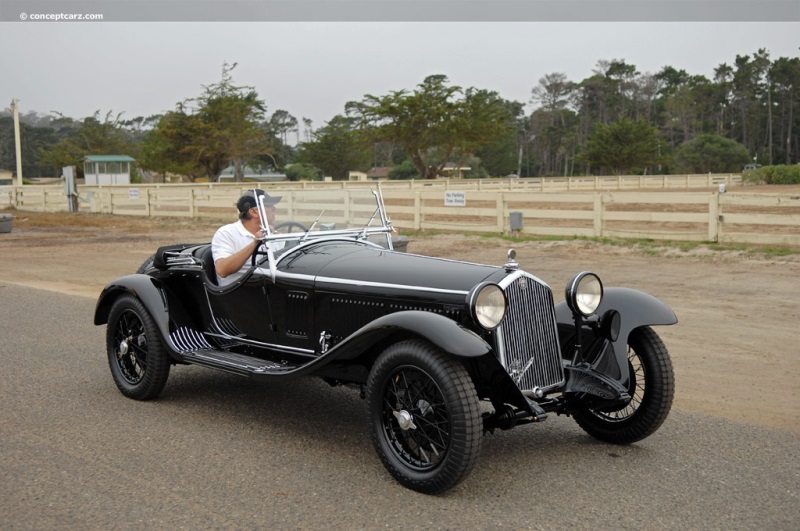
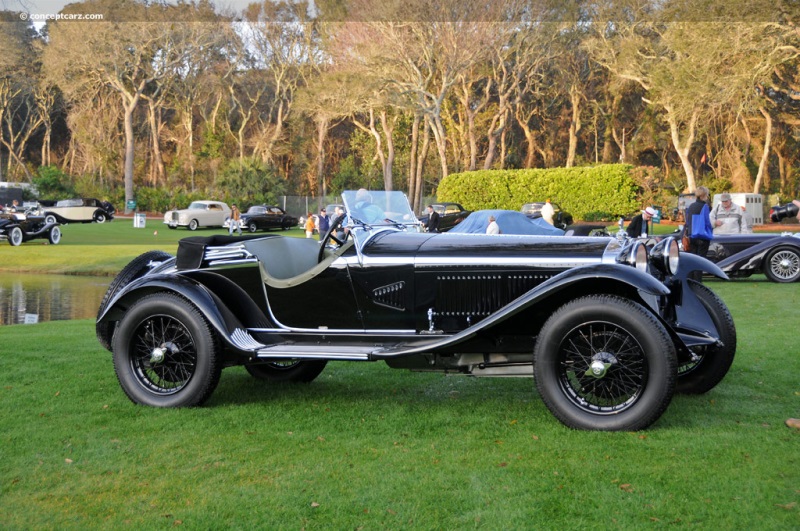
1930 6C 1750 GS | 1932 6C 1750 ![]() |
1931 Alfa Romeo 6C 1750 news, pictures, and information | ||
| Tweet | ||
![]() | ![]() | ![]() | Zagato Spyder Coachwork: Zagato |
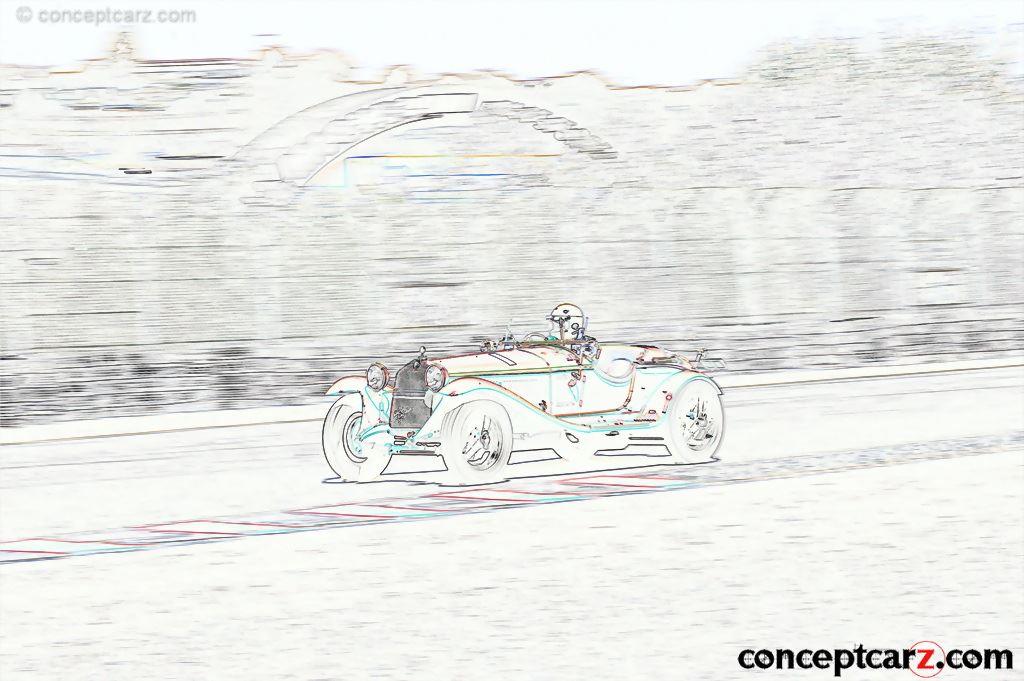
In 1929, the legendary Alfa Romeo engineer, Vittorio Jano, designed a supercharged, six-cylinder, sports racing car engine of 1750cc. The Sports models would use a light frame with this powerful 100 horsepower engine, creating a car of truly exceptional capabilities. It was common practice for Alfa Romeo to sell only the chassis, with a coachbuilder adding a body. Zagato and Touring provided the majority for Alfa. Zagato bodies were favored for racing as the Superleggera principle of applying aluminum body panels over a steel framework which saved weight, improving the performance. Of the 2,259 1750's built, only 257 were Gran Sports. Many great racing drivers successfully raced these cars, including Campari, Varzi, Nuvolari and Zehender.
The Sport models would use a light frame with this powerful 100 bhp engine, creating a car of truly exceptional capabilities.
It was common practice for Alfa Romeo to sell only the chassis, with a coachbuilder adding a body. Zagato and Touring provided the majority for Alfa. Zagato bodies were favored for racing because the coachbuilder utilized the Superleggera principle for applying aluminum body panels over a steel framework. This saved substantial weight, improving the performance.
The definitive form of the 1750 was the Gran Sport, and this model was instrumental in making Alfa a dominant marque in 1930's racing, especially at LeMans and the legendary Mille Miglia. This car is from the fifth of six series. Of the 2,259 1750's, only 257 were Gran Sports. Many great racing drivers successfully campaigned these cars, including Campari, Varzi, Nuvolari and Zehender.
This Gran Sport has finished the 1000 Mile Colorado Grand twice, was the oldest car to finish in the 2004 California Mille Miglia, and was most recently entered, with its female driver/navigator team, in the 2007 1000-mile Huron Mille Miglia.
Great for competition 'Then and Now', this Gran Sport is regularly raced by its female owner.
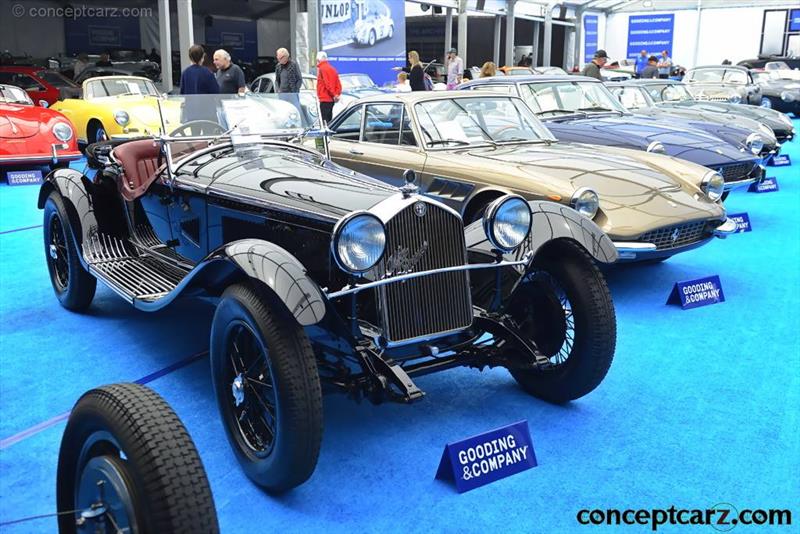
![]() | ![]() | ![]() | Zagato Spyder Coachwork: Zagato Chassis Num: 6C10814356 Engine Num: 6C10814356 |
| Sold for $946,000 at 2007 Gooding & Company. | |||
The heroic capabilities of the engine were first seen in 1982 when Giusepee Campari won the grueling Mille Milgia with the first of the 6C 1500 supercharged Zagato Spyders. From there, Alfa Romeo's domination in the sports car racing scene would continue to escalate. Campari would repeat his victory in the Mille Miglia in 1930, this time with a 6C 1750 Zagato Spyder driven in the 2000cc class. Pirola and Guidotti won their 1500cc class in a 6C 1500. Seven of the top ten places that year were Alfa Romeos.
Alfa Romeo's success in competition continued with their 8C 2300. In 1950 an Alfa Romeo Tipo 159 Zagato bodied car won the first Grand Prix World Championship.
This 1931 Alfa Romeo 6C 1750 Zagato Spyder is equipped with the superchanged engine that provided 85 horsepower at 4400 rpm. It is from the fifth series of production and wears coachwork by Zagato. It was first registered on August 10th of 1931 in the village of Saint Varent in Southwest France to Baron Phillipe de Gunzbourg. It was given the registration number 493 XL1.
It is believed that Baron used this car in motor racing with several notable successes. On June 5th of 1932 he won the 2000cc class at the La Mothe Ste Heraye hill climb and another class victory on June 12th at the Pumoyen hill climb.
In 1933 the Baron co-drove an 8C 2300 Alfa Romeo to second place at the 24 Hours of LeMans with Luigi Chinetti.
de Gunzbourg owned this car until September of 1935 when it was registered in the department of Basses Pyrenees with registration number 5906 NM2. On May 14th of 1940, ownership passed to the aircraft manufacturing company Hydravions F.B.A. of Argenteuil near Paris and registered 5922YC2.
On June 5th of 1944, the car was purchased by Victor Polledri, a friend of Luigi Chinetti. It was given the Paris registration number 3081RN4. The car would remain in his posession until the late 1960s when it was sold to M. Barriere who used it sparingly until his death. Upon his death, the car passed to his son. While in his son's care, the engine was rebuilt and the Zagato coachwork was stripped to bare metal. Little was done after that; it was sold in the early 1980s to its last owner. The car has been stored, in unrestored condition since that time.
In 2007 it was offered for sale at the Gooding & Company auction held in Pebble Beach, California where it was estimated to sell for $900,000 - $1,200,000. It is rare that an unmolested supercharged Alfa Romeo Zagato Spyder 6C 1750 comes to market. As the gavel fell for the third and final time, the lot had been sold for the sum of $946,000 including buyer's premium.
By Daniel Vaughan | Apr 2008
![]() | ![]() | ![]() | Zagato Spyder Coachwork: Zagato Chassis Num: 10814344 |
![]() | ![]() | ![]() | Zagato Spyder Coachwork: Zagato Chassis Num: 10814368 Engine Num: 10814368 |
| Sold for $1,320,000 at 2008 Gooding & Company. | |||
Its very early ownership has been lost to history. In 1934 it was in the possession of Charles E.C. Martin. The next owner, also of the United Kingdom, was Johnny Spindler who used it in competition at the Prescott Hill climb in the early postwar years.
Near the close of the 1950s, the car was in the ownership of a U.S. Navy officer in Norfolk, Virginia. It was sold to Gene Cesari, who sold it to L. Scott Bailey, the founder, editor, and publisher of Automobile Quarterly. The next owner was a resident of Washington, Pennsylvania.
The next owner, in the late 1980s, entrusted Tony Merrick in England to perform a light mechanical and cosmetic restoration, which was completed in 1993. It was used sparingly after the restoration - until it was entered in the 1997 California Mille 1,000-mile run.
It was purchased in 1998 by another individual who enlisted David George to perform a thorough restoration. In 2003, it was purchased by the current owner, who spent an additional $100,000 on a complete engine rebuilt by expert Jim Stokes in England. It was then driven twice on the Mille Miglia Storica with great success.
The car is currently painted in all-black livery with matching black leather interior. It is in impeccable cosmetic and operation condition and one of the very few Pre-War Alfa Romeos still wearing its original Zagato coachwork.
In 2008, this Series V Alfa Romeo 6C 1750 was offered for sale at the Gooding & Company auction held in Pebble Beach, California and was estimated to sell for $1,300,000 - $1,600,000. As the gavel fell for the third and final time, the lot had been sold for $1,320,000, including buyer's premium.
As one of the most successful models of its period, the Alfa Romeo 6C 1750, along with its predecessor the 19500, embodied the functional simplicity typical of the 1930s Italian sports car. With its supercharged performance and elegant coachwork, the 1750 could be described as the ancestor of every GT car ever made. This late Series V model is one of the few 1750s still retaining its original Zagato coachwork. It was driven in competition by several British owners during the first half of its life. It arrived in the United States in the 1950s, and L. Scott Bailey, founder of Automobile Quarterly, owned the car for a number of years. Now carefully preserved, it has been driven on many rallies in recent years.
In 2009, it was on display at the Pebble Beach Concours d'Elegance.
By Daniel Vaughan | Oct 2009
![]() | ![]() | ![]() | Zagato Spyder Coachwork: Zagato |
This Zagato-bodied two-seater spider is typical of the model. A total of 369 Super Sport and Grand Sport 6C 1750s were built. It is powered by a water-cooled, double-overhead-cam, 6-cylinder, 1752 cc, engine coupled to a 4-speed manual transmission. The engine produces 85 horsepower and the supercharged version was capable of 90 mph. The chassis consist of channel-steel, and front and rear suspension by semi-elliptic leaf springs with 4-wheel drum brakes.
Current owner purchased the car in 1993 and a three-year restoration was completed in 1996. Since the restoration, the car has been driven 1,800 miles just for the fun of driving it, according to the owner.
![]() | ![]() | ![]() | Zagato Spyder Coachwork: Zagato |
This Alfa Romeo received Best in Show at the 2003 Glenmoor Gathering.
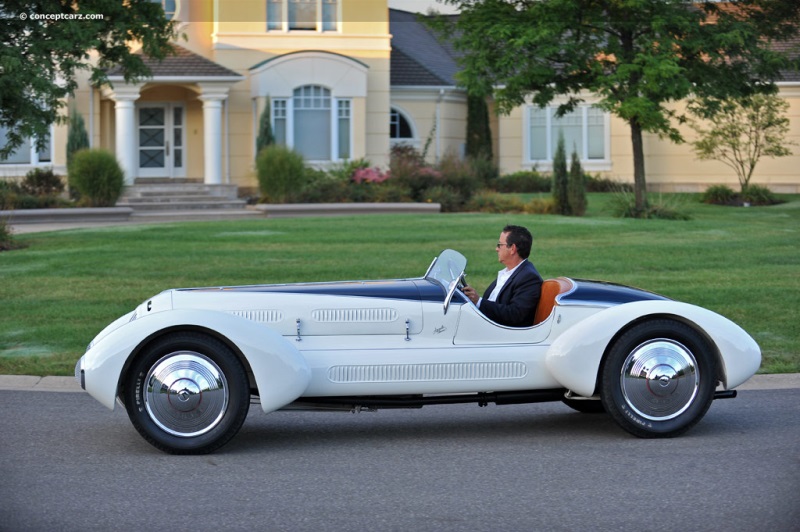
![]() | ![]() | ![]() | Cabriolet Coachwork: Castagna Chassis Num: 10914408 |
| Sold for $434,080 (€336,000) at 2012 RM Auctions. | |||
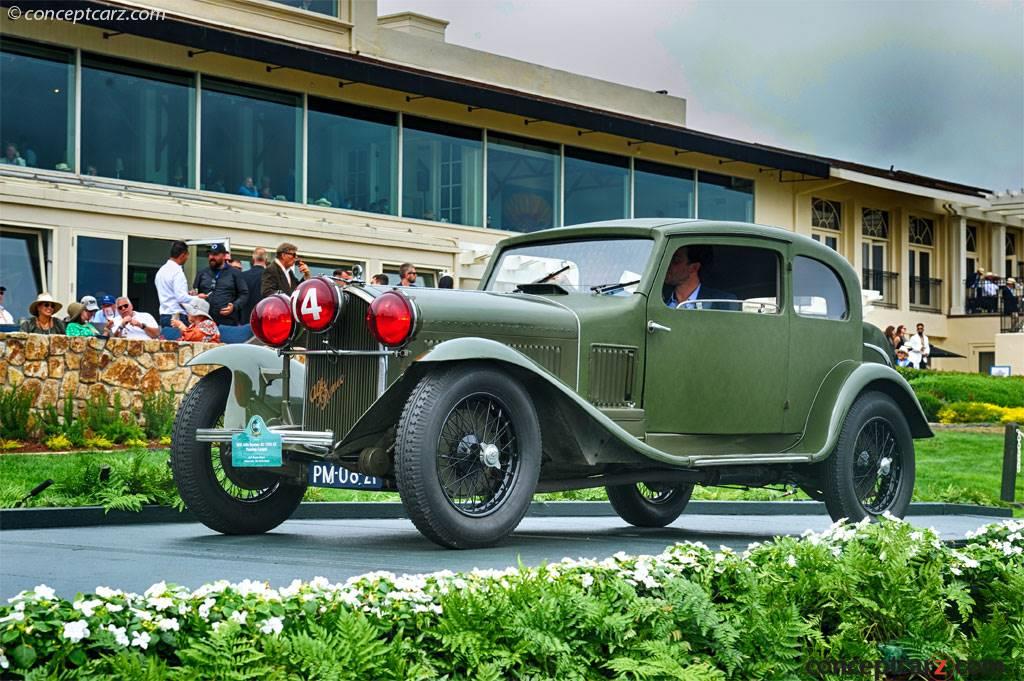
After World War II, the car was purchased by an American and brought to the United states. In the 1950s, it was purchased by Mr. Paul W. Hatmon of Independence, Missouri, who traded a Jaguar XK for the car. Mr. Earl Brown of Kentucky became the car's next care-taker in 1961. In the early 2000s, the car was sold to a collector in Italy. Since the acquisition, the car has been given a sympathetic restoration with the purpose of preserving the Alfa. The original green paint and a fragment of the lizard patterned calfskin upholstery were used as a guide. The Castagna body number was found on various body panels and parts, another confirmation to the coachwork's originality. After the work was completed, the car was awarded 'Best of Show' at the 2009 Concours d'Elegance Trofeo Salvarola Terme, as well as best pre-war car at the 2010 concours at San Pellegrino Terme and 'Best of Show' in the Pre-War Class at the Concorso d'Eleganza in Motion during the Vernasca Silver Flag in 2011.
Modern modifications made to the car include the electric cooling fan and a water temperature gauge. The car has a full set of tools, and documentation of the restoration process. Powering the car is a six-cylinder, dual overhead cam engine that offers 55 horsepower. There is a four-speed manual transmission and four-wheel drum brakes.
In 2012, the car was offered for sale at RM Auction's Monaco sale. The car carried a pre-auction estimated value of €325.000-€375.000. As bidding came to a close, the car had been sold for the sum of €336.000 inclusive of buyer's premium.
By Daniel Vaughan | Jun 2012
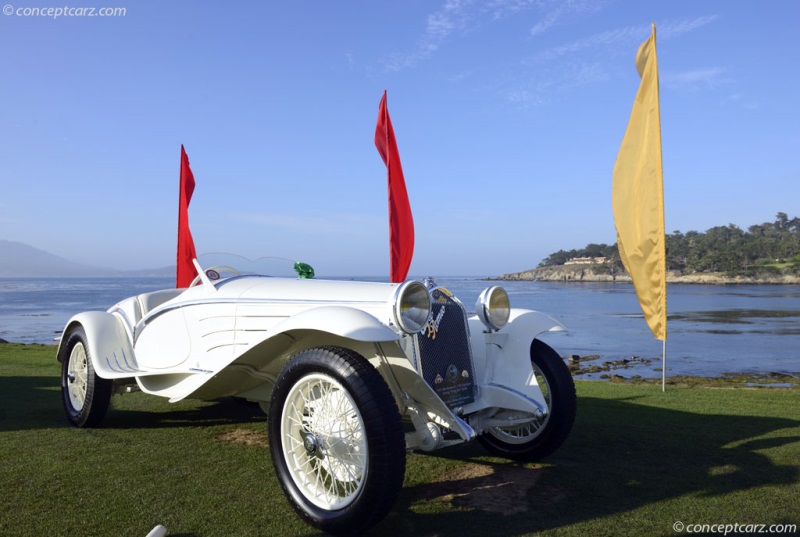
![]() | ![]() | ![]() | Spider Corsa Coachwork: Giuseppe Aprile Chassis Num: 10814331 |
After the work was completed, the car was sold to its third owner, a local enthusiast, who kept it until 1956 in the Savona area. During the War, the car was hid in order to keep it protected. The next care taker owned the car until 2008 and during that time, it was seen in the public on rare occasions.
The current owner acquired the car in 2008. Since that time, the car has been meticulously restored. The work took two years to complete. With help and collaboration from the Politecnico of Milano University the exact shades of white and blue have been recreated. Upon completion, it made its first concours debut (and its restoration debut) at the 2012 Pebble Beach Concours d'Elegance.
By Daniel Vaughan | Mar 2013
In 1929 the 6C 1750 was created as a replacement for the aging 6C 1500. The name, 6C 1750, was a combination of the six-cylinder engine and the 1752 cc engine displacement. The 1750 continued the strong racing legacy Alfa Romeo had established with their P2 Grand Prix car and the 1500. The design for the Sport editions were simply yet sophisticated. They used a light frame coupled with a small inline-six cylinder supercharged engine capable of producing nearly 100 horsepower.
The 1750 was created in 1929 and produced until 1933, during this time nearly 2500 examples were created. There were six series each achieving a higher level of sophistication over the prior series. As was the case with many manufacturers at the time, Alfa Romeo supplied the rolling chassis and commissioned coachbuilders such as Zagato, Touring, Stablimenti Farina, Castagna, and James Young to finish the body. The result was a wide range of specifications and creativity.
The design was handled by Vittorio Jano, an individual Enzo Ferrari, an employee of Alfa Romeo, had been able to lure from Fiat. Jano had been tasked with designing the 6C 1500 which had been powered by a six-cylinder engine. He was then tasked with designing the 6C 1750 which was debuted at the 1929 Rome Motorshow. It shared many similarities with its predecessor; the biggest difference being an enlarged engine. Because of the larger engine it was capable of being outfitted with larger, heavier bodies.
The first version of the 1750 was the Turismo. The second version was the Sport which sat atop a shorter wheelbase and was given an improved engine. The most powerful and competitive versions of the 1750 was the Super Sport or Gran Sport. In this form they were often campaigned by the factory and privateers in a plethora of sporting events. They were equipped with supercharged engines and sat atop a short wheelbase. Most of the 360 examples received coachwork courtesy of Zagato, mainly because of the lightweight design. Only 44 examples of the sixth series Gran Sport were produced. The Gran Sport was successfully campaigned at events like the Mille Miglia, Targa Florio, and Tourist Trophy where it emerged victorious.
In 1931 the 8C 2300 replaced the Gran Sport. The 1750 Gran Sport is one of the finest sporting examples of its time. The 1750 continued Alfa Romeo's reputation for fun-to-drive vehicles that were competitive and durable.
By Daniel Vaughan | Dec 2008
For more information and related vehicles, click hereThe 1750 was created in 1929 and produced until 1933, during this time nearly 2500 examples were created. There were six series each achieving a higher level of sophistication over the prior series. As was the case with many manufacturers at the time, Alfa Romeo supplied the rolling chassis and commissioned coachbuilders such as Zagato, Touring, Stablimenti Farina, Castagna, and James Young to finish the body. The result was a wide range of specifications and creativity.
The design was handled by Vittorio Jano, an individual Enzo Ferrari, an employee of Alfa Romeo, had been able to lure from Fiat. Jano had been tasked with designing the 6C 1500 which had been powered by a six-cylinder engine. He was then tasked with designing the 6C 1750 which was debuted at the 1929 Rome Motorshow. It shared many similarities with its predecessor; the biggest difference being an enlarged engine. Because of the larger engine it was capable of being outfitted with larger, heavier bodies.
The first version of the 1750 was the Turismo. The second version was the Sport which sat atop a shorter wheelbase and was given an improved engine. The most powerful and competitive versions of the 1750 was the Super Sport or Gran Sport. In this form they were often campaigned by the factory and privateers in a plethora of sporting events. They were equipped with supercharged engines and sat atop a short wheelbase. Most of the 360 examples received coachwork courtesy of Zagato, mainly because of the lightweight design. Only 44 examples of the sixth series Gran Sport were produced. The Gran Sport was successfully campaigned at events like the Mille Miglia, Targa Florio, and Tourist Trophy where it emerged victorious.
In 1931 the 8C 2300 replaced the Gran Sport. The 1750 Gran Sport is one of the finest sporting examples of its time. The 1750 continued Alfa Romeo's reputation for fun-to-drive vehicles that were competitive and durable.
By Daniel Vaughan | Dec 2008
| RM To Sell Magnificent 1905 Fiat 60HP | |
![]() | MAGNIFICENT 1905 FIAT 60HP HEADS LIST OF INCREDIBLE NEW ENTRIES FOR RM'S SALE DURING THE CONCORSO D'ELEGANZA VILLA D'ESTE WEEKEND • RM Auctions announces additional stunning consignments for its forthcoming sale during the Concorso d'Eleganza Villa d'Este weekend, 25th May • Offered for sale publicly for the first time in 108 years, this thundering and unique early 60HP FIAT presents collectors with the rarest of opportunities to buy a piece of motoring history • A simply exquisite and...[Read more...] |
| RM Announces Early Highlights For Sale During the Concorso D'Eleganza Villa D'Este Weekend | |
![]() | • RM Auctions returns to Cernobbio on Lake Como, Italy, on the 25th of May, for its biennial sale during the Concorso d'Eleganza Villa d'Este • Exclusive evening sale to a featured, elite, handpicked selection of approximately 40 blue-chip automobiles • Early attractions include a superb 1962 Ferrari 400 Superamerica Coupe, a historically significant 1947 Cisitalia 202 MM 'Nuvolari' Spider, a delectable 1930 Bugatti Type 46 Superprofile Coupe, and a 1929 Rolls-Royce Phantom I Open Tourer wit...[Read more...] |
| RM Group of Companies Enjoys Significant Growth and Record $360 Million in Auction Sales During 2012 | |
![]() | • RM group of companies, including RM Auctions and Auctions America, generates more than $360 million in auction sales in 2012 • Results tally represents best performance in the history of the collector car hobby • RM Auctions secures 49 individual million-dollar-plus transactions and a string of new auction records • Biennial Monaco sale enters history books as one of the most successful collector car auctions ever staged in Europe • Auctions America enjoys significant growth and puts Aubur...[Read more...] |
| Ferrari 'Tour De France' Joins RM's Monterey Sale | |
![]() | • RM Auctions announces a rare and coveted 1956 Ferrari 250 GT LWB Berlinetta Scaglietti 'Tour de France' as the latest feature attraction for its Monterey sale, August 17–18 • The first 14-Louver TdF built and one of just nine examples of its kind, 0585 GT is Ferrari Classiche certified and boasts a well-documented history, including a co-starring role in the 1966 Disney classic, The Love Bug • Exclusive TdF joins previously announced Ferrari 410 S to lead an exceptional roster of more than a...[Read more...] |
| RM Secures One-Of-A-Kind Ferrari and Talbot-Lago For its Monterey sale | |
![]() | RM Auctions, the world's largest collector car auction house for investment-quality automobiles, is delighted to announce two new headline attractions for its highly anticipated Monterey, California sale, August 17–18: a spectacular 1955 Ferrari 410 Sport Berlinetta and a flawless 1938 Talbot-Lago T23 Teardrop Coupe. On display at the company's sale in Monaco this week (May 11–12), both automobiles represent the pinnacle of exclusivity and style. The extraordinarily rare 410 S, chassis 0594 C...[Read more...] |
1931
Alfa Romeo
models |
| Alfa Romeo 8C 2300 |
| Alfa Romeo 8C 2300 Monza |
| Alfa Romeo Tipo A |
| Similar Automakers | |
| Citroen | Fiat |
| Lancia | Morgan |
| Opel | Peugeot |
| Renault | Seat |
| Skoda | Vauxhall |
| Similarly Sized Vehicles from 1931 |
| Voisin C14 |
| Alfa Romeo: 1931-1940 |
| Similar Automakers |
| Other models by Alfa Romeo |
| 147 156 164 1750 1900 SS | 2000 24HP 2600 6C 8C | 8C 2600 90 Alfetta Arna BAT | Giulia Giulietta Junior Zagato Milano Montreal | P3 RL Spider Sprint Zagato SZ | Tipo 158 Alfetta Tipo 33 TZ |
1930 6C 1750 GS | 1932 6C 1750 ![]() |


1930 6C 1750 GS


1931