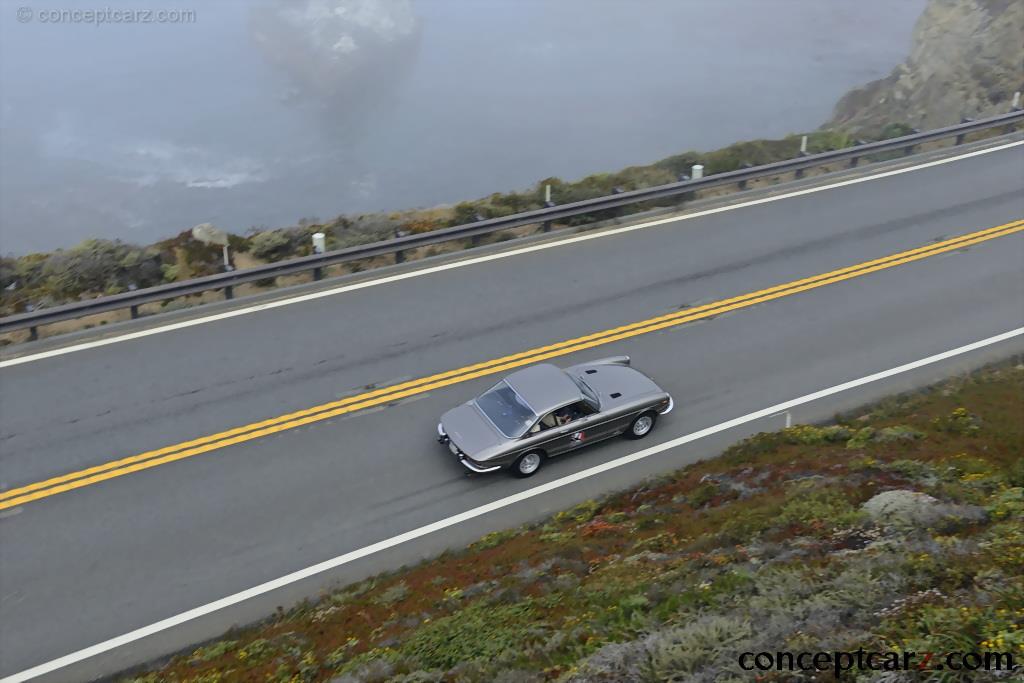
1968 365 GTC |
1969 Ferrari 365 GTC news, pictures, and information | ||
| Tweet | ||
![]() | ![]() | ![]() | Coupe Chassis Num: 12471 |
![]() | ![]() | Coupe Chassis Num: 12713 |
| Sold for $124,655 (CHF 160,817) at 2005 Bonhams. Sold for $209,000 at 2007 RM Auctions. | ||
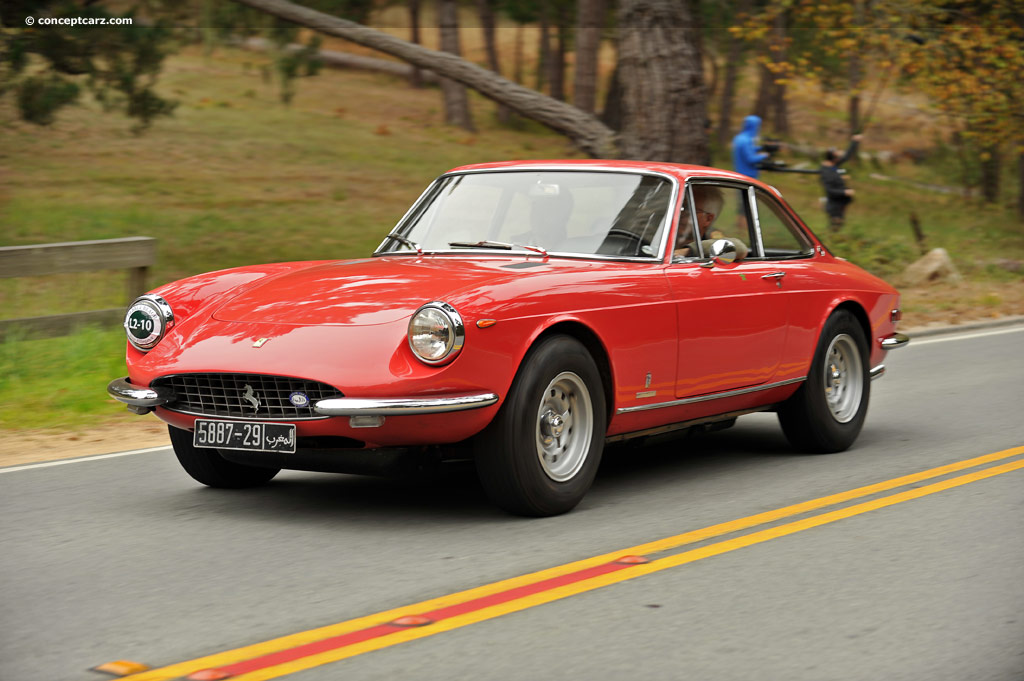
The design is a collaboration of the front end of a 400 Superamerica married to the tail of a 275 GTS. By 1968 a new engine was fitted, displacing 4.4-liters, and creating the 365 GTC. Very few design changes were made, such as the removable of the 330 GTC's fender vents.
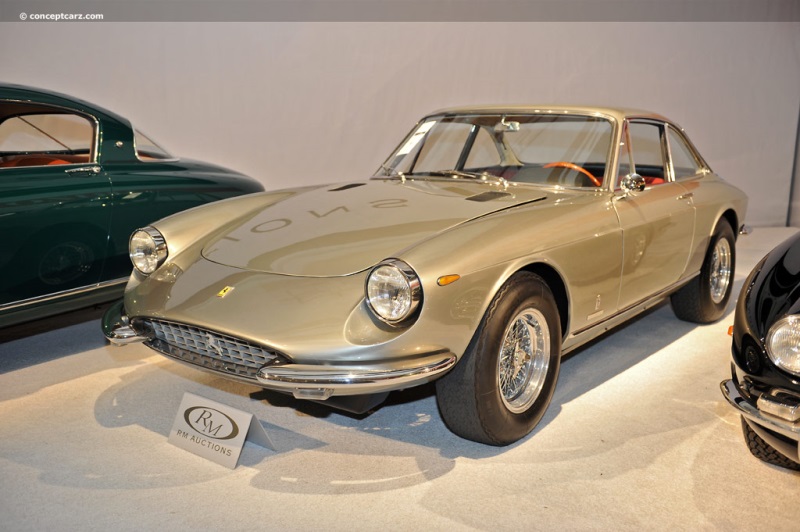
This vehicle is a matching numbers grand touring example finished in metallic chestnut brown with an interior that has been re-trimmed in black leather and still retains it original golden teak wood dash. It has traveled just 87,000 miles since new and still is in great condition in modern times.
At auction, the estimated value proved accurate as the lot was sold for $209,000 including buyer's premium.
By Daniel Vaughan | Dec 2007
![]() | ![]() | Coupe Chassis Num: 12177 Engine Num: 12177 |
In 2008, this vehicle was offered for sale at the 'Sports & Classics of Monterey' presented by RM Auctions. It had an estimated value of $300,000 - $350,000. The lot was sold for a high bid of $324,500, including buyer's premium.
By Daniel Vaughan | Jan 2009
![]() | ![]() | Coupe Chassis Num: 12271 Engine Num: 12271 |
| Sold for $374,000 at 2011 Gooding & Company. | ||
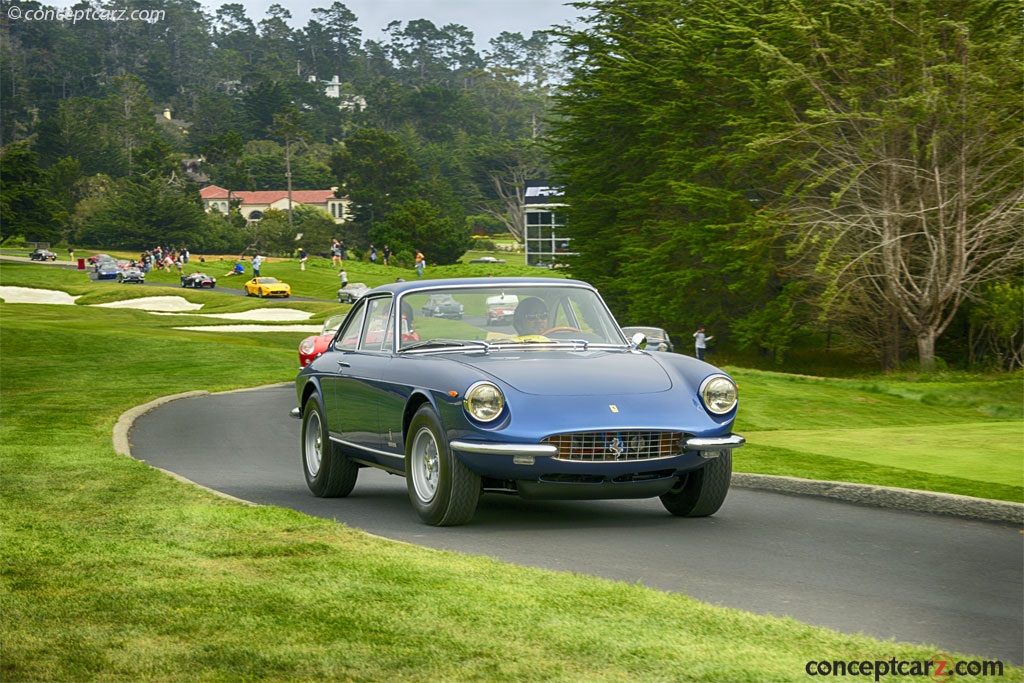
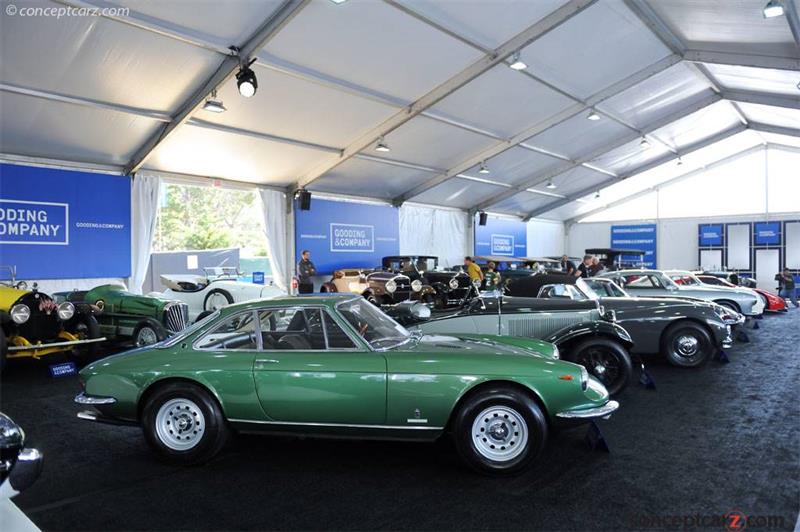
The success of the 330 GTC encouraged Ferrari to give the design one final year of life, equipping it with an increase in power and torque, as well as minor cosmetic changes, including new cooling vents that were moved from the side panels onto the bonnet.
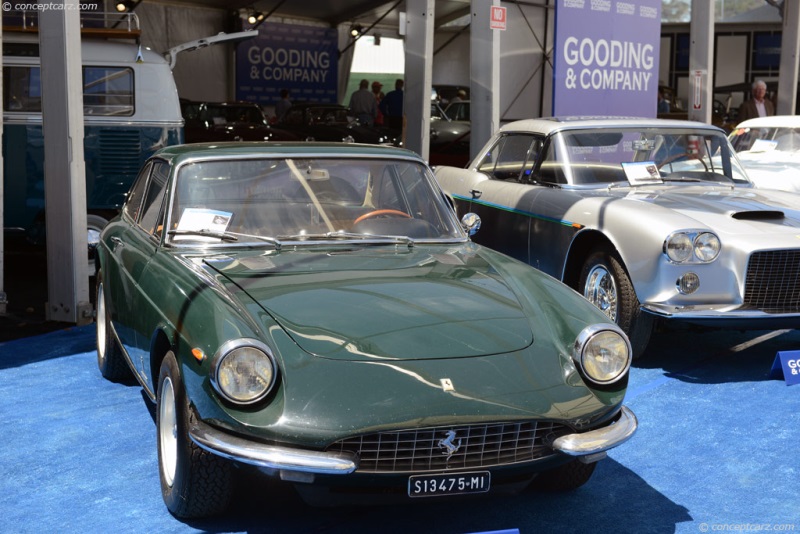
This 356 GTC was originally finished in Marrone Colorado with a Nero interior. It left the factory in March of 1969 destined for M.G. Crepaldi S.a.s., the official dealership in Milan, from where it was sold to its first owner. It remained in Italy until the early 1970s, when Italian car broker Robert de la Rive Box imported it into Switzerland.
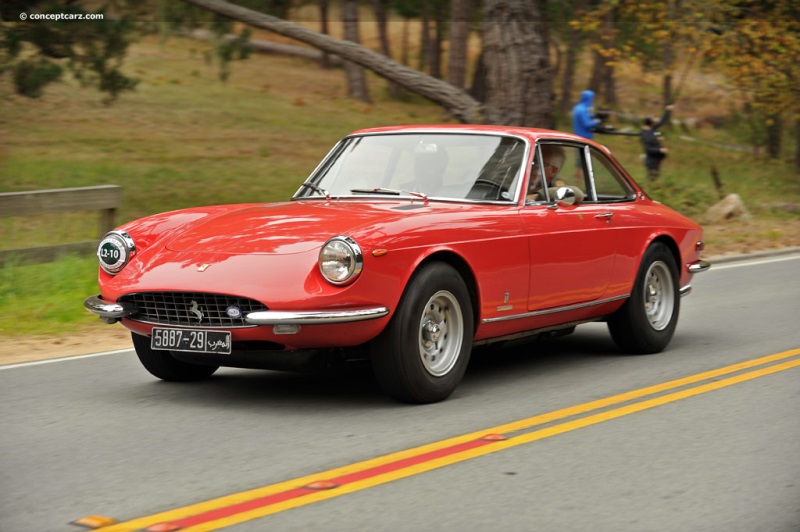
On September 10th of 1977, Mr. de la Rive Box sold it to Ralph Stafano, a mechanical engineer and Ferrari collector living in Anchorage, Alaska. Stuart Hollander of St. Louis acquired it in 1987. At the time, it was still wearing its original color scheme. Mr. Hollander commissioned a complete restoration, during which time the livery was changed to red paint with a tan interior. Completed in 1989, the work resulted in immediate exhibition success when the car placed Third in Class that same year at the annual Ferrari Club of America National Concours at Lake Lanier Islands, Georgia.
Daniel Wetuk of North Salem, NY purchased it in early 2000. In December of 2004, Dr. Alex Albarian from Glendale, CA became the vehicle's next owner. From late 2007 to 2009, the car was treated to a range of mechanical and cosmetic work that included reupholstering the center console and refitting a period-correct radio, installing new carburetors, adding a factory correct air-conditioning system and rebuilding the suspension and brakes.
In 2011, the car was offered for sale at the Gooding & Company auction held in Pebble Beach, California. It was estimated to sell for $350,000 - $400,000. As bidding came to a close, the car had been sold for the sum of $374,000 inclusive of buyer's premium.
By Daniel Vaughan | Nov 2011
![]() | ![]() | ![]() | Coupe |
![]() | ![]() | ![]() | Coupe Chassis Num: 12059 Engine Num: 12059 |
| Sold for $726,000 at 2013 RM Auctions. | |||
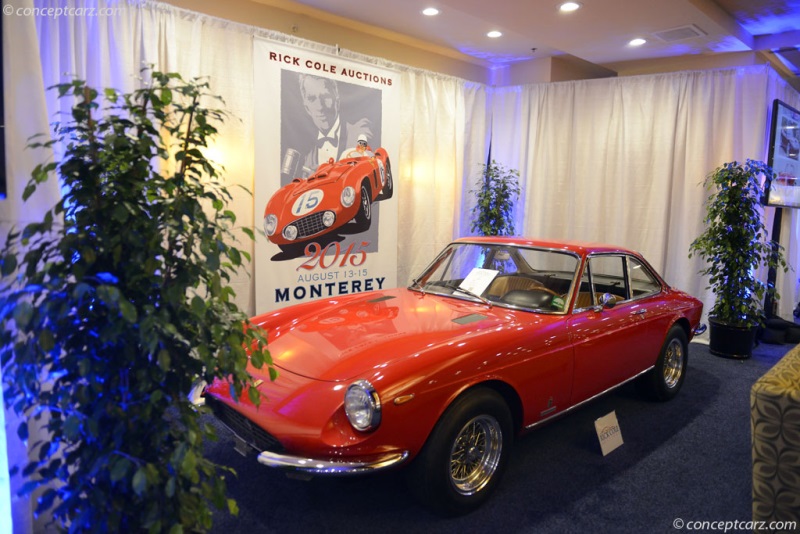
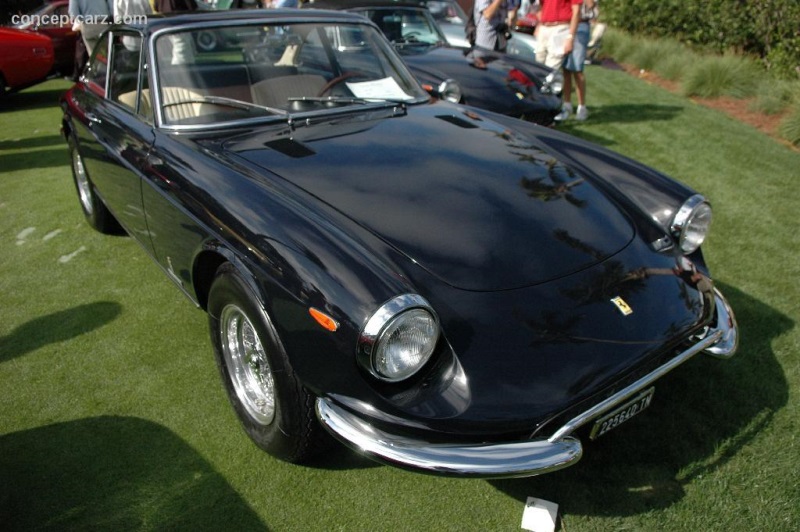
In 2008, it was purchased by an East Coast enthusiast and treated to some mechanical freshening as well as a repaint in the shade of Grigio Notte (Midnight Grey), while the interior was reupholstered in Pelle Rossa (red leather). In 2010, the car was formally submitted to Ferrari Classiche for factory authentication.
In March of 2011, the car was purchased by a Southern California owner who treated it to a mechanical restoration. On May 6, 2012, the 365 garnered Meguiars' Award for Outstanding Paint Presentation at the Greystone Mansion Concours d'Elegance, while on June 6, the car won Second in Class at the San Marino Motor Classic.
Currently, the car shows 91,000 kilometers on the odometer.
In 2013, the car was offered for sale at RM Auction's sale in Scottsdale, Arizona. The lot was sold for the sum of $726,000 including buyer's commission.
By Daniel Vaughan | Feb 2013
The 365 Series were introduced in the late 1960's and stayed in production until the early 1970's. The 365's were often powered by a Columbo SOHC 4390 cc V-12 engine with three Weber carburetors capable of producing around 300 horsepower. The front and rear suspension for most of the series was independent with double wishbones and coil springs. The 365 GT4 2+2 had an independent with transverse parallelograms and coil springs suspension. The 365 California had a live axle with coil springs rear suspension. The chassis was an oval tube ladder type frame layout.
Disc brakes were standard on all the vehicles, as was the five-speed manual gearbox. Many of the series received standard options such as power steering and air conditioning, uncommon at the time. When most manufacturers such as Lamborghini and DeTomaso were creating vehicles with mid-engined design, Ferrari continued to use their tried-and-true front-engined, rear wheel design.
In 1967 Ferrari dominated the Daytona 24 Hours race with a first, second, and third place finish. At the 1968 Paris Auto Show the public and press were expecting Ferrari's new berlinetta to be dubbed 'Daytona'. They were proven wrong when Ferrari dubbed the vehicle the 365 GTB/4, however, the name Daytona is a common reference to the vehicle even to this day. Ferrari had intended on using 'Daytona' but it was revealed prematurely so the traditional Ferrari naming sequence was used.
During its production lifespan lasting from 1968 through 1974, 1383 examples of the Pinifarina designed 365 GTB/4 Daytona vehicles were created.
The famous coachbuilder Pininfarina was tasked with creating many of the designs for the 365 Series. The designs were not new, rather they borrowed many of the styling cues of the prior 330 GTC and 275 GTS models. The headlights were courtesy of the 500 Superfast. The result was a visually stunning automobile with proven Ferrari mechanics and performance.
GT represented Gran Turismo. GTB represented Berlinetta or coupe. GTS stood for open models which were either a targa roof or a full convertible. '4' represented four-cam engines. 'C' represented 'Competizione' or 'Corsa' meaning 'to race'.
365 California
In 1966 Ferrari introduced the 365 California at the Geneva Auto Show as a replacement for the Ferrari 500 Superfast. The famous coachbuilder, Pininfarina, had been tasked with creating the body for the vehicle. The result was a two door, two-seat, convertible. The 365 borrowed many of the mechanics of its predecessor including the five-speed manual gearbox, chassis, and suspension. The front of vehicle was similar in design to the 500 with the remaining portions all new. With a top speed of 240 km/h, it was the fastest convertible in the world at the time. Disc brakes provided excellent stopping power for the 1300 kg vehicle. Production continued for only a year with a total of fourteen examples being created.
365 GT2+2
In 1967 Ferrari introduced the 365 GT2+2, only its second production four-seater vehicle. The vehicle would stay in production until 1971 during which around 800 examples being created.
The rear passengers had limited headroom but there was sufficient legroom for most passengers. The purpose of the vehicle was to provided performance and comfort. As a result the vehicle was outfitted with electric windows, leather interior, power assisted brakes, full carpeting, and optional air conditioning.
365 GTC
Near the close of 1968, Ferrari introduced the 365 GTC which stayed in production until 1970. During the production lifespan, 168 examples were produced. The 365 GTC was basically a 330 GTC with a SOHC 4390 cc V-12 engine. Visually, the vehicle was very similar to its predecessor except for the air vents in the front wings had been removed. In their place were black vents placed in the back corners of the hood.
365 GTS
The 365 GTS was a replacement for the 330 GTS. It featured a 4390 cc SOHC engine and had its cooling vents removed in favor of vents in the hood. Only twenty examples were created.
365 GTC/4
In 1971 Ferrari introduced the 365 GTC/4 as a replacement for the 365 GT 2+2. It sat atop a Daytona chassis and given an independent suspension. The same Daytona ventilated disc brakes were used. The gearbox was mounted in the front and the engine was the 4390 cc V12 but with six sidedraught Weber carburetors and wet sump lubrication resulting in 340 horsepower.
The design was once again handled by Pininfarina. The two-door, 2+2 coupe had pop-up headlights and five-spoke alloy wheels. During its production lifespan lasting until 1972, around 500 examples were produced. Strict American safety and emission regulations were partly responsible for the demise of the GTC/4.
365 GT4 2+2
The 365 GT4 2+2 was debuted to the public at the 1972 Paris Auto Show as a replacement for the 365 GT 2+2 and the 365 GTC/4. It sat atop an enlarged 365 GTC/4 chassis and given the same mechanics. The larger chassis meant more interior room for the passengers, especially the rear passengers, and their luggage. The styling was once again assigned to Pininfarina. The design was different from the prior 365 models.
During its production lifespan lasting until 1976, around 470 examples were created.
365 GT4 BB
The 365 GT4 BB, meaning Berlinetta Boxer, was introduced to the public at the 1971 Turin Auto Show. Its styling was similar to the P6 show car built in 1968. The engine was a flat-12 cylinder power-plant mounted longitudinal. The gearbox was mounted under the engine. This was a great design but ultimately created an unbalanced weight distribution with most of the weight over the rear axle. The weight distribution problem and the fact that the engine was mounted high in the vehicle resulted in a car that had poor handling and never achieved successful racing status.
The 365 GT4 BB was replaced by the 512 BB in 1976. The 512 BB was similar in design but featured a five-liter engine.
By Daniel Vaughan | Dec 2006
For more information and related vehicles, click hereDisc brakes were standard on all the vehicles, as was the five-speed manual gearbox. Many of the series received standard options such as power steering and air conditioning, uncommon at the time. When most manufacturers such as Lamborghini and DeTomaso were creating vehicles with mid-engined design, Ferrari continued to use their tried-and-true front-engined, rear wheel design.
In 1967 Ferrari dominated the Daytona 24 Hours race with a first, second, and third place finish. At the 1968 Paris Auto Show the public and press were expecting Ferrari's new berlinetta to be dubbed 'Daytona'. They were proven wrong when Ferrari dubbed the vehicle the 365 GTB/4, however, the name Daytona is a common reference to the vehicle even to this day. Ferrari had intended on using 'Daytona' but it was revealed prematurely so the traditional Ferrari naming sequence was used.
During its production lifespan lasting from 1968 through 1974, 1383 examples of the Pinifarina designed 365 GTB/4 Daytona vehicles were created.
The famous coachbuilder Pininfarina was tasked with creating many of the designs for the 365 Series. The designs were not new, rather they borrowed many of the styling cues of the prior 330 GTC and 275 GTS models. The headlights were courtesy of the 500 Superfast. The result was a visually stunning automobile with proven Ferrari mechanics and performance.
GT represented Gran Turismo. GTB represented Berlinetta or coupe. GTS stood for open models which were either a targa roof or a full convertible. '4' represented four-cam engines. 'C' represented 'Competizione' or 'Corsa' meaning 'to race'.
365 California
In 1966 Ferrari introduced the 365 California at the Geneva Auto Show as a replacement for the Ferrari 500 Superfast. The famous coachbuilder, Pininfarina, had been tasked with creating the body for the vehicle. The result was a two door, two-seat, convertible. The 365 borrowed many of the mechanics of its predecessor including the five-speed manual gearbox, chassis, and suspension. The front of vehicle was similar in design to the 500 with the remaining portions all new. With a top speed of 240 km/h, it was the fastest convertible in the world at the time. Disc brakes provided excellent stopping power for the 1300 kg vehicle. Production continued for only a year with a total of fourteen examples being created.
365 GT2+2
In 1967 Ferrari introduced the 365 GT2+2, only its second production four-seater vehicle. The vehicle would stay in production until 1971 during which around 800 examples being created.
The rear passengers had limited headroom but there was sufficient legroom for most passengers. The purpose of the vehicle was to provided performance and comfort. As a result the vehicle was outfitted with electric windows, leather interior, power assisted brakes, full carpeting, and optional air conditioning.
365 GTC
Near the close of 1968, Ferrari introduced the 365 GTC which stayed in production until 1970. During the production lifespan, 168 examples were produced. The 365 GTC was basically a 330 GTC with a SOHC 4390 cc V-12 engine. Visually, the vehicle was very similar to its predecessor except for the air vents in the front wings had been removed. In their place were black vents placed in the back corners of the hood.
365 GTS
The 365 GTS was a replacement for the 330 GTS. It featured a 4390 cc SOHC engine and had its cooling vents removed in favor of vents in the hood. Only twenty examples were created.
365 GTC/4
In 1971 Ferrari introduced the 365 GTC/4 as a replacement for the 365 GT 2+2. It sat atop a Daytona chassis and given an independent suspension. The same Daytona ventilated disc brakes were used. The gearbox was mounted in the front and the engine was the 4390 cc V12 but with six sidedraught Weber carburetors and wet sump lubrication resulting in 340 horsepower.
The design was once again handled by Pininfarina. The two-door, 2+2 coupe had pop-up headlights and five-spoke alloy wheels. During its production lifespan lasting until 1972, around 500 examples were produced. Strict American safety and emission regulations were partly responsible for the demise of the GTC/4.
365 GT4 2+2
The 365 GT4 2+2 was debuted to the public at the 1972 Paris Auto Show as a replacement for the 365 GT 2+2 and the 365 GTC/4. It sat atop an enlarged 365 GTC/4 chassis and given the same mechanics. The larger chassis meant more interior room for the passengers, especially the rear passengers, and their luggage. The styling was once again assigned to Pininfarina. The design was different from the prior 365 models.
During its production lifespan lasting until 1976, around 470 examples were created.
365 GT4 BB
The 365 GT4 BB, meaning Berlinetta Boxer, was introduced to the public at the 1971 Turin Auto Show. Its styling was similar to the P6 show car built in 1968. The engine was a flat-12 cylinder power-plant mounted longitudinal. The gearbox was mounted under the engine. This was a great design but ultimately created an unbalanced weight distribution with most of the weight over the rear axle. The weight distribution problem and the fact that the engine was mounted high in the vehicle resulted in a car that had poor handling and never achieved successful racing status.
The 365 GT4 BB was replaced by the 512 BB in 1976. The 512 BB was similar in design but featured a five-liter engine.
By Daniel Vaughan | Dec 2006
| WHAT IS THE MILLE MIGLIA? | |
![]() | Numerous attempts have been made to answer the question 'What exactly is the Mille Miglia?' and the responses have been carefully considered and contemplated. Many of the answers are more than valid, as they involve a Red Arrow race that encompasses a multitude of shades, facets and colors. According to the online encyclopedia known as 'Wikipedia', the Mille Miglia is defined as the following: 'The Mille Miglia was an open-road endurance race which took place in Italy twenty-four times fro...[Read more...] |
| 1985 San Marino Grand Prix: Angelis Descending, Ascending | |
![]() | If someone was on a quest to prove the involvement of a supreme being in the affairs of man he or she could offer the 1985 San Marino Grand Prix as evidence. For, on that day Elio de Angelis would be provided one last moment in the sun. Elio de Angelis was one of a dying breed within Formula One. Born of a wealthy Roman family, de Angelis had been in want for nothing from the day he was born. However, he was certainly an individual with his head on his shoulders and very unassuming in the way...[Read more...] |
| 2013: CELEBRATING 50 YEARS OF McLAREN | |
![]() | 'Life is measured in achievement, not in years alone.' When a 27-year-old Bruce McLaren penned those words in 1964, his new company, Bruce McLaren Motor Racing Ltd, was less than a year old. In those days, Bruce's vision was shared by fewer than half a dozen loyal souls, who slogged across the world to race his self-made cars. Nowadays, the McLaren Group employs more than 2000 people, all of whom still share Bruce's ideals of combining sportsmanship with solid engineering practice ...[Read more...] |
| 1958 German Grand Prix: So Close Never Felt So Good! | |
![]() | On the 19th of July, at the 11th RAC British Grand Prix, Roy Salvadori would climb to the 3rd step on the podium. It would be the greatest result of his career in Formula One and it would be a most exuberant moment for the man from Dovercourt joining two other Brits on the podium of their home grand prix. However, it would be the race just two weeks later that would provide Salvadori with one of his greatest, and most disappointing, moments in Formula One. Salvadori's World Championship debut...[Read more...] |
| Jaguar Heritage Racing scores debut win in Monaco Historic | |
![]() | Jaguar Heritage Racing, the new 'works' supported racing programme of Jaguar Cars, scored its debut win with a C-type in the Grand Prix de Monaco Historique, Serie C for Pre-1953 Sports Prototypes. The prestigious FIA sanctioned race was won by Alex Buncombe, in Jaguar Heritage Racing's 1952 C-type. The Grand Prix de Monaco Historique is widely regarded as the jewel in the crown of historic racing. This is the 8th running of the FIA sanctioned event, which occurs two weeks ahead of the F1 Gra...[Read more...] |
1969
Ferrari
models |
| Ferrari 312 F1 |
| Ferrari 312 P |
| Ferrari 365 GT 2+2 |
| Ferrari 365 GTB/4 |
| Ferrari 365 GTB/4C Competition |
| Ferrari 365 GTS |
| Ferrari Dino 246 |
| Similar Automakers | |
| Aston Martin | Bentley |
| Bugatti | Devon |
| GTA | Koenigsegg |
| Lamborghini | Lotus |
| Maserati | Maybach |
| McLaren | Porsche |
| Rolls-Royce | Spyker |
| Tesla | |
| Similarly Sized Vehicles from 1969 |
| Aston Martin DB6 |
| Ferrari 365 GTB/4 |
| Ferrari 365 GTS |
| Fiat 124 |
| ISO Grifo GL |
| Jaguar XKE E-Type |
| Land Rover SWB IIA |
| Porsche 914/14 SCCA |
| Volvo P 130 |
| Ferrari: 1961-1970 |
| Similar Automakers |
| Other models by Ferrari |
1968 365 GTC |


1968 365 GTC


1969