History
Prior to World War II, Alfa Romeo was blessed with a mystique that few companies have ever been able to duplicate. Perhaps the easiest way to describe prewar Alfa Romeo is to compare it with postwar Ferrari, a company whose relentless dominance on the racetrack and in the garages of millionaires has become a familiar fact of life. It was, after all, with Alfa Romeo that Enzo Ferrari began in earnest his famous career.
Suggesting that the two brands are entirely analogous is far too simple a conclusion, though. Ferrari did, in a sense, pick up where prewar Alfa left off, building glorious cars that were created first and foremost to win races. But the Ferrari company was a relative latecomer to auto racing, while Alfa Romeo was involved from nearly the start of the sport. Alfa Romeo built its reputation with some of the finest drivers, finest engineers, and finest automobiles known to the world. An Alfa won every Mille Miglia from 1928 to 1938, with the exception of the 1931 race that was won by a Mercedes-Benz SSK. Alfas won Le Mans in 1931, 1932, 1933, and 1934. It wasn't until just before the outbreak of World War II when Nazi Germany fed Auto Union and Mercedes-Benz great sums of money to create cars that could dominate auto racing and boost national pride, that Alfas began to slowly slip off the podiums—and even after that the company remained highly competitive.
Alfa Romeos raced in the most grueling, dangerous, frightening, and exciting events that car racing has ever known. The company's road cars, too, used phenomenal engines and chassis, many of which were initially developed for race use and then later detuned and clothed in stunning bodies by Italy's famed carrozzerie. Alfa built supercars before supercars existed. Alfa was, put simply, one of the absolutely superlative prewar marques, a rarefied combination of lust, precision, sophistication, and aesthetic excellence.
After World War II, though, Alfa Romeo boldly entered a market into which it had never before ventured: that of the mass-produced car. Fortunately, these later Alfas did not lose their prewar dignity. Instead, the carmaker's characteristically excellent engineering and styling were translated into smaller, more affordable packages. The 1900 was the first of Alfa's mass-produced cars. An excellent vehicle with monocoque construction and a twin-cam four-cylinder with an alloy head, the 1900 was a clear departure from Alfa's prewar roots. The car was distinctive, though, and while it was usually ordered as a conservative sedan, it could also be ordered as a coupe or convertible from the same excellent design houses that created some of the finest examples of prewar Alfa style. The real success story of Alfa Romeo's early postwar years, though, was introduced four years after the 1900, and named Giulietta.
Despite what BMW fans might say about their 2002s, the Alfa Romeo Giulietta was the first sports sedan. Admittedly, that assertion might meet with some controversy, but even on paper, the Giulietta's sporty demeanor is clear. Even the four-door (or Berlina) Giuliettas were equipped with mechanicals that made many contemporary sports cars jealous. The brakes were excellent finned Alfin drums, the rear axle with its aluminum differential housing was suspended by coils instead of leaves, and the car's compact size and weight of just one ton ensured delightful road manners.
And then you see the engine. Displacing just 1,290cc, it was not particularly powerful. It had a polished sophistication that could not be matched by the engines in many cars with bigger price tags and more impressive performance figures, though. The Giulietta engine was such an inherently excellent and modern unit that its basic design, albeit in 1,962cc form, was in use until the very last of the Alfa Romeo 105- and 115-series Spiders were produced—in 1993.
The Giulietta's engine contained many features usually reserved for prohibitively expensive cars, yet it was made available affordably to the masses. The block and head were both cast in aluminum. An oil capacity to rival the Exxon Valdez ensured cool operation even at sustained high engine speeds. The pistons traveled in cast-iron wet liners that were replaceable, indicating that these engines were designed not just to perform but also to last. Twin, chain-driven camshafts operated two valves per cylinder that opened into hemispherical combustion chambers. This was an engine comparable to those used in some of the very best sports cars of the time—and sure enough, Alfa created successful racing cars using tuned Giulietta running gear coupled with aerodynamic bodies.
Unlike most cars offering more than one body configuration, where the four-door sedan is usually the first style introduced, Alfa Romeo introduced the coupe (or Sprint) version of its Giulietta before the Berlina. The background behind this unusual decision is fascinating.
Alfa intended to release the Giulietta Berlina as the initial Giulietta body style in 1953. In order to raise money and generate interest in their new car, Alfa held a lottery by issuing company securities and giving security holders the chance to win a Giulietta. Alfa Romeo held this lottery while their latest car was still being developed, though, and by 1953 the Giulietta was not yet ready for production. The randomly selected lottery winners were getting upset at not having their cars by the originally stated release date, and Alfa knew it had to act quickly to settle the problem before the Giulietta's reputation was tarnished before the model had even been released.
The Giulietta Berlina would not be ready until 1955. Given Alfa Romeo's close relationship with the Italian carrozzerie, though, the company knew that it could order a limited run of cars built quickly to assuage the concerns of angry lottery winners. Alfa Romeo accordingly contacted Bertone to arrange for the production of the Giulietta Sprint in time for a debut at Turin in 1954. Alfa didn't realize just how well its Giulietta would sell in all three standard body configurations (Berlina, Sprint, and Spider), and by the end of production, the car had been a success story not only for Alfa but also for Bertone, which went on to produce all Giulietta Sprints.
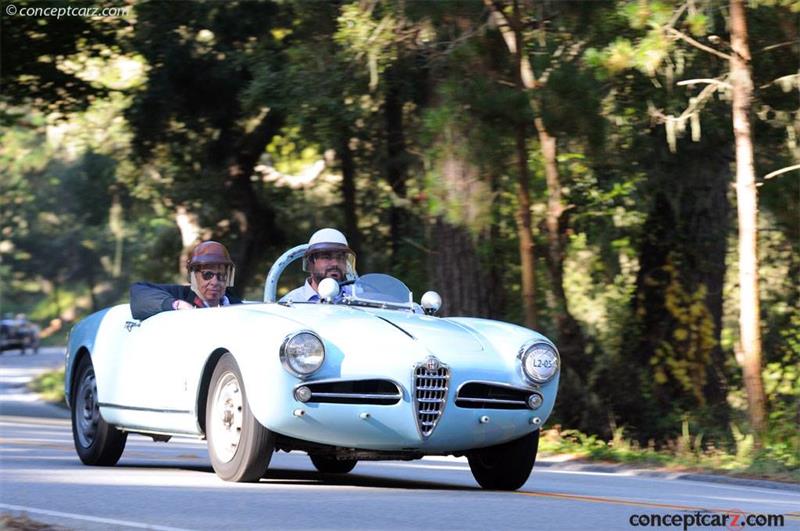
In addition to the Berlina and Sprint, a two-seat Spider (convertible) version of the Giulietta was also produced. Styled and built by Pinin Farina, this lithe and pretty automobile was proof that the Giulietta running gear was perfectly suited to sports cars. Though the Berlina was the most popular body style by a wide margin, the little sedans are now very rare as they tended to lead rougher lives than the Sprints and Spiders.
From 1956, Giulietta shoppers could choose a Sprint Veloce or Spider Veloce in addition to the standard versions of the three primary body styles. The Veloce models featured, amongst other engine modifications, twin Weber carburetors in place of the standard trims' single Solex units, and they could rev to 8,000rpm. With virtually no external cues giving away the added power, the Veloces were true sleepers that offered tremendous fun in cars that were still relatively affordable and sturdy.
Two other notable and exclusive Giulietta body styles were the Sprint Speciale (by Bertone) and the Sprint Zagato. These models added sleek, aerodynamic bodies to an already impressive platform. The cars are highly prized today, the Sprint Speciale for its terrific style and the Sprint Zagato for its racing pedigree.
The Giulietta was produced in two series, retroactively titled 750 and 101 in reference to the beginning digits used for part numbers associated with the vehicles. The early 750 and later 101 were distinguished by several subtle yet important changes (such as the 101's split-case gearbox and longer wheelbase for Spider), but they were not marketed as different cars, and there were transitional examples that blurred the distinctions between the series. Despite the detailed changes, the Giulietta models were never fully redesigned until the Giulia replacement came in 1962 (some Giulietta models remained in production until 1964). The Giulia continued to cement Alfa Romeo's postwar reputation as the producer of innovative, thoughtfully engineered, and superbly styled mass-produced sports cars and sedans.
To gain an insightful understanding of the Giulietta, it's helpful to consider the car's name. Giulietta. No one seems to know for sure where that name came from, but there is a popular legend that offers a possible idea. Several of Alfa Romeo's directors, as well as racing driver Jean-Pierre Wimille, ended up in a Paris nightclub at a time near the debut of the Alfa 1900. A clever Russian prince who happened to be in the same nightclub recognized the eight gentlemen and asked, 'You are eight Romeos, without even one Giulietta?' Evidently, the Alfa directors liked the name.
Whether or not this story is true, it gives a clear (if romanticized) picture of what Alfa Romeo was like in the 1950s. This was a clever, stylish brand, run by charismatic enthusiasts who were ready to reformulate the essence of their company. Exciting times, exciting people, exciting cars—Giulietta's birth represented a new chapter in Alfa Romeo's history that has come to be as highly regarded as the tradition of extravagant perfection before it.
Sources:
Benson, Joe. Illustrated Alfa Romeo Buyer's Guide . 2nd. Osceola, WI: MBI Publishing Company, 1992. Print.
Goodfellow, Winston. Italian Sports Cars. Osceola, WI: MBI Publishing Company, 2000. Print.
LaChance, David. ''The Italian Girlfriend'.' Hemmings Sports & Exotic Car. Dec 2010: 24-29. Print.By Evan Acuña
Suggesting that the two brands are entirely analogous is far too simple a conclusion, though. Ferrari did, in a sense, pick up where prewar Alfa left off, building glorious cars that were created first and foremost to win races. But the Ferrari company was a relative latecomer to auto racing, while Alfa Romeo was involved from nearly the start of the sport. Alfa Romeo built its reputation with some of the finest drivers, finest engineers, and finest automobiles known to the world. An Alfa won every Mille Miglia from 1928 to 1938, with the exception of the 1931 race that was won by a Mercedes-Benz SSK. Alfas won Le Mans in 1931, 1932, 1933, and 1934. It wasn't until just before the outbreak of World War II when Nazi Germany fed Auto Union and Mercedes-Benz great sums of money to create cars that could dominate auto racing and boost national pride, that Alfas began to slowly slip off the podiums—and even after that the company remained highly competitive.
Alfa Romeos raced in the most grueling, dangerous, frightening, and exciting events that car racing has ever known. The company's road cars, too, used phenomenal engines and chassis, many of which were initially developed for race use and then later detuned and clothed in stunning bodies by Italy's famed carrozzerie. Alfa built supercars before supercars existed. Alfa was, put simply, one of the absolutely superlative prewar marques, a rarefied combination of lust, precision, sophistication, and aesthetic excellence.
After World War II, though, Alfa Romeo boldly entered a market into which it had never before ventured: that of the mass-produced car. Fortunately, these later Alfas did not lose their prewar dignity. Instead, the carmaker's characteristically excellent engineering and styling were translated into smaller, more affordable packages. The 1900 was the first of Alfa's mass-produced cars. An excellent vehicle with monocoque construction and a twin-cam four-cylinder with an alloy head, the 1900 was a clear departure from Alfa's prewar roots. The car was distinctive, though, and while it was usually ordered as a conservative sedan, it could also be ordered as a coupe or convertible from the same excellent design houses that created some of the finest examples of prewar Alfa style. The real success story of Alfa Romeo's early postwar years, though, was introduced four years after the 1900, and named Giulietta.
Despite what BMW fans might say about their 2002s, the Alfa Romeo Giulietta was the first sports sedan. Admittedly, that assertion might meet with some controversy, but even on paper, the Giulietta's sporty demeanor is clear. Even the four-door (or Berlina) Giuliettas were equipped with mechanicals that made many contemporary sports cars jealous. The brakes were excellent finned Alfin drums, the rear axle with its aluminum differential housing was suspended by coils instead of leaves, and the car's compact size and weight of just one ton ensured delightful road manners.
And then you see the engine. Displacing just 1,290cc, it was not particularly powerful. It had a polished sophistication that could not be matched by the engines in many cars with bigger price tags and more impressive performance figures, though. The Giulietta engine was such an inherently excellent and modern unit that its basic design, albeit in 1,962cc form, was in use until the very last of the Alfa Romeo 105- and 115-series Spiders were produced—in 1993.
The Giulietta's engine contained many features usually reserved for prohibitively expensive cars, yet it was made available affordably to the masses. The block and head were both cast in aluminum. An oil capacity to rival the Exxon Valdez ensured cool operation even at sustained high engine speeds. The pistons traveled in cast-iron wet liners that were replaceable, indicating that these engines were designed not just to perform but also to last. Twin, chain-driven camshafts operated two valves per cylinder that opened into hemispherical combustion chambers. This was an engine comparable to those used in some of the very best sports cars of the time—and sure enough, Alfa created successful racing cars using tuned Giulietta running gear coupled with aerodynamic bodies.
Unlike most cars offering more than one body configuration, where the four-door sedan is usually the first style introduced, Alfa Romeo introduced the coupe (or Sprint) version of its Giulietta before the Berlina. The background behind this unusual decision is fascinating.
Alfa intended to release the Giulietta Berlina as the initial Giulietta body style in 1953. In order to raise money and generate interest in their new car, Alfa held a lottery by issuing company securities and giving security holders the chance to win a Giulietta. Alfa Romeo held this lottery while their latest car was still being developed, though, and by 1953 the Giulietta was not yet ready for production. The randomly selected lottery winners were getting upset at not having their cars by the originally stated release date, and Alfa knew it had to act quickly to settle the problem before the Giulietta's reputation was tarnished before the model had even been released.
The Giulietta Berlina would not be ready until 1955. Given Alfa Romeo's close relationship with the Italian carrozzerie, though, the company knew that it could order a limited run of cars built quickly to assuage the concerns of angry lottery winners. Alfa Romeo accordingly contacted Bertone to arrange for the production of the Giulietta Sprint in time for a debut at Turin in 1954. Alfa didn't realize just how well its Giulietta would sell in all three standard body configurations (Berlina, Sprint, and Spider), and by the end of production, the car had been a success story not only for Alfa but also for Bertone, which went on to produce all Giulietta Sprints.
In addition to the Berlina and Sprint, a two-seat Spider (convertible) version of the Giulietta was also produced. Styled and built by Pinin Farina, this lithe and pretty automobile was proof that the Giulietta running gear was perfectly suited to sports cars. Though the Berlina was the most popular body style by a wide margin, the little sedans are now very rare as they tended to lead rougher lives than the Sprints and Spiders.
From 1956, Giulietta shoppers could choose a Sprint Veloce or Spider Veloce in addition to the standard versions of the three primary body styles. The Veloce models featured, amongst other engine modifications, twin Weber carburetors in place of the standard trims' single Solex units, and they could rev to 8,000rpm. With virtually no external cues giving away the added power, the Veloces were true sleepers that offered tremendous fun in cars that were still relatively affordable and sturdy.
Two other notable and exclusive Giulietta body styles were the Sprint Speciale (by Bertone) and the Sprint Zagato. These models added sleek, aerodynamic bodies to an already impressive platform. The cars are highly prized today, the Sprint Speciale for its terrific style and the Sprint Zagato for its racing pedigree.
The Giulietta was produced in two series, retroactively titled 750 and 101 in reference to the beginning digits used for part numbers associated with the vehicles. The early 750 and later 101 were distinguished by several subtle yet important changes (such as the 101's split-case gearbox and longer wheelbase for Spider), but they were not marketed as different cars, and there were transitional examples that blurred the distinctions between the series. Despite the detailed changes, the Giulietta models were never fully redesigned until the Giulia replacement came in 1962 (some Giulietta models remained in production until 1964). The Giulia continued to cement Alfa Romeo's postwar reputation as the producer of innovative, thoughtfully engineered, and superbly styled mass-produced sports cars and sedans.
To gain an insightful understanding of the Giulietta, it's helpful to consider the car's name. Giulietta. No one seems to know for sure where that name came from, but there is a popular legend that offers a possible idea. Several of Alfa Romeo's directors, as well as racing driver Jean-Pierre Wimille, ended up in a Paris nightclub at a time near the debut of the Alfa 1900. A clever Russian prince who happened to be in the same nightclub recognized the eight gentlemen and asked, 'You are eight Romeos, without even one Giulietta?' Evidently, the Alfa directors liked the name.
Whether or not this story is true, it gives a clear (if romanticized) picture of what Alfa Romeo was like in the 1950s. This was a clever, stylish brand, run by charismatic enthusiasts who were ready to reformulate the essence of their company. Exciting times, exciting people, exciting cars—Giulietta's birth represented a new chapter in Alfa Romeo's history that has come to be as highly regarded as the tradition of extravagant perfection before it.
Sources:
Benson, Joe. Illustrated Alfa Romeo Buyer's Guide . 2nd. Osceola, WI: MBI Publishing Company, 1992. Print.
Goodfellow, Winston. Italian Sports Cars. Osceola, WI: MBI Publishing Company, 2000. Print.
LaChance, David. ''The Italian Girlfriend'.' Hemmings Sports & Exotic Car. Dec 2010: 24-29. Print.By Evan Acuña
The 1954 Alfa Romeo Giulietta was an important vehicle for the Company, because it was the first offering since World War II that truly resembled the racing-inspired vehicles Alfa was capable of producing. The vehicles were mass-produced, a first for the company. The Giulietta came in various body styles including the Spider, Sprint, TI, and Veloce.
The vehicles were built with the engine in the front and powered the rear wheels. Most used a four-speed manual gearbox with front and rear drum brakes. The steering was worm-and-roller with the front suspension comprised of wishbones with telescopic dampers and coil springs with anti-roll bar while the rear was a rigid live axle with telescopic dampers and coil springs.
The first of the Giulietta's to be offered was the 2+2 coupe which featured a four-cylinder engine and bodywork by Bertone. The 1290 cc engine producing 65 horsepower, a respectable figure at the time. A year later the Berlina version appeared, commonly referred to as a salon. This version brought a level of practicality, with its four doors and longer wheelbase. It featured the same mechanical components as the Sprint but the engine was not as powerful, producing a little over 50 horsepower.
The famous coachbuilder, Pininfarina, was tasked with designing a new prototype for 1955. What was created was the Giulietta Spider Prototype, first introduced to the public at the 1956 Turing Motor Show in production form. It sat atop a slightly shorter wheelbase than the Sprint but used the same mechanical components.
In 1956, the Veloce was introduced. This version was sporty, with its dual-cam 1300 cc alloy engine. Using dual Weber DC03 carburetors the vehicle was capable of producing 90 horsepower. The gas tank was enlarged to better prepare it for endurance racing while the larger front brakes provided excellent stopping power. By using Plexiglas rear and side windows and aluminum alloy doors, hood, and trunk lid the vehicle was able to shed weight, ultimately improving performance. The Veloce version was available on the Spider and the Sprint.
In 1957, the Giulietta Ti was introduced, outfitted with a salon body and powered by a Sprint engine. With the four doors and a 65 horsepower engine, this became the most popular Giulietta ever produced.
Modest changes were made in 1959 to correct reliability issues. There were few aesthetic changes, mostly to the exterior of the TI version.
In 1961 the berlina's received an updated grill and the Spider now shared the same wheelbase as the Sprint. The TI received extra power, an increase that brought total output to 75 horsepower.
In 1963, the production of the Berlina ceased with the TI doing the same a year later. Throughout the production lifespan of the Giulietta, the TI was by far the most popular model with nearly 93,000 examples being produced. The closest to the TI was the Berlina with a little over 39,000 examples. With nearly 2,800 examples produced, the Spider Veloce was the lowest produced version. There was a version dubbed the Promiscua that was a four-door estate car and featured bodywork by Coli that was even more exclusive, with only 91 examples produced.
By Daniel Vaughan | Jan 2011
The vehicles were built with the engine in the front and powered the rear wheels. Most used a four-speed manual gearbox with front and rear drum brakes. The steering was worm-and-roller with the front suspension comprised of wishbones with telescopic dampers and coil springs with anti-roll bar while the rear was a rigid live axle with telescopic dampers and coil springs.
The first of the Giulietta's to be offered was the 2+2 coupe which featured a four-cylinder engine and bodywork by Bertone. The 1290 cc engine producing 65 horsepower, a respectable figure at the time. A year later the Berlina version appeared, commonly referred to as a salon. This version brought a level of practicality, with its four doors and longer wheelbase. It featured the same mechanical components as the Sprint but the engine was not as powerful, producing a little over 50 horsepower.
The famous coachbuilder, Pininfarina, was tasked with designing a new prototype for 1955. What was created was the Giulietta Spider Prototype, first introduced to the public at the 1956 Turing Motor Show in production form. It sat atop a slightly shorter wheelbase than the Sprint but used the same mechanical components.
In 1956, the Veloce was introduced. This version was sporty, with its dual-cam 1300 cc alloy engine. Using dual Weber DC03 carburetors the vehicle was capable of producing 90 horsepower. The gas tank was enlarged to better prepare it for endurance racing while the larger front brakes provided excellent stopping power. By using Plexiglas rear and side windows and aluminum alloy doors, hood, and trunk lid the vehicle was able to shed weight, ultimately improving performance. The Veloce version was available on the Spider and the Sprint.
In 1957, the Giulietta Ti was introduced, outfitted with a salon body and powered by a Sprint engine. With the four doors and a 65 horsepower engine, this became the most popular Giulietta ever produced.
Modest changes were made in 1959 to correct reliability issues. There were few aesthetic changes, mostly to the exterior of the TI version.
In 1961 the berlina's received an updated grill and the Spider now shared the same wheelbase as the Sprint. The TI received extra power, an increase that brought total output to 75 horsepower.
In 1963, the production of the Berlina ceased with the TI doing the same a year later. Throughout the production lifespan of the Giulietta, the TI was by far the most popular model with nearly 93,000 examples being produced. The closest to the TI was the Berlina with a little over 39,000 examples. With nearly 2,800 examples produced, the Spider Veloce was the lowest produced version. There was a version dubbed the Promiscua that was a four-door estate car and featured bodywork by Coli that was even more exclusive, with only 91 examples produced.
By Daniel Vaughan | Jan 2011
Similarly Sized Vehicles
from 1958
Similarly Priced Vehicles
Chevrolet Corvette C1 ($3,630-$3,630)
Porsche 356A ($3,200-$5,900)
Edsel Pacer ($2,698-$3,765)
Edsel Citation ($3,498-$3,765)
Mercury Voyager ($3,630-$3,630)
Buick Series 50 Super ($3,642-$3,787)
Austin-Healey 100-6 ($2,920-$3,390)
Alfa Romeo Giulietta Veloce Sprint ($3,298-$3,298)
Pontiac Star Chief Series 28 ($3,070-$3,350)
Ford Thunderbird ($3,628-$3,912)
Mercury Montclair ($3,235-$3,600)
Average Auction Sale: $73,979
Porsche 356A ($3,200-$5,900)
Edsel Pacer ($2,698-$3,765)
Edsel Citation ($3,498-$3,765)
Mercury Voyager ($3,630-$3,630)
Buick Series 50 Super ($3,642-$3,787)
Austin-Healey 100-6 ($2,920-$3,390)
Alfa Romeo Giulietta Veloce Sprint ($3,298-$3,298)
Pontiac Star Chief Series 28 ($3,070-$3,350)
Ford Thunderbird ($3,628-$3,912)
Mercury Montclair ($3,235-$3,600)
Average Auction Sale: $73,979
Alfa Romeo Monthly Sales Volume
March 2023
2,390


1958 Alfa Romeo Giulietta Vehicle Profiles
Recent Vehicle Additions


Performance and Specification Comparison
Price Comparison
$3,995
Giulietta Spider Specification Comparison by Year
Year
Production
Wheelbase
Engine
Prices
86.60 in., 93.70 in.
4 cyl., 78.72 CID., 50.00hp
4 cyl., 78.72 CID., 65.00hp
4 cyl., 78.72 CID., 65.00hp
$3,135 - $4,070
88.60 in.
4 cyl., 78.72 CID., 100.00hp
4 cyl., 78.72 CID., 103.00hp
4 cyl., 78.72 CID., 103.00hp
$3,515 - $3,515
Related Automotive News

RM Sotheby's To Offer The Petitjean Collection 'Part Ii' – A Ferrari Only Collection From 1959 To 1989 To Be Offered Without Reserve
AN EXCEPTIONAL COLLECTION OF 28 FERRARI ROAD CARS CELEBRATING THREE DECADES OF THE MARANELLO MARQUE HEADS TO PARIS SALE
RM Sothebys announces The Petitjean Collection Part II
Incredible collection of 28 Ferrari road cars to be offer...

Fearsome and Solidly Original 1971 Hemi Challenger a Feature at Russo and Steele's Scottsdale Auction Event
Scottsdale, Arizona (January 3rd, 2017) – The Chrysler E-bodies might have been the last to enter Detroits pony car game. Though critics argue that the best were saved for last with these cars, making their introduction more than five years after...

Extremely Original 'Holy Grail' 1970 Oldsmobile 442 W-30 Convertible at Russo and Steele's 2016 Arizona Auction Event
Scottsdale, Arizona (November 24, 2015) – While Oldsmobile is believed to have created the first true American muscle car with the release of its 303 V-8 Rocket 88 in 1949, it was not until 1964 that it returned to the concept with the 442 option,...

Barrett-Jackson Flavors Its January Scottsdale Auction With NASCAR Treats
RACING HERITAGE, HIGH PERFORMANCE ARE RECIPES FOR CAR-COLLECTING FEAST
SPEED™ SET FOR 39 HOURS of LIVE COVERAGE STARTING JAN. 15
The great Henry Ford once said, Auto racing began five minutes after the second car was built.
...

TOPLINE COLLECTORS PLACE SPOTLIGHT on SPEED'S BARRETT-JACKSON BROADCAST FROM SCOTTSDALE
TOPLINE COLLECTORS PLACE SPOTLIGHT on SPEEDS BARRETT-JACKSON BROADCAST FROM SCOTTSDALE
LOST SHELBY DUAL PROTOTYPE, HAGERTY GIVEAWAY %26 SALON COLLECTION HIGHLIGHT 39 HOURS OF LIVE COVERAGE
The 42nd annual Barrett-Jackson Scottsdale (Ar...