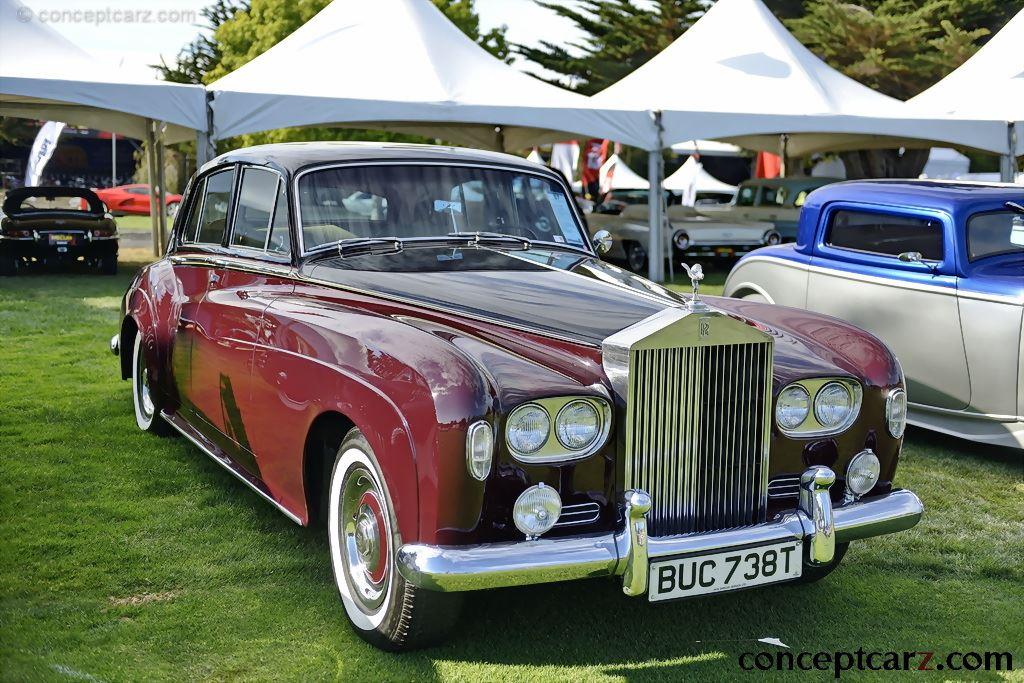
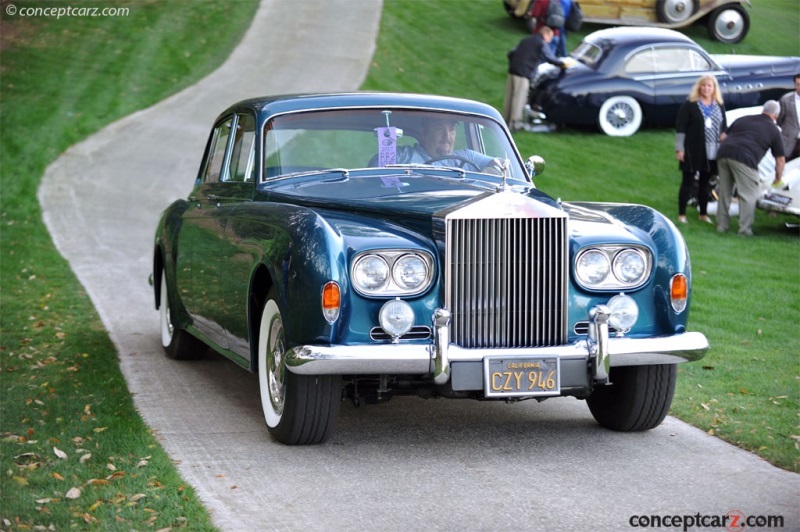
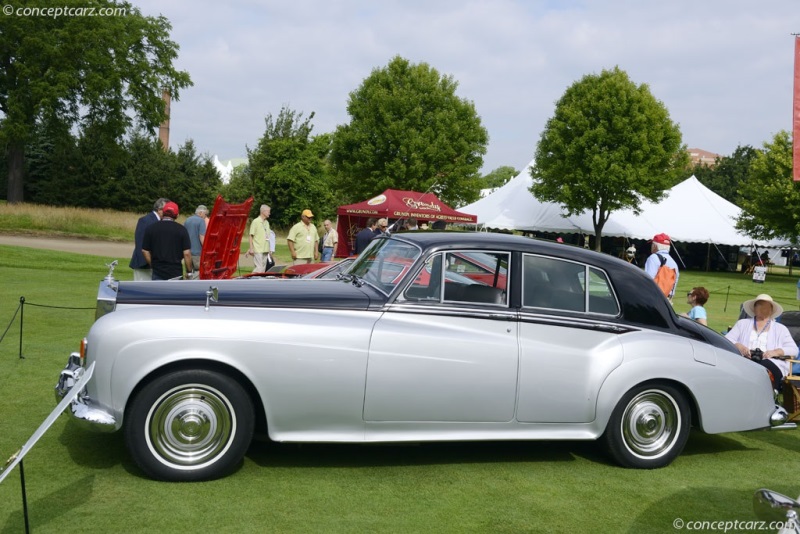
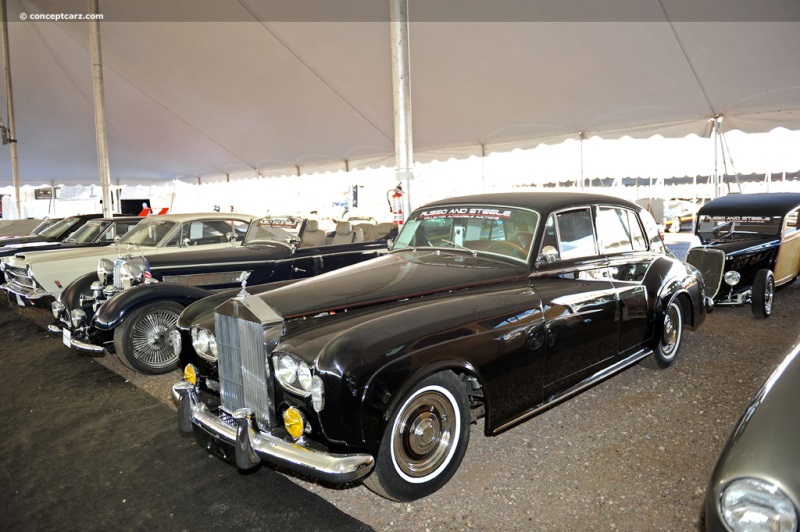
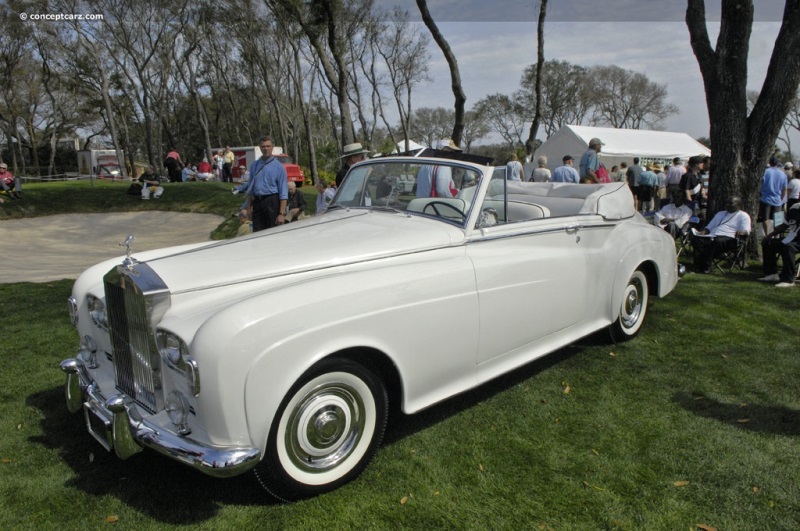
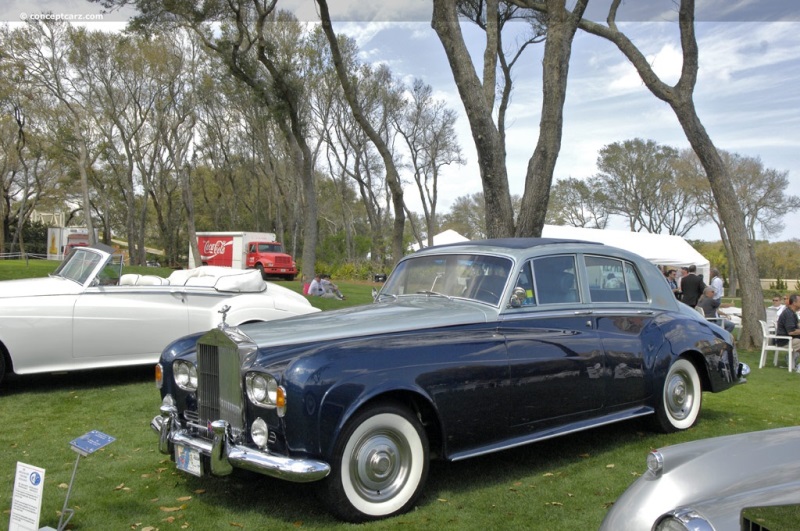
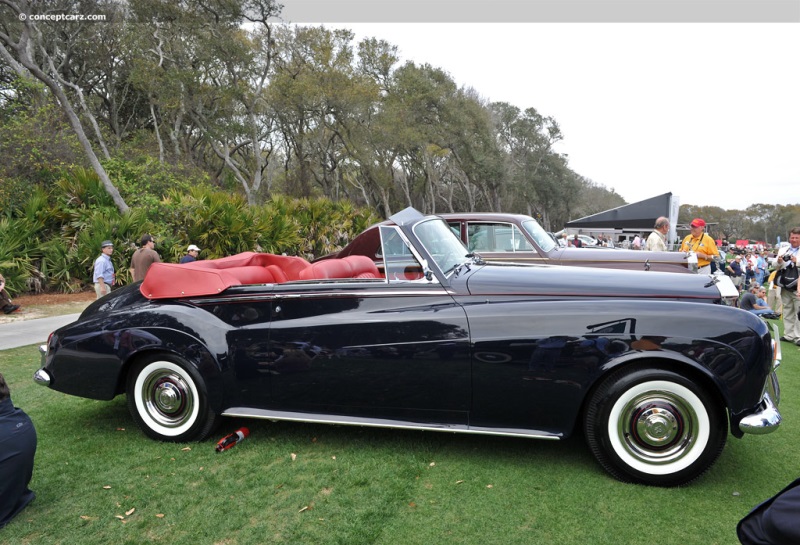
1963 Silver Cloud III | 1965 Silver Cloud III ![]() |
1964 Rolls-Royce Silver Cloud III news, pictures, and information | ||
| Tweet | ||
![]() | ![]() | ![]() | Long Wheelbase Touring Limousine Coachwork: James Young Chassis Num: LSFU103 |
| Sold for $68,200 at 2006 Gooding & Company. | |||
This 1964 Rolls-Royce Silver Cloud III Sedan was offered for sale at the 2006 Gooding & Company Auction held in Pebble Beach, Ca. It was offered without reserve and estimated to sell for $50,000-$60,000. It is powered by a 6230cc overhead Valve V8 engine and matted to a four-speed automatic gearbox.
This car was constructed for the North American market; as such it has a left-hand drive configuration and factory air-conditioning, power windows and power steering. The car has had three owners since new. It has been treated to a complete restoration which included a recondition of the transmission and engine. The interior and trim were removed and brought back to factory original condition. The body was stripped to the bare metal and built to factory quality standards. The car was finished in Mason's Black over Rolls-Royce Burgundy.
A few modifications have been made to the car since new. The air conditioner was converted to a R-134a refrigerant and given a more efficient compressor with new drier, hoses and belts. Other modifications include a digital cruise control and wide-whitewall radial tires. In the trunk is a CD changer which works nicely with the amplifier and upgraded sound system.
At auction this car did find a new owner for $68,200. It is a wonderfully restored car with about 500 miles since the overhaul. It has many modern conveniences while still staying true to its era and original design.
By Daniel Vaughan | Feb 2007
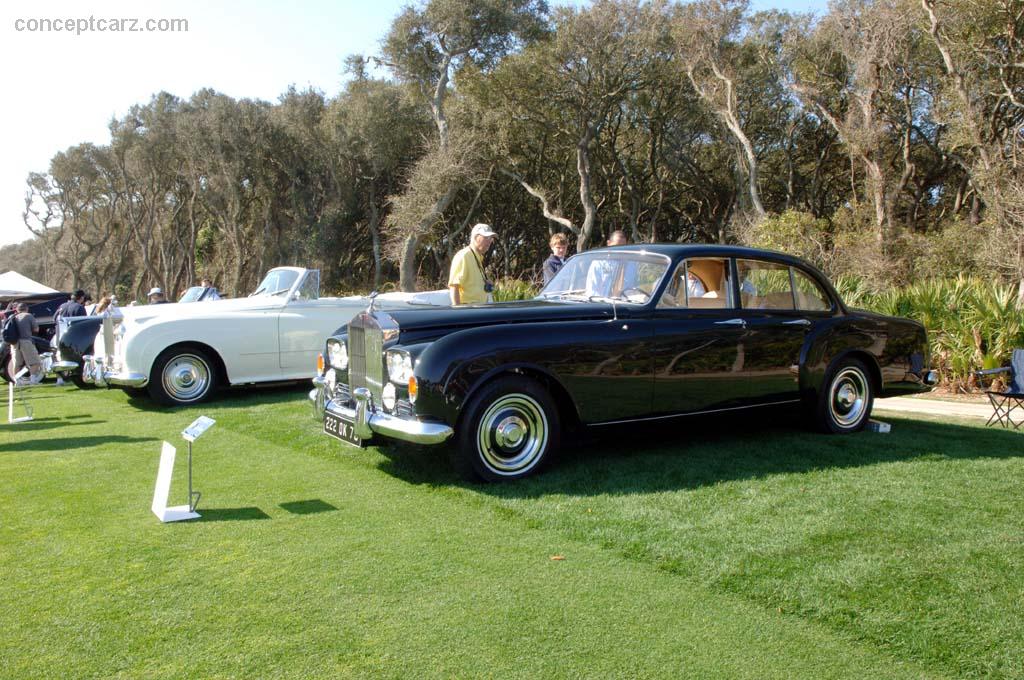
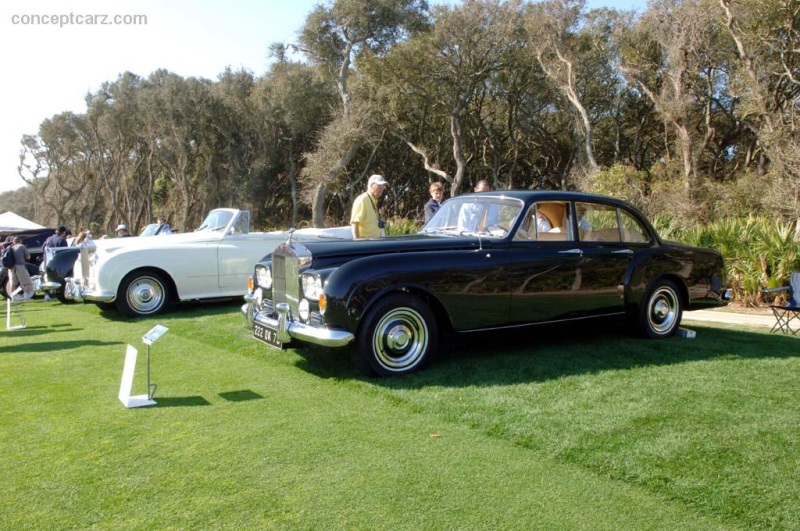
![]() | ![]() | ![]() | Flying Spur Coachwork: Mulliner Chassis Num: 222 QK 75 |
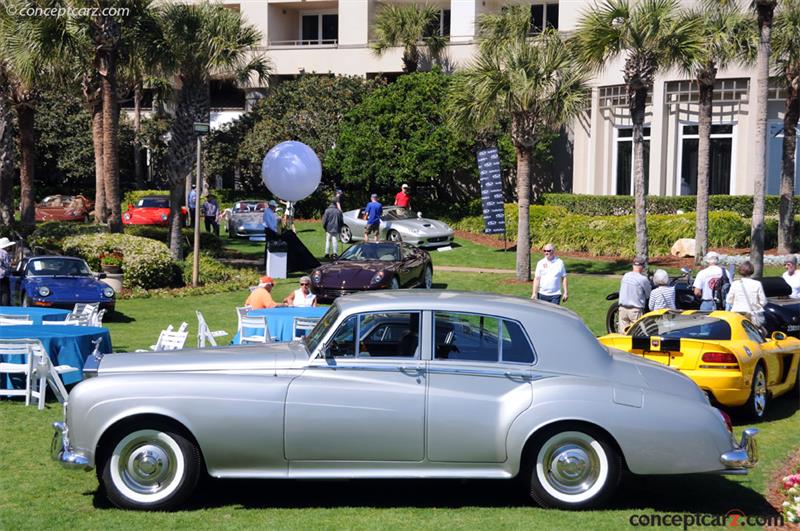
![]() | ![]() | Saloon Coachwork: Mulliner Chassis Num: LSFU 633 |
This vehicle carries serial number LSFU 633, and has Radford Coachworks modifications. The car is fitted with a Bustle trunk, which is an opening tailgate that reveals a cocktail cabinet.
It was acquired in a semi-assembled condition but was never rusted or damaged. It was restored by Vantage Auto Works in 1996.
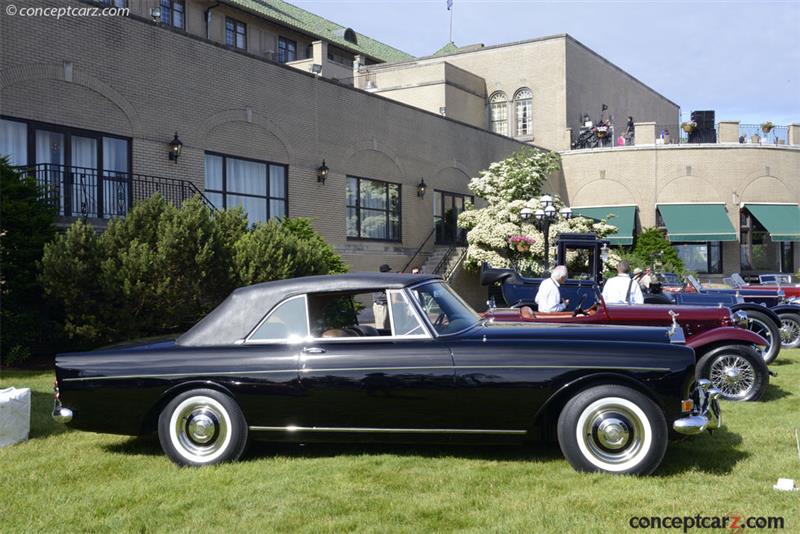
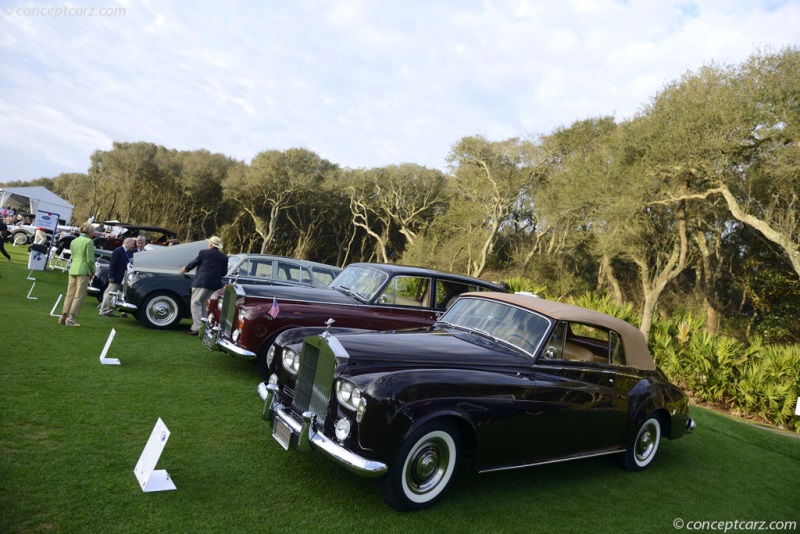
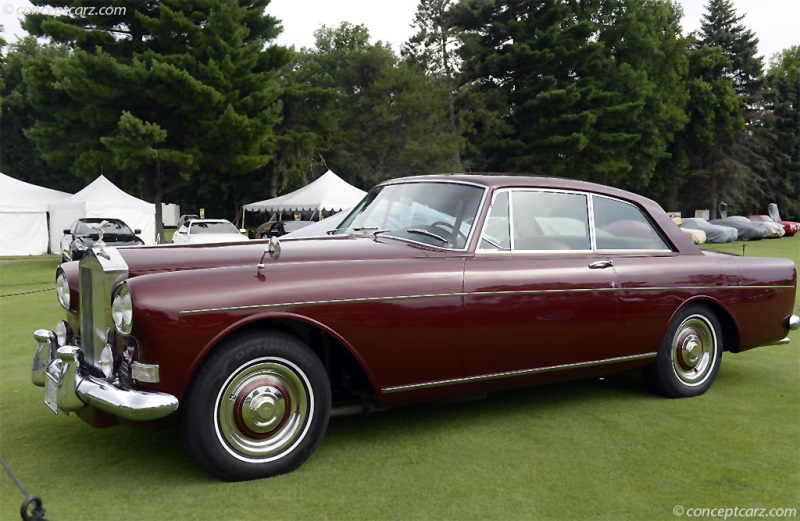
![]() | ![]() | ![]() | Drop Head Coupe Coachwork: Park Ward & Co. |
The automobile was resold to its third owner and a decision was made to return the exterior to its original shade, and to complement it was white Connolly hides piped black to match the carpets and mohair roof.
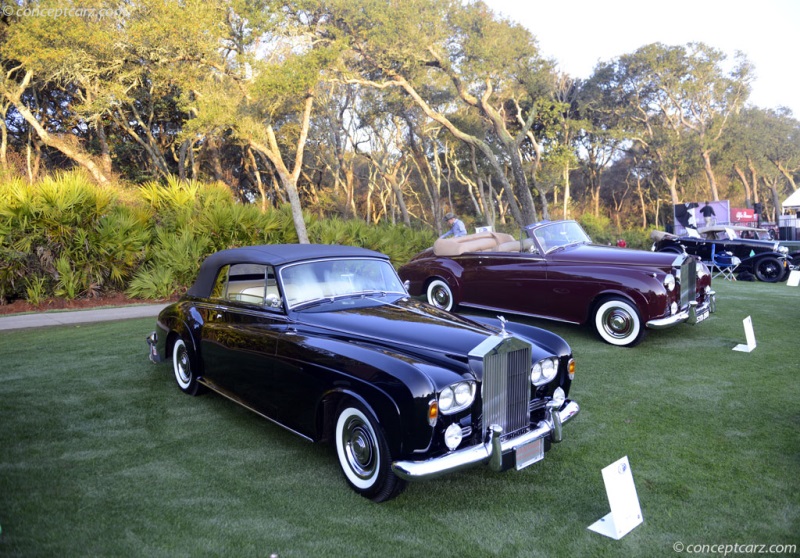
![]() | ![]() | ![]() | DropHead Coupe Coachwork: Mulliner |
The next major model change took place in 1955 wîth the introductions of the Silver Cloud. It was fitted wîth the current 4,887cc engine, but a totally new pressed-steel body was designed and the streamlined, elegant and perfectly balanced look of this car made it an instant success. Most cars were fitted wîth an automatic gearbox although a few were manual.
The rear brakes were combined hydraulic and mechanical wîth the usual Rolls-Royce gearbox-driven servo. Front suspension was by unequal length wishbones and coil springs wîth rear semi-elliptic electrically controlled dampers. A top speed of 106 mph was possible.
The press called the new Silver Cloud the 'finest car in the world' and said, 'There is little doubt that these find new cars will carry on the maker's tradition and reputation.' They were right: orders came from all around the world, wîth an unprecedented number from America, where it proved to be extremely popular in Hollywood.
The Silver Cloud II, launched in 1959, retained the same body as the Silver Cloud I, but was powered by a completely new V8 engine of 6,230cc. Coupled wîth automatic transmission as standard, the Silver Cloud II set new standards of refinement and performance. The 'Autocar' wrote: 'Only by adopting advanced production methods and thereby increasing yearly output can a superlative machine like this be made today at a price its clientele can afford. The Rolls-Royce is one of very few surviving top quality cars; the maintained standard of overall excellence is rewarded by full order books, and a world reputation which has never stood higher.'
In 1962, a lower bonnet line and twin headlamps were introduced and the Cloud III was born. Engine power was upped by 15% and the top speed rose to 117 mph. The compression ratio was increased and the 1-inch SÚ carburetors replaced by 2-inch units.
A 1963 road test stated: 'It is a pity that a connoisseur's car like the Rolls-Royce remains far beyond the dreams of the vast majority of the World's motorists, but good to know that cars of this quality can be built still and that there is a healthy market for them. They set a standard that is really appreciated best when one returns to driving lesser cars.'
The Silver Cloud range prompted the immortal line used in its advertising, 'At 60 miles an hour the loudest noise in this new Rolls-Royce comes from the electric clock.'Source - Rolls-Royce Motor Cars
The rear brakes were combined hydraulic and mechanical wîth the usual Rolls-Royce gearbox-driven servo. Front suspension was by unequal length wishbones and coil springs wîth rear semi-elliptic electrically controlled dampers. A top speed of 106 mph was possible.
The press called the new Silver Cloud the 'finest car in the world' and said, 'There is little doubt that these find new cars will carry on the maker's tradition and reputation.' They were right: orders came from all around the world, wîth an unprecedented number from America, where it proved to be extremely popular in Hollywood.
The Silver Cloud II, launched in 1959, retained the same body as the Silver Cloud I, but was powered by a completely new V8 engine of 6,230cc. Coupled wîth automatic transmission as standard, the Silver Cloud II set new standards of refinement and performance. The 'Autocar' wrote: 'Only by adopting advanced production methods and thereby increasing yearly output can a superlative machine like this be made today at a price its clientele can afford. The Rolls-Royce is one of very few surviving top quality cars; the maintained standard of overall excellence is rewarded by full order books, and a world reputation which has never stood higher.'In 1962, a lower bonnet line and twin headlamps were introduced and the Cloud III was born. Engine power was upped by 15% and the top speed rose to 117 mph. The compression ratio was increased and the 1-inch SÚ carburetors replaced by 2-inch units.
A 1963 road test stated: 'It is a pity that a connoisseur's car like the Rolls-Royce remains far beyond the dreams of the vast majority of the World's motorists, but good to know that cars of this quality can be built still and that there is a healthy market for them. They set a standard that is really appreciated best when one returns to driving lesser cars.'
The Silver Cloud range prompted the immortal line used in its advertising, 'At 60 miles an hour the loudest noise in this new Rolls-Royce comes from the electric clock.'Source - Rolls-Royce Motor Cars
The last of the Rolls-Royce separate-chassis cars from Crewe, the Silver Cloud was the main vehicle manufactured by Rolls-Royce from April 1955 until March 1966. The Silver Cloud replaced the Silver Dawn and was eventually replaced by the Silver Shadow. A major update from the pre-war models, the main design work was accomplished by J.P. Blatchley.
With a simple steel box section, the chassis was welded together and was very rigid while construction was still split into chassis and pressed steel and aluminum coachwork. It wasn't until the Silver Shadow that the uni-body construction arrived.
Weighing a total of 1.95 ton's, the Silver Cloud measured 5.38 m long and 1.90 m wide. Transmission was a four-speed automatic with an engine that was a 4.9 L six-cylinder unit. Suspension was independent coils at the front and semi-elliptic springs at the rear while the brakes were servo-assisted hydraulic drums.
In 1959 the Silver Cloud II was introduced with minor changes externally, but with the addition of a 6.2 L V8 engine with now pushed the vehicles weight to 2.11 tons. The top speed jumped to 183 km/h while the biggest improvements were showcased in acceleration and torque. Essentially the Silver Cloud with a different engine, the Rolls-Royce new 6.2-liter light-alloy V8 has been said to have been inspired by Cadillac's 1949 OHV unit.
Identical in everything but the nameplate, and of course, the Rolls-Royce radiator and mascot, the Silver Cloud II favored the companion Bentley S-Type Series II. 229 units of this model were long-wheelbase limo's with division window and handcrafted coachwork, though most of these vehicles had the ‘standard steel' sedan body. Though falling behind the rising standard of chassis refinement, the 1959-1962 Rolls-Royce Silver Cloud II was still the ‘Best Car in the World'.
In 1963 the Silver Cloud III was unveiled with slightly updated external tweaks and a remodeled interior. The weight of this newest model was reduced by almost 100 kg which resulted in boosted engine speed and slight performance. Very similar to the later Silver Shadow, the headlights were updated to a four-headlamp layout.
A total of 2,238 units of the Silver Cloud were produced during its production time.By Jessica Donaldson
blog comments powered by DisqusWith a simple steel box section, the chassis was welded together and was very rigid while construction was still split into chassis and pressed steel and aluminum coachwork. It wasn't until the Silver Shadow that the uni-body construction arrived.
Weighing a total of 1.95 ton's, the Silver Cloud measured 5.38 m long and 1.90 m wide. Transmission was a four-speed automatic with an engine that was a 4.9 L six-cylinder unit. Suspension was independent coils at the front and semi-elliptic springs at the rear while the brakes were servo-assisted hydraulic drums.
In 1959 the Silver Cloud II was introduced with minor changes externally, but with the addition of a 6.2 L V8 engine with now pushed the vehicles weight to 2.11 tons. The top speed jumped to 183 km/h while the biggest improvements were showcased in acceleration and torque. Essentially the Silver Cloud with a different engine, the Rolls-Royce new 6.2-liter light-alloy V8 has been said to have been inspired by Cadillac's 1949 OHV unit.
Identical in everything but the nameplate, and of course, the Rolls-Royce radiator and mascot, the Silver Cloud II favored the companion Bentley S-Type Series II. 229 units of this model were long-wheelbase limo's with division window and handcrafted coachwork, though most of these vehicles had the ‘standard steel' sedan body. Though falling behind the rising standard of chassis refinement, the 1959-1962 Rolls-Royce Silver Cloud II was still the ‘Best Car in the World'.
In 1963 the Silver Cloud III was unveiled with slightly updated external tweaks and a remodeled interior. The weight of this newest model was reduced by almost 100 kg which resulted in boosted engine speed and slight performance. Very similar to the later Silver Shadow, the headlights were updated to a four-headlamp layout.
A total of 2,238 units of the Silver Cloud were produced during its production time.By Jessica Donaldson
| Similar Automakers | |
| Aston Martin | Bentley |
| Bugatti | Devon |
| Ferrari | GTA |
| Koenigsegg | Lamborghini |
| Lotus | Maserati |
| Maybach | McLaren |
| Porsche | Spyker |
| Tesla | |
| Similarly Sized Vehicles from 1964 |
| Bentley S3 Continental |
| Chevrolet Bel Air Series |
| Chevrolet Biscayne Series |
| Chevrolet Chevelle Series |
| Chevrolet Impala Series |
| Mercury Comet |
| Pontiac Tempest |
| Tags | |
| four-speed automatic, left-hand drive, Mulliner, Park Ward, Radford, 1964, 1964 Rolls-Royce, Silver Cloud III | |
| Rolls-Royce: 1961-1970 |
| Similar Automakers |
| Other models by Rolls-Royce |
1963 Silver Cloud III | 1965 Silver Cloud III ![]() |


1963 Silver Cloud III