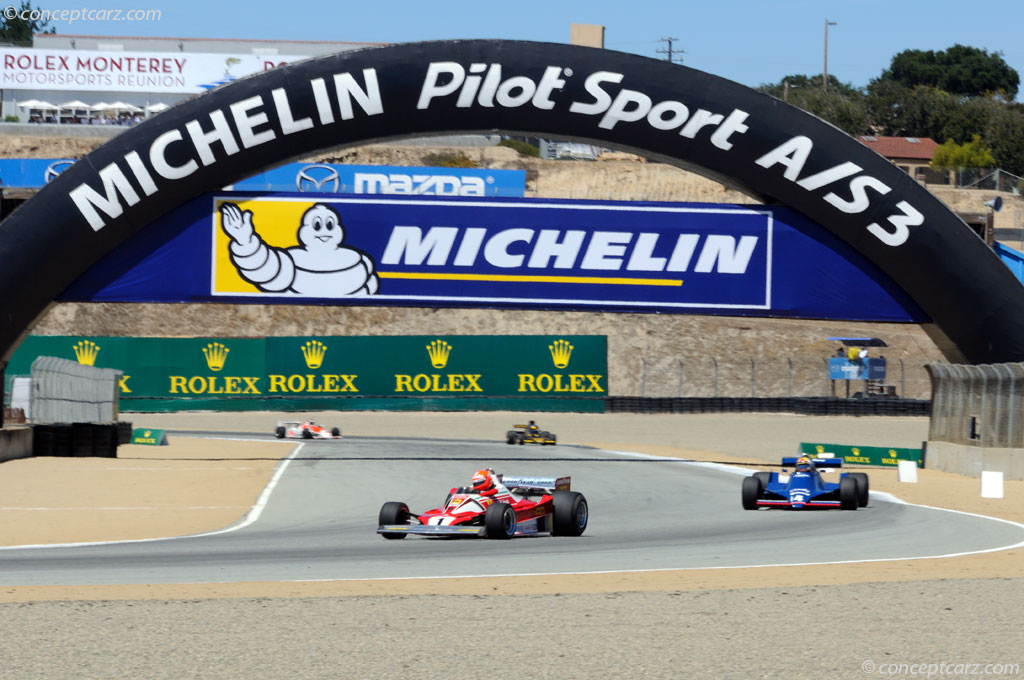
1976 Ferrari 312 T2
1976 Ferrari 312 T2 Navigation
History
In 1973 Ferrari did not win a single F1 race. The flat-12 312 B engine introduced in 1970 had done well during the early parts of its career, racking up numerous victories, but as time progressed, the competition became fierce. Ferrari was being outpaced by other firms such as Cosworth and McLaren and was quickly relinquishing its strong hold on Formula One racing. Something needed to be done. A new engine, new car, new driver, and new personnel were all considered. Enzo Ferrari began by giving the chief engineering job to Mauro Forghieri. Forghieri immediately began redesigning the engine. Niki Lauda and Clay Regazzoni were signed as drivers. During the 1974 season, Regazzoni was runner-up behind McLaren's James Hunt in the championship.
The 1974 season proved to be a vast improvement over the prior year but still far away from where Enzo wanted it to be. The 312 B3 captured nine pole positions, with only two turning into overall victories. In total, Ferrari was able to score three victories in 1974. The problem with the 312 B3 was its reliability. By the close of the 1974 season, production had begun on a new car.
More power, less weight, and better performance were the goals of the new racer. The flat-12 engine was modified to 485 horsepower, far outpowering its competition. A new transverse gearbox was directly bolted onto the engine in an effort to amplify weight distribution. The name 312 T was derived from the use of the new transverse gearbox. The 312 T was completed, tested, and ready to be raced part-way through the 1975 season. At its first race, it easily secured a pole position but failed to finish after it crashed in the first lap. Of the next five races, the 312 T finished first in four of them, securing the constructors and drivers title for Ferrari. Lauda had proven his driving skills and the worth of the 312 T.
During 1957 and 1976, seven 312 T's were created. Variants of the 312 T followed due to regulation changes and ever-improving competition.
In 1976 a new car, the 312 T2, was introduced. The Spanish Grand Prix had made the prior version obsolete. Ferrari and Lauda were positioned for another successful season. A terrible accident left Lauda on the sidelines. Luckily he had not been killed. The crash had occurred in one of the left-bend turns when the rear wishbone broke after coming in contact with a curb. The car was thrown off the track, breaking through a couple of fences and coming to a rest next to a rock. The vehicle was on fire. Two other racecars crashed into the Ferrari. Lunger had lost his helmet on one of the fences and sat trapped in the cockpit of the blazing Ferrari. It was nearly a minute before he was rescued and pulled from the vehicle. He had inhaled a dangerous amount of smoke and gases, seriously injuring his lungs. He suffered burns on his face and hands. It took nearly a week in the hospital before he was able to travel back to his home in Austria. He underwent rehabilitation and began working with fitness experts. After 42 days absent from Grand Prix racing, he returned with a fourth-place finish at the Italian Grand Prix at Monza. The win kept him in the lead for the world championship. His wounds were not completely healed and were causing problems with his vision. His eyelids had been badly burned and were not 100%. So during the Japanese Grand Prix, under very heavy rain, Lauda resigned from the race after completing only a couple of laps and forfeiting the world championship.
Lauda came back strong in 1977 with the Ferrari 312 T2, seeking redemption for the 1976 season that had cost him the world championship by just one point. With three overall victories and six second-place finishes, he easily won the driver's and constructor's championships.
For the 1978 season, Lauda switched teams and joined Alfa Romeo. Gilles Villeneuve from Canada became the new driver for Ferrari.
A new chassis was created, retaining its old drivetrain, and dubbed the 312 T3. In total, five examples were created using the Type 015 12-cylinder engine and producing over 500 horsepower. The 580 kg car was poised for victory. However, strong competition from Lotus with their ground effects cars piloted by Mario Andretti and Ronnie Peterson meant that Ferrari's Reutemann would finish third in points.
Formula one was changing dramatically. The competition was fierce, and technology was advancing. Renault entered the scene with V6 engines that were turbocharged. These racers were very fast on the straight stretches. The Lotus cars were fast through the corners. Ferrari found help from Pininfarina and Fiat, who attached ground effect technology to the 312 T chassis. The result was the 312 T4. The 312 T4 proved to be very reliable and fast, scoring Ferrari another Driver and Constructor's world championship.
In 1980, the 312 T5 was created after minor modifications to the 312 T4 were made. The Ferrari domination of Formula 1 again slipped away. Only a few points were scored, and the team ended the season eighth in the constructor's championship.
During 1980, six examples of the 515 horsepower 312 T5 were created.
By Daniel Vaughan | Apr 2010
The 1974 season proved to be a vast improvement over the prior year but still far away from where Enzo wanted it to be. The 312 B3 captured nine pole positions, with only two turning into overall victories. In total, Ferrari was able to score three victories in 1974. The problem with the 312 B3 was its reliability. By the close of the 1974 season, production had begun on a new car.
More power, less weight, and better performance were the goals of the new racer. The flat-12 engine was modified to 485 horsepower, far outpowering its competition. A new transverse gearbox was directly bolted onto the engine in an effort to amplify weight distribution. The name 312 T was derived from the use of the new transverse gearbox. The 312 T was completed, tested, and ready to be raced part-way through the 1975 season. At its first race, it easily secured a pole position but failed to finish after it crashed in the first lap. Of the next five races, the 312 T finished first in four of them, securing the constructors and drivers title for Ferrari. Lauda had proven his driving skills and the worth of the 312 T.
During 1957 and 1976, seven 312 T's were created. Variants of the 312 T followed due to regulation changes and ever-improving competition.
In 1976 a new car, the 312 T2, was introduced. The Spanish Grand Prix had made the prior version obsolete. Ferrari and Lauda were positioned for another successful season. A terrible accident left Lauda on the sidelines. Luckily he had not been killed. The crash had occurred in one of the left-bend turns when the rear wishbone broke after coming in contact with a curb. The car was thrown off the track, breaking through a couple of fences and coming to a rest next to a rock. The vehicle was on fire. Two other racecars crashed into the Ferrari. Lunger had lost his helmet on one of the fences and sat trapped in the cockpit of the blazing Ferrari. It was nearly a minute before he was rescued and pulled from the vehicle. He had inhaled a dangerous amount of smoke and gases, seriously injuring his lungs. He suffered burns on his face and hands. It took nearly a week in the hospital before he was able to travel back to his home in Austria. He underwent rehabilitation and began working with fitness experts. After 42 days absent from Grand Prix racing, he returned with a fourth-place finish at the Italian Grand Prix at Monza. The win kept him in the lead for the world championship. His wounds were not completely healed and were causing problems with his vision. His eyelids had been badly burned and were not 100%. So during the Japanese Grand Prix, under very heavy rain, Lauda resigned from the race after completing only a couple of laps and forfeiting the world championship.
Lauda came back strong in 1977 with the Ferrari 312 T2, seeking redemption for the 1976 season that had cost him the world championship by just one point. With three overall victories and six second-place finishes, he easily won the driver's and constructor's championships.
For the 1978 season, Lauda switched teams and joined Alfa Romeo. Gilles Villeneuve from Canada became the new driver for Ferrari.
A new chassis was created, retaining its old drivetrain, and dubbed the 312 T3. In total, five examples were created using the Type 015 12-cylinder engine and producing over 500 horsepower. The 580 kg car was poised for victory. However, strong competition from Lotus with their ground effects cars piloted by Mario Andretti and Ronnie Peterson meant that Ferrari's Reutemann would finish third in points.
Formula one was changing dramatically. The competition was fierce, and technology was advancing. Renault entered the scene with V6 engines that were turbocharged. These racers were very fast on the straight stretches. The Lotus cars were fast through the corners. Ferrari found help from Pininfarina and Fiat, who attached ground effect technology to the 312 T chassis. The result was the 312 T4. The 312 T4 proved to be very reliable and fast, scoring Ferrari another Driver and Constructor's world championship.
In 1980, the 312 T5 was created after minor modifications to the 312 T4 were made. The Ferrari domination of Formula 1 again slipped away. Only a few points were scored, and the team ended the season eighth in the constructor's championship.
During 1980, six examples of the 515 horsepower 312 T5 were created.
By Daniel Vaughan | Apr 2010
- 1976 Ferrari 312 T2 Menu
- Article
- Image gallery
- Specifications
- Profiles
- Production figures
Ferrari
Similar Vehicles
Similar Automakers
Related Drivers
 Andreas Nikolaus 'Niki' Lauda
 Gianclaudio Giuseppe 'Clay' Regazzoni
 Carlos Alberto Reutemann
 Joseph Gilles Henri Villeneuve
Related Teams
 Scuderia Ferrari


1976 Ferrari 312 T2 Vehicle Profiles

Designer: Mauro Forghieri
Chassis #: 026
Recent Vehicle Additions


Related Automotive News

Driving Impressions : MINI Cooper S E Countryman ALL 4
For those of us tethered to the past, Mini conjures up the image of small shoebox with go-kart like handling. Before Austin Powers or Mark Wahlberg graced a Mini drivers seat, later Formula One World Champions Graham Hill, Jackie Stewart, John Surtees,...

Ferrari's Anniversary Celebrations Get Underway With Re-Enactment Of 125 S Driving Through The Maranello Gates
Maranello (Italy), 10 March 2017 – On March 12 1947, Enzo Ferrari fired up the 125 S, the first car to bear his name. That test-drive on the streets of Maranello marked the start of modern Ferrari history. The then-modest factory quickly grew...

JOHN SURTEES CBE ANNOUNCES AUCTION LOTS FOR THE 2016 HENRY SURTEES FOUNDATION TEAM KARTING CHALLENGE
Tuesday 5 July 2016 – Mercedes-Benz World Circuit, Brooklands
Team entries are shaping up well for the hotly contested Henry Surtees Foundation Team Karting Challenge, which will take place on Tuesday 5 July 2016. The event organised by John S...

McLaren: 50 Years of Winning Gold
Throughout its 50 year history, McLaren has worn a number of different liveries from orange, to red and white, to silver and black. However, there is one color that is even more synonymous with the name—gold.
In the world of Formula One, Mclaren,...

The Unforgettable Seventies
Maranello, 21 August – There is great anticipation about the cinematic release of Rush, the film directed by Oscar-winner Ron Howard about the sporting rivalry and relationship between James Hunt and Niki Lauda in the dramatic and emotional...


